
Entertainment
Book Review:“My Grandfather Would Have Shot Me”

You’ve heard the stories.
Great-Grandpa made hooch in the basement during Prohibition. Grandma was arrested for protesting back in the ‘60s. Your great-grandma once chased a man off with a gun.
Scandalous then, maybe, but quaint family stories now. You cherish those rebel-rousing ancestors of yours – but in “My Grandfather Would Have Shot Me” by Jennifer Teege and Nikola Sellmair, some tales may lie buried.
At 38 years old, Jennifer Teege had everything she wanted: a degree, success, a husband, two healthy sons, and a bright future.
And then, while idly browsing in a nearby library, she says, “I found the book.”
Photos inside it seemed familiar – then recognizable. They were pictures of her birth mother and the grandmother Teege loved. And between the pictures was a story that was “the key to my family history, to my life”: the mother who gave Teege up for adoption was the child of one of Germany ’s most notorious Nazis.
The grandmother who cared for Teege as a child was the mistress of Amon Goeth, commandant of Plaszów concentration camp.
Did her adoptive parents know the truth? Teege had contact with her mother until she was 7 years old and she knew her father was Nigerian; why didn’t anyone say anything about the bigger secret of their lives?
And how could Teege ever reconcile the gentle grandma she loved with the woman who surely knew what was going on at the camp, but who chose to ignore it in favor of a life of comfort?
Though it felt like picking at a painful scab, Teege needed to know everything about her grandfather, a man she understood would have been outraged at her very existence.
She toured his home near Plaszów, and visited sites of former concentration camps. She looked hard at old photos, and contacted her birth parents to find closure.
“I want to walk upright, to live a normal life,” she says. “There is no such thing as inherited guilt. Everybody has the right to their own life story.”
Think that’s impactful? Just wait.
Half of “My Grandfather Would Have Shot Me” is what you just learned – which is so powerful, so striking a tale that it’s impossible to tear yourself away.
Except there’s more.
Author Jennifer Teege tells about her experiences, her memories, and her heartbreaking repugnance for her ancestry, but journalist Nikola Sellmair acts as a sort of narrator, filling in the historical gaps among Teege’s tale.
Sellmair’s part of this book puts Teege’s words into perspective, in short, and so we see modern personal anguish side-by-side with past brutality and horror.
We read about warm-fuzzies, followed by breathtaking inhumanity and, in the juxtaposition of the two, we become just as baffled as is Teege about events that don’t make sense. Wow.
Without Sellmair’s half of this book, I think this would be just another biography; with her half, it’s just incredible for World War II scholars, students, and biographers.
Now out in paperback, “My Grandfather Would Have Shot Me” is one amazing story.
“My Grandfather Would Have Shot Me” by Jennifer Teege and Nikola Sellmair, c. 2015, The Experiment, $14.95; 240 pages.


Activism
Oakland Post: Week of September 9 – 15, 2026
The printed Weekly Edition of the Oakland Post: Week of September 9 – 15, 2026
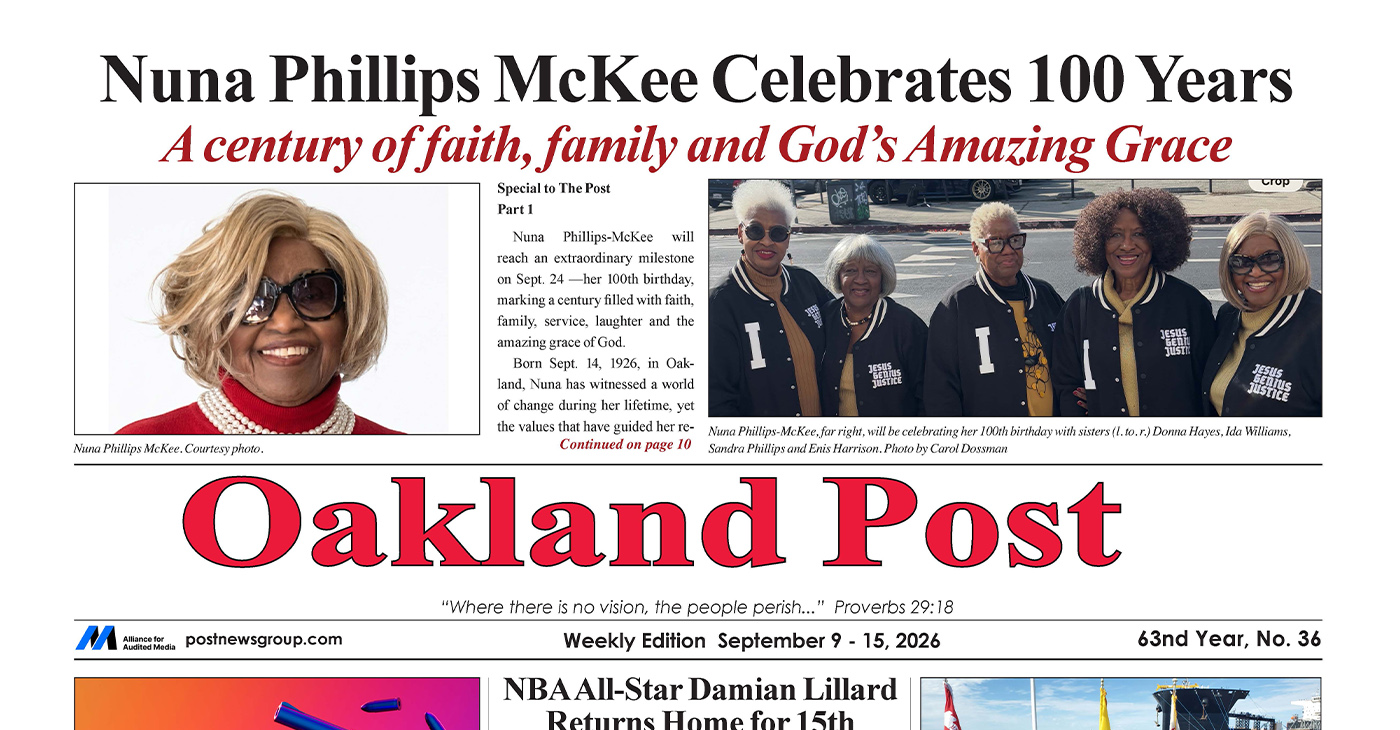
To enlarge your view of this issue, use the slider, magnifying glass icon or full page icon in the lower right corner of the browser window.
Activism
Oakland Post: Week of September 2 – 8, 2026
The printed Weekly Edition of the Oakland Post: Week of September 2 – 8, 2026
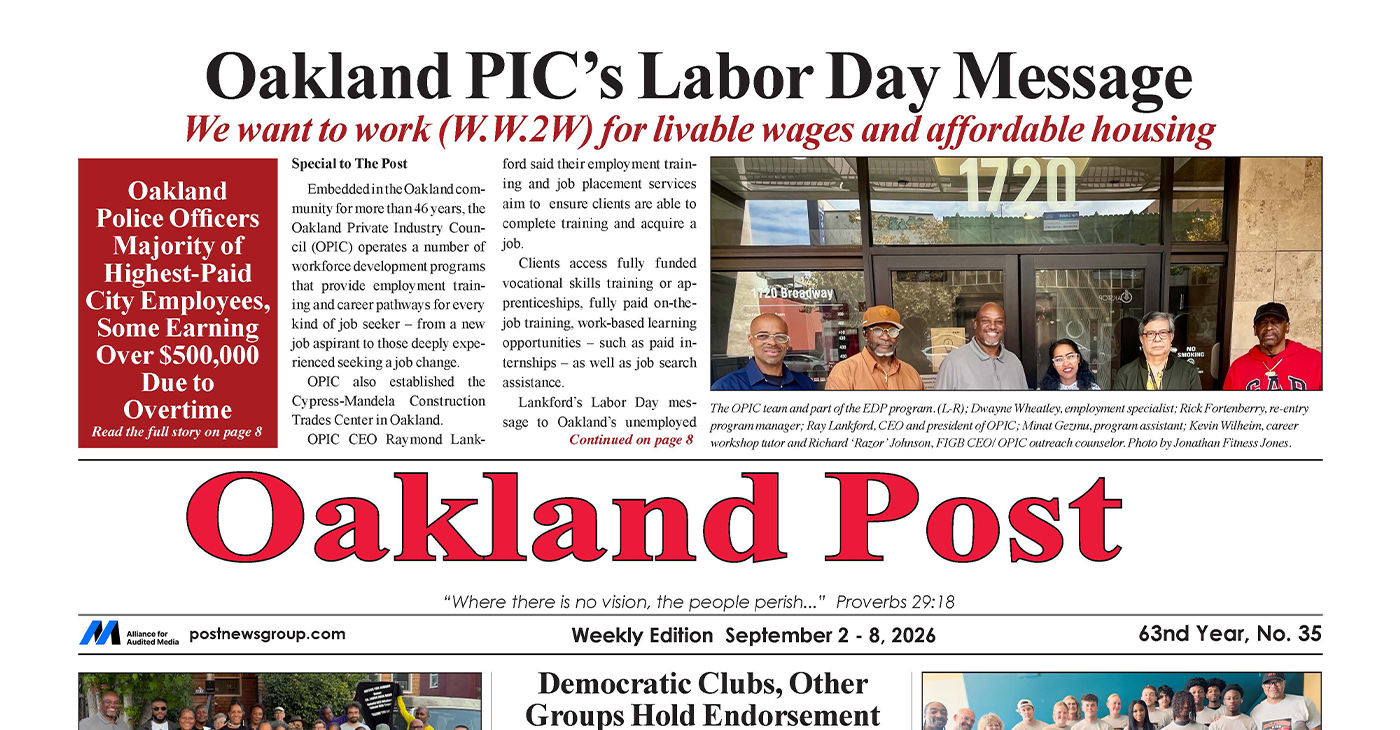
To enlarge your view of this issue, use the slider, magnifying glass icon or full page icon in the lower right corner of the browser window.
Black History
Jackie Wright Champions Bay Area Stories, Filmmakers and Cultural Institutions
As an award-winning communications professional, Wright has worked with corporations, nonprofits, government agencies, educational institutions, artists, and community organizations. In 2026, she expanded that work by launching an introductory public relations class for small businesses and nonprofits, offering practical tools for gaining visibility, shaping messages and building productive relationships with the media.

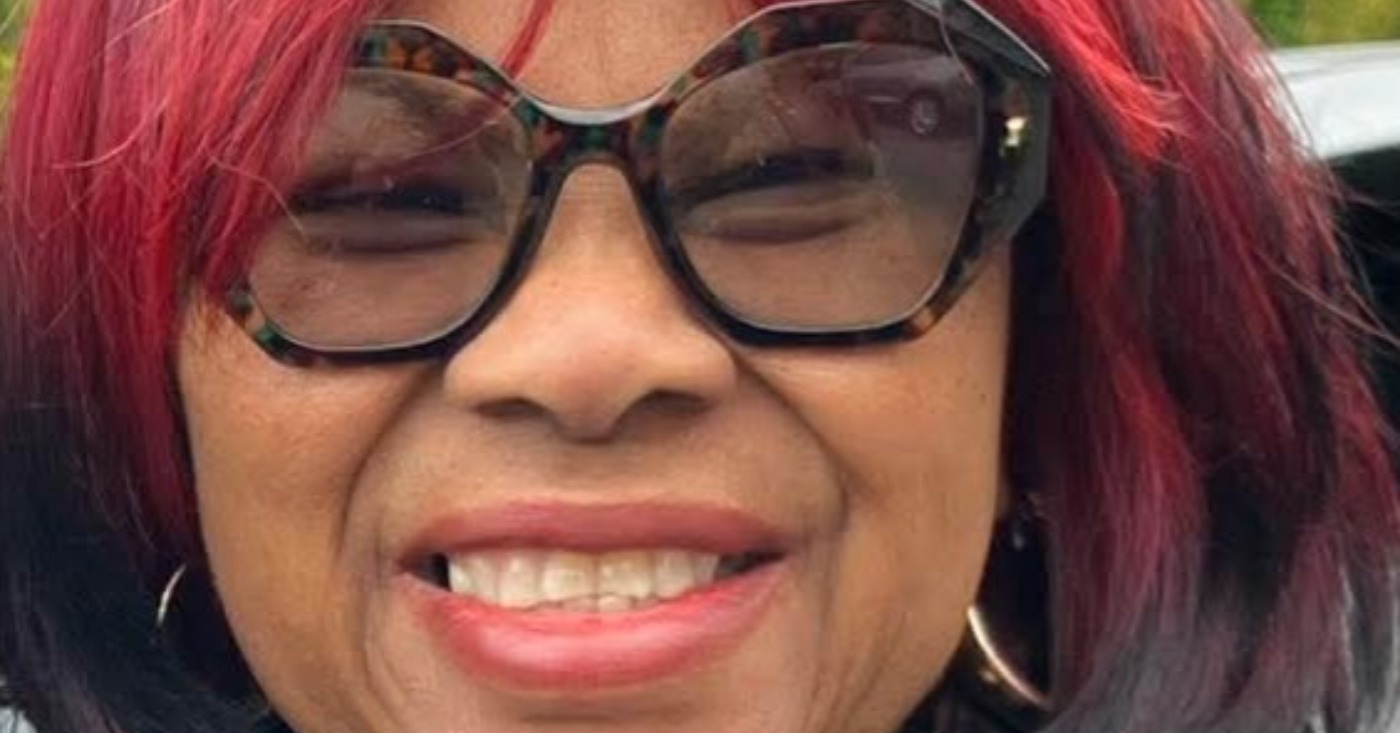
Jackie Wright has spent more than two decades helping people, organizations and communities understand the power of a well-told story.
As founder and president of Wright Enterprises, a San Francisco-based strategic communications and public affairs firm, Wright has built a career spanning journalism, public relations, media relations, crisis communications, community engagement and multimedia storytelling.
As an award-winning communications professional, Wright has worked with corporations, nonprofits, government agencies, educational institutions, artists, and community organizations. In 2026, she expanded that work by launching an introductory public relations class for small businesses and nonprofits, offering practical tools for gaining visibility, shaping messages and building productive relationships with the media.
Wright’s commitment to storytelling is also deeply personal. She wrote and co-directed the 15-minute documentary, “Love Separated in Life…Love Reunited in Honor,” which chronicles the story of her parents, Specialist Five (S5 Wyley Wright Jr. and Ouida Fay McClendon Wright. Her father, a U.S. Army helicopter crew chief, died in Vietnam in 1964 while serving as an honor guard during a visit by then-Secretary of Defense Robert McNamara. Decades later, Wright and her siblings had their father exhumed from a segregated cemetery in Jacksonville, Florida, and their mother moved from her burial place in Georgia so the couple could be reunited at Arlington National Cemetery in 2014.

The family journey later took Wright and her sister to Vietnam, where they discovered the former military compound that had been named in honor of their father and another fallen soldier. The documentary, centered on love, war, family, racial understanding, and remembrance, earned festival recognition at screenings.
“It was quite an honor to learn about my family’s history and share it on film,” said Wright.
That filmmaking experience complements Wright’s longstanding advocacy for independent cinema. She has served as a media partner and brand ambassador for Bay Area film festivals, including the San Francisco Black Film Festival, Oakland International Film Festival, and the Durban International Film Festival in South Africa.
“It’s important to help filmmakers and underrepresented stories reach broader audiences,” said Wright.
Whether promoting a neighborhood organization, championing an independent filmmaker or preserving her own family history, Wright has remained consistent. Through Wright Enterprises, she has turned communications into both a profession and a form of community service, telling stories that might otherwise go unheard.
“Our stories are an integral part of our history, and our history is not only American history, but worldwide,” she said.



Port of Oakland, Army Corps Sign Historic Harbor Design Agreement

Democratic Clubs Interview Candidates for Oakland School Board

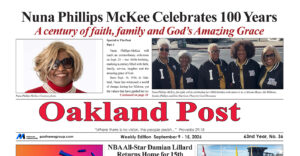
Nuna Phillips-McKee Celebrates 100 Years: ‘A Century of Faith, Family and God’s Amazing Grace!’

D.A. Ursula Jones Dickson: Terminix to Pay $3.15 Million Over Illegal Disposal of Pesticides, Customer Records

REPORT: Community Level Policy Is Impacting Homelessness and Drug Abuse in California

OPINION: AI Needs to Know Who Is the Boss
Goldi-Locs and Two (or Three) Bears in the Forest in California Hills

Election Watch 2026: 85% of Eligible Voters in California Are Registered

Don’t Let scammers Crash Your School Year

BOOK REVIEW — Curved Air: A Biography of Sickle Cell Anemia and the Quest to Cure the First Molecular Disease

California’s Legal Cannabis Market Hits $8 Billion as State Touts Progress on Fighting Drugs, Crime

Blacks and Latinos Clash Over LA’s Barrio Run; Mayor Karen Bass Calls for Dialogue Across Racial, Neighborhood Lines

Asm. Smallwood-Cuevas’s Bill Repealing ‘Racist’ CalWORKs ‘Man-in-the-House’ Rule Clears Legislature

Asm. Smallwood-Cuevas’s Bill Repealing ‘Racist’ CalWORKs ‘Man-in-the-House’ Rule Clears Legislature

‘Ready to See These Bills Become Law’: Sen. Weber’s Package of 15 Bills Advance to Gov. Newsom’s Desk

Department of Homeland Security Demands California Secretary of State Shirley N. Weber Scrub Voter Rolls

“The Power to See Threats Sooner”: Gov. Newsom, Safety Officials Showcase California’s Investments in Hi-Tech Wildfire Prevention

Alpha Kappa Alpha Sorority, Inc. Celebrates New North Atlantic Regional Director

California Sen. Padilla Joins Colleagues to Introduce Bill Imposing Term Limits on Supreme Court Justices

Less Affluent School Districts, Including Sacramento City, Face Threat of State Takeover

Car Wash Workers Cope with Lingering Impacts of ICE Raids

ESSAY: California Can Close Its Colorectal Cancer Gap

Oakland Post: Week of August 5 – 11, 2026

As Part of Your Back-to- School Checklist, Vaccinate

Oakland ‘Port Serves as a Powerful Engine for Good Jobs and Economic Development

Gov. Newsom Signs New Affordable Housing Legislation

Gov. Newsom Announces $109.6 Million in Funding for 278 Supportive Homes in Bakersfield, Contra Costa, Sacramento and Fresno

California Hispanic Chambers of Commerce Unveils: ‘Powering the Future’ Theme for 47th Annual Statewide Convention

Closing the Gap: What the Data and Frontline Experiences Reveal About Cancer in Black California

Congresswoman Simon Demands Investigation into Trump’s Abuse of Emergency Powers for Coal Export Terminal in West Oakland

The Conversation With Al McFarlane 6/23/26

Media Monday 6/22/26

LIVE! ASK ALMA! — TUES. 6.23.26 7PM EST

Car Buying Secrets: 4 Hidden Checks Before You Sign!

Is This 550 HP Charger Worth YOUR Money? AutoNetwork Review

Celebrating Juneteenth – Frederick Douglass on education and resistance

LIVE! — ASK ALMA! — TUES. 6.19.26 7PM EST

Hyundai Ioniq 5 Parking, Safety, and 360 View #shorts

2025 Ioniq 5 New Wiper & Powerful Performance! #shorts

Electric SUV Range: Is 259 Miles Enough? #shorts

EV Charging: How Fast Can You Charge an Electric Vehicle? #shorts

Biometric Cooling… Messaging Seats…Come on! 2025 Infiniti QX80 Autograph 4WD

Charged Up: Witness the Magic of a Fully Electric Car! #shorts

Range Rover Sport PHEV Included…: See What’s Inside This Luxury SUV! #shorts

Invisible Hood View: Perfect Parking with X-Ray Vision! #shorts
-

 Commentary2 weeks ago
Standoff for Justice: Our Homes Are Worth Fighting For
-

 Business2 weeks ago
Gubernatorial Candidate Steve Hilton Blasts California New Tire Rules; Newsom Hits Back
-

 Activism2 weeks ago
Oakland Post: Week of August 26 – September 1, 2026
-

 Education2 weeks ago
Gov. Newsom’s Latest Appointees Include Sacramento Advocate for Formerly Incarcerated Students; State’s New Tech Chief
-

 Business2 weeks ago
Frontier Airlines’ Return to Oakland Airport Brings Flights, Jobs and Opportunity
-

 Business2 weeks ago
Oakland Coliseum Project Opens Door for Small Businesses to Build Bigger
-

 Business2 weeks ago
Chef Sharon Lee Blends Culinary Excellence, Education and Empowerment
-

 Community2 weeks ago
Big City Mayors Ask for “Yes” Vote on Housing Bond Measure; Conservatives Say “No”
