
Art
BLACspace Cooperative Invites Bay Area to Experience Oakland’s Black Cultural Ecosystem Through a BLAC Map Tour + Party
BLACspace Cooperative invites the Bay Area to experience Oakland’s Black cultural ecosystem through its BLAC Map Tour + Party on October 2. Presented as part of the Museum of the African Diaspora’s Nexus: SF/Bay Area Black Art Week, the event offers a guided field trip through creative and cultural spaces, followed by a celebration. Guests will explore the people and places shaping Black arts and culture across Oakland. The tour highlights BLACspace’s interactive guide to spaces stewarded by its members. Read more to learn about this unique event.

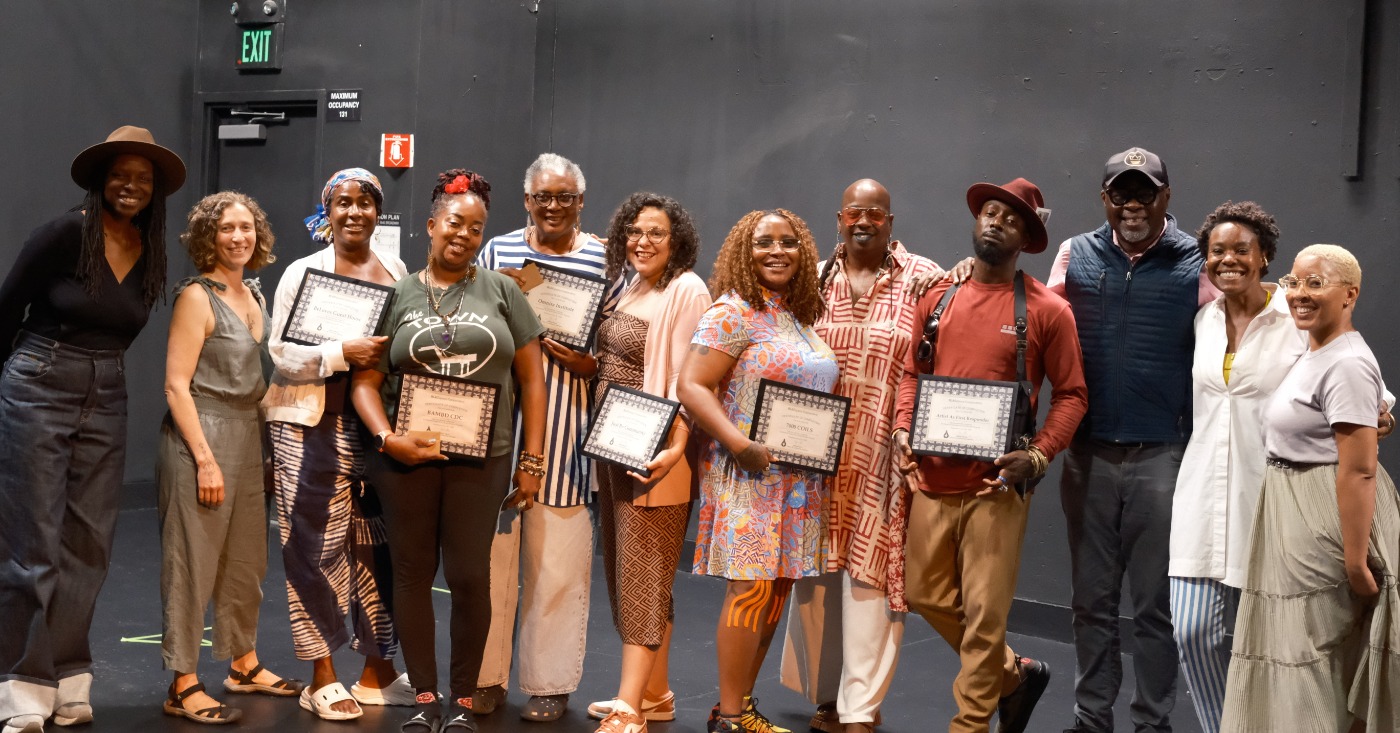
Presented as part of MoAD’s Nexus: SF/Bay Area Black Art Week, the October 2 experience takes guests inside the spaces, practices, and relationships that keep Black arts and culture rooted in Oakland
What does Oakland’s Black cultural ecosystem look like from the inside?
On Friday, October 2, BLACspace Cooperative will bring its BLAC Map to life with The BLAC Map Tour + Party, a two-part experience connecting artists, cultural workers, community partners, funders, and arts lovers with the people and places shaping Black arts and culture across Oakland and the greater Bay Area.
Presented as part of the Museum of the African Diaspora’s Nexus: SF/Bay Area Black Art Week, the day begins at MoAD at 685 Mission St. at 12 noon with a guided field trip through creative and cultural spaces connected to the BLACspace ecosystem.
Guests will travel together by bus from San Francisco to Oakland, stepping inside studios, cultural hubs, creative businesses, and gathering places while experiencing artist talks, exhibitions, film, music, movement, ancestral practice, and opportunities for conversation.
The Tour is an extension of The BLAC Map of Oakland, BLACspace’s interactive guide to creative and cultural spaces stewarded by members of its ecosystem. The map makes visible a network of people and places working to keep Black culture rooted in a city where displacement, rising costs, and shrinking arts funding continue to threaten cultural permanence.
“We call this work Cultural Reforestation,” said Zakiya Harris, Vision and Leadership steward of BLACspace Cooperative. “It’s about repairing, replenishing, and rooting Black arts and culture where it has been displaced, and creating the conditions for our cultural ecosystem to remain for generations to come.”
The Tour will move through several Bay Area cultural spaces, including Minnesota Street Project, The Barn, B-Love’s Guest House, Koo Labs Production & Design Center, BAM House, and BlaQyard, with experiences featuring members and collaborators across the BLACspace ecosystem.
At 5 p.m., the field trip gives way to The BLAC Map Party, a celebration of the ecosystem the Tour spent the day exploring. The evening invites the wider community to gather for music, food, art, cultural activations, an opening Ring Shout ceremony, and connection among Black artists, cultural workers, organizations, and the people who support their work.
The experience reflects BLACspace’s larger belief that the future of Black arts and culture requires cooperation.
As a Black arts and culture-promoting cooperative, BLACspace brings together artists, cultural workers, creative businesses, and organizations to share resources, relationships, knowledge, and stewardship.
Through membership, holistic business coaching, mutual aid, consulting, storytelling, and advocacy for cultural spaces, the cooperative is building infrastructure intended to strengthen Oakland’s Black cultural economy for the long term.
EVENT INFORMATION
The BLAC Map Tour + Party
Friday, Oct. 2
BLAC Map Tour: 12–5 p.m.
Begins at the Museum of the African Diaspora (MoAD)
685 Mission St., San Francisco
BLAC Map Party: 5–8 p.m.
Oakland, California
Party location provided to confirmed RSVP guests.
Tickets, RSVP information, and additional event details are available through BLACspace Cooperative at ABOUT BLACSPACE COOPERATIVE
About BLACspace Cooperative:
BLACspace Cooperative connects and cultivates an ecosystem of artists, cultural workers, creative businesses, and organizations shaping Black arts and culture. Through holistic business coaching, values-aligned consulting, shared stewardship, and advocacy for cultural spaces, BLACspace works to create the conditions for its ecosystem to remain rooted and thrive.
Its work is grounded in Cultural Reforestation: strengthening what is here, restoring what has been displaced, and building toward cultural permanence in Oakland and beyond for the next 100 years.
Adéniké Amin is the storytelling steward for BLACspace Cooperative. For media and other information, please reach out to adenike@blacspace.coop








Art
Event Preview: ‘Fashion v. Fascism’ – A Runway Revolution Is Coming to the Bay Area
“Every piece on this runway translates what is happening under fascism into a feeling,” explains Erica Furlong, the FVF creative director. “One designer’s trench coat is covered in pockets stamped ‘TRUTH,’ ‘MEMORY,’ ‘HOPE,’ ‘VOTE,’ ‘FUTURE,’ because that’s literally what gets seized first, pocket by pocket, under fascist decline. Fashion can hold grief and hope in the same silhouette, and that tension is exactly what this moment needs.”

“Fashion vs. Fascism” (FVF) is a visually immersive evening of fashion, music and political theater exposing the rise of fascism in the U.S. and the need to resist. Democracy is under siege, and culture is one of our most potent defenses, organizers say.
Called a live “runway revolution,” FvF premieres Oct. 3 at The Rotunda, 300 Frank Ogawa Plaza in downtown Oakland.
A play that is part fashion show, part protest, part performance art, FvF stages five runway collections spotlighting the pillars of contemporary fascist politics and the urgent need to resist: the myth of a “glorious past,” the manufactured emergencies used to justify surveillance and crackdowns, and the oligarchs and grifters profiting from it all. Runway fashion shares the stage with political theater and live music, with a closing call to action.
“We need lawsuits, ballots and mass protests, but none of it lands if we’re not also fighting for people’s imagination,” says Linda Burnham, co-producer of the show. “People are exhausted and scared. FvF will expose the absurdities of fascist mythology and ideology in ways a news headline cannot and spark new ideas about how to resist.”

“Fascism doesn’t win by policy alone. It wins by telling a story. A myth about a ‘Golden Age.’ A permanent emergency that makes cruelty seem necessary. That’s not an accident, it’s a strategy, and it works on the same terrain as culture: image, spectacle, emotion,” says Aya De León, the show’s playwright.
“Every piece on this runway translates what is happening under fascism into a feeling,” explains Erica Furlong, the FVF creative director. “One designer’s trench coat is covered in pockets stamped ‘TRUTH,’ ‘MEMORY,’ ‘HOPE,’ ‘VOTE,’ ‘FUTURE,’ because that’s literally what gets seized first, pocket by pocket, under fascist decline. Fashion can hold grief and hope in the same silhouette, and that tension is exactly what this moment needs.”
At its best, fashion is about creativity, diversity, innovation, experimentation and the free exchange of ideas. Fascism, by contrast, demands conformity and control, while suppressing dissent.
FVF was created, organizers say, because democracy should always be in style.
Featured designers include Erica Varize, Rickie Lee, Tianna Charity, Julie Wong, and Maria Flores. The evening features a script by lead playwright Aya De León, musical performances by Mindeullae Project and DJ Emancipation, and other special guests.
FvF is designed to travel. Following the Oakland premiere, FvF will extend its reach through a documentary short, a curriculum on contemporary fascism in the U.S., and a full replication playbook — design templates, script, and curriculum — so organizers in other cities can stage their own version of the show.
Get more details at www.fashionvfascism.org.
Art
Misty Copeland Shapes Ballet’s Tomorrow
THE POSITIVE COMMUNITY — Misty Copeland will curate the 2026 Joyce Ballet Festival, a two-week event in New York City from August 4-16. This role allows her to influence the future of ballet by showcasing a wide range of dancers, choreographers, and companies. The festival will present both established and contemporary works, blending classical traditions with new artistic expressions.
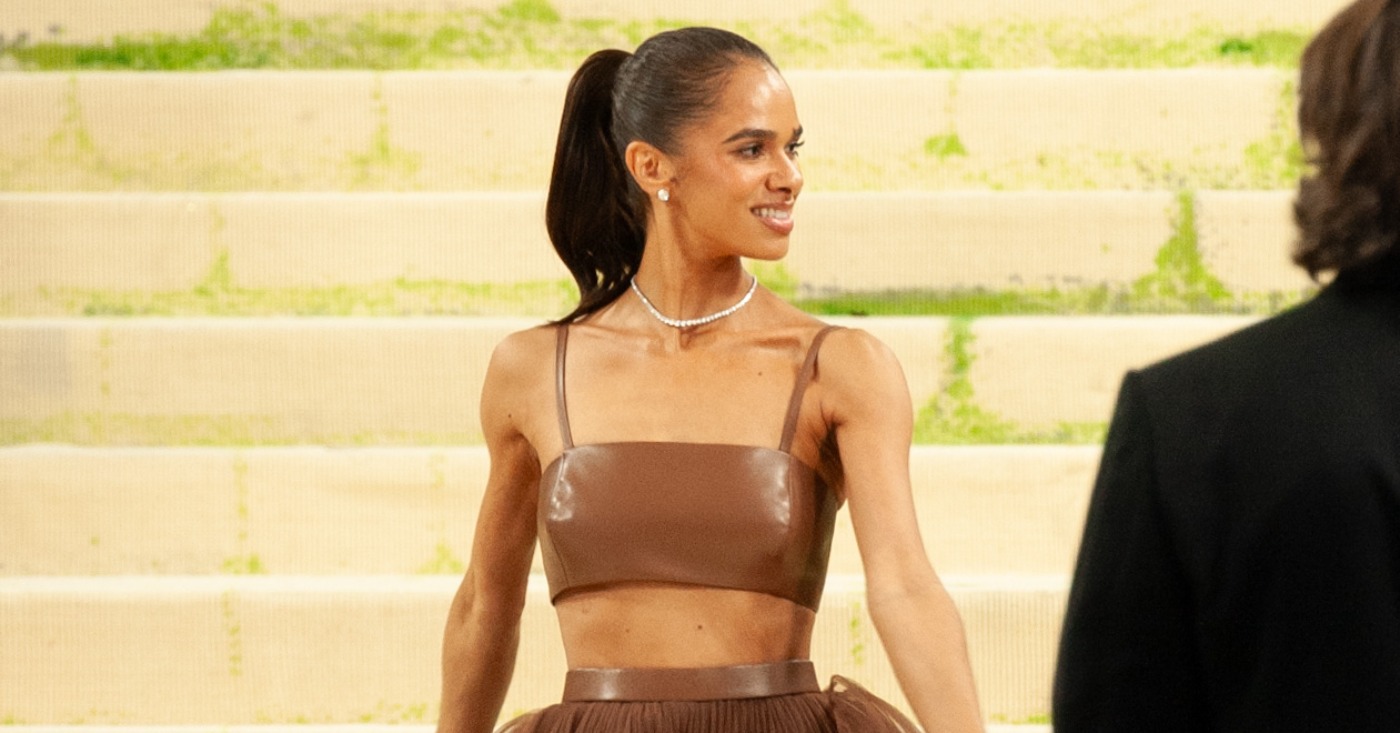
This summer, Misty Copeland will step into a different kind of spotlight. Instead of taking center stage as a dancer, she will help determine what audiences see onstage as curator of the 2026 Joyce Ballet Festival. Taking place August 4 through August 16 at The Joyce Theater in New York City, the two-week celebration will bring together dancers, choreographers and companies representing a broad spectrum of ballet. The festival gives Copeland an opportunity to share not only her appreciation for ballet’s traditions, but also her vision for its future.
Copeland understands better than most how powerful a ballet stage can be. Her historic career with American Ballet Theatre changed the conversation about representation in one of the world’s most traditional performing arts. When she became the company’s first Black woman to reach the rank of principal dancer, her achievement carried significance far beyond a personal milestone. It gave young dancers of color a new image of what was possible and challenged the industry to reconsider who belonged at the center of ballet.
That history informs the perspective she brings to the festival. Copeland has spent much of her career moving between performance, mentorship, advocacy and storytelling. Her curatorial role allows her to bring those interests together by creating a program that does not treat ballet as a museum piece. Instead, the festival presents dance as an evolving language capable of carrying classical traditions into new cultural and artistic territory.

Audiences will encounter a mixture of established works and contemporary creations during the festival. Classical ballet vocabulary will share space with choreography that pushes dancers toward different physical, emotional and theatrical possibilities. The result is intended to give audiences a broader understanding of the art form while demonstrating that tradition and innovation do not have to be competing forces.
The lineup also provides an opportunity to see dancers from different artistic environments. Performers connected to organizations including American Ballet Theatre, New York City Ballet, Paris Opera Ballet, Houston Ballet, Dance Theatre of Harlem and Complexions Contemporary Ballet are among those represented in the festival. Each company carries its own history and artistic identity, making their participation part of a larger conversation about the many ways ballet can be performed and interpreted.
The presence of Dance Theatre of Harlem is particularly meaningful within the larger story of Copeland’s career and the evolution of Black representation in ballet. Founded during a period when opportunities for Black dancers were severely limited, the company helped demonstrate that excellence and classical training could flourish in a Black cultural environment. Its legacy continues to influence dancers and audiences, making its connection to a festival curated by Copeland especially resonant.
The program also reaches beyond a single definition of contemporary ballet. Choreographers with different backgrounds and artistic philosophies contribute to an evening that can move from recognizable classical structures to works shaped by modern dance, theater, popular culture and new approaches to movement. That diversity reflects a generation of artists who increasingly see ballet not as a rigid vocabulary but as a foundation from which they can explore.
For New York audiences, the festival offers something that is increasingly valuable: the opportunity to experience outstanding dancers in an intimate setting. The Joyce is known for presenting dance in a theater where audiences can see movement and artistry up close. That environment can make a familiar ballet work feel newly personal while allowing experimental pieces to communicate with unusual immediacy.
Copeland’s role as curator also sends a message about the importance of artistic leadership. The people who select performers and choreography help determine which stories receive attention and which artists receive opportunities. By bringing a range of voices into the festival, Copeland is using that responsibility to broaden the conversation around ballet. Her choices can introduce audiences to artists they may not otherwise encounter while encouraging longtime ballet followers to look at the form from a different perspective.
The 2026 Joyce Ballet Festival ultimately arrives at an important moment for the art form. Ballet is carrying centuries of tradition into an era defined by changing audiences, broader representation and increasingly adventurous choreography. Copeland’s festival reflects that transition. For two weeks in August, The Joyce will become a meeting place for the familiar and the unexpected—a celebration of where ballet came from and a preview of where it may be going. And with Misty Copeland helping shape the conversation, the future of ballet promises to be as expansive as the dancers who are defining it.
Based on reporting by The Positive Community.
Art
BOOK REVIEW: Never Tell a Black Girl How to Black Girl: Essays
Growing up in North Carolina, she Black Girled her hair her entire life. Her grandma made her sit for box braids when she was small, telling Brown that she was “tenderheaded.” Later, Brown had relaxed hair until she “went broke” and couldn’t afford the process anymore. That was when she got acquainted with her natural hair – although she returned to box braids at least once, and loved them all over again.
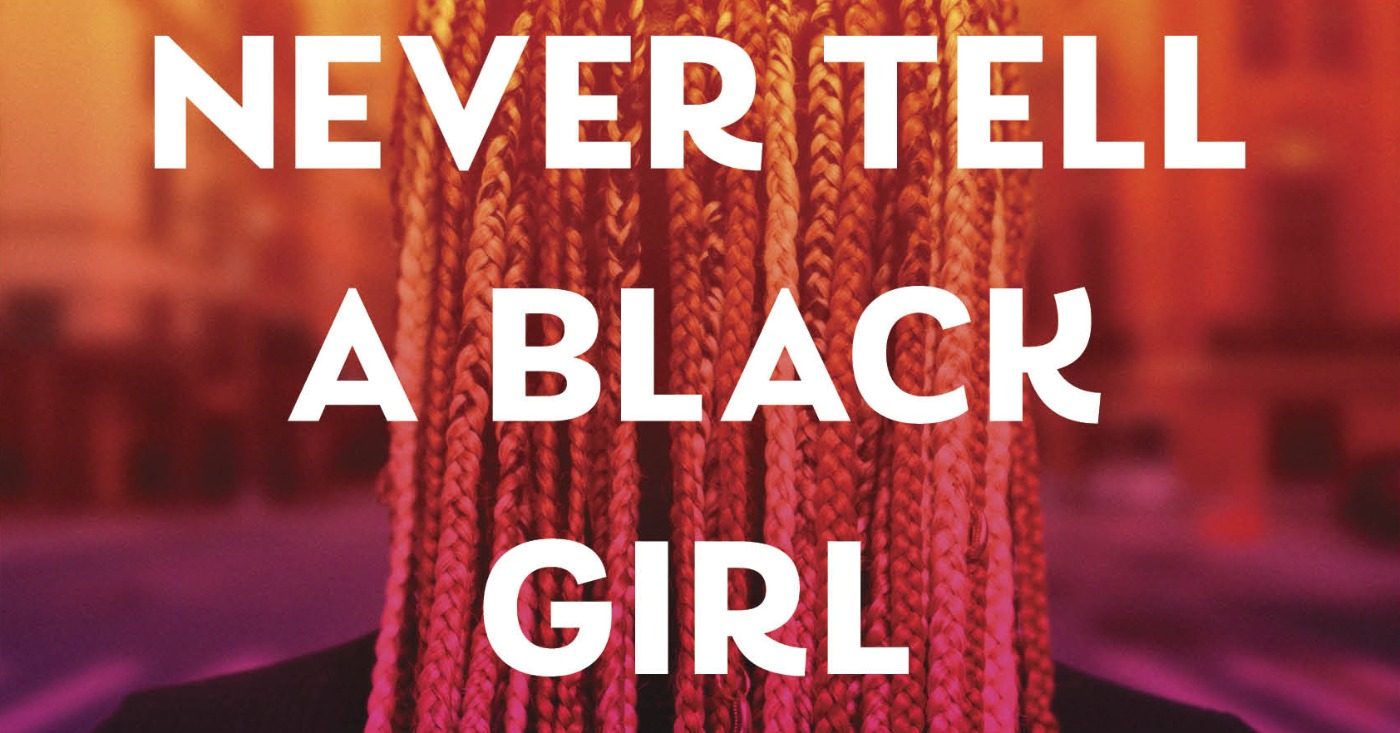
Author: Amena Brown, Copyright: c.2026, Publisher: Tiny Rep Books, SRP: $30.00, Page Count: 320 pages
Some things can really make you cross.
People telling you your business, for instance. People asking questions they have no reason to know the answers to. Folks who criticize your hair or clothes or life. These things would set anyone off; they’d be the last straw for anybody. As in the new book, “Never Tell a Black Girl How to Black Girl” by Amena Brown, some folks just cross the line.
In a way, it’s a matter of grammar.
Depending on how you say it, “Black Girl is a noun and a verb,” says Brown. A Black Girl can be a Black Girl… and she can Black Girl. Brown herself has done it “in six countries.”
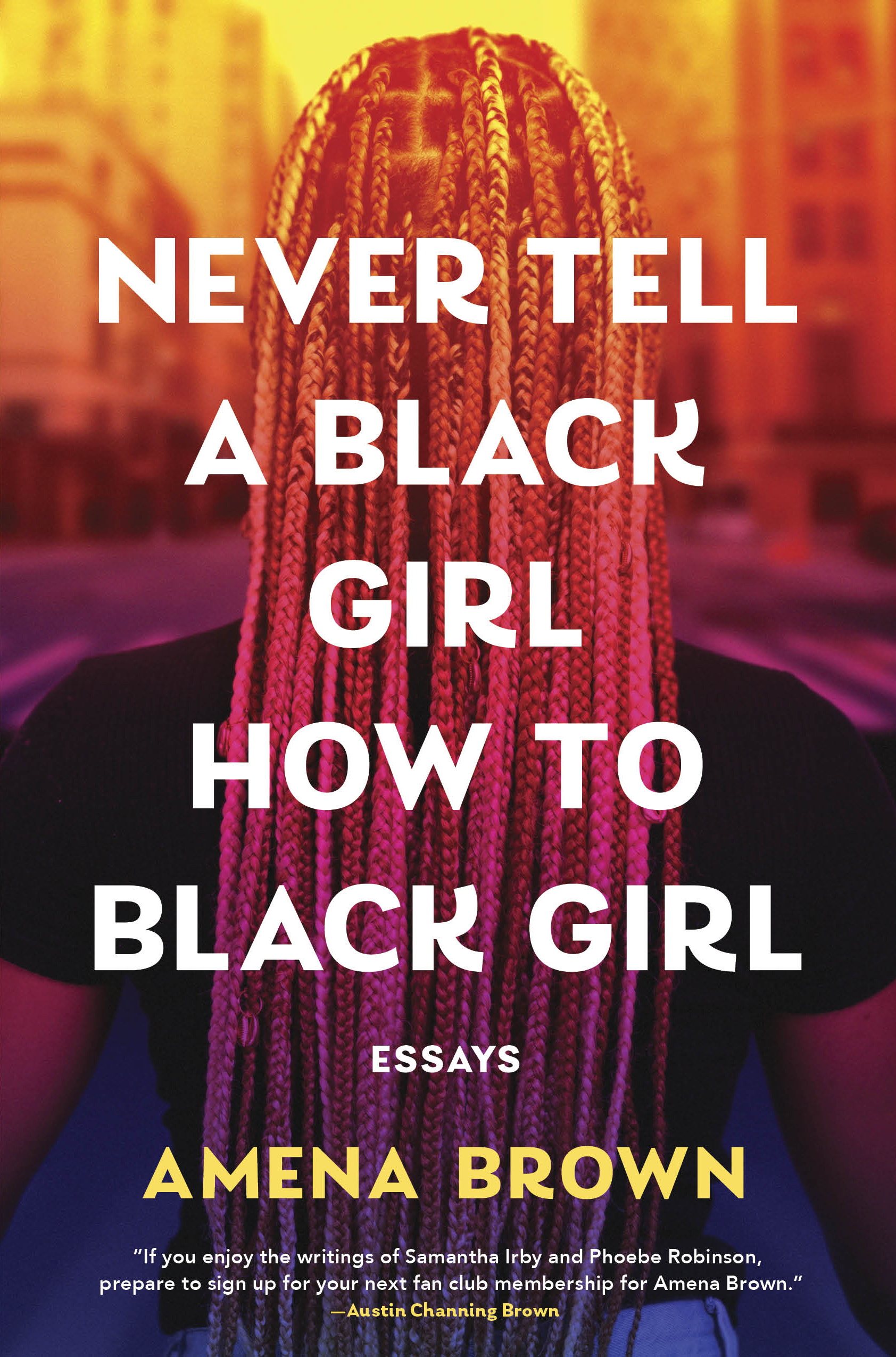
Growing up in North Carolina, she Black Girled her hair her entire life. Her grandma made her sit for box braids when she was small, telling Brown that she was “tenderheaded.” Later, Brown had relaxed hair until she “went broke” and couldn’t afford the process anymore. That was when she got acquainted with her natural hair – although she returned to box braids at least once, and loved them all over again.
As the child of a strict Pentecostal mother, Brown was a “late bloomer.” She didn’t drink alcohol until she was in her twenties. She was chaste while dating and a better church girl than a party girl. After she left the church, she began experimenting with wine first, then cocktails. She learned to cook, reasoning that the path to finding love started in a kitchen, one that happened to be her grandmother’s. And yes, love did eventually come in the form of a red-headed White man who was her friend before he became her boyfriend — and before he became her mother-sanctioned, grandma-approved husband.
Overall, says Brown, there is no single right method for doing this.
“There are so many ways to Black Girl, which means the way you Black Girl is beautiful, and the way I Black Girl is beautiful too.”
Looking for a collection of addictive, can’t-read-just-one essays that’ll make you laugh but that also feel like author Amena Brown is peeking at your life? Want a book that speaks to every corner of your existence?
Yeah, then you want “Never Tell a Black Girl How to Black Girl.”
You know how it is when you spot something so profound, so right, that you just have to call your friends and read it out loud to them? That’s what you’ll find here: truth told with humor that’s also oozing with warmth. Add honesty that’s smart and bold and practically begging for a “Heck, YES!” and you’ve got your new favorite book.
The essays here are short enough to read in a few minutes, but compelling enough to make you want more, so give yourself room.
This is a book for twenty- and thirty-somethings, but also for their mothers and grandmas who can handle respectful irreverence and surefooted playfulness. Can men enjoy “Never Tell a Black Girl How to Black Girl”? Sure, but it’s more for women, cross your heart.



Asm. Corey Jackson Announces Launch of 24-Hour Childcare in His District

IN MEMORIAM: The Rev. Leon “Sonny” Clark, Longtime Orange County Pastor and Community Leader, Dies at 72

Poll: Becerra Widens His Lead Over Hilton; Californians Split on Wealth Tax

From Historic Memories to New Possibilities: Oakland Celebrates Coliseum 60

County Office of Education Says OUSD Finances Are Getting Healthier, Materially Stronger

LIVE FREE Sunday Dinner Brings Faith, Fellowship and Civic Conversation to Oakland

Remembering Chauncey Bailey as Student Journalists Face Threats to Truth-Telling

BLACspace Cooperative Invites Bay Area to Experience Oakland’s Black Cultural Ecosystem Through a BLAC Map Tour + Party

In Wake of Death on Doorstep, Williams Chapel Baptist Church Calls for Better Care, Funding for Unhoused

Oakland Centenarian Nuna McKee Honored!

Caribbean Nations Produce Action Plan Calling for UK Reparations Over Slavery

Oakland Post: Week of September 23 – 29, 2026

Doulas Are Helping Black California Moms Navigate Pregnancy–Even as High Mortality Rates Persist

Newsom Signs Addictive Social Media Law to Protect Kids

On Your November Ballot: Prop 38 Would Allocate $8.4 Billion to Immunology and Immunotherapy Funding

Less Affluent School Districts, Including Sacramento City, Face Threat of State Takeover

ESSAY: California Can Close Its Colorectal Cancer Gap

California Hispanic Chambers of Commerce Unveils: ‘Powering the Future’ Theme for 47th Annual Statewide Convention

Four Candidates, Including Incumbent Barbara Lee, Qualify for Oakland Mayor’s Race

Oakland Post: Week of August 12 – 18, 2026

From Blueprint to Breakthrough: Tackling Affordable Housing in Oakland

Oakland Observes Black August with Block Parties, Film Showings, Workshops

COMMENTARY: Why Local School Tax Measure G1 Will Not Be on the November Ballot

Standoff for Justice: Our Homes Are Worth Fighting For

Returning to Its Roots, the Oakland Black-Eyed Pea Festival Partners with the Freedom Farmers Market Sept. 12

Oakland Post: Week of August 26 – September 1, 2026

NPRC Scores First Advocacy Victory: David Shaw Finally Gets His Wish to ‘Go Home’

Frontier Airlines’ Return to Oakland Airport Brings Flights, Jobs and Opportunity

Gubernatorial Candidate Steve Hilton Blasts California New Tire Rules; Newsom Hits Back

Chef Sharon Lee Blends Culinary Excellence, Education and Empowerment

The Conversation With Al McFarlane 6/23/26

Media Monday 6/22/26

LIVE! ASK ALMA! — TUES. 6.23.26 7PM EST

Car Buying Secrets: 4 Hidden Checks Before You Sign!

Is This 550 HP Charger Worth YOUR Money? AutoNetwork Review

Celebrating Juneteenth – Frederick Douglass on education and resistance

LIVE! — ASK ALMA! — TUES. 6.19.26 7PM EST

Hyundai Ioniq 5 Parking, Safety, and 360 View #shorts

2025 Ioniq 5 New Wiper & Powerful Performance! #shorts

Electric SUV Range: Is 259 Miles Enough? #shorts

EV Charging: How Fast Can You Charge an Electric Vehicle? #shorts

Biometric Cooling… Messaging Seats…Come on! 2025 Infiniti QX80 Autograph 4WD

Charged Up: Witness the Magic of a Fully Electric Car! #shorts

Range Rover Sport PHEV Included…: See What’s Inside This Luxury SUV! #shorts

Invisible Hood View: Perfect Parking with X-Ray Vision! #shorts
-
 Commentary4 weeks ago
Standoff for Justice: Our Homes Are Worth Fighting For
-
 Activism4 weeks ago
Oakland Post: Week of August 26 – September 1, 2026
-
 Business4 weeks ago
Frontier Airlines’ Return to Oakland Airport Brings Flights, Jobs and Opportunity
-
 Business4 weeks ago
Gubernatorial Candidate Steve Hilton Blasts California New Tire Rules; Newsom Hits Back
-
 Business4 weeks ago
Chef Sharon Lee Blends Culinary Excellence, Education and Empowerment
-

 Community4 weeks ago
Big City Mayors Ask for “Yes” Vote on Housing Bond Measure; Conservatives Say “No”
-
 Black History4 weeks ago
Jackie Wright Champions Bay Area Stories, Filmmakers and Cultural Institutions
-

 Education4 weeks ago
Gov. Newsom’s Latest Appointees Include Sacramento Advocate for Formerly Incarcerated Students; State’s New Tech Chief
