
Activism
Black Women Revolt: Bay Area Org Gets to Grassroots of Domestic Violence
Considering itself a grassroots community activist movement, Black Women Revolt was founded in 2020. The group’s founders, Geoffrea Morris and Lyn-Tise Jones — who are sisters — say they both felt a strong desire to set up an organization in San Francisco offering help to Black women dealing with the suffering and setbacks domestic violence can cause.

By Charlene Muhammad | Special to the Oakland Post
In the San Francisco Bay Area, the Black Women Revolt Resource Center is dedicated to creating awareness about domestic violence and solving it — with a specific focus on women of color.
Considering itself a grassroots community activist movement, Black Women Revolt was founded in 2020. The group’s founders, Geoffrea Morris and Lyn-Tise Jones — who are sisters — say they both felt a strong desire to set up an organization in San Francisco offering help to Black women dealing with the suffering and setbacks domestic violence can cause.
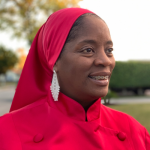
“I think that Black women and Black families in particular really suffer in silence,” said Black Women Revolt Resource Center’s executive director Paméla Tate, an author and domestic abuse awareness advocate.
“And that’s not to say that other Brown families don’t. Latino families do, as well as Asian families. But, particularly, African Americans here in the U.S. have suffered with domestic abuse and intimate partner violence, since we were brought to this continent,” Tate continued.
Morris was inspired to step in the gap after she found out that there were no organizations providing treatment, care, counseling, and other social and health services to Black women dealing with domestic violence. Jones, her younger sister, also felt moved to create a program that would help Black mothers and children dealing with trauma.
So, the sisters teamed up to create what is now known as The Black Women Revolt Resource Center in San Francisco.
According to Morris and Jones, the organization serves its clients and community in several ways, including increasing awareness about the impact of intergenerational violence in the Black community; removing barriers for Black women who have experienced domestic abuse to receive access to culturally sensitive resources; and providing a designated space with resources specifically for Black women in San Francisco to help educate and heal as they recover from abuse.
Tate has trained over 100 community members and domestic abuse agency staff, preparing them to work as advocates throughout California, according to the agency.
The San Francisco Family Violence Council’s 2020 report cites clear racial disparities across all three forms of family violence. It disproportionately impacts African American and Latinx populations: 4 out of 10 substantiated child abuse cases involved Black children and 1 in 3 involved Latino children; 28 % of dependent adult abuse victims were Black; and more than half of domestic violence victims were Black or Latino.
“The lack of choices around marrying a partner, mating with a partner, and how they were treated on a daily basis, in terms of work expectations, sexual ideation, has all been put upon Black women, and I think, because we had to take it, when we got here, and centuries later, we’re still kind of taking it,” said Tate.
Part of the problem, observes Tate, is that there is a culture of secrecy in the Black community. Many Black women live in households where problems aren’t discussed outside of the family unit. There are also unspoken rules that encourage silence around mental health issues and physical abuse.
“We just don’t talk about it. So, we function in these isolated silos, and then once someone shares that something has happened to them, people are not necessarily always supportive.” Said Tate.
“One, because they don’t know that there are resources available to assist; two, because again, you’ve broken the code of silence; three, because this is kind of how we’ve been conditioned to live and respond. And four, I think, would just be because it’s not normal to talk about,” Tate went on, adding that the Black Women’s Revolt Resource Center is not yet fully operational and still awaiting funding to expand its work.
Tate says one class at the center trains batterer intervention staff, arming them with information about anger management techniques they can share with clients.
Recently, the center launched another class exclusively for advocates, who will answer crisis lines and work directly with domestic abuse survivors. Soon, it plans to start training outreach staff, who will be working on launching a youth advisory council. The aim is to get some teens to jump start conversations with teenagers, who represent a rising population of people encountering intimate partner violence and domestic violence, according to Tate.
While there is much work to be done to lower the startling number of DV cases in the Bay Area, the founders and director of the resource center say they are making a difference in the lives of survivors of domestic abuse.
To solve domestic violence, talk about it, said Tate.
“A lot of people don’t discuss domestic violence. A lot of people don’t even know the actual definition of domestic violence, meaning it’s more than just hitting. I think conversations and a lack of judgment would be a great start,” she said.




Activism
Oakland Post: Week of September 23 – 29, 2026
The printed Weekly Edition of the Oakland Post: Week of September 23 – 29, 2026


To enlarge your view of this issue, use the slider, magnifying glass icon or full page icon in the lower right corner of the browser window.

Activism
Oakland Post: Week of September 16 – 22, 2026
The printed Weekly Edition of the Oakland Post: Week of September 16 – 22, 2026

To enlarge your view of this issue, use the slider, magnifying glass icon or full page icon in the lower right corner of the browser window.
Activism
Oakland Post: Week of September 9 – 15, 2026
The printed Weekly Edition of the Oakland Post: Week of September 9 – 15, 2026

To enlarge your view of this issue, use the slider, magnifying glass icon or full page icon in the lower right corner of the browser window.



Asm. Corey Jackson Announces Launch of 24-Hour Childcare in His District

IN MEMORIAM: The Rev. Leon “Sonny” Clark, Longtime Orange County Pastor and Community Leader, Dies at 72

Poll: Becerra Widens His Lead Over Hilton; Californians Split on Wealth Tax

From Historic Memories to New Possibilities: Oakland Celebrates Coliseum 60

County Office of Education Says OUSD Finances Are Getting Healthier, Materially Stronger

LIVE FREE Sunday Dinner Brings Faith, Fellowship and Civic Conversation to Oakland

Remembering Chauncey Bailey as Student Journalists Face Threats to Truth-Telling

BLACspace Cooperative Invites Bay Area to Experience Oakland’s Black Cultural Ecosystem Through a BLAC Map Tour + Party

In Wake of Death on Doorstep, Williams Chapel Baptist Church Calls for Better Care, Funding for Unhoused

Oakland Centenarian Nuna McKee Honored!

Caribbean Nations Produce Action Plan Calling for UK Reparations Over Slavery

Oakland Post: Week of September 23 – 29, 2026

Doulas Are Helping Black California Moms Navigate Pregnancy–Even as High Mortality Rates Persist

Newsom Signs Addictive Social Media Law to Protect Kids

On Your November Ballot: Prop 38 Would Allocate $8.4 Billion to Immunology and Immunotherapy Funding

Standoff for Justice: Our Homes Are Worth Fighting For

Oakland Post: Week of August 26 – September 1, 2026

Frontier Airlines’ Return to Oakland Airport Brings Flights, Jobs and Opportunity

Gubernatorial Candidate Steve Hilton Blasts California New Tire Rules; Newsom Hits Back

Chef Sharon Lee Blends Culinary Excellence, Education and Empowerment

Jackie Wright Champions Bay Area Stories, Filmmakers and Cultural Institutions

Big City Mayors Ask for “Yes” Vote on Housing Bond Measure; Conservatives Say “No”

Oakland Coliseum Project Opens Door for Small Businesses to Build Bigger

Gov. Newsom’s Latest Appointees Include Sacramento Advocate for Formerly Incarcerated Students; State’s New Tech Chief

Misnamed ‘Parent’ PAC Seeks to Influence Oakland School Board Elections

Longtime BWOPA Member Brendalyn Goodall Appointed to California Workforce Development Board

Gov. Newsom Signs Law Shielding Immigration Aid Workers From Doxing Threats

Secretary of State Shirley N. Weber Urges Californians to Vote Early as Voter ID Battle Intensifies

Oakland Post: Week of September 2 – 8, 2026

IN MEMORIAM: Dolly Parton Dead at 80 — How She Built a Legacy of Love and Earned Her Place in Black Culture

The Conversation With Al McFarlane 6/23/26

Media Monday 6/22/26

LIVE! ASK ALMA! — TUES. 6.23.26 7PM EST

Car Buying Secrets: 4 Hidden Checks Before You Sign!

Is This 550 HP Charger Worth YOUR Money? AutoNetwork Review

Celebrating Juneteenth – Frederick Douglass on education and resistance

LIVE! — ASK ALMA! — TUES. 6.19.26 7PM EST

Hyundai Ioniq 5 Parking, Safety, and 360 View #shorts

2025 Ioniq 5 New Wiper & Powerful Performance! #shorts

Electric SUV Range: Is 259 Miles Enough? #shorts

EV Charging: How Fast Can You Charge an Electric Vehicle? #shorts

Biometric Cooling… Messaging Seats…Come on! 2025 Infiniti QX80 Autograph 4WD

Charged Up: Witness the Magic of a Fully Electric Car! #shorts

Range Rover Sport PHEV Included…: See What’s Inside This Luxury SUV! #shorts

Invisible Hood View: Perfect Parking with X-Ray Vision! #shorts
-
 Community3 weeks ago
Misnamed ‘Parent’ PAC Seeks to Influence Oakland School Board Elections
-
 Activism4 weeks ago
Oakland Post: Week of September 2 – 8, 2026
-

 Community3 weeks ago
Richmond Tiny House Village Farm & Garden Set to Open Gates on Sept. 26
-

 Activism3 weeks ago
Oakland Post: Week of September 9 – 15, 2026
-

 Black History3 weeks ago
Latest Massacre in Haiti Reveals Cruelty U.S. Deportations
-

 Black History3 weeks ago
OPINION: Nolan Wells’ Death One of Several Signifying Racial Terror Lives on in U.S. South
-

 Community3 weeks ago
Democratic Clubs Interview Candidates for Oakland School Board
-

 Business2 weeks ago
Mayor Lee Announces $1 Million Kaiser Permanente Grant for Pilot Program to Address Homelessness, Clean Up Public Spaces throughout Oakland
