
Politics
Black State Legislators Hacked by Scott’s Veto Pen


by Derek Joy
Special to the NNPA from The Miami Times
Black State Legislators were among the hardest hit by Republican Gov. Rick Scott’s $461 million cuts from the state budget, which pased at $78 billion.
The 19-day, Special Legislative Session – June 1 to June 19 – ended with bad news for Democrats in general, South Florida and Blacks in particular. This session was called after the Legislature failed to pass a budget during its 60-day regular session.
Black Democrats said their legislation suffered veto after veto, mostly because they supported Medicaid expansion.
Democratic State Rep. Cynthia Stafford, said Scott’s draconian budget cuts was out of control.
“It’s a sad state of affairs,” said Stafford, who represents district 109. “I was very disappointed in the vetoes. My gosh, I would’ve thought he would have shown some balance, especially towards Black communities. That’s where the most need is. I had items in the budget vetoed because I supported Medicaid expansion.”
Scott’s surgeon-like cuts gave rise to questions of whether the vetoes amount to racial and economic discrimination.
“He vetoed what senators put in the budget because of Medicaid expansion. Republican and Democrats in the Senate saw their projects vetoed,” said Sen. Oscar Braynon, who represents District 36. “The vetoes hit South Florida the harder than anywhere else in the state.”
Braynon said he’s not sure the vetoes were “necessarily discrimination,” because South Florida Republican Senators Rene Garcia and Miguel De la Portilla and Rep. Anitere Flores had projects vetoed.
Braynon managed to get $100,000 funding for a water and sewer project in Biscayne Park, but similar projects in the other cities within his District were cut from the budget, as was the $1.5 million for the Opa-locka Cultural Arts Center.
Rep. Sharon Pritchett, a Democrat who represents District 102, was moderate in a succinct assessment.
“We got some things for the Broward portion of the District,” said Pritchett, without being specific. “Republicans got everything they wanted.”
Sen. Dwight Bullard (Dem., District 39) saw his District suffer wholesale cuts from the budget. Among the cut budget items submitted by Bullard were $100,000 for a kitchen incubator to help jumpstart catering businesses; $100,000 for a job incubator; $100,000 for a workforce program; a program for the elderly and several other programs.
Bullard, like Braynon, Pritchett, Stafford and other Black state legislators, suffered cuts to projects designed to help the poor, minority, disadvantaged and minorities.
However, Bullard managed to win approval of $800,000 funding for the Florida Children’s Initiative in a three city — Jacksonville, Orlando and Miami. There was also some funding for Jackson Memorial Hospital and Broward hospitals in Braynon’s District 36 under the Low-Income Pool (LIP) and property tax relief that allows homeowners to argue their tax bills.
“Medicaid expansion was the big thing. When the Governor said he won’t support Medicaid expansion, that was a slap in the face of Blacks and poor. It definitely impacts Blacks and poor,” said Bullard.
Republicans argued they decided against Medicaid because of the lawsuit filed by Scott and others who sought to repeal the Affordable Care Act. But that argument wasn’t waged by all Republicans, as their Senate majority passed a Medicaid Expansion Bill that was killed in the State House. Moreover, the U.S. Supreme Court ruled that the ACA was constitutional.
“I am thrilled that the U. S. Supreme Court made the right decision in the King v. Burwell case,” wrote Congresswoman Frederica Wilson in a prepared statement. “There are 1,324,516 individuals and families that could have lost their subsidies, worth $389 million and faced a 359 percent increase in their cost of premiums.
“My District has the third highest number of people in the nation who benefit from the subsidy. It is a relief that those constituents, mostly immigrants, can now rest assured their health care needs can be met.”
That Supreme Court ruling puts Scott and the Republican majority in the State Legislature on the hook for at least $400,000 for funding when they passed on the $51 billion in federal funding had Medicaid expansion been implemented.









Community
Mayor Barbara Lee Holds Special State of the City Address in Deep East Oakland
In partnership with Rise East and the 40×40 Council, Oakland Mayor Barbara Lee held a special 2026 State of the City East Oakland community conversation on Oct. 14. The purpose of bringing a State of the City address directly to the community was to celebrate East Oakland, highli

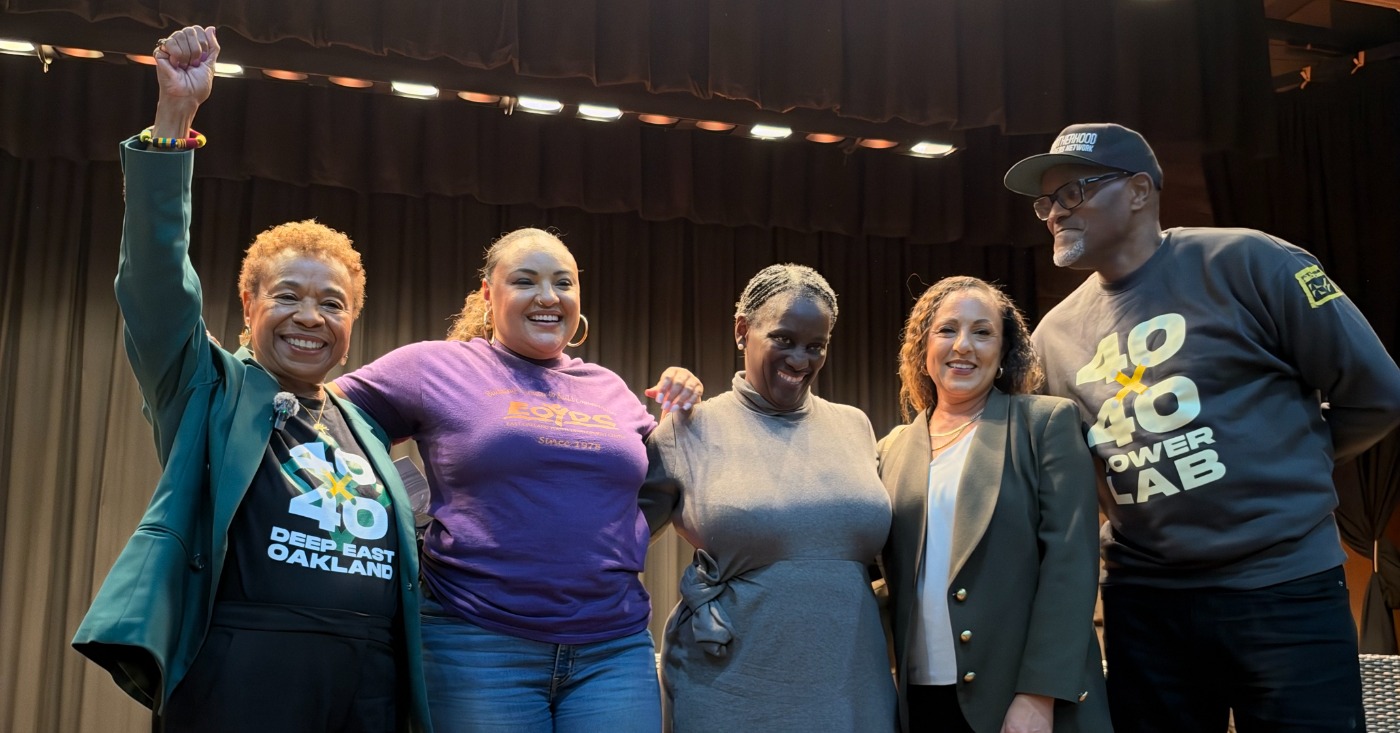
In partnership with Rise East and the 40×40 Council, Oakland Mayor Barbara Lee held a special 2026 State of the City East Oakland community conversation on Oct. 14.
The purpose of bringing a State of the City address directly to the community was to celebrate East Oakland, highlight the work underway, and look ahead to what neighbors, local businesses, youth, funders, community organizations, and partners can accomplish together.
Held at the Roots Community Health/Parker Elementary School Campus at 7929 Ney Ave., the event was emceed by special guest Mark Curry, Oakland native, comedian, and actor.
Lee shared how Rise East and the 40×40 Council have brought together the knowledge, relationships, and resources of people and organizations committed to East Oakland.

Residents bring lived experience, community organizations bring trusted relationships and philanthropy, and businesses bring resources and opportunity, she said, then turned to the government’s role: public investment, services and policy.
But, Lee intoned, City Hall has a responsibility to help connect those efforts.
“I am committed to listening to residents, working across departments and sectors, and helping open doors to opportunity. We must connect neighborhood priorities to the decisions we make about housing, economic development, safety, health and our young people.
City Hall “must be accountable for the results,” Lee said. “The measure of success is what families experience: greater stability, more opportunity and a stronger sense that they belong and have a future here.
“Tonight is an opportunity to listen to the leaders doing this work, learn what is making a difference and identify where we can do more together,” the mayor said.
Lee went on to moderate a ‘fireside chat’ on the theme: Building Oakland’s Future Together — From Neighborhood Investment to Community Empowerment with:
- Selena Wilson, CEO, East Oakland Youth Development Center
- Greg Hodge, CEO, Brotherhood of Elders
- Carolyn “CJ” Johnson, CEO, Black Cultural Zone
- Dr. Noha Aboelata, CEO, Roots Health Center
Mayor Barbara Lee’s media relations department provided this report.

Featured
Opponents Smear Effective African American Transit Director as Election Nears
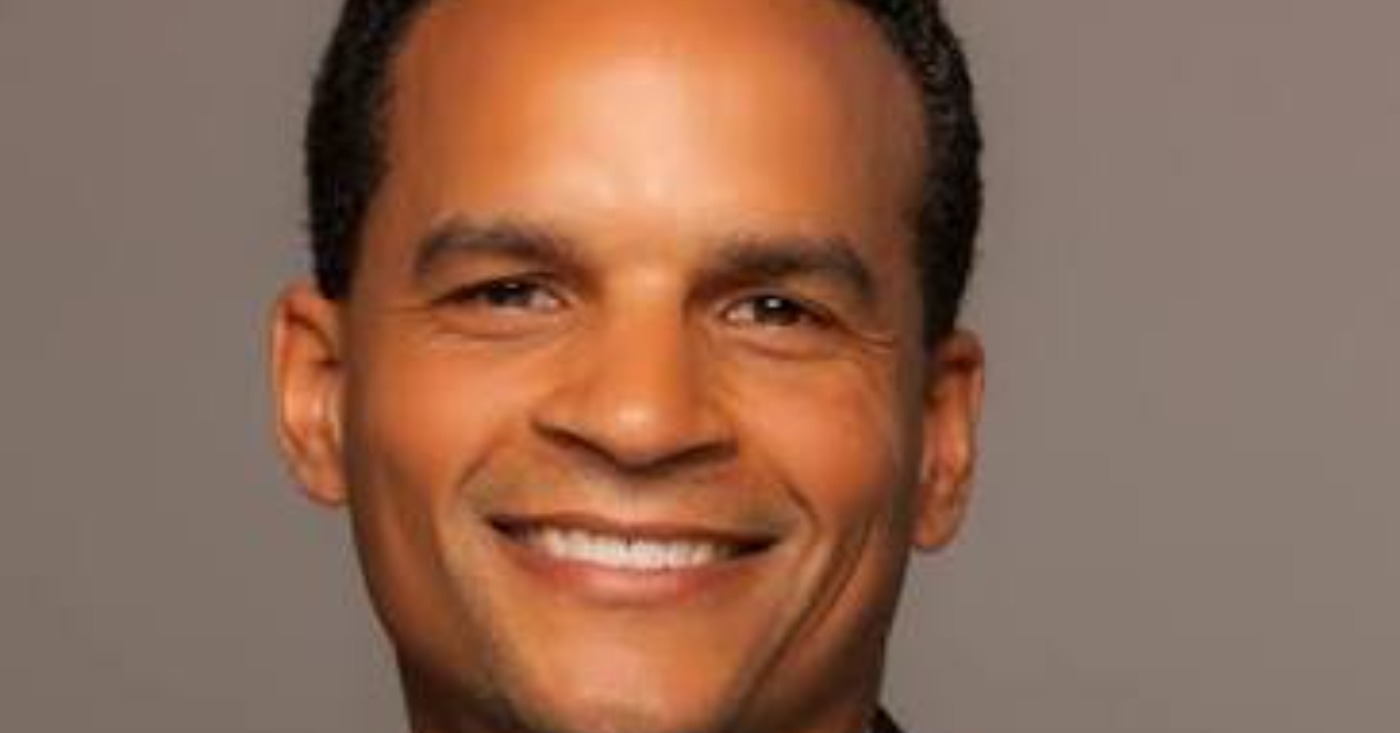
Incumbent Joel Young is defending his seat on the AC Transit Board against allegations of harassment stemming from a public interaction in late 2024. Supporters of the director cite his record of securing $600 million for bus services and leading civil rights initiatives as evidence of his effectiveness. They argue the accusations regarding a group photo interaction have been politically weaponized by opponents to influence the Ward 3 election. The controversy has sparked a debate over candidate character versus transit performance. Learn more about the investigation and the upcoming vote.
I am an academic and a community activist. I take women’s issues, including workplace harassment and discrimination, seriously. I have been following the AC Transit Ward 3 election and have become concerned about what I believe is a serious injustice.
Joel Young is an effective AC Transit director. He has secured more than $600 million for local bus service and fare affordability. He led the Freedom Bus Project, integrating civil rights history, art and transit. He was presiding over the board of AC transit when it won the 2023 Outstanding Public System Award, and he raised $1 million for the hydrogen fuel cell bus program. These are just a few of his accomplishments.
I reviewed the allegations of unwanted physical contact and harassment made by AC Transit Director Sarah Syed against Director Joel Young, I believe the events of Sept. 24, 2025, have been characterized in a way that does not accurately reflect what occurred.
That interaction took place during a group photo after celebrating the life of a longtime Board member who passed away. From the video I reviewed, it appears that individuals were consoling one another and exchanging hugs in a public setting surrounded by numerous witnesses.
Young’s interaction with Syed appears consistent with those expressions of sympathy and it appears that Young was attempting to extend a gesture of goodwill toward Syed.
I am concerned by how this incident has been recently used as a political tool to influence the outcome of the AC Transit Ward 3 election and support Young’s opponent.
Syed and her supporters launched a targeted political campaign, first through the Alameda County Democratic Party and subsequently by organizing a letter from a group of majority-white elected officials who have endorsed Young’s opponent against Young, who is Africa American.
Furthermore, this manufactured controversy distracts voters from the critical issues facing AC Transit. The public deserves a substantive debate on service reliability, ridership recovery, passenger and operator safety, financial stability, regional equity, and future transportation infrastructure. The electorate should be evaluating which candidate possesses the judgment, experience, and vision to lead AC Transit forward – not reacting to a distorted personal interaction.
Regardless of one’s political views or preferred candidate, allegations of harassment should never be weaponized for electoral purposes. We all know that exaggerated or unsupported accusations can undermine public understanding of, and trust in, efforts to address genuine sexual harassment and violence.
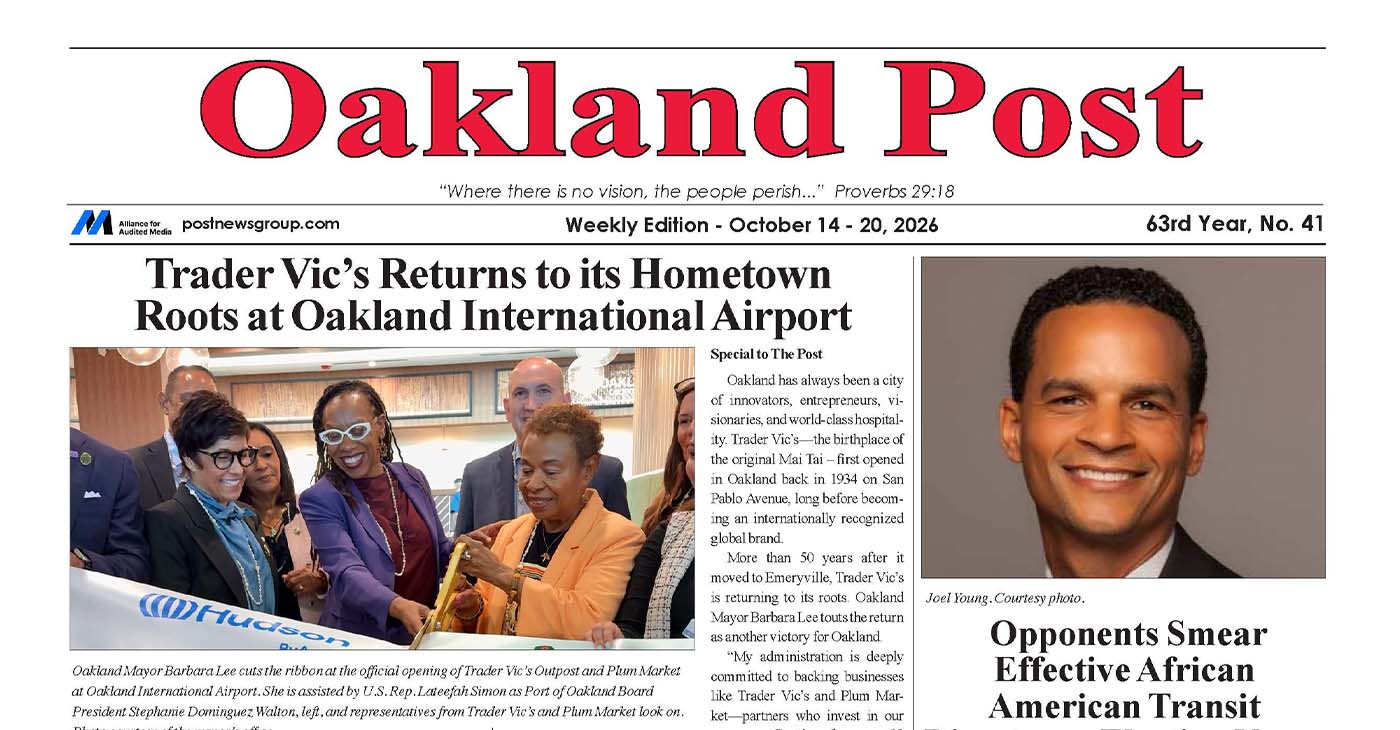
To enlarge your view of this issue, use the slider, magnifying glass icon or full page icon in the lower right corner of the browser window.


Mayor Barbara Lee Holds Special State of the City Address in Deep East Oakland

Practitioners of African Traditional Spirituality Offer Ancestral Reverence Ritual Oct. 31

It’s Time to Lose Weight Before the Holidays

Trader Vic’s Returns to Its Oakland Roots

Oakland Coal Terminal Backed by Trump Would Be Bigger, Dirtier Than Promised, Says Report

Opponents Smear Effective African American Transit Director as Election Nears

Oakland Post: Week of October 14 – 20, 2026

OP-ED: The Black Church Writes AI’s Next Chapter

OP-ED: The Black Church Writes AI’s Next Chapter

WCCUSD Joins Statewide Organic School Food Purchasing Cooperative

Democrats, Community Groups Back Measure EE to Change How Oakland Is Governed

Four Tips to Help You Plan a Holiday “Staycation”

Veterans Housing Project Proposed for South Richmond
PRESS ROOM: Transformative Justice Coalition 2026 Voting Rights Champion Awards Reception ‘Yesterday Is Today: The Battle For Voting Rights

Mayor Lee Delivers 2026 State of the City Address: ‘Oakland Continues to Be on the Move’

Misnamed ‘Parent’ PAC Seeks to Influence Oakland School Board Elections

Oakland Post: Week of September 2 – 8, 2026

Oakland Post: Week of September 9 – 15, 2026

Poll: Becerra Widens His Lead Over Hilton; Californians Split on Wealth Tax

County Office of Education Says OUSD Finances Are Getting Healthier, Materially Stronger

Richmond Tiny House Village Farm & Garden Set to Open Gates on Sept. 26

Latest Massacre in Haiti Reveals Cruelty U.S. Deportations

OPINION: Nolan Wells’ Death One of Several Signifying Racial Terror Lives on in U.S. South

Mayor Lee Announces $1 Million Kaiser Permanente Grant for Pilot Program to Address Homelessness, Clean Up Public Spaces throughout Oakland

BLACspace Cooperative Invites Bay Area to Experience Oakland’s Black Cultural Ecosystem Through a BLAC Map Tour + Party

Zakiya Jendayi Arrested, Locked Out of Home by Sheriff’s Deputies

Democratic Clubs Interview Candidates for Oakland School Board

Oakland People’s Arms Embargo Coalition Demands End to Military Shipments Thru Oakland

Oakland Post: Week of September 16 – 22, 2026

Two Looming Threats Every Alameda County Elder Should Know About

The Conversation With Al McFarlane 6/23/26

Media Monday 6/22/26

LIVE! ASK ALMA! — TUES. 6.23.26 7PM EST

Car Buying Secrets: 4 Hidden Checks Before You Sign!

Is This 550 HP Charger Worth YOUR Money? AutoNetwork Review

Celebrating Juneteenth – Frederick Douglass on education and resistance

LIVE! — ASK ALMA! — TUES. 6.19.26 7PM EST

Hyundai Ioniq 5 Parking, Safety, and 360 View #shorts

2025 Ioniq 5 New Wiper & Powerful Performance! #shorts

Electric SUV Range: Is 259 Miles Enough? #shorts

EV Charging: How Fast Can You Charge an Electric Vehicle? #shorts

Biometric Cooling… Messaging Seats…Come on! 2025 Infiniti QX80 Autograph 4WD

Charged Up: Witness the Magic of a Fully Electric Car! #shorts

Range Rover Sport PHEV Included…: See What’s Inside This Luxury SUV! #shorts

Invisible Hood View: Perfect Parking with X-Ray Vision! #shorts
-
 Economy3 weeks ago
Poll: Becerra Widens His Lead Over Hilton; Californians Split on Wealth Tax
-
 Business3 weeks ago
County Office of Education Says OUSD Finances Are Getting Healthier, Materially Stronger
-
 Business4 weeks ago
Mayor Lee Announces $1 Million Kaiser Permanente Grant for Pilot Program to Address Homelessness, Clean Up Public Spaces throughout Oakland
-
 Art3 weeks ago
BLACspace Cooperative Invites Bay Area to Experience Oakland’s Black Cultural Ecosystem Through a BLAC Map Tour + Party
-
 Lead Story2 weeks ago
Zakiya Jendayi Arrested, Locked Out of Home by Sheriff’s Deputies
-
 Uncategorized4 weeks ago
Oakland People’s Arms Embargo Coalition Demands End to Military Shipments Thru Oakland
-
 Activism4 weeks ago
Oakland Post: Week of September 16 – 22, 2026
-
 Community4 weeks ago
Two Looming Threats Every Alameda County Elder Should Know About
