
#NNPA BlackPress
Black Men Die of Prostate Cancer at Double the Rate of All Other Races
NNPA NEWSWIRE — “I think that if proton therapy were an option, I think he would still be here,” said Mary Lambert, the widow of Benjamin Lambert IV, in an interview. “We appealed it. We had doctors write letters, we saw different specialists, and they flat out refused. We went to the insurance after it was passed into state law in the state of Virginia and Terry McAuliffe who was governor at the time and he signed an emergency deal to make it law immediately, stating that proton therapy could be held at a higher standard than photon therapy. And they are still refusing to adhere to the letter of the law.”
The post Black Men Die of Prostate Cancer at Double the Rate of All Other Races first appeared on BlackPressUSA.



Virginia Insurer Under Fire for Refusing Coverage of Treatment Despite Law
By Hazel Trice Edney, TriceEdneyWire.com
Benjamin J. Lambert IV, a member of one of the most prominent Black families in Virginia’s public service history, lost his battle to prostate cancer on Monday, June 3, 2019. He was only 52. His father, Virginia Senator Benjamin J. Lambert III, his grandfather, and four uncles also all died of prostate cancer, according to Lambert family members.
The Lamberts are just seven examples of the thousands of Black men per year – from every socio-economic walk of life and every part of the U. S. – who are disparately diagnosed with prostate cancer. Not only is the rate of prostate cancer among Black men higher than Whites, but the chances of Black men dying from it are more than double that of White men and men of other races, according to the National Cancer Institute.
But doctors and medical administrators across the nation believe these grossly disparate numbers can be minimized or at least equalized by one form of cancer therapy that top-level cancer doctors and researchers say could pivot the death disparities. The therapy, called Proton Beam, specializes in zapping cancer cells with laser focused radiation without damaging surrounding non-cancerous tissues. Some of the top medical universities across the nation have proton beam centers; including Harvard, MD Anderson, the Mayo Clinic, and Johns Hopkins.
This is the reason that a list of insurance agencies are currently under fire by cancer advocates across the nation for refusing to cover the cost of proton beam therapy. For example, even after the Virginia General Assembly passed a bi-partisan bill, that encourages insurers such as Anthem, Aetna, Cigna and Humana, to stop labeling the FDA-approved treatment as experimental, Anthem is still under fire for what is deemed as unfair decisions that, in some instances, are believed to have led to deaths.
In doing so, the insurers had been covering the other forms of treatment by radiation mainly because of the lower costs, reported Jeremy Lazarus for the Richmond Free Press as the bill passed through the General Assembly during its spring legislative session of 2017.
The Free Press article quoted Anthem spokesman Scott Golden as saying Anthem stopped covering the therapy after finding “no clear scientific evidence that proton beam treatment for localized prostate cancer is equal to other forms of conventional photon radiation therapy.”
But that was before Virginia’s General Assembly passed the law prohibiting insurers from holding proton therapy to a higher standard in comparison to other therapies. Although the law does not mandate coverage for any specific case, according to Virginia’s Legislative Information System, the law “Prohibits health insurance policies and plans from holding proton radiation therapy to a higher standard of clinical evidence for benefit coverage decisions than is applied for other types of radiation therapy treatment. The measure applies to policies and plans that provide coverage for cancer therapy.”
The Virginia Legislature’s move to make law concerning the issue was mainly because the refusal to cover Proton therapy has baffled cancer experts and advocates alike.
“Proton therapy is a medically necessary, FDA-cleared treatment for cancer patients,” says a report by the D.C.-based Alliance for Proton Therapy Access (APTA). “For many cancer patients, proton therapy is prescribed by their physician and is the optimal and most effective treatment option. Studies have shown that proton therapy can help increase survival, reduce the risk of secondary cancers, result in fewer acute and long-term conditions as well as debilitating short-term side effects and improve quality of life for individuals undergoing cancer treatment,” states the APTA report titled, “Cancer Care Denied: The Broken State of Patient Access to Proton Therapy.”
Daniel E. Smith, executive director of the APTA, says the coverage denials are often shocking and have led to death.
“It’s inconceivable that an insurer would play games with a disease like cancer, where a diagnosis can be a matter of life or death. Cancer patients wait days, weeks, or even months for an opaque appeal process to play out while their cancer and anxiety grow – they must either start treatment without their insurer’s approval and no guarantee of payment, continue waiting, or opt for a cancer treatment that is less effective or poses higher health risks. We can no longer tolerate a process that endangers the lives of cancer patients who don’t have time on their side,” Smith said in a statement to the Trice Edney News Wire. “Our report shows that private insurers deny proton therapy six out of 10 times for patients aged 18-64. While improper denials are reversed a third of the time, appeals take an average of five weeks; and that’s time cancer patients do not have when fighting an aggressive disease.”
The Lambert family pleaded for what they believed could be the life-saving treatments for Benjamin IV.
“I am writing this letter to you, our elected officials in the Commonwealth, in order to solicit your help to save the life of my son,” wrote his mother, Carolyn Lambert, to Republican Sen. Frank W. Wagner and Democratic Sen. Richard Saslaw on Feb. 10, 2017, nearly two years before his death. Our medical team in Arizona has recommended that Benjamin’s best chance at life is with proton therapy. Fortunately for us, there is a proton facility just an hour away from our state capitol at Hampton University.”
Even after the bill passed, Anthem continued to deny the coverage, ultimately forcing the Lambert family to shoulder the cost of the therapy. But by then, it was too late. Benjamin IV’s widow, a nurse and mother of his two children, believes he would have lived had Anthem initially covered the treatment.
Meanwhile, the Free Press article reported that “advocates note that the same insurers that refuse to cover treatment in Virginia are willing to provide coverage for patients that travel to proton therapy centers in other states.”
This apparent discriminate behavior has drawn the ire of Bill Thomas, associate vice president for governmental relations at Hampton University, which has an 11-year-old Proton Beam Center that costed $225 million. Thomas has led the fight in Virginia against the apparently racially discriminate coverage.
“Proton beam is just a therapy. But it’s the best therapy in the world because all the top cancer centers in America have proton beam. There’s nobody arguing with Harvard about this. There’s nobody arguing with Johns Hopkins about this. There’s nobody arguing with MP Anderson about this. They’re arguing with a Black school,” Thomas said in an interview. “The medical efficacy has been proven. The General Assembly took us through a four-year drama of even approving this law, so, all the issues have been discussed, adjudicated, and denied and that’s why they came up with the law. All we’re interested in is for the attorney general for the Commonwealth of Virginia to make Anthem obey Virginia law. It has nothing to do with anything else…Anthem – against Virginia law – did not pay for his insurance coverage,” said Thomas, referring to Lambert’s case.
Thomas continued, “They originally were turning people down point blank, saying that proton therapy was investigational and experimental. That’s a lie. It’s FDA approved. Now let me put that in context. That’s how we got the law passed because the insurance companies were lying.”
Thomas’ view is that with Black men dying from prostate cancer at twice the rate of Whites and others, insurers who go out of their way to deny the prostate treatment at Hampton are considered suspect. About 30 percent of the patients there are Black men, Thomas says.
Besides that, Petersburgh, Va., which is 79 percent Black and less than a hundred miles from Hampton, has the highest death rate of Black men from prostate cancer in the U. S., according to an article reported earlier this year by the Massey Cancer Center at Virginia Commonwealth University. The statistic was a quote from Luisel Ricks-Santi, director of the Hampton University Cancer Research Center.
Whether or not insurers are intentionally discriminating in their decisions about what or who they cover, their conduct is being monitored and documented by the U. S. government, particularly the National Institute of Health (NIH), which has designated Hampton University as a center of excellence for biomedical research.
“Not surprisingly, racial biases continue to impact such decisions, with reports showing that historically, black men undergo less aggressive treatment and more watchful waiting (WW), even after adjusting for socioeconomic status,” states an NIH study. “Within the context of high-risk disease, numerous studies have shown a clear racial variation in the primary treatment of prostate cancer, including more use of WW and lower use of radical prostatectomy (RP) among minorities compared to their white counterparts.”
For many of the families and loved ones of prostate cancer patients left behind, there is no need for proof.
“I think that if proton therapy were an option, I think he would still be here,” said Mary Lambert, the widow of Benjamin Lambert IV, in an interview. “We appealed it. We had doctors write letters, we saw different specialists, and they flat out refused. We went to the insurance after it was passed into state law in the state of Virginia and Terry McAuliffe who was governor at the time and he signed an emergency deal to make it law immediately, stating that proton therapy could be held at a higher standard than photon therapy. And they are still refusing to adhere to the letter of the law.”
Their children, a son and daughter who were ages 9 and 12 respectively when Lambert died, are now in middle and high school.
“I think he would still be here living a full life and contributing to his community and society as a whole,” Mary Lambert said. “At this point, I am just so beat up. I think this is ultimately their goal when they do this stuff. You know, they want you to just accept what they say and go away.”
Smith, of the Alliance for Proton Therapy Access, agrees: “We have worked with far too many cancer survivors who waited days, weeks, or even months, for a broken review and appeals process to play out while their cancer and anxiety grew. It’s time to hold insurers accountable for providing fair, timely, and transparent access to cancer treatment.”
The post Black Men Die of Prostate Cancer at Double the Rate of All Other Races first appeared on BlackPressUSA.














#NNPA BlackPress
Smooth Ride! Car Suspension & Comfort Tested #shorts
Smooth suspension meets surprisingly spacious legroom. Experience true comfort on any road!


 Watch the full video: https://youtu.be/l9Z571za5Gc
#NNPA BlackPress
61 years since Selma, Houston leaders say the bridge remains to be crossed
61 years after Selma, Houston leaders say the fight for equality continues. The issues that sparked the marches still impact Black Americans today.
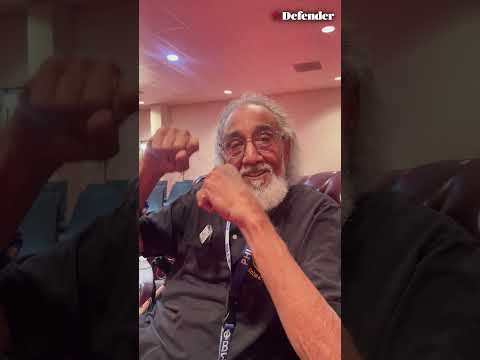
It has been 61 years since the Selma marches. But political leaders in Houston say that the issues protesters were marching for still plague the lives of Black Americans.
Visit Our Website
Read more stories by our team
https://defendernetwork.com/category/news/opinion/
Sign-up for the Top 5 newsletter
Donate/ Support Our Work

#NNPA BlackPress
Here is what you need to know about finding unique white elephant gift ideas that everyone wants to steal
The best white elephant gift ideas are funny enough to get a reaction but useful enough that people actually want to steal them. Look for gifts with a surprise factor, broad appeal, an inside joke, and just enough personality to spark some friendly competition. The wrapping paper comes off, the room goes quiet for half […]

The best white elephant gift ideas are funny enough to get a reaction but useful enough that people actually want to steal them. Look for gifts with a surprise factor, broad appeal, an inside joke, and just enough personality to spark some friendly competition.
The wrapping paper comes off, the room goes quiet for half a second, and suddenly everyone wants the same gift. That is the sweet spot. A great white elephant pick should make people laugh, lean in, and start plotting their next steal before the turn is even over.
Should a White Elephant Gift Be Funny or Useful?
A white elephant gift can be funny or useful, but the strongest choices usually give people a reason to laugh and a reason to keep the item. A practical gift with an odd design, unexpected feature, or playful theme can get a reaction without becoming something the recipient immediately wants to give away.
The right balance depends on the group. Close friends and family members may enjoy a ridiculous gag gift because they already understand one another’s sense of humor.
A workplace exchange, neighborhood party, or mixed-age gathering usually calls for something with broader appeal. In those settings, humor works better when it is built into an item people could still use afterward.
It also helps to think about how quickly the gift will make sense once it is opened. A strangely shaped kitchen tool, oversized mug, quirky desk accessory, or unexpectedly fancy everyday item can create an immediate reaction. Guests understand the joke right away, while the item still has enough practical value to attract a steal.
Pure gag gifts can be harder to pull off. Something that exists only for the punchline may get a big laugh during the reveal and then sit untouched for the rest of the game. If the goal is to bring one of the gifts everyone keeps fighting over, usefulness gives the joke staying power.
Memorable Present Ideas: Creating Inside Joke Gifts
Inside joke gifts can make a white elephant exchange feel much more personal, especially when most of the group shares the same stories. The trick is choosing a reference that people will recognize quickly instead of building the entire joke around something only two guests understand.
You can turn a memorable vacation mishap, office catchphrase, family story, or long-running group joke into the theme of the gift. A personalized comic book can work especially well when it turns familiar people or a ridiculous shared moment into part of the story.
Think carefully about who the joke involves before ordering anything permanent. The gift should make the person feel included in the fun, not singled out for the wrong reason.
Can You Bring Something You Already Own?
Holiday gift exchanges can be a good place to re-gift something you never used, especially if it is unopened and clean.
The following can all work if they still look presentable:
- A duplicate kitchen gadget
- An untouched game
- A decorative item
- A sealed gift set
- An unopened candle
- A new travel accessory
The goal is to give the item a second chance, not use the exchange as an excuse to clear out damaged or unwanted clutter.
Take a close look at the packaging before wrapping it. Faded boxes, missing pieces, visible wear, or anything that looks obviously used can make the gift feel careless.
Wrapping Budget-Friendly Gifts
Wrapping can make gifts more entertaining before anyone even knows what’s inside.
Misdirection works especially well for fun party games. Put a small gift inside a much larger box. Use packaging from an unrelated household item.
Add harmless weight so guests cannot guess what they are holding. The reveal becomes part of the joke without changing the gift itself.
You can also lean into the theme of the exchange. Bright paper, oversized bows, reusable bags, or deliberately over-the-top wrapping can make an ordinary item feel more memorable. If the gift itself is already funny, simple wrapping may work better so the surprise stays hidden until the last second.
Frequently Asked Questions
Is Picking Last an Advantage in White Elephant?
Picking last can be an advantage because you get to see almost every gift before making your move. Instead of choosing blindly from the remaining wrapped presents, you can steal something that has already caught your attention if the rules still allow it.
That advantage depends on the house rules. Some games limit how many times a gift can be stolen.
Others lock an item once it reaches a certain number of steals. If the most popular gifts are already unavailable, the final player may have fewer strong options than expected.
The first player can also get another turn at the end in some versions of the game. That rule can balance things out, since the person who started with the least information may get one final chance to steal.
How Do You Plan White Elephant for a Large Group?
For a large white elephant exchange, set a firm spending limit and establish the stealing rules in advance.
Create a clear turn order before the game begins. Drawing numbers as guests arrive can save time once everyone is ready to start.
Keep the number of steals per gift limited so the game does not drag on. It also helps to have one person track which creative holiday presents have been stolen and when they are locked, especially if dozens of people are participating.
Can You Play White Elephant Virtually?
A virtual white elephant exchange can work over a video call, with one person keeping track of the turn order and each steal. Guests can either mail physical gifts ahead of time or use digital gifts that can be delivered once the game ends.
Set the spending limit and stealing rules before everyone joins. It also helps to decide how gifts will be revealed and who is responsible for sending each one afterward so the exchange does not become confusing.
Choose a Perfect White Elephant Gift in a Snap
Look for a white elephant gift that fits some of these criteria, and everyone will be trying to grab it at your next celebration.
Do you need more gift-giving tips and tricks? Make sure you read some of our other posts.



Mayor Barbara Lee Holds Special State of the City Address in Deep East Oakland

Practitioners of African Traditional Spirituality Offer Ancestral Reverence Ritual Oct. 31

It’s Time to Lose Weight Before the Holidays

Trader Vic’s Returns to Its Oakland Roots

Oakland Coal Terminal Backed by Trump Would Be Bigger, Dirtier Than Promised, Says Report

Opponents Smear Effective African American Transit Director as Election Nears

Oakland Post: Week of October 14 – 20, 2026

OP-ED: The Black Church Writes AI’s Next Chapter

OP-ED: The Black Church Writes AI’s Next Chapter

WCCUSD Joins Statewide Organic School Food Purchasing Cooperative

Democrats, Community Groups Back Measure EE to Change How Oakland Is Governed

Four Tips to Help You Plan a Holiday “Staycation”

Veterans Housing Project Proposed for South Richmond
PRESS ROOM: Transformative Justice Coalition 2026 Voting Rights Champion Awards Reception ‘Yesterday Is Today: The Battle For Voting Rights

Mayor Lee Delivers 2026 State of the City Address: ‘Oakland Continues to Be on the Move’

Misnamed ‘Parent’ PAC Seeks to Influence Oakland School Board Elections

Oakland Post: Week of September 2 – 8, 2026

Oakland Post: Week of September 9 – 15, 2026

Poll: Becerra Widens His Lead Over Hilton; Californians Split on Wealth Tax

County Office of Education Says OUSD Finances Are Getting Healthier, Materially Stronger

Richmond Tiny House Village Farm & Garden Set to Open Gates on Sept. 26

Latest Massacre in Haiti Reveals Cruelty U.S. Deportations

Mayor Lee Announces $1 Million Kaiser Permanente Grant for Pilot Program to Address Homelessness, Clean Up Public Spaces throughout Oakland

OPINION: Nolan Wells’ Death One of Several Signifying Racial Terror Lives on in U.S. South

Listening as a Lifeline: A Doula’s Witness to Black Maternal Health

Zakiya Jendayi Arrested, Locked Out of Home by Sheriff’s Deputies

BLACspace Cooperative Invites Bay Area to Experience Oakland’s Black Cultural Ecosystem Through a BLAC Map Tour + Party

Oakland Post: Week of September 16 – 22, 2026

Oakland People’s Arms Embargo Coalition Demands End to Military Shipments Thru Oakland

Democratic Clubs Interview Candidates for Oakland School Board

The Conversation With Al McFarlane 6/23/26

Media Monday 6/22/26

LIVE! ASK ALMA! — TUES. 6.23.26 7PM EST

Car Buying Secrets: 4 Hidden Checks Before You Sign!

Is This 550 HP Charger Worth YOUR Money? AutoNetwork Review

Celebrating Juneteenth – Frederick Douglass on education and resistance

LIVE! — ASK ALMA! — TUES. 6.19.26 7PM EST

Hyundai Ioniq 5 Parking, Safety, and 360 View #shorts

2025 Ioniq 5 New Wiper & Powerful Performance! #shorts

Electric SUV Range: Is 259 Miles Enough? #shorts

EV Charging: How Fast Can You Charge an Electric Vehicle? #shorts

Biometric Cooling… Messaging Seats…Come on! 2025 Infiniti QX80 Autograph 4WD

Charged Up: Witness the Magic of a Fully Electric Car! #shorts

Range Rover Sport PHEV Included…: See What’s Inside This Luxury SUV! #shorts

Invisible Hood View: Perfect Parking with X-Ray Vision! #shorts
-
 Economy3 weeks ago
Poll: Becerra Widens His Lead Over Hilton; Californians Split on Wealth Tax
-
 Business3 weeks ago
County Office of Education Says OUSD Finances Are Getting Healthier, Materially Stronger
-
 Business4 weeks ago
Mayor Lee Announces $1 Million Kaiser Permanente Grant for Pilot Program to Address Homelessness, Clean Up Public Spaces throughout Oakland
-
 Black History2 weeks ago
Listening as a Lifeline: A Doula’s Witness to Black Maternal Health
-
 Lead Story2 weeks ago
Zakiya Jendayi Arrested, Locked Out of Home by Sheriff’s Deputies
-
 Art3 weeks ago
BLACspace Cooperative Invites Bay Area to Experience Oakland’s Black Cultural Ecosystem Through a BLAC Map Tour + Party
-
 Activism4 weeks ago
Oakland Post: Week of September 16 – 22, 2026
-
 Uncategorized4 weeks ago
Oakland People’s Arms Embargo Coalition Demands End to Military Shipments Thru Oakland
