
Entertainment
Bill Pickett Rodeo Founder Dies At 76


Lu Vason, the founder and producer of 31 year old Bill Pickett Invitational Rodeo (Courtesy of The Chicago Defender)
Lu Vason: Visionary and Producer
Special to the NNPA from The Chicago Defender
Best known for the Bill Pickett Invitational Rodeo, founder and producer Lu Vason who grew up in Berkeley, California. He moved to Denver in 1977. Vason, who lived in Aurora and had just turned 76, died early Sunday of a heart condition, said Les Franklin, a close friend of Vason’s and the founder of the Shaka Franklin Foundation for Youth.
Like many successful people Lu Vason had a varied life, with each experience leading him to his destiny. He had established himself as an innovative leader in special events marketing. had over 40 years experience as a producer, media impresario and marketing consultant.
Before Vason got into show business, he was a beautician and barber. When he began a career as a promoter and producer, the legendary rock music promoter Barry Fey became his mentor.
Lu Vason, promoted musical artists and is credited with creating the Pointers Sisters and managing various other artists. He formed Aries Concerts and the Jazz Lives Series promoting various concerts and concert tours. He promoted performances by stars like Prince and Stevie Wonder.
Eventually, he realized that the music industry was being taken over by bigger corporations with deeper pockets and he couldn’t compete with that.
He continued to promote smaller concerts, and was working until shortly before he died.
In 1977, during Wyoming’s Cheyenne Frontier Days, Vason’s interest turned toward rodeo. His curiosity was inspired when he noted that there were no Black cowboys participating that day. He then Were people aware of the role that the Black cowboy had played in this country’s history?
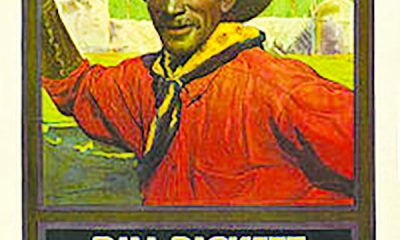
At the Black American West Museum, in Denver, Vason learned of Bill Pickett, a black cowboy who created “bulldogging,” now called steer wrestling, according to the rodeo website. Pickett would ride alongside a steer, jump on its shoulders and bring the animal down by digging in his heels.
Lu Vason was convinced that the time had come to uncover the cultural past of the Black cowboy. In 1984, he created an all Black rodeo named after legendary Black cowboy, Bill Pickett, who originated “bulldogging”. Some 25 years later the Bill Pickett Invitational Rodeo is now a popular series, which reaches over 130,000 spectators annually across the United States..
“People knew the name, Will Rogers, but who they hadn’t heard of was Bill Pickett, and if they had, they didn’t know he was Black,” Vason said, according to the website.
The first Bill Pickett Invitational was held in 1984 in Denver.
“Lu was an incredible creative conceptionalist and organizer. The Bill Pickett Rodeo is proof of his vision to see what is sustainable and far reaching. His legacy will continue through the Bill Pickett Rodeo,” said Margo LaDrew, LaDrew & Associates who worked as a consultant for over 20 years with Mr. Vason.
Committed to the black community, especially to helping black youngsters, Vason was always around youth and children making a difference.
On Sunday, Vason’s Facebook page was filled with condolences and tributes from friends.
A funeral service is set for Friday at Shorter Community AME Church in Denver at 11:30 a.m.



To enlarge your view of this issue, use the slider, magnifying glass icon or full page icon in the lower right corner of the browser window.
To enlarge your view of this issue, use the slider, magnifying glass icon or full page icon in the lower right corner of the browser window.

Activism
Oakland Post: Week of September 30 – October 6, 2026
The printed Weekly Edition of the Oakland Post: Week of September 30 – October 6, 2026
To enlarge your view of this issue, use the slider, magnifying glass icon or full page icon in the lower right corner of the browser window.


Mayor Barbara Lee Holds Special State of the City Address in Deep East Oakland

Practitioners of African Traditional Spirituality Offer Ancestral Reverence Ritual Oct. 31

It’s Time to Lose Weight Before the Holidays

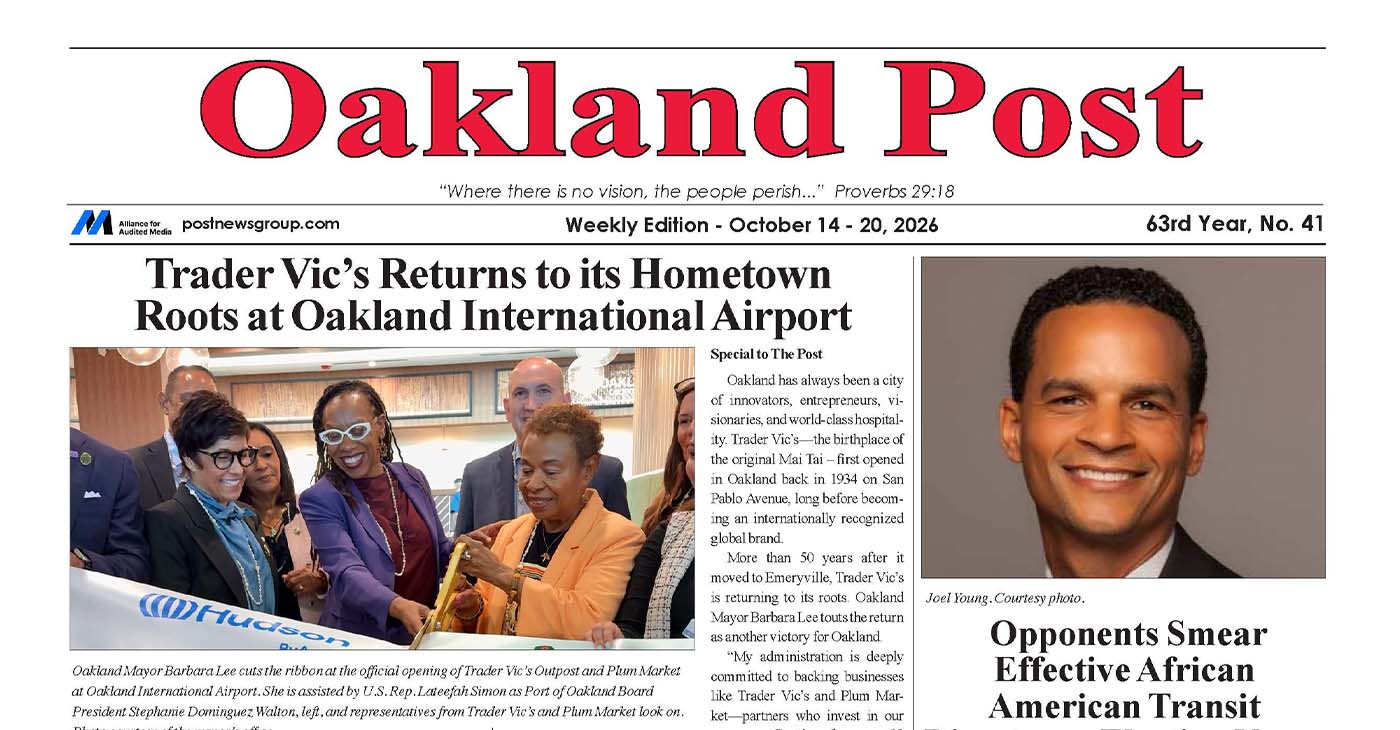
Trader Vic’s Returns to Its Oakland Roots

Oakland Coal Terminal Backed by Trump Would Be Bigger, Dirtier Than Promised, Says Report

Opponents Smear Effective African American Transit Director as Election Nears

Oakland Post: Week of October 14 – 20, 2026

OP-ED: The Black Church Writes AI’s Next Chapter

OP-ED: The Black Church Writes AI’s Next Chapter

WCCUSD Joins Statewide Organic School Food Purchasing Cooperative

Democrats, Community Groups Back Measure EE to Change How Oakland Is Governed

Four Tips to Help You Plan a Holiday “Staycation”

Veterans Housing Project Proposed for South Richmond
PRESS ROOM: Transformative Justice Coalition 2026 Voting Rights Champion Awards Reception ‘Yesterday Is Today: The Battle For Voting Rights

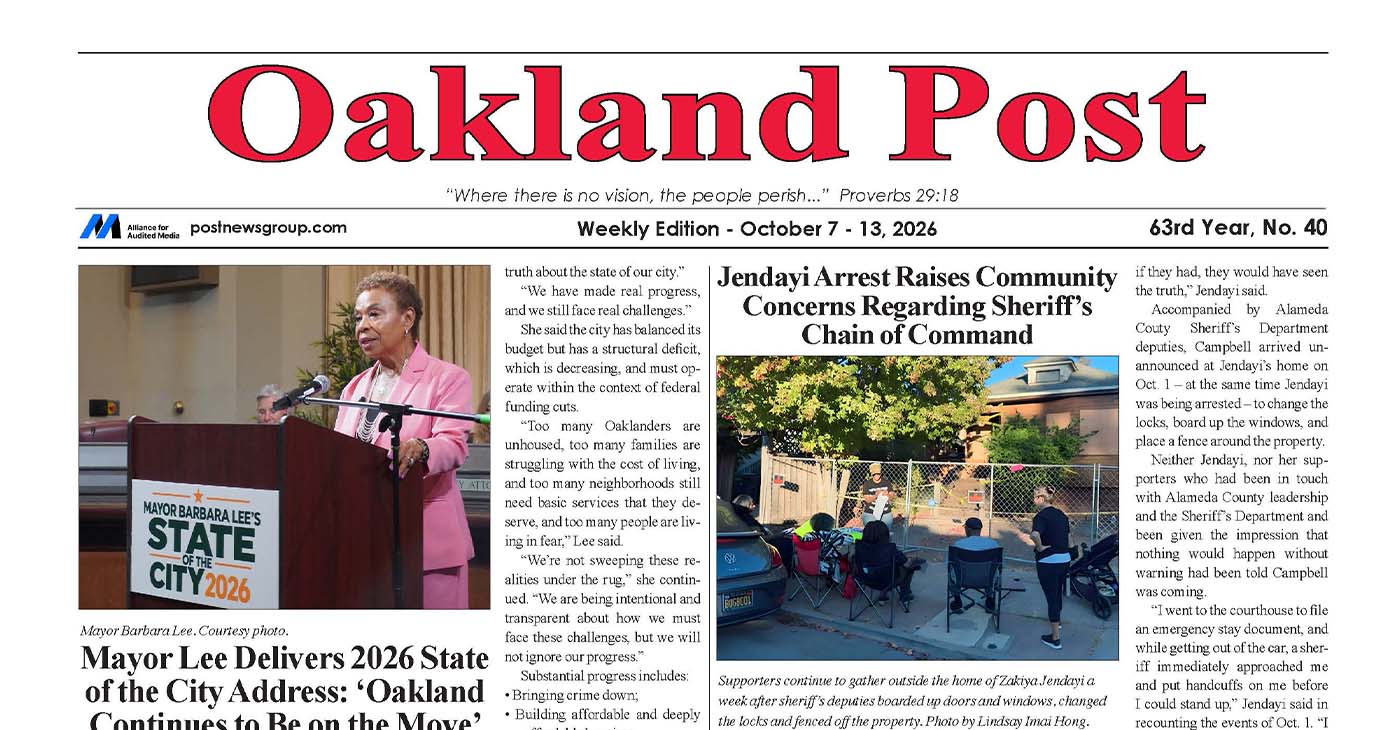
Mayor Lee Delivers 2026 State of the City Address: ‘Oakland Continues to Be on the Move’

Misnamed ‘Parent’ PAC Seeks to Influence Oakland School Board Elections

Oakland Post: Week of September 2 – 8, 2026

Oakland Post: Week of September 9 – 15, 2026

Poll: Becerra Widens His Lead Over Hilton; Californians Split on Wealth Tax

County Office of Education Says OUSD Finances Are Getting Healthier, Materially Stronger

Richmond Tiny House Village Farm & Garden Set to Open Gates on Sept. 26

Latest Massacre in Haiti Reveals Cruelty U.S. Deportations

Mayor Lee Announces $1 Million Kaiser Permanente Grant for Pilot Program to Address Homelessness, Clean Up Public Spaces throughout Oakland

OPINION: Nolan Wells’ Death One of Several Signifying Racial Terror Lives on in U.S. South

BLACspace Cooperative Invites Bay Area to Experience Oakland’s Black Cultural Ecosystem Through a BLAC Map Tour + Party

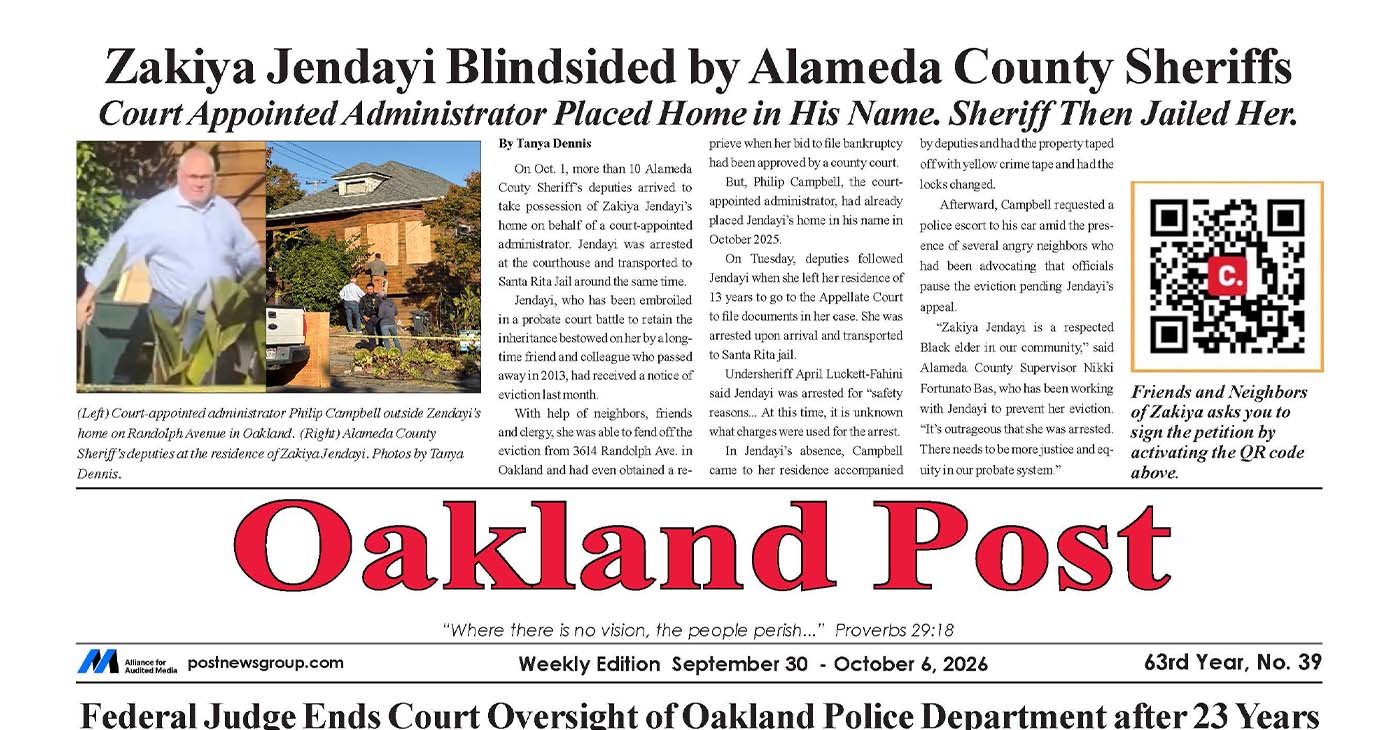
Zakiya Jendayi Arrested, Locked Out of Home by Sheriff’s Deputies

Democratic Clubs Interview Candidates for Oakland School Board

Oakland Post: Week of September 16 – 22, 2026

Oakland People’s Arms Embargo Coalition Demands End to Military Shipments Thru Oakland

Listening as a Lifeline: A Doula’s Witness to Black Maternal Health

The Conversation With Al McFarlane 6/23/26

Media Monday 6/22/26

LIVE! ASK ALMA! — TUES. 6.23.26 7PM EST

Car Buying Secrets: 4 Hidden Checks Before You Sign!

Is This 550 HP Charger Worth YOUR Money? AutoNetwork Review

Celebrating Juneteenth – Frederick Douglass on education and resistance

LIVE! — ASK ALMA! — TUES. 6.19.26 7PM EST

Hyundai Ioniq 5 Parking, Safety, and 360 View #shorts

2025 Ioniq 5 New Wiper & Powerful Performance! #shorts

Electric SUV Range: Is 259 Miles Enough? #shorts

EV Charging: How Fast Can You Charge an Electric Vehicle? #shorts

Biometric Cooling… Messaging Seats…Come on! 2025 Infiniti QX80 Autograph 4WD

Charged Up: Witness the Magic of a Fully Electric Car! #shorts

Range Rover Sport PHEV Included…: See What’s Inside This Luxury SUV! #shorts

Invisible Hood View: Perfect Parking with X-Ray Vision! #shorts
-
 Economy3 weeks ago
Poll: Becerra Widens His Lead Over Hilton; Californians Split on Wealth Tax
-
 Business3 weeks ago
County Office of Education Says OUSD Finances Are Getting Healthier, Materially Stronger
-
 Business4 weeks ago
Mayor Lee Announces $1 Million Kaiser Permanente Grant for Pilot Program to Address Homelessness, Clean Up Public Spaces throughout Oakland
-
 Art3 weeks ago
BLACspace Cooperative Invites Bay Area to Experience Oakland’s Black Cultural Ecosystem Through a BLAC Map Tour + Party
-
 Lead Story2 weeks ago
Zakiya Jendayi Arrested, Locked Out of Home by Sheriff’s Deputies
-
 Activism4 weeks ago
Oakland Post: Week of September 16 – 22, 2026
-
 Uncategorized4 weeks ago
Oakland People’s Arms Embargo Coalition Demands End to Military Shipments Thru Oakland
-
 Black History2 weeks ago
Listening as a Lifeline: A Doula’s Witness to Black Maternal Health
Entertainment
Bill Pickett Rodeo Founder Dies At 76
Lu Vason, the founder and producer of 31 year old Bill Pickett Invitational Rodeo (Courtesy of The Chicago Defender)
Lu Vason: Visionary and Producer
Special to the NNPA from The Chicago Defender
Best known for the Bill Pickett Invitational Rodeo, founder and producer Lu Vason who grew up in Berkeley, California. He moved to Denver in 1977. Vason, who lived in Aurora and had just turned 76, died early Sunday of a heart condition, said Les Franklin, a close friend of Vason’s and the founder of the Shaka Franklin Foundation for Youth.
Like many successful people Lu Vason had a varied life, with each experience leading him to his destiny. He had established himself as an innovative leader in special events marketing. had over 40 years experience as a producer, media impresario and marketing consultant.
Before Vason got into show business, he was a beautician and barber. When he began a career as a promoter and producer, the legendary rock music promoter Barry Fey became his mentor.
Lu Vason, promoted musical artists and is credited with creating the Pointers Sisters and managing various other artists. He formed Aries Concerts and the Jazz Lives Series promoting various concerts and concert tours. He promoted performances by stars like Prince and Stevie Wonder.
Eventually, he realized that the music industry was being taken over by bigger corporations with deeper pockets and he couldn’t compete with that.
He continued to promote smaller concerts, and was working until shortly before he died.
In 1977, during Wyoming’s Cheyenne Frontier Days, Vason’s interest turned toward rodeo. His curiosity was inspired when he noted that there were no Black cowboys participating that day. He then Were people aware of the role that the Black cowboy had played in this country’s history?
At the Black American West Museum, in Denver, Vason learned of Bill Pickett, a black cowboy who created “bulldogging,” now called steer wrestling, according to the rodeo website. Pickett would ride alongside a steer, jump on its shoulders and bring the animal down by digging in his heels.
Lu Vason was convinced that the time had come to uncover the cultural past of the Black cowboy. In 1984, he created an all Black rodeo named after legendary Black cowboy, Bill Pickett, who originated “bulldogging”. Some 25 years later the Bill Pickett Invitational Rodeo is now a popular series, which reaches over 130,000 spectators annually across the United States..
“People knew the name, Will Rogers, but who they hadn’t heard of was Bill Pickett, and if they had, they didn’t know he was Black,” Vason said, according to the website.
The first Bill Pickett Invitational was held in 1984 in Denver.
“Lu was an incredible creative conceptionalist and organizer. The Bill Pickett Rodeo is proof of his vision to see what is sustainable and far reaching. His legacy will continue through the Bill Pickett Rodeo,” said Margo LaDrew, LaDrew & Associates who worked as a consultant for over 20 years with Mr. Vason.
Committed to the black community, especially to helping black youngsters, Vason was always around youth and children making a difference.
On Sunday, Vason’s Facebook page was filled with condolences and tributes from friends.
A funeral service is set for Friday at Shorter Community AME Church in Denver at 11:30 a.m.
To enlarge your view of this issue, use the slider, magnifying glass icon or full page icon in the lower right corner of the browser window.
To enlarge your view of this issue, use the slider, magnifying glass icon or full page icon in the lower right corner of the browser window.
Activism
Oakland Post: Week of September 30 – October 6, 2026
The printed Weekly Edition of the Oakland Post: Week of September 30 – October 6, 2026
To enlarge your view of this issue, use the slider, magnifying glass icon or full page icon in the lower right corner of the browser window.
-
Economy3 weeks ago
Poll: Becerra Widens His Lead Over Hilton; Californians Split on Wealth Tax
-
Business3 weeks ago
County Office of Education Says OUSD Finances Are Getting Healthier, Materially Stronger
-
Business4 weeks ago
Mayor Lee Announces $1 Million Kaiser Permanente Grant for Pilot Program to Address Homelessness, Clean Up Public Spaces throughout Oakland
-
Art3 weeks ago
BLACspace Cooperative Invites Bay Area to Experience Oakland’s Black Cultural Ecosystem Through a BLAC Map Tour + Party
-
Lead Story2 weeks ago
Zakiya Jendayi Arrested, Locked Out of Home by Sheriff’s Deputies
-
Activism4 weeks ago
Oakland Post: Week of September 16 – 22, 2026
-
Uncategorized4 weeks ago
Oakland People’s Arms Embargo Coalition Demands End to Military Shipments Thru Oakland
-
Black History2 weeks ago
Listening as a Lifeline: A Doula’s Witness to Black Maternal Health

Leave a Reply