
Entertainment
Bill Cosby’s Public Moralizing Was His Undoing


This Nov. 11, 2014, file photo shows entertainer and Navy veteran Bill Cosby speaking during a Veterans Day ceremony, at the The All Wars Memorial to Colored Soldiers and Sailors in Philadelphia. (AP Photo/Matt Rourke, File)
DAVID BAUDER, AP Television Writer
NEW YORK (AP) — For decades, Bill Cosby cast himself as America’s dad and then as America’s granddad, a moralist with tough talk for young people about acting responsibly. It was that image that proved to be his undoing.
The judge who unsealed documents on Monday revealing Cosby’s 2005 admission that he obtained quaaludes to give to young women before sex cited the comedian’s public moralizing in deciding to release the testimony.
The testimony, from a decade-old lawsuit, has called into question Cosby’s denials that he drugged and sexually assaulted women.
Cosby had fought the request from The Associated Press to unseal the material.
But U.S. District Judge Eduardo Robreno in Philadelphia ruled: “The stark contrast between Bill Cosby, the public moralist, and Bill Cosby, the subject of serious allegations concerning improper (and perhaps criminal) conduct, is a matter to which the AP — and by extension the public — has a significant interest.”
Cosby’s moralizing also triggered the most recent round of allegations by more than two dozen women who say he assaulted them. Last October, 31-year-old comedian Hannibal Buress set off the storm when he noted the contrast between Cosby’s image and the accusations.
“He gets on TV, ‘Pull your pants up, black people. I was on TV in the ’80s! I can talk down to you because I had a successful sitcom!'” Buress said. “Yeah, but you rape women, Bill Cosby, so turn the crazy down a couple notches.”
As leader of television’s Huxtable clan in the 1980s, Cosby was the dad who did things right. It was a persona that made him beloved and rich.
And Cosby gave back. He and wife Camille offered millions in donations to colleges and other institutions across the country, including $20 million to Spelman College in 1988. He also freely gave advice and opinions on society’s failings, which weren’t welcomed as much as the money.
One such commentary, a decade ago during a commemoration of the 50th anniversary of the Supreme Court decision on segregated schools, was cited by Robreno in his ruling. Cosby criticized a lack of parenting among poor families, complaining about young people’s poor speech, dress and dropout rates.
It was labeled the “pound cake” speech for this passage: “Looking at the incarcerated, these are not political criminals,” Cosby said. “These are people going around stealing Coca-Cola. People getting shot in the back of the head over a piece of pound cake! Then we all run out and are outraged: ‘The cops shouldn’t have shot him.’ What the hell was he doing with the pound cake in his hand?”
Cosby has aggressively sought to protect his public image as accusations came forth. His representatives have cast doubt on his accusers, and Cosby sought to get an AP reporter who had asked about them not to use his comments.
He also testified in the 2005 case that he granted the National Enquirer an interview about accusations against him in exchange for the tabloid squelching another story about an alleged assault.
Even before Monday’s release of testimony, the allegations had severely damaged Cosby’s career. NBC walked away from plans to make another Cosby sitcom, TV Land took reruns of “The Cosby Show” off the air, and Netflix shelved plans for a Cosby standup special.
Cosby mounted a standup comedy tour that was dotted with cancellations, and no further appearances are scheduled, according to the industry trade publication Pollstar.
The Bounce TV network, which is geared toward black viewers, announced Tuesday that it is taking its reruns of “Cosby,” the comic’s 1990s-era CBS show, off the air immediately.
And the smaller Centric cable network, which is affiliated with BET and aimed at black women, said it is dropping “The Cosby Show.” The 1980s NBC series was a big chunk of Centric’s schedule, airing four hours a day and in weekend marathons once a month.
It doesn’t appear that “The Cosby Show” is airing regularly anywhere else now in the U.S., said Bill Carroll, an expert on the syndication market for Katz Television. He said he doubts it will return while its star, who turns 78 on Sunday, is alive.
“You never say never,” he said. “But I think in the foreseeable future, I doubt we’re going to see ‘The Cosby Show’ returning.”
It remains to be seen how many minds the newly released testimony will change. But actress and Philadelphia native Jill Scott, who had publicly supported Cosby last fall, said she was “completely disgusted” by what he had to say under oath.
“I stood by a man I respected and loved,” Scott said via Twitter. “I was wrong.”
____
Associated Press correspondent Michael Sisak in Philadelphia and Television Writer Lynn Elber in Los Angeles contributed to this report.
____
Follow David Bauder at twitter.com/dbauder. His work can be found at http://bigstory.ap.org/content/david-bauder.
Copyright 2015 The Associated Press. All rights reserved. This material may not be published, broadcast, rewritten or redistributed.






Activism
Oakland Post: Week of April 1 – 7, 2026
The printed Weekly Edition of the Oakland Post: Week of April 1 – 7, 2026
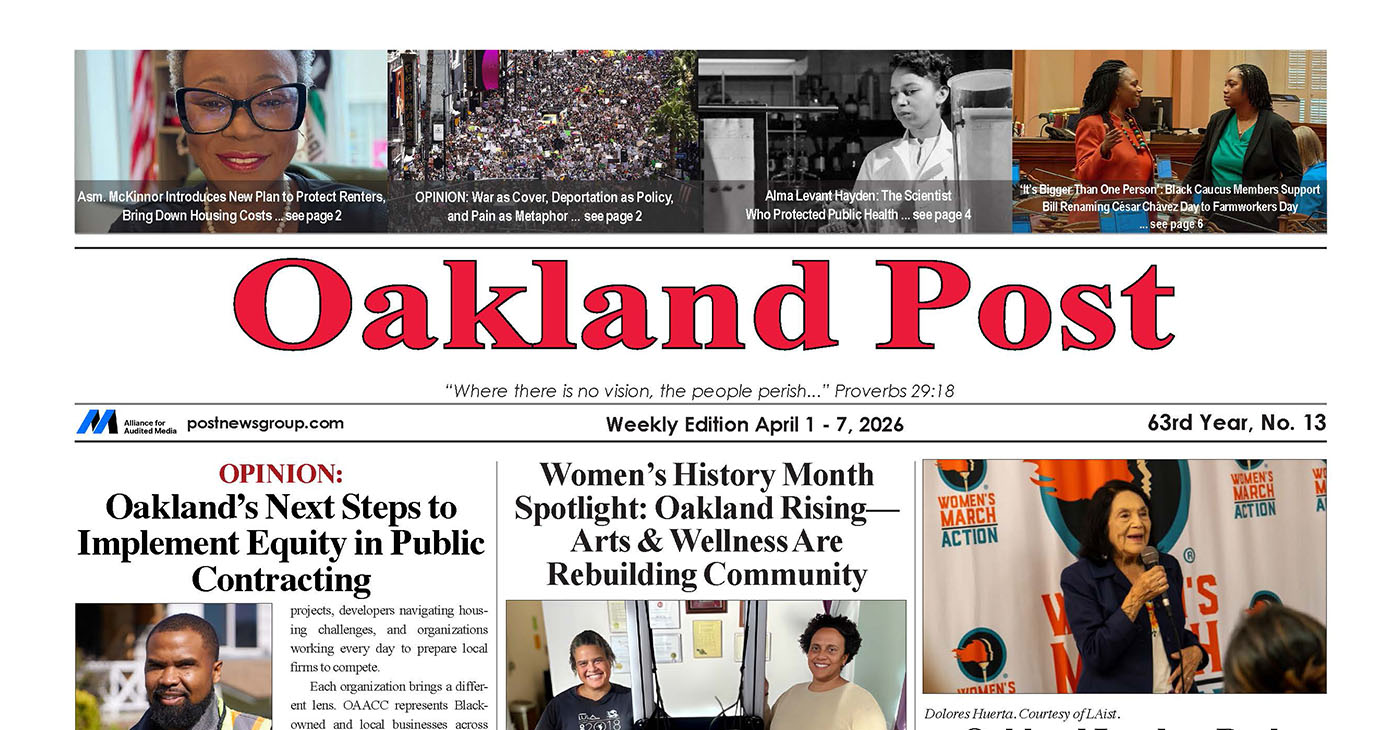
To enlarge your view of this issue, use the slider, magnifying glass icon or full page icon in the lower right corner of the browser window.
Activism
Oakland Post: Week of March 18 – 24, 2026
The printed Weekly Edition of the Oakland Post: Week of March 18 – 24, 2026
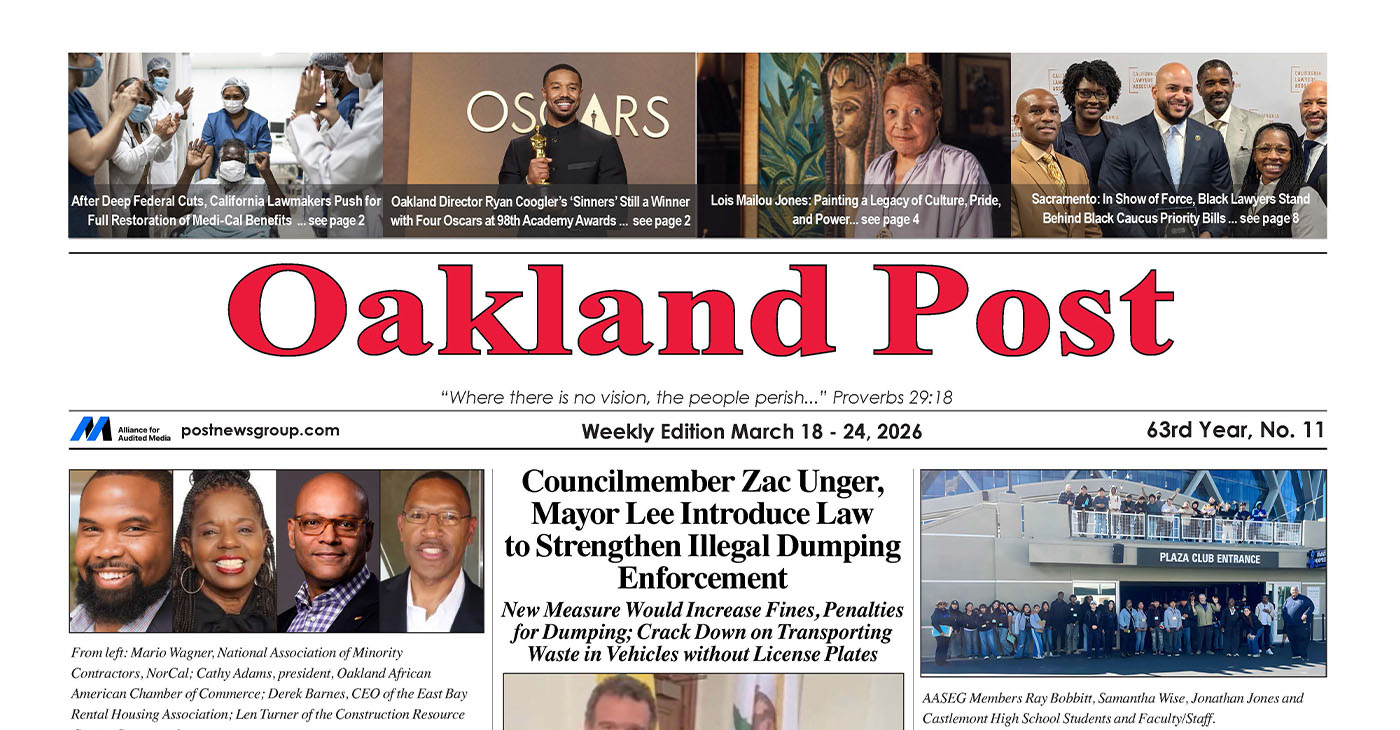
To enlarge your view of this issue, use the slider, magnifying glass icon or full page icon in the lower right corner of the browser window.
Activism
Oakland Post: Week of March 11 -17, 2026
The printed Weekly Edition of the Oakland Post: Week of March 11 – 17, 2026
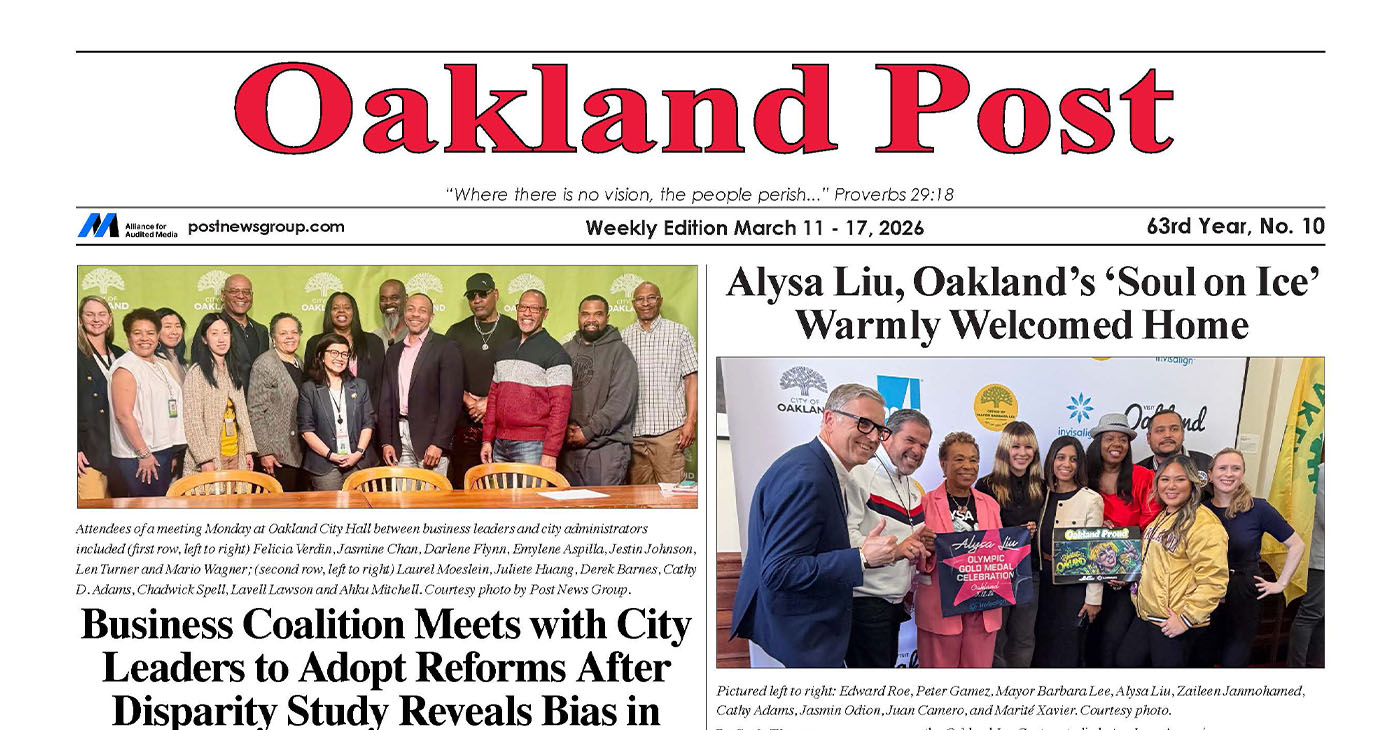
To enlarge your view of this issue, use the slider, magnifying glass icon or full page icon in the lower right corner of the browser window.

WORK FROM HOME
Home-based business with potential monthly income of $10K+ per month. A proven training system and website provided to maximize business effectiveness. Perfect job to earn side and primary income. Contact Lynne for more details: Lynne4npusa@gmail.com 800-334-0540


Oakland Post: Week of April 1 – 7, 2026

Black Artists in America, Installation Three Wraps at the Dixon Gallery and Gardens

Grief, Advocacy, and Education: A Counselor Reflects on Black Maternal Health

Future of Florida’s Black History Museum in Limbo

New Research Shows the Many Benefits of Early Learning

South Hampton K-8 Students Among Top 10 Finalists for Samsung’s ‘Solve for Tomorrow’ Competition

Cuba: No Negotiation with US on the President or Political System

Brooklyn Academy of Music Names Jamaican-Born Tamara McCaw as President

Trinidad & Tobego – U.S. Launches WhatsApp Channel for American Citizens in the Country

Oakland Post: Week of March 18 – 24, 2026

AI Innovation vs. Ethics and Environmental Impact

AI, Web3, and Digital Reparations

What If You Owned Your AI Agent?

Season 7, Episode 3 – January Reporter’s Roundtable 📱

Season 7, Episode 3 – January Reporter’s Roundtable

Reflecting on Black History Milestones in Birmingham AL

Oakland Post: Week of February 25 – March 3, 2026

PRESS ROOM: NBA Hall of Fame Nominee Terry Cummings Joins 100 Black Men of DeKalb County to Launch Victory & Values Initiative

Trump’s MAGA Allies are Creating Executive Order Plan to Steal the 2026 Midterms

Oakland Post: Week of March 4 – 10, 2026

Chase Oakland Community Center Hosts Alley-Oop Accelerator Building Community and Opportunity for Bay Area Entrepreneurs

U.S. manufacturing rebounds – how foundry services are adapting to rising demand

Poll Shows Support for Policies That Help Families Afford Child Care

OP-ED: One Hundred Years of Black Workers Telling the Truth

Advancements in solar technology that are changing the way we power the world

Oakland Post: Week of March 11 -17, 2026

Woman’s Search for Family’s Roots Leads to Ancestor John T. Ward – A Successful Entrepreneur and Conductor on the Underground Railroad

COMMENTARY: Women of Color Shape Our Past and Future

PRESS ROOM: Civil Rights TV Launches in Selma as the World’s First 24/7 Civil Rights Television Network
Oakland Post: Week of March 18 – 24, 2026

Hyundai Ioniq 5 Parking, Safety, and 360 View #shorts

2025 Ioniq 5 New Wiper & Powerful Performance! #shorts

Electric SUV Range: Is 259 Miles Enough? #shorts

EV Charging: How Fast Can You Charge an Electric Vehicle? #shorts

Biometric Cooling… Messaging Seats…Come on! 2025 Infiniti QX80 Autograph 4WD

Charged Up: Witness the Magic of a Fully Electric Car! #shorts

Range Rover Sport PHEV Included…: See What’s Inside This Luxury SUV! #shorts

Invisible Hood View: Perfect Parking with X-Ray Vision! #shorts

AI Is Reshaping Black Healthcare: Promise, Peril, and the Push for Improved Results in California

ESSAY: Technology and Medicine, a Primary Care Point of View

Sanctuary Cities

The RESISTANCE – FREEDOM NOW

STATE OF THE PEOPLE: Freddie

ECONOMIC BOYCOTT DAY!!!!!

I told You So
-
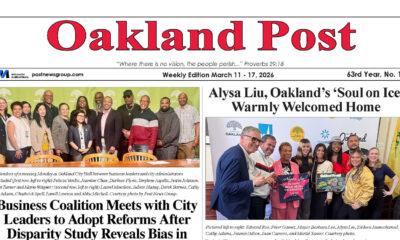 Activism3 weeks ago
Oakland Post: Week of March 11 -17, 2026
-
 #NNPA BlackPress4 weeks ago
Woman’s Search for Family’s Roots Leads to Ancestor John T. Ward – A Successful Entrepreneur and Conductor on the Underground Railroad
-
 #NNPA BlackPress4 weeks ago
COMMENTARY: Women of Color Shape Our Past and Future
-
 Activism2 weeks ago
Oakland Post: Week of March 18 – 24, 2026
-

 Advice3 weeks ago
Financial Wellness and Mental Health: Managing Money Stress in College
-

 #NNPA BlackPress4 weeks ago
Advocates Raise Alarm Over ICE Operation, MOU and Detention Risks in Baltimore County
-

 #NNPA BlackPress4 weeks ago
Pete Buttigieg to Join Mayor Randall Woodfin for Community Town Hall in Birmingham
-
 #NNPA BlackPress2 weeks ago
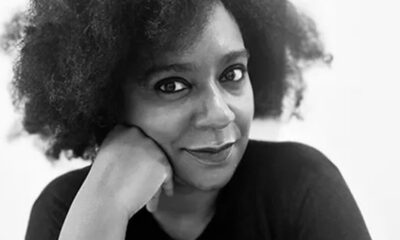
Brooklyn Academy of Music Names Jamaican-Born Tamara McCaw as President
