
Activism
Assembly Bill AB 767 Eliminates Barriers to State Support for Victims of Violence

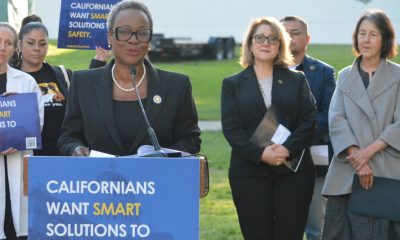
In a virtual press conference on Aug. 6, legislators announced Assembly Bill 767, which will make it easier for victims of violence, including by police, to get state compensation.
AB 767 is authored by Assembly members Tim Grayson (D-Concord), Shirley Weber (D-San Diego), Buffy Wicks (D-Berkeley), David Chiu (D-San Francisco), Sydney Kamlager (D-Los Angeles), Rob Bonta (D-Oakland), Cristina Garcia (D-Downey), and Sen. Scott Wiener (D-San Francisco).
Present at the press conference were survivors of violence, including members of community organizations Youth Alive! and Californians for Safety and Justice, who are co-sponsors of the bill, and the family of Sean Monterrosa, who was killed by Vallejo police.
Monterrosa, a 22-year-old Latinx man from San Francisco, was fatally shot by Vallejo police officer Jarrett Tonn on June 2.
According to Youth ALIVE! Policy and Advocacy Manager, Gabriel Garcia, the bill “would address numerous barriers that have disproportionately denied survivors of color compensation. Among other things, A.B. 767 would:
• make victims of police brutality and their families eligible for victim compensation
• not require applicants to make statements to law enforcement at the scene of the crime or while recovering at the hospital in order to qualify for compensation
• prevent the state from denying applications or labeling the victim as uncooperative just because the survivor delayed reporting the crime
• not require a police report to be filed or an arrest or conviction to be made in order to establish that a crime occurred
“We cannot continue to let the police decide who is a ‘deserving’ victim,” said Youth ALIVE! Intervention Director Kyndra Simmons. She adds “[t]his has prevented many survivors and victims, including victims of police violence, from accessing the resources and support they need to heal.”
Tonya Lancaster, trauma survivor and Youth ALIVE! Client, said “[v]ictim support is so needed for everyone who has lost a loved one, suddenly, from violence. Qualifying for victim compensation was life-changing for me after my son Jordan Holmes was killed—I want to see that support for everybody who needs it.”
Oakland attorney John Burris is representing the Monterrosa family, which is suing the city of Vallejo and Tonn in federal court for wrongful death. Burris said Tonn was “a trigger-happy officer and potentially a homicidal officer,” and added “clearly not a person who should be in a Black and Brown community. . . . This officer in my view was a panicky guy . . . scared to death of any little thing. . . . That is unconscionable to me. . . . [it’s] flat-out murder.”
Tonn has shot at people four times in five years: Monterrosa in 2020, two others in 2017, and one in 2015.
On June 17, Tonn was named in a federal lawsuit for excessive force in an incident of mistaken identity on Nov. 4, 2018.
Monterrosa’s family also called on state Attorney General Xavier Becerra to investigate the Vallejo Police Dept. for what they said is a culture of ignoring injustice in police shootings.
Monterrosa’s shooting was the latest police killing in Vallejo, which include the rapper Willie McCoy, aka “Willie Bo,” in February of 2019; Ronnel Foster in 2018; and Angel Ramos in 2017.
The District Attorney of Solano County, Krishna Abrams, recused herself from both the McCoy and Monterrossa cases, deferring to Becerra.








Activism
Oakland Post: Week of March 18 – 24, 2026
The printed Weekly Edition of the Oakland Post: Week of March 18 – 24, 2026


To enlarge your view of this issue, use the slider, magnifying glass icon or full page icon in the lower right corner of the browser window.

Activism
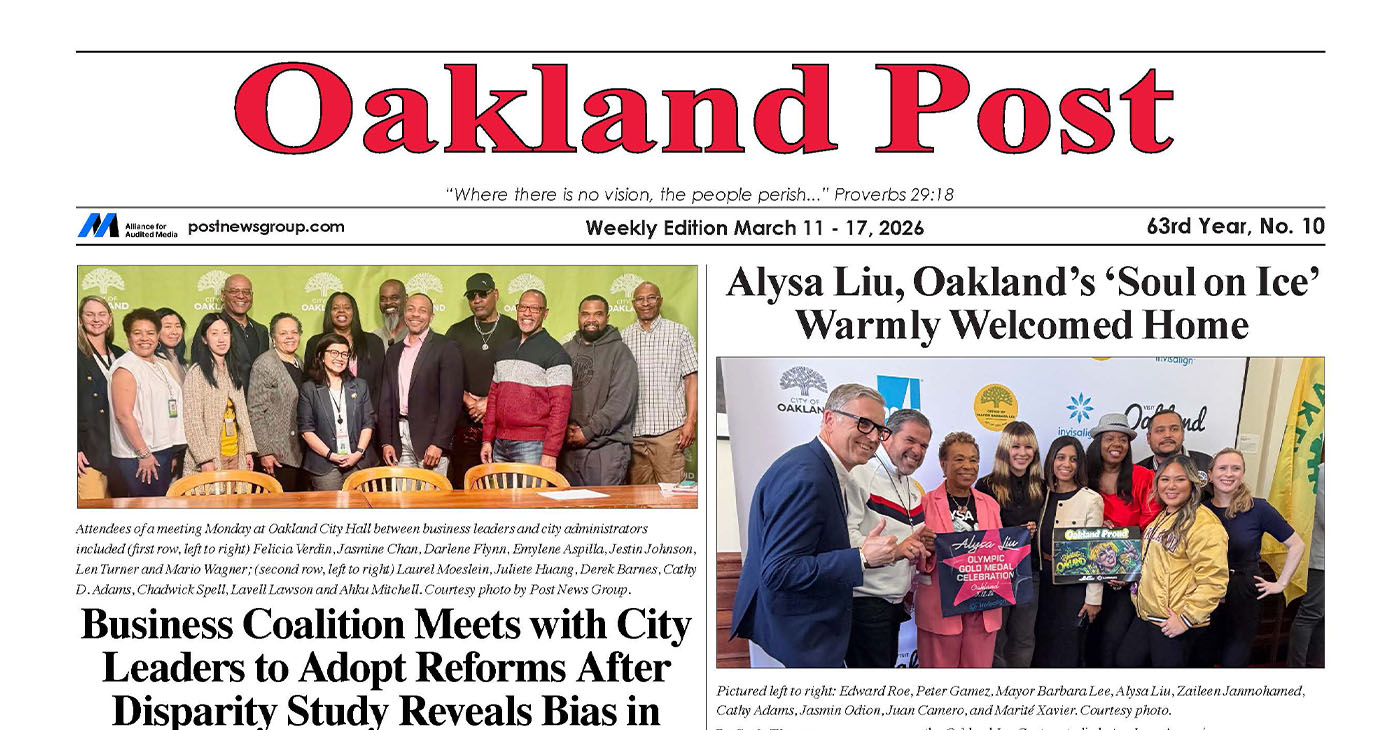
Oakland Post: Week of March 11 -17, 2026
The printed Weekly Edition of the Oakland Post: Week of March 11 – 17, 2026
To enlarge your view of this issue, use the slider, magnifying glass icon or full page icon in the lower right corner of the browser window.
Activism
Oakland Post: Week of March 4 – 10, 2026
The printed Weekly Edition of the Oakland Post: Week of March 4 – 10, 2026

To enlarge your view of this issue, use the slider, magnifying glass icon or full page icon in the lower right corner of the browser window.


WORK FROM HOME
Home-based business with potential monthly income of $10K+ per month. A proven training system and website provided to maximize business effectiveness. Perfect job to earn side and primary income. Contact Lynne for more details: Lynne4npusa@gmail.com 800-334-0540


Black Artists in America, Installation Three Wraps at the Dixon Gallery and Gardens

Grief, Advocacy, and Education: A Counselor Reflects on Black Maternal Health

Future of Florida’s Black History Museum in Limbo

New Research Shows the Many Benefits of Early Learning

South Hampton K-8 Students Among Top 10 Finalists for Samsung’s ‘Solve for Tomorrow’ Competition

Cuba: No Negotiation with US on the President or Political System

Brooklyn Academy of Music Names Jamaican-Born Tamara McCaw as President

Trinidad & Tobego – U.S. Launches WhatsApp Channel for American Citizens in the Country

Oakland Post: Week of March 18 – 24, 2026

AI Innovation vs. Ethics and Environmental Impact

AI, Web3, and Digital Reparations

What If You Owned Your AI Agent?

Season 7, Episode 3 – January Reporter’s Roundtable 📱

Season 7, Episode 3 – January Reporter’s Roundtable

AI, Media, and Power | Part 2, Real-World Impacts and Tradeoffs

Discrimination in City Contracts

Oakland Post: Week of February 11 – 17, 2026

Reflecting on Black History Milestones in Birmingham AL

Rising Optimism Among Small And Middle Market Business Leaders Suggests Growth for California

CITY OF SAN LEANDRO STATE OF CALIFORNIA PUBLIC WORKS DEPARTMENT ENGINEERING DIVISION NOTICE TO BIDDERS FOR ANNUAL STREET OVERLAY/REHABILITATION 2019-21 – PHASE III

Oakland Post: Week of February 18 – 24, 2026

PRESS ROOM: NBA Hall of Fame Nominee Terry Cummings Joins 100 Black Men of DeKalb County to Launch Victory & Values Initiative

Oakland Post: Week of February 25 – March 3, 2026

U.S. manufacturing rebounds – how foundry services are adapting to rising demand

Trump’s MAGA Allies are Creating Executive Order Plan to Steal the 2026 Midterms

OP-ED: One Hundred Years of Black Workers Telling the Truth

Advancements in solar technology that are changing the way we power the world

Chase Oakland Community Center Hosts Alley-Oop Accelerator Building Community and Opportunity for Bay Area Entrepreneurs

Poll Shows Support for Policies That Help Families Afford Child Care

PRESS ROOM: Civil Rights TV Launches in Selma as the World’s First 24/7 Civil Rights Television Network

Hyundai Ioniq 5 Parking, Safety, and 360 View #shorts

2025 Ioniq 5 New Wiper & Powerful Performance! #shorts

Electric SUV Range: Is 259 Miles Enough? #shorts

EV Charging: How Fast Can You Charge an Electric Vehicle? #shorts

Biometric Cooling… Messaging Seats…Come on! 2025 Infiniti QX80 Autograph 4WD

Charged Up: Witness the Magic of a Fully Electric Car! #shorts

Range Rover Sport PHEV Included…: See What’s Inside This Luxury SUV! #shorts

Invisible Hood View: Perfect Parking with X-Ray Vision! #shorts

AI Is Reshaping Black Healthcare: Promise, Peril, and the Push for Improved Results in California

ESSAY: Technology and Medicine, a Primary Care Point of View

Sanctuary Cities

The RESISTANCE – FREEDOM NOW

STATE OF THE PEOPLE: Freddie

ECONOMIC BOYCOTT DAY!!!!!

I told You So
-
 #NNPA BlackPress4 weeks ago
Reflecting on Black History Milestones in Birmingham AL
-
 #NNPA BlackPress4 weeks ago
PRESS ROOM: NBA Hall of Fame Nominee Terry Cummings Joins 100 Black Men of DeKalb County to Launch Victory & Values Initiative
-
 Activism4 weeks ago
Oakland Post: Week of February 25 – March 3, 2026
-
 #NNPA BlackPress4 weeks ago
Trump’s MAGA Allies are Creating Executive Order Plan to Steal the 2026 Midterms
-
 #NNPA BlackPress4 weeks ago
Poll Shows Support for Policies That Help Families Afford Child Care
-

 Activism3 weeks ago
Oakland Post: Week of March 4 – 10, 2026
-

 #NNPA BlackPress3 weeks ago
Woman’s Search for Family’s Roots Leads to Ancestor John T. Ward – A Successful Entrepreneur and Conductor on the Underground Railroad
-

 #NNPA BlackPress3 weeks ago
OP-ED: NNPA Launches 2026 “Leadership Matters” Video Series
