
Bay Area
Among Less-Educated Young Workers, Women and Black Men Are Paid Far Less
According to Byeongdon Oh, a postdoctoral researcher in the campus’ Social Sciences D-Lab, the pay disparity between Asian and white men on one side and Black men on the other may actually be worse than the data suggest. A disproportionate number of young men who did not go to college are Black. A disproportionate number of young Black men have been incarcerated, he explained, and incarcerated men were not tracked in the survey data.

By Edward Lempinen | UC Berkeley News
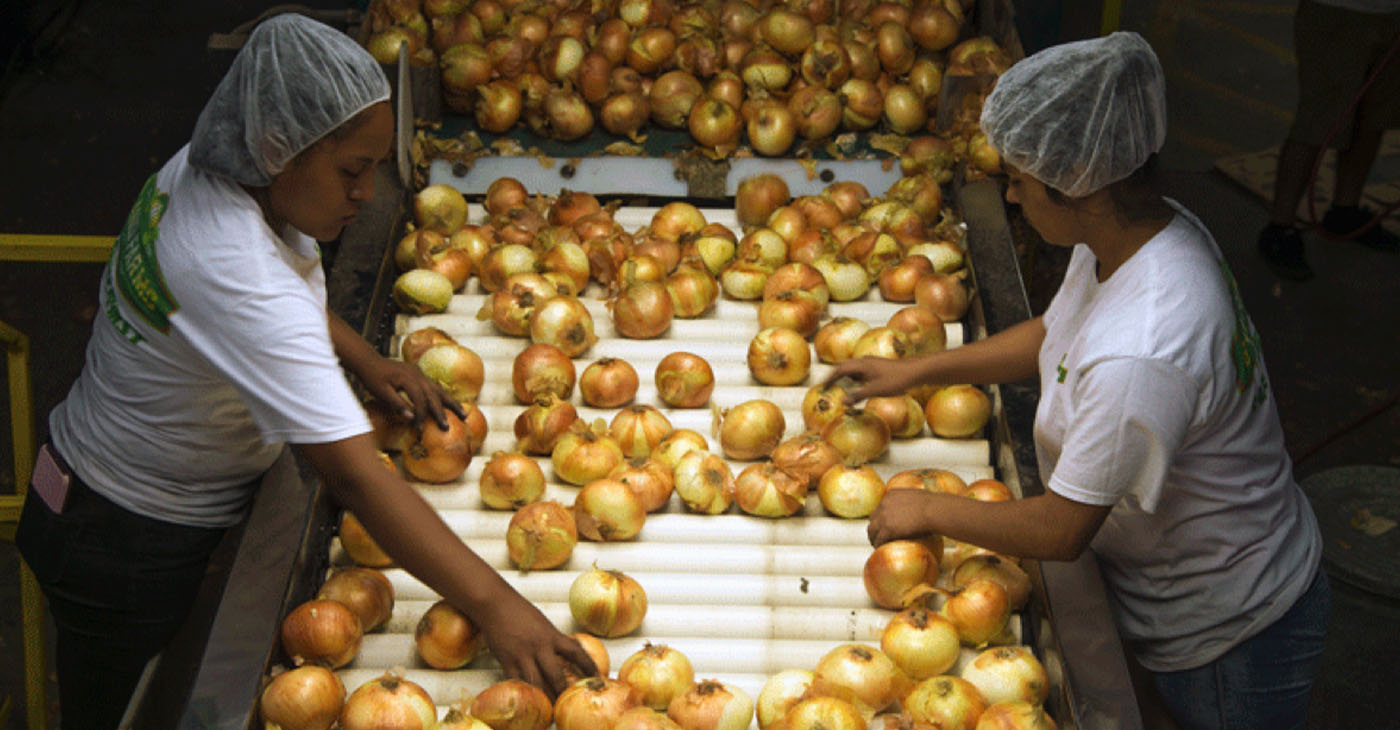
Less-educated U.S. workers often face a lifetime of financial challenges, but some among them are more disadvantaged than others: Young Asian and white men without college education are paid more — sometimes far more — than both Black men and women of all racial groups, according to a new study co-authored at UC Berkeley.
The study led by Byeongdon Oh, a postdoctoral researcher in the campus’ Social Sciences D-Lab, found that young Black men with no college education earn barely half of what their Asian American and white counterparts make. Latinx, Asian and Black women lag even further.
“Earnings are an important factor to study because they’re related to other outcomes, like health, engagement with the criminal justice system and family development,” Oh said. “So, we focus on the non-college population at an early age. They are already disadvantaged economically — they have very low earnings. If there’s a sizable racial or ethnic earnings disparity in this population, there may be severe consequences.”
The study, “Inequality among the Disadvantaged? Racial/Ethnic Disparities in Earnings among Young Men and Women without a College Education,” was released Dec. 21, 2022, in the journal Sociology of Race and Ethnicity, published by the American Sociological Association. It provides the first detailed look at the earnings of young adults with no college experience as their working lives take shape.
In recent years, about one-third of young Americans have stopped their education after high school. That projects to roughly 1 million less-educated young people every year entering a job market that increasingly requires advanced education and training to earn even a middle-class salary. LatinX and Black people are over-represented in this group.
To understand their experience, Oh and colleagues Daniel Mackin Freeman and Dara Shifrer from Portland State University studied data from the High School Longitudinal Study of 2009, tracing racial and ethnic earnings disparities among men and women who had never attended college. In 2016, they were in their early 20s.
“Striking” was the word the authors used to describe the earnings gaps revealed in the core data:
- Young Asian American men with no college education earned an average of $24,837 in 2016, followed by white men at $22,056 and Latinx men at $17,984. Young Black men averaged just $12,573 — barely half the wages earned by Asian Americans and whites.
- A similar, but less severe, disparity was evident among young women with no college experience. White women on average earned $14,766, followed by Latinx women at $12,465, Asian American women at $10,935 and Black women at $10,871.
- The gap between these women and men was vast, with young Black women on average earning only 44 cents for every dollar earned by Asian American men with similar levels of education.
Exploring the impact of race and gender discrimination
How to explain these racial and gender gaps in earning?
Oh said the data did not allow the researchers to determine the causes. They did find, however, that a range of possible factors — from family background and home location to high school grades and criminal records — rarely account for the earnings gaps.
But, he explained, racial discrimination in the workforce cannot be ruled out as the cause.
Oh suggested that complex social and economic factors may sort people of color into lower-paying job sectors, but the estimated earnings gaps among groups of people in the same occupation are still dramatic. These earning disparities, he said, may reflect employer bias against women and Black men.
The findings “suggest that, like their more educated counterparts, young non-college-educated women may face pernicious earnings discrimination in the labor market, regardless of their race/ethnicity,” the authors wrote.
They added: “The results may indicate that employers devalue the work of young Black men without a college education to a greater degree than they do the work of white, Latinx, and Asian men without a college education.”
According to Oh, the pay disparity between Asian and white men on one side and Black men on the other may actually be worse than the data suggest. A disproportionate number of young men who did not go to college are Black. A disproportionate number of young Black men have been incarcerated, he explained, and incarcerated men were not tracked in the survey data.
“And so, our findings on the earnings gap are conservative — it may be larger,” he said.
The new study opens up a range of new questions for Oh and other researchers. Understanding the experience of the young workers would require more targeted surveys and in-person interviews. Those would allow the researchers to understand whether discrimination is to blame, and if so, how it works, Oh said.
“I hope the contribution of our research is to make people ask why we have these striking earnings gaps,” he said. “Then, rather than wasting time blaming workers’ choices or attitudes, we might get further by identifying discriminatory labor market processes.”











Activism
Oakland Post: Week of April 8 – 14, 2026
The printed Weekly Edition of the Oakland Post: Week of April 8 – 14, 2026
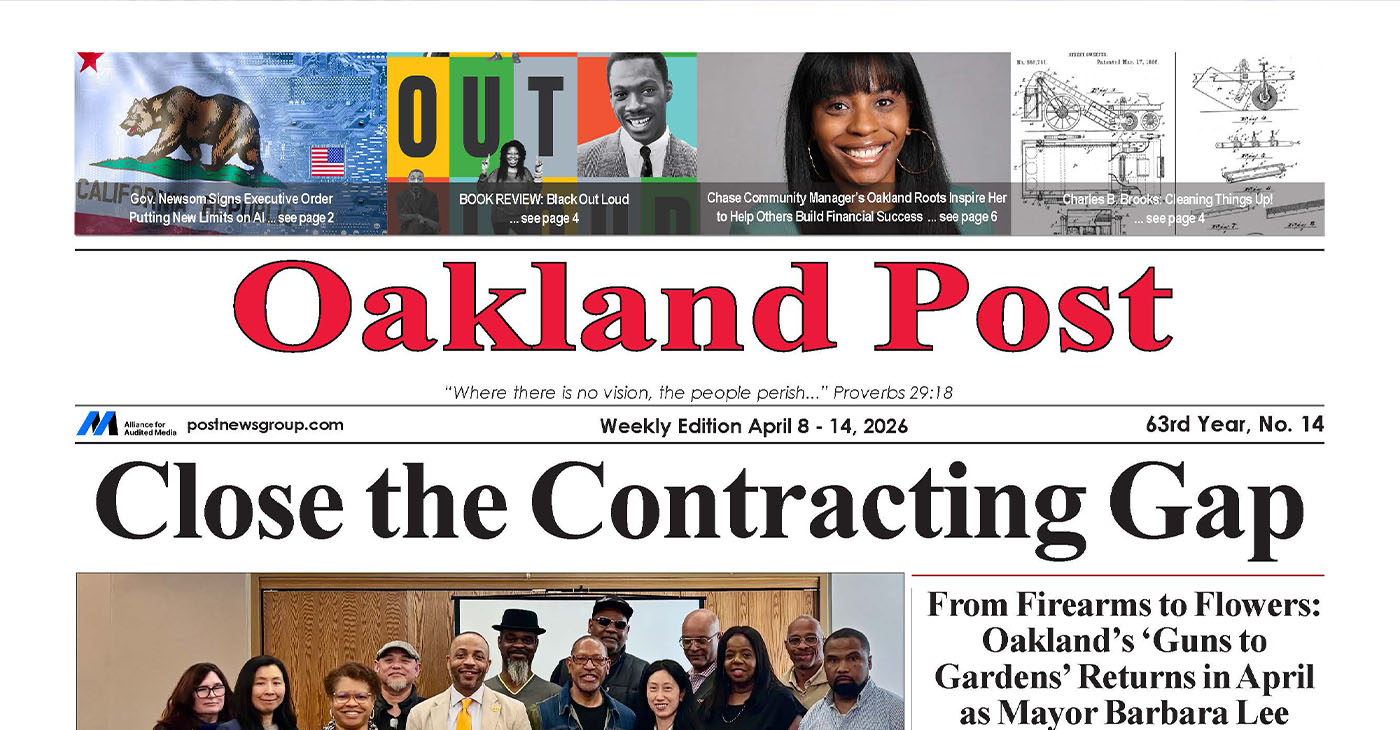
To enlarge your view of this issue, use the slider, magnifying glass icon or full page icon in the lower right corner of the browser window.
Activism
Oakland Post: Week of April 1 – 7, 2026
The printed Weekly Edition of the Oakland Post: Week of April 1 – 7, 2026
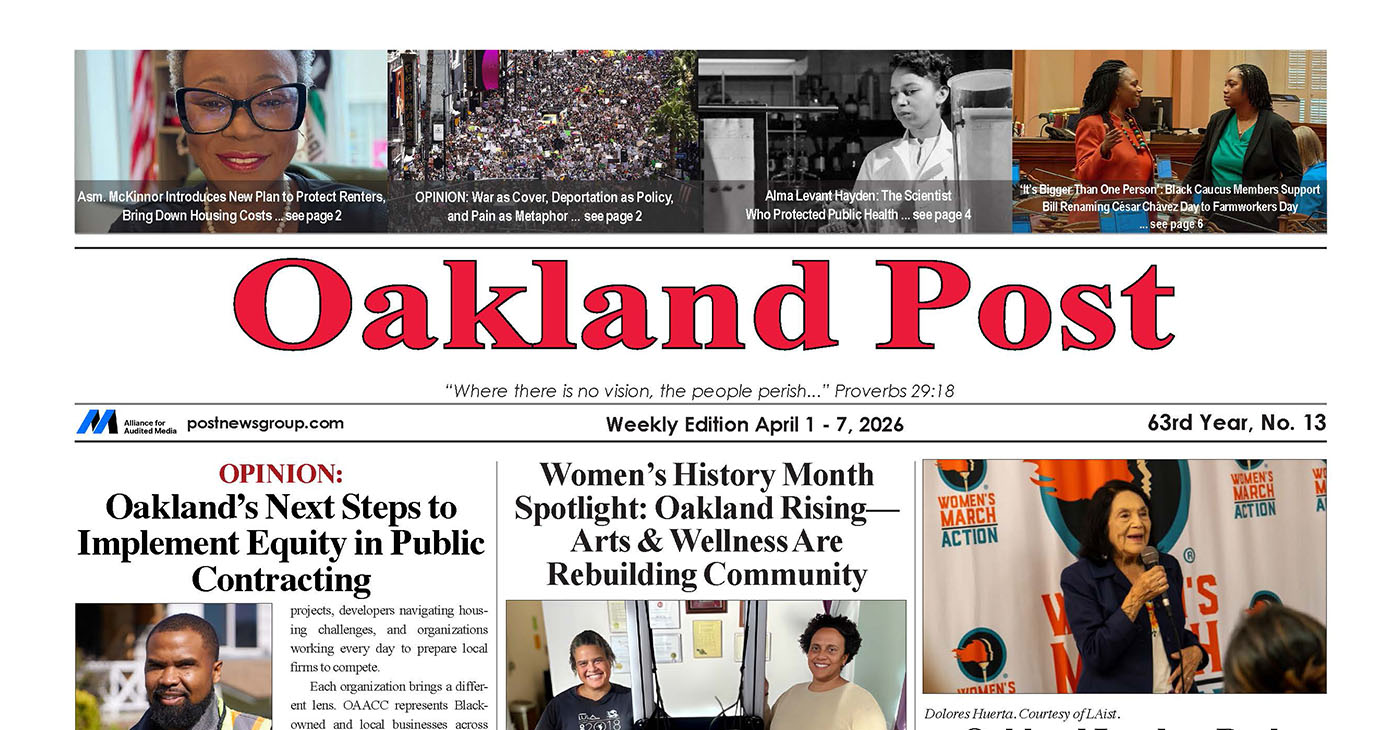
To enlarge your view of this issue, use the slider, magnifying glass icon or full page icon in the lower right corner of the browser window.
Activism
Oakland Post: Week of March 18 – 24, 2026
The printed Weekly Edition of the Oakland Post: Week of March 18 – 24, 2026

To enlarge your view of this issue, use the slider, magnifying glass icon or full page icon in the lower right corner of the browser window.

WORK FROM HOME
Home-based business with potential monthly income of $10K+ per month. A proven training system and website provided to maximize business effectiveness. Perfect job to earn side and primary income. Contact Lynne for more details: Lynne4npusa@gmail.com 800-334-0540


Oakland Post: Week of April 8 – 14, 2026

Oakland Post: Week of April 1 – 7, 2026

Black Artists in America, Installation Three Wraps at the Dixon Gallery and Gardens

Grief, Advocacy, and Education: A Counselor Reflects on Black Maternal Health

Future of Florida’s Black History Museum in Limbo

New Research Shows the Many Benefits of Early Learning

South Hampton K-8 Students Among Top 10 Finalists for Samsung’s ‘Solve for Tomorrow’ Competition

Cuba: No Negotiation with US on the President or Political System

Brooklyn Academy of Music Names Jamaican-Born Tamara McCaw as President

Trinidad & Tobego – U.S. Launches WhatsApp Channel for American Citizens in the Country

Oakland Post: Week of March 18 – 24, 2026

AI Innovation vs. Ethics and Environmental Impact

AI, Web3, and Digital Reparations

What If You Owned Your AI Agent?

Season 7, Episode 3 – January Reporter’s Roundtable 📱

Reflecting on Black History Milestones in Birmingham AL

Oakland Post: Week of February 25 – March 3, 2026

Oakland Post: Week of March 4 – 10, 2026

PRESS ROOM: NBA Hall of Fame Nominee Terry Cummings Joins 100 Black Men of DeKalb County to Launch Victory & Values Initiative

Trump’s MAGA Allies are Creating Executive Order Plan to Steal the 2026 Midterms

U.S. manufacturing rebounds – how foundry services are adapting to rising demand

Poll Shows Support for Policies That Help Families Afford Child Care

Oakland Post: Week of March 11 -17, 2026
Oakland Post: Week of March 18 – 24, 2026

OP-ED: One Hundred Years of Black Workers Telling the Truth

Advancements in solar technology that are changing the way we power the world

Financial Wellness and Mental Health: Managing Money Stress in College

Woman’s Search for Family’s Roots Leads to Ancestor John T. Ward – A Successful Entrepreneur and Conductor on the Underground Railroad

COMMENTARY: Women of Color Shape Our Past and Future

PRESS ROOM: Civil Rights TV Launches in Selma as the World’s First 24/7 Civil Rights Television Network

Hyundai Ioniq 5 Parking, Safety, and 360 View #shorts

2025 Ioniq 5 New Wiper & Powerful Performance! #shorts

Electric SUV Range: Is 259 Miles Enough? #shorts

EV Charging: How Fast Can You Charge an Electric Vehicle? #shorts

Biometric Cooling… Messaging Seats…Come on! 2025 Infiniti QX80 Autograph 4WD

Charged Up: Witness the Magic of a Fully Electric Car! #shorts

Range Rover Sport PHEV Included…: See What’s Inside This Luxury SUV! #shorts

Invisible Hood View: Perfect Parking with X-Ray Vision! #shorts

AI Is Reshaping Black Healthcare: Promise, Peril, and the Push for Improved Results in California

ESSAY: Technology and Medicine, a Primary Care Point of View

Sanctuary Cities

The RESISTANCE – FREEDOM NOW

STATE OF THE PEOPLE: Freddie

ECONOMIC BOYCOTT DAY!!!!!

I told You So
-
 Activism3 weeks ago
Oakland Post: Week of March 11 -17, 2026
-
 Activism3 weeks ago
Oakland Post: Week of March 18 – 24, 2026
-
 Advice3 weeks ago
Financial Wellness and Mental Health: Managing Money Stress in College
-
 #NNPA BlackPress2 weeks ago
Brooklyn Academy of Music Names Jamaican-Born Tamara McCaw as President
-
 #NNPA BlackPress2 weeks ago
Grief, Advocacy, and Education: A Counselor Reflects on Black Maternal Health
-
 #NNPA BlackPress2 weeks ago
New Research Shows the Many Benefits of Early Learning
-

 Advice4 weeks ago
Women & Wealth: Tips for Navigating Your Lifelong Financial Journey
-
 #NNPA BlackPress2 weeks ago
Black Artists in America, Installation Three Wraps at the Dixon Gallery and Gardens
