
#NNPA BlackPress
Alfred Liggins is the Other Half of Urban One’s Success Story
OMAHA STAR — “Look, my mother has an amazing story from where she came, and she’s always been more of a forefront person. A lot of people tend to think this woman built this company and she made her son the CEO, but they don’t realize how long I’ve been at the company and that it was really a joint effort. They tend to think it’s a traditional family business. But my mother is very good at giving me credit. She did it when we were in Omaha.”

By Leo Adam Biga, The Omaha Star
The oft-told entrepreneurial success narrative of Urban One founder and chair Cathy Hughes tends to leave out a crucial part of the story: her son and company CEO Alfred Liggins III is an equal partner in the journey of this black multimedia and entertainment enterprise.
By now, the tale of this single mother’s rise from Omaha dreamer to Washington, D.C. icon is the stuff of legend. But what gets lost in translation is that her son also came out of Omaha. He was only 7 when he moved with his mom to D.C., but he was there long enough to form fond memories of school (Sacred Heart, Mammoth Park), recreation (Kellom Pool, Fontenelle Park) and spending time with extended family (his maternal grandparents Helen Jones Woods and William Alfred Woods).
For years, he came back annually to visit family. He twice lived with his biological father Alfred Liggins II.
Contrary to popular belief, he didn’t enter or inherit the family business after it was already rolling. He was there from its fledgling start and helped make it a success. He’s since taken it to unimagined heights.
But even he is in awe of his mom.
 “Yeah, I marvel at her gumption and her fearlessness,” he said. “You have to remember, she’s only 17 years older than I am. The business was founded in 1980. I joined full time in 1985 when we had the one radio station, so I’ve had a front-row seat on the business journey from almost the beginning.

“She was very open in making me her business partner very early. It’s really a joint journey.”
Along the way, there’s been little time to admire what they’ve done together.
“It wasn’t like we were sitting back watching, going, ‘Oh, look at what we did.’ You’re too busy trying to keep doing what you’re doing on the right track and figuring out how to fix the stuff that’s not working and figuring out what the next thing is.”
He doesn’t mind her getting most of the pub.
“Look, my mother has an amazing story from where she came, and she’s always been more of a forefront person. A lot of people tend to think this woman built this company and she made her son the CEO, but they don’t realize how long I’ve been at the company and that it was really a joint effort. They tend to think it’s a traditional family business.
“But my mother is very good at giving me credit. She did it when we were in Omaha.”
Last May, Omaha feted Hughes at events celebrating her life, including naming a street in her honor. Liggins was content letting his mom have the spotlight.
“I never spend a bunch of time doing press or correcting people because that’s just not who I am. I love our partnership. I’m grateful and happy that people are inspired by her story, our story, and it’s a great story and a great journey. I don’t feel a need to build my own story separate and apart from hers.
“But if I get called for an interview and we start talking about it, I’m happy to lay out what my role was and what our relationship is.”
Before coming on full time at age 20 in 1985, Liggins worked at the station as a sportscaster and weekend talk-show host while a high school teenager.
“I guess it was cool I worked at a radio station, but I didn’t really want to do it. I was kind of required to do it. I didn’t really want to be in the radio business at first. I wanted to be in the record business.”
He went to L.A. to live with his stepfather, Dewey Hughes, looking to break into the music biz.
“I ended up unemployed and my mother suggested I come back to D.C., work at the station, go to college at night and get my act together and figure out what to do next, so I did that.”
What was then known as Radio One consisted of a single station. Within a decade, the mother and son built the company into a nationwide network.
“I always had a talent for sales. I went into the sales department and started to be successful pretty early on,” Liggins said.
He kept doubling his earnings from year to year until, by his early 20s, he was pulling down $150,000.
“I was young making a lot of money. That was the time I realized this would be a great career path if we could grow the business beyond where we were.”
Between his earnings and social life, he dropped out of night school. It was only some years later he applied to the Wharton School of Business executive management master’s program. Despite not being a college graduate, he got in on the strength of managing a $25 million a year company and recommendations from the likes of the Rev. Jesse Jackson.
“The idea that I had doubled-back and ended up getting in an Ivy League business school was exciting to me. It kind of felt like I was beating the system in some way.
My diploma says the same thing everyone else’s diploma says. In the end, I feel like I got my ticket punched, my certification, my bona fides.”
While he took care of business behind the scenes, Cathy Hughes made her presence known on air.
“My mother was doing the morning show and I was a stabilizing force in the sales department. She did some things on the air, like lead the Washington Post boycott, which really started to brand her as the voice of the black community. I was able to sell that to mainstream advertisers. We started to make money. It wasn’t a ton, but we went from losing four, five hundred thousand dollars to making a couple hundred thousand dollars.”
Reaching a more substantial audience came next.
“We owned one AM radio station, and FM radio at that time was really exploding. It was where all the audience was, AM was dying. We set out and put together a plan to expand into FM radio. I identified an FM we could afford. Investors worked with my mother and me to figure out how to finance it. It was like a $7.5 million purchase. I think they needed like 10 different minority-focused, venture-capital entities to put up the funding. And we got our first FM.
“That first year the bank required us to keep it in an adult contemporary format that wasn’t black-targeted because they wanted to have the cash flow. But we didn’t do that very well and we fell out of the ratings book. We were like, ‘OK, can we change the format to something we know?’ So, we changed to an urban adult contemporary and it took off like a rocket.”
For the first time, the company recorded serious profits.
 “Five years later the AM and the FM were doing $10 million of revenue and $5 million of profitability. We became a wild success. Then we bought into the Baltimore market – our first market outside of Washington. Then we kept going from there. I felt like we were on this mission to build this business. I felt optimistic and empowered and energetic and vigorous.”
In charge of day-to-day operations for more than two decades, Liggins has led subsequent strategic moves – from taking the company public in 1998 to brokering deals that created TV One and Interactive One (now iOne Digital) to entering the casino-gaming industry. He’s also guided the company in divesting itself of low-performing stations and other media segment drags and in acquiring Reach Media, whose national radio lineup includes Tom Joyner, Erica Campbell, DL Hughley and the Rev. Al Sharpton.
“We built our company around serving the black community,” he said.
That’s why getting into television was key.
“BET was created in Washington in 1980 – the same year Radio One was formed. We knew BET founder Robert Johnson. The people who invested in Radio One were also involved in BET. One of our lead investors was actually on the BET board, so we had a front-row seat to see that success.
“It was clear there was only one network targeting black people in the entire country, and that didn’t make any sense. But we were building the radio station and TV remained off our radar for a time.”
But there was no getting around that radio was “a tertiary medium,” Liggins said, “and if you wanted to really grow the platform to serve African-Americans you had to be in the places where they’re at – and they don’t just listen to radio.
“I’ve always looked at us as in the black people business and not just the media business. BET was wildly successful and there was only one of it, so I always wanted to get into the television business.”
The opportunity to enter the TV space came, he said, when “Comcast decided they wanted to expand in content, and I went in and made a big pitch to them.
“I said, ‘Look, I know we’ve never done television before, but we know how to market and program to black people. You have the distribution, but we’ll put up all the money.’
Lots of people were wanting to start a cable network, but they wanted Comcast to put up all the money. Eventually, $134 million was raised. Comcast invested $15 million in it. They got a big piece of the company just for giving us the distribution. We invested $74 million and I raised another $30 million from people I had done business with before. That’s how we got started in TV.”
The once monolithic TV industry, he said, “is disintermediating now with cord cutting” and streaming.
“We’re trying to figure out how to pay for and deliver more content and what other distribution opportunities or systems there are for us to monetize that content.”
To hedge against media volatility, the company’s diversified into the casino gaming business with partners MGM and a casino resort in D.C.
“It’s been a great investment for us,” Liggins said.
Meanwhile, the radio business that’s been the foundation of the company, he said, is “a declining, mature legacy media business that probably will have further consolidation.” He added, “We’ve got to figure out what our role in that is.”
Urban One carries “a lot of debt,” he said, “because we piled up a bunch of debt buying radio stations over the years, and then when the Internet hit all traditional media took a hit – print taking the worst of the brunt.”
“Our debt’s come way down but still not low enough, so were continuing to reduce our leverage. We’ve been buying back stock for 10 years, which is good, because we’ve been buying it back at low prices and paying down debt. Hopefully, we’ll make that transition to the new media ecosystem and have a reasonable level of debt and have increased holdings for the shareholders who decided not to sell.”
Then there’s the new phenomenon of black culture and content being in great demand.
“Everyone wants to be in that space,” Liggins said, “which makes it more competitive for us because we’re up against big guys like Viacom, A&E, HBO, Warner. Everybody’s got black content, and some of these players have got a lot more money than we do, so we’ve got to be smart and nimble in what we produce and how we finance it.”
He’s arrived at a leadership style that suits him.
“I’m an information-gatherer. I ask a lot of questions of a lot of people and I throw a lot of ideas on the wall. Then I debate them with folks. Even though I ask people a lot of questions I’m not necessarily a manager by consensus all the time. I’ll take that info and chart the path. I’m a big believer in hiring people who know more than I do in certain areas and have skill sets I don’t.
“When we were building the radio company, I made a point of hiring people who had worked for larger radio companies. People we brought in taught us about research and disciplined programming and sales techniques, so I’m a big believer in importing knowledge. What happens in a family business when it’s the only place you’ve really worked at is that you don’t know what you don’t know. You have to import that knowledge in order to grow the business.”
He nurtures the team he’s cultivated around him.
“I try to be collegial in my style with folks even though like my mother I can be very direct. Some people may say I’m aloof. I would say generally though the people who work with me like working with me. I nurture a positive relationship with those people.
“Sometimes when you have to ask people to do difficult things or you have to address negative issues or shortcomings it’s better if it’s coming from a place of constructive criticism in a joint goal as opposed to an ego-driven place where you’re trying to prove your smarter than that person.”
Ego has no place in his business approach.
“In a corporate environment I could see where infighting could cause managers to want to make sure they get credit for the idea and they look like they’re the smartest person in the room – because they want to get that next promotion. Well, fortunately, being in your own business I don’t have to worry about that. I’m more focused on just getting to the right answer and I don’t care who gets the credit.”
Liggins, a single father of one son, acknowledges he’s given some thought to a third generation in this family legacy business.
“It would be great. My son’s 10. He talks as if he wants to. It’s still early on. He’s got to earn his way into that, too. But I like the idea that he would want to follow in our footsteps. But it’s up to me he’s got a company to even consider taking over by the time he comes of age.
“I’m still trying to navigate our transition in the media business – reducing our leverage so the company isn’t at risk and so it is set up for the future.”
Whatever happens, Omaha remains home for him and his mother – a reality impressed upon him when they visited last spring.
“It’s like you come full circle. This is where we both recognize we’re from. We’ve got deep roots there. There’s a track record of successful African-Americans from that community. We’ve always come back.
“To have a street named in her honor is a big deal. You feel like your business career and your life have meant something. It was an amazing experience.”
(Read more of Leo Adam Biga’s work at leoadambiga.com.)









#NNPA BlackPress
Youth-Led Black August Event Brings Past to Present at East Oakland Boxing Association
The mission of Youth Alive! Is to “break the cycle of violence, heal trauma, and uplift a thriving community of leaders, to save lives in Oakland and beyond” by serving “as mentors, youth leaders, counselors, case managers, intervention specialists and violence interrupters,” working “to help violently wounded people heal themselves and their community.”
The post The mission of Youth Alive! Is to “break the cycle of violence, heal trauma, and uplift a thriving community of leaders, to save lives in Oakland and beyond” by serving “as mentors, youth leaders, counselors, case managers, intervention specialists and violence interrupters,” working “to help violently wounded people heal themselves and their community.” appeared first on BlackPressUSA.
Youth-Led Black August Event Brings Past to Present at East Oakland Boxing Association
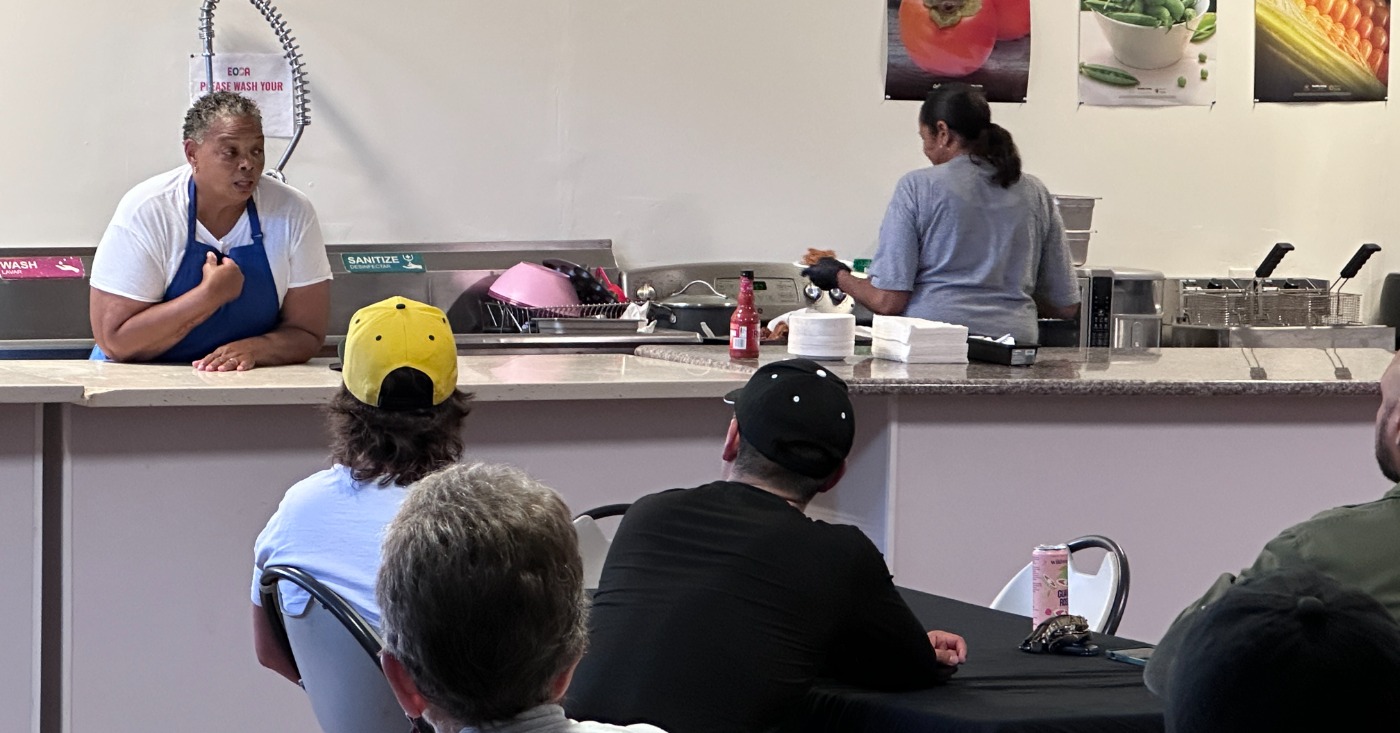
The East Oakland Boxing Association (EOBA) and Youth Alive! came together on Aug. 21 to share with their community all that Black August means to them.
Held on EOBA’s patio at 816 98th Ave. in Deep East Oakland, the two organizations hosted their second annual Black August Experience, featuring a food tasting, financial literacy and mindfulness workshops, and voter registration with the League of Women Voters Oakland (LWV).
Black August is known as a time to uphold the legacy of prisoners who protested their conditions by fasting, fighting, and educating themselves on the economic and political circumstances that contributed to their incarceration.
According to its website, “EOBA is a multi-service youth and community development hub that goes far beyond the ring. While rooted in the discipline of boxing, for nearly 40 years EOBA has also integrated robust programs in workforce development, food justice, afterschool enrichment, financial literacy, mentorship, and wellness.”.

The mission of Youth Alive! Is to “break the cycle of violence, heal trauma, and uplift a thriving community of leaders, to save lives in Oakland and beyond” by serving “as mentors, youth leaders, counselors, case managers, intervention specialists and violence interrupters,” working “to help violently wounded people heal themselves and their community.”
Through Coro California, another leadership organization serving young people across the state for 80 years, they gained a broader understanding of Black August.
EOBA Executive Director Dawna Williams spoke about how much she learned about Black August from the youth who created it. “I let them educate me,” she said. Instead of talking about prison reform and mass incarceration, Williams and youth interns found that Black August meant so much more. “We would have done a disservice if we had just focused on who the people were and what their situation was…We tried to take their message from back in the day and make it relevant to the young people today. What do they need to know?”
Youth interns created and placed posters around the patio to help participants understand how traditional Black foodways, civic engagement, financial literacy, and the power of education are relevant to Black resistance today.
An EOBA member described Black August with Youth ALIVE! as “a whole vibe. “This year we added the Fun Zone for the kids, because you really cannot go wrong with a Fun Zone. I also loved seeing everyone chillin’ in the outdoor lounge, catching some Vitamin D and just enjoying a Friday evening together.”
The food tasting, a popular event from last year, featured traditional Black foods such as black-eyed peas, johnny cakes, and fried chicken. Led by Williams, the tasting included a talk about how these traditional foods were made and why they are forms of Black resilience.
The “‘Plate of History’ was a favorite of the online writers. “Fun, educational, and did I mention delicious? Our Taste of History cook, Angela Southall, served up some good eats while connecting food to history and culture.”
The writer also commended the “League of Women Voters Oakland for their civic leadership and for getting our young people informed, ready, and registered to vote.”
Overall, it was a “good Friday event in East Oakland,” the writer said.
Upcoming Black August events: Building Opportunities for Self-Sufficiency (BOSS), will host “Black August: The Arc of Liberation” at Oakland City Hall on Sat. Aug. 29, from 11 a.m. to 3 p.m.
The websites for East Oakland Boxing Association, Youth Alive! and CORO are sources for this report.
Jana Lang is an Oakland resident, teacher, gardener and poet participating in the Propel News Initiative.
The post The mission of Youth Alive! Is to “break the cycle of violence, heal trauma, and uplift a thriving community of leaders, to save lives in Oakland and beyond” by serving “as mentors, youth leaders, counselors, case managers, intervention specialists and violence interrupters,” working “to help violently wounded people heal themselves and their community.” appeared first on BlackPressUSA.
#NNPA BlackPress
EV Home Charging Warning: What Dealerships Won’t Tell You! #shorts
Is your home EV charging setup ready? Dealerships may not warn you about critical outlet and circuit needs. Find out before you plug in!
The post EV Home Charging Warning: What Dealerships Won’t Tell You! #shorts appeared first on BlackPressUSA.

Dealerships won’t tell you: charging this big battery at home isn’t always simple. Verify your outlet capacity, circuit, and setup before assuming level one or basic outdoor outlets will suffice.
 Watch the full video: https://youtu.be/A9Cd2SspoaQ
#AutoNetwork
The post EV Home Charging Warning: What Dealerships Won’t Tell You! #shorts appeared first on BlackPressUSA.
#NNPA BlackPress
Car Buying Secrets: Dealership Traps & How to Avoid Them #shorts
Don’t get tricked at the dealership! Learn essential car buying secrets to secure the best deal and avoid hidden traps.
The post Car Buying Secrets: Dealership Traps & How to Avoid Them #shorts appeared first on BlackPressUSA.

Before stepping into a dealership, secure bank pre-approval for your financing rate. Then, get the out-the-door price in writing. Never discuss monthly payments until that number is fixed. Test road noise and rear visibility yourself. Decline add-ons with a simple ‘Not today’. Check backseat space with your tallest household member.
Watch the full video: https://youtu.be/maAOBjO1puY
#AutoNetwork
The post Car Buying Secrets: Dealership Traps & How to Avoid Them #shorts appeared first on BlackPressUSA.


Prostate Cancer is Twice as Likely to Kill Black Men. Talking to Your Doctor Could Help Save Your Life

Oakland Post: Week of September 2 – 8, 2026

Longtime BWOPA Member Brendalyn Goodall Appointed to California Workforce Development Board

Jackie Wright Champions Bay Area Stories, Filmmakers and Cultural Institutions

Chef Sharon Lee Blends Culinary Excellence, Education and Empowerment

‘Passing a Law Isn’t The Finish Line’: California Assembly Evaluates Implementation, Results

OPINION: Angie Nixon Will Turn You Into a Democratic Socialist If Donald Trump Hasn’t Already

Gov. Newsom Signs Law Shielding Immigration Aid Workers From Doxing Threats

BOOK REVIEW: Every Inch of a Lady

Big City Mayors Ask for “Yes” Vote on Housing Bond Measure; Conservatives Say “No”

Madeline M. Turner: The Inventor Who Made Juicing Easier

Gubernatorial Candidate Steve Hilton Blasts California New Tire Rules; Newsom Hits Back

Frontier Airlines’ Return to Oakland Airport Brings Flights, Jobs and Opportunity

Secretary of State Shirley N. Weber Urges Californians to Vote Early as Voter ID Battle Intensifies

Gov. Newsom’s Latest Appointees Include Sacramento Advocate for Formerly Incarcerated Students; State’s New Tech Chief

Department of Homeland Security Demands California Secretary of State Shirley N. Weber Scrub Voter Rolls

New Judge Could Decide if Karmelo Anthony Gets a New Trial

“The Power to See Threats Sooner”: Gov. Newsom, Safety Officials Showcase California’s Investments in Hi-Tech Wildfire Prevention

Alpha Kappa Alpha Sorority, Inc. Celebrates New North Atlantic Regional Director

California Sen. Padilla Joins Colleagues to Introduce Bill Imposing Term Limits on Supreme Court Justices

Less Affluent School Districts, Including Sacramento City, Face Threat of State Takeover

Car Wash Workers Cope with Lingering Impacts of ICE Raids

COMMENTARY: You Are Already Paying for the AI Boom

California Bill Would Let Abuse Victims Use Trauma as Legal Defense for Violent Crime

Oakland Post: Week of July 29 – August 4, 2026

OP-ED: ‘The Trusted Messenger’ and the Black Vote

How Oakland’s Courtsmith is Scaling its Business and Local Impact

ESSAY: California Can Close Its Colorectal Cancer Gap

As Part of Your Back-to- School Checklist, Vaccinate

Oakland Post: Week of August 5 – 11, 2026

The Conversation With Al McFarlane 6/23/26

Media Monday 6/22/26

LIVE! ASK ALMA! — TUES. 6.23.26 7PM EST

Car Buying Secrets: 4 Hidden Checks Before You Sign!

Is This 550 HP Charger Worth YOUR Money? AutoNetwork Review

Celebrating Juneteenth – Frederick Douglass on education and resistance

LIVE! — ASK ALMA! — TUES. 6.19.26 7PM EST

Hyundai Ioniq 5 Parking, Safety, and 360 View #shorts

2025 Ioniq 5 New Wiper & Powerful Performance! #shorts

Electric SUV Range: Is 259 Miles Enough? #shorts

EV Charging: How Fast Can You Charge an Electric Vehicle? #shorts

Biometric Cooling… Messaging Seats…Come on! 2025 Infiniti QX80 Autograph 4WD

Charged Up: Witness the Magic of a Fully Electric Car! #shorts

Range Rover Sport PHEV Included…: See What’s Inside This Luxury SUV! #shorts

Invisible Hood View: Perfect Parking with X-Ray Vision! #shorts
-
 Community4 weeks ago
Less Affluent School Districts, Including Sacramento City, Face Threat of State Takeover
-
 Commentary4 weeks ago
ESSAY: California Can Close Its Colorectal Cancer Gap
-
 Business4 weeks ago
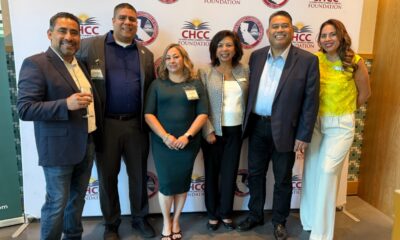
California Hispanic Chambers of Commerce Unveils: ‘Powering the Future’ Theme for 47th Annual Statewide Convention
-

 Community4 weeks ago
Four Candidates, Including Incumbent Barbara Lee, Qualify for Oakland Mayor’s Race
-

 Business4 weeks ago
From Blueprint to Breakthrough: Tackling Affordable Housing in Oakland
-
 Black History4 weeks ago
Oakland Observes Black August with Block Parties, Film Showings, Workshops
-
 Activism4 weeks ago
Oakland Post: Week of August 12 – 18, 2026
-

 Commentary4 weeks ago
COMMENTARY: Why Local School Tax Measure G1 Will Not Be on the November Ballot

1 Comment