
Activism
After Wood Street Clearance, Homeless People Stay
Advocates claim about a dozen of them showed up on November 8 to support residents. One of them, Annmarie Bustamente, said their presence “definitely helped the residents block the eviction” and that the residents were “tired of displacement and said no” to a member of Oakland’s Public Works Department encouraging them to move.

By Zack Haber
On the morning of November 8, members of both Oakland’s Encampment Management Team, Public Works, and Police Department came to an area encompassing about 1/5 of a mile from Wood Street and Grand Avenue to Wood Street and 26th Street with the stated goal of clearing the location of homeless people. But after the attempted clearance, homeless people remained in the area.
“The objective was to move as many people as possible,” wrote Oakland Communications Director Karen Boyd in an e-mail. “But that could not be accomplished without the full cooperation of the community.”
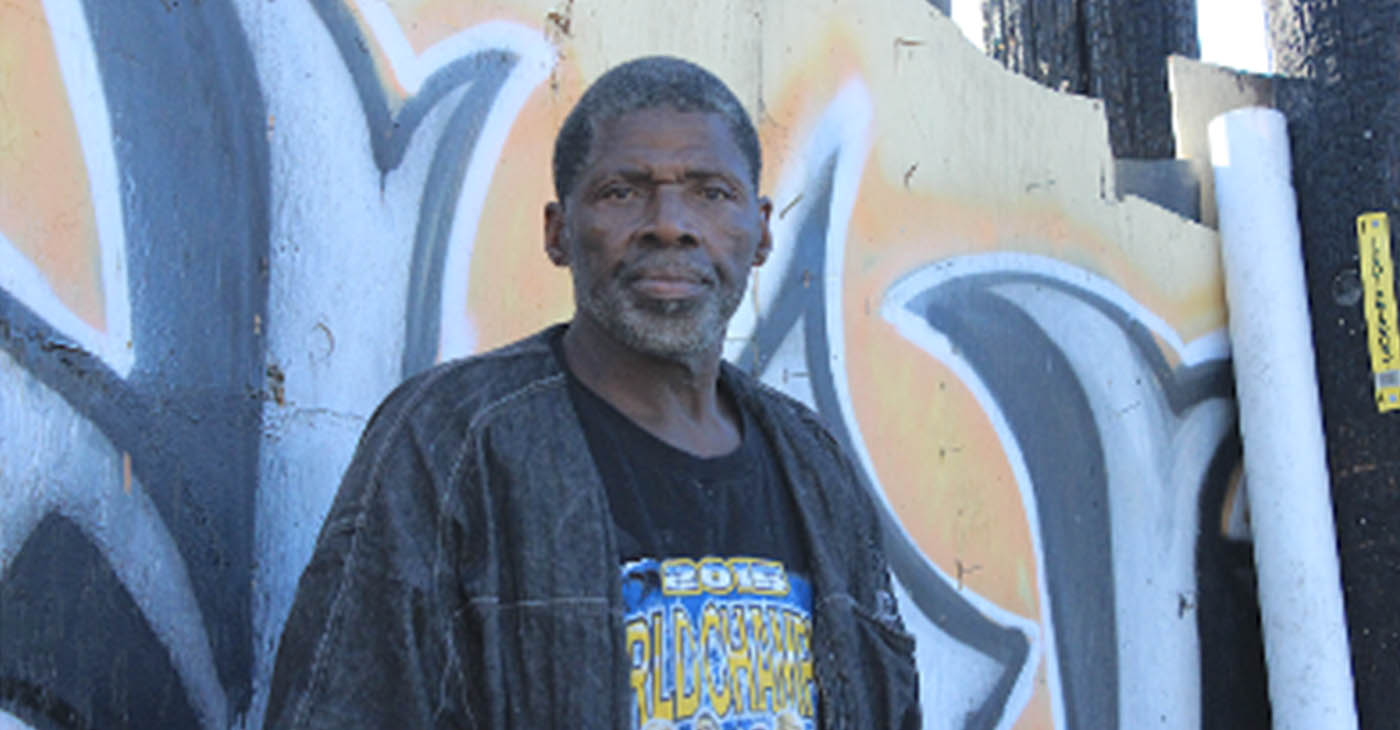
“You can’t push us back any further than this,” said homeless resident Jessie Parker, a 63-year-old lifelong Oaklander who came to live on Wood Street after being shot in the leg. The injury prevented him from being able to do the physical movement required for the construction and electrical work he had done in the past. On November 4, the city put up pink notices informing him that starting in four days they would force him to vacate the area he’s lived in for about nine years, but he, like dozens of others living in vehicles, tents or makeshift homes along Wood Street, didn’t leave.
Parker’s statement references the fact that Wood Street is one of the westernmost streets in West Oakland. A little further west from where Parker lives is land owned by Caltrans under the 880 overpass where still more homeless people live, as well as a 1.5 acre plot of land belonging to a company called Gamechanger LLC. To the east are businesses and residential areas.
After about two years in delays, Gamechanger agreed to lease its land to the city for $1 a year and the city opened a Safe RV Parking site on July 7 on the company’s land through the non-profit Building Opportunities for Self Sufficiency.
In the Safe RV Parking site, residents who own RVs and trailers can legally live in them and receive services. It’s unclear how long this service will last, as the lease between GameChanger and the city can expire by November of next year. That same lease laid out plans to allow 75 RVs or trailers space to park, but while walking through the site on November 10, this writer counted 29 RVs while half of the site sat vacant. The site is not available for many residents, like Parker, who don’t have an RV or a trailer.
“I never received an offer to move in,” said Parker, who lives in a truck. “It’s for RVs only.”
The site opening has put other residents at risk of displacement who can’t or don’t want to access it. Since Oakland’s City Council unanimously passed its Encampment Management Policy in October of last year, despite protests and critical public comments during five hours of a meeting, city policy now states those living within 25 feet of such sites can face clearance.
Although their policy now allows it, the city had not attempted to move nor even encouraged people who are living near the Safe RV Parking site to leave the area until the November 8 operation. But recent communications from Justin Tombolesi, who is the constituent liaison for District 3 Councilmember Carroll Fife, have led advocates and homeless people to believe the company is now pressuring the city to force people to leave the area. In a text message to a homeless resident who lives near Wood Street, Tombolesi wrote “Gamechanger is suing the city because people are too close to the RV site.”
Gamechanger denies suing or pressuring the city. When asked if the company was suing or threatening to sue the city, the company’s lawyer, Pat Smith of Smith LLP, responded in an email, writing “Not at all — no thought of suing the city. The city is solely in charge of the site and ownership has no involvement or concern over how the city is handling things.”
In an e-mail, Boyd wrote that “No filings or actions to terminate the lease have been served upon the city,” but that the city has “spoken with legal counsel representing GameChanger’s lot regarding the city’s plans to create compliance.”
In another text message to the same resident, Tombolesi also claimed the city would allow residents living on Wood Street to move to a vacant portion of land off the street and just north of the Safe RV Parking site during the November 8 closure operation. No residents have moved into that location and residents, as well advocates who were on site that day, claim no one was invited to do so. Boyd said the city offered nine spaces in the city’s Community Cabins, and five spaces in a rapid rehousing program called The Holland. One resident accepted a space in the Community Cabins, which is a program that offers small, unheated shelter in shed-like spaces made by the Tuff Shed company.
Advocates claim about a dozen of them showed up on November 8 to support residents. One of them, Annmarie Bustamente, said their presence “definitely helped the residents block the eviction” and that the residents were “tired of displacement and said no” to a member of Oakland’s Public Works Department encouraging them to move.
Although the closure operation was originally slated to occur over three days between Monday November 8 and Wednesday November 10, no one from the city came back after the first day.
“The ability to proceed Monday impacted the entire operation,” wrote Boyd in an e-mail, “and activities for the following days were cancelled.”
Although homeless residents did not leave Wood Street, Oakland’s Police Department’s Public Information Officer Kim Armstead said the department did tow six vehicles for long expired registration on November 6 and 7 in the area in preparation for the closure.
According to Armstead, the department avoided towing vehicles that served as people’s homes, as the department, following the cities’ direction, has “agreed not to tow vehicles where there is clear evidence they are being used as shelter.” Armstead also said on November 8, OPD supported the city operation with two officers, one sergeant, and six police service techs who provided traffic control and security for city workers.
One homeless resident named Evangeline said the towing of her and her husband’s vehicle has made it difficult to go grocery shopping and to visit her mother, who just had a heart attack. The couple can’t afford to pay the fees to get the car back, so it will remain in the tow yard.
“We’re really stuck,” she said.
Although residents like Parker avoided being moved from Wood Street, it’s unclear when or if the city will come back to move them. According to Parker, a member of the non-profit Building Opportunities for Self Sufficiency has been working to secure some form of permanent housing for him, and he’s hopeful that the person will be successful.
“I’m a little older now so my peak interest is getting back into housing,” said Parker. “If I get into housing, I’m sure I won’t go back to this. I can’t take these harsh elements no more.”







Activism
Oakland Post: Week of September 23 – 29, 2026
The printed Weekly Edition of the Oakland Post: Week of September 23 – 29, 2026

To enlarge your view of this issue, use the slider, magnifying glass icon or full page icon in the lower right corner of the browser window.
Activism
Oakland Post: Week of September 16 – 22, 2026
The printed Weekly Edition of the Oakland Post: Week of September 16 – 22, 2026

To enlarge your view of this issue, use the slider, magnifying glass icon or full page icon in the lower right corner of the browser window.
Activism
Oakland Post: Week of September 9 – 15, 2026
The printed Weekly Edition of the Oakland Post: Week of September 9 – 15, 2026

To enlarge your view of this issue, use the slider, magnifying glass icon or full page icon in the lower right corner of the browser window.



Asm. Corey Jackson Announces Launch of 24-Hour Childcare in His District

IN MEMORIAM: The Rev. Leon “Sonny” Clark, Longtime Orange County Pastor and Community Leader, Dies at 72

Poll: Becerra Widens His Lead Over Hilton; Californians Split on Wealth Tax

From Historic Memories to New Possibilities: Oakland Celebrates Coliseum 60

County Office of Education Says OUSD Finances Are Getting Healthier, Materially Stronger

LIVE FREE Sunday Dinner Brings Faith, Fellowship and Civic Conversation to Oakland

Remembering Chauncey Bailey as Student Journalists Face Threats to Truth-Telling

BLACspace Cooperative Invites Bay Area to Experience Oakland’s Black Cultural Ecosystem Through a BLAC Map Tour + Party

In Wake of Death on Doorstep, Williams Chapel Baptist Church Calls for Better Care, Funding for Unhoused

Oakland Centenarian Nuna McKee Honored!

Caribbean Nations Produce Action Plan Calling for UK Reparations Over Slavery

Oakland Post: Week of September 23 – 29, 2026

Doulas Are Helping Black California Moms Navigate Pregnancy–Even as High Mortality Rates Persist

Newsom Signs Addictive Social Media Law to Protect Kids

On Your November Ballot: Prop 38 Would Allocate $8.4 Billion to Immunology and Immunotherapy Funding

Standoff for Justice: Our Homes Are Worth Fighting For

Oakland Post: Week of August 26 – September 1, 2026

Frontier Airlines’ Return to Oakland Airport Brings Flights, Jobs and Opportunity

Gubernatorial Candidate Steve Hilton Blasts California New Tire Rules; Newsom Hits Back

Chef Sharon Lee Blends Culinary Excellence, Education and Empowerment

Jackie Wright Champions Bay Area Stories, Filmmakers and Cultural Institutions

Big City Mayors Ask for “Yes” Vote on Housing Bond Measure; Conservatives Say “No”

Oakland Coliseum Project Opens Door for Small Businesses to Build Bigger

Gov. Newsom’s Latest Appointees Include Sacramento Advocate for Formerly Incarcerated Students; State’s New Tech Chief

Misnamed ‘Parent’ PAC Seeks to Influence Oakland School Board Elections

Longtime BWOPA Member Brendalyn Goodall Appointed to California Workforce Development Board

Gov. Newsom Signs Law Shielding Immigration Aid Workers From Doxing Threats

Secretary of State Shirley N. Weber Urges Californians to Vote Early as Voter ID Battle Intensifies

From Palestine to Oakland: Seeds for Liberation Examines Shared Struggles for Freedom

IN MEMORIAM: Dolly Parton Dead at 80 — How She Built a Legacy of Love and Earned Her Place in Black Culture

The Conversation With Al McFarlane 6/23/26

Media Monday 6/22/26

LIVE! ASK ALMA! — TUES. 6.23.26 7PM EST

Car Buying Secrets: 4 Hidden Checks Before You Sign!

Is This 550 HP Charger Worth YOUR Money? AutoNetwork Review

Celebrating Juneteenth – Frederick Douglass on education and resistance

LIVE! — ASK ALMA! — TUES. 6.19.26 7PM EST

Hyundai Ioniq 5 Parking, Safety, and 360 View #shorts

2025 Ioniq 5 New Wiper & Powerful Performance! #shorts

Electric SUV Range: Is 259 Miles Enough? #shorts

EV Charging: How Fast Can You Charge an Electric Vehicle? #shorts

Biometric Cooling… Messaging Seats…Come on! 2025 Infiniti QX80 Autograph 4WD

Charged Up: Witness the Magic of a Fully Electric Car! #shorts

Range Rover Sport PHEV Included…: See What’s Inside This Luxury SUV! #shorts

Invisible Hood View: Perfect Parking with X-Ray Vision! #shorts
-
 Community2 weeks ago
Misnamed ‘Parent’ PAC Seeks to Influence Oakland School Board Elections
-

 Activism3 weeks ago
Oakland Post: Week of September 2 – 8, 2026
-

 Community2 weeks ago
Richmond Tiny House Village Farm & Garden Set to Open Gates on Sept. 26
-

 Black History2 weeks ago
OPINION: Nolan Wells’ Death One of Several Signifying Racial Terror Lives on in U.S. South
-

 Black History2 weeks ago
Latest Massacre in Haiti Reveals Cruelty U.S. Deportations
-

 Activism2 weeks ago
Oakland Post: Week of September 9 – 15, 2026
-

 Community2 weeks ago
Democratic Clubs Interview Candidates for Oakland School Board
-
 Featured2 weeks ago
‘Ready to See These Bills Become Law’: Sen. Weber’s Package of 15 Bills Advance to Gov. Newsom’s Desk
