Connect with us

Activism

Protecting California’s Black Moms and Babies: Policies and Programs Struggle to Fix Deep-Rooted Maternal Health Inequities

“Access to doula services means that any time in their trimesters, they can have eight sessions with their doula, whether virtual, Telehealth or in-person. The doulas are with them through their labor and delivery, and can help clients, partners, families, be prepared with a birth plan, education, and understanding labor stages,” said Los Angeles-based Sister Marquita of A Sister By Your Side doula services.

Published

on

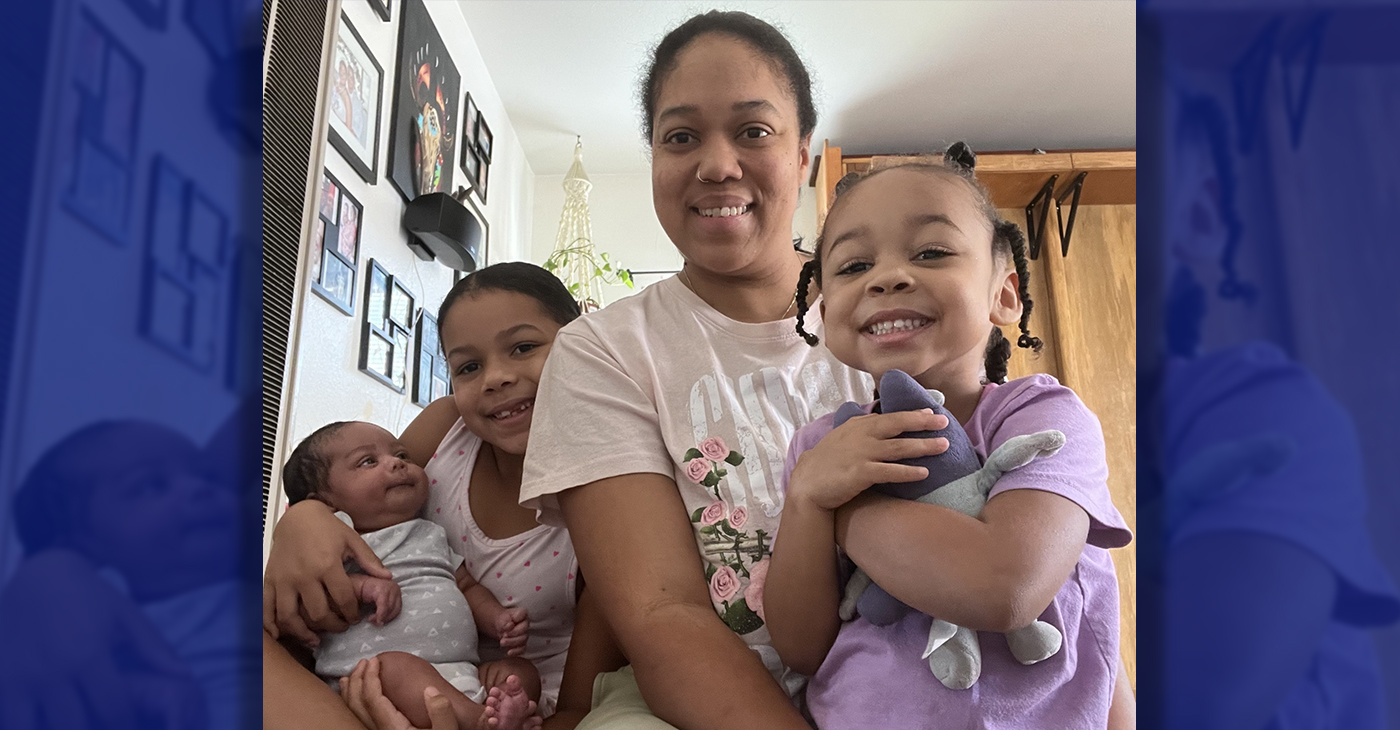
Gnae Dismuske and her children.

By Charlene Muhammad, California Black Media

Gnae Dismuke experienced a miscarriage at 11 weeks in 2017 and later gave birth to three children, now ages six, four, and one month.

Dismuke says she’s encouraged that programs exist to advocate for safer birth outcomes for Black women like her. However, when it comes to actual practices of medical facilities and doctors, she has a conflicted perspective – a point of view shaped by her three birth experiences: one in a hospital, one at home, and another in a hospital.

Dismuke, who lives in Los Angeles, addressed her birthing challenges with the help of Black Infant Health in partnership with the Long Beach Public Health and Human Services Department. They supplied doulas and nurses who visited her home during her last birth and advocated on her behalf.

“The nurse was able to move mountains quickly that I wasn’t able to move with the medical industry, with just advocating for me, asking for things like physical therapy,” she stated.

Statistics show that Black women in California are three to four times more likely than White women to die from pregnancy-related complications. Some birth equity advocates argue that expanding access to midwifery care and certified birth doulas could help reduce these disparities. Others emphasize the need for education, noting barriers such as high costs for preferred birthing options and managing high-risk factors like hypertension and stress related to systemic discrimination.

“Doctors don’t want to see you until almost the end of the first trimester. That’s 11 to 12 weeks in. Many things could go wrong,” Dismuke said, recalling experiencing spontaneous bleeding in the first trimester for all three of her births.

“Groups like M.O.R.E. Mothers, a nonprofit maternal health-focused community-based organization in Long Beach, are part of programmatic solutions. They provide classes and workshops,” she added.

To assist mothers like Dismuke, the Department of Health Care Services (DHCS) added doula services to preventive services covered under Medi-Cal in 2023. Still, many mothers don’t know these benefits exist because Medi-Cal coverage is based on income, but those pregnant qualify at higher income levels than other adults.

“I thought [a doula] was for people who had money, who had private health insurance and stuff like that,” said a Medi-Cal beneficiary who asked not to be identified.

Under Assembly Bill (AB) 133, doula services were formally included as a “covered preventive service” under Medi-Cal in 2023. AB 133 was co-authored by former State Sen. Nancy Skinner (D-Berkeley) and Sen. Akilah Weber (D-San Diego), a pediatrician. It built on the California “Momnibus” Act, passed in 2021, aimed at improving maternal and infant health outcomes among Medi-Cal members.

“Access to doula services means that any time in their trimesters, they can have eight sessions with their doula, whether virtual, Telehealth or in-person. The doulas are with them through their labor and delivery, and can help clients, partners, families, be prepared with a birth plan, education, and understanding labor stages,” said Los Angeles-based Sister Marquita of A Sister By Your Side doula services.

Doulas also help mothers understand their rights during labor and delivery, and Medi-Cal support extends postpartum care until the baby reaches one year of age.

The statistics are personal for Jade Ross, a member of Los Angeles County MotherBoard, an advisory collaborative of Black mothers working at the intersection of healing, advocacy, and sustainable systems change to create a more just and equitable world for Black mothers and babies.

“That’s why I do the work I do: so Black women can basically birth in joy without trauma,” stated Ross, while cuddling her 11-week-old infant, Kalea.
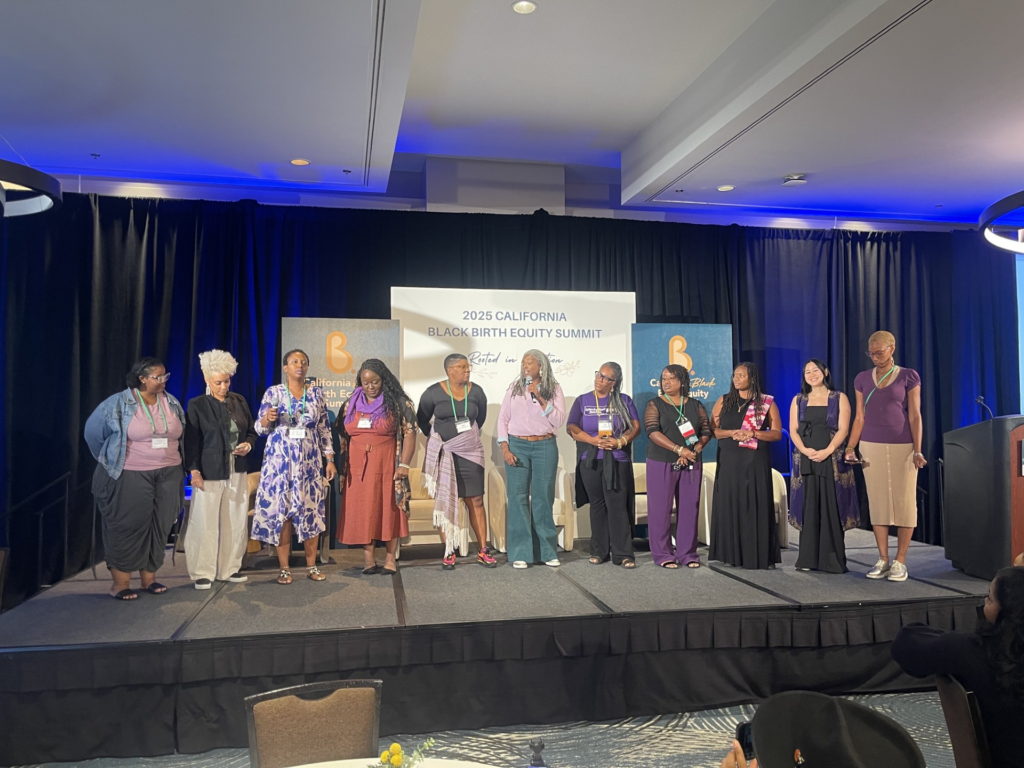
Organizers and participants of the 2025 California Black Birth Equity Summit close out the event with an uplifting a cappella performance.

Organizers and participants of the 2025 California Black Birth Equity Summit close out the event with an uplifting a cappella performance.

“A lot of it has to do with education,” continued Ross, speaking at the 2025 California Black Birth Equity Summit in Sacramento. “I think a lot of people have certain ideas about what midwifery or holistic care looks like, or, on the other end, don’t trust the medical system.”

Held biannually, the Summit was founded by Mashariki Kudumu, a doula and public health advocate. This year, it was co-hosted by the California Coalition for Black Birth Justice and UCSF Center for Birth Justice. Themed “Rooted in Action,” the Summit brought over 500 clinicians, midwives, doulas, and policymakers together.

Sonya Young Aadam, CEO of the California Black Women’s Health Project, said, “I strongly believe that our advocacy in these spaces can make a difference. We go in and we demand the care that we need. But many of us are not even aware the disparities exist.”

Despite progress, disparities persist. According to the 2025 State of Black Birth Equity in California Report, the state continues to experience disproportionately poor outcomes, even with low maternal mortality and strong infant health outcomes.

Jennie Joseph, a British-trained midwife and summit panelist, said that Black women in the U.S.:

  • tend to have premature babies;
  • have low birth weight babies;
  • lose babies more frequently;
  • are less likely to breastfeed; and
  • often struggle to recover postpartum.

“This is all we’ve got. This is all we can expect. Is this the reason why Black women and families are suffering?’ No! The root causes are straightforward: racism, classism, gender discrimination. That’s it!” said Joseph.

She emphasized these outcomes are not physiological but result from systemic inequities.

“One solution is simply getting people into care straight away. We operate like the triage or the emergency room for pregnancy-related issues. We’ll get you in, we’ll sort you out, and then we’ll pass you on to whoever you want to go on to,” she said.

Assemblymember Mia Bonta (D-Alameda) noted at the Summit that California’s maternal health crisis includes the closure of more than 50 labor and delivery wards in the last decade, heavily impacting low-income, Black, Latina, and Indigenous communities.

Ongoing challenges include low Medi-Cal reimbursement, lack of investment in the birthing workforce, and federal attacks on healthcare infrastructure. Bonta’s AB 55, the Freedom to Birth Act, champions Alternative Birth Centers, which improve newborn birth rates, decrease cesarean births, promote successful breastfeeding, and reduce racial health disparities.

“Red tape should never stand in the way of proven solutions to deliver affordable and accessible healthcare for Californians. By signing AB 55, our state has taken a much-needed step to address the maternal health crisis,” Bonta said.

Doula Directory: Search a list of doulas in California enrolled as Medi-Cal providers.

California Black Doulas: Get a full list.


Continue Reading
Click to comment

Leave a Reply

Your email address will not be published. Required fields are marked *

Activism

Up to the Job: How San Francisco’s PRC Is Providing Work Opportunities That Turn Into Lasting Stability

Each year, PRC serves more than 5,000 clients through a wide range of programs. These include housing navigation, legal advocacy to ensure access to health and public benefits, supportive housing, job and life-skills training, and residential treatment programs. 

Published

on

Black Leadership Council (BLC) Advocacy Day in Sacramento. BLC works to advance meaningful change through policy engagement to unlock the full potential of Black and low-income communities. Photo courtesy PRC.

Joe Kocurek | California Black Media  

 Seville Christian arrived in San Francisco in the 1990s from Kansas City, Mo., a transgender woman coming from a time and place still hostile to who she was. 

 San Francisco offered a deeper LGBTQ+ history and a more visible community of people like her, but even in a city known for acceptance, building a stable life from scratch was no small task. 

 After arriving in the city, she turned to Positive Resource Center (PRC) looking for work — and for a foothold — in a new place. 

 “PRC gave me my first job,” Christian said. “A simple gig — passing out magazines at the San Francisco Pride Parade.” 

 That first opportunity marked the beginning of a decades-long relationship with PRC, one that has seen Christian grow from client to valued employee, and eventually to policy fellow. 

 “Today, I’ve been with PRC for 27 years, going on 28,” she said. 

Helping people access employment and build sustainable careers has been a cornerstone of PRC’s mission since its inception nearly four decades ago. In its most recent annual impact report, PRC served 443 clients through workforce development services, including career counseling, educational programs, hands-on training, and job search assistance. The average wage earned by PRC clients is $26.48 per hour — approximately 38% above San Francisco’s minimum wage. 

To advance this work, organizations like PRC have benefited from funding through California’s Stop the Hate Program, which provides direct support to community-based organizations leading anti-hate initiatives. 

Christian’s path was not without challenges. During some rocky years, she experienced periods of housing instability and struggled with addiction. Through PRC, she enrolled in a life-skills program that emphasized using her own lived experience as a means of helping others. The program helped set her on a path toward completing an associate’s degree and ultimately launching a career in case management. 

“Today, whether someone is new to the city or has lived here their whole life, I know how to help them navigate to where they need to be,” Christian said. 

PRC welcomed guests to their annual Open House in April, an evening dedicated to connection, reflection, and learning more about the programs and people working every day to support San Franciscans experiencing housing instability, unemployment, and behavioral health challenges.

PRC welcomed guests to their annual Open House in April, an evening dedicated to connection, reflection, and learning more about the programs and people working every day to support San Franciscans experiencing housing instability, unemployment, and behavioral health challenges.

Each year, PRC serves more than 5,000 clients through a wide range of programs. These include housing navigation, legal advocacy to ensure access to health and public benefits, supportive housing, job and life-skills training, and residential treatment programs. 

While PRC was founded to serve people living with HIV, its mission has expanded over the decades to meet the needs of people with disabilities, individuals experiencing homelessness, and those facing mental health and substance use challenges.  

According to PRC’s Chief of Public Policy and Public Affairs, Tasha Henneman, some of the organization’s earliest programs remain as vital today as they were at the start. 

“Our emergency financial assistance program helped more than 1,200 people this year pay rent, cover medical bills, and keep the lights on,” Henneman said. “And over 1,400 people reached out for legal advocacy, resulting in more than $2.5 million in retroactive benefits unlocked.” 

Beyond direct services, PRC is deeply committed to community empowerment and policy change. Programs such as the Black Leadership Council support community leaders in advocating for systemic reform, while the Black Trans Initiative focuses on addressing the unique challenges faced by Black transgender individuals. 

 A recent study from the Williams Institute highlighted findings that 71% of transgender homicide victims in the U.S. between 2010 and 2021 were Black and that nearly a third of the transgender homicides during that period were confirmed or suspected hate crimes.  

PRC’s direct and indirect services can be a lifeline for people experiencing hate and are an example of the resources people can get connected with through the state’s CA vs Hate hotline.  

PRC is now also producing a film project that centers the lived experiences of Black trans clients, including individuals like Christian.

 “Our film highlights the health journeys and lived experiences of some of PRC’s Black trans clients,” Henneman said. “Our goal is to give voice, visibility, and agency to the participants — and to bring their stories, both harrowing and inspirational, to policymakers and the broader public.” 

The film, expected to be released later this year, is directed by Yule Caise, with assistant director Zarina Codes, a Black transgender San Francisco resident. 

 Today, Christian continues her relationship with PRC as an ambassador, reflecting on a journey that began with a single job opportunity and grew into a lifelong commitment to service. 

“Sometimes I’ll be riding the bus or standing in a grocery store, and someone will come up to me from a women’s shelter,” she said. “They’ll say, ‘Oh, Miss Seville, I just want to thank you. You really helped me with what I was dealing with.’” 

She paused, smiling. 

“And in those moments,” Christian said, “I think to myself, “Well!.” 

A single word that sums up pride in a journey to find the best in herself.  

 Get Support After Hate:

California vs Hate is a non-emergency, multilingual hotline and online portal offering confidential support for hate crimes and incidents. Victims and witnesses can get help anonymously by calling 833-8-NO-HATE (833-866-4283), Monday to Friday, 9 a.m.–6 p.m. PT, or online at any time. Anonymous. Confidential. No Police. No ICE.This story was produced in partnership with CA vs Hate. Join them for the first-ever CA Civil Rights Summit on May 11, 2026. More information at www.cavshate.org/summit.

Continue Reading

Activism

Mayor Barbara Lee Proclaims April 9 as ‘100 Black Men of the Bay Area Day’

“Today, the 100th day of the year, I proclaim 100 Black Men Day,” said Mayor Barbara Lee standing with newly appointed Oakland Port Commissioner Derek Mohammad, a 100 Black Men member. “Whereas the 100 Black Men of the Bay Area has demonstrated decades of unwavering commitment to uplifting youth and strengthening families and advancing opportunity and access in Oakland and the greater Bay Area with their signature programs…the chapter has impacted thousands of young people and contributed thousands of hours of community service…”

Published

on

At D. Monaghan’s on the Hill, a resolution declaring April 9 ‘100 Black Men of the Bay Area Day’ was witnessed by (l.-r.) 100 Black Men leaders Maurice Harold, Marco T. Lindsey, Danny Lee Williams, Oakland Mayor Barbara Lee, Oakland City Council President Kevin Jenkins, Port of Oakland Commissioner Derek Mohammad, and Oakland Councilmember Janani Ramachandran. Photo by Carla Thomas.

By Carla Thomas 

When Oakland Mayor Barbara Lee announced that she would proclaim Thursday, April 9, as “100 Black Men of the Bay Area Day,” the organization’s board chairman and owner of D. Monaghan’s on the Hill, Danny Lee Williams knew he wanted to mark the historic moment with fanfare his community could share.

Standing at the podium on the patio of his restaurant in the Oakland Hills, he welcomed about 150 members of the organization and the broader community who gathered to celebrate.

“This is a special day, and we are in the midst of our Economic Empowerment week,” he said. Williams also welcomed four vendors to sell their gifts and accessories during the event free of charge.

“Today, the 100th day of the year, I proclaim 100 Black Men Day,” said Mayor Barbara Lee standing with newly appointed Oakland Port Commissioner Derek Mohammad, a 100 Black Men member. “Whereas the 100 Black Men of the Bay Area has demonstrated decades of unwavering commitment to uplifting youth and strengthening families and advancing opportunity and access in Oakland and the greater Bay Area with their signature programs…the chapter has impacted thousands of young people and contributed thousands of hours of community service…”

Lee shared how as a single parent of two boys, she was grateful to have the organization’s support in mentoring her sons.

“Today, my adult son is a member in Illinois, and I thank the organization for supporting so many Black boys.”

The idea for the proclamation originated with Oakland City Councilmember Kevin Jenkins, who praised the organization for its leadership and contributions to Oakland and the greater Bay Area.

“This work that we do would not be possible without partnerships with organizations like the 100 Black Men,” said Jenkins. “We’re saving lives, restoring communities, and giving people hope and opportunities.”

“This is Oakland,” said Mayor Lee. “This is what we’re about. It’s about new ideas, thinking outside the box and being who we are. It’s about bringing joy. This is our holiday.”

The mayor also thanked the organization for volunteering during Oakland Cleanup days.

Councilmember Janani Ramachandran added that while many complain about problems in the city, “the 100” put in the work.

“It’s hard to be in the community and do the work, but that is exactly what the 100 Black Men does,” she said.

The organization’s economic chair and associate director of Diversity Equity and Inclusion at the University of California Berkeley’s Business School, Marco T. Lindsey, shared his enthusiasm for change.

“Today is the culmination of our work and something special is happening in our organization and our city,” he said.  “We have a special opportunity to show up for our community now in ways that we haven’t had in the past. We have a mayor that supports us and it’s important that each and every one of us do our part. We all need our fingerprints on whatever we want to see in our city.”

Lindsey also expressed that if underserved youth and their parents had access to the resources needed for success, “Our youth wouldn’t be breaking windows and joining gangs if they had a pathway to earn $75k to $100k a year.”

The 100 Black Men were hosts of an Economic Empowerment Forum at McClymonds High School on April 11 educating students on entrepreneurship and financial literacy. On Sat., April 18, they will hold their fifth annual Career Expo at Contra Costa College 2600 Mission Bell Drive (G225) in San Pablo from 8 a.m. to 3 p.m. The 100 Black Men chapter of the Bay Area was established in 1988, one of the earliest in the nation.

For more information visit 100blackmenba.org

Continue Reading

Activism

Building Bridges of Support: How AAPI Equity Alliance Is Strengthening California’s Anti-Hate Network

In May 2022, Patricia Roque said she and her parents were attacked after a late-night stop at a fast-food drive-thru in Southern California. After hitting their car, the other driver pulled alongside them and mocked them using a racist Asian accent. Then, he threatened to kill them. The situation escalated when the man returned while the family was waiting for police and assaulted Roque’s father, fracturing his rib and choking her mother before bystanders intervened. 

Published

on

Patricia Roque (far right) pictured with her family at a Stop Asian Hate rally after her father's assault (far left). (Courtesy of AAPI Equity Alliance)

By Edward Henderson

When Aurelle Garner stepped out of her car one summer evening and saw a group of youths marching down her street, her stomach dropped.

What had begun as slurs hurled at her and her transgender children at a local park had escalated to violent pounding on their front door. Garner said that, before that incident, local law enforcement had repeatedly minimized her reports of harassment.

It was not until she contacted the Legal Department at The LGBTQ Center Long Beach that her family finally found help.

“I don’t know where we’d be if it weren’t for their help,” Garner, who lives in Southern California, said. “They didn’t just give legal advice. They helped us navigate a system that had otherwise dismissed us.”

Aurelle Garner, who received services from The LGBTQ Center Long Beach (Sponsored by AAPI Equity Alliance) to aid her transgender children. (Courtesy of AAPI Equity Alliance)

Aurelle Garner, who received services from The LGBTQ Center Long Beach (Sponsored by AAPI Equity Alliance) to aid her transgender children. (Courtesy of AAPI Equity Alliance)

That support exists because The LGBTQ Center Long Beach does not work in isolation.

The Center partners with the AAPI Equity Alliance under California’s Stop the Hate program, a statewide coalition aimed at preventing hate and supporting survivors.

As the Los Angeles County Regional Lead, AAPI Equity Alliance works with the Center and dozens of other community-based organizations to connect people to legal aid, mental health services, and support. The programs also work in tandem with CA vs Hate, the state’s anti-hate hotline and virtual reporting system that connects people across California with organizations like the LGBTQ Center Long Beach – that provide support services

Garner’s experience illustrates the kind of harm that often falls outside the narrow legal definition of a hate crime but still leaves families traumatized and unsafe. It also shows how AAPI Equity Alliance’s leadership in the Stop the Hate ecosystem translates state funding and policy into real, on-the-ground support.

Patricia Roque (Courtesy of AAPI Equity Alliance)

Patricia Roque (Courtesy of AAPI Equity Alliance)

In May 2022, Patricia Roque said she and her parents were attacked after a late-night stop at a fast-food drive-thru in Southern California. After hitting their car, the other driver pulled alongside them and mocked them using a racist Asian accent. Then, he threatened to kill them. The situation escalated when the man returned while the family was waiting for police and assaulted Roque’s father, fracturing his rib and choking her mother before bystanders intervened.

“The police arrived long after it was over,” Roque told California Black Media (CBM). “By then, the damage was already done.”

The following day, Roque’s family was connected to the Filipino Migrant Center (FMC), a community-based organization that has received Stop the Hate funding and works within the broader AAPI Equity Alliance network. FMC provided immediate support — helping the family navigate legal options, organizing emergency financial assistance to cover medical bills and missed work, and offering emotional and community care while the criminal case unfolded.

“But the process is long and complicated. When you need help right away, that delay is a huge barrier. FMC was there immediately,”Rogue said.

The criminal case did not result in the accountability the family hoped for. But Roque said the support she received transformed her relationship to her community and to advocacy.

“Before this, I wasn’t involved in organizing at all,” she said. “Through this process, I realized my voice mattered. FMC helped turn something traumatic into a way to support others and push for change.”

Stories like Garner’s and Roque’s are part of a much larger reckoning that began at the onset of the COVID-19 pandemic, when Asian Americans and Pacific Islanders across the country experienced a surge in harassment, discrimination, and violence fueled by racist rhetoric.

Filipino Migrant Center stands in solidarity against Anti-Asian Violence (Courtesy of AAPI Equity Alliance)

Filipino Migrant Center stands in solidarity against Anti-Asian Violence (Courtesy of AAPI Equity Alliance)

In response, AAPI Equity Alliance partnered with San Francisco’s Chinese for Affirmative Action and the Asian American Studies Department at San Francisco State University to launch Stop AAPI Hate in March 2020. Since then, the project has collected more than 9,000 reports nationwide documenting incidents ranging from verbal harassment and workplace discrimination to physical assault and child bullying.

“People tend to think about hate only when it turns violent,” said Kiran Bhalla of AAPI Equity Alliance. “But there are everyday acts of discrimination that people endure constantly. Without some kind of recourse, that harm just keeps going.”

The data helped spur unprecedented action in California. In 2021, the State Legislature passed the $165.5 million Asian Pacific Islander Equity Budget, signed by Gov. Gavin Newsom. Of that total, $110 million was dedicated to victim services, education, and outreach. In August 2023, California invested an additional $40 million to expand California’s Stop the Hate program to serve a broader range of communities affected by hate and discrimination.

Today, the program supports roughly 100 nonprofit organizations statewide. As Los Angeles County Regional Lead, AAPI Equity Alliance coordinates grantees, facilitates cross-community collaboration, and helps ensure services reach those most impacted.

A recently released survey estimated that approximately 3.1 million Californians directly experienced hate, with Native Hawaiian or Pacific Islanders, Black or African Americans, and other communities of color, including Asian Americans, among those most likely to experience hate.

Black Californians, however, remain the most targeted group when it comes to reported hate crimes.

Nearly 48% of Asian American and Pacific Islander adults in California reported experiencing a hate incident in 2024, according to Stop AAPI Hate research. Most incidents were not criminal, leaving survivors with little recourse through the legal system.

That gap is precisely where AAPI Equity Alliance and its partners focus their work. The Stop the Hate framework prioritizes non-carceral responses, recognizing that policing alone often fails survivors and can further harm Black, brown, and immigrant communities.

Instead, the work centers on data and research, policy advocacy, community care, and public education. Through school-based programs, legal advocacy, emergency assistance, and survivor-centered services, the network aims to interrupt cycles of harm before they escalate.

For survivors like Garner and Roque, that support has made the difference between enduring trauma in silence and finding a path toward healing and collective power.

“When people experience hate, there’s often a profound sense of isolation,” Bhalla said. “This work helps people get back to school, back to work, back to their lives. It reminds them they’re not alone.”

Get Support After Hate:

California vs Hate is a non-emergency, multilingual hotline and online portal offering confidential support for hate crimes and incidents. Victims and witnesses can get help anonymously by calling 833-8-NO-HATE (833-866-4283), Monday to Friday, 9 a.m.–6 p.m. PT, or online at any time. Anonymous. Confidential. No Police. No ICE.This story was produced in partnership with CA vs Hate. Join them for the first-ever CA Civil Rights Summit on May 11, 2026. More information at www.cavshate.org/summit.

Continue Reading

Subscribe to receive news and updates from the Oakland Post

* indicates required

CHECK OUT THE LATEST ISSUE OF THE OAKLAND POST

ADVERTISEMENT

WORK FROM HOME

Home-based business with potential monthly income of $10K+ per month. A proven training system and website provided to maximize business effectiveness. Perfect job to earn side and primary income. Contact Lynne for more details: Lynne4npusa@gmail.com 800-334-0540

Facebook

Trending

Copyright ©2021 Post News Group, Inc. All Rights Reserved.