
Alameda County
More Cuts Coming to WCCUSD Amid Declining Enrollment
The WCCUSD is currently in the second year of a 2024-2026 fiscal solvency plan. Fiscal insolvency could place the district under state receivership, which would mean it would no longer be in charge of making the financial decisions.

The Richmond Standard

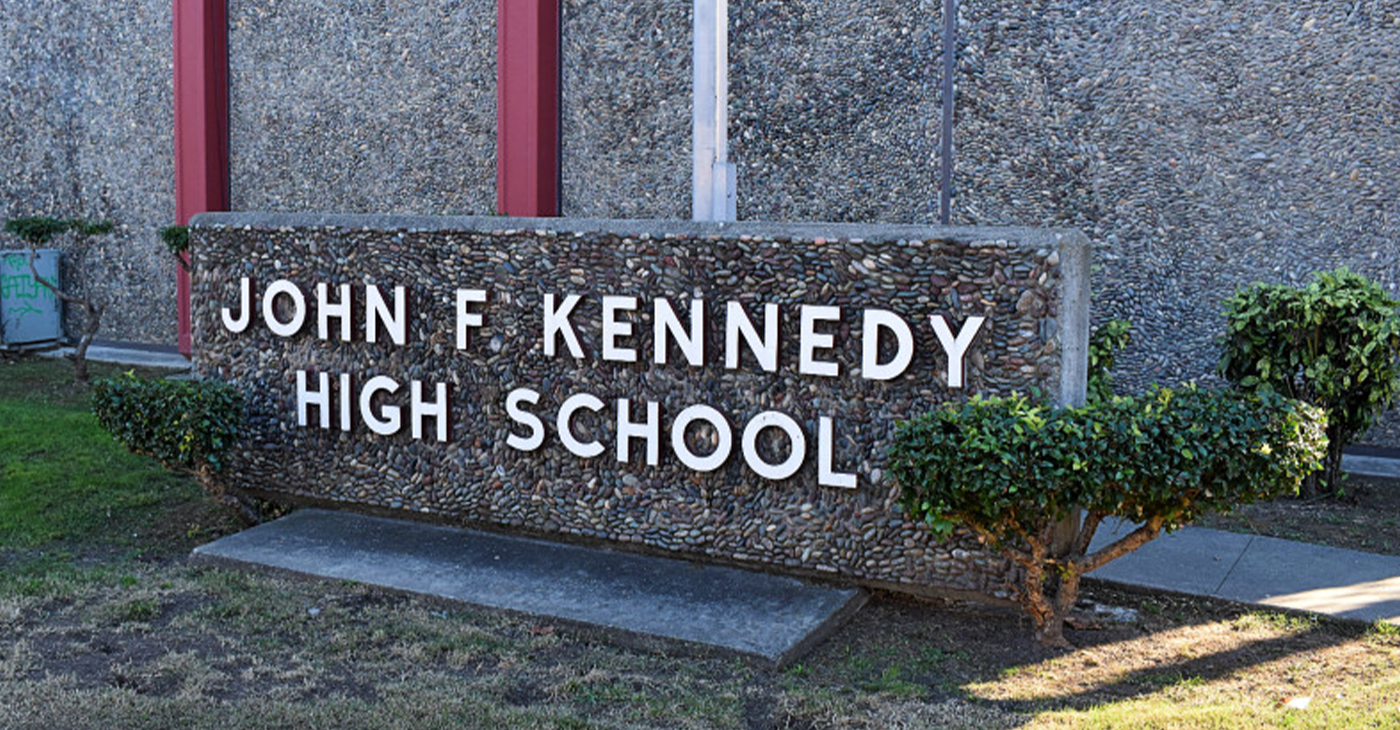
In the wake of $19 million in cuts it experienced this fiscal year, the West Contra Costa Unified School District (WCCUSD) says it needs to make another $13.2 million in cuts to staffing and programs over the next three fiscal years as declining enrollment continues to impact the district’s operating budget.
The WCCUSD is currently in the second year of a 2024-2026 fiscal solvency plan. Fiscal insolvency could place the district under state receivership, which would mean it would no longer be in charge of making the financial decisions.
Last year as part of the plan, the district identified $19 million in budget reductions. Now, the district is looking to make another $7.2 million in cuts for the 2025-26 fiscal year, and another $6 million in the 2026-27 fiscal year.
The Board of Education was asked last week to approve staff’s cost-cutting proposals, which includes the elimination of 43 positions next fiscal year, or about 1.28 percent of the district’s total staffing.
Of those positions, 26 would be members of the United Teachers of Richmond, the union representing teachers, counselors, psychologists, early childhood educators and nurses.
Another 47 positions, including 19 members of the United Teachers of Richmond, are proposed to be cut the following fiscal year.

In a newsletter last month, WCCUSD Interim Superintendent Dr. Kim Moses said the district is looking to make reductions that have “the least impact on student programming and school staffing.”
“Although no one wants to make reductions in WCCUSD, continuing our fiscal solvency plan is necessary to ensure the district’s fiscal solvency and maintain local control over budget decisions,” Dr. Moses stated.
Even with the proposed cuts, the district said it will still lean too heavily on its reserves. It doesn’t help that state and federal funding sources available during the COVID-19 pandemic recovery no longer exist.
A main source for the loss in operating revenue is declining enrollment, a problem facing a number of districts, particularly those in the expensive Bay Area, according to the district.
In California, the amount of unrestricted state funding each district receives is determined by student attendance. The district has seen enrollment drop by nearly 3,000 students since the 2019-2020 school year, from 28,247 total students to 25,273 in 2024-2025, which has also led to reduced state funding. The district says 10.5 percent of the enrollment decline was experienced amid the COVID pandemic.
Enrollment is projected to drop by roughly another 500 students by fiscal year 2026-2027.
While attendance-based funding is declining, compensation packages for WCCUSD staff have increased since 2019, with salaries up by over 19.5 percent and benefits up by 26.2 percent, according to the district.
The education publication EdSource reported that the WCCUSD was the first in the state to become insolvent in 1991, resulting in a $29 million “bailout loan” that took two decades to pay off.
Speaking to EdSource, Francisco Ortiz, president of United Teachers of Richmond, warned about further cutting staff, saying most schools in the district are regularly using substitute teachers. He recommended drawing down the rainy-day reserves to keep teachers, as it is currently a rainy day financially.
“Our most vulnerable students are the ones receiving the blunt end of this. Cutting classroom teachers is not the answer,” Ortiz told EdSource.










Activism
Youth-Led Black August Event Brings Past to Present at East Oakland Boxing Association
The mission of Youth Alive! Is to “break the cycle of violence, heal trauma, and uplift a thriving community of leaders, to save lives in Oakland and beyond” by serving “as mentors, youth leaders, counselors, case managers, intervention specialists and violence interrupters,” working “to help violently wounded people heal themselves and their community.”

Youth-Led Black August Event Brings Past to Present at East Oakland Boxing Association
The East Oakland Boxing Association (EOBA) and Youth Alive! came together on Aug. 21 to share with their community all that Black August means to them.
Held on EOBA’s patio at 816 98th Ave. in Deep East Oakland, the two organizations hosted their second annual Black August Experience, featuring a food tasting, financial literacy and mindfulness workshops, and voter registration with the League of Women Voters Oakland (LWV).
Black August is known as a time to uphold the legacy of prisoners who protested their conditions by fasting, fighting, and educating themselves on the economic and political circumstances that contributed to their incarceration.
According to its website, “EOBA is a multi-service youth and community development hub that goes far beyond the ring. While rooted in the discipline of boxing, for nearly 40 years EOBA has also integrated robust programs in workforce development, food justice, afterschool enrichment, financial literacy, mentorship, and wellness.”.
The mission of Youth Alive! Is to “break the cycle of violence, heal trauma, and uplift a thriving community of leaders, to save lives in Oakland and beyond” by serving “as mentors, youth leaders, counselors, case managers, intervention specialists and violence interrupters,” working “to help violently wounded people heal themselves and their community.”
Through Coro California, another leadership organization serving young people across the state for 80 years, they gained a broader understanding of Black August.

EOBA Executive Director Dawna Williams spoke about how much she learned about Black August from the youth who created it. “I let them educate me,” she said. Instead of talking about prison reform and mass incarceration, Williams and youth interns found that Black August meant so much more. “We would have done a disservice if we had just focused on who the people were and what their situation was…We tried to take their message from back in the day and make it relevant to the young people today. What do they need to know?”
Youth interns created and placed posters around the patio to help participants understand how traditional Black foodways, civic engagement, financial literacy, and the power of education are relevant to Black resistance today.
An EOBA member described Black August with Youth ALIVE! as “a whole vibe. “This year we added the Fun Zone for the kids, because you really cannot go wrong with a Fun Zone. I also loved seeing everyone chillin’ in the outdoor lounge, catching some Vitamin D and just enjoying a Friday evening together.”
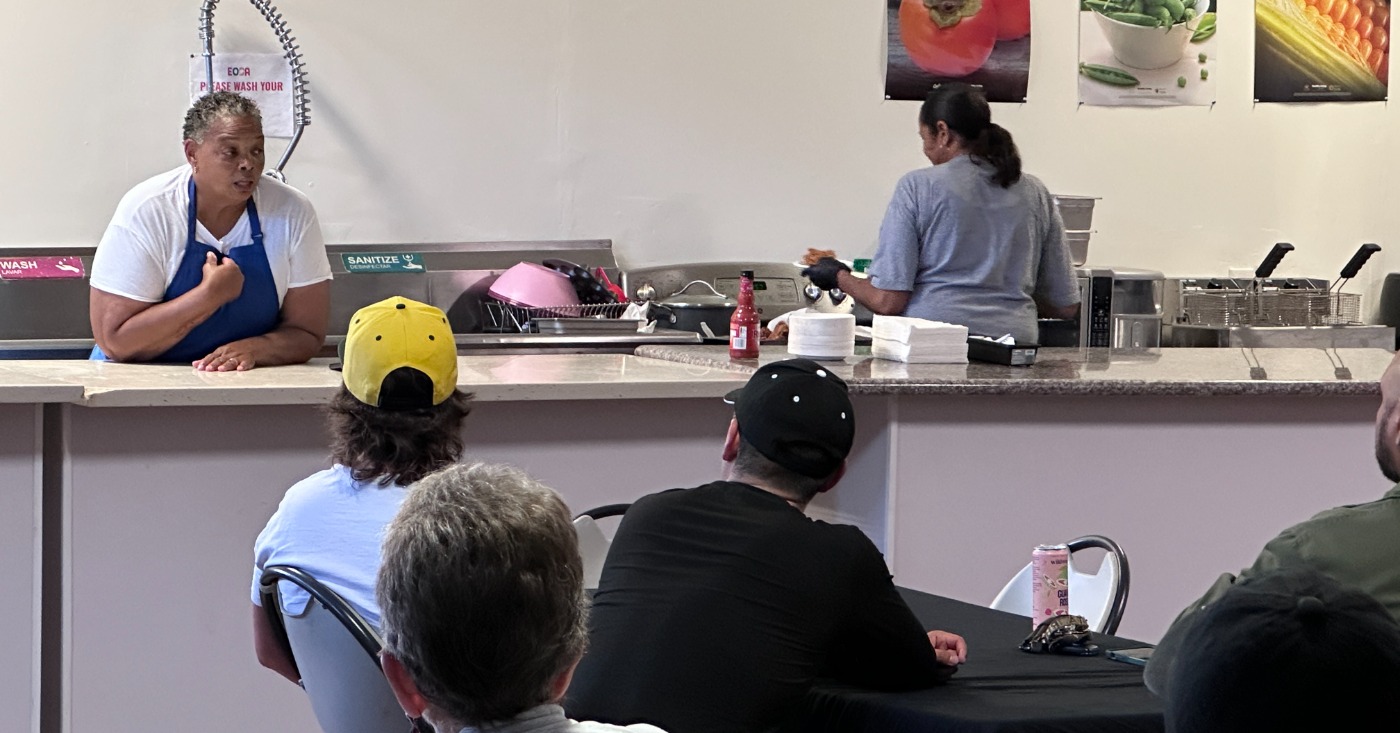
The food tasting, a popular event from last year, featured traditional Black foods such as black-eyed peas, johnny cakes, and fried chicken. Led by Williams, the tasting included a talk about how these traditional foods were made and why they are forms of Black resilience.
The “‘Plate of History’ was a favorite of the online writers. “Fun, educational, and did I mention delicious? Our Taste of History cook, Angela Southall, served up some good eats while connecting food to history and culture.”
The writer also commended the “League of Women Voters Oakland for their civic leadership and for getting our young people informed, ready, and registered to vote.”
Overall, it was a “good Friday event in East Oakland,” the writer said.
Upcoming Black August events: Building Opportunities for Self-Sufficiency (BOSS), will host “Black August: The Arc of Liberation” at Oakland City Hall on Sat. Aug. 29, from 11 a.m. to 3 p.m.
The websites for East Oakland Boxing Association, Youth Alive! and CORO are sources for this report.
Jana Lang is an Oakland resident, teacher, gardener and poet participating in the Propel News Initiative.


In her 80s and still actively working as an agricultural engineer, Effie Gant continues to break barriers in urban farming and community leadership.
The certified USDA grower and respected urban farmer, based in South Sacramento, was recently spotted vending at the Freedom Farmers’ Market by the Temescal Street Fair on Saturday, July 11, where she proudly displayed dozens of sweet, juicy watermelons.
Festivalgoers gathered not only to purchase her produce but also to enjoy activities like the popular watermelon-eating contest. Yet beyond the festive atmosphere, Gant has a larger vision.
Gant is now setting her sights on the Bay Area, where she plans to launch a farmers’ market to increase access to fresh, locally grown food.
Known for her leadership in sustainable agriculture and food justice, she brings decades of hands-on experience and community advocacy to regions where food access remains inconsistent.
She has built a strong reputation through her work with Meadowview Urban Farm and the Yisrael Family Urban Farm, cultivating crops such as watermelons, honeydew melons, and collard greens. Her approach emphasizes sustainability, education, and empowering residents to grow their own food, even in small urban spaces.
As a USDA-certified grower, Gant blends technical expertise with grassroots engagement to combat food insecurity.
Beyond farming, Gant serves as CEO and President of Highways to Hedges, a nonprofit focused on environmental justice and community development. She is also president of the Hampton Station Neighborhood Association and board chairman for HHCORE, where she advocates for safety, equity, and economic opportunity.
Her proposed farmers market will connect small-scale farmers with urban communities while elevating Black farmers and other underrepresented growers.
“I want to teach the next generation about farming and how lucrative it can be,” Gant said. “You don’t need hundreds of acres. You can start with one acre or even your backyard.”Gant also noted her involvement in a collective of farmers who supply produce through government-supported programs.
“We operate as a team, and we all benefit,” she said.
Through workshops, speaking engagements, and hands-on training, Gant and her organization continue to educate communities about agriculture and food justice. Her market initiative will emphasize affordability, cultural relevance, and nutrition education.
Her broader work includes creating edible forests in partnership with Soil Born Farms, planting fruit trees directly in neighborhoods to expand food access. As a mentor with the Center of Expertise on Food Justice and Health Equity, Gant remains a leading voice in building sustainable and resilient food systems.
Gant says she welcomes the community to join her in creating a new farmer’s market.
“Farming is essential to life,” she said. “I want to train as many people as I can to use food and farming as a tool for empowerment, health, and long-term change.”
Activism
From Disparity Study to Solutions: Oakland Coalition and Mayor Barbara Lee Renew Commitment to Reform City Contracting
She committed to ensuring the coalition has direct access to City leadership by designating Assistant Deputy City Administrator Chuck Baker the primary liaison. Working alongside Deputy City Administrator Sofia Navarro, DWES Director Emylene Aspilla, Race and Equity Director Darlene Flynn, and other City departments, the coalition will continue advancing these priorities while maintaining regular communication with City leadership.

Special to The Post
On June 30, a coalition of minority business leaders, contractors and others met with Oakland Mayor Barbara Lee to discuss the City’s commitment to implement recommendations outlined in Oakland’s Disparity Study and eliminate barriers that have historically prevented Black and minority-owned businesses from fully participating in public contracting opportunities.
Representatives of the Oakland African American Chamber of Commerce (OAACC), National Association of Minority Contractors Northern California (NAMC NorCal), Construction Resource Center (CRC), and the East Bay Rental Housing Association (EBRHA) said the meeting represented an important milestone in a process that has been underway for several months.
On April 21, the Oakland City Council’s Life Enrichment Committee received a progress report from the Department of Workplace and Employment Standards (DWES), where Director Emylene Aspilla presented the coalition’s working document and outlined a collaborative implementation plan between the coalition and the City. That report established 30-, 60-, and 90-day objectives focused on five key priorities:
- Reforming Local and Small Local Business Enterprise (L/SLBE) waiver practices
- Strengthening prompt payment compliance
- Improving procurement forecasting and transparency
- Expanding contractor capacity building and business development
- Increasing oversight, accountability, and public reporting
A series of working sessions was scheduled between coalition representatives, DWES, and the City Administrator’s Office to begin implementing those priorities but were temporarily delayed by the resignation of former City Administrator Jestin Johnson.
Rather than allowing that momentum to stall, OAACC President and CEO Cathy Adams requested a meeting with Lee to gain clarity on the City’s direction and reaffirm its commitment to implementing the recommendations contained within the Disparity Study.
Coalition leaders described the meeting as productive, candid, collaborative, and encouraging.
During the meeting, Lee spoke not only from her role as mayor but also from her experience as an 8(a) contractor and business owner, sharing that she understands firsthand what it takes to build and grow a successful company, employ a substantial workforce, compete for public work, and navigate the complexities of municipal contracting.
She committed to ensuring the coalition has direct access to City leadership by designating Assistant Deputy City Administrator Chuck Baker the primary liaison. Working alongside Deputy City Administrator Sofia Navarro, DWES Director Emylene Aspilla, Race and Equity Director Darlene Flynn, and other City departments, the coalition will continue advancing these priorities while maintaining regular communication with City leadership.
Mayor Lee also expressed her commitment to personally participate in future working meetings with the coalition.
“This meeting represents a renewed commitment to partnership,” said Adams. “Mayor Lee listened, engaged, and demonstrated that she wants to move beyond conversation and into implementation.”
CRC’s Len Turner said the roadmap is already in place. ““The City already has the evidence. What’s been missing is execution. …Now it’s time to deliver results.”
Mario Wagner, president of NAMC NorCal agreed that the next phase must focus on implementation, funding, and accountability.
“The coalition is ready to get to work. …The next step is ensuring these initiatives receive meaningful funding in the upcoming fiscal budget cycle. Just as important, the City must establish transparent reporting mechanisms that keep the public informed through regular progress reports, measurable benchmarks, and accountability.”
Coalition leaders also acknowledged that while City leadership has indicated it is reviewing Local and Small Local Business Enterprise waiver practices, the community continues to seek a formal response regarding existing long-term waivers, including waivers extending 10 and 25 years. The coalition believes those waivers should be comprehensively reviewed and, where appropriate, rolled back as part of the City’s broader contracting reforms.
The coalition is also calling on the City to include meaningful funding in the upcoming fiscal budget cycle to support implementation of the Disparity Study recommendations and establish better methods and mechanisms to keep the public informed through regular progress reports, measurable benchmarks, and transparent accountability.
The coalition’s immediate next step is to schedule a working meeting with Baker, Aspilla, Lee, and the appropriate City staff to review what has already been accomplished under the implementation framework.



Oakland Probate Dispute Raises Questions About Court-Ordered Property Transfer and Missing Notice

‘Raising a Child Shouldn’t Break the Bank’: California Is Helping Families Save on Childcare Costs

Secretary of State Shirley Weber Pushes Back Against DOJ Demands Over California Voter Rolls

Chase Launches Fraud & Scam Prevention Month

U.S. Rep. Simon Secures More Than $1 Million for Public Safety at Mills College at Northeastern University Oakland, Surrounding Neighborhood

COMMENTARY: Valarie Bachelor and Jennfier Brouhard are Excellent School Board Members and Deserve to Be Reelected

Oakland Faith Leaders Gather to Revitalize the Interdenominational Ministerial Alliance of Oakland

Statue of ‘La Catrina,’ a Beloved Symbol of Dia de Los Muertos, Visits Oakland

Oakland Honors 60 Years of the Black Panther Party at the All Power to the People Gala

Fate of Bay Area Public Transit Hinges on Regional Transit Measure

Why AC Transit Director Joel Young is My Choice for AC Transit Board Ward 3

Oakland Post: Week of October 21 – 27, 2026

Mayor Barbara Lee Holds Special State of the City Address in Deep East Oakland

Practitioners of African Traditional Spirituality Offer Ancestral Reverence Ritual Oct. 31

It’s Time to Lose Weight Before the Holidays

Misnamed ‘Parent’ PAC Seeks to Influence Oakland School Board Elections

Listening as a Lifeline: A Doula’s Witness to Black Maternal Health

Poll: Becerra Widens His Lead Over Hilton; Californians Split on Wealth Tax

County Office of Education Says OUSD Finances Are Getting Healthier, Materially Stronger

Doulas Are Helping Black California Moms Navigate Pregnancy–Even as High Mortality Rates Persist

Oakland Post: Week of September 9 – 15, 2026

Zakiya Jendayi Arrested, Locked Out of Home by Sheriff’s Deputies

Mayor Lee Announces $1 Million Kaiser Permanente Grant for Pilot Program to Address Homelessness, Clean Up Public Spaces throughout Oakland

Richmond Tiny House Village Farm & Garden Set to Open Gates on Sept. 26

BLACspace Cooperative Invites Bay Area to Experience Oakland’s Black Cultural Ecosystem Through a BLAC Map Tour + Party

OPINION: Nolan Wells’ Death One of Several Signifying Racial Terror Lives on in U.S. South

Latest Massacre in Haiti Reveals Cruelty U.S. Deportations

Oakland People’s Arms Embargo Coalition Demands End to Military Shipments Thru Oakland

Oakland Post: Week of September 16 – 22, 2026

Democratic Clubs Interview Candidates for Oakland School Board

The Conversation With Al McFarlane 6/23/26

Media Monday 6/22/26

LIVE! ASK ALMA! — TUES. 6.23.26 7PM EST

Car Buying Secrets: 4 Hidden Checks Before You Sign!

Is This 550 HP Charger Worth YOUR Money? AutoNetwork Review

Celebrating Juneteenth – Frederick Douglass on education and resistance

LIVE! — ASK ALMA! — TUES. 6.19.26 7PM EST

Hyundai Ioniq 5 Parking, Safety, and 360 View #shorts

2025 Ioniq 5 New Wiper & Powerful Performance! #shorts

Electric SUV Range: Is 259 Miles Enough? #shorts

EV Charging: How Fast Can You Charge an Electric Vehicle? #shorts

Biometric Cooling… Messaging Seats…Come on! 2025 Infiniti QX80 Autograph 4WD

Charged Up: Witness the Magic of a Fully Electric Car! #shorts

Range Rover Sport PHEV Included…: See What’s Inside This Luxury SUV! #shorts

Invisible Hood View: Perfect Parking with X-Ray Vision! #shorts
-
 Black History3 weeks ago
Listening as a Lifeline: A Doula’s Witness to Black Maternal Health
-
 Economy4 weeks ago
Poll: Becerra Widens His Lead Over Hilton; Californians Split on Wealth Tax
-
 Business4 weeks ago
County Office of Education Says OUSD Finances Are Getting Healthier, Materially Stronger
-
 Lead Story3 weeks ago
Zakiya Jendayi Arrested, Locked Out of Home by Sheriff’s Deputies
-
 Art4 weeks ago
BLACspace Cooperative Invites Bay Area to Experience Oakland’s Black Cultural Ecosystem Through a BLAC Map Tour + Party
-

 Business4 weeks ago
From Historic Memories to New Possibilities: Oakland Celebrates Coliseum 60
-

 Community4 weeks ago
Asm. Corey Jackson Announces Launch of 24-Hour Childcare in His District
-

 Black History4 weeks ago
IN MEMORIAM: The Rev. Leon “Sonny” Clark, Longtime Orange County Pastor and Community Leader, Dies at 72
