
Activism
Two New California Bills Are Aiming to Lower Your Prescription Drug Costs
“When basic life necessities like medication become unaffordable in Blue States, working people pay the price. As Democrats, we should be leading on making people’s lives better and more affordable,” continued Weiner. It is past time California caught up with other states and put basic protections in place to contain the astronomical cost of basic medications.”


By Edward Henderson, California Black Media
Sen. Scott Wiener (D-San Francisco) has introduced two bills in the State Senate that could lower prescription drug prices for California residents.
Senate Bill (SB) 40, or the Insulin Affordability Act — and accompanying legislation, SB 41, or Pharmacy Benefit Manager (PBM) Reform — comprise Wiener’s Prescription Drug Affordability (PDA) Package.
Together, the bills would cap monthly co-pays for insulin at $35 (SB 40) and create regulations for pharmacy benefit managers (PBM) whose negotiation practices, critics say, have resulted in steep price increases for prescription drugs (SB 41).
“It makes no sense that people with diabetes in states like West Virginia can access affordable insulin while Californians are stuck with higher prices,” said Wiener in a statement.
“When basic life necessities like medication become unaffordable in Blue States, working people pay the price. As Democrats, we should be leading on making people’s lives better and more affordable,” continued Weiner. It is past time California caught up with other states and put basic protections in place to contain the astronomical cost of basic medications.”
SB 40’s proposed $35 monthly co-pay was written, in part, in response to the price of insulin tripling over the past decade, Wiener’s office says. As a result of the increase, one in four people using insulin has reported insulin underuse because they can’t afford the full dose.

About 4,037,000 adult Californians have diabetes, with an additional 263,000 cases of Type 1 diabetes diagnosed each year. This rate in new cases disproportionately affects the elderly, men, and low-income patients, Wiener’s office reports.
According to Wiener, SB 41 is his follow-up to similar legislation he introduced last year, SB 966, which was vetoed by Gov. Newsom.
Middlemen in the pharmaceutical industry, PBMs buy prescription drugs from manufacturers and then sell them to pharmacies and health plans. Their position as intermediaries allows them to charge high administrative fees and significantly higher prices for drugs to pharmacies than they paid originally. This practice results in higher costs for patients seeking the prescriptions they need.
“On behalf of the Californians we serve who live with chronic and rare diseases, we are grateful to Sen. Wiener for his commitment and attempt to hold pharmacy middlemen accountable for their anti-patient and anti-pharmacy practices,” stated Liz Helms, California Chronic Care Coalition President & CEO. “Health care costs continue to rise when patients cannot afford medically necessary medications.”
SB 41 proposes that all PBMs be licensed and that they disclose basic information regarding their business practices to the licensing entity. It also calls for a number of other requirements and prohibitions, including limiting how fees may be charged and requiring transparency related to all fees assessed.
“This bill addresses some of the worst abuses by pharmacy benefit managers: lack of transparency, unfair business practices, steering, and price gouging,” said Jamie Court, President of Consumer Watchdog.
In 2022, drug spending in California grew by 12%, while total health premiums rose by just 4%. Last year, more than half of Californians either skipped or postponed mental and physical healthcare due to cost, putting their safety and well-being at risk. One in three reported holding medical debt, including half of low-income Californians.
So far, there is no organized opposition to the Prescription Drug Affordability package.











Activism
Oakland Post: Week of August 5 – 11, 2026
The printed Weekly Edition of the Oakland Post: Week of August 5 – 11, 2026
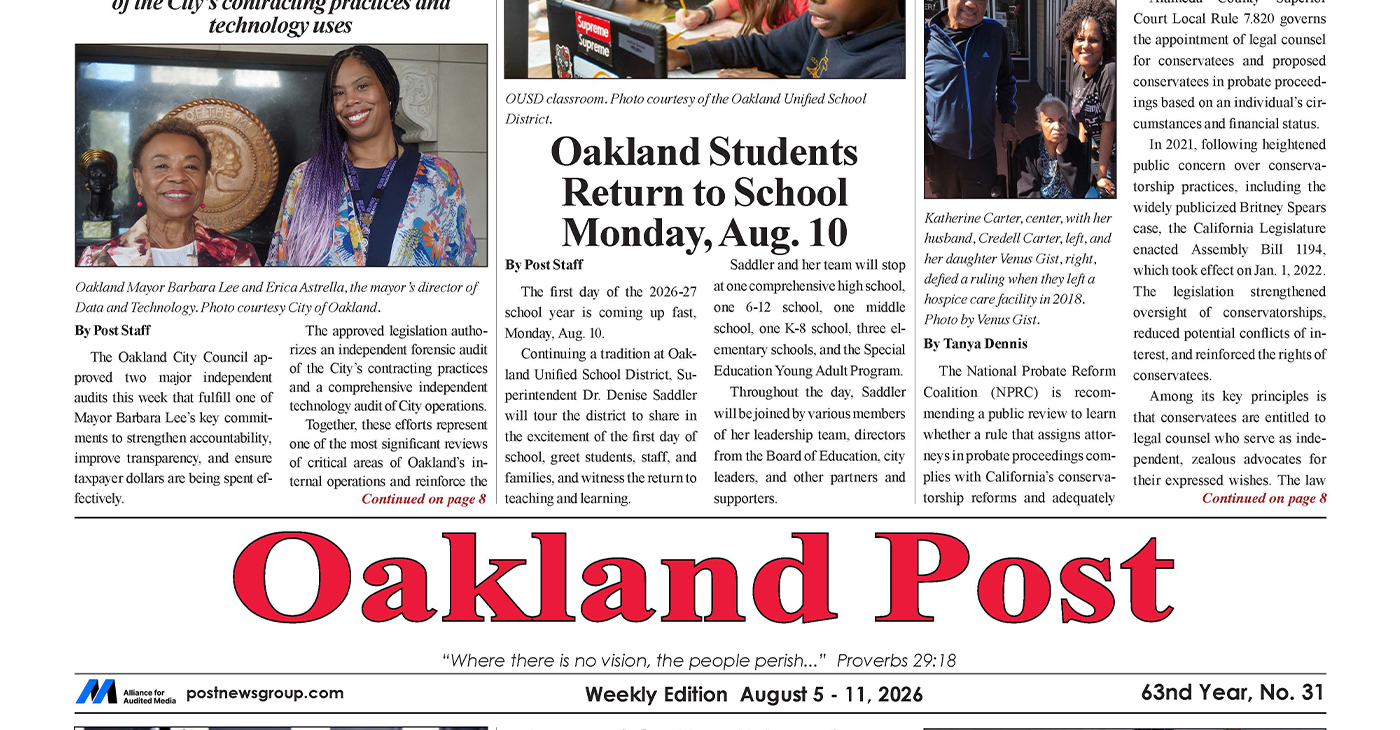
To enlarge your view of this issue, use the slider, magnifying glass icon or full page icon in the lower right corner of the browser window.
Activism
Oakland Post: Week of July 29 – August 4, 2026
The printed Weekly Edition of the Oakland Post: Week of July 29 – August 4, 2026

To enlarge your view of this issue, use the slider, magnifying glass icon or full page icon in the lower right corner of the browser window.
Activism
Oakland Post: Week of July 22 – 28, 2026
The printed Weekly Edition of the Oakland Post: Week of July 22 – 28, 2026

To enlarge your view of this issue, use the slider, magnifying glass icon or full page icon in the lower right corner of the browser window.
WORK FROM HOME
Home-based business with potential monthly income of $10K+ per month. A proven training system and website provided to maximize business effectiveness. Perfect job to earn side and primary income. Contact Lynne for more details: Lynne4npusa@gmail.com 800-334-0540


Car Wash Workers Cope with Lingering Impacts of ICE Raids

Misty Copeland Shapes Ballet’s Tomorrow

As Part of Your Back-to- School Checklist, Vaccinate

As Part of Your Back-to- School Checklist, Vaccinate

Congresswoman Simon Demands Investigation into Trump’s Abuse of Emergency Powers for Coal Export Terminal in West Oakland

OPINION: The Philippines Isn’t Foreign When Your Family Still Lives There

Asm. McKinnor’s Bill Banning Drones Above Outdoor Entertainment Events Awaits Senate Decision

California Sen. Padilla Joins Colleagues to Introduce Bill Imposing Term Limits on Supreme Court Justices

Department of Homeland Security Demands California Secretary of State Shirley N. Weber Scrub Voter Rolls

George Cook: The Inventor Who Made Fishing Smarter

Gov. Newsom Announces $109.6 Million in Funding for 278 Supportive Homes in Bakersfield, Contra Costa, Sacramento and Fresno

Rep. Kamlager Dove Demands Care, Justice for Man Shot by ICE

“The Power to See Threats Sooner”: Gov. Newsom, Safety Officials Showcase California’s Investments in Hi-Tech Wildfire Prevention

100 Black Wings’ Team Oakland Youth Athletes Heading to Taiwan for 2026 International Children’s Games

Oakland ‘Port Serves as a Powerful Engine for Good Jobs and Economic Development
Department of Homeland Security Demands California Secretary of State Shirley N. Weber Scrub Voter Rolls

Oakland Children’s Hospital Workers and Patients Rally for Pediatric Medical Care

New Judge Could Decide if Karmelo Anthony Gets a New Trial
“The Power to See Threats Sooner”: Gov. Newsom, Safety Officials Showcase California’s Investments in Hi-Tech Wildfire Prevention

Alpha Kappa Alpha Sorority, Inc. Celebrates New North Atlantic Regional Director

Surveillance Pricing Fight: State Senate Debates Bill Banning Retailers from Using AI to Set Prices Based on a Buyer’s Profile

Mount Zion MBC, Church of Jesus Christ of Latter-day Saints Partner to Bring 29,000 Meals to Alameda County
California Sen. Padilla Joins Colleagues to Introduce Bill Imposing Term Limits on Supreme Court Justices

Starting This Summer, California Car Buyers Can Get an Instant $3500 Off the Cost of Electric Vehicles

COMMENTARY: You Are Already Paying for the AI Boom

California Bill Would Let Abuse Victims Use Trauma as Legal Defense for Violent Crime

Fed Court to Decide Landmark First Amendment Case

Gov. Gavin Newsom Signs Law Streamlining Affordable Housing Rules

Oakland Celebrates $125 Million Coliseum Sale
Car Wash Workers Cope with Lingering Impacts of ICE Raids

The Conversation With Al McFarlane 6/23/26

Media Monday 6/22/26

LIVE! ASK ALMA! — TUES. 6.23.26 7PM EST

Car Buying Secrets: 4 Hidden Checks Before You Sign!

Is This 550 HP Charger Worth YOUR Money? AutoNetwork Review

Celebrating Juneteenth – Frederick Douglass on education and resistance

LIVE! — ASK ALMA! — TUES. 6.19.26 7PM EST

Hyundai Ioniq 5 Parking, Safety, and 360 View #shorts

2025 Ioniq 5 New Wiper & Powerful Performance! #shorts

Electric SUV Range: Is 259 Miles Enough? #shorts

EV Charging: How Fast Can You Charge an Electric Vehicle? #shorts

Biometric Cooling… Messaging Seats…Come on! 2025 Infiniti QX80 Autograph 4WD

Charged Up: Witness the Magic of a Fully Electric Car! #shorts

Range Rover Sport PHEV Included…: See What’s Inside This Luxury SUV! #shorts

Invisible Hood View: Perfect Parking with X-Ray Vision! #shorts
-
 Featured5 days ago
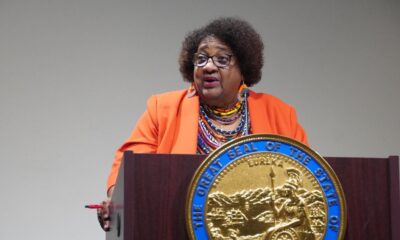
Department of Homeland Security Demands California Secretary of State Shirley N. Weber Scrub Voter Rolls
-
 Business3 weeks ago
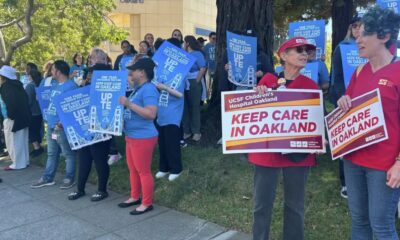
Oakland Children’s Hospital Workers and Patients Rally for Pediatric Medical Care
-
 #NNPA BlackPress2 weeks ago
New Judge Could Decide if Karmelo Anthony Gets a New Trial
-
 Environment5 days ago
“The Power to See Threats Sooner”: Gov. Newsom, Safety Officials Showcase California’s Investments in Hi-Tech Wildfire Prevention
-
 Black History2 weeks ago
Alpha Kappa Alpha Sorority, Inc. Celebrates New North Atlantic Regional Director
-
 Business3 weeks ago
Surveillance Pricing Fight: State Senate Debates Bill Banning Retailers from Using AI to Set Prices Based on a Buyer’s Profile
-
 Business3 weeks ago
Mount Zion MBC, Church of Jesus Christ of Latter-day Saints Partner to Bring 29,000 Meals to Alameda County
-
 Featured5 days ago
California Sen. Padilla Joins Colleagues to Introduce Bill Imposing Term Limits on Supreme Court Justices
