
California Black Media
10 New California Laws Taking Effect July 1 You Should Know About
On July 1, several California cities and jurisdictions will raise their local minimum wages to keep pace with inflation. The largest increases include Los Angeles ($18.42/hour), San Francisco ($19.61/hour), Emeryville ($20.34/hour) — the highest citywide minimum wage in the state — Pasadena ($18.57/hour), and Santa Monica and unincorporated Los Angeles County ($18.47/hour). The increases range from 30 cents to 66 cents per hour.


By Edward Henderson, California Black Media
Beginning July 1, several new California laws will take effect, bringing changes that affect workers, students, consumers, renters, and families across the state. While some of the new policies are administrative, others could have a direct impact on household finances, education, housing, and public safety.
Here are some of the new laws Californians should know about:
- Healthcare Worker Minimum Wage (SB 525): California continues the phased implementation of its landmark healthcare minimum wage law. Beginning July 1, workers at many hospitals and healthcare facilities will receive wage increases, with employees at some facilities reaching a minimum wage of $25 per hour.
- Transit-Oriented Housing Development (SB 79): New state housing policies taking effect July 1 make it easier to build higher-density housing near public transportation by limiting certain local zoning restrictions. Supporters believe the law will help address California’s housing shortage, reduce commuting costs, and increase access to jobs and public transit.
- All-Gender School Restrooms (SB 760): California public schools serving kindergarten through 12th grade must now provide at least one all-gender restroom for student use. Supporters say the requirement helps ensure that all students have access to safe and inclusive restroom facilities.
- Student Mental Health Resources on School IDs (AB 727): Student identification cards for grades 7 through 12 and public colleges must include information about suicide prevention resources, including crisis services for LGBTQ+ youth. The goal, supporters argue, is to make life-saving mental health resources more accessible to students when they need them most.
- Limits on Student Smartphone Use: School districts are expected to begin implementing policies limiting student smartphone use during the school day. The new law requires every school district, county office of education and charter school to adopt a policy by July 1 restricting or prohibiting smartphone use on campus, while allowing exceptions for emergencies, health needs and other specified circumstances.
- Restaurant Food Allergen Disclosure (SB 68): Chain restaurants in California with 20 or more locations nationwide must now provide customers with information about the nine major food allergens.
- Standardized Food Date Labels (AB 660): California is introducing standardized food date labels such as “Best if Used By” to replace inconsistent phrases like “Sell By” and “Use Before.” Lawmakers who supported the measure say the change, effective July 1, will reduce consumer confusion and help prevent unnecessary food waste.
- Local Minimum Wage Increases: On July 1, several California cities and jurisdictions will raise their local minimum wages to keep pace with inflation. The largest increases include Los Angeles ($18.42/hour), San Francisco ($19.61/hour), Emeryville ($20.34/hour) — the highest citywide minimum wage in the state — Pasadena ($18.57/hour), and Santa Monica and unincorporated Los Angeles County ($18.47/hour). The increases range from 30 cents to 66 cents per hour.
- Autonomous Vehicle Safety Requirements (AB 1777): Companies operating autonomous vehicles must maintain dedicated communication systems that allow first responders to quickly contact operators during emergencies, helping improve public safety as self-driving technology expands.
- New Firearm Restrictions (AB 1127): Beginning July 1, licensed firearms dealers are prohibited from selling certain semiautomatic pistols that can be readily converted into fully automatic weapons using a device commonly known as a “Glock switch.” The law applies to future retail sales of qualifying firearms but does not ban possession of existing firearms or private-party transfers.









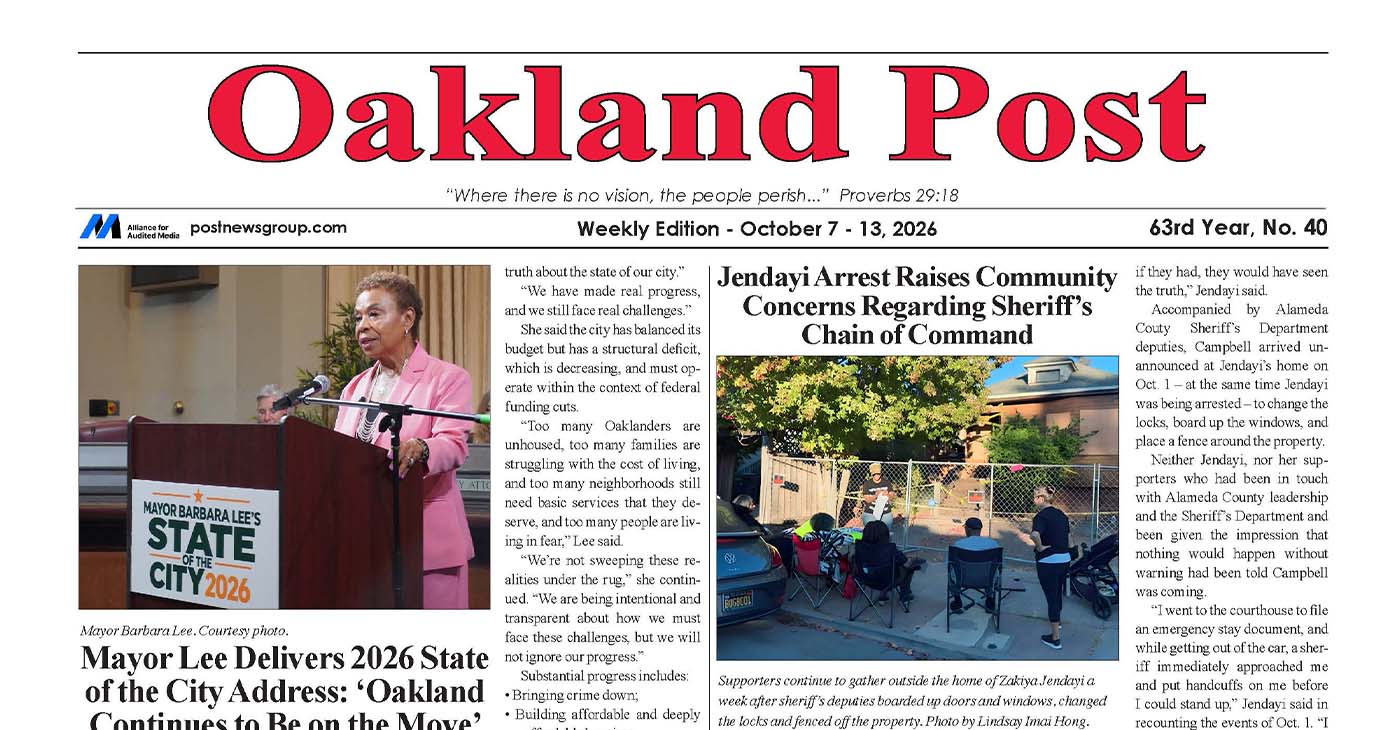
To enlarge your view of this issue, use the slider, magnifying glass icon or full page icon in the lower right corner of the browser window.

Activism
Oakland Post: Week of September 30 – October 6, 2026
The printed Weekly Edition of the Oakland Post: Week of September 30 – October 6, 2026

To enlarge your view of this issue, use the slider, magnifying glass icon or full page icon in the lower right corner of the browser window.
Activism
Oakland Post: Week of September 23 – 29, 2026
The printed Weekly Edition of the Oakland Post: Week of September 23 – 29, 2026

To enlarge your view of this issue, use the slider, magnifying glass icon or full page icon in the lower right corner of the browser window.


WCCUSD Joins Statewide Organic School Food Purchasing Cooperative

Democrats, Community Groups Back Measure EE to Change How Oakland Is Governed

Four Tips to Help You Plan a Holiday “Staycation”

Veterans Housing Project Proposed for South Richmond
PRESS ROOM: Transformative Justice Coalition 2026 Voting Rights Champion Awards Reception ‘Yesterday Is Today: The Battle For Voting Rights

Mayor Lee Delivers 2026 State of the City Address: ‘Oakland Continues to Be on the Move’

Oakland Awarded More than $14 Million in State Funding

Jendayi Arrest Raises Community Concerns Regarding Sheriff’s Chain of Command

Marin County Supes Expand Small Business Options with Home Kitchen Pilot Program

Allen Temple Baptist Church Hosts Free Prostate Cancer Screenings on Oct. 17

AC Transit Labor Unions Back Director Joel Young

Locals Can Get Locally Grown Produce Delivered Through Urban Tilth

‘ICE-Free Marin’ Supporters Press Supervisors as County Drafts Enforcement Restrictions

Oakland Post: Week of October 7 – 13, 2026

Ghana’s Ministry of Foreign Affairs Publishes Global Circle’s Vatican Reparations Call in Special Edition Alongside Heads of State

Frontier Airlines’ Return to Oakland Airport Brings Flights, Jobs and Opportunity

Jackie Wright Champions Bay Area Stories, Filmmakers and Cultural Institutions

Chef Sharon Lee Blends Culinary Excellence, Education and Empowerment

Gubernatorial Candidate Steve Hilton Blasts California New Tire Rules; Newsom Hits Back

Misnamed ‘Parent’ PAC Seeks to Influence Oakland School Board Elections

Oakland Coliseum Project Opens Door for Small Businesses to Build Bigger

Big City Mayors Ask for “Yes” Vote on Housing Bond Measure; Conservatives Say “No”

Gov. Newsom’s Latest Appointees Include Sacramento Advocate for Formerly Incarcerated Students; State’s New Tech Chief

Oakland Post: Week of September 2 – 8, 2026

Longtime BWOPA Member Brendalyn Goodall Appointed to California Workforce Development Board

Gov. Newsom Signs Law Shielding Immigration Aid Workers From Doxing Threats

Secretary of State Shirley N. Weber Urges Californians to Vote Early as Voter ID Battle Intensifies

Oakland Post: Week of September 9 – 15, 2026

Richmond Tiny House Village Farm & Garden Set to Open Gates on Sept. 26

Madeline M. Turner: The Inventor Who Made Juicing Easier

The Conversation With Al McFarlane 6/23/26

Media Monday 6/22/26

LIVE! ASK ALMA! — TUES. 6.23.26 7PM EST

Car Buying Secrets: 4 Hidden Checks Before You Sign!

Is This 550 HP Charger Worth YOUR Money? AutoNetwork Review

Celebrating Juneteenth – Frederick Douglass on education and resistance

LIVE! — ASK ALMA! — TUES. 6.19.26 7PM EST

Hyundai Ioniq 5 Parking, Safety, and 360 View #shorts

2025 Ioniq 5 New Wiper & Powerful Performance! #shorts

Electric SUV Range: Is 259 Miles Enough? #shorts

EV Charging: How Fast Can You Charge an Electric Vehicle? #shorts

Biometric Cooling… Messaging Seats…Come on! 2025 Infiniti QX80 Autograph 4WD

Charged Up: Witness the Magic of a Fully Electric Car! #shorts

Range Rover Sport PHEV Included…: See What’s Inside This Luxury SUV! #shorts

Invisible Hood View: Perfect Parking with X-Ray Vision! #shorts
-

 Business3 weeks ago
Mayor Lee Announces $1 Million Kaiser Permanente Grant for Pilot Program to Address Homelessness, Clean Up Public Spaces throughout Oakland
-

 Economy2 weeks ago
Poll: Becerra Widens His Lead Over Hilton; Californians Split on Wealth Tax
-

 Business2 weeks ago
County Office of Education Says OUSD Finances Are Getting Healthier, Materially Stronger
-

 Community4 weeks ago
Democratic Clubs Interview Candidates for Oakland School Board
-
 Uncategorized3 weeks ago
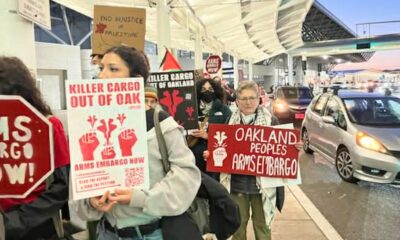
Oakland People’s Arms Embargo Coalition Demands End to Military Shipments Thru Oakland
-

 Activism3 weeks ago
Oakland Post: Week of September 16 – 22, 2026
-

 Community3 weeks ago
Two Looming Threats Every Alameda County Elder Should Know About
-

 Art2 weeks ago
BLACspace Cooperative Invites Bay Area to Experience Oakland’s Black Cultural Ecosystem Through a BLAC Map Tour + Party
