
Book Reviews
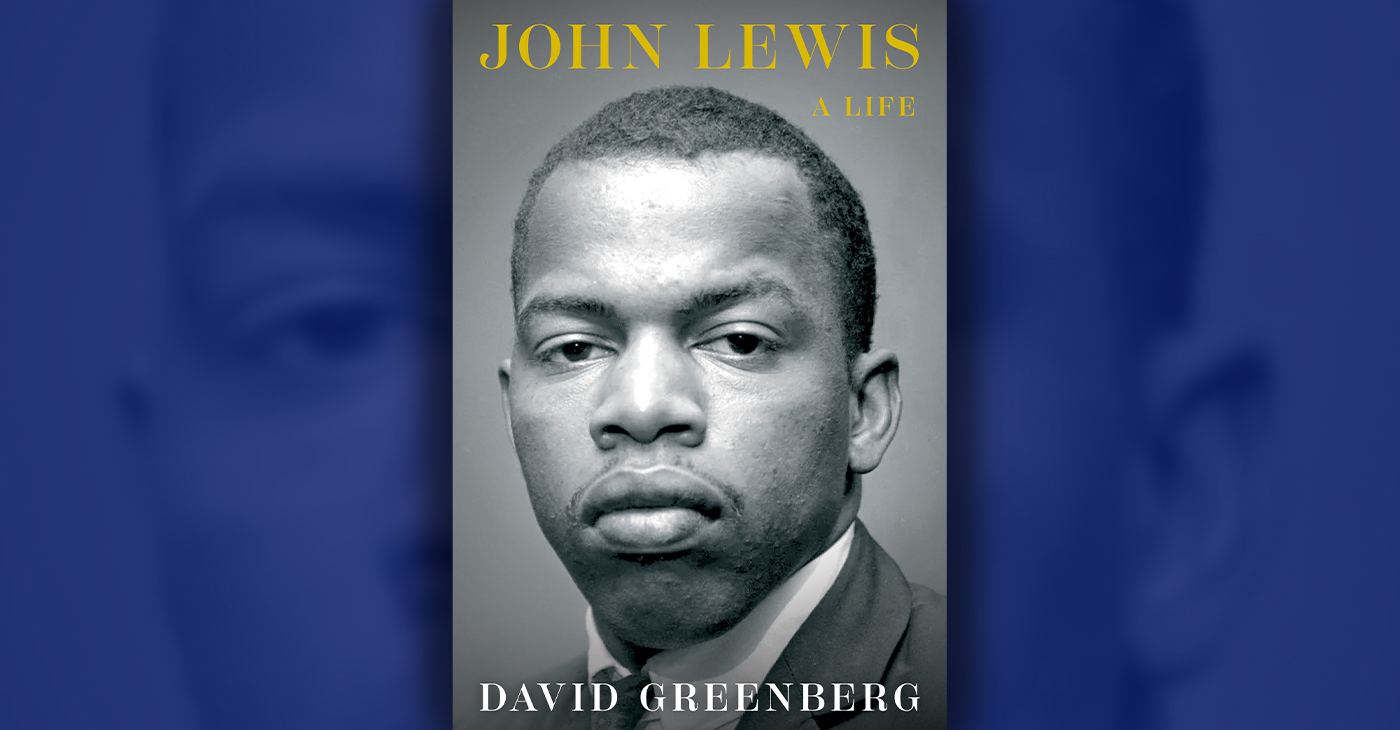
Book Review: “John Lewis: A Life” by David Greenberg
You give, and you give, and you give. No problem. If you can be of service to your community, then that’s what you’ll do. You’ll volunteer where you’re needed. You’ll offer up your time to organize events and gather other helpers. You’ve dedicated your life to public service because, as in the new biography, “John Lewis: A Life” by David Greenberg, you’ve got it to give.

By Terri Schlichenmeyer
You give, and you give, and you give.
No problem. If you can be of service to your community, then that’s what you’ll do. You’ll volunteer where you’re needed. You’ll offer up your time to organize events and gather other helpers. You’ve dedicated your life to public service because, as in the new biography, “John Lewis: A Life” by David Greenberg, you’ve got it to give.
Born into a large but poor family in 1940, John Lewis became a widely respected U.S. Congressman who represented Georgia and fought to advance civil rights legislation in the U.S. House of Representatives from 1987 through 2020.
Lewis grew up dodging chores in his father’s fields. Instead, he spent most of his time reading anything he could get his hands on. Lewis’s extended family – numbering in the hundreds – never minded much. They knew young John as someone who had big plans for getting off the farm and making something of himself.
Though he was already a victim of Jim Crow laws, and racism kept him from the books and education he craved, Greenberg says that “John’s teenage years coincided with the emerging civil rights movement,” and that became Lewis’s focus. He avidly followed the radio broadcasts of Martin Luther King, Jr., who became a beacon for him.
When it was time to choose a college, Lewis attended the American Baptist Theological Seminary in Nashville, but he “began… to ‘drift away’” from the church because it frowned on his interest in the NAACP. He chose another church and eventually made a name for himself there as a gentle, level thinker and a leader.
By 1960, Lewis had become more active in the effort for equality. In 1961, he met King, who “had a high opinion of Lewis.”
King, in fact, offered Lewis a job but Lewis “felt committed to SNCC,” and turned the great man down.
Still, Lewis kept in contact with King after he went to work with Robert Kennedy in 1968. He was organizing on behalf of Kennedy in Indianapolis when Dr. King was assassinated; he was in New York when Kennedy was shot.
It’s almost impossible in a small article like this to explain the breadth and depth of John Lewis’s days, or of this book. There’s so much to learn, so many anecdotes to explain his work and his life. Since distilling what author David Greenberg offers won’t do justice to either subject or saga, just know that “John Lewis” is about as comprehensive as it gets.
Using archives and other, newer sources, Greenberg dives into Lewis as a whole, taking us back even before he was born. Readers who’ve spent considerable time studying the politician will be pleasantly surprised to find new information here; those who are familiar with Lewis’s Civil Rights work or his politics will devour the until-now unfamiliar parts, making each page a pleasantly dramatic new discovery, like a treasure hunt with an old friend.
Be aware that Greenberg peoples this account of Lewis’s life and his career abundantly, which can be overwhelming unless you devote your time well. “John Lewis” is a book for students, historians, biography-lovers, political fans, and activists.
Find it for yourself. Consider it for gift-giving.











Book Reviews
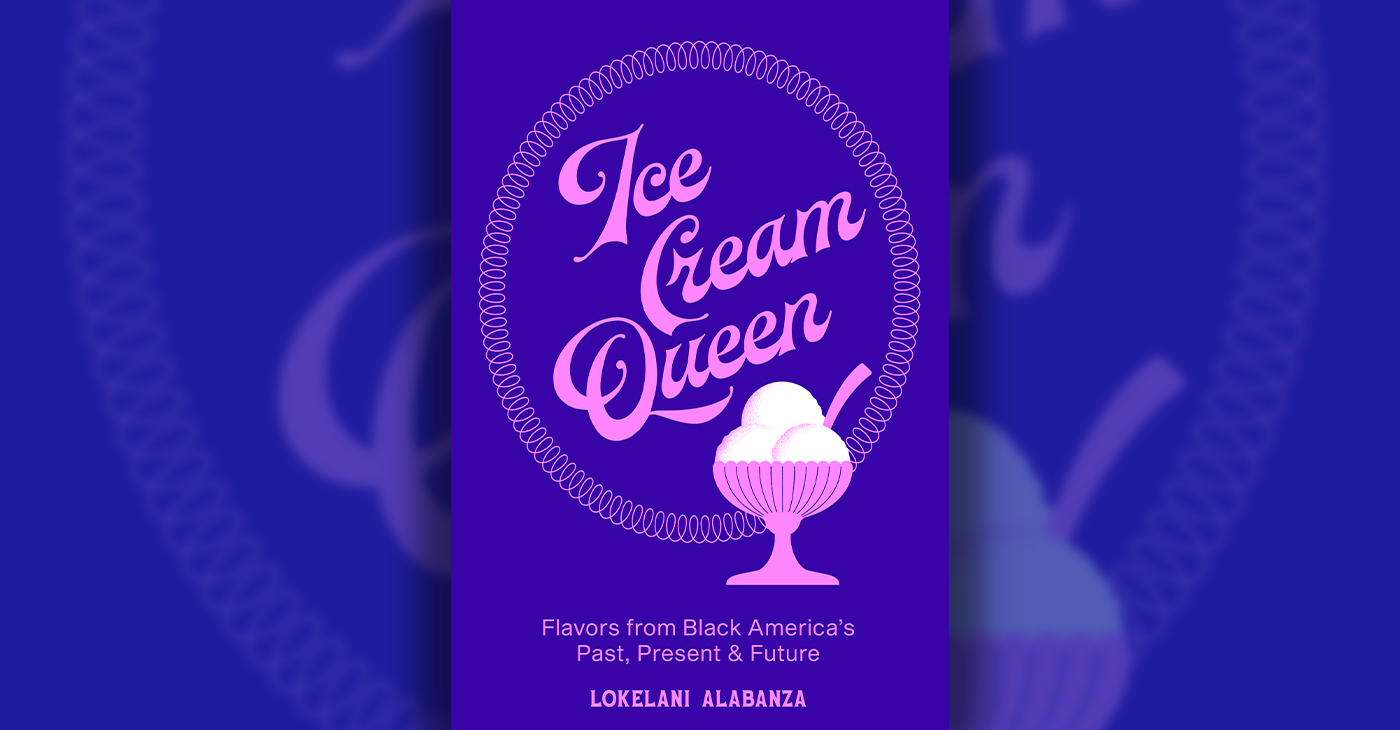
BOOK REVIEW: The Ice Cream Queen: Flavors from Black America’s Past, Present & Future
Sugar is the first ingredient for ice cream, which was first made some 1500 years ago but which didn’t arrive in this country until around 1744. Thirty years after that, America’s first ice cream parlor was opened in New York City, and it was a hit. Take note, though, and stress the word “parlor.” An ice cream shop was a totally unacceptable place for unchaperoned ladies. A parlor was completely fine.
By Terri Schlichenmeyer
Author: Lokelani Alabanza, Copyright: c.2026, Publisher: W.W. Norton, SRP: $29.99, Page Count: 264 pages
Your tongue can barely stay behind your teeth.
Is it Rocky Road that’s tempting you, or Chocolate Chip Cookie Dough? Maybe something with caramel on top, or just plain vanilla, dressed up in a rainbow of sprinkles. Have you ever had a bad ice cream cone on a hot summer’s day? Probably not — so dip into the new book “Ice Cream Queen” by Lokelani Albanza and have a taste.
For nearly three centuries, says Albanza, “African American hands have been touching sugar.” Planting it, harvesting it, processing it, every step was loaded with possible danger, loss of limb, and loss of life.
Sugar is the first ingredient for ice cream, which was first made some 1500 years ago but which didn’t arrive in this country until around 1744. Thirty years after that, America’s first ice cream parlor was opened in New York City, and it was a hit. Take note, though, and stress the word “parlor.” An ice cream shop was a totally unacceptable place for unchaperoned ladies. A parlor was completely fine.
Writing about memories of her grandma’s stash of ice cream, Albanza recalls enjoying it after a good Southern meal cooked by the Tennessean woman. In her career journey, Albanza learned about other Black cooks and Black cookbooks — “And then I found Sarah Estell.”
From roughly 1840 until the Civil War, Estell, a Black woman, owned and ran an ice cream “saloon” in Nashville, serving ice cream she made. Known locally as the “Ice Cream Queen,” Estell seemed to disappear after 1865.
Like her “North Star,” Estell, Albanza makes unusual kinds of ice cream.
In this book, you’ll find a glossary of terms, lists of equipment needed, and directions for different bases to get you started. There are recipes for basic flavors, Parmesan, cream cheese & pepper jelly, burnt almond, and marshmallow. You can have blueberry ice cream, cranberry-cherry vodka, summer corn, and more. But why stop there?
Says Albanza, “I have yet to come across one person who doesn’t like ice cream. Not one.”
So, what’s your preference? A waffle cone, a regular cone, or in a bowl? Sprinkles or not, and okay, now you want some ice cream, but first, check out “Ice Cream Queen.”
The thing you’ll notice about this book is that it’s so happy. From the “birth of ice cream,” to tales of notable people in frozen-concoction history, to recipes for kids and kids-at-heart, this is one of those books that cooks will love, but it’s not just for them. Alabanza satisfies everyone, from historians to foodies, with step-by-step, easy-to-try instructions, so you can create tasty foundations for whatever flavor you might want to try. There’s even some encouragement for a little experimentation of your own. Glossy photos will make your mouth water as you smile big.
Summertime can be a scorcher, and you know what cools you off best? Yep, so find this book, invest in a few tools, and be the hit of the neighborhood. For that, a book like “Ice Cream Queen” can’t be licked.
Advice
Book Review: Books for College-Bound Students
The kind of workday your Grandpa had is probably over, and you can’t count on toiling at the same place for 40 years for a pension and a gold watch. You already know that, and these books will help you decide your next step. You’ll learn what kind of worker you are, what’s stopping you from finding a job or occupation you’ll love, how to determine the purpose you envision for your future, and how to get where you need to be.
By Terri Schlichenmeyer
Authors: Various, Copyright: c.2026, Publishers: Various, SRP: $21.00 – $29.00, Page Counts: Various
The videos and news reports were inspiring.
In them, a hesitant prospective college student became a happy, new college-bound student with the click of a key. They were accepted into the college of their dreams – so how can you get the same feeling next spring, when you’re the one with the highest of hopes?
You can start by reading these great books and sharing them with your family…
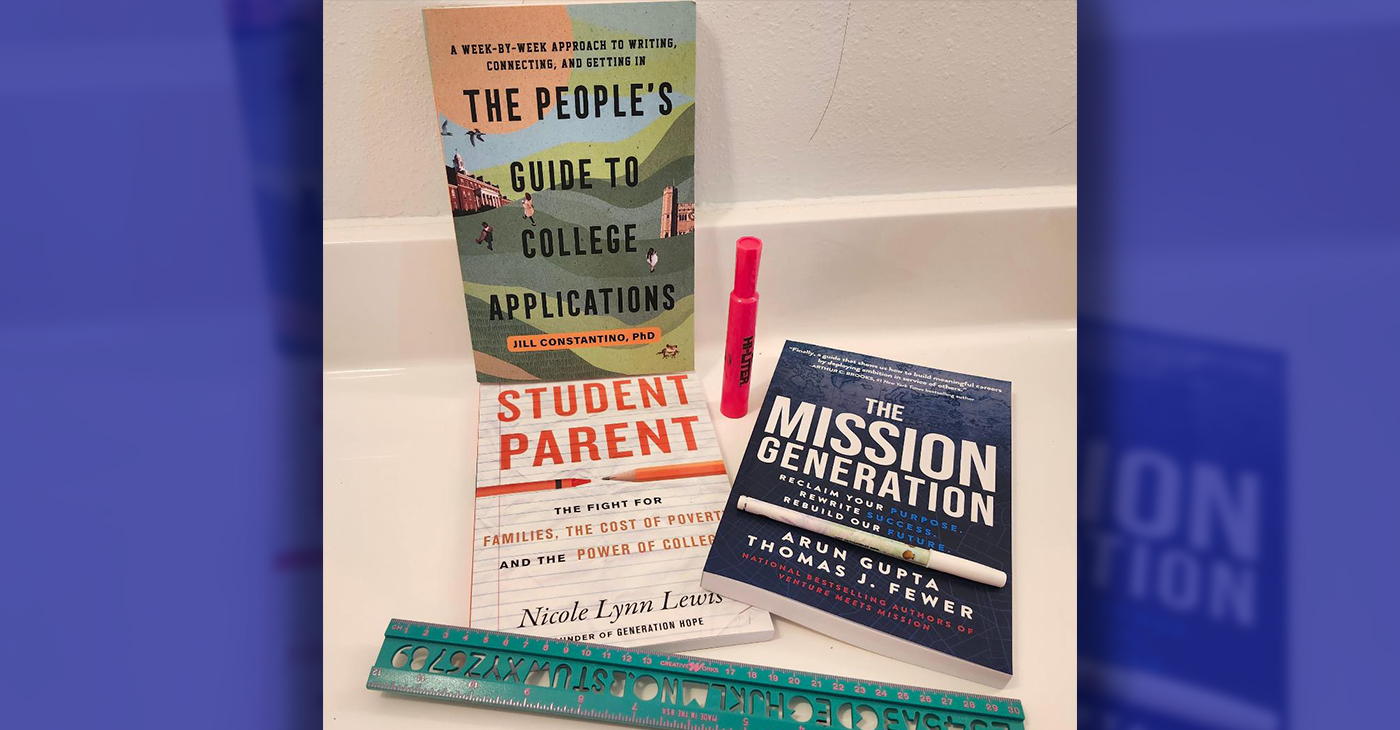
You probably already know that getting into the college of your choice is not something you do last-minute. In “The People’s Guide to College Applications: A Week-by-Week Approach to Writing, Connecting, and Getting in” (Prometheus Books, $ 21.95), Jill Constantino takes you through each step, but not in a frantic way. There’s no pressure here, just easy-to-grasp, makes-sense methods to apply for the college you want. There are reminders here, things you can’t forget and things you can, hints on asking for referrals and writing essays, and plenty of reminders to take a deep breath. Bonus: it’s also a book for parents, who may feel just as much pressure as their child does.
Okay, but let’s say that you’re an adult, a parent who’s sweating those college applications, classes, and the FAFSA for yourself, ugh! Then you’ll want to read “Student Parent: The Fight for Families, the Cost of Poverty, and the Power of College” by Nicole Lynn Lewis (Beacon Press, $26.97). an urgent call meant for nontraditional students who are also Black, Latinx, gay, Moms, or Dads.
Inside this book, you’ll find stats and stories that may already sound familiar, tales of not enough money, not enough support, not enough arms or sleep or resources. If you’re looking for a book of advice, this isn’t it, though. It’s more of a resource that you’ll want to take to your guidance counselor or any local politician.
Alright, but what if you’ve decided that college can wait? Is that okay? Look for “The Mission Generation: Reclaim Your Purpose, Rewrite Success, Rebuild Our Future” by Arun Gupta and Thomas J. Fewer (Wiley, $29.00) because – guess what? – you have many options for your future.
The kind of workday your Grandpa had is probably over, and you can’t count on toiling at the same place for 40 years for a pension and a gold watch. You already know that, and this book will help you decide your next step. You’ll learn what kind of worker you are, what’s stopping you from finding a job or occupation you’ll love, how to determine the purpose you envision for your future, and how to get where you need to be. This book isn’t just for high schoolers, but for anyone ages 16 and beyond who’s feeling restless, ready for change, or who’s thinking about some kind of purposeful retirement.
And if these aren’t the college-based or not-college-bound books you need, then be sure to ask your favorite bookseller or librarian for help on ideas, how-to’s, test prep books, or study guides. They’ll have books for you, and maybe a little inspiration, too.
Arts and Culture
Book Review: Books on Black History and Black Life for Kids
For the youngest reader, “As You Are: A Hope for Black Sons” by Kimberly A. Gordon Biddle, illustrated by David Wilkerson (Magination Press, $18.99) is a book for young Black boys and for their mothers. It’s a hope inside a prayer that the world treats a child gently, and it could make a great baby shower gift.
By Terri Schlichenmeyer
Authors: Various, Copyright: c. 2025, 2026, Publishers: Various, SRPs: $17.99-$18.99, Page Counts: Various,
Everybody in your family has stories to share.
Your parents have told you some, no doubt. Your grandparents have offered a few, too, and aunties and uncles have spun some good tales. But there’s so much more to know, so grab one of these great books and learn about Black History and Black life.
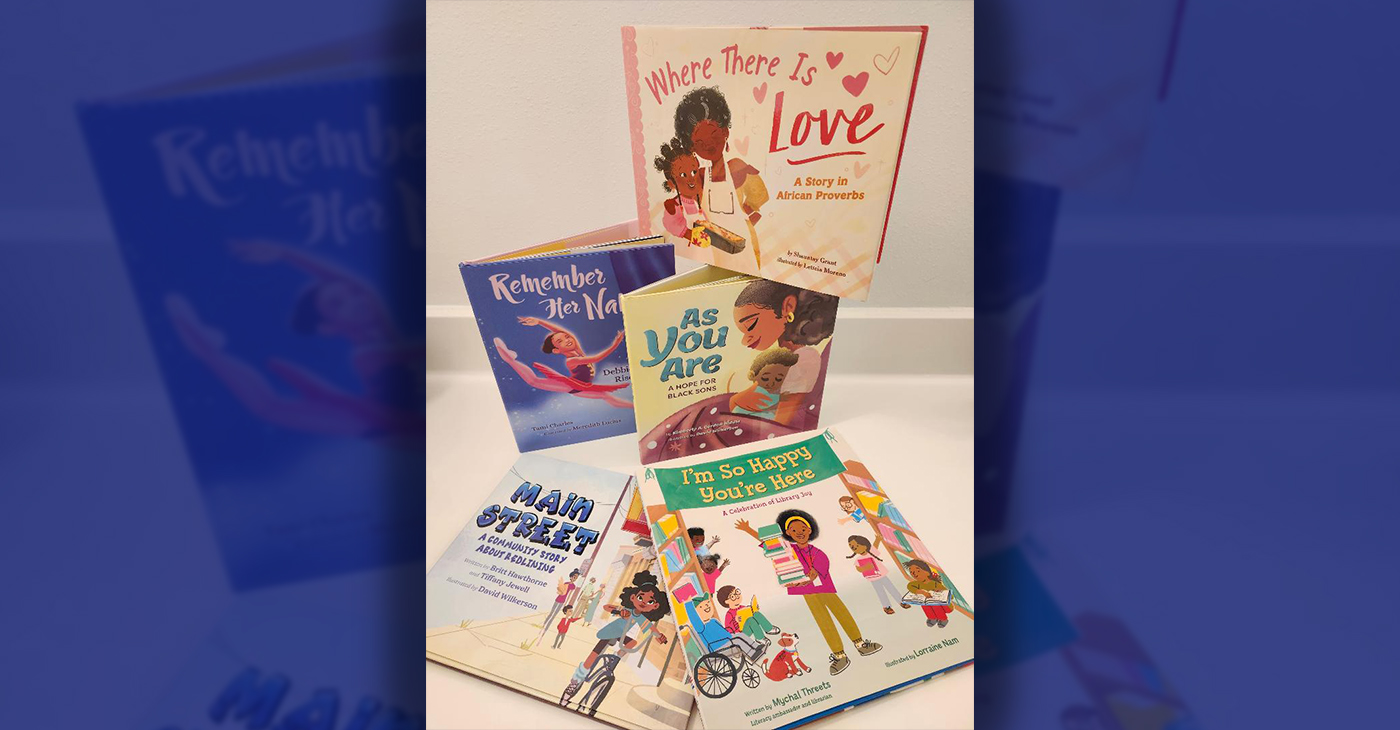
For the youngest reader, “As You Are: A Hope for Black Sons” by Kimberly A. Gordon Biddle, illustrated by David Wilkerson (Magination Press, $18.99) is a book for young Black boys and for their mothers. It’s a hope inside a prayer that the world treats a child gently, and it could make a great baby shower gift.
If someone said you couldn’t do something that you were clearly able to do, would you fight to do it anyhow? In the new book, “Remember Her Name! Debbie Allen’s Rise to Fame” by Tami Charles, illustrated by Meredith Lucius (Charlesbridge, $17.99), a young girl in the Jim Crow South is told that she can’t dance because of the color of her skin.
She didn’t listen, though, and neither did her mother, who took her daughter to Mexico, where the girl soared! This is an inspiration for any 5-to-7-year-old; be sure to check out the back-of-the-book information, if you’re an adult fan.

Do you often hear your elders say things that sound like lessons? They might be, so “Where There is Love: A Story of African Proverbs” by Shauntay Grant, illustrated by Leticia Moreno (Penguin Workshop, $18.99) is a book you’ll like. It’s a quick-to-read collection of short proverbs that you can say every day. Kids ages 4-to-6 will easily remember what they find in this book; again, look in the back for more information.
Surely, you love your neighborhood, which is why the tale inside “Main Street: A Community Story about Redlining” by Britt Hawthorne and Tiffany Jewell, illustrated by David Wilkerson (Penguin Kokila, $18.99) is a book for you.
Olivia’s neighborhood is having a block party, but she’s sad when no one shows up. That’s when she learns that “the government” is discriminating against the people and businesses near where she lives. So, what can she and her neighbors do? The answer might inspire 6-to-8-year-old kids to stand up to wrongs they see, and to help make their neighborhoods stronger and safer.
And finally, if a kid wants a book, where can they go to find it? In “I’m So Happy You’re Here: A Celebration of Library Joy” by Mychal Threets, illustrated by Lorraine Nam (Random House, $18.99) is a good introduction to the best of what a library has to offer. The freedom to walk into a library and borrow a book is the theme here, as is the sheer happiness of being welcomed, no matter who you are. This is an easy book for kids as young as two and as old as five to enjoy.
On that note, if you want more, head to that library, or a nearby bookstore. They’ll be glad to see you. They’ve got stories to share.



Asm. Corey Jackson Announces Launch of 24-Hour Childcare in His District

IN MEMORIAM: The Rev. Leon “Sonny” Clark, Longtime Orange County Pastor and Community Leader, Dies at 72

Poll: Becerra Widens His Lead Over Hilton; Californians Split on Wealth Tax

From Historic Memories to New Possibilities: Oakland Celebrates Coliseum 60

County Office of Education Says OUSD Finances Are Getting Healthier, Materially Stronger

LIVE FREE Sunday Dinner Brings Faith, Fellowship and Civic Conversation to Oakland

Remembering Chauncey Bailey as Student Journalists Face Threats to Truth-Telling

BLACspace Cooperative Invites Bay Area to Experience Oakland’s Black Cultural Ecosystem Through a BLAC Map Tour + Party

In Wake of Death on Doorstep, Williams Chapel Baptist Church Calls for Better Care, Funding for Unhoused

Oakland Centenarian Nuna McKee Honored!

Caribbean Nations Produce Action Plan Calling for UK Reparations Over Slavery

Oakland Post: Week of September 23 – 29, 2026

Doulas Are Helping Black California Moms Navigate Pregnancy–Even as High Mortality Rates Persist

Newsom Signs Addictive Social Media Law to Protect Kids

On Your November Ballot: Prop 38 Would Allocate $8.4 Billion to Immunology and Immunotherapy Funding

Standoff for Justice: Our Homes Are Worth Fighting For

Oakland Post: Week of August 26 – September 1, 2026

Frontier Airlines’ Return to Oakland Airport Brings Flights, Jobs and Opportunity

Gubernatorial Candidate Steve Hilton Blasts California New Tire Rules; Newsom Hits Back

Chef Sharon Lee Blends Culinary Excellence, Education and Empowerment

Jackie Wright Champions Bay Area Stories, Filmmakers and Cultural Institutions

Big City Mayors Ask for “Yes” Vote on Housing Bond Measure; Conservatives Say “No”

Oakland Coliseum Project Opens Door for Small Businesses to Build Bigger

Gov. Newsom’s Latest Appointees Include Sacramento Advocate for Formerly Incarcerated Students; State’s New Tech Chief

Misnamed ‘Parent’ PAC Seeks to Influence Oakland School Board Elections

Longtime BWOPA Member Brendalyn Goodall Appointed to California Workforce Development Board

Gov. Newsom Signs Law Shielding Immigration Aid Workers From Doxing Threats

Secretary of State Shirley N. Weber Urges Californians to Vote Early as Voter ID Battle Intensifies

From Palestine to Oakland: Seeds for Liberation Examines Shared Struggles for Freedom

IN MEMORIAM: Dolly Parton Dead at 80 — How She Built a Legacy of Love and Earned Her Place in Black Culture

The Conversation With Al McFarlane 6/23/26

Media Monday 6/22/26

LIVE! ASK ALMA! — TUES. 6.23.26 7PM EST

Car Buying Secrets: 4 Hidden Checks Before You Sign!

Is This 550 HP Charger Worth YOUR Money? AutoNetwork Review

Celebrating Juneteenth – Frederick Douglass on education and resistance

LIVE! — ASK ALMA! — TUES. 6.19.26 7PM EST

Hyundai Ioniq 5 Parking, Safety, and 360 View #shorts

2025 Ioniq 5 New Wiper & Powerful Performance! #shorts

Electric SUV Range: Is 259 Miles Enough? #shorts

EV Charging: How Fast Can You Charge an Electric Vehicle? #shorts

Biometric Cooling… Messaging Seats…Come on! 2025 Infiniti QX80 Autograph 4WD

Charged Up: Witness the Magic of a Fully Electric Car! #shorts

Range Rover Sport PHEV Included…: See What’s Inside This Luxury SUV! #shorts

Invisible Hood View: Perfect Parking with X-Ray Vision! #shorts
-
 Community2 weeks ago
Misnamed ‘Parent’ PAC Seeks to Influence Oakland School Board Elections
-

 Activism3 weeks ago
Oakland Post: Week of September 2 – 8, 2026
-

 Community2 weeks ago
Richmond Tiny House Village Farm & Garden Set to Open Gates on Sept. 26
-

 Activism2 weeks ago
Oakland Post: Week of September 9 – 15, 2026
-

 Black History2 weeks ago
Latest Massacre in Haiti Reveals Cruelty U.S. Deportations
-

 Black History2 weeks ago
OPINION: Nolan Wells’ Death One of Several Signifying Racial Terror Lives on in U.S. South
-

 Community2 weeks ago
Democratic Clubs Interview Candidates for Oakland School Board
-
 Featured2 weeks ago
‘Ready to See These Bills Become Law’: Sen. Weber’s Package of 15 Bills Advance to Gov. Newsom’s Desk
