
California Black Media
U.S. Rep. Kamlager-Dove Leads Discussion on Improving Black Student Learning, Test Scores
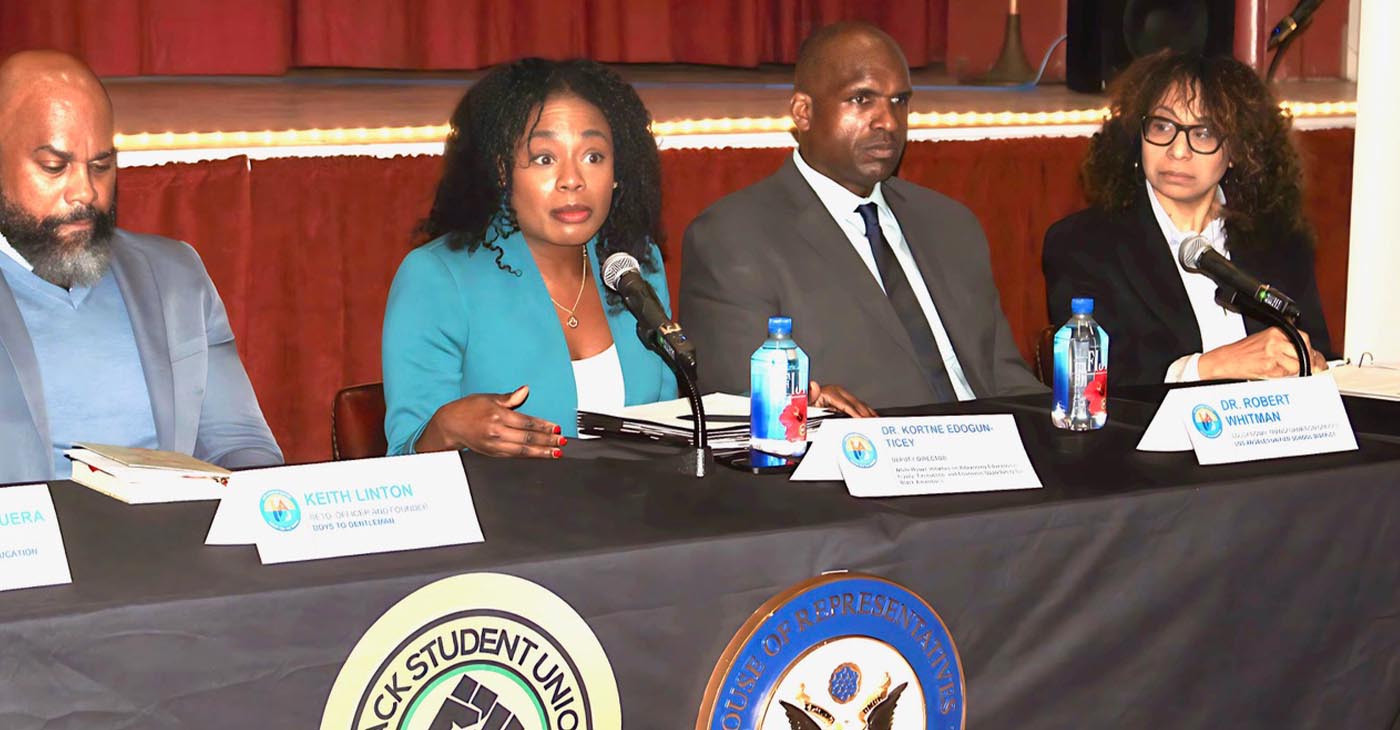
On April 8, U.S. Congressmember Sydney Kamlager-Dove (D-CA-37) moderated a roundtable focused on Los Angeles Unified School District’s (LAUSD) strategies to improve Black student performance in classrooms. Kamlager-Dove, who represents a district that covers parts of Los Angeles County, hopes that ideas shared at the event can be incorporated into models that can impact other regions across California, where Black students continue to fall behind their peers of other races and ethnicities.

By Lila Brown, California Black Media

On April 8, U.S. Congressmember Sydney Kamlager-Dove (D-CA-37) moderated a roundtable focused on Los Angeles Unified School District’s (LAUSD) strategies to improve Black student performance in classrooms.
Kamlager-Dove, who represents a district that covers parts of Los Angeles County, hopes that ideas shared at the event can be incorporated into models that can impact other regions across California, where Black students continue to fall behind their peers of other races and ethnicities.
Discussions at the event centered on LAUSD’s Black Student Achievement Plan (BSAP) and other educational initiatives aimed at enhancing learning and boosting test scores.
“The Black Student Achievement Plan is unique in that it takes a community-centered approach to uplifting Black students,” said Kamlager-Dove during the event held at John Muir Middle School in Los Angeles.
“We must implement culturally responsive education in the classroom to challenge our students academically while giving them a sense of purpose,” she continued.
In 2023, nearly 70% of Black children in California fell below a passing mark on the state standardized English Language Arts exam, and only about 20% of those students were performing at grade level based on their scores on the math assessment test.

A variety of public education experts joined Kamlager on the panel, including Dr. Kortne Edogun-Ticey, Senior Advisor, U.S. Department of Education; Dr. Robert Whitman, Educational Transformation Officer at LAUSD; Dr. Pedro Noguera, Professor and Dean at the University of Southern California Rossier School of Education; and Keith Linton, founder of the non-profit Boys to Gentlemen.
Jonathan McGee, a student who sits on the BSAP Student Advisory Council, also spoke during the panel.
The BSAP was approved by the LAUSD Board of Education in February of the 2020-21 school year. Funds have been earmarked to address the longstanding disparities in educational outcomes between Black students and their non-Black peers. Dating back to the landmark case, Brown v. the Board of Education of Topeka, Kan., in which the U.S. Supreme Court declared that segregated schools were unconstitutional, positive outcomes for Black students continue to lag behind district and national averages for their non-Black counterparts.
Edogun-Ticey spoke about broader investments the federal government is making in education that directly impact Black students through The White House Initiative on Advancing Educational Equity, Excellence, and Economic Opportunity for Black Americans.
‘This administration did not shy away from the idea that we need resources for support which means billions of dollars in investment for HBCUs,” she explained.
BSAP strategies include partnering with Black families and local community; supporting the implementation of culturally and linguistically responsive and anti-racist practices; offering wrap-around support structures; and highlighting experiences that uplift the contributions of the Black community as motivation and models to develop positive Black student identity. Additionally, the BSAP provides increased staffing to support Black students’ academic and social-emotional needs.
“School districts across the country must push back against attacks on marginalized students by implementing programs like the BSAP, which should serve as a model for future initiatives,” Kamlager said.













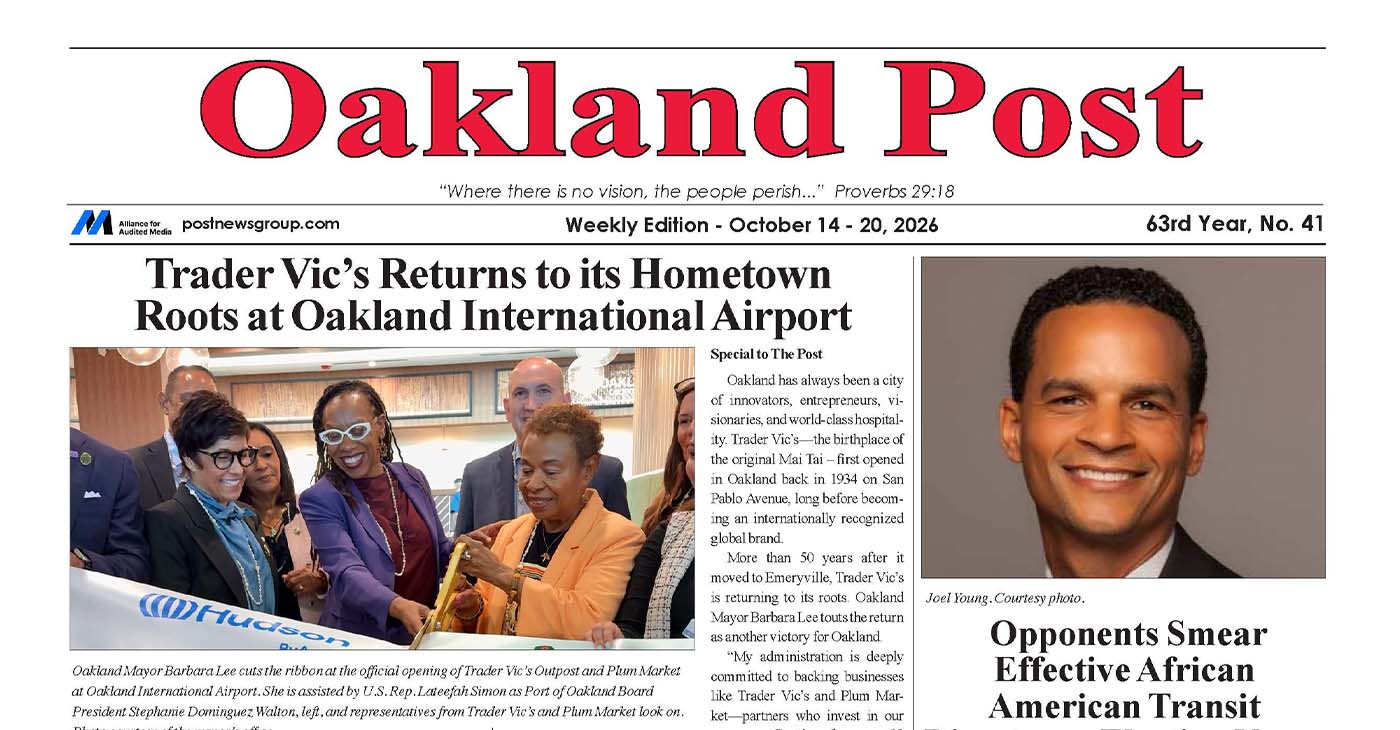
To enlarge your view of this issue, use the slider, magnifying glass icon or full page icon in the lower right corner of the browser window.
To enlarge your view of this issue, use the slider, magnifying glass icon or full page icon in the lower right corner of the browser window.
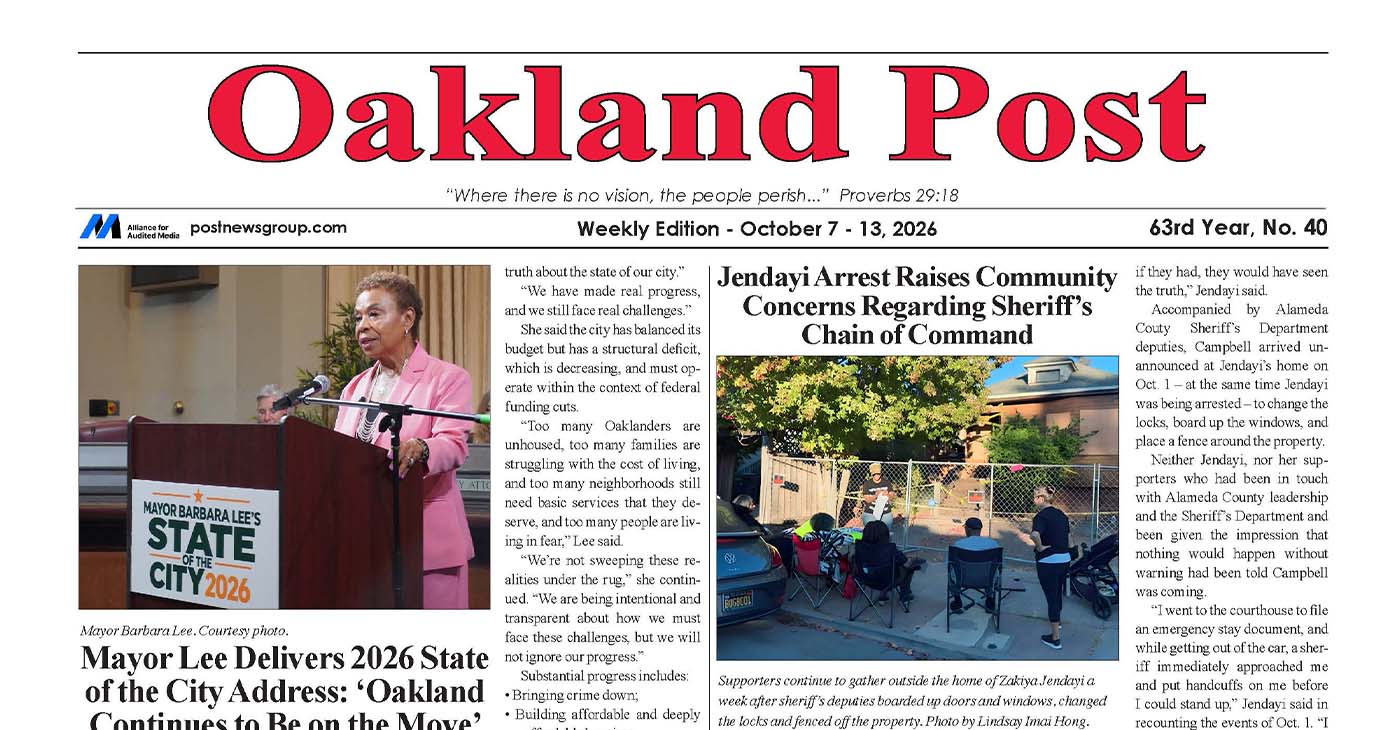
To enlarge your view of this issue, use the slider, magnifying glass icon or full page icon in the lower right corner of the browser window.



Oakland Probate Dispute Raises Questions About Court-Ordered Property Transfer and Missing Notice

‘Raising a Child Shouldn’t Break the Bank’: California Is Helping Families Save on Childcare Costs

Secretary of State Shirley Weber Pushes Back Against DOJ Demands Over California Voter Rolls

Chase Launches Fraud & Scam Prevention Month

U.S. Rep. Simon Secures More Than $1 Million for Public Safety at Mills College at Northeastern University Oakland, Surrounding Neighborhood

COMMENTARY: Valarie Bachelor and Jennfier Brouhard are Excellent School Board Members and Deserve to Be Reelected

Oakland Faith Leaders Gather to Revitalize the Interdenominational Ministerial Alliance of Oakland

Statue of ‘La Catrina,’ a Beloved Symbol of Dia de Los Muertos, Visits Oakland

Oakland Honors 60 Years of the Black Panther Party at the All Power to the People Gala

Fate of Bay Area Public Transit Hinges on Regional Transit Measure

Why AC Transit Director Joel Young is My Choice for AC Transit Board Ward 3

Oakland Post: Week of October 21 – 27, 2026

Mayor Barbara Lee Holds Special State of the City Address in Deep East Oakland

Practitioners of African Traditional Spirituality Offer Ancestral Reverence Ritual Oct. 31

It’s Time to Lose Weight Before the Holidays

Misnamed ‘Parent’ PAC Seeks to Influence Oakland School Board Elections

Listening as a Lifeline: A Doula’s Witness to Black Maternal Health

Poll: Becerra Widens His Lead Over Hilton; Californians Split on Wealth Tax

Doulas Are Helping Black California Moms Navigate Pregnancy–Even as High Mortality Rates Persist

County Office of Education Says OUSD Finances Are Getting Healthier, Materially Stronger

Oakland Post: Week of September 9 – 15, 2026

Zakiya Jendayi Arrested, Locked Out of Home by Sheriff’s Deputies

Mayor Lee Announces $1 Million Kaiser Permanente Grant for Pilot Program to Address Homelessness, Clean Up Public Spaces throughout Oakland

Richmond Tiny House Village Farm & Garden Set to Open Gates on Sept. 26

BLACspace Cooperative Invites Bay Area to Experience Oakland’s Black Cultural Ecosystem Through a BLAC Map Tour + Party

OPINION: Nolan Wells’ Death One of Several Signifying Racial Terror Lives on in U.S. South

Latest Massacre in Haiti Reveals Cruelty U.S. Deportations

Oakland People’s Arms Embargo Coalition Demands End to Military Shipments Thru Oakland

Oakland Post: Week of September 16 – 22, 2026

Democratic Clubs Interview Candidates for Oakland School Board

The Conversation With Al McFarlane 6/23/26

Media Monday 6/22/26

LIVE! ASK ALMA! — TUES. 6.23.26 7PM EST

Car Buying Secrets: 4 Hidden Checks Before You Sign!

Is This 550 HP Charger Worth YOUR Money? AutoNetwork Review

Celebrating Juneteenth – Frederick Douglass on education and resistance

LIVE! — ASK ALMA! — TUES. 6.19.26 7PM EST

Hyundai Ioniq 5 Parking, Safety, and 360 View #shorts

2025 Ioniq 5 New Wiper & Powerful Performance! #shorts

Electric SUV Range: Is 259 Miles Enough? #shorts

EV Charging: How Fast Can You Charge an Electric Vehicle? #shorts

Biometric Cooling… Messaging Seats…Come on! 2025 Infiniti QX80 Autograph 4WD

Charged Up: Witness the Magic of a Fully Electric Car! #shorts

Range Rover Sport PHEV Included…: See What’s Inside This Luxury SUV! #shorts

Invisible Hood View: Perfect Parking with X-Ray Vision! #shorts
-
 Black History3 weeks ago
Listening as a Lifeline: A Doula’s Witness to Black Maternal Health
-
 Economy4 weeks ago
Poll: Becerra Widens His Lead Over Hilton; Californians Split on Wealth Tax
-
 Business4 weeks ago
County Office of Education Says OUSD Finances Are Getting Healthier, Materially Stronger
-
 Lead Story3 weeks ago
Zakiya Jendayi Arrested, Locked Out of Home by Sheriff’s Deputies
-
 Art4 weeks ago
BLACspace Cooperative Invites Bay Area to Experience Oakland’s Black Cultural Ecosystem Through a BLAC Map Tour + Party
-
 Business4 weeks ago
From Historic Memories to New Possibilities: Oakland Celebrates Coliseum 60
-
 Community4 weeks ago
Asm. Corey Jackson Announces Launch of 24-Hour Childcare in His District
-

 Black History4 weeks ago
IN MEMORIAM: The Rev. Leon “Sonny” Clark, Longtime Orange County Pastor and Community Leader, Dies at 72
