
Bay Area
Special Stage Events, Activities for Children at Oakland’s Black-Eyed Pea Festival
The 8th Annual Black-Eyed Pea Festival, held on the front lawn of Oakland Technical High School, is offering a change to your routine with main stage acts and activities for children. And it’s free.

Special to The Post
Got kids?
So, you know they like to do the same thing over and over.
They want you to read them the same story, watch the same movie, eat the same food. They don’t get tired, but you are a little weary of the routine that you know is actually good for them.
But on Saturday, Sept. 30, you don’t have to go to Fairyland again.
The 8th Annual Black-Eyed Pea Festival, held on the front lawn of Oakland Technical High School, is offering a change to your routine with main stage acts and activities for children. And it’s free.
The festival begins at 11 a.m. with a welcome by the event’s regular M.C., Carla Service of Oakland’s Dance-A-Vision. After a brief drum invocation by Awon Ohun Omnira, renowned Bay Area vocalist Rhonda Benin begins the first of two 25-minute sets called “What Is a Band?” from noon to 1 p.m.
The set is an interactive musical program designed for children to introduce them to a live band. Through the “call and response style,” children become a part of the band while learning about the piano, the bass, the drum, and the voice. And musical terms like melody, a capella, call and response, syncopation, rhythm, polyrhythms, unison, and improvisation.
Informative and fun, Benin, who is also a music teacher, will invite a few children to join her on stage to take a turn at playing a percussive instrument.
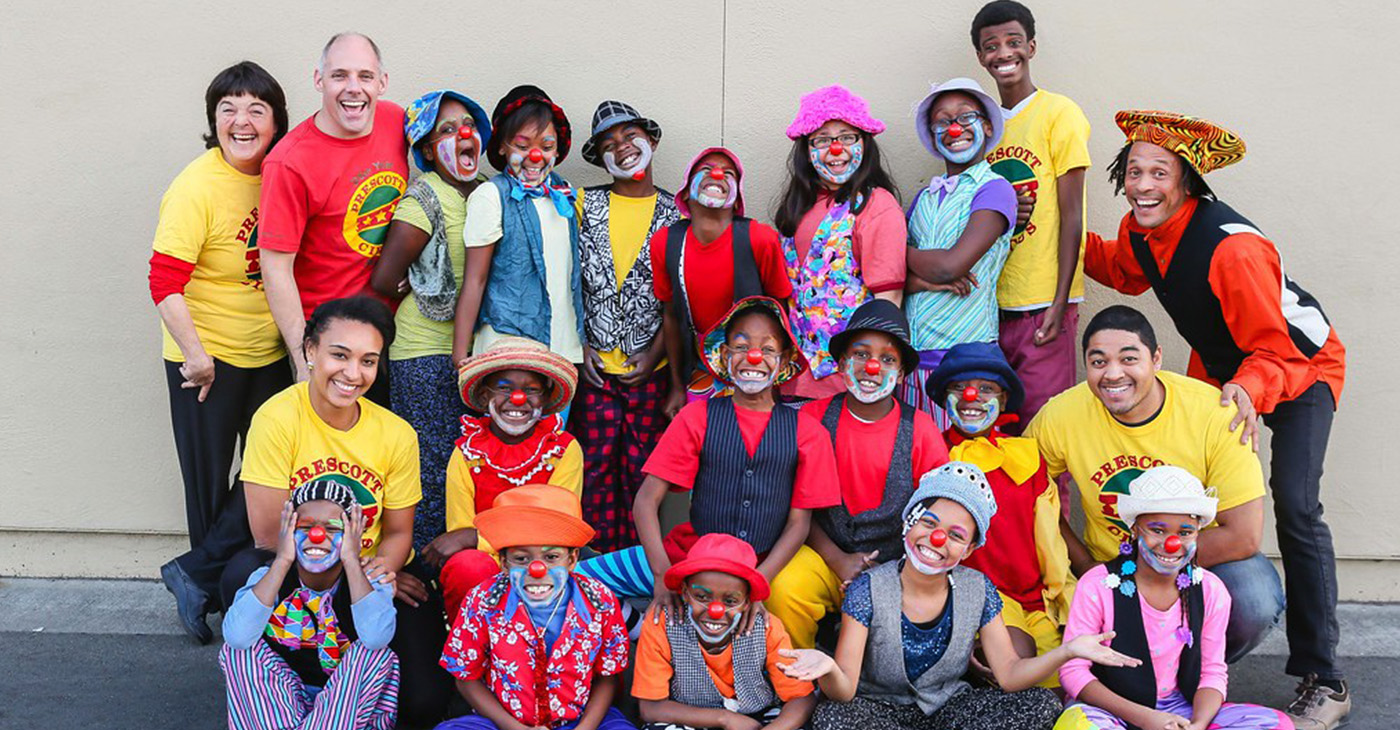
After Benin’s set, the festival welcomes the Prescott Circus, an Oakland youth group that will — literally — bring in the clowns.
But not just clowns. They’ll bring tradition in the form of stilt-walking, a form of entertainment in several African and Caribbean countries incorporated in carnivals and pageants. There’ll be jugglers and kids performing balancing acts as well as hip-hop dancing. They’re on stage from 1:20 p.m. to 2 p.m.
Asé Arts, run by Nichole Talbott, is a community art studio in the Mosswood Park neighborhood. She will provide all-day arts and crafts activities for children. She has separate tables for very young children and sets tasks within their age range and ability. Of course, children will be using black-eyed peas to decorate their artwork, small picture frames and more.
A few feet away, Benjamin ‘Benja’ Mertz, will supervise a touch-and-play booth where children will get a chance to experiment with instruments, mostly percussive. It serves as a follow-up to Benin’s set on bands. Mertz will be at the festival from 11 a.m. to 4 p.m. A storyteller as well as a musician, he might be persuaded to regale kids with a tale or two.
Adults, of course, are not left out. On the main stage that day, the festival will have the John Santos Quartet, selections by Dimensions Dance Theatre, second-line style music from New Orleans native Michael Jones of MJ’s Brass Boppers and Alvon Johnson will close out the day with a lively blues set.
Nobody will be hungry with soul food classics and creole dishes for sale by Carolyn’s Creole Kitchen, Arnette Cheri catering and Krazy Kettle desserts.
The 8th Annual Oakland Black-Eyed Pea Festival, a celebration of African American traditional music, food and art will be held:
When: Saturday, Sept. 30, 2023
Time: 11 a.m. to 6 p.m.
Where: Oakland Technical High School, 4351 Broadway, Oakland, 94611
Cost: Free
For more information, please call 510-332-5851 or email at oakbepf@gmail.com.









Activism
Oakland Post: Week of September 30 – October 6, 2026
The printed Weekly Edition of the Oakland Post: Week of September 30 – October 6, 2026

To enlarge your view of this issue, use the slider, magnifying glass icon or full page icon in the lower right corner of the browser window.
Activism
Oakland Post: Week of September 23 – 29, 2026
The printed Weekly Edition of the Oakland Post: Week of September 23 – 29, 2026

To enlarge your view of this issue, use the slider, magnifying glass icon or full page icon in the lower right corner of the browser window.

Activism
Oakland Post: Week of September 16 – 22, 2026
The printed Weekly Edition of the Oakland Post: Week of September 16 – 22, 2026

To enlarge your view of this issue, use the slider, magnifying glass icon or full page icon in the lower right corner of the browser window.



OP-ED: Proposition 44 Would Put a Price on Trust

OP-ED: Proposition 40: It’s Time to Play Chess, Not Checkers

Listening as a Lifeline: A Doula’s Witness to Black Maternal Health

New Protections for Ticket Buyers: Gov. Newsom Signs Assemblymember Isaac Bryan’s Bill

‘We Don’t Talk Trash — We Pick Up Trash!’

Zakiya Jendayi Arrested, Locked Out of Home by Sheriff’s Deputies

Oakland Post: Week of September 30 – October 6, 2026

Asm. Corey Jackson Announces Launch of 24-Hour Childcare in His District

IN MEMORIAM: The Rev. Leon “Sonny” Clark, Longtime Orange County Pastor and Community Leader, Dies at 72

Poll: Becerra Widens His Lead Over Hilton; Californians Split on Wealth Tax

From Historic Memories to New Possibilities: Oakland Celebrates Coliseum 60

County Office of Education Says OUSD Finances Are Getting Healthier, Materially Stronger

LIVE FREE Sunday Dinner Brings Faith, Fellowship and Civic Conversation to Oakland

Remembering Chauncey Bailey as Student Journalists Face Threats to Truth-Telling

BLACspace Cooperative Invites Bay Area to Experience Oakland’s Black Cultural Ecosystem Through a BLAC Map Tour + Party

Standoff for Justice: Our Homes Are Worth Fighting For

Oakland Post: Week of August 26 – September 1, 2026

Frontier Airlines’ Return to Oakland Airport Brings Flights, Jobs and Opportunity

Jackie Wright Champions Bay Area Stories, Filmmakers and Cultural Institutions

Gubernatorial Candidate Steve Hilton Blasts California New Tire Rules; Newsom Hits Back

Chef Sharon Lee Blends Culinary Excellence, Education and Empowerment

Misnamed ‘Parent’ PAC Seeks to Influence Oakland School Board Elections

Oakland Coliseum Project Opens Door for Small Businesses to Build Bigger

Big City Mayors Ask for “Yes” Vote on Housing Bond Measure; Conservatives Say “No”

Gov. Newsom’s Latest Appointees Include Sacramento Advocate for Formerly Incarcerated Students; State’s New Tech Chief

Oakland Post: Week of September 2 – 8, 2026

Longtime BWOPA Member Brendalyn Goodall Appointed to California Workforce Development Board

Gov. Newsom Signs Law Shielding Immigration Aid Workers From Doxing Threats

Secretary of State Shirley N. Weber Urges Californians to Vote Early as Voter ID Battle Intensifies

Oakland Post: Week of September 9 – 15, 2026

The Conversation With Al McFarlane 6/23/26

Media Monday 6/22/26

LIVE! ASK ALMA! — TUES. 6.23.26 7PM EST

Car Buying Secrets: 4 Hidden Checks Before You Sign!

Is This 550 HP Charger Worth YOUR Money? AutoNetwork Review

Celebrating Juneteenth – Frederick Douglass on education and resistance

LIVE! — ASK ALMA! — TUES. 6.19.26 7PM EST

Hyundai Ioniq 5 Parking, Safety, and 360 View #shorts

2025 Ioniq 5 New Wiper & Powerful Performance! #shorts

Electric SUV Range: Is 259 Miles Enough? #shorts

EV Charging: How Fast Can You Charge an Electric Vehicle? #shorts

Biometric Cooling… Messaging Seats…Come on! 2025 Infiniti QX80 Autograph 4WD

Charged Up: Witness the Magic of a Fully Electric Car! #shorts

Range Rover Sport PHEV Included…: See What’s Inside This Luxury SUV! #shorts

Invisible Hood View: Perfect Parking with X-Ray Vision! #shorts
-
 Community4 weeks ago
Misnamed ‘Parent’ PAC Seeks to Influence Oakland School Board Elections
-
 Activism4 weeks ago
Oakland Post: Week of September 9 – 15, 2026
-

 Community4 weeks ago
Richmond Tiny House Village Farm & Garden Set to Open Gates on Sept. 26
-

 Black History4 weeks ago
Latest Massacre in Haiti Reveals Cruelty U.S. Deportations
-

 Black History4 weeks ago
OPINION: Nolan Wells’ Death One of Several Signifying Racial Terror Lives on in U.S. South
-

 Business3 weeks ago
Mayor Lee Announces $1 Million Kaiser Permanente Grant for Pilot Program to Address Homelessness, Clean Up Public Spaces throughout Oakland
-
 Economy2 weeks ago
Poll: Becerra Widens His Lead Over Hilton; Californians Split on Wealth Tax
-
 Business2 weeks ago
County Office of Education Says OUSD Finances Are Getting Healthier, Materially Stronger
