
Activism
Acknowledging Our Ancestars is Good for Our Souls
Ancestors are those in our maternal and paternal bloodlines born before us (in most cases) who have transitioned from the Earth to an invisible-spiritual-sky realm. We use ancestors interchangeably with Ancestars to honor some African ancients’ belief that our dearly departed return to the stars from which they came once they leave the Earth.

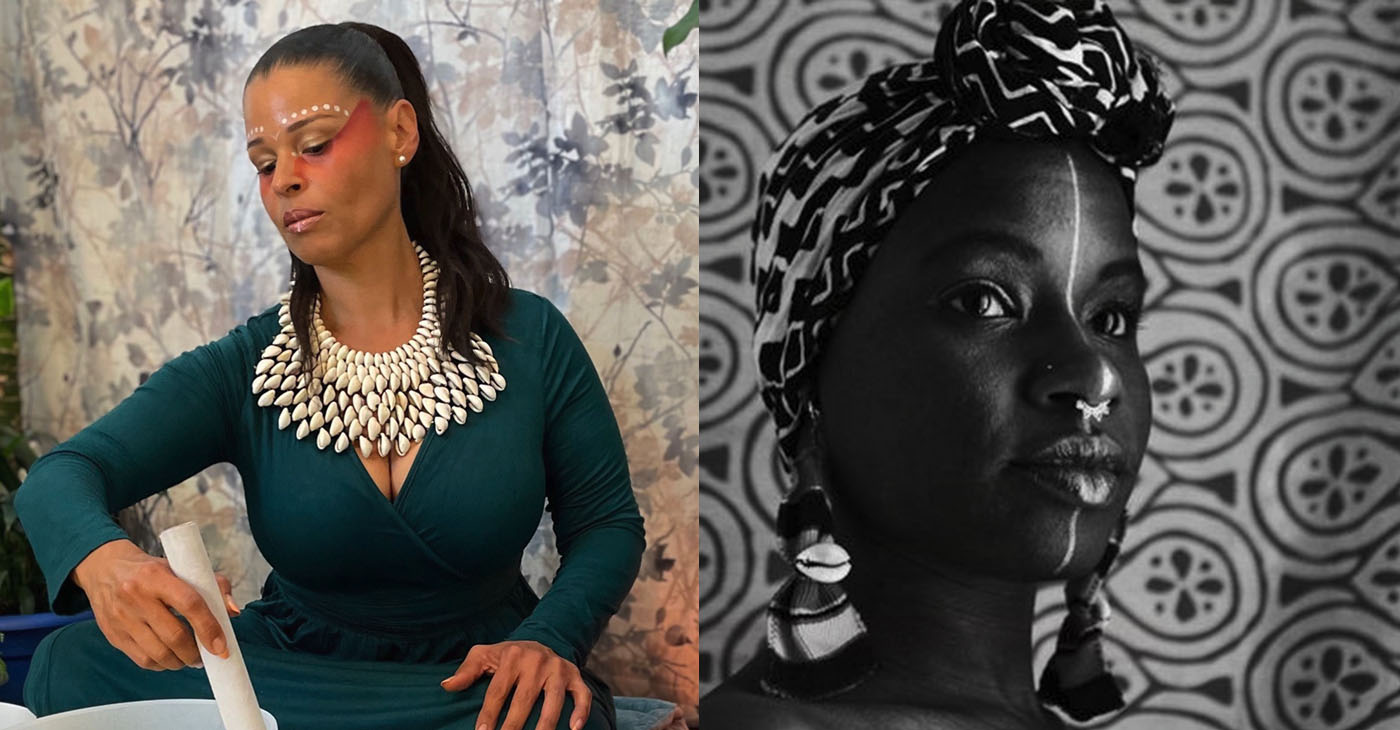
By Daktari S. Hicks, PsyD and
Monique “Kiki” Lyons, MA, AMFT
Except for some ceremonial moments and times, i.e., Kwanzaa, Juneteenth, Memorial Day, etc., we don’t think a lot about our ancestors.
Most of the time, in fact, we don’t think about those who walked in life before us and left footsteps for us to follow.
In many cases, we just bury them six feet under; or we cremate their physical bodies and scatter their ashes in a body of water or house them in an urn.
But are the dead really dead? As Black psychologists, we think not. The master Congo Nganga Dr. K. Kia Bunseke Fu-Kiau has taught us that we are seeds in a seed, from a seed, in a seed, from a seed ad infinitum.
We come and go and return and go and come back and go and come continually. As Black psychologists, we do believe in the continued existence, spirit, and power of our Ancestors, the invisible ones, or the dwellers of heaven (the sky world).
Ancestors are those in our maternal and paternal bloodlines born before us (in most cases) who have transitioned from the Earth to an invisible-spiritual-sky realm. We use ancestors interchangeably with Ancestars to honor some African ancients’ belief that our dearly departed return to the stars from which they came once they leave the Earth.

Us Black folk also adopt chosen, non-blood related Ancestors due to their vital impacts on us while they were alive and long after they’ve gone. Ibaye (“blessings to ancestor”) Sir Duke Ellington, Marvin Gaye, Chuck Brown, and Billy Stewart, a few of our Chocolate City-DC ancestors, where Dr. Daktari was born and raised.
Ibaye Monica Renee Hastings-Smith, Dr. “Papa” Zakariya Diouf, Zeke Nealy, Kamau Amen-Ra, and Dr. Angelina Graham, some of our local Oakland community Ancestors.
Nana Peasant, a character from Julie Dash’s film “Daughters of the Dust” says, “The Ancestors and the womb … they’re One, they’re the same. Those in the grave, like those who’re across the sea, they’re with us. They’re all the same. The Ancestors and the womb are one … Call on those old Africans. They’ll come to you when you least expect them. They’ll hug you up quick and soft like the warm, sweet wind. Let those old souls come into your heart. Let them feed your head with wisdom that ain’t from this day and time.”
Our Ancestars are vital because they serve as ever-present driving forces that guide and direct us on our divine paths.
An African proverb states, “A wise will is dedicated to the Ancestors, for it’s them who gave you everything.”
With that notion in mind, we inherit the good, bad, ugly, and phenomenal from our ancestors via genetic, familial, psychical, spiritual, cultural, and social modes of transmission. Within our collective ancestral memory bank, we can tap into intergenerational memories/stories of distant Ancestors that impact how we think, feel, and act yesterday, today, and tomorrow.
We co-authors crossed paths in 2017 when our ancestors deemed it necessary while attending an ancestral veneration ceremony at Oya Nike’s Botanica in Berkeley, CA, led by Curandero/Santero/Palero Baba Ruben Texidor.
We continued along our shared ancestral journey in 2019 by participating in Lead to Life’s Guns to Shovels Ceremony at Oakland City Hall where we erected altars for the ancestors, drummed/danced for the orishas (deified ancestors in the Yoruba tradition), and witnessed fireworkers meld guns (used to take lives) into shovels, which were used to plant trees on reclaimed local Ohlone land.
Via public/private communal ceremonies, we learned to cultivate ancestral healing. We acknowledge, communicate, and collaborate with our beloved Ancestars in an effort to resolve their unresolved trauma and access our inherited legacies of dynamism, resilience, revitalization, spirituality, and vitality.
The ancestors are, in fact, you. Acknowledging our ancestors is to honor the best of ourselves. We are the ancestors come to complete what they left incomplete, to finish the song, to finish the dance step, to finish their task, to finish our elevation and affirmation.
We encourage you to reach out, connect with, and honor your ancestors for reciprocal rejuvenation by creating an ancestral altar in your home/community, offering them omi tutu (fresh water), giving them their flowers, cooking their favorite meal, playing their favorite songs, and paying attention to your dreams, which are the “voices of Ancestors.”
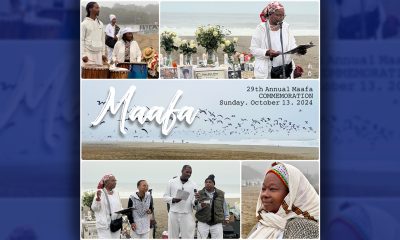
We also invite you to attend the Annual Maafa Commemoration Sunrise Ceremony at Ocean Beach, which typically occurs on the second Sunday of every October.
The Association of Black Psychologists (ABPsi) Bay Area Chapter is committed to providing the Post Newspaper readership with monthly discussions about critical issues in Black Mental Health. The ABPsi-Bay Area Chapter is a healing resource. Readers are welcome to join us at our monthly chapter meetings every 3rd Saturday via Zoom. We can be contacted at bayareaabpsi@gmail.com.






Activism
Oakland Post: Week of September 16 – 22, 2026
The printed Weekly Edition of the Oakland Post: Week of September 16 – 22, 2026

To enlarge your view of this issue, use the slider, magnifying glass icon or full page icon in the lower right corner of the browser window.
Activism
Oakland Post: Week of September 9 – 15, 2026
The printed Weekly Edition of the Oakland Post: Week of September 9 – 15, 2026
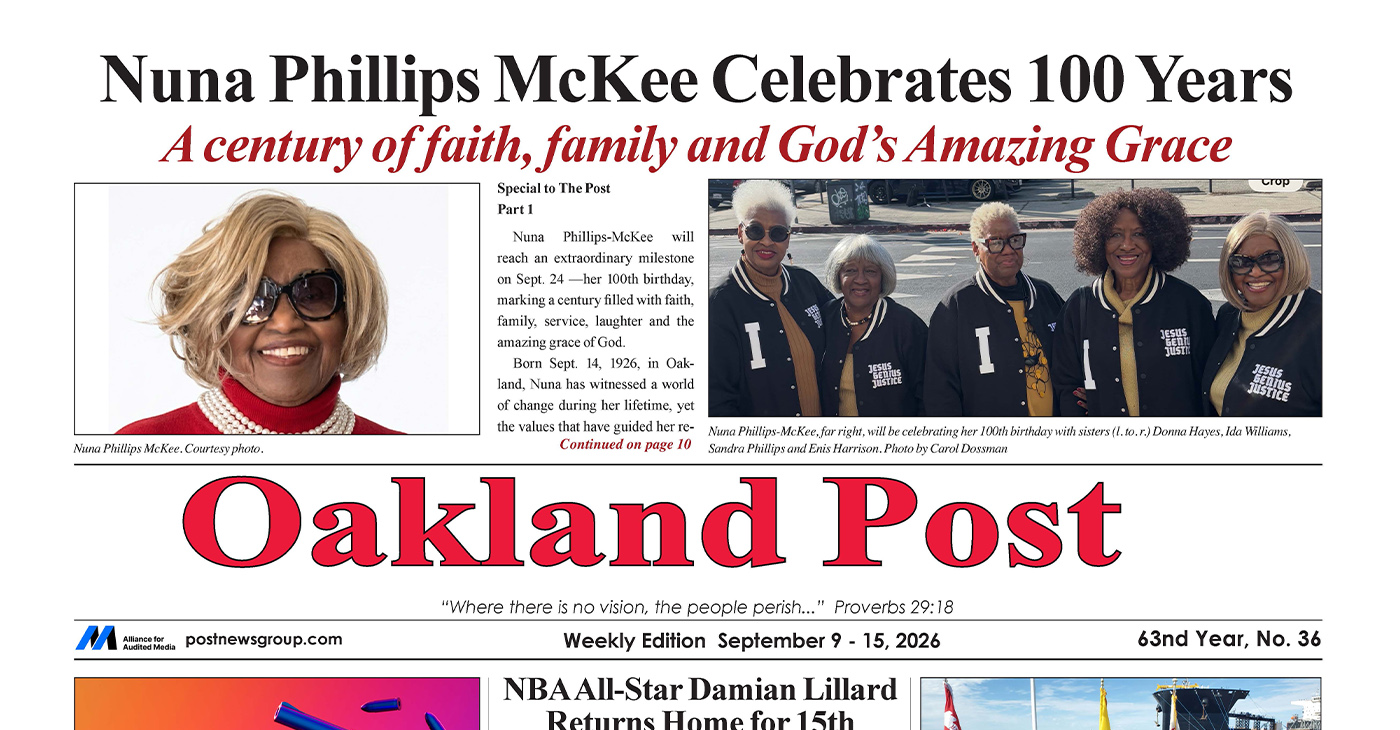
To enlarge your view of this issue, use the slider, magnifying glass icon or full page icon in the lower right corner of the browser window.
Activism
Oakland Post: Week of September 2 – 8, 2026
The printed Weekly Edition of the Oakland Post: Week of September 2 – 8, 2026
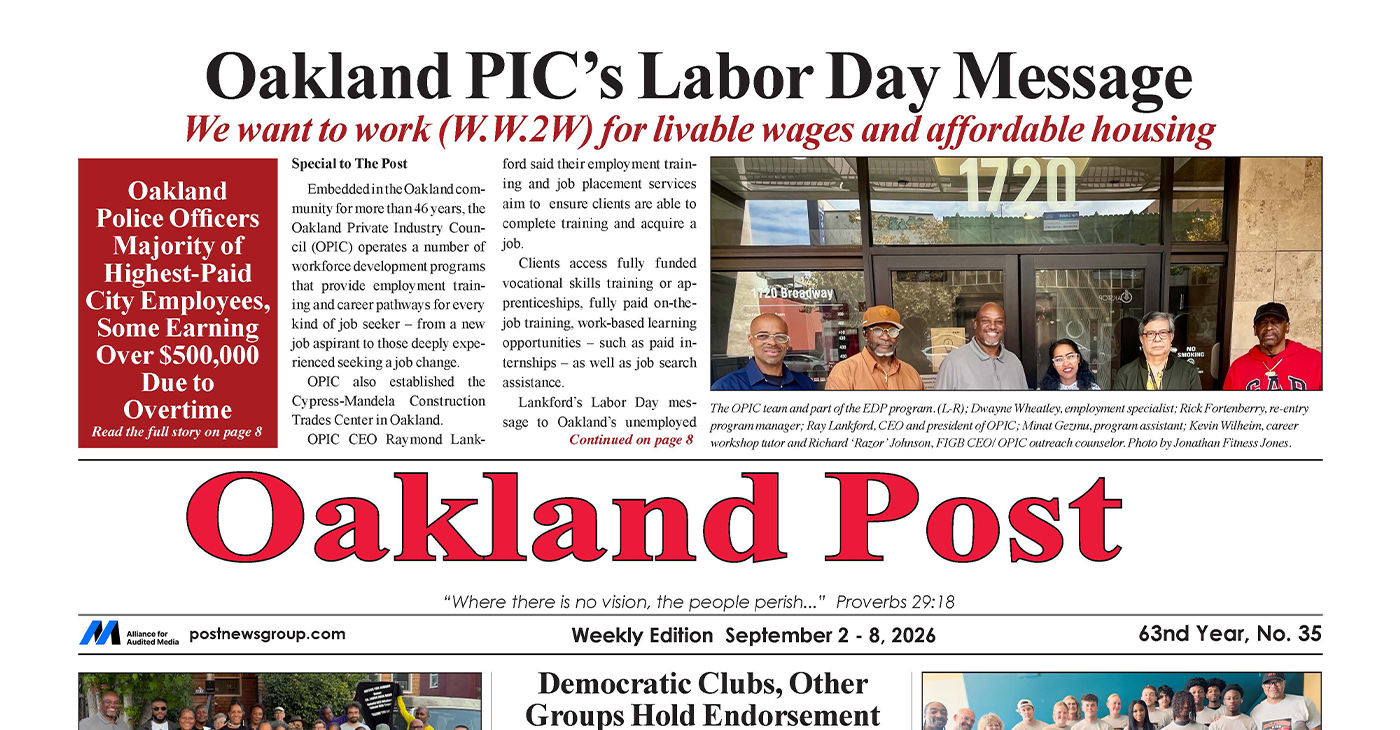
To enlarge your view of this issue, use the slider, magnifying glass icon or full page icon in the lower right corner of the browser window.



Doulas Are Helping Black California Moms Navigate Pregnancy–Even as High Mortality Rates Persist

Newsom Signs Addictive Social Media Law to Protect Kids

On Your November Ballot: Prop 38 Would Allocate $8.4 Billion to Immunology and Immunotherapy Funding

Ask California: Golden State Releases New AI Chatbot

Asm. Isaac Bryan’s Bill Banning California Police From ICE Side Jobs Reaches Newsom’s Desk

Assemblymember LaShae Sharp-Collins’s Bill Would Pause Law Enforcement’s Use of Shock Gloves Pending Study

BOOK REVIEW: ‘Laws of Solomon’ Reveals Tender Heart of Former Child Soldier

OPINION: The New American Fear – From 9-11 to AI

Passing for White, Fighting for Black America: The Courage of Walter White

Oakland People’s Arms Embargo Coalition Demands End to Military Shipments Thru Oakland

Barbara Lee Mourns Gloria Steinem, Remembers a Friendship Rooted in Equality

Event Preview: ‘Fashion v. Fascism’ – A Runway Revolution Is Coming to the Bay Area

Two Looming Threats Every Alameda County Elder Should Know About

Oakland Mayor Reads to Children at Bookout Block Party at Marcus Books Store

Tradition Comes to the Streets in 11th Annual Black-Eyed Pea Festival at the Freedom Farmers Market

Less Affluent School Districts, Including Sacramento City, Face Threat of State Takeover

ESSAY: California Can Close Its Colorectal Cancer Gap

California Hispanic Chambers of Commerce Unveils: ‘Powering the Future’ Theme for 47th Annual Statewide Convention

Four Candidates, Including Incumbent Barbara Lee, Qualify for Oakland Mayor’s Race

Oakland Post: Week of August 12 – 18, 2026

From Blueprint to Breakthrough: Tackling Affordable Housing in Oakland

Oakland Observes Black August with Block Parties, Film Showings, Workshops

COMMENTARY: Why Local School Tax Measure G1 Will Not Be on the November Ballot

Standoff for Justice: Our Homes Are Worth Fighting For

Returning to Its Roots, the Oakland Black-Eyed Pea Festival Partners with the Freedom Farmers Market Sept. 12

Oakland Post: Week of August 26 – September 1, 2026

NPRC Scores First Advocacy Victory: David Shaw Finally Gets His Wish to ‘Go Home’

Frontier Airlines’ Return to Oakland Airport Brings Flights, Jobs and Opportunity

Gubernatorial Candidate Steve Hilton Blasts California New Tire Rules; Newsom Hits Back

Chef Sharon Lee Blends Culinary Excellence, Education and Empowerment

The Conversation With Al McFarlane 6/23/26

Media Monday 6/22/26

LIVE! ASK ALMA! — TUES. 6.23.26 7PM EST

Car Buying Secrets: 4 Hidden Checks Before You Sign!

Is This 550 HP Charger Worth YOUR Money? AutoNetwork Review

Celebrating Juneteenth – Frederick Douglass on education and resistance

LIVE! — ASK ALMA! — TUES. 6.19.26 7PM EST

Hyundai Ioniq 5 Parking, Safety, and 360 View #shorts

2025 Ioniq 5 New Wiper & Powerful Performance! #shorts

Electric SUV Range: Is 259 Miles Enough? #shorts

EV Charging: How Fast Can You Charge an Electric Vehicle? #shorts

Biometric Cooling… Messaging Seats…Come on! 2025 Infiniti QX80 Autograph 4WD

Charged Up: Witness the Magic of a Fully Electric Car! #shorts

Range Rover Sport PHEV Included…: See What’s Inside This Luxury SUV! #shorts

Invisible Hood View: Perfect Parking with X-Ray Vision! #shorts
-
 Commentary4 weeks ago
Standoff for Justice: Our Homes Are Worth Fighting For
-
 Activism4 weeks ago
Oakland Post: Week of August 26 – September 1, 2026
-
 Business4 weeks ago
Frontier Airlines’ Return to Oakland Airport Brings Flights, Jobs and Opportunity
-
 Business4 weeks ago
Gubernatorial Candidate Steve Hilton Blasts California New Tire Rules; Newsom Hits Back
-
 Business4 weeks ago
Chef Sharon Lee Blends Culinary Excellence, Education and Empowerment
-

 Community4 weeks ago
Big City Mayors Ask for “Yes” Vote on Housing Bond Measure; Conservatives Say “No”
-

 Black History4 weeks ago
Jackie Wright Champions Bay Area Stories, Filmmakers and Cultural Institutions
-

 Education4 weeks ago
Gov. Newsom’s Latest Appointees Include Sacramento Advocate for Formerly Incarcerated Students; State’s New Tech Chief
