
Barbara Lee
Supreme Court Denies Affirmative Action for Everyone but the Wealthy and White
For generations, affirmative action has been a powerful means of lowering barriers to education for historically marginalized and underrepresented students of color. At its core, it simply aims to remedy the government-sanctioned, decades-long inequality by making race one factor in the college admissions process.


By Hon. Barbara Lee

By ruling that race and ethnicity cannot be considered in college admissions, the U.S. Supreme Court sets us back more than four decades.
For generations, affirmative action has been a powerful means of lowering barriers to education for historically marginalized and underrepresented students of color. At its core, it simply aims to remedy the government-sanctioned, decades-long inequality by making race one factor in the college admissions process.
Dismantling these policies will not only have devastating implications for students of color, but for the classrooms at these institutions, which will become devoid of diversity in the lived experience and perspective needed to solve America’s toughest challenges. Higher education serves as an incubator for the brilliant ideas of tomorrow. Those ideas will now become less diverse.
I’m a graduate of Mills College, a women’s college in Oakland. There was a time when, as a Black woman, my options for higher education were limited. But because affirmative action successfully addressed the centuries-long discrimination in higher education, I was able to earn my degree while caring for my two children as a single mother on public assistance.
I met my mentor, Congresswoman Shirley Chisholm; received my master’s degree in social work; became a successful small business owner; serve in Congress; and ran to be only the third Black woman in our nation’s history to serve in the U.S. Senate.
The list of barriers to higher education is already long, and I fear that with this ruling we are turning back the clock, and a generation of talented young people of color may not be given the same opportunities that I had.
For those reasons and more, I’ve fought hard to uphold affirmative action. California’s Proposition 209, which effectively banned affirmative action across our state’s public education systems, was a harmful policy that deprived countless students of color the opportunity to study at some of the greatest academic institutions in the world.
In 2020, I fought for the reversal of Prop 209, but it sadly failed. I argued against the banning of affirmative action before the UC Board of Regents years ago, and since that policy went into effect, the share of Black, Latino and Native American students has fallen significantly.
California has a difficult relationship with race. Despite being one of the most progressive states in the country, we struggle with racial inequality of epic proportions.
Ironically, [June 29] the California Reparations Task Force completed the report they were commissioned to produce. I was the only member of Congress to testify in front of the task force, and yesterday’s ruling affirms the need for their work toward an effort to repair the legacy of slavery, Jim Crow and systemic racism, and for my continued effort at the federal level to establish a Commission on Truth, Racial Healing and Transformation.
While the country mourns the end of affirmative action in higher education, let’s be clear: The Supreme Court did not strike down affirmative action for everyone. It was just taken away for everyone that’s not wealthy and white.
For many wealthy white students, it still exists in the form of legacy admissions. Justice Brett Kavanaugh knows this intimately, as a legacy admission to Yale. Judge Clarence Thomas was an affirmative action admission as well. Yet, they are denying future generations their same opportunities, and making the application of a first-generation college student from an immigrant family less notable than the child of a fifth-generation Yale graduate from a wealthy family.
In the spirit of Judge Ketanji Brown Jackson’s dissent on the ruling, preventing the consideration of race does not end racism, and deeming race irrelevant in law does not make it so in life. We do not live in a colorblind society.
Systemic racism is not an abstract idea. For the far right, it is intentional, deliberate and strategic. Their efforts to ban books, erase history and simply deny students of color entry into the building is a coordinated effort to uphold white supremacy.
Education has always been the great equalizer, which is why, for centuries, people of color were systematically shut out of educational opportunities. [Last] Thursday’s decision is simply one more part of this effort and, ultimately, lays the groundwork to undermine Brown v. Board of Education, which began the dismantling of Jim Crow.
The remnants of Jim Crow laws and the chains of slavery were meant to be broken, not meant to take new forms. Affirmative action is a crucial tool to not only incentivize racial diversity on our college campuses, but level the playing field for all those in pursuit of the American dream.
This opinion was originally published in the Sacramento Bee on July 1.














Activism
From Disparity Study to Solutions: Oakland Coalition and Mayor Barbara Lee Renew Commitment to Reform City Contracting
She committed to ensuring the coalition has direct access to City leadership by designating Assistant Deputy City Administrator Chuck Baker the primary liaison. Working alongside Deputy City Administrator Sofia Navarro, DWES Director Emylene Aspilla, Race and Equity Director Darlene Flynn, and other City departments, the coalition will continue advancing these priorities while maintaining regular communication with City leadership.
Special to The Post
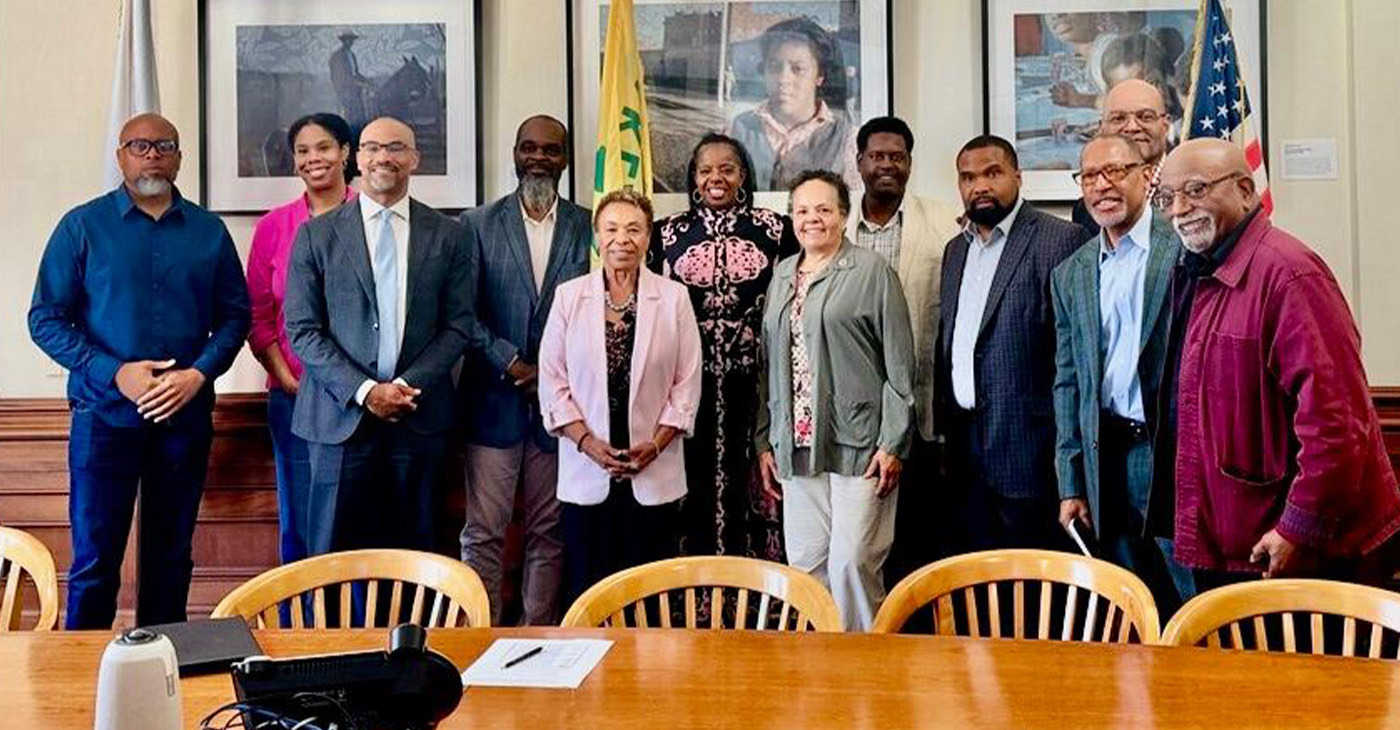
On June 30, a coalition of minority business leaders, contractors and others met with Oakland Mayor Barbara Lee to discuss the City’s commitment to implement recommendations outlined in Oakland’s Disparity Study and eliminate barriers that have historically prevented Black and minority-owned businesses from fully participating in public contracting opportunities.
Representatives of the Oakland African American Chamber of Commerce (OAACC), National Association of Minority Contractors Northern California (NAMC NorCal), Construction Resource Center (CRC), and the East Bay Rental Housing Association (EBRHA) said the meeting represented an important milestone in a process that has been underway for several months.
On April 21, the Oakland City Council’s Life Enrichment Committee received a progress report from the Department of Workplace and Employment Standards (DWES), where Director Emylene Aspilla presented the coalition’s working document and outlined a collaborative implementation plan between the coalition and the City. That report established 30-, 60-, and 90-day objectives focused on five key priorities:
- Reforming Local and Small Local Business Enterprise (L/SLBE) waiver practices
- Strengthening prompt payment compliance
- Improving procurement forecasting and transparency
- Expanding contractor capacity building and business development
- Increasing oversight, accountability, and public reporting
A series of working sessions was scheduled between coalition representatives, DWES, and the City Administrator’s Office to begin implementing those priorities but were temporarily delayed by the resignation of former City Administrator Jestin Johnson.
Rather than allowing that momentum to stall, OAACC President and CEO Cathy Adams requested a meeting with Lee to gain clarity on the City’s direction and reaffirm its commitment to implementing the recommendations contained within the Disparity Study.
Coalition leaders described the meeting as productive, candid, collaborative, and encouraging.
During the meeting, Lee spoke not only from her role as mayor but also from her experience as an 8(a) contractor and business owner, sharing that she understands firsthand what it takes to build and grow a successful company, employ a substantial workforce, compete for public work, and navigate the complexities of municipal contracting.
She committed to ensuring the coalition has direct access to City leadership by designating Assistant Deputy City Administrator Chuck Baker the primary liaison. Working alongside Deputy City Administrator Sofia Navarro, DWES Director Emylene Aspilla, Race and Equity Director Darlene Flynn, and other City departments, the coalition will continue advancing these priorities while maintaining regular communication with City leadership.
Mayor Lee also expressed her commitment to personally participate in future working meetings with the coalition.
“This meeting represents a renewed commitment to partnership,” said Adams. “Mayor Lee listened, engaged, and demonstrated that she wants to move beyond conversation and into implementation.”
CRC’s Len Turner said the roadmap is already in place. ““The City already has the evidence. What’s been missing is execution. …Now it’s time to deliver results.”
Mario Wagner, president of NAMC NorCal agreed that the next phase must focus on implementation, funding, and accountability.
“The coalition is ready to get to work. …The next step is ensuring these initiatives receive meaningful funding in the upcoming fiscal budget cycle. Just as important, the City must establish transparent reporting mechanisms that keep the public informed through regular progress reports, measurable benchmarks, and accountability.”
Coalition leaders also acknowledged that while City leadership has indicated it is reviewing Local and Small Local Business Enterprise waiver practices, the community continues to seek a formal response regarding existing long-term waivers, including waivers extending 10 and 25 years. The coalition believes those waivers should be comprehensively reviewed and, where appropriate, rolled back as part of the City’s broader contracting reforms.
The coalition is also calling on the City to include meaningful funding in the upcoming fiscal budget cycle to support implementation of the Disparity Study recommendations and establish better methods and mechanisms to keep the public informed through regular progress reports, measurable benchmarks, and transparent accountability.
The coalition’s immediate next step is to schedule a working meeting with Baker, Aspilla, Lee, and the appropriate City staff to review what has already been accomplished under the implementation framework.
Activism
Mayor Barbara Lee Joins National Public Safety Leaders to Advance Proven Violence Reduction Strategies
Oakland Mayor Barbara Lee attends a two-day meeting with other mayors and public safety leaders to discuss violence reduction strategies; Oakland has seen a 39% drop in homicides.

By Post Staff
Mayor Barbara Lee this week joined Baltimore Mayor Brandon Scott, Philadelphia Mayor Cherelle Parker and public safety leaders from Oakland for a two-day meeting focused on advancing cutting-edge public safety strategies, including focused deterrence and violence reduction.
The meeting brought together civic and public safety leaders from Oakland and Indianapolis to locations in Baltimore and Philadelphia to share lessons learned and identify innovative approaches to crime prevention, intervention, and enforcement.
The participating cities are widely recognized for pioneering community-centered public safety models that prioritize prevention, accountability, and sustained investment in neighborhood-based solutions
Oakland’s delegation included Department of Violence Prevention (DVP) Chief Holly Joshi, Oakland Police Department Assistant Chief Casey Johnson, and Ceasefire Director Annette Jointer.
Oakland’s participation underscores its continued leadership in advancing evidence-based violence reduction strategies and building a public safety system that integrates law enforcement with community intervention and prevention programs.
Oakland continues to see historic reductions in violence, reflecting coordinated efforts across the Department of Violence Prevention, Oakland Police Department, Ceasefire, and community-based partners, including:
- Violent crime down 22%
- Homicides down 39%
- Lowest homicide total in nearly 60 years
These gains reflect sustained investment in focused deterrence strategies, real-time intervention, and expanded community violence interruption programs.
“Public safety is not achieved by any one agency alone—it requires coordination, trust, and a shared commitment to prevention and accountability,” said Lee. “We are proud to stand alongside cities like Baltimore, Philadelphia, and Indianapolis that are proving what works. We are seeing real progress in reducing violence in our communities, and we remain committed to building on that momentum through strategies that center prevention, intervention, and strong partnerships with residents.”

“Oakland’s progress shows what is possible when cities invest in focused deterrence and wraparound supports that reach people most at risk,” said Joshi. “Our work is grounded in building trust, responding quickly to emerging conflicts, and connecting individuals to services that interrupt cycles of violence. This convening was an opportunity to strengthen that work through shared learning with peers who are advancing similar strategies nationwide.”
Said Johnson, “Effective public safety requires a balanced approach that combines accountability with deep collaboration across agencies and communities.”
“We are seeing meaningful reductions in violent crime because of strong partnerships between law enforcement, DVP, Ceasefire, and community organizations,” said Johnson. “Engaging with peer cities allows us to refine and improve the strategies that are making Oakland safer.”
Activism
‘Hire Oakland’ Job Fair Draws 2,000, Connecting Residents to Immediate Job Opportunities
Oakland’s Hire Oakland job fair, hosted by Mayor Barbara Lee’s office, connected over 2,000 job seekers with employers, highlighting a strong demand for quality jobs and career pathways in the city.
By Post Staff
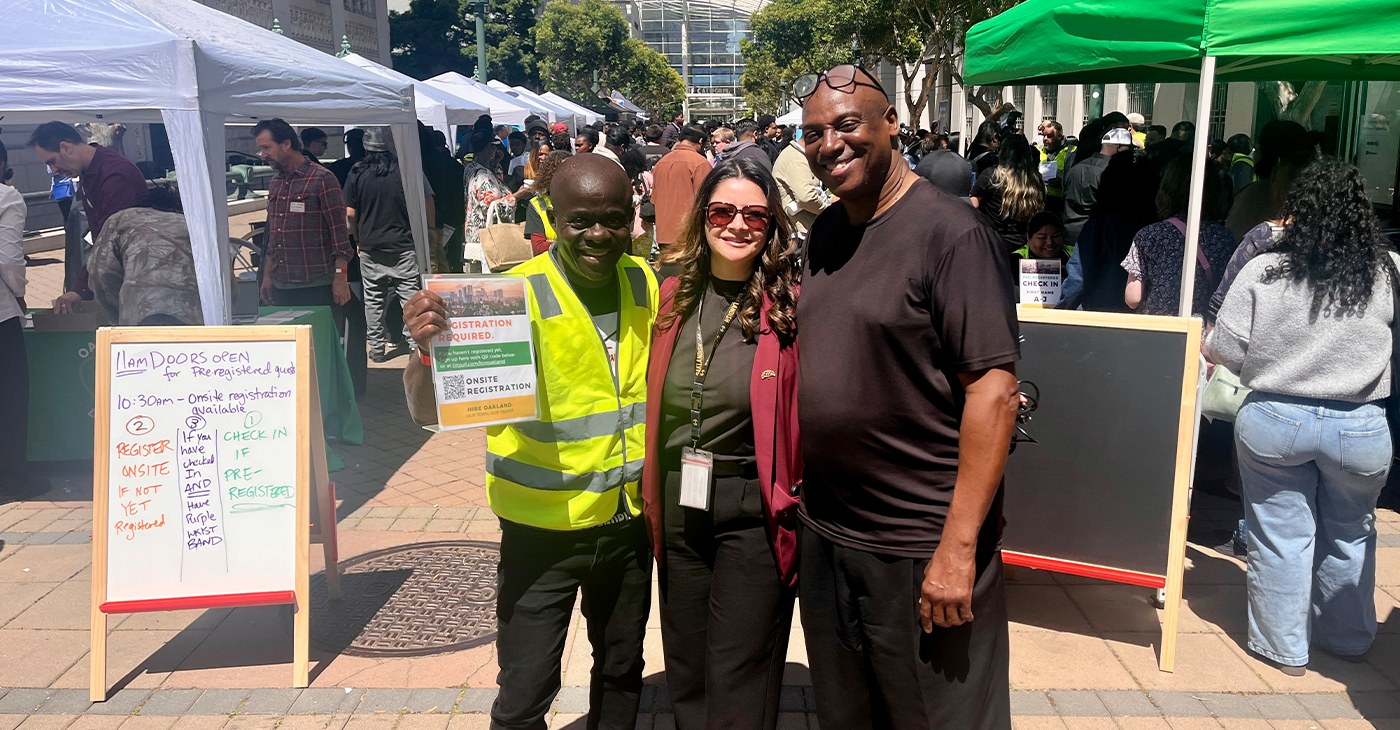
The Office of Mayor Barbara Lee, in partnership with the City of Oakland and regional employers, hosted a successful Hire Oakland job fair this week at Frank H. Ogawa Plaza, bringing together job seekers and employers for a day focused on opportunity, connection, and economic mobility.
With more than 2,000 RSVPs, the event on Wednesday reflected strong demand across Oakland for access to quality jobs and career pathways. Attendees participated in on-site recruitment, application support, and hands-on workshops designed to help job seekers navigate hiring processes and prepare for interviews.
Over the course of the day, employers and community partners engaged directly with residents in a welcoming, high-energy environment centered on opportunity and hope. Participating employers included EBMUD, Samuel Merritt University, the City of Oakland, BART, PG&E, AC Transit, East Bay Regional Parks District, Southwest Airlines, FedEx, and many others offering immediate openings and career pathways across sectors.
Workforce development partners Oakland Private Industry Council (OPIC) and Lao Family Community Development provided connections to résumé support, interview coaching, and individualized job search assistance throughout the event.
The strong turnout underscores a clear reality: Oakland residents are eager for pathways into meaningful work, and sustained investment in youth and workforce programs is essential.
That is why Mayor Lee has prioritized relaunching the Oakland Police Cadet Program and the Mayor’s Youth Employment and Education Program (MYEEP)—ensuring young people have early access to paid work experience, mentorship, and long-term career pathways, according to a City press statement.
“The turnout shows what we already know—Oaklanders are ready to work, ready to grow, and ready to build their futures here at home,” said Lee. “When we connect people directly to employers and invest in young people early, we are not just filling jobs—we are changing lives and strengthening our city’s future.”
The Hire Oakland job fair is part of the City’s broader effort to strengthen workforce pipelines, expand access to good-paying jobs, and ensure Oakland residents are first in line for local opportunity.
About Hire OaklandHire Oakland is a citywide workforce initiative led by the Office of Mayor Barbara Lee in partnership with City departments, workforce development organizations, and regional employers. The program connects Oakland job seekers to real-time hiring opportunities, training resources, and career pathways.



Mayor Barbara Lee Holds Special State of the City Address in Deep East Oakland

Practitioners of African Traditional Spirituality Offer Ancestral Reverence Ritual Oct. 31

It’s Time to Lose Weight Before the Holidays

Trader Vic’s Returns to Its Oakland Roots

Oakland Coal Terminal Backed by Trump Would Be Bigger, Dirtier Than Promised, Says Report

Opponents Smear Effective African American Transit Director as Election Nears

Oakland Post: Week of October 14 – 20, 2026

OP-ED: The Black Church Writes AI’s Next Chapter

OP-ED: The Black Church Writes AI’s Next Chapter

WCCUSD Joins Statewide Organic School Food Purchasing Cooperative

Democrats, Community Groups Back Measure EE to Change How Oakland Is Governed

Four Tips to Help You Plan a Holiday “Staycation”

Veterans Housing Project Proposed for South Richmond
PRESS ROOM: Transformative Justice Coalition 2026 Voting Rights Champion Awards Reception ‘Yesterday Is Today: The Battle For Voting Rights

Mayor Lee Delivers 2026 State of the City Address: ‘Oakland Continues to Be on the Move’

Misnamed ‘Parent’ PAC Seeks to Influence Oakland School Board Elections

Listening as a Lifeline: A Doula’s Witness to Black Maternal Health

Poll: Becerra Widens His Lead Over Hilton; Californians Split on Wealth Tax

Oakland Post: Week of September 9 – 15, 2026

County Office of Education Says OUSD Finances Are Getting Healthier, Materially Stronger

Richmond Tiny House Village Farm & Garden Set to Open Gates on Sept. 26

Mayor Lee Announces $1 Million Kaiser Permanente Grant for Pilot Program to Address Homelessness, Clean Up Public Spaces throughout Oakland

Latest Massacre in Haiti Reveals Cruelty U.S. Deportations

Zakiya Jendayi Arrested, Locked Out of Home by Sheriff’s Deputies

OPINION: Nolan Wells’ Death One of Several Signifying Racial Terror Lives on in U.S. South

Doulas Are Helping Black California Moms Navigate Pregnancy–Even as High Mortality Rates Persist

BLACspace Cooperative Invites Bay Area to Experience Oakland’s Black Cultural Ecosystem Through a BLAC Map Tour + Party

Oakland Post: Week of September 16 – 22, 2026

Democratic Clubs Interview Candidates for Oakland School Board

Oakland People’s Arms Embargo Coalition Demands End to Military Shipments Thru Oakland

The Conversation With Al McFarlane 6/23/26

Media Monday 6/22/26

LIVE! ASK ALMA! — TUES. 6.23.26 7PM EST

Car Buying Secrets: 4 Hidden Checks Before You Sign!

Is This 550 HP Charger Worth YOUR Money? AutoNetwork Review

Celebrating Juneteenth – Frederick Douglass on education and resistance

LIVE! — ASK ALMA! — TUES. 6.19.26 7PM EST

Hyundai Ioniq 5 Parking, Safety, and 360 View #shorts

2025 Ioniq 5 New Wiper & Powerful Performance! #shorts

Electric SUV Range: Is 259 Miles Enough? #shorts

EV Charging: How Fast Can You Charge an Electric Vehicle? #shorts

Biometric Cooling… Messaging Seats…Come on! 2025 Infiniti QX80 Autograph 4WD

Charged Up: Witness the Magic of a Fully Electric Car! #shorts

Range Rover Sport PHEV Included…: See What’s Inside This Luxury SUV! #shorts

Invisible Hood View: Perfect Parking with X-Ray Vision! #shorts
-
 Black History3 weeks ago
Listening as a Lifeline: A Doula’s Witness to Black Maternal Health
-
 Economy4 weeks ago
Poll: Becerra Widens His Lead Over Hilton; Californians Split on Wealth Tax
-
 Business4 weeks ago
County Office of Education Says OUSD Finances Are Getting Healthier, Materially Stronger
-
 Lead Story3 weeks ago
Zakiya Jendayi Arrested, Locked Out of Home by Sheriff’s Deputies
-
 Black History4 weeks ago
Doulas Are Helping Black California Moms Navigate Pregnancy–Even as High Mortality Rates Persist
-
 Art4 weeks ago
BLACspace Cooperative Invites Bay Area to Experience Oakland’s Black Cultural Ecosystem Through a BLAC Map Tour + Party
-

 Business4 weeks ago
From Historic Memories to New Possibilities: Oakland Celebrates Coliseum 60
-

 Community4 weeks ago
Asm. Corey Jackson Announces Launch of 24-Hour Childcare in His District
