
#NNPA BlackPress
The way Sacramento pays for arts education is broken. Here’s what could help.
By Srishti Prabha | CapRadio | Special to the OBSERVER A 2019 report by Create CA found that 89% of public schools in California were not meeting the state standards for arts education. Lack of accountability compounded by the incremental loss of funding has contributed to many school districts having a fragmented landscape where funding […]
The post The way Sacramento pays for arts education is broken. Here’s what could help. first appeared on BlackPressUSA.


By Srishti Prabha | CapRadio | Special to the OBSERVER
A 2019 report by Create CA found that 89% of public schools in California were not meeting the state standards for arts education. Lack of accountability compounded by the incremental loss of funding has contributed to many school districts having a fragmented landscape where funding for the arts is coming from obscure sources. In Sacramento, the hardest hit regions were those with Black and brown students.

Spanglish chatter is followed by giggles as students walk from their first-grade classroom to the art room at Glenwood Elementary School in North Sacramento.
At the back of the line, 7–year-old Salvador Vasquez exclaims, “I’m so excited!”
Once a week, the first graders at Glenwood Elementary get access to arts education and they are buzzing with energy.
“I like to learn new things in art,” says student Cardiair Potts.
His friend Lizandro Zepeda thinks art class is unlike his normal class where they focus on math and reading: “It makes me happy because, with the projects, we bring them in our house, we can show them to our family.”
Stevie Wonder songs set the mood in the classroom, as the first-graders gossip, color and cut butterfly shapes.
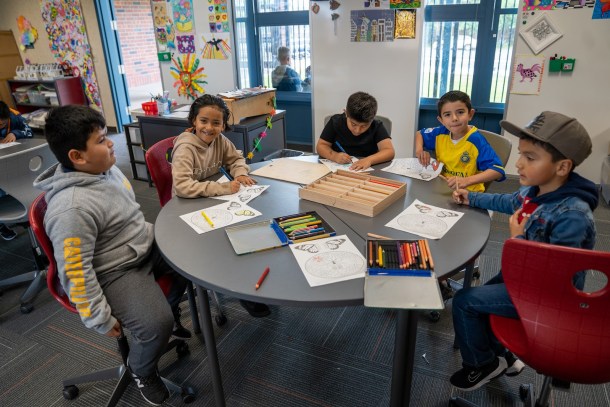
Andrea Rodriguez, the visual arts enrichment teacher, develops and runs all the arts programming for Glenwood Elementary. She sees 450 students for 40 minutes a week.
The Robla Unified School District, a majority Black and brown district with 84% of its families lower-income, provides visual arts education for every student once a week. Surprisingly, this is more than what many other students in Sacramento County receive. A year-long program committed to any type of arts education at the elementary school level is not standard practice for all districts, and Robla Unified is ahead of the curve, even without a theater, music and dance curriculum.
California’s state-mandated arts framework requires that students from grades first through sixth receive instruction in dance, music, theater and visual arts in each grade level. And from grades seventh to 12th, to have the choice from these four buckets of arts education.
Yet, a 2019 report by Create CA — the most recent available — found that 89% of public schools in California were not meeting the state standards for arts education. Lack of accountability compounded by the incremental loss of funding has contributed to many school districts having a fragmented landscape where funding for the arts is coming from obscure sources. In Sacramento, the hardest hit regions were those with Black and Brown students.
The passing of Proposition 28 in 2022 marked a historic investment of money for arts education. That, along with an arts block grant issued the same year, were to be the panacea for three decades of non-existent arts education. However, Gov. Gavin Newson’s proposed budget will decrease funding for the arts, and the limitations of this funding prompt more questions than solutions.
“Scarcity mindset … making do with whatever you had”
Allison Cagley, executive director of Friends of Sacramento Arts, said in Sacramento County most of the losses in arts education are seen in the years before high school, impacting young students of color and students from socioeconomically disadvantaged backgrounds. Accounting for students from underserved regions requires intentionality, said Cagley, and incorporating arts education into the school day.
“It can’t be an after-school program only because that builds inequitable access. Art needs to be consistent in terms of hands-on experience, as well as exposure,” said Cagley, who facilitates arts programming in local schools. “And [we need] to build out a diverse body of art forms and [teaching] artists that accurately reflect the demographics of schools.”
The benefits of arts education for youth — better social and emotional health, improved test scores, less truancy — are more prevalent in the public education space than before.
“I know it helps with attendance because [when] they know they have art that day, they tend to come to school because they look forward to your class,” Rodriguez said of her students.
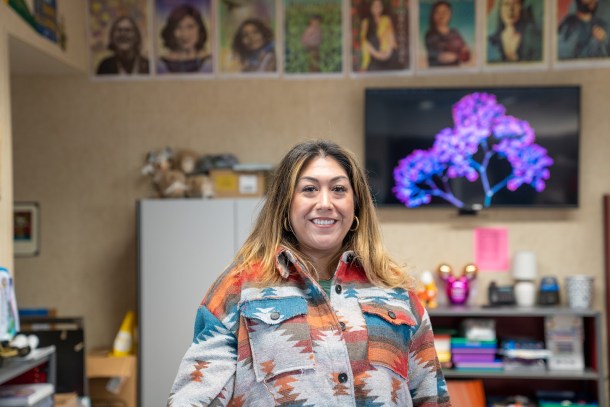
Rodriguez began her journey as a visual arts teacher at Natomas High School in 2007 before becoming the sole arts educator at Glenwood Elementary.
“When I started, we had lab fees, so kids used to have to pay. It’s now illegal, but they had to pay $15 a semester,” said Rodriguez. “My entire budget came out of kids paying their lab fees. And I felt horrible because some kids were like, ‘I don’t have the money.’ I used to spend thousands upon thousands of dollars as a brand-new teacher in my 20s, trying to make my curriculum and classroom work.”
Once the state outlawed fees for arts education in 2012, Rodriguez’s budget was around $12 per pupil. Ten years later, she is spending about $15 per student in a well-resourced district. However, if the amount spent in 2012, when arts education was not prioritized, was adjusted for inflation, schools should be spending $16 per student to provide the same services.
“Since I adopted a new classroom and somebody else’s idea of curriculum, my budget eats into my new ideas,” Rodriguez said. “I try to use a lot of what I have and try to be very creative with what I can do here.”
Rodriguez is not alone in her struggle to conform curriculum to available funds. The malleability of the budget is entirely dependent on the priorities of the principal, and the championing from teachers and parents. In some cases, the departure or retirement of an arts teacher or supportive principal may lead to the ending of an arts program.
CLARA, a nonprofit organization based in Midtown Sacramento, works with Sacramento County’s schools to deliver dance classes on-site. Executive Director Megan Wygant said their programming has been subject to the changing whims of the administration and teachers this past year.
“We had a contract to start at a new school or to come back, and we walked in on the first day and were like, ‘You’re not the principal we used to work with,’” said Wygant on not having the buy-in on the programs from new school officials. “Principals were saying, ‘I don’t know if I want my teachers losing an hour of classroom time every week.’”
Programming run by CLARA can be funded by the districts or PTAs, but this varies from school to school and district to district.
Sources of funding for arts education in the county are haphazardly drawn from different pools of money, and the transparency around the amount, the rationale, and the outcomes are disparate and opaque.
When Rodriguez wanted to do a 3D cultural food project, appealing to the diverse classrooms she educates, she asked her principal, “Is there money?” He told her “Yeah, whatever you need. We’ll get it out of a different budget.”
Rodriguez said was not entirely sure how the arts education budget in her district was determined, but knew she was receiving $7,000 a year.

Before Proposition 13 was enacted in 1978, property taxes funded California’s public schools, and there was much more discretionary local control of the education budget. The Public Policy Institute suggests that “between 1970 and 1997, spending per pupil in California fell more than 15 percent relative to spending in the rest of the country” because of Prop 13. Though the state tried to match the lost funding, slashes in education were inevitable, and arts education took the brunt of the cuts.
Prop 13 diminished access to arts education, said Cagley: “The arts were obliterated from public education, and now in California, 1 in 5 school children receive any arts education, despite the fact that it is regulated in the California Department of Education framework.”
In 2010, the Local Control Funding Formula, or LCFF, the state’s method of allocating funds to districts based on economic disparity, once again shifted the landscape of public education — and hurt arts education.
“The visual and performing arts in California have been challenged in the local education funding formula,” said Tom DeCaigny, executive director of Create CA. “So, they’ve not risen to the priority of local districts or the State Department of Education.”
The LCFF model accommodates schools in high- and low-income neighborhoods with more resources, but the void is exasperated for schools in neighborhoods at the cusp of low-income, Cagley said: “What’s interesting about the funding of arts education is that sometimes Title I schools, because they are Title I, get more money than schools that are on the border of Title I.”
Title I schools are defined by the economic need of their student population. And the LCFF model accounts for the needs of high-poverty areas with Title 1 schools in the County.
But the design of this model is a myth, as observed at Glenwood Elementary — a Title 1 school — which is still not meeting the state standards or the comprehensive needs of the students.
Mollie Morrison, the visual and performing arts coordinator at C.K. McClatchy High School in Sacramento’s Land Park neighborhood, said she finds that when students come to her arts classroom, they are unprepared. McClatchy High, as a Title I school, receives extra funds and has a robust theater, visual arts and dance program.
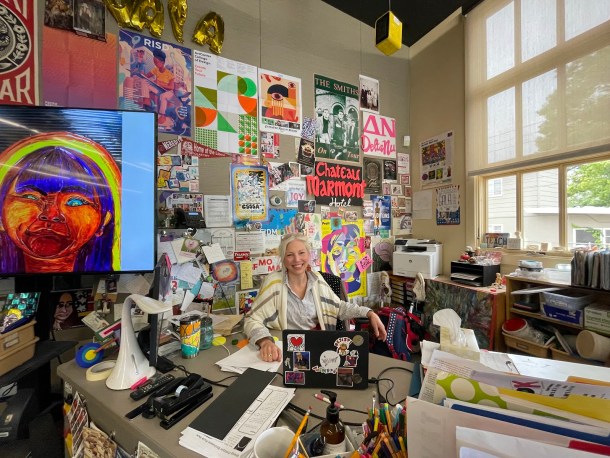
But to get into this program, students have to submit a portfolio to Morrison, which can be an obstacle for the 66% of students at the high school coming from disadvantaged socioeconomic backgrounds, and who likely did not get adequate arts education at the elementary level.
“There is no art right now in elementary schools because it’s not required. It just depends on what school you go to, whether or not you touch the arts,” Morrison said. “You have to think about how intimidated [students are] by the time they finally hit one of these classrooms. It’s very hard to win them back over at 16 or 17.”
“It’s exciting … But we don’t even generate that many teachers”
In the last two years, two potentially big advancements have happened in the area of arts funding for California students.
Assembly Bill 181, a novel discretionary arts, music and instructional material block grant of $3.6 billion, was included in Newsom’s 2022-2023 budget, and is to be used by 2025-2026 fiscal year. The funding is for materials, curriculum development, professional development and COVID aid.
Then in November 2022, Prop 28 passed with an approval rating of 65%. The measure would dedicate $990 million to arts and music education in the state — the most money ever allocated. But the lofty goals of both the block grant and Prop 28 aren’t necessarily panning out as promised.
Many schools had distributed their portion of the block grant money over the next few years, but then the grant funding was cut to $1.8 billion in Newsom’s proposed 2023-2024 budget, under the premise that this money would be offset by Prop 28 funding.
Prop 28 was also subject to cuts and reduced to $940 million, with a one-time fund of $100 million to cover the deficit. The Legislative Analyst’s Office confirms that the one-time amount will not cover the deficit of arts funds assumed by the Newsom’s slashes.
“Prop 28 funding should supplement current arts funding, not supplant,” Cagley said. That’s because these two pools of money from the block grant and the proposition serve different purposes. The block grant is to be used for materials, supplies and programs. Prop 28, on the other hand, is intended primarily to be used to hire more arts teachers.
Letty Kraus, director of the California County Superintendents Arts Initiative, and Cagley both expressed concern over how the Prop 28 funds are to be used: 80% on credentialed teachers and pipelines, 18% on teaching artists and partnerships with local arts organizations, and 2% on materials. “The conundrum is there is a huge hole of qualified arts teachers,” Cagely said.
The Sacramento County Office of Education’s Assistant Superintendent Jackie White estimates the need for over 200 art teachers in the county, and a total 15,000 arts teachers in the state. “We don’t even generate that many teachers,” said White.

But that’s not the only problem, said Kraus. Working with Sacramento County’s superintendents, she said that the language of the block grant is ambiguous, which could lead to funding not necessarily being used for arts or music.
Measuring arts education progress is tenuous, considering the California Department of Education has not released current arts education data since 2019 to track improvements, or the lack thereof, in the state. (CDE did not return requests for comment.)
“Part of what has to happen is that the California Department of Education has to come through with guidance,” Kraus said. “But they’re not funded with staff for Prop 28.”
Still, Kraus, Cagley and White are cautiously optimistic about Prop 28, but said that the implementation requires dedicated attention to equitable and culturally competent curriculum.
“This Prop 28 money, it’s really exciting,” White said. “I’m glad it got voted in. We need money for arts education.”
Rodriguez witnesses the direct impact culturally-reflective arts education has had on her former students. Kimberly Jackson, now in her early 20s, is a working professional, but makes time once a week to volunteer in Rodriquez’s classroom.
“Dr. Dre has been in my life for almost a decade,” she said about Rodriguez. “As an educator, she made me more open to [art] and really challenged me because she’s always elevating and incorporating the identities of her students.”
Jackson said she wants elementary school students to see reflective arts education and is confident that Rodriguez’s teachings bolster a future where students of all backgrounds are empowered. Having students like Jackson has been a driver in Rodriguez’s pursuits to provide comprehensive visual arts programming, she said.
“It’s that sense of community that I’m so in love with,” expressed Rodriguez. “And seeing kids love themselves because of what they are able to achieve is so priceless. And not every student gets that luxury — that’s what has kept me in education.”
Srishti Prabha is a Report For America corps member and Education Reporter in collaboration with The Sacramento Observer and CapRadio. Their focus is on K-12 education in Black communities.
The post The way Sacramento pays for arts education is broken. Here’s what could help. appeared first on The Sacramento Observer.
This article originally appeared in the Sacramento Observer.
The post The way Sacramento pays for arts education is broken. Here’s what could help. first appeared on BlackPressUSA.













#NNPA BlackPress
NFL: Week Two Recap | Jalen Hurts did not fold; Caleb Williams exits game with injury
Philadelphia Eagles quarterback Jalen Hurts found Darius Cooper with nine seconds left for the game winning touchdown as his team beat the Tennessee Titans 24-20 in Nashville. Hurts finished the day 26/37 for 264 yards. He threw for two touchdowns and two interceptions. Prior to the final drive, the Eagles ran 25 plays for 45 […]
The post NFL: Week Two Recap | Jalen Hurts did not fold; Caleb Williams exits game with injury appeared first on BlackPressUSA.

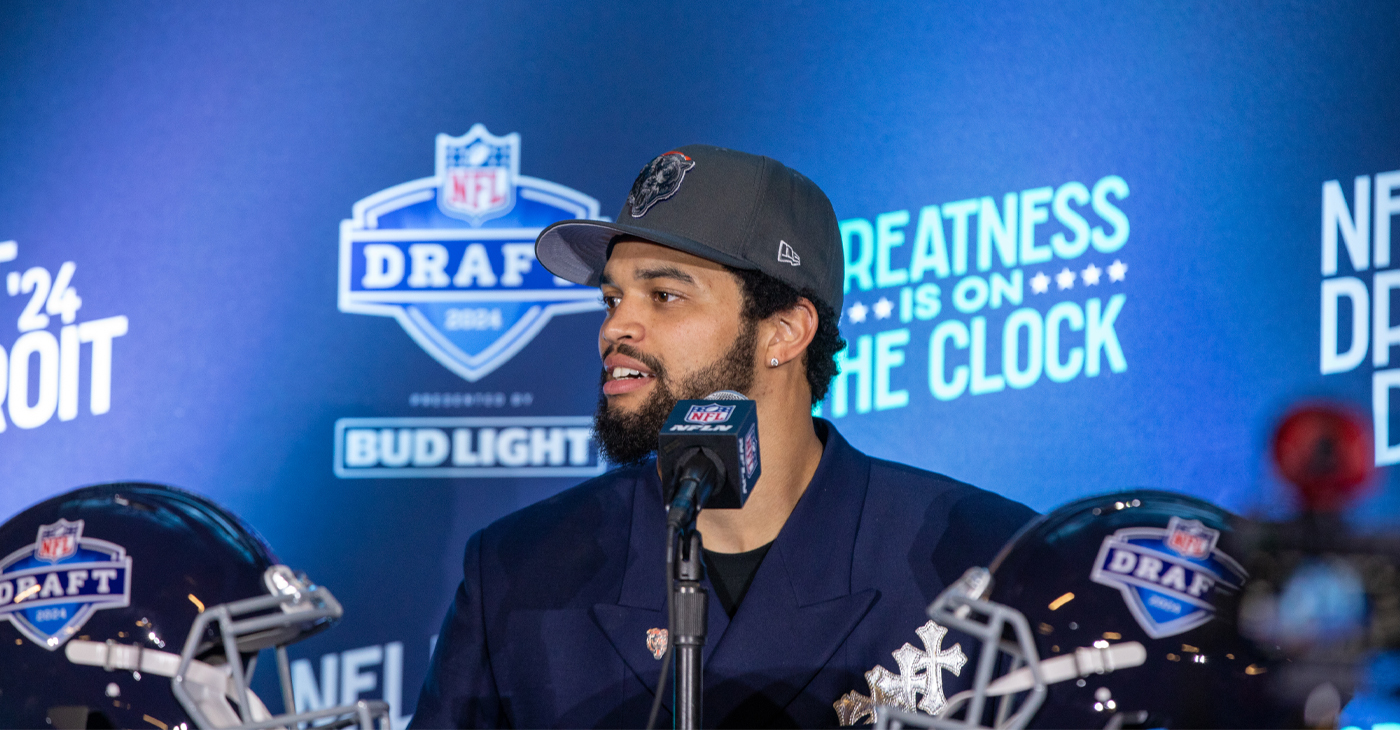
Philadelphia Eagles quarterback Jalen Hurts found Darius Cooper with nine seconds left for the game winning touchdown as his team beat the Tennessee Titans 24-20 in Nashville. Hurts finished the day 26/37 for 264 yards. He threw for two touchdowns and two interceptions.
Prior to the final drive, the Eagles ran 25 plays for 45 yards. During the final drive Hurts went 6-8 with 61 passing yards and the touchdown. Titans defensive tackle — and team captain — Jeffery Simmons said this week that the way to defend Jalen Hurts is to make him “play quarterback.”
Hurts said to Simmons after today’s game: “You started that sh**. I had to finish it.”
Running back Saquon Barkley suffered a stinger in the first half but he ultimately finished the game. He had four carries and nine yards and one catch for eleven yards. He will get an MRI for his injury, but admitted to Cameron Wolfe of the NFL Network he was fine.
Caleb Williams leaves game against Vikings with apparent lower-body injury
Chicago Bears quarterback Caleb Williams was helped off the field with a right leg injury with 7:42 remaining in the fourth quarter. Williams was down, writhing in pain after scrambling to his left. After departing the injury tent, Williams raised his right fist, acknowledging the crowd while expressing his frustration. Testing will commence on Monday to find out more details about his injury.
“We’ll know tomorrow,” Johnson admitted regarding Williams’ injury. “He’s in good spirits. He’s a team player.”
Williams finished the day with 138 passing yards and one interception.
“I’m actually happy it’s nothing with the knee — that was my first inclination,” Johnson said. “But, a hamstring could be pretty damaging as well. So, we’ll see. We’ll see how bad it is tomorrow and we’ll go from there.”
Bryce Young once again dominated the Falcons
Carolina Panthers quarterback Bryce Young is 5-1 against the Atlanta Falcons and is undefeated at Mercedes-Benz Stadium. Today, Young threw for 287 yards and three touchdowns as he led the Panthers to a 34-3 dismembering of the Atlanta Falcons. Georgia Tech alumnus Darren Waller caught two touchdowns and linebacker Devin Lloyd returned one of his two interceptions for a touchdown.
Cooper Rush started his second straight game for the Falcons and it did not go well. The partisan crowd voiced their displeasure after Rush completed 10/17 passes for 86 yards and two interceptions. Jack Strand entered the game for Rush prompting cheers from the Falcons fans. The rookie threw a pick-six on his first career pass attempt. Strand was the first QB to accomplish that feat since Sam Darnold in 2018 and is the first Falcons player to do that since Brett Favre in 1991. Strand finished the day with 59 passing yards and 16 rushing yards.
According to reports, quarterback Michael Penix, Jr. is expected to make his season debut this Thursday at the Green Bay Packers. His return should help the Falcons. They are the first team since the 2008 Rams to not run any plays in the red zone after the first two games to open a season.
The bright spots for the Falcons today were the Spelman College Jaguarettes performing with the Falcons cheerleaders and Florida A&M’s marching band, The Marching 100, also performed during halftime!
Jayden Daniels gets carted off after apparent arm injury
Washington Commanders quarterback Jayden Daniels appeared to injure his left elbow on the final play of the first half in his game against the Dallas Cowboys. During the play, Daniels got stepped on, braced himself for the fall, and his elbow bent the wrong way. Daniels draped a towel over his head as he exited the field on the cart.
He was later ruled out.
Daniels suffered a dislocated elbow to the same arm during week nine of last season against the Washington Commanders, which led to him being shut down for the remainder of the season.
The post NFL: Week Two Recap | Jalen Hurts did not fold; Caleb Williams exits game with injury appeared first on BlackPressUSA.

#NNPA BlackPress
The Complete Negotiation Framework — Every Stage, Every Tactic, Every Win
Master the complete vehicle-purchase negotiation framework with Roosevelt Gist and Roosevelt. Learn every stage, tactic, and win!
The post The Complete Negotiation Framework — Every Stage, Every Tactic, Every Win appeared first on BlackPressUSA.

Roosevelt Gist and Roosevelt deliver the complete vehicle-purchase negotiation framework in Episode 8 of The Color of Our Money Is Green. This episode covers the three foundations of every effective negotiation, the full seven-stage negotiation sequence with exact language for every stage, and five of the most common dealership tactics with the specific response each one requires.
What You Learn in This Episode:
The three foundations that make every negotiation tactic work
The complete seven-stage car-buying negotiation sequence
Exact language for every stage of the dealership conversation
Five common dealership tactics — the turnover, the four-square, the packed payment, spot delivery, and forced add-ons — and how to counter each one
Why signing preliminary paperwork isn’t the same as signing the final contract
___________________________________________________________________
“The Color of Our Money Is Green: A Buyer’s Guide to What Cars Actually Cost” — stan.store/RGist
____________________________________________________________________
AutoNetwork helps serious car shoppers inspect any new vehicle online before walking into a dealership. I’m Roosevelt — I’ve been reviewing cars and shaping digital car buying and credit union auto leasing since before YouTube car reviews existed.
You’ll find detailed walkaround reviews, POV test drives, and buyer-focused breakdowns covering comfort, space, features, and real-world value.
How to use the channel:
Watch the walkaround of the car you’re considering
Visit AutoNetwork.com for the full review
Check CouponsOffersAndDeals.com for current dealer specials
Walk in already knowing what you want — and what it should cost
 AutoNetwork.com
 CouponsOffersAndDeals.com
Affiliate disclosure: some links earn a small commission at no cost to you and help support the channel. Insta360 is one of those partners.
The post The Complete Negotiation Framework — Every Stage, Every Tactic, Every Win appeared first on BlackPressUSA.
#NNPA BlackPress
Mazda CX-90 Luxury: Heated Seats & Premium Comfort! #shorts
Stay toasty in the CX-90! Plush Nappa leather, heated/ventilated seats, and a memory-equipped heated steering wheel deliver ultimate luxury.
The post Mazda CX-90 Luxury: Heated Seats & Premium Comfort! #shorts appeared first on BlackPressUSA.

Experience ultimate comfort in the CX-90. Nappa leather, heated/ventilated seats, 8-way power adjustments, and memory settings for both front passengers. The heated steering wheel with memory tilt/telescope adds premium convenience.
 Watch the full video: https://youtu.be/EH5A4eQ4ipY
#AutoNetwork
The post Mazda CX-90 Luxury: Heated Seats & Premium Comfort! #shorts appeared first on BlackPressUSA.



Asm. Corey Jackson Announces Launch of 24-Hour Childcare in His District

IN MEMORIAM: The Rev. Leon “Sonny” Clark, Longtime Orange County Pastor and Community Leader, Dies at 72

Poll: Becerra Widens His Lead Over Hilton; Californians Split on Wealth Tax

From Historic Memories to New Possibilities: Oakland Celebrates Coliseum 60

County Office of Education Says OUSD Finances Are Getting Healthier, Materially Stronger

LIVE FREE Sunday Dinner Brings Faith, Fellowship and Civic Conversation to Oakland

Remembering Chauncey Bailey as Student Journalists Face Threats to Truth-Telling

BLACspace Cooperative Invites Bay Area to Experience Oakland’s Black Cultural Ecosystem Through a BLAC Map Tour + Party

In Wake of Death on Doorstep, Williams Chapel Baptist Church Calls for Better Care, Funding for Unhoused

Oakland Centenarian Nuna McKee Honored!

Caribbean Nations Produce Action Plan Calling for UK Reparations Over Slavery

Oakland Post: Week of September 23 – 29, 2026

Doulas Are Helping Black California Moms Navigate Pregnancy–Even as High Mortality Rates Persist

Newsom Signs Addictive Social Media Law to Protect Kids

On Your November Ballot: Prop 38 Would Allocate $8.4 Billion to Immunology and Immunotherapy Funding

Standoff for Justice: Our Homes Are Worth Fighting For

Oakland Post: Week of August 26 – September 1, 2026

Frontier Airlines’ Return to Oakland Airport Brings Flights, Jobs and Opportunity

Gubernatorial Candidate Steve Hilton Blasts California New Tire Rules; Newsom Hits Back

Chef Sharon Lee Blends Culinary Excellence, Education and Empowerment

Jackie Wright Champions Bay Area Stories, Filmmakers and Cultural Institutions

Big City Mayors Ask for “Yes” Vote on Housing Bond Measure; Conservatives Say “No”

Oakland Coliseum Project Opens Door for Small Businesses to Build Bigger

Gov. Newsom’s Latest Appointees Include Sacramento Advocate for Formerly Incarcerated Students; State’s New Tech Chief

Misnamed ‘Parent’ PAC Seeks to Influence Oakland School Board Elections

Longtime BWOPA Member Brendalyn Goodall Appointed to California Workforce Development Board

Gov. Newsom Signs Law Shielding Immigration Aid Workers From Doxing Threats

Secretary of State Shirley N. Weber Urges Californians to Vote Early as Voter ID Battle Intensifies

From Palestine to Oakland: Seeds for Liberation Examines Shared Struggles for Freedom

Oakland Post: Week of September 2 – 8, 2026

The Conversation With Al McFarlane 6/23/26

Media Monday 6/22/26

LIVE! ASK ALMA! — TUES. 6.23.26 7PM EST

Car Buying Secrets: 4 Hidden Checks Before You Sign!

Is This 550 HP Charger Worth YOUR Money? AutoNetwork Review

Celebrating Juneteenth – Frederick Douglass on education and resistance

LIVE! — ASK ALMA! — TUES. 6.19.26 7PM EST

Hyundai Ioniq 5 Parking, Safety, and 360 View #shorts

2025 Ioniq 5 New Wiper & Powerful Performance! #shorts

Electric SUV Range: Is 259 Miles Enough? #shorts

EV Charging: How Fast Can You Charge an Electric Vehicle? #shorts

Biometric Cooling… Messaging Seats…Come on! 2025 Infiniti QX80 Autograph 4WD

Charged Up: Witness the Magic of a Fully Electric Car! #shorts

Range Rover Sport PHEV Included…: See What’s Inside This Luxury SUV! #shorts

Invisible Hood View: Perfect Parking with X-Ray Vision! #shorts
-
 Community3 weeks ago
Misnamed ‘Parent’ PAC Seeks to Influence Oakland School Board Elections
-
 Activism4 weeks ago
Oakland Post: Week of September 2 – 8, 2026
-

 Community3 weeks ago
Richmond Tiny House Village Farm & Garden Set to Open Gates on Sept. 26
-

 Activism3 weeks ago
Oakland Post: Week of September 9 – 15, 2026
-

 Black History3 weeks ago
Latest Massacre in Haiti Reveals Cruelty U.S. Deportations
-

 Black History3 weeks ago
OPINION: Nolan Wells’ Death One of Several Signifying Racial Terror Lives on in U.S. South
-

 Community3 weeks ago
Democratic Clubs Interview Candidates for Oakland School Board
-

 Business2 weeks ago
Mayor Lee Announces $1 Million Kaiser Permanente Grant for Pilot Program to Address Homelessness, Clean Up Public Spaces throughout Oakland
