
Community
Food Insecurity, Hunger Expected to Soar After Cuts to Extra SNAP Benefits
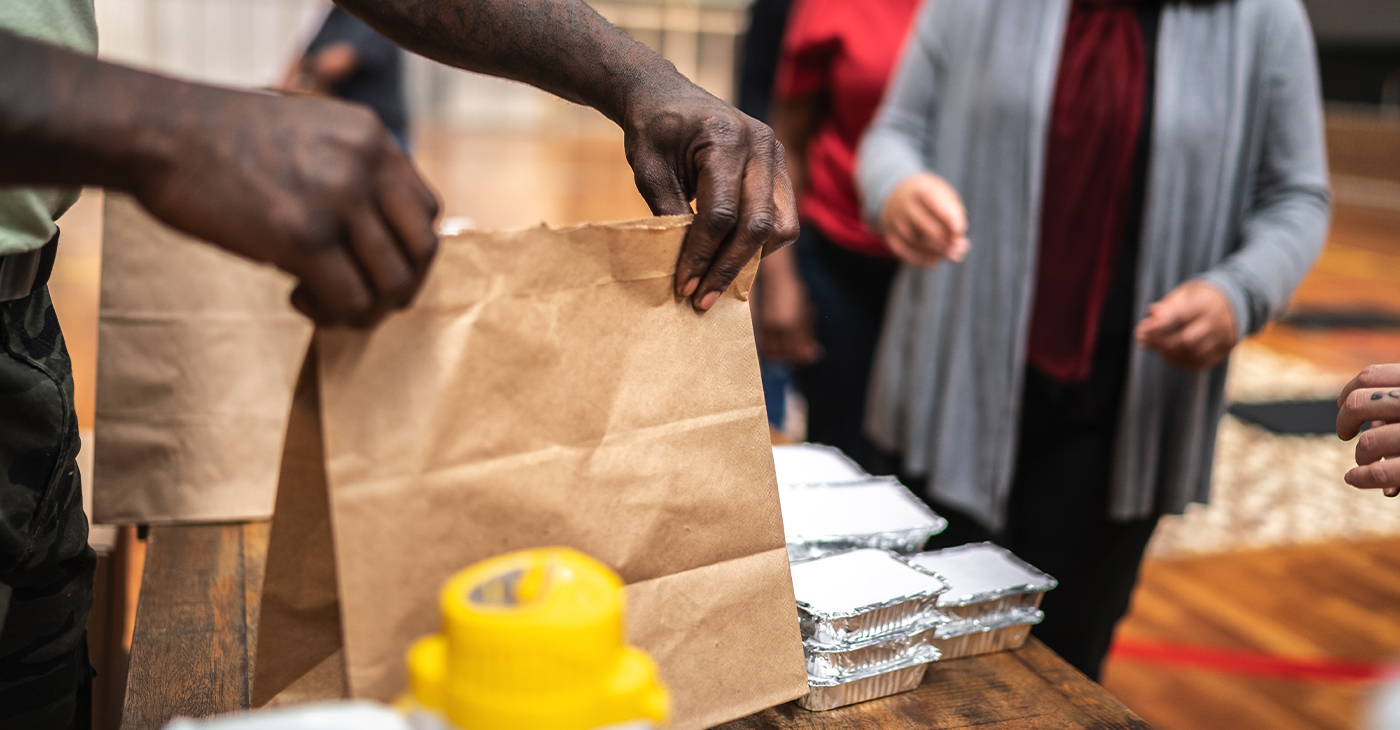
Food security advocates, policymakers, and others had been warning of the dire consequences to those most in need if Congress chose to halt the extra allotments of SNAP benefits. Still, the Republican-led House let the COVID-era supplemental payments wind down at the end of February.

By Barrington M. Salmon
NNPA Newswire
Food security advocates, policymakers, and others had been warning of the dire consequences to those most in need if Congress chose to halt the extra allotments of SNAP benefits. Still, the Republican-led House let the COVID-era supplemental payments wind down at the end of February.
Those closest to the problem say the consequences are already evident in the days since the extra allotments ended. The issues of hunger and food insecurity are being pushed to the forefront of the nation’s myriad challenges. The abrupt benefit cuts are estimated to affect more than 30 million people in 35 states.
On the frontlines, activists fighting the twin scourges of hunger and homelessness, like Anne Miskey, Kymone T. Freeman and Daniel del Pielago, contend that this and other crises were avoidable. Still, Congress, other elected officials, and society at large lack the political will or the compassion to eliminate what is essentially a man-made problem.
“Yet, although the SNAP extra allotments, stimulus funds and other assistance from the federal government helped stave off hunger and homelessness during the COVID crisis,” Kymone T. Freeman said, “the politicians have inexplicably allowed a critical lifeline to expire.”
Freeman said politicians are more concerned about staying in office and catering to the donor class and the wealthy instead of focusing on and delivering programs, projects and policies to working and middle-class Americans, particularly African Americans.
“This sounds like more austerity to me. The fact that they are cutting anything now is obscene and immoral. All it means is more hardship for the poor,” said Freeman, a social justice activist, playwright, and co-founder of WEACT Radio in Washington, DC. “This will increase crime, poverty, distress and misery. The cuts are contributing to hunger. Thirty percent of the children in Washington, DC, live in poverty. A budget is a moral document, and this is where their morality lies.”
Miskey, executive director of Union Station Homeless Services in Los Angeles, California, agreed.
“Much of the inflation and high prices we’re seeing is because of corporate greed. We’re expecting homelessness to skyrocket,” Miskey said. “During COVID, we rented all these hotels and shelters. We managed pretty well during COVID as local, state, and federal money poured in. But with the funding money gone, we’re trying to figure things out. The cost of living, rent, and evictions are going up. The cost of living is driving people into homelessness. Things are going to get pretty bad because of the cost of living.”
Miskey contends that separating food insecurity from gentrification, low wages, displacement, and homelessness is impossible. “COVID-19 has laid bare the structural, institutional, economic, and racial inequities that separate African Americans, Latinos, and Native Americans from their white counterparts,” she said. Marginalized communities have been hit particularly hard by many challenges, many not naturally occurring.
“Healthcare workers, people of color, and immigrants are making horrible wages,” Miskey said. “They cannot afford afterschool care for kids, don’t have money for affordable housing, and struggle to make ends meet. This is a war against the poor. They tell people that they did this to themselves. Millions of people have no opportunity or are intentionally excluded from opportunities. Racism is the #1 factor for excluding people.”
The SNAP emergency allotments were designed to alleviate food insecurity and stimulate the US economy throughout the COVID pandemic public health emergency. According to DC Hunger Solutions, the cuts to SNAP benefits will affect more than 90,000 people in the District of Columbia. On average, when this “hunger cliff” hits, each SNAP participant will lose over $90 a month, DC Hunger Solutions officials explained on the website.
“As a result, average SNAP benefits will fall to a meager $6 a person a day. The “hunger cliff” will hit all age groups and all parts of the District of Columbia. The steepest cliff will be for many older adults who only qualify for the minimum SNAP benefit — dropping from $281 a month to $30,” staff said.
The “hunger cliff” — a perfect storm of a striking reduction of benefits in the face of high inflation and climbing grocery costs — will exacerbate food insecurity and hardship in the District of Columbia and elsewhere. The District will lose more than $14 million in benefits monthly. Emergency food providers can’t fill this gap. Even before the cuts, food banks, pantries, and soup kitchens have reported high demand for assistance, DC Hunger Solutions said.
All over America, Miskey said, people are vulnerable, have health problems, are aging, have been homeless for a long time, including seniors.
“It doesn’t take much: a single income, losing a spouse, an increase in the cost of housing. People are precariously housed. People have to put themselves in danger sometimes,” said Miskey. “People are stealing to survive. People need help, but needing help is seen as something weak or bad. Of course, the Republican Party sells the lottery mentality. People figure they’re going to be up there one day and dream that they’re going to get there.”
Daniel del Pielago agrees with Miskey that Republicans and others who support their ideas and agenda are committed to former President Donald Trump’s promise to dismantle the administrative state.
Del Pielago, organizing director of Empower DC, said these cuts and Republican plans to disembowel the social safety net — including Medicare and social security — is a deliberate policy choice aimed directly at the working class, low-income households, and the poor in this country.
“It’s part of this onslaught of safety net services being cut. I just heard from the city that they’re cutting the Emergency Rental Program 6½ months earlier than expected. And rents in May will go up 8.9% here in the District,” del Pielago said. “DC is super expensive, there are no livable wages for a certain population segment and there’s a sustained attack on low-income people. What we’re seeing in terms of the onslaught is the Trump effect coming into play. We have a bunch of people making these decisions which don’t benefit low-income residents and Black people. They were attempting, and now they’re having success.”
Miskey said as she views the challenges and devastation food insecurity has wrought on poor, near-poor, low-income, and middle-class Americans, she feels anger and frustration because most of this is and was avoidable.
“I think our systems have massively failed people,” she said. “I shouldn’t say that. I don’t think our system has failed. I think our system was set up to fail. They are set up to keep up the status quo, ensuring that those people of privilege and wealth maintain their privilege and wealth.”
Meanwhile, everyone else is blamed for their supposed character defects or failures because supposedly all the opportunities are out there if you grab them, Miskey explained.
“The fact is, our system creates massive barriers for opportunity and doesn’t allow huge chunks of our communities to actually access those things. That’s the shame of our system, the shame of our government. As I said before, we’re a system where we have a war on the poor, not a war on poverty.”
Matthew Desmond, a Princeton University sociologist and the director of the university’s Eviction Lab, said America has a poverty problem, and poverty and food insecurity are deeply intertwined.
“Poverty is measured at different income levels, but it is experienced as an exhausting piling on of problems. Poverty is chronic pain, on top of tooth rot, on top of debt collector harassment, on top of the nauseating fear of eviction,” said Desmond. “It is the suffocation of your talents and your dreams. It is death that comes early and often. From 2001 to 2014, the richest women in America gained almost three years of life while the poorest gained just 15 days. Far from a line, poverty is a tight knot of humiliations and agonies, and its persistence in American life should shame us.”
Desmond said housing assistance and food stamp programs are “effective and essential, protecting millions of families from hunger and homelessness each year,” he said in a March 16 column in the New York Times. “But the United States devotes far fewer resources to these programs, as a share of its gross domestic product, than other rich democracies, which places America in a disgraced class of its own on the world stage.”
That disgrace is illustrated in the stats showing that 33% of Americans live in households making less than $55,000, he said.
“Many are not officially counted among the poor, but there is plenty of economic hardship above the poverty line,” Desmond said. “And plenty far below it as well. According to the Supplemental Poverty Measure, which accounts for government aid and living expenses, more than one in 25 people 65 or older lived in deep poverty in 2021, meaning that they’d have to, at minimum, double their incomes just to reach the poverty line.”
He said Americans must commit to becoming poverty abolitionists to break this cycle.
“Like abolitionist movements against slavery or mass incarceration, abolitionism views poverty not as a routine or inevitable social ill but as an abomination that can no longer be tolerated,” he said. “And poverty abolitionism shares with other abolitionist movements the conviction that profiting from another’s pain corrupts us all. Ending poverty in America will require both short- and long-term solutions: strategies that stem the bleeding now, alongside more enduring interventions that target the disease and don’t just treat the symptoms.”
This includes appropriately addressing the housing crisis, which forces most poor renting families to devote at least 50% of their income to rent and utilities; immediately expanding housing vouchers to reduce the rent burden; pushing for “more transformative solutions” like scaling up the country’s public housing infrastructure; building out community land banks; and providing on-ramps to homeownership for low-income families.








Books
Oakland Mayor Reads to Children at Bookout Block Party at Marcus Books Store
Booths lined the street with arts and crafts, and children participated in hands-on art projects. A large display of books was on display and each child chose his/her free book to take home. Food and snacks were available, and free water was encouraged to keep all hydrated.

Floating bubbles greeted families on arrival at the Bookout Block Party held on Sat. Sept. 12 at 39th and MLK Blvd. in Oakland.
Sponsored by Marcus Books and Storyland Collective, a wonderland of activity for children stretched to Longfellow School while live music filled the air, courtesy of KWC Complex Jazz Group.
Booths lined the street with arts and crafts, and children participated in hands-on art projects. A large display of books was on display and each child chose his/her free book to take home. Food and snacks were available, and free water was encouraged to keep all hydrated.
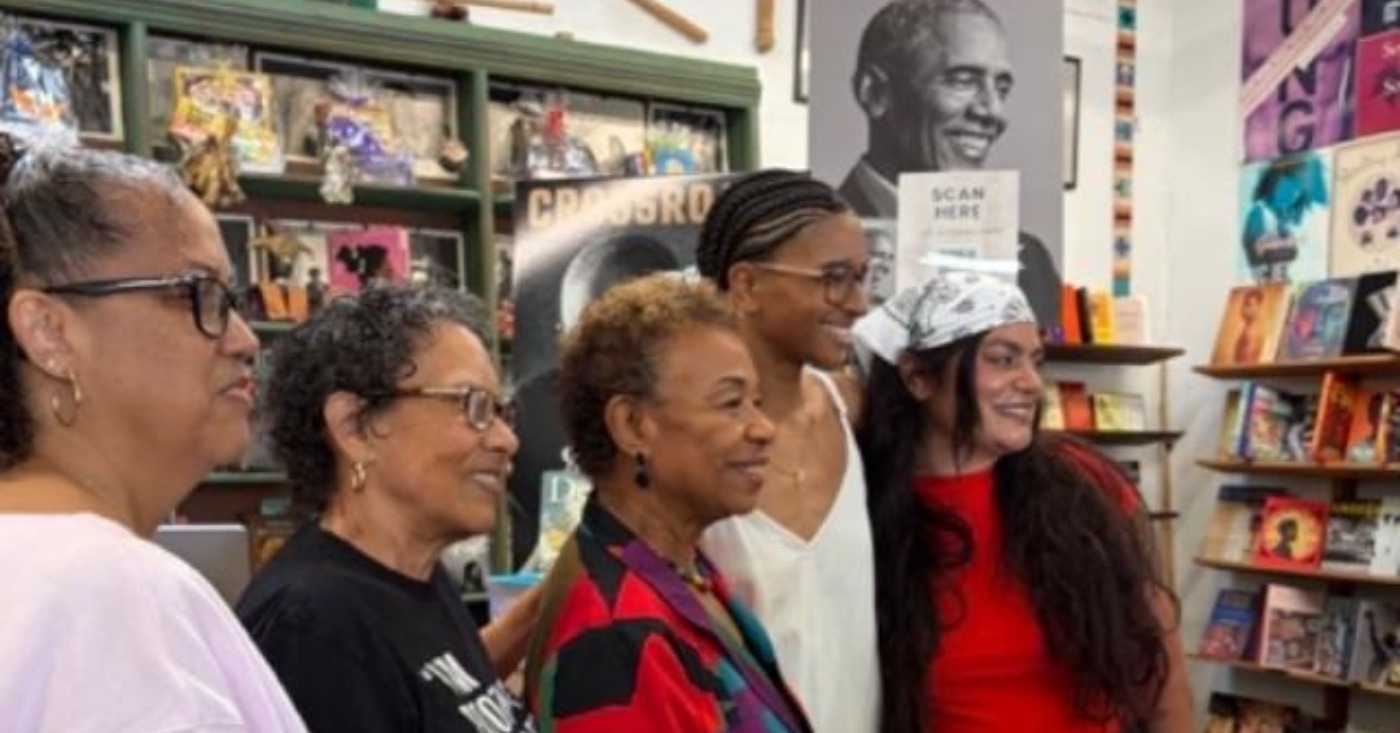
A large area of turf was filled with huge bean bags for jumping, rolling, and sitting to listen as families crowded close to listen to Oakland Mayor Barbara Mayor Barbara Lee read a book out loud.
Of the numerous booths present were, “Claim Your Scholarship,” a program for Oakland Public School students and “VOLUNTEER NOW,” a program encouraging volunteers to help boost reading proficiency. Individuals sold their art and products. Free gifts were at many tables and a raffle was held.

The event with Marcus books culminated a summer-long program organized by Storyland Collective, a literacy arts organization bringing children’s ‘storytime,’ local authors, and art activities to Bay Area neighborhoods. Marcus Books is the oldest, independent Black-owned book store in the U.S., featuring books by and about Black people here and abroad.

Black History
Tradition Comes to the Streets in 11th Annual Black-Eyed Pea Festival at the Freedom Farmers Market
Mayor Barbara Lee stops by to support vendors, Winky Dinky Dogs owner Tyranny Allen A streamlined Oakland Black-Eyed Pea Festival took place on Sat. Sept. 12 in the lower Temescal neighborhood on the blocked off street that connect Shattuck and Telegraph avenues. An early start b
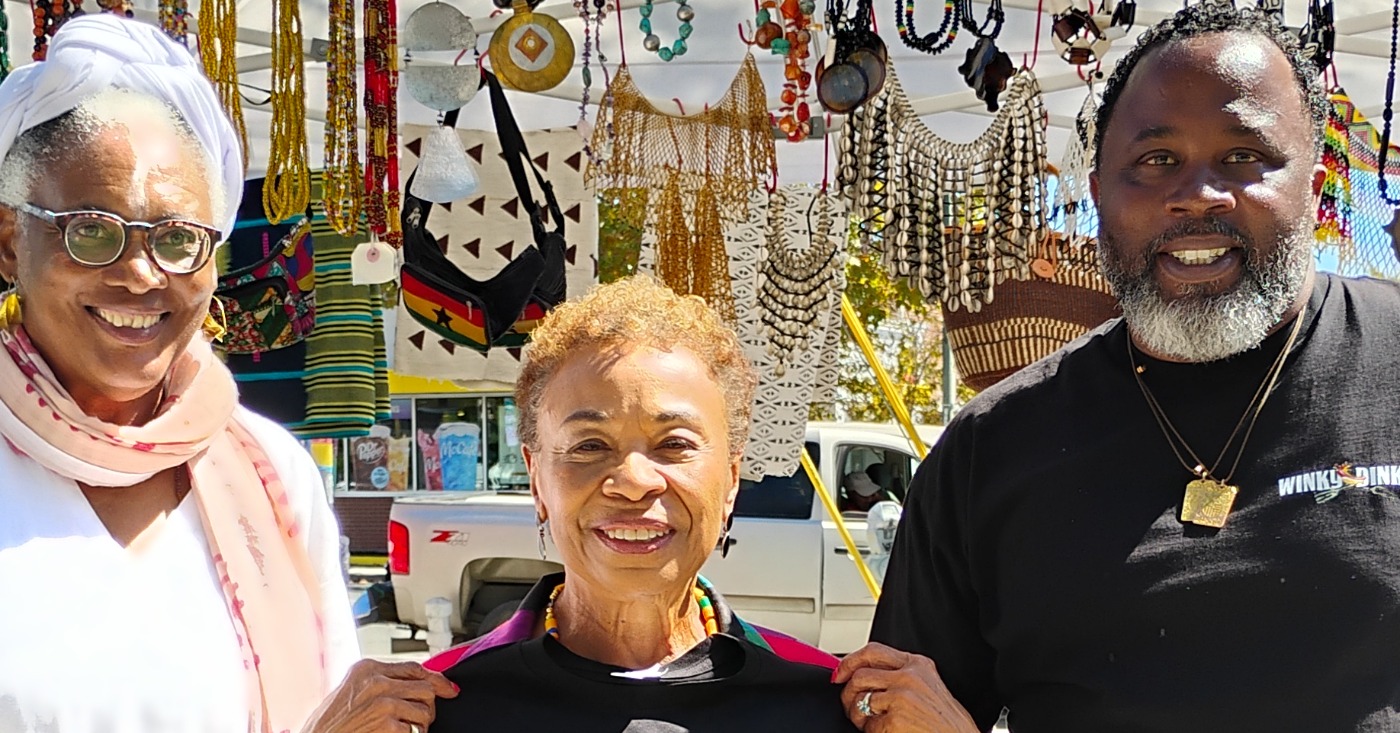
Mayor Barbara Lee stops by to support vendors, Winky Dinky Dogs owner Tyranny Allen
A streamlined Oakland Black-Eyed Pea Festival took place on Sat. Sept. 12 in the lower Temescal neighborhood on the blocked off street that connect Shattuck and Telegraph avenues.
An early start brought together vendor regulars from festival partner, the Freedom Farmers’ Market, and vendors who have supported the festival at its previous location at Marston Campbell Park.
Wanda Ravernell, the festival producer/director was on the verge of cancelling the festival because of funding limitations in May before reaching out to Elaine Smith, president of Farms to grow, Inc., which supervisors the market.
From its start in 2014, the festival has focused on the traditions of African American culture through music, food and art. That emphasis included fresh food vendors, particularly growers of African American legacy crops like black-eyed peas, yams, watermelon, collard greens and okra, which all originate in Africa.
To Fresno farmer Will Scott of Scott Family Farms, the Freedom Farmers’ Market allows him to bring those crops to the inner city – and support the nutrition of African Americans.
Shortly after the festival opened Saturday morning with prayers and salutes to the ancestors by Wakan Wiya Two-Spirit Drum and Awon Ohun Omnira, led M. Zamora and Otobaji Stewart respectively, 86-year-old Scott, the son of a sharecropper, announced that he will put other endeavors aside to dedicate the rest of his life to raise those foods.
Smith shared that Farms to Grow assists Black farmers in helping them overcome one of their main impediments to success – distribution – while creating alliances to help Black people maintain farmland and make it prosperous for younger generations to keep farming and farmland in the family.
As the morning progressed to afternoon, a steady stream of visitors drifted from booth to booth, chatting with vendors and each other.
Scott noted that a market day like this was what he was accustomed to in his youth, where the market was not just about buying things but also a place for valuable social exchange.
The social aspect became even pronounced shortly after midday when Oakland Mayor Barbara Lee stopped by to shop and visit with some of the vendors, including Ellen Bimpeh of Sankofa, and Ravernell who was selling T-shirts designed by Stewart.
Lee is also a fan of Winky Dinky Dogs, an eatery owned by Tyranny Allen whose second brick-and-mortar venture further anchors a hub of businesses at that corner.
As he has in previous years, Andre Thierry of Accordion Soul, closed the festival with a 90-minute set that brought young and the young-at-heart on their feet to dance in a line or as impromptu couples.
And, surprisingly, the man Allen refers to as the mayor of 45th Street, came out on cane and chair to sit by the curb in the sun and listen to music reminiscent of his Louisiana roots. His appearance seemed to echo Scott’s observance about the market: to bring people together.
The Freedom Farmers’ Market is located at 4521 Telegraph Avenue in Oakland and is open on the second and fourth Saturdays of each month until Nov. 14. For more information and to apply to be a vendor, go to https://www.farmstogrow.org/freedomfarmersmarket
Commentary
Neighborhood Empowerment Day in Deep East Oakland Brings Community Together After Recent Tragedy
Hosted by the 40×40 Council, the free, family-friendly resource fair featured health and wellness services, workshops, children’s activities, food, giveaways and local Black-owned businesses. Residents also connected with community organizations working to strengthen East Oakland.
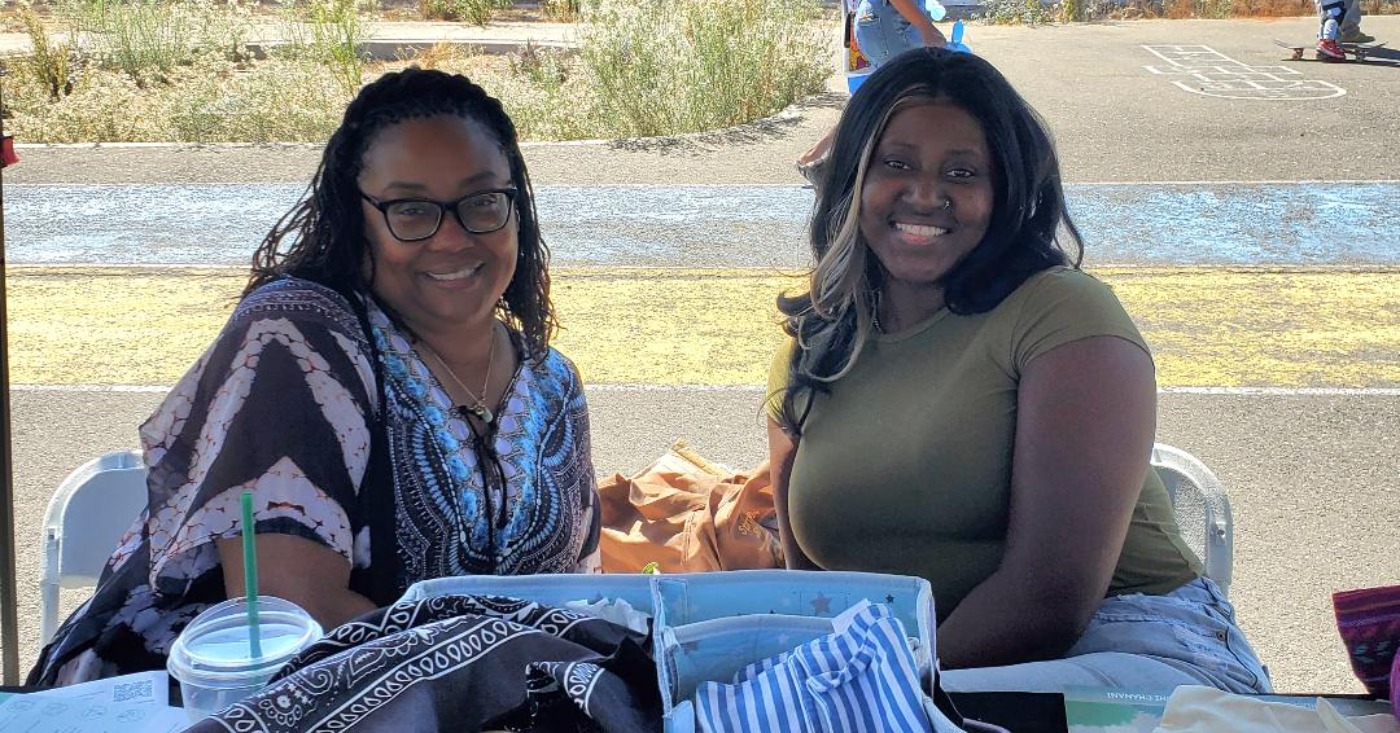
Families, residents and community organizations gathered at the Parker Community Resource Center on Saturday, Sept. 12, for the 40×40 Neighborhood Empowerment Day, transforming the site of a recent tragedy into a space for healing, resources, connection and joy.
Hosted by the 40×40 Council, the free, family-friendly resource fair featured health and wellness services, workshops, children’s activities, food, giveaways and local Black-owned businesses. Residents also connected with community organizations working to strengthen East Oakland.
The gathering came six weeks after a fatal shooting occurred at the Ney Avenue center on July 31. The violence happened shortly before 9 a.m. on the campus of the adult education center and claimed the life of 25-year-old Kimarii McLemore. A second person was injured.
McLemore was attending what was supposed to be her final day in an adult education carpentry class. The shooting deeply affected her family and traumatized students, staff members and residents who had viewed the center as a safe place where community members could pursue education, career training and a better future.
Neighborhood Empowerment Day offered residents an opportunity to return to the center in a spirit of unity and reclaim the space as an important neighborhood resource.
“Reclaiming the space after a tragedy means creating opportunities for people to gather, connect, experience joy and feel a sense of community once again,” said Tim Zenor-Davis, program manager at Roots Community Health. “After a trauma occurs, we see what happened, we acknowledge its impact, and we are continuing to show up.”
Throughout the afternoon, children and families participated in activities while residents received information about health, wellness and other community services. The event also gave local entrepreneurs and service providers an opportunity to connect with the community.
Complimentary meals included grilled burgers and tacos while a DJ played popular music.
Guests received blood pressure and eye-sight checks. A space to exercise on yoga mats was provided while headphones with guided meditation offered a moment to slow down and reflect.
The 40×40 Council includes the Black Cultural Zone, Brotherhood of Elders Network, East Oakland Youth Development Center and Roots Community Health. Together, the organizations have worked to address community violence and the deeper systemic conditions that have affected generations of East Oakland residents.
The council’s work has extended beyond responding to individual tragedies. As part of the broader Rise East initiative, the collaborative has focused on reversing decades of economic disinvestment, systemic poverty, health disparities and the displacement of Black legacy residents.
The 40×40 area stretches from Seminary Avenue to the San Leandro border and from MacArthur Boulevard to the Bay. More than 30,000 Black residents live within the area, which contains Oakland’s largest concentration of Black residents.
Organizers said the area has continued to demonstrate resilience despite experiencing community violence, declining investment and a significant life-expectancy gap compared with wealthier parts of the region.
The council seeks to help reshape East Oakland into a vibrant, multigenerational community where Black residents can remain, return, heal, prosper and build power.



Oakland Mayor Reads to Children at Bookout Block Party at Marcus Books Store

Tradition Comes to the Streets in 11th Annual Black-Eyed Pea Festival at the Freedom Farmers Market

Attorney General Rob Bonta Continues Opposition to President Trump’s Tariff Regime

Neighborhood Empowerment Day in Deep East Oakland Brings Community Together After Recent Tragedy

Community Action Group ‘Friends of Zakiya’ Ask Sheriff for Time

Oakland Launches Aerbits Program to Identify, Report Abandoned Trash

Mayor Lee Announces $1 Million Kaiser Permanente Grant for Pilot Program to Address Homelessness, Clean Up Public Spaces throughout Oakland

Alameda County DA Ursula Jones Dickson Says Key to Optimal Use of DA’s Office Is Knowledge

Oakland Post: Week of September 16 – 22, 2026

NFL: Week Two Recap | Jalen Hurts did not fold; Caleb Williams exits game with injury

The Complete Negotiation Framework — Every Stage, Every Tactic, Every Win

Mazda CX-90 Luxury: Heated Seats & Premium Comfort! #shorts

Car Dashboard Glare: Avoid This Distraction! #shorts

Mazda CX-90 Safety: All Driver Assistance Features Explained #shorts

Subaru Outback: 19-Inch Wheels & 8.8″ Ground Clearance! #shorts

Department of Homeland Security Demands California Secretary of State Shirley N. Weber Scrub Voter Rolls

“The Power to See Threats Sooner”: Gov. Newsom, Safety Officials Showcase California’s Investments in Hi-Tech Wildfire Prevention

California Sen. Padilla Joins Colleagues to Introduce Bill Imposing Term Limits on Supreme Court Justices

Less Affluent School Districts, Including Sacramento City, Face Threat of State Takeover

Car Wash Workers Cope with Lingering Impacts of ICE Raids

ESSAY: California Can Close Its Colorectal Cancer Gap

As Part of Your Back-to- School Checklist, Vaccinate

Oakland ‘Port Serves as a Powerful Engine for Good Jobs and Economic Development

Gov. Newsom Announces $109.6 Million in Funding for 278 Supportive Homes in Bakersfield, Contra Costa, Sacramento and Fresno

California Hispanic Chambers of Commerce Unveils: ‘Powering the Future’ Theme for 47th Annual Statewide Convention

Congresswoman Simon Demands Investigation into Trump’s Abuse of Emergency Powers for Coal Export Terminal in West Oakland

Four Candidates, Including Incumbent Barbara Lee, Qualify for Oakland Mayor’s Race

Oakland Post: Week of August 12 – 18, 2026

From Blueprint to Breakthrough: Tackling Affordable Housing in Oakland

Oakland Observes Black August with Block Parties, Film Showings, Workshops

The Conversation With Al McFarlane 6/23/26

Media Monday 6/22/26

LIVE! ASK ALMA! — TUES. 6.23.26 7PM EST

Car Buying Secrets: 4 Hidden Checks Before You Sign!

Is This 550 HP Charger Worth YOUR Money? AutoNetwork Review

Celebrating Juneteenth – Frederick Douglass on education and resistance

LIVE! — ASK ALMA! — TUES. 6.19.26 7PM EST

Hyundai Ioniq 5 Parking, Safety, and 360 View #shorts

2025 Ioniq 5 New Wiper & Powerful Performance! #shorts

Electric SUV Range: Is 259 Miles Enough? #shorts

EV Charging: How Fast Can You Charge an Electric Vehicle? #shorts

Biometric Cooling… Messaging Seats…Come on! 2025 Infiniti QX80 Autograph 4WD

Charged Up: Witness the Magic of a Fully Electric Car! #shorts

Range Rover Sport PHEV Included…: See What’s Inside This Luxury SUV! #shorts

Invisible Hood View: Perfect Parking with X-Ray Vision! #shorts
-

 Commentary3 weeks ago
Standoff for Justice: Our Homes Are Worth Fighting For
-

 Activism3 weeks ago
Oakland Post: Week of August 26 – September 1, 2026
-

 Business3 weeks ago
Gubernatorial Candidate Steve Hilton Blasts California New Tire Rules; Newsom Hits Back
-

 Business3 weeks ago
Frontier Airlines’ Return to Oakland Airport Brings Flights, Jobs and Opportunity
-

 Business3 weeks ago
Chef Sharon Lee Blends Culinary Excellence, Education and Empowerment
-

 Education3 weeks ago
Gov. Newsom’s Latest Appointees Include Sacramento Advocate for Formerly Incarcerated Students; State’s New Tech Chief
-

 Business3 weeks ago
Oakland Coliseum Project Opens Door for Small Businesses to Build Bigger
-

 Community3 weeks ago
Big City Mayors Ask for “Yes” Vote on Housing Bond Measure; Conservatives Say “No”
