
Activism
Research Finds Black Californians Prioritize Health, While System Fails to Prioritize Black Californians
The data that was collected showed that 90% of Black Californians say that they have health insurance coverage, and 92% of respondents said that they have seen a doctor or healthcare provider in the last year. Most people reported putting “a great deal” or “quite a bit” of effort into getting screenings and preventative care, tracking health indicators like blood pressure and cholesterol, and working to maintain a healthy weight. Four out of five reported focusing “a great deal” or “quite a bit” on mental health.

Maxim Elramsisy | California Black Media
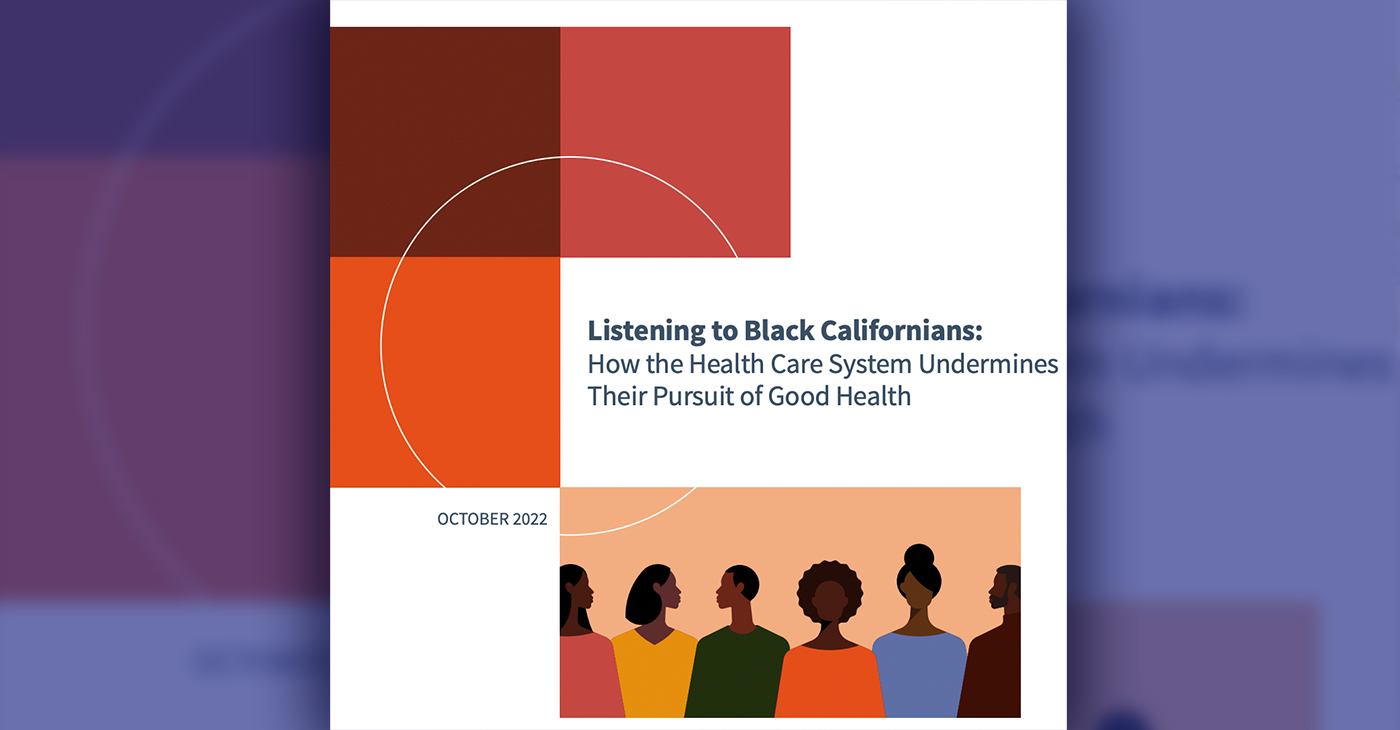
The California Health Care Foundation (CHCF) has released a study that found Black Californians are highly engaged with their health care, are active in advocating for their health and have strong and clear opinions about how the healthcare system can be improved.
“I think it’s surprising because of the pervasive myths about noncompliance among black patients,” said Shakari Byerly, managing partner of EVITARUS, a Los Angeles based Black-owned public opinion research firm who designed, conducted and analyzed the research. “The fact is that our traditional foods may not be as healthy. While that may have some degree of anecdotal resonance, what we’re seeing broadly is that people are working very hard.”
The study was staged in three different phases intended to get varying levels of insight from different cohorts of Black Californians.
Phase one consisted of hourlong interviews with 100 individuals to understand their views on health, perceptions of discrimination, and their vision for an ideal healthcare system.
In Phase Two, the researchers conducted 18 segmented focus groups to explore structural issues in the healthcare system.
In Phase Three, 3,325 Black Californians were surveyed to determine how well the findings in phases one and two captured and represented the views of the general population of Black Californians.
The data that was collected showed that 90% of Black Californians say that they have health insurance coverage, and 92% of respondents said that they have seen a doctor or healthcare provider in the last year. Most people reported putting “a great deal” or “quite a bit” of effort into getting screenings and preventative care, tracking health indicators like blood pressure and cholesterol, and working to maintain a healthy weight. Four out of five reported focusing “a great deal” or “quite a bit” on mental health.
One in three Black Californians and nearly half (47%) of Black women say they experienced inadequate treatment for pain by their health care provider. “We’ve heard story after story of Black women in particular, talking about not being believed, having their pain and agony inadequately treated,” Byerly said.
Nearly one in three Black Californians was found to be treated unfairly by a healthcare provider because of their race or ethnicity, and more than one in four Black Californians avoid care due to concerns that they will be treated unfairly or with disrespect. Unfair experiences are most common among Black Californians with mental health conditions, disabilities, identifying as LGBTQIA+, and women.
The study found that Black Californians have clear opinions on how to improve the health care system. Strong majorities (75%<) expressed that it is extremely important or very important to increase Black representation among health care leadership and in the healthcare workforce. The majority in each age group said that it was at least somewhat important to have a Black or African American Doctor. According to data released by the American Medical Association, 10% of medical school matriculants in 2021 self-identified as Black, or a combination of Black and Asian, Hispanic, or White.
“There needs to be additional support. Financial support. Upfront financial support, for those who want to be doctors. In nursing there’s also a need for financial support, but there’s also not a standard for advising people about the most efficient, most successful pathways to nursing careers … that’s a problem that can be corrected,” CHCF senior program officer Katherine Haynes told California Black Media. “There is another issue and this has to do with the environment in which physicians and nurses practice … Just as patients experience racism, providers experience racism, and they experience it from their peers, from their supervisors, from patients … building practices of reporting those instances of racist treatment need to be made more robust so that a system is created in which providers of color can do their best work for patients. That means having zero tolerance for racist behavior in our healthcare institution.”
The survey indicated that Black Californians believe that there should be an expansion of community-based education to teach about how to access health care options and an increase of Black community health care advocates. They believe that there should be accountability for providing equitable care using financial and accreditation incentives, and through additional training to providers.
More than 80% of the survey respondents said that they are very satisfied or somewhat satisfied with their main source of healthcare. Satisfaction rates were inversely related to age.
“When you look at elders 65 and older, and really 75+, they are the sickest, yet, they appeared most satisfied with their care … that satisfaction is in contrast to younger people who tend to go to urgent care or emergency rooms for care” said Haynes. “I suspect … that it comes from familiarity, having relationships and knowing how to use the system.”
The CHCF study showed that Black Californians go to great lengths to prioritize their health, but the health care system fails to prioritize them.
Haynes recommended one solution. “You can report it to your health plan. You can return it to the state licensing board. You can contact the Department of Managed Health Care, which oversees health plans and to the Office of the Patient Advocate. Those are your rights,” said Haynes. “I will tell you that if you file a grievance versus a complaint, it poses legal liability and so those things that rise to that, or look like they might rise to that, are much more likely to get a response from a health care system.”
You can read the whole report here.












Activism
Oakland Post: Week of September 23 – 29, 2026
The printed Weekly Edition of the Oakland Post: Week of September 23 – 29, 2026

To enlarge your view of this issue, use the slider, magnifying glass icon or full page icon in the lower right corner of the browser window.
Activism
Oakland Post: Week of September 16 – 22, 2026
The printed Weekly Edition of the Oakland Post: Week of September 16 – 22, 2026

To enlarge your view of this issue, use the slider, magnifying glass icon or full page icon in the lower right corner of the browser window.
Activism
Oakland Post: Week of September 9 – 15, 2026
The printed Weekly Edition of the Oakland Post: Week of September 9 – 15, 2026

To enlarge your view of this issue, use the slider, magnifying glass icon or full page icon in the lower right corner of the browser window.



Asm. Corey Jackson Announces Launch of 24-Hour Childcare in His District

IN MEMORIAM: The Rev. Leon “Sonny” Clark, Longtime Orange County Pastor and Community Leader, Dies at 72

Poll: Becerra Widens His Lead Over Hilton; Californians Split on Wealth Tax

From Historic Memories to New Possibilities: Oakland Celebrates Coliseum 60

County Office of Education Says OUSD Finances Are Getting Healthier, Materially Stronger

LIVE FREE Sunday Dinner Brings Faith, Fellowship and Civic Conversation to Oakland

Remembering Chauncey Bailey as Student Journalists Face Threats to Truth-Telling

BLACspace Cooperative Invites Bay Area to Experience Oakland’s Black Cultural Ecosystem Through a BLAC Map Tour + Party

In Wake of Death on Doorstep, Williams Chapel Baptist Church Calls for Better Care, Funding for Unhoused

Oakland Centenarian Nuna McKee Honored!

Caribbean Nations Produce Action Plan Calling for UK Reparations Over Slavery

Oakland Post: Week of September 23 – 29, 2026

Doulas Are Helping Black California Moms Navigate Pregnancy–Even as High Mortality Rates Persist

Newsom Signs Addictive Social Media Law to Protect Kids

On Your November Ballot: Prop 38 Would Allocate $8.4 Billion to Immunology and Immunotherapy Funding

Standoff for Justice: Our Homes Are Worth Fighting For

Oakland Post: Week of August 26 – September 1, 2026

Frontier Airlines’ Return to Oakland Airport Brings Flights, Jobs and Opportunity

Gubernatorial Candidate Steve Hilton Blasts California New Tire Rules; Newsom Hits Back

Chef Sharon Lee Blends Culinary Excellence, Education and Empowerment

Jackie Wright Champions Bay Area Stories, Filmmakers and Cultural Institutions

Big City Mayors Ask for “Yes” Vote on Housing Bond Measure; Conservatives Say “No”

Oakland Coliseum Project Opens Door for Small Businesses to Build Bigger

Gov. Newsom’s Latest Appointees Include Sacramento Advocate for Formerly Incarcerated Students; State’s New Tech Chief

Misnamed ‘Parent’ PAC Seeks to Influence Oakland School Board Elections

Longtime BWOPA Member Brendalyn Goodall Appointed to California Workforce Development Board

Gov. Newsom Signs Law Shielding Immigration Aid Workers From Doxing Threats

Secretary of State Shirley N. Weber Urges Californians to Vote Early as Voter ID Battle Intensifies

From Palestine to Oakland: Seeds for Liberation Examines Shared Struggles for Freedom

IN MEMORIAM: Dolly Parton Dead at 80 — How She Built a Legacy of Love and Earned Her Place in Black Culture

The Conversation With Al McFarlane 6/23/26

Media Monday 6/22/26

LIVE! ASK ALMA! — TUES. 6.23.26 7PM EST

Car Buying Secrets: 4 Hidden Checks Before You Sign!

Is This 550 HP Charger Worth YOUR Money? AutoNetwork Review

Celebrating Juneteenth – Frederick Douglass on education and resistance

LIVE! — ASK ALMA! — TUES. 6.19.26 7PM EST

Hyundai Ioniq 5 Parking, Safety, and 360 View #shorts

2025 Ioniq 5 New Wiper & Powerful Performance! #shorts

Electric SUV Range: Is 259 Miles Enough? #shorts

EV Charging: How Fast Can You Charge an Electric Vehicle? #shorts

Biometric Cooling… Messaging Seats…Come on! 2025 Infiniti QX80 Autograph 4WD

Charged Up: Witness the Magic of a Fully Electric Car! #shorts

Range Rover Sport PHEV Included…: See What’s Inside This Luxury SUV! #shorts

Invisible Hood View: Perfect Parking with X-Ray Vision! #shorts
-
 Community2 weeks ago
Misnamed ‘Parent’ PAC Seeks to Influence Oakland School Board Elections
-

 Activism3 weeks ago
Oakland Post: Week of September 2 – 8, 2026
-

 Community2 weeks ago
Richmond Tiny House Village Farm & Garden Set to Open Gates on Sept. 26
-

 Black History2 weeks ago
OPINION: Nolan Wells’ Death One of Several Signifying Racial Terror Lives on in U.S. South
-

 Black History2 weeks ago
Latest Massacre in Haiti Reveals Cruelty U.S. Deportations
-

 Activism2 weeks ago
Oakland Post: Week of September 9 – 15, 2026
-

 Community2 weeks ago
Democratic Clubs Interview Candidates for Oakland School Board
-

 Featured2 weeks ago
‘Ready to See These Bills Become Law’: Sen. Weber’s Package of 15 Bills Advance to Gov. Newsom’s Desk
