
Activism
Honoring Black Women in Bay Area Who fought for Equal Education for Children
Not many people think of California as having deep roots embedded in slavery, and practices of white supremacy. California was admitted as a free state on Sept. 9, 1850. Pioneer Blacks and those who came during the Great Migration, were in search of freedom, yet they were met with the same oppressive racism and hostility that existed in the South.

By Rev. Dr. Martha C. Taylor

One of the most egregious laws enacted in the State of California was the denial of Black children having an equal opportunity for education.
Not many people think of California as having deep roots embedded in slavery, and practices of white supremacy. California was admitted as a free state on Sept. 9, 1850. Pioneer Blacks and those who came during the Great Migration, were in search of freedom, yet they were met with the same oppressive racism and hostility that existed in the South.
Blacks were aware that the key to upward mobility was education. It is important to note in Black history that, as the late Alice Childress, playwright, actress and novelist once said Blacks “are the only racial group within the United States ever forbidden by law to read and write.”
Though not as extreme as the anti-literacy laws of the South, one racist California law stated: “every school, unless otherwise provided by special law shall be open for white children…. On the other hand, “The education of children of African descent…shall be provided for in separate schools.”
Further, Black parents were forced to pay public school taxes for white students, while Black children attended separate schools that were not equal.

Many inequities were addressed through the Black Church, the institution described by C. Eric Lincoln as the social, cultural, political, location for the Black Community; it was their school, forum, political arena, social clubs, art gallery and much more.
Ministers and others formed four California Colored Conventions with a focus on racial uplift from 1855-1865, which provided Black Churches to address concerns about state laws.
In the Bay Area and other places, the Black Church became the educational institution for Black children.
St. Cyprian African Methodist was the first organized Black church in San Francisco (later renamed Bethel AME) in 1852. Two years later, on May 22, 1854, the church served as the first schoolhouse for 23 Black children in the basement of the church. Children from elementary to high school age shared the same room with no books.
In Oakland, the First African Methodist Episcopal Church (FAME) established in 1858, also was the first school for Black children.
Black women played key roles in the education of Black children.
Mrs. Elizabeth Thorn Scott-Flood opened a private school for colored children circa 1857 in the old carpenter schoolhouse that was abandoned by whites for being inadequate. Lydia Flood-Jackson, daughter of Elizabeth Flood, was a race woman who also fought tirelessly for education and women’s rights.
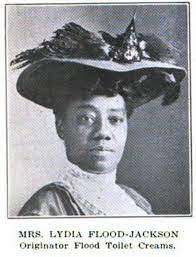
Lydia Floyd Jackson fought tirelessly for education and women’s rights. Wikipedia.org photo.
Ten years later, the first public colored school in Oakland was taught by Miss Mary J. Sanderson, near 10th Avenue and E. 11th Street in an area previously known as Brooklyn, an annex of Oakland. The school closed as Black families began to move out of the area and relocate where work was available.
Bits of history often fall between the cracks if not taught or discussed. Long before the 1954 landmark case involving 8-year-old Linda Brown vs. Board of Education, Topeka, where the Supreme Court struck down the 1896 Plessy vs. Ferguson ‘separate but equal’ decision, there was a case in San Francisco that dates to 1874.
In Mary Frances Ward vs. Noah Flood, the 11-year-old was denied enrollment to Broadway Grammar School, a white school near her home strictly based on her race. The matter advanced to the California State Supreme Court which ruled that Ward’s rights were not violated because there was an all-Black school near her home.
But the next year, with the support of white citizens, the school system changed. According to historian Alfred Broussard “the segregated school was more expensive to operate on a per pupil basis than were the larger white institutions.”
Looking down the corridors of time, Black Lives have always mattered.
We honor our ancestors who struggled for equality when we continue the struggle; the fight has not been won.
Vivian Rodgers was the first Black female to graduate in 1909. Vivian Osborne, a local graduate from Berkeley High School, 1914 applied to U.C. Berkeley with excellent academic records but was required to take four entrance exams.
Ida Louise Jackson, a pioneering Black woman graduated in 1922 from U.C. Berkeley, becoming the first Black public school teacher in California.
As we honor women during this month, let us also remember men who struggled for achievement through education.
Alexander Dumas Jones of San Francisco was the first Black to enroll at UC Berkeley in 1881, followed by Charles Edward Carpenter as the first Black graduate in 1905.
There are so many more, some known, others unknown. As James Weldon Johnson wrote in his poem that became the “Black National Anthem,” ‘Let us march on til victory is won.’











To enlarge your view of this issue, use the slider, magnifying glass icon or full page icon in the lower right corner of the browser window.
To enlarge your view of this issue, use the slider, magnifying glass icon or full page icon in the lower right corner of the browser window.
To enlarge your view of this issue, use the slider, magnifying glass icon or full page icon in the lower right corner of the browser window.


Oakland Probate Dispute Raises Questions About Court-Ordered Property Transfer and Missing Notice

‘Raising a Child Shouldn’t Break the Bank’: California Is Helping Families Save on Childcare Costs

Secretary of State Shirley Weber Pushes Back Against DOJ Demands Over California Voter Rolls

Chase Launches Fraud & Scam Prevention Month

U.S. Rep. Simon Secures More Than $1 Million for Public Safety at Mills College at Northeastern University Oakland, Surrounding Neighborhood

COMMENTARY: Valarie Bachelor and Jennfier Brouhard are Excellent School Board Members and Deserve to Be Reelected

Oakland Faith Leaders Gather to Revitalize the Interdenominational Ministerial Alliance of Oakland

Statue of ‘La Catrina,’ a Beloved Symbol of Dia de Los Muertos, Visits Oakland

Oakland Honors 60 Years of the Black Panther Party at the All Power to the People Gala

Fate of Bay Area Public Transit Hinges on Regional Transit Measure

Why AC Transit Director Joel Young is My Choice for AC Transit Board Ward 3

Oakland Post: Week of October 21 – 27, 2026

Mayor Barbara Lee Holds Special State of the City Address in Deep East Oakland

Practitioners of African Traditional Spirituality Offer Ancestral Reverence Ritual Oct. 31

It’s Time to Lose Weight Before the Holidays

Misnamed ‘Parent’ PAC Seeks to Influence Oakland School Board Elections

Listening as a Lifeline: A Doula’s Witness to Black Maternal Health

Poll: Becerra Widens His Lead Over Hilton; Californians Split on Wealth Tax

Doulas Are Helping Black California Moms Navigate Pregnancy–Even as High Mortality Rates Persist

County Office of Education Says OUSD Finances Are Getting Healthier, Materially Stronger

Oakland Post: Week of September 9 – 15, 2026

Zakiya Jendayi Arrested, Locked Out of Home by Sheriff’s Deputies

Mayor Lee Announces $1 Million Kaiser Permanente Grant for Pilot Program to Address Homelessness, Clean Up Public Spaces throughout Oakland

Richmond Tiny House Village Farm & Garden Set to Open Gates on Sept. 26

BLACspace Cooperative Invites Bay Area to Experience Oakland’s Black Cultural Ecosystem Through a BLAC Map Tour + Party

OPINION: Nolan Wells’ Death One of Several Signifying Racial Terror Lives on in U.S. South

Latest Massacre in Haiti Reveals Cruelty U.S. Deportations

Oakland People’s Arms Embargo Coalition Demands End to Military Shipments Thru Oakland

Oakland Post: Week of September 16 – 22, 2026

Democratic Clubs Interview Candidates for Oakland School Board

The Conversation With Al McFarlane 6/23/26

Media Monday 6/22/26

LIVE! ASK ALMA! — TUES. 6.23.26 7PM EST

Car Buying Secrets: 4 Hidden Checks Before You Sign!

Is This 550 HP Charger Worth YOUR Money? AutoNetwork Review

Celebrating Juneteenth – Frederick Douglass on education and resistance

LIVE! — ASK ALMA! — TUES. 6.19.26 7PM EST

Hyundai Ioniq 5 Parking, Safety, and 360 View #shorts

2025 Ioniq 5 New Wiper & Powerful Performance! #shorts

Electric SUV Range: Is 259 Miles Enough? #shorts

EV Charging: How Fast Can You Charge an Electric Vehicle? #shorts

Biometric Cooling… Messaging Seats…Come on! 2025 Infiniti QX80 Autograph 4WD

Charged Up: Witness the Magic of a Fully Electric Car! #shorts

Range Rover Sport PHEV Included…: See What’s Inside This Luxury SUV! #shorts

Invisible Hood View: Perfect Parking with X-Ray Vision! #shorts
-
 Black History3 weeks ago
Listening as a Lifeline: A Doula’s Witness to Black Maternal Health
-
 Economy4 weeks ago
Poll: Becerra Widens His Lead Over Hilton; Californians Split on Wealth Tax
-
 Business4 weeks ago
County Office of Education Says OUSD Finances Are Getting Healthier, Materially Stronger
-
 Lead Story3 weeks ago
Zakiya Jendayi Arrested, Locked Out of Home by Sheriff’s Deputies
-
 Art4 weeks ago
BLACspace Cooperative Invites Bay Area to Experience Oakland’s Black Cultural Ecosystem Through a BLAC Map Tour + Party
-
 Business4 weeks ago
From Historic Memories to New Possibilities: Oakland Celebrates Coliseum 60
-
 Community4 weeks ago
Asm. Corey Jackson Announces Launch of 24-Hour Childcare in His District
-
 Black History4 weeks ago
IN MEMORIAM: The Rev. Leon “Sonny” Clark, Longtime Orange County Pastor and Community Leader, Dies at 72
