
Bay Area
California’s New COVID Plan Includes Faith Community, Public Health Leaders
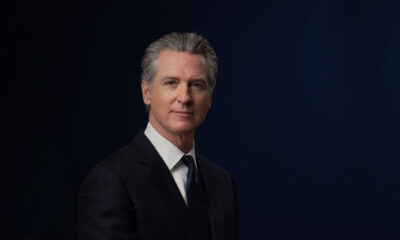
Pointing out that California has one of the lowest COVID-19 death rates in the country, Governor Gavin Newsom added that the SMARTER plan will also focus on preparing the state in the event that there is a similar crisis in the future. Ensuring that the plan is equitable and addresses the needs of Californians of all backgrounds is a priority as well, he emphasized.


By Tanu Henry, California Black Media

Black faith and public health leaders are hailing Gov. Gavin Newsom’s new COVID response plan.
Last week, Gov. Gavin Newsom unveiled the proposal designed to be more strategic, nimble and sustainable than it is reactive. California is the first in the nation to transition the Coronavirus crisis from a pandemic to an endemic.
Newsom made the announcement three days after he lifted the statewide indoor mask mandate.
Dubbed the SMARTER Plan, an acronym that stands for Shots, Masks, Awareness, Readiness, Testing and Rx, the state’s new COVID response plan will focus on precautionary measures and interventions rather than broad mandates on masking, sheltering in place or shutdowns.
“This has been a remarkable two years for everyone. No one has been immune from the stress and travails, the heartache and devastation. But many of us have shared those burdens disproportionately, unequally,” said Newsom. “Those issues are all part and parcel of the consciousness that brings us to this moment.
The governor was speaking at a warehouse in Fontana that the state set up to handle logistics during the pandemic.
Pointing out that California has one of the lowest COVID-19 death rates in the country, Newsom added that the SMARTER plan will also focus on preparing the state in the event that there is a similar crisis in the future. Ensuring that the plan is equitable and addresses the needs of Californians of all backgrounds is a priority as well, he emphasized.
“We are moving away from a crisis mindset to living with this virus,” said Newsom. “We have come to understand what was not understood at the beginning of this crisis: that there is no ending.
“We have a more prescriptive details and strategies to continue those efforts in partnership with 800 community-based organizations, 200 mobile clinic sites, in partnership with our state-owned testing labs, in partnership with our schools and faith-based leaders,” he added.
According to the governor’s office, over 70 million COVID vaccines have been administered in the state. About 80% of Californians have received one dose and about 70% are fully vaccinated.
Sam Casey, executive director of Congregations Organized for Prophetic Engagement (COPE) and pastor of New Life Christian Church in Fontana, says he has been involved in the fight against COVID since the onset of the pandemic.
“We engaged in testing, bringing greater awareness as well as making sure some of the most marginalized communities had access to not only testing but more importantly vaccination,” he said.
“We are still engaged in that fight that’s relevant to the SMARTER plan,” Casey continued. “We’ve helped individuals get shots in their arms. We’ve presented some 75,000 N95 masks to our congregations and communities. We have passed out some 15,000 COVID tests and continue to create greater awareness in our communities.”
Dr. Jerry Abraham, director of Kedran Vaccines in South Los Angeles, runs a health center that provides COVID-19 inoculation to people in neighborhoods that have been historically underserved.
“We continue to see a continued decline in infection rates, in hospitalizations and in deaths — and that’s really exciting,” said Abraham, speaking at a press briefing for the African American press organized by VaccinateAll58, the California Department of Public Health’s COVID-19 response program.
Although about 82,000 Californians have died from COVID-related causes and more than 8 million have been diagnosed with the disease, Abraham says he’s hopeful about entering this next phase of the state’s response.
“We are really in this transition period from pandemic to endemic, and there really is this new conversation about learning to live with COVID. That is how we are going to go about our business and how we are going to go about staying in business and staying in school, going to church – all of these things are a part our strategy to move forward.”
Abraham encouraged people to continue to be vigilant, wear masks when necessary, and take steps to protect themselves and the people they love.
Black Californians, who make up about 6% of the state’s population, currently account for about 7% of confirmed deaths from COVID and more than 5% of all cases.
Fontana Mayor Acquanetta Warren, who is African American, welcomed the governor to her city and thanked him for leading the fight against COVID.
“California has led the nation’s fight against COVID-19 with early, robust, public health measures that have helped to save countless lives,” she said. “In Fontana, we remain focused and ready to adopt to the evolving pandemic.”
Keeping incidents of COVID low in the state, will require the participation of everyone, said Kirsten Bibbins-Domingo, chair of Epidemiology and Biostatistics at the UC San Francisco.
“California’s success in this next phase of the pandemic depends on our focus on those who have borne the brunt throughout: essential workers, older adults, Latino, Black, and Pacific Islander communities, and those with more limited resources,” she said. “The equitable response is the smarter response, and I hope the plans outlined here receive sustained attention and investment,” Bibbens-Domingo said.
Andy Slavitt, former senior advisor for COVID-19 Response in the Biden Administration, says Newsom’s post-pandemic strategy should be a model for states around the country.
“California’s SMARTER plan should represent a turning point in managing the pandemic from taking whatever the virus brings us to being prepared to manage whatever challenges come next,” he said.
Newsom said the state will also be analyzing wastewater to track the evolution of the virus.
“As we enter the next phase of the pandemic, the state is better equipped than ever to protect Californians from COVID-19 with smart strategies that save lives and advance our ongoing recovery,” said Newsom.
“Building on proven tools – rooted in science and data – that have been honed over the past two years, we’re keeping our guard up with a focus on continued readiness, awareness and flexibility to adapt to the evolving pandemic. As we have throughout the pandemic, the state will continue applying the lessons we’ve learned about the virus to keep California moving forward.”
Aldon Thomas Stiles contributed to this report.










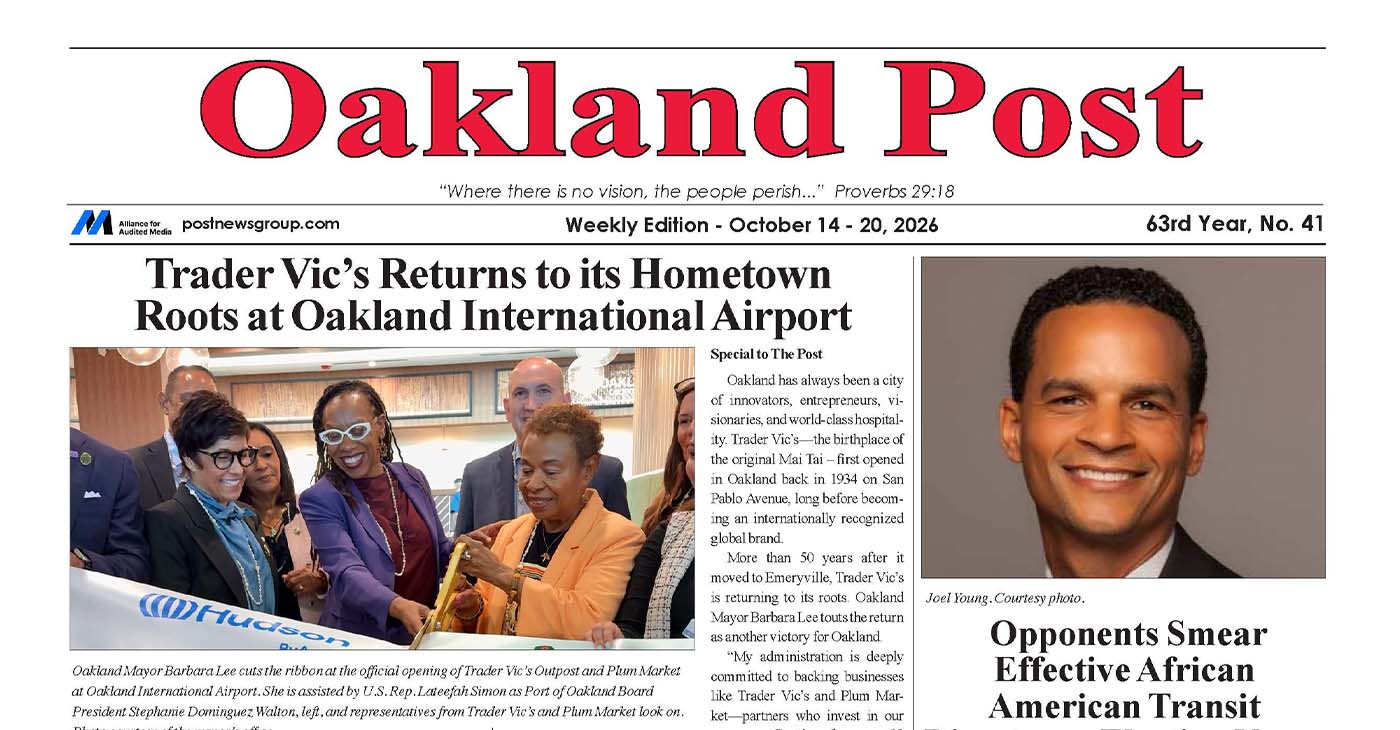
To enlarge your view of this issue, use the slider, magnifying glass icon or full page icon in the lower right corner of the browser window.
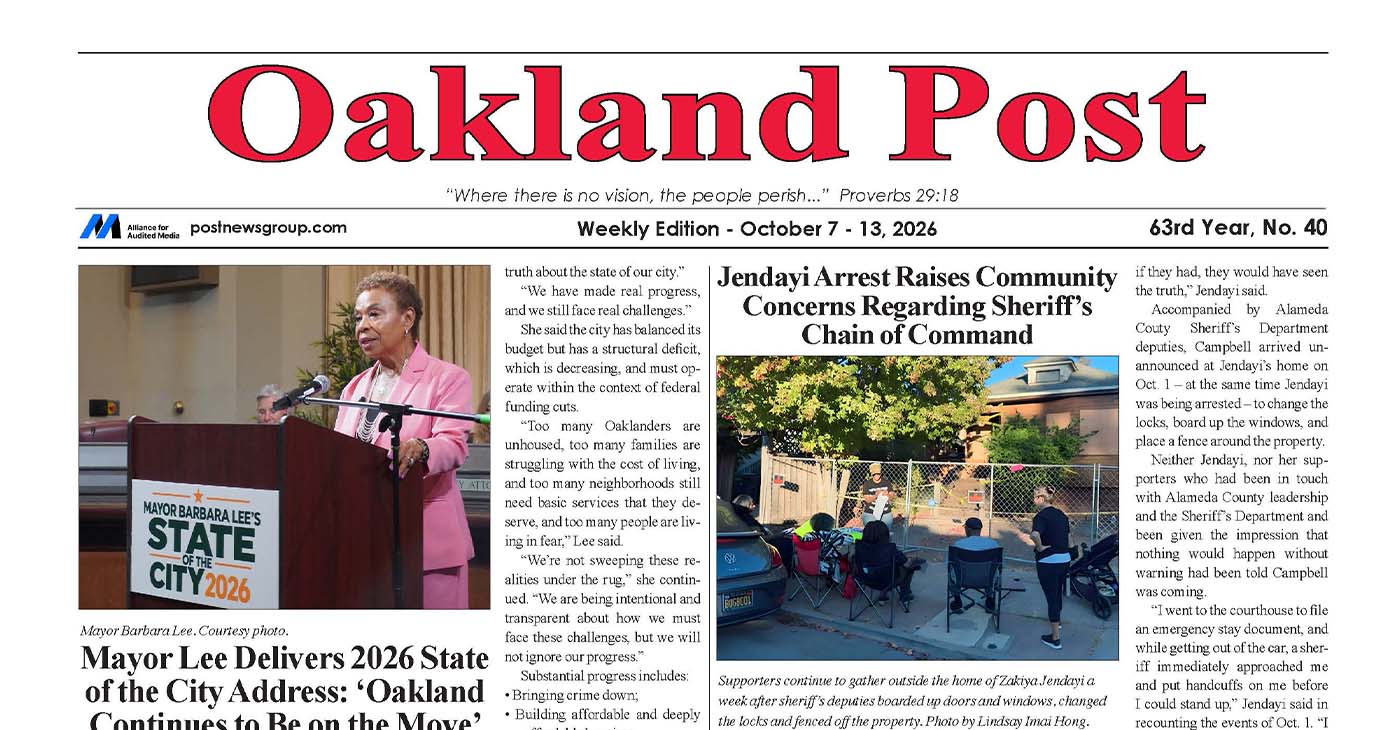
To enlarge your view of this issue, use the slider, magnifying glass icon or full page icon in the lower right corner of the browser window.
Activism
Oakland Post: Week of September 30 – October 6, 2026
The printed Weekly Edition of the Oakland Post: Week of September 30 – October 6, 2026
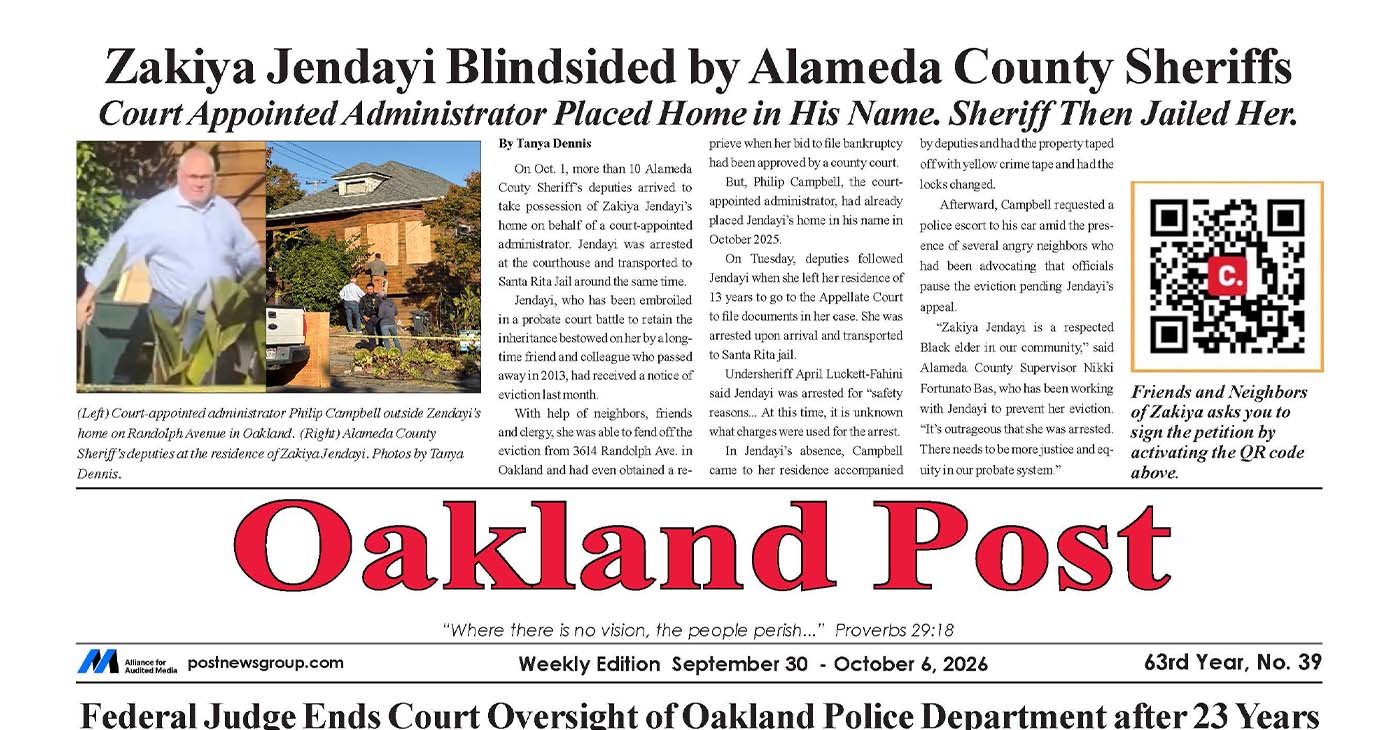
To enlarge your view of this issue, use the slider, magnifying glass icon or full page icon in the lower right corner of the browser window.


Mayor Barbara Lee Holds Special State of the City Address in Deep East Oakland

Practitioners of African Traditional Spirituality Offer Ancestral Reverence Ritual Oct. 31

It’s Time to Lose Weight Before the Holidays

Trader Vic’s Returns to Its Oakland Roots

Oakland Coal Terminal Backed by Trump Would Be Bigger, Dirtier Than Promised, Says Report

Opponents Smear Effective African American Transit Director as Election Nears

Oakland Post: Week of October 14 – 20, 2026

OP-ED: The Black Church Writes AI’s Next Chapter

OP-ED: The Black Church Writes AI’s Next Chapter

WCCUSD Joins Statewide Organic School Food Purchasing Cooperative

Democrats, Community Groups Back Measure EE to Change How Oakland Is Governed

Four Tips to Help You Plan a Holiday “Staycation”

Veterans Housing Project Proposed for South Richmond
PRESS ROOM: Transformative Justice Coalition 2026 Voting Rights Champion Awards Reception ‘Yesterday Is Today: The Battle For Voting Rights

Mayor Lee Delivers 2026 State of the City Address: ‘Oakland Continues to Be on the Move’

Misnamed ‘Parent’ PAC Seeks to Influence Oakland School Board Elections

Oakland Post: Week of September 2 – 8, 2026

Oakland Post: Week of September 9 – 15, 2026

Poll: Becerra Widens His Lead Over Hilton; Californians Split on Wealth Tax

County Office of Education Says OUSD Finances Are Getting Healthier, Materially Stronger

Richmond Tiny House Village Farm & Garden Set to Open Gates on Sept. 26

Latest Massacre in Haiti Reveals Cruelty U.S. Deportations

Mayor Lee Announces $1 Million Kaiser Permanente Grant for Pilot Program to Address Homelessness, Clean Up Public Spaces throughout Oakland

OPINION: Nolan Wells’ Death One of Several Signifying Racial Terror Lives on in U.S. South

Listening as a Lifeline: A Doula’s Witness to Black Maternal Health

BLACspace Cooperative Invites Bay Area to Experience Oakland’s Black Cultural Ecosystem Through a BLAC Map Tour + Party

Zakiya Jendayi Arrested, Locked Out of Home by Sheriff’s Deputies

Democratic Clubs Interview Candidates for Oakland School Board

Oakland Post: Week of September 16 – 22, 2026

Oakland People’s Arms Embargo Coalition Demands End to Military Shipments Thru Oakland

The Conversation With Al McFarlane 6/23/26

Media Monday 6/22/26

LIVE! ASK ALMA! — TUES. 6.23.26 7PM EST

Car Buying Secrets: 4 Hidden Checks Before You Sign!

Is This 550 HP Charger Worth YOUR Money? AutoNetwork Review

Celebrating Juneteenth – Frederick Douglass on education and resistance

LIVE! — ASK ALMA! — TUES. 6.19.26 7PM EST

Hyundai Ioniq 5 Parking, Safety, and 360 View #shorts

2025 Ioniq 5 New Wiper & Powerful Performance! #shorts

Electric SUV Range: Is 259 Miles Enough? #shorts

EV Charging: How Fast Can You Charge an Electric Vehicle? #shorts

Biometric Cooling… Messaging Seats…Come on! 2025 Infiniti QX80 Autograph 4WD

Charged Up: Witness the Magic of a Fully Electric Car! #shorts

Range Rover Sport PHEV Included…: See What’s Inside This Luxury SUV! #shorts

Invisible Hood View: Perfect Parking with X-Ray Vision! #shorts
-
 Economy3 weeks ago
Poll: Becerra Widens His Lead Over Hilton; Californians Split on Wealth Tax
-
 Business3 weeks ago
County Office of Education Says OUSD Finances Are Getting Healthier, Materially Stronger
-
 Business4 weeks ago
Mayor Lee Announces $1 Million Kaiser Permanente Grant for Pilot Program to Address Homelessness, Clean Up Public Spaces throughout Oakland
-
 Black History2 weeks ago
Listening as a Lifeline: A Doula’s Witness to Black Maternal Health
-
 Art3 weeks ago
BLACspace Cooperative Invites Bay Area to Experience Oakland’s Black Cultural Ecosystem Through a BLAC Map Tour + Party
-
 Lead Story2 weeks ago
Zakiya Jendayi Arrested, Locked Out of Home by Sheriff’s Deputies
-
 Activism4 weeks ago
Oakland Post: Week of September 16 – 22, 2026
-
 Uncategorized4 weeks ago
Oakland People’s Arms Embargo Coalition Demands End to Military Shipments Thru Oakland
