
Bay Area
Oakland African American Chamber of Commerce Hosts 4th Black Sunday Holiday Expo at Akoma Market
The East Oakland Black Cultural Zone is a safe place for families, professionals, and children. It was a time to celebrate Black culture as we continue to promote “Oakland for the Holidays” campaign in collaboration with KRON 4. Guests enjoyed free admission and parking and came ready to kick-start their holiday shopping!


By Post Staff
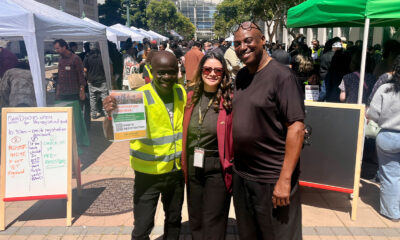
The Oakland African American Chamber of Commerce (OAACC), in collaboration with Akoma Outdoor Market, celebrated the season at the 4th Annual Black Sunday Holiday Expo on December 5, at 73rd Avenue and Foothill Boulevard in Oakland.
OAACC was joined by the city’s other ethnic chambers of commerce in this community event.
The East Oakland Black Cultural Zone is a safe place for families, professionals, and children. It was a time to celebrate Black culture as we continue to promote “Oakland for the Holidays” campaign in collaboration with KRON 4. Guests enjoyed free admission and parking and came ready to kick-start their holiday shopping!
OAACC also promoted several Black-owned businesses which needed to boost revenue because of the ongoing pandemic. “The Culture Zone has offered vendor spaces for a number of businesses that do not have a store front,” said District 6 Councilmember Loren Taylor. “Growing their businesses by participating every month is a step closer too to a permanent location and job creation.”
“We have to continue to support Black-owned businesses to help them survive and thrive,” said Cathy D. Adams, who is president and CEO of the OAACC. “Our job is to promote our businesses as much as possible and find resources to support them.
“This year we featured live entertainment by the legendary West Coast Blues under the direction of Ronnie Stewart. Desserts were provided by Grandma’s Desserts business owner Sherry Vance. Food was catered by Magnolia Street Catering, a member of OAACC.
Mayor Libby Schaaf joined the Holiday Expo to provide an official greeting and San Francisco Mayor London Breed made a guest appearance as did recording artist Dewayne Wiggins.
District 7 Councilmember Treva Reid and Congresswoman Barbara Lee were not able to attend but both sent a representative.
Also present was Carl Davis Jr., the new president and chief executive officer of the California African American Chamber of Commerce. He is also known as the founder of the Northern California Black Chamber Presidents Association, which was represented by its current president Elease Cheek. Frederick Jordan, board chairman and founder of the San Francisco African American Chamber of Commerce was present as well.
OAACC partnered with Lend a Hand Foundation in collecting toys at the Expo. The organization is still in need of unwrapped toys for children 1-11 years old. Toys can still be dropped off at OAACC’s office at 333 Helgenberger Road, Suite 269 in Oakland, Tuesday through Friday from 10:00 a.m.-2:00 p.m. Please call the office at (510) 268-1600 if you are able to donate a toy.
OAACC was established in 2003. We are a private non-profit organization whose mission is to advance economic opportunity and strengthen Oakland’s Black business community. We provide several services for our business associates and members including access to workshops, business development opportunities and advocacy.










Activism
Oakland Post: Week of August 12 – 18, 2026
The printed Weekly Edition of the Oakland Post: Week of August 12 – 18, 2026

To enlarge your view of this issue, use the slider, magnifying glass icon or full page icon in the lower right corner of the browser window.
Activism
Oakland Post: Week of August 5 – 11, 2026
The printed Weekly Edition of the Oakland Post: Week of August 5 – 11, 2026
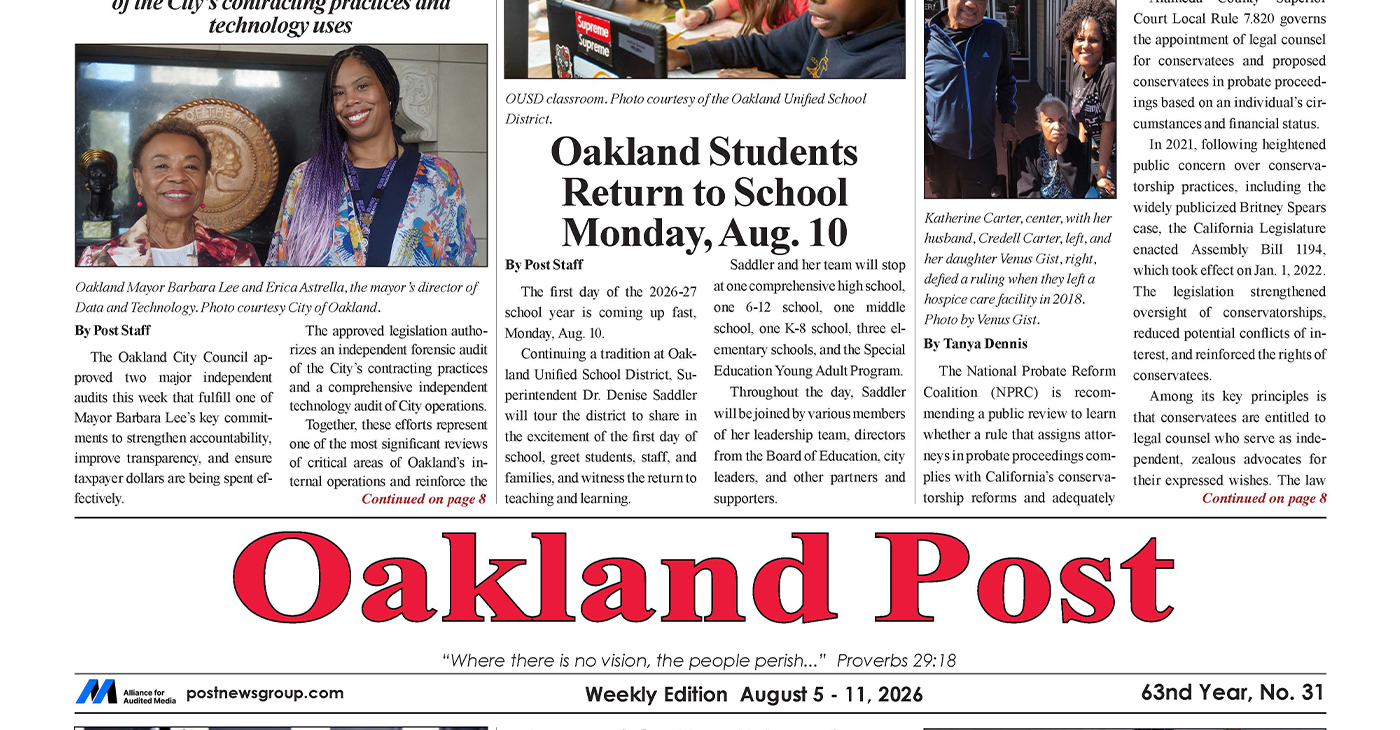
To enlarge your view of this issue, use the slider, magnifying glass icon or full page icon in the lower right corner of the browser window.
Activism
Oakland Post: Week of July 29 – August 4, 2026
The printed Weekly Edition of the Oakland Post: Week of July 29 – August 4, 2026

To enlarge your view of this issue, use the slider, magnifying glass icon or full page icon in the lower right corner of the browser window.

WORK FROM HOME
Home-based business with potential monthly income of $10K+ per month. A proven training system and website provided to maximize business effectiveness. Perfect job to earn side and primary income. Contact Lynne for more details: Lynne4npusa@gmail.com 800-334-0540


OPINION: 57,000 Empty Apartments and Not a Word of Apology – City Limits

Oakland Protesters Rally to Defend Haitian Immigrants and TPS

First 5 Alameda County Celebrates First Year of Measure C’s Implementation

From Palestine to Oakland: Seeds for Liberation Examines Shared Struggles for Freedom

NABJ Convention Brings Black Journalists, Civic Leaders Together in Atlanta

At Sacramento Summit, Becerra Discusses Policy; Uses “Family” Metaphor to Frame Case for National Political Unity

$5 Billion Coliseum Vision Puts Oakland Jobs, Businesses at Center

Gov. Newsom Nominates 3 Black Women Judges to Serve on State Courts of Appeal

Oakland Observes Black August with Block Parties, Film Showings, Workshops

NPRC Elder Justice Symposium Invites Community to Join Effort to Protect Alameda County Elders
Episode 4: Grow Stronger After 50
Episode 4: Grow Stronger After 50

Four Candidates, Including Incumbent Barbara Lee, Qualify for Oakland Mayor’s Race

Oakland Observes Black August with Block Parties, Film Showings, Workshops

Oakland Post: Week of August 12 – 18, 2026

Department of Homeland Security Demands California Secretary of State Shirley N. Weber Scrub Voter Rolls

New Judge Could Decide if Karmelo Anthony Gets a New Trial

Oakland Children’s Hospital Workers and Patients Rally for Pediatric Medical Care

“The Power to See Threats Sooner”: Gov. Newsom, Safety Officials Showcase California’s Investments in Hi-Tech Wildfire Prevention

Alpha Kappa Alpha Sorority, Inc. Celebrates New North Atlantic Regional Director

Surveillance Pricing Fight: State Senate Debates Bill Banning Retailers from Using AI to Set Prices Based on a Buyer’s Profile

Mount Zion MBC, Church of Jesus Christ of Latter-day Saints Partner to Bring 29,000 Meals to Alameda County

California Sen. Padilla Joins Colleagues to Introduce Bill Imposing Term Limits on Supreme Court Justices

Less Affluent School Districts, Including Sacramento City, Face Threat of State Takeover

Car Wash Workers Cope with Lingering Impacts of ICE Raids

Starting This Summer, California Car Buyers Can Get an Instant $3500 Off the Cost of Electric Vehicles

COMMENTARY: You Are Already Paying for the AI Boom

California Bill Would Let Abuse Victims Use Trauma as Legal Defense for Violent Crime

Fed Court to Decide Landmark First Amendment Case

Gov. Gavin Newsom Signs Law Streamlining Affordable Housing Rules

The Conversation With Al McFarlane 6/23/26

Media Monday 6/22/26

LIVE! ASK ALMA! — TUES. 6.23.26 7PM EST

Car Buying Secrets: 4 Hidden Checks Before You Sign!

Is This 550 HP Charger Worth YOUR Money? AutoNetwork Review

Celebrating Juneteenth – Frederick Douglass on education and resistance

LIVE! — ASK ALMA! — TUES. 6.19.26 7PM EST

Hyundai Ioniq 5 Parking, Safety, and 360 View #shorts

2025 Ioniq 5 New Wiper & Powerful Performance! #shorts

Electric SUV Range: Is 259 Miles Enough? #shorts

EV Charging: How Fast Can You Charge an Electric Vehicle? #shorts

Biometric Cooling… Messaging Seats…Come on! 2025 Infiniti QX80 Autograph 4WD

Charged Up: Witness the Magic of a Fully Electric Car! #shorts

Range Rover Sport PHEV Included…: See What’s Inside This Luxury SUV! #shorts

Invisible Hood View: Perfect Parking with X-Ray Vision! #shorts
-
 Featured2 weeks ago
Department of Homeland Security Demands California Secretary of State Shirley N. Weber Scrub Voter Rolls
-
 #NNPA BlackPress3 weeks ago
New Judge Could Decide if Karmelo Anthony Gets a New Trial
-
 Business4 weeks ago
Oakland Children’s Hospital Workers and Patients Rally for Pediatric Medical Care
-
 Environment2 weeks ago
“The Power to See Threats Sooner”: Gov. Newsom, Safety Officials Showcase California’s Investments in Hi-Tech Wildfire Prevention
-
 Black History3 weeks ago
Alpha Kappa Alpha Sorority, Inc. Celebrates New North Atlantic Regional Director
-
 Business4 weeks ago
Surveillance Pricing Fight: State Senate Debates Bill Banning Retailers from Using AI to Set Prices Based on a Buyer’s Profile
-
 Business4 weeks ago
Mount Zion MBC, Church of Jesus Christ of Latter-day Saints Partner to Bring 29,000 Meals to Alameda County
-
 Featured2 weeks ago
California Sen. Padilla Joins Colleagues to Introduce Bill Imposing Term Limits on Supreme Court Justices
