
Berkeley
Opinion – Black Berkeleyans Demand a Response to the Adeline Corridor Plan

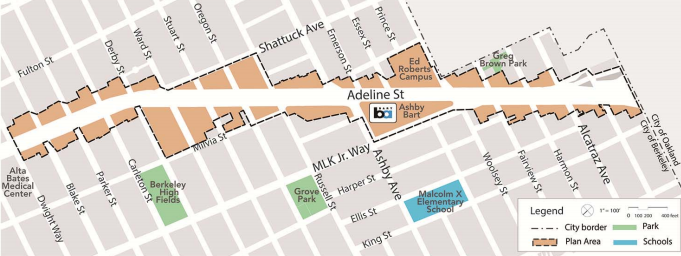
This statement was made to the Berkeley Planning Commission’s special meeting on the Adeline Corridor Plan on Sept. 16, 2020, represented as a “long-range…blueprint for the future,” which many “black” Berkeleyans are suspicious of.
Since Mr. Lee believes that the dangerous mythology of “race,” which has no basis in science, is the root of the even more dangerous reality of racism, he has enclosed all “racial” terms in quotes so as not to legitimize either.
Good evening.
Malcolm X said: If you stick a knife in my back nine inches and pull it out six inches, that’s not progress. If you pull it all the way out, that’s not progress — because it won’t heal the wound that the blow made.
I’m not only speaking for myself, but I’m also presuming to speak for my fellow native “Black” Berkeleyans who aren’t joining this meeting because they don’t have the proper technology; because they’re intelligent enough to have lost faith in Berkeley’s pro-developer, gentrifier-friendly city government; or because, like most of us, they’ve been displaced and exiled against their will to Godforsaken cultural wastelands like Antioch and Pittsburg.
White Power and Us
The presence of “Black” and other non-“white” people in Berkeley had everything to do with the machinations of White Power and nothing whatever to do with the wishes of those of us who were herded into South and West Berkeley by redlining and restricted to these districts by the Berkeley Police Dept.

Likewise, the progressive disappearance of “Black” and other non-“white” people from Berkeley is mostly due to the insidiousness of White Power and has very little to do with our preferences.
Thus, our existence in this city is defined by our being pushed around by White Power, which obligates me to do my best to speak truth to this power.
The Lasting Wound
Despite the best efforts of “Black” community leaders to avoid our community being ravaged like majority-“Black” districts in Oakland were when BART was built in Berkeley in the late 1960s and early 1970s, the Ashby Station drove right through the vital beating heart of the city’s northern non-“white” commercial and cultural district, which was known as South Berkeley Square
It ran down Grove Street, now Martin Luther King, Jr. Way, from Woolsey to Ashby.
This was tantamount to slicing thru our jugular vein. “Black” and other non-“white” businesses bled out to Sacramento Street and to East Oakland.
“Black” Berkeley, in particular, never recovered from the destruction wrought by creating a convenience for “white” people at the expense of a non-“white” district.
Berkeley Community Flea Market
Ironically, the Berkeley Community Flea Market occupies the very spot of this devastating economic, cultural and social violation.
Quite appropriately, the market faithfully mirrors and sustains the rich ethnic diversity, innovative entrepreneurial spirit and strong sense of community kinship that made historic non-“white” Berkeley such a unique and beloved home for people like myself, which managed to thrive in the face of the historic racism of the rest of this supposedly “progressive” city, which fought tooth and nail to integrate its schools and didn’t do so until 1969.
Who Deserves Help?
When I was in high school, I taught beginners’ swimming to elementary school students. Whenever I had to choose between extending a helping hand to a child with a flotation device and one without one, I naturally reached for the latter.
That’s what “white” privilege in Berkeley and throughout the country does for “white” people — it sustains them and keeps their heads above water.
Not only do “Black” people lack this protection, but they’re also pulled to the bottom by the weight of the ongoing operations and legacy of “white” supremacy, which is currently experiencing a resurgence, including in Berkeley, where outsiders and newcomers presume to dictate to its historic “Black” residents, even though, relatively speaking, most of them arrived here only yesterday afternoon.
Two Demands
So it adds insult to injury that we have to come before this body to ask for — no, to demand — the simple justice of the right of return for exiled “Black” Berkeleyans and the re-establishment of non-white,” and particularly “Black,” businesses and cultural institutions, including the protection and promotion of the flea market.
The city and BART must understand that those of us who are exiled from our home remain vitally interested in and committed to it. We not only want to come home, but we deserve to.
However, as the Portland, Ore., plan proved, the right of return is meaningless if people are offered homes that they can’t afford.
Therefore, any housing built at the Ashby BART station — which, I should emphasize, is not what the “Black” community wants — must be 100% affordable for those of us who were forced out of our community because of the harm that was inflicted by BART and the city.
Similarly, the flea market must not be shunted off to the side, where it will eventually die a quiet, unceremonious death. Instead, just as it’s the beating heart of what’s left of non-“white” Berkeley, it should also be the seed of this special community’s economic and cultural rebirth.
If the Adeline Corridor Plan does not do these two things, it’s not worth the paper that it’s printed on.
Confirmation?
Indeed, it will be read by “Black” and other non-“white” Berkeleyans, both those who’ve managed to remain and those who were forced out, as yet another in a long train of racist subterfuges — merely sealing the destruction, displacement and disempowerment that began with the building of the Ashby BART station.
Moreover, failing to do these two things would also confirm our worse experiences of and fears about Berkeley’s endemic, systemic racism and make us question if we have a future in a city that’s mostly led by politicians who say all the right things and do all the wrong things and, through their actions, are consigning us to the fate of the Ohlone, whose land this truly is.
Thank you for your kind consideration.
Paul Lee, Exiled South Berkeleyan




Activism
Black Repertory Group Needs Volunteers to Help Shape the Next Generation of Artists and Leaders
Legendary performers such as Whoopi Goldberg and Danny Glover worked with and were inspired by BRG’s founders. More recently, Grammy award-winning artist Kehlani attended the Black Repertory Group Summer Day Camp for several years.


By Sean Vaughn Scott, Special to The Post
For more than 60 years, the Black Repertory Group (BRG) has changed lives through the arts.
Founded in 1964 by educators and visionaries Birel L. Vaughn and Nora Vaughn, BRG has become one of America’s oldest continuously operating Black theater institutions. For generations, it has preserved culture, developed talent, and provided opportunities for young people to discover their voices and their potential.
The results speak for themselves.
Legendary performers such as Whoopi Goldberg and Danny Glover worked with and were inspired by BRG’s founders. More recently, Grammy award-winning artist Kehlani attended the Black Repertory Group Summer Day Camp for several years.
Long before international recognition, Kehlani performed on the BRG stage. During a summer day camp production of “Princess and da Frog,” she portrayed Ray, the lovable firefly whose light guided others through the darkness. Her journey is proof that today’s camper may become tomorrow’s artist, entrepreneur, educator, or leader.
Located at 3201 Adeline St. in Berkeley, BRG continues that mission through its Youth Summer Day Camp of the Arts.
BRG is currently accepting applications and maintains an open enrollment program. Students may enroll throughout the summer as space permits and immediately become part of the BRG family.
We are also proud to be a multicultural opportunity program, welcoming children and families from all backgrounds, cultures, and communities. Through theater, music, dance, public speaking, visual arts, technical theater, and leadership development, students gain confidence, discipline, creativity, and lifelong skills.
As our programs grow, so does our need for volunteers.
We are seeking community members to assist with youth mentoring, registration, costumes, set construction, painting, props, ushering, photography, social media, marketing, technical theater, and fundraising activities. Whether you volunteer for a few hours or throughout the season, your support directly impacts the lives of young people.
BRG also partners with churches, civic organizations, alumni associations, fraternities, sororities, and community groups through theater party fundraisers, group sales, and buy-out performances. These partnerships have helped organizations raise funds while supporting arts and cultural programming.
The theater also serves as the home of the Berkeley NAACP Chapter, which meets every second Saturday of the month from 1 to 3 p.m.
For more than six decades, the Black Repertory Group has remained committed to one belief: every child deserves an opportunity to shine.
The next great artist may already be among us.
The next Kehlani may already be walking through our doors.
We invite you to volunteer, enroll, participate, and become part of the legacy.
For more information please go to www.blackrepertorygroup.com, call (510) 652-2120, or email info@blackrepertorygroup.com
Sean Vaughn Scott is the director of the Black Repertory Group.

Bay Area
UC Berkeley Named Top Public University in the U.S. and No. 7 in the World by ‘U.S. News’
Berkeley has been consistently awarded the distinction of the U.S.’s top public university since the Best Global Universities list was first published in 2014. “A strong position in the Best Global Universities rankings recognizes a school’s profound commitment to world-class research and cross-border academic excellence,” said LaMont Jones, managing editor for education at U.S. News.
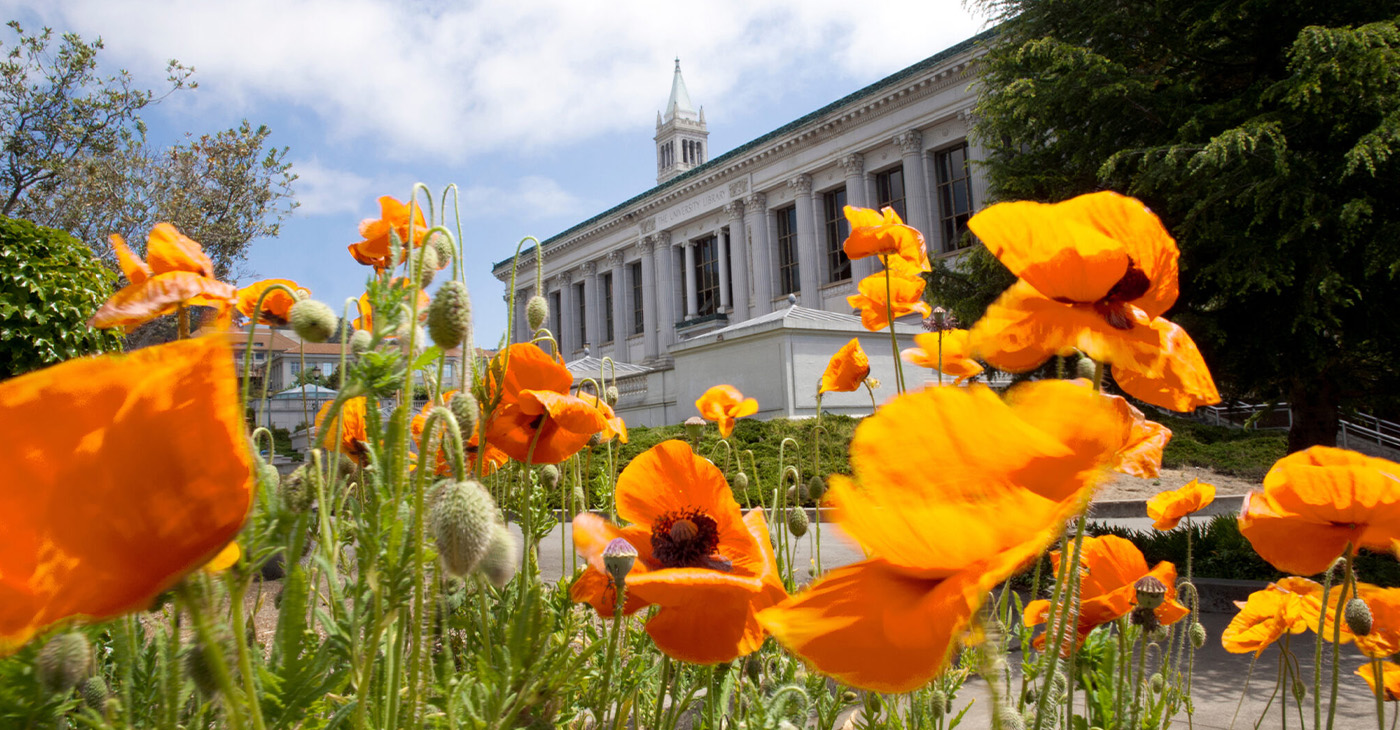
The 2026 Best Global Universities rankings evaluated 2,250 research institutions from more than 100 countries
By Lila Thulin
U.S. News & World Report has ranked UC Berkeley No. 7 in its 2026 list of the best global universities, which assesses more than 2,250 research institutions worldwide.
Berkeley also claimed the honor of top public university in the U.S.
Released on Monday, the list evaluates universities from more than 100 countries on 13 metrics such as global and research reputation (as reported by academics and peers) and number of highly cited scholarly papers.
Berkeley has been consistently awarded the distinction of the U.S.’s top public university since the Best Global Universities list was first published in 2014.
“A strong position in the Best Global Universities rankings recognizes a school’s profound commitment to world-class research and cross-border academic excellence,” said LaMont Jones, managing editor for education at U.S. News.
The rankings also assess a university’s strength in various subject areas; these assessments are separate from U.S. News’ 2026 Best Graduate Programs rankings released in April.
This year, Berkeley was named in the top three nationally in seven subject areas – environment/ecology, ecology, water resources, physics, computer science, chemistry, and engineering – and in the top five for a total of 17 subjects. Subject rankings are based heavily on scholarly publications and citations as well as reputation.

In September, U.S. News also released its 2026 Best Colleges list, in which Berkeley was also named the No. 1 public institution among American universities.
That honor joins other accolades judging campus to be the best public university in the country, such as those from Forbes, The Wall Street Journal and Times Higher Education.
Arts and Culture
Farwest Region Deltas Celebrate Centennial With “September Breakfast” Honoring Vivian Osborne Marsh
The region was established in 1925 under the leadership of Vivian Osborne Marsh, who became its first Regional Director. Marsh was a pioneering scholar and civic leader, earning recognition as the first Black woman to receive both a bachelor’s and a master’s degree in anthropology from UC Berkeley.

By Antoinette Porter
Hundreds of members of Delta Sigma Theta Sorority, Inc., and their guests gathered at the Martin Luther King Jr. Student Union at the University of California, Berkeley, to mark the 100th anniversary of the sorority’s Farwest Region.
The region was established in 1925 under the leadership of Vivian Osborne Marsh, who became its first Regional Director. Marsh was a pioneering scholar and civic leader, earning recognition as the first Black woman to receive both a bachelor’s and a master’s degree in anthropology from UC Berkeley.
Marsh went on to serve as Delta Sigma Theta’s 7th National President, where she launched the sorority’s National Library Project to expand access to books in underserved Black communities in the South. During her presidency, the organization also became a prominent voice in the civil rights movement, lobbying Congress to pass anti-lynching legislation.
Bak in the Bay Area, Marsh devoted her career to advancing educational opportunities, mentoring young people, and strengthening community life. That commitment continues to shape the region, which supports initiatives in education, social justice, and economic development. Current projects include raising scholarship funds for students at Historically Black Colleges and Universities, voter education campaigns, and health and wellness programs.
A century after its founding, the Farwest Region of Delta Sigma Theta remains active across California and other western states, carrying forward Marsh’s vision of service and advocacy.



Asm. Corey Jackson Announces Launch of 24-Hour Childcare in His District

IN MEMORIAM: The Rev. Leon “Sonny” Clark, Longtime Orange County Pastor and Community Leader, Dies at 72

Poll: Becerra Widens His Lead Over Hilton; Californians Split on Wealth Tax

From Historic Memories to New Possibilities: Oakland Celebrates Coliseum 60

County Office of Education Says OUSD Finances Are Getting Healthier, Materially Stronger

LIVE FREE Sunday Dinner Brings Faith, Fellowship and Civic Conversation to Oakland

Remembering Chauncey Bailey as Student Journalists Face Threats to Truth-Telling

BLACspace Cooperative Invites Bay Area to Experience Oakland’s Black Cultural Ecosystem Through a BLAC Map Tour + Party

In Wake of Death on Doorstep, Williams Chapel Baptist Church Calls for Better Care, Funding for Unhoused

Oakland Centenarian Nuna McKee Honored!

Caribbean Nations Produce Action Plan Calling for UK Reparations Over Slavery

Oakland Post: Week of September 23 – 29, 2026

Doulas Are Helping Black California Moms Navigate Pregnancy–Even as High Mortality Rates Persist

Newsom Signs Addictive Social Media Law to Protect Kids

On Your November Ballot: Prop 38 Would Allocate $8.4 Billion to Immunology and Immunotherapy Funding

Less Affluent School Districts, Including Sacramento City, Face Threat of State Takeover

ESSAY: California Can Close Its Colorectal Cancer Gap

California Hispanic Chambers of Commerce Unveils: ‘Powering the Future’ Theme for 47th Annual Statewide Convention

Four Candidates, Including Incumbent Barbara Lee, Qualify for Oakland Mayor’s Race

Oakland Post: Week of August 12 – 18, 2026

From Blueprint to Breakthrough: Tackling Affordable Housing in Oakland

Oakland Observes Black August with Block Parties, Film Showings, Workshops

COMMENTARY: Why Local School Tax Measure G1 Will Not Be on the November Ballot

Standoff for Justice: Our Homes Are Worth Fighting For

Returning to Its Roots, the Oakland Black-Eyed Pea Festival Partners with the Freedom Farmers Market Sept. 12

Oakland Post: Week of August 26 – September 1, 2026

NPRC Scores First Advocacy Victory: David Shaw Finally Gets His Wish to ‘Go Home’

Frontier Airlines’ Return to Oakland Airport Brings Flights, Jobs and Opportunity

Gubernatorial Candidate Steve Hilton Blasts California New Tire Rules; Newsom Hits Back

Chef Sharon Lee Blends Culinary Excellence, Education and Empowerment

The Conversation With Al McFarlane 6/23/26

Media Monday 6/22/26

LIVE! ASK ALMA! — TUES. 6.23.26 7PM EST

Car Buying Secrets: 4 Hidden Checks Before You Sign!

Is This 550 HP Charger Worth YOUR Money? AutoNetwork Review

Celebrating Juneteenth – Frederick Douglass on education and resistance

LIVE! — ASK ALMA! — TUES. 6.19.26 7PM EST

Hyundai Ioniq 5 Parking, Safety, and 360 View #shorts

2025 Ioniq 5 New Wiper & Powerful Performance! #shorts

Electric SUV Range: Is 259 Miles Enough? #shorts

EV Charging: How Fast Can You Charge an Electric Vehicle? #shorts

Biometric Cooling… Messaging Seats…Come on! 2025 Infiniti QX80 Autograph 4WD

Charged Up: Witness the Magic of a Fully Electric Car! #shorts

Range Rover Sport PHEV Included…: See What’s Inside This Luxury SUV! #shorts

Invisible Hood View: Perfect Parking with X-Ray Vision! #shorts
-
 Business4 weeks ago
Frontier Airlines’ Return to Oakland Airport Brings Flights, Jobs and Opportunity
-
 Business4 weeks ago
Gubernatorial Candidate Steve Hilton Blasts California New Tire Rules; Newsom Hits Back
-
 Business4 weeks ago
Chef Sharon Lee Blends Culinary Excellence, Education and Empowerment
-

 Black History4 weeks ago
Jackie Wright Champions Bay Area Stories, Filmmakers and Cultural Institutions
-

 Community4 weeks ago
Big City Mayors Ask for “Yes” Vote on Housing Bond Measure; Conservatives Say “No”
-

 Education4 weeks ago
Gov. Newsom’s Latest Appointees Include Sacramento Advocate for Formerly Incarcerated Students; State’s New Tech Chief
-

 Business4 weeks ago
Oakland Coliseum Project Opens Door for Small Businesses to Build Bigger
-

 Community2 weeks ago
Misnamed ‘Parent’ PAC Seeks to Influence Oakland School Board Elections
