
National
Whites Don’t Have to Pretend to Be Black to Lead an NAACP Chapter


By Jazelle Hunt
NNPA Washington Correspondent
WASHINGTON (NNPA) – If Rachel Dolezal had looked around, she would have discovered that a White person does not have to pretend to be Black in order to lead an NAACP chapter. In fact, she would have to look no farther than several states south, to Arizona, to see that a White man, Donald Harris, is president of the Maricopa County NAACP.
Dolezal served as president of the Spokane, Wash. NAACP branch of the NAACP until her parents disclosed that their estranged White daughter was passing as Black. The shocking disclosure created a national uproar – not about her being White, but her living a lie – and led to her resignation.
As president of the Phoenix-based NAACP branch, Donald Harris was not amused.
“I think there may be some mental health issues,” he said. “[Dolezal] has done some good things, and she’s also done some bad things. But she did them knowingly. [She’s become] a joke, and that’s a shame. But that reflects more on her than it does on the NAACP.”
Paul Krissel, a White man who has served as treasurer of the Salem-Keizer NAACP chapter in Oregon, agrees.
“[A] commentator said, ‘It’s like a car crash. We love a car crash. Why don’t we spend this much time looking at the work of the NAACP? All of a sudden you want to have a conversation about racial identity because a White woman converted herself over to Black?’ These conversations have been going on for years, and all of a sudden the mainstream is interested in them because there’s a car crash.”
The NAACP, the nation’s largest surviving civil rights organization, was founded in 1909 by 60 people, most of them White liberals. Seven of the founders were Black, including W.E. B. DuBois, Ida B. Wells-Barnett and Mary Church Terrell.
William Monroe Trotter, the crusading editor of the Boston Guardian, helped form the NAACP but quit because he thought it was being controlled by Whites. Trotter focused on reviving the National Equal Rights League, an all-Black civil rights organization started in 1864 by Frederick Douglass, Henry Highland Garnett, and John Mercer Langston, among others.
The NAACP did not have its first African American executive secretary (now called president) until James Weldon Johnson assumed the post in 1920.
In December, Donald Harris, a White, 77-year-old lawyer and Vietnam veteran, was elected to succeed Oscar Tillman, who had headed the Maricopa County, Arizona NAACP branch almost three decades. Born in Brooklyn, N.Y. to Jewish parents who were also members of the NAACP, Harris has been a member and volunteer of the Maricopa County chapter over the past 50 years.
Even so, Harris’ race matters. Someone made that clear at the very first chapter he joined while working at Camp Pendleton in California, after returning from the war.
“In the beginning…I joined the [North San Diego County] branch of the NAACP. I used to go on Wednesday nights and I was the legal adviser,” he recounted. “One night I stood up and said, ‘I think this is what we ought to do.’ And a woman who was a member said, ‘I’m tired of White people telling us what we need to do.’ And I just said, ‘Thank you very much ma’am, you just freed up my Wednesday nights.’ And I took off.”
Harris’ race came up again when he was elected the new branch president in Arizona by a 19-to-0 vote (with four abstentions). By then, he had spent many years as volunteer and nearly 15 as a board member. Still, there was an “unpleasant meeting” in which Black leaders, elders, and pastors, who were not members but had a lot of influence in the community, proposed ways to undermine or recall his presidency.
“There was a hunt for a new president but nobody…wanted to do the work. I did not want to be president…but it was such an embarrassment [for the chapter]. So I said, ‘I nominate myself,’ waiting for somebody to say, ‘How about me.’ But nobody did,” Harris said. “Then a couple of people, after the fact, started saying, ‘Gee, we wanted to be president.’ And therein lies the rub.”
There were also death threats, both at the time of his election, and recently, as he has made a few national media appearances regarding the Dolezal saga.
But his race has also mattered in a positive way, which writer and commentator, Michaela Angela Davis pointed out last week when she and Harris appeared on CNN’s Anderson Cooper 360 together.
“What [Harris] said is it – using his White male privilege to help the American project. That’s what [Dolezal] could have done,” she said.
For Harris, that truth was hard to hear.
“It is unpleasant, but true. I can use my leverage in the White community to push civil rights,” he said. “Cindy McCain lives here, she owns Anheuser-Busch – I can go to her and say, ‘I need $70,000.’ I can hit up my fat-cat friends. I can ask $25,000 from the Fiesta Bowl, and we’ve never gotten that much from them. I could go places where African Americans couldn’t go.”
Paul Krissel, a former treasurer of the Salem-Keizer NAACP chapter in Oregon, has had similar experience as a White executive member and volunteer. He’s spent approximately 40 years working and fighting for social justice with local and national labor unions and other organizing groups. Now “semi-retired,” he’s been volunteering heavily with the NAACP for the past five or six years, planning events and serving in general.
“The challenge is always to help well-meaning people get beyond, ‘I want to do good for somebody else,’ to, here’s the social construct that creates these patterns of discrimination and oppression in society. This has to be the work of White people challenging White people. I have the credibility to challenge White people in a way a person of color wouldn’t be able to,” Krissel stated.
“If I just go hang out with people of color, hang out at these organizations, and feel good about myself for being involved in that work, but I’m not going back out to my peers…then I’m really not doing the work.”
###














Business
Event Preview: ‘Fashion v. Fascism’ – A Runway Revolution Is Coming to the Bay Area
“Fashion v. Fascism” (FVF) is an upcoming visually immersive event combining fashion, music, and political theater to expose the rise of fascism in the U.S. and advocate for resistance. Described as a live “runway revolution,” FVF premieres October 3 at The Rotunda in downtown Oakland. The event will feature five runway collections spotlighting elements of contemporary fascist politics, accompanied by political theater and live music, culminating in a call to action. Organizers state that culture is a potent defense when democracy is under siege. Read more to learn about this unique event.


“Fashion vs. Fascism” (FVF) is a visually immersive evening of fashion, music and political theater exposing the rise of fascism in the U.S. and the need to resist. Democracy is under siege, and culture is one of our most potent defenses, organizers say.
Called a live “runway revolution,” FvF premieres Oct. 3 at The Rotunda, 300 Frank Ogawa Plaza in downtown Oakland.
A play that is part fashion show, part protest, part performance art, FvF stages five runway collections spotlighting the pillars of contemporary fascist politics and the urgent need to resist: the myth of a “glorious past,” the manufactured emergencies used to justify surveillance and crackdowns, and the oligarchs and grifters profiting from it all. Runway fashion shares the stage with political theater and live music, with a closing call to action.
“We need lawsuits, ballots and mass protests, but none of it lands if we’re not also fighting for people’s imagination,” says Linda Burnham, co-producer of the show. “People are exhausted and scared. FvF will expose the absurdities of fascist mythology and ideology in ways a news headline cannot and spark new ideas about how to resist.”
“Fascism doesn’t win by policy alone. It wins by telling a story. A myth about a ‘Golden Age.’ A permanent emergency that makes cruelty seem necessary. That’s not an accident, it’s a strategy, and it works on the same terrain as culture: image, spectacle, emotion,” says Aya De León, the show’s playwright.
“Every piece on this runway translates what is happening under fascism into a feeling,” explains Erica Furlong, the FVF creative director. “One designer’s trench coat is covered in pockets stamped ‘TRUTH,’ ‘MEMORY,’ ‘HOPE,’ ‘VOTE,’ ‘FUTURE,’ because that’s literally what gets seized first, pocket by pocket, under fascist decline. Fashion can hold grief and hope in the same silhouette, and that tension is exactly what this moment needs.”
At its best, fashion is about creativity, diversity, innovation, experimentation and the free exchange of ideas. Fascism, by contrast, demands conformity and control, while suppressing dissent.
FVF was created, organizers say, because democracy should always be in style.
Featured designers include Erica Varize, Rickie Lee, Tianna Charity, Julie Wong, and Maria Flores. The evening features a script by lead playwright Aya De León, musical performances by Mindeullae Project and DJ Emancipation, and other special guests.
FvF is designed to travel. Following the Oakland premiere, FvF will extend its reach through a documentary short, a curriculum on contemporary fascism in the U.S., and a full replication playbook — design templates, script, and curriculum — so organizers in other cities can stage their own version of the show.
Get more details at www.fashionvfascism.org.

Business
Port of Oakland, Army Corps Sign Historic Harbor Design Agreement
OAKLAND POST — Oakland Port Commission President Stephanie Dominguez Walton called the agreement a historic milestone that will support thousands of jobs. “Today marks a historic occasion for the Port as we sign the inaugural Design Agreement for the Turning Basin Widening Project, which will keep Oakland competitive,” said Walton.

A $642 million project designed to accommodate larger cargo ships and strengthen the Port of Oakland’s position as a major Pacific trade gateway moved a significant step closer to construction on Aug. 27.
The U.S. Army Corps of Engineers (USACE) San Francisco District and the Port of Oakland commemorated the signing of the inaugural Design Agreement for the Oakland Harbor Turning Basins Widening Project during a ceremony aboard the USS Potomac, the presidential yacht once used by President Franklin D. Roosevelt.
The project will widen the Port’s Inner and Outer Harbor turning basins, allowing today’s increasingly larger and longer vessels more space to safely maneuver and turn around. The current basins are narrow, creating delays and operational inefficiencies.
Oakland Port Commission President Stephanie Dominguez Walton called the agreement a historic milestone that will support thousands of jobs.
“Today marks a historic occasion for the Port as we sign the inaugural Design Agreement for the Turning Basin Widening Project, which will keep Oakland competitive,” said Walton.
The agreement advances the project into its preconstruction engineering and design phase following years of planning and collaboration.

Lt. Col. Virginia Brickner, commander of the USACE San Francisco District, said the signing represented tangible progress toward construction.
“We are moving forward. We are showing progress,” Brickner said.
Major General Jason Kelly, USACE Deputy Commanding General for Civil and Emergency Operations, said dredging is critical for maritime dominance, supply chains, and economic competitiveness.
“Dredging sustains our national economic infrastructure,” he said. “The future demands more, the taxpayer deserves more, and together we’re going to deliver.”
For U.S. Representative Congresswoman Lateefah Simon (D-CA-12), the Port project will support jobs beyond its completion. “This will impact workers and businesses, and every shipping container represents multiple jobs.”
Oakland Mayor Barbara Lee described Oakland as a gateway to international markets and spoke on earlier efforts to deepen Oakland’s shipping channel to 50 feet. While serving in the California Legislature, Lee helped bring together labor, business, environmental advocates and Port officials to resolve disputes surrounding dredging and environmental protections.
“We want the Port to remain competitive economically,” Lee said, excited about both protecting the environment and generating sustainable jobs in the region. “We want to make sure that we create good-paying union jobs, and that the Port continues to not just survive, but thrive.”
Port of Oakland Executive Director Kristi McKenney said economic growth is dependent on investments in the Oakland Harbor’s infrastructure.
“This investment and staying competitive will fuel our economy for years to come,” said McKenney.
The Port of Oakland, with its partners, supports more than 98,000 regional jobs and $174 billion in annual economic activity. The Port oversees the Oakland Seaport, the Oakland San Francisco Bay Airport (OAK), and nearly 20 miles of waterfront, including Jack London Square.
Community
Democratic Clubs Interview Candidates for Oakland School Board
OAKLAND POST — For the first time, the interviews were jointly sponsored by the John George Democratic Club, Wellstone Democratic Renewal Club, Oakland East Bay Democratic Club, Black Women Organized for Political Action (BWOPA), Niagara Democratic Club, Block by Block Organizing Network and Oakland African American Chamber of Commerce.
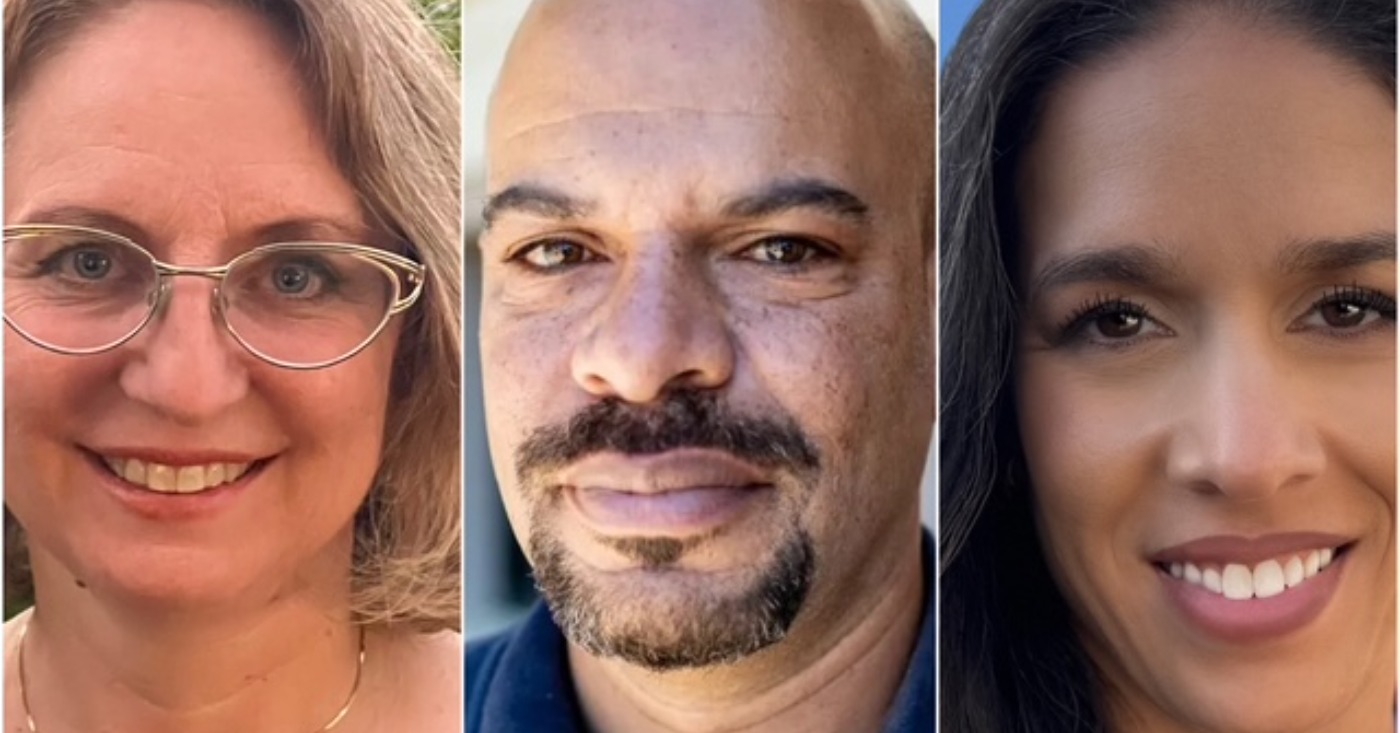
Local Democratic clubs and community organizations interviewed candidates running for Oakland school board in the November elections, including incumbents Jennifer Brouhard in District 2, Mike Hutchinson in District 4 and Valarie Bachelor in District 6.
For the first time, the interviews were jointly sponsored by the John George Democratic Club, Wellstone Democratic Renewal Club, Oakland East Bay Democratic Club, Black Women Organized for Political Action (BWOPA), Niagara Democratic Club, Block by Block Organizing Network and Oakland African American Chamber of Commerce.
The Democratic clubs interviewed only registered Democrats.
John George and Wellstone endorsed Brouhard and Bachelor. Neither endorsed Hutchinson.
In District 4, Wellstone ranked Sylvia Pfeiffer Williams first and Kathryn Camp second. John George ranked Camp first and Williams second.
Hutchinson, an Oakland native and Oakland public schools graduate, highlighted his record.
“I was in board leadership and chaired the Budget and Finance Committee,” he said. “We passed balanced budgets and paid off the state loan early, which allowed us to finally leave state receivership after 22 years.”

Hutchinson said the district faces a financial crisis requiring changes in board leadership and district policies.
“We need a different majority so we can get back on track, end school closures, and manage our resources better,” he said.
Williams taught adult education in Oakland for 18 years.
Williams said her philosophy “comes from the disability justice world, to center the needs of the most vulnerable. When we center the needs of the most vulnerable, we create environments, systems, and learning experiences in which everyone can thrive.”
Williams framed potential school closures as an equity issue.
“Are we thinking about closing schools up in the hills?” she asked. “Or are we thinking about closing schools where communities are in crisis right now?”
Camp, a Bay Area native and Oakland resident of 25 years, has a son in second grade.
“Our kids are only getting one shot at a great education, and I’m running to bring pragmatic, student-centered leadership that restores trust, builds responsibility, and delivers results for every child,” she said.
On her website, Camp pledged accountability and transparency. “As a proud OUSD parent, I know our schools need more than promises – they need fiscal responsibility, equity, and meaningful action guided by long-term strategy,” she said.
“That means protecting classrooms, supporting teachers, using resources wisely, and making decisions that reflect clear priorities and real accountability,” said Camp. “It also means bringing people together and providing the kind of steady leadership that can navigate complex systems, ask hard questions, and stay grounded in what matters most: student outcomes, thriving schools, and a district that works for the communities it serves.”
Wellstone’s Education Committee said it opposed Hutchinson because he frequently challenged the board majority and superintendent.
“He also claims that the teachers’ contract is illegal that a grand jury should be called. He is not endorsed by the teachers’ union; he has been disruptive and non-collaborative at meetings,” and he has been absent 26% of the time, the committee said.
“He claims that the teachers’ contract is illegal and that a grand jury should be called,” the committee said. “He takes individual credit for accomplishments, including paying the state loan, when in fact these changes came from the work of the entire board, or were the result of following through on policy.”
Next week: District 6 school board candidates.



Event Preview: ‘Fashion v. Fascism’ – A Runway Revolution Is Coming to the Bay Area

Port of Oakland, Army Corps Sign Historic Harbor Design Agreement

Democratic Clubs Interview Candidates for Oakland School Board

Nuna Phillips-McKee Celebrates 100 Years: ‘A Century of Faith, Family and God’s Amazing Grace!’

D.A. Ursula Jones Dickson: Terminix to Pay $3.15 Million Over Illegal Disposal of Pesticides, Customer Records

REPORT: Community Level Policy Is Impacting Homelessness and Drug Abuse in California

OPINION: AI Needs to Know Who Is the Boss
Goldi-Locs and Two (or Three) Bears in the Forest in California Hills

Election Watch 2026: 85% of Eligible Voters in California Are Registered

Don’t Let scammers Crash Your School Year

BOOK REVIEW — Curved Air: A Biography of Sickle Cell Anemia and the Quest to Cure the First Molecular Disease

California’s Legal Cannabis Market Hits $8 Billion as State Touts Progress on Fighting Drugs, Crime

Blacks and Latinos Clash Over LA’s Barrio Run; Mayor Karen Bass Calls for Dialogue Across Racial, Neighborhood Lines

Asm. Smallwood-Cuevas’s Bill Repealing ‘Racist’ CalWORKs ‘Man-in-the-House’ Rule Clears Legislature

Asm. Smallwood-Cuevas’s Bill Repealing ‘Racist’ CalWORKs ‘Man-in-the-House’ Rule Clears Legislature

Department of Homeland Security Demands California Secretary of State Shirley N. Weber Scrub Voter Rolls

“The Power to See Threats Sooner”: Gov. Newsom, Safety Officials Showcase California’s Investments in Hi-Tech Wildfire Prevention

California Sen. Padilla Joins Colleagues to Introduce Bill Imposing Term Limits on Supreme Court Justices

Less Affluent School Districts, Including Sacramento City, Face Threat of State Takeover

Car Wash Workers Cope with Lingering Impacts of ICE Raids

ESSAY: California Can Close Its Colorectal Cancer Gap

As Part of Your Back-to- School Checklist, Vaccinate

Oakland ‘Port Serves as a Powerful Engine for Good Jobs and Economic Development

Gov. Newsom Announces $109.6 Million in Funding for 278 Supportive Homes in Bakersfield, Contra Costa, Sacramento and Fresno

California Hispanic Chambers of Commerce Unveils: ‘Powering the Future’ Theme for 47th Annual Statewide Convention

Congresswoman Simon Demands Investigation into Trump’s Abuse of Emergency Powers for Coal Export Terminal in West Oakland

Four Candidates, Including Incumbent Barbara Lee, Qualify for Oakland Mayor’s Race

Oakland Post: Week of August 12 – 18, 2026

From Blueprint to Breakthrough: Tackling Affordable Housing in Oakland

Oakland Observes Black August with Block Parties, Film Showings, Workshops

The Conversation With Al McFarlane 6/23/26

Media Monday 6/22/26

LIVE! ASK ALMA! — TUES. 6.23.26 7PM EST

Car Buying Secrets: 4 Hidden Checks Before You Sign!

Is This 550 HP Charger Worth YOUR Money? AutoNetwork Review

Celebrating Juneteenth – Frederick Douglass on education and resistance

LIVE! — ASK ALMA! — TUES. 6.19.26 7PM EST

Hyundai Ioniq 5 Parking, Safety, and 360 View #shorts

2025 Ioniq 5 New Wiper & Powerful Performance! #shorts

Electric SUV Range: Is 259 Miles Enough? #shorts

EV Charging: How Fast Can You Charge an Electric Vehicle? #shorts

Biometric Cooling… Messaging Seats…Come on! 2025 Infiniti QX80 Autograph 4WD

Charged Up: Witness the Magic of a Fully Electric Car! #shorts

Range Rover Sport PHEV Included…: See What’s Inside This Luxury SUV! #shorts

Invisible Hood View: Perfect Parking with X-Ray Vision! #shorts
-

 Commentary3 weeks ago
Standoff for Justice: Our Homes Are Worth Fighting For
-

 Activism3 weeks ago
Oakland Post: Week of August 26 – September 1, 2026
-

 Business3 weeks ago
Gubernatorial Candidate Steve Hilton Blasts California New Tire Rules; Newsom Hits Back
-

 Business3 weeks ago
Frontier Airlines’ Return to Oakland Airport Brings Flights, Jobs and Opportunity
-

 Business3 weeks ago
Chef Sharon Lee Blends Culinary Excellence, Education and Empowerment
-

 Education3 weeks ago
Gov. Newsom’s Latest Appointees Include Sacramento Advocate for Formerly Incarcerated Students; State’s New Tech Chief
-

 Business3 weeks ago
Oakland Coliseum Project Opens Door for Small Businesses to Build Bigger
-

 Community3 weeks ago
Big City Mayors Ask for “Yes” Vote on Housing Bond Measure; Conservatives Say “No”
