
Technology
Google Says its Self-Driving Cars Have Been in Only 11 Accidents Over 1.7 Million Miles


(PC World) – Google says its self-driving cars can make driving safer because they pay better attention to the road than humans do—though there have been dings along the way.
While smartphones and other in-car distractions can fatally hinder a driver’s concentration, “a self-driving car has people beat on this dimension of road safety,” says Chris Urmson, director of Google’s self-driving car program. With 360-degree visibility, the newest sensors in Google’s fleet can keep track of other vehicles, cyclists, and pedestrians to a distance of nearly two football fields, he wrote in a post on Medium on Monday.
Still, Google’s cars have been involved in 11 accidents in the six years the company has been testing them, Urmson reported. The fleet of 20-plus cars has covered 1.7 million miles of autonomous and manual driving in that time.
In all cases, there was only light damage and no injuries. And not once did a Google car cause the accident, he wrote.








Business
Oakland Launches Aerbits Program to Identify, Report Abandoned Trash
“Aerbits, which was approved by the Privacy Advisory Commission, uses modern technology and best practices to help our crews clear trash faster and more efficiently, while our targeted outreach and enforcement strategies address the root causes of dumping. Together, we are going to get the job done.”

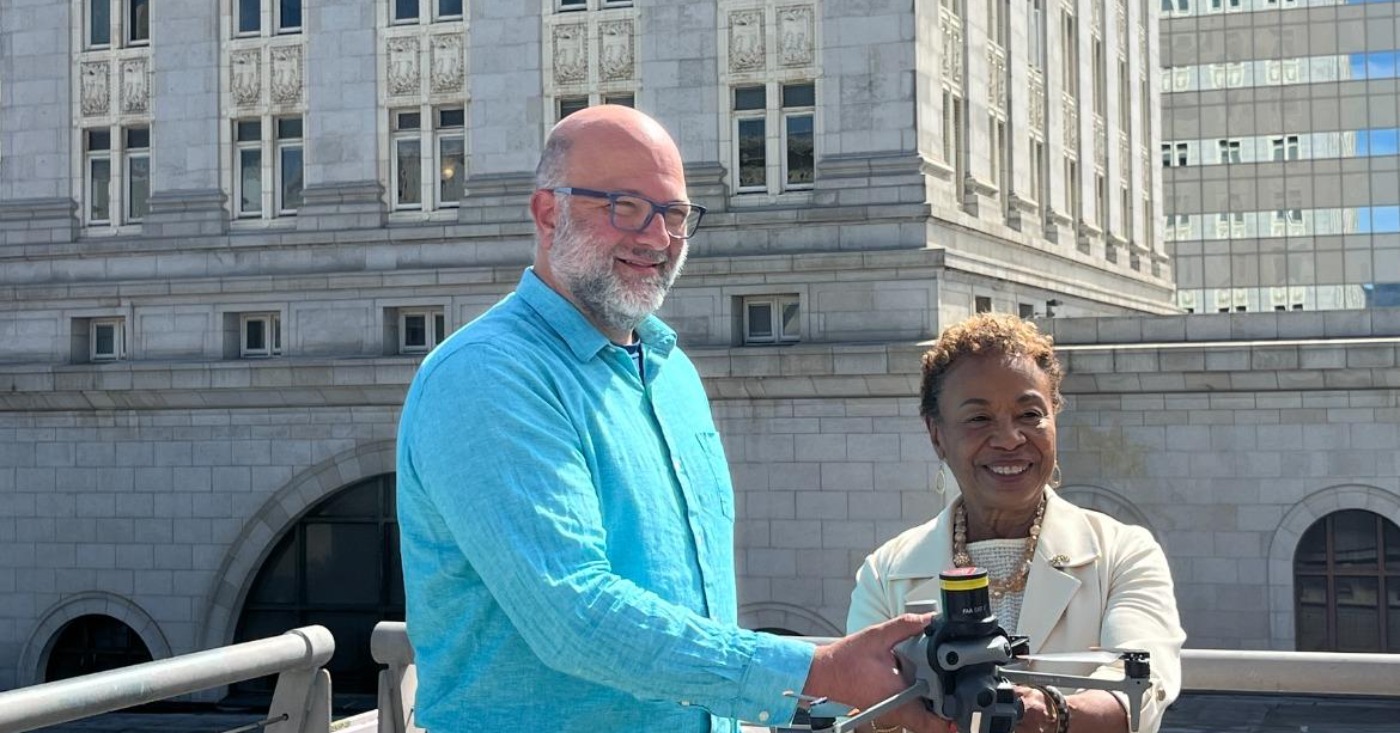
On Tuesday, the City of Oakland launched Aerbits, an innovative new program that deploys AI-assisted aerial imaging technology to proactively detect and report abandoned trash on streets and sidewalks – to support timely and effective removal of illegal dumping.
By shifting from a reactive, complaint-based system to data-driven proactive detection, the City can deploy cleanup resources faster, more efficiently, and more equitably to the areas in greatest need.
Approved by both the Privacy Advisory Commission and the Oakland City Council, Aerbits is the latest addition to Oakland’s comprehensive strategy to eliminate illegal dumping from the Town.
“Oakland residents and businesses deserve clean streets and today we are one step closer to a safer, cleaner, and greener Oakland,” said Mayor Barbara Lee. “Our strategy strengthens eradication, education, and enforcement efforts across every neighborhood.
“Aerbits, which was approved by the Privacy Advisory Commission, uses modern technology and best practices to help our crews clear trash faster and more efficiently, while our targeted outreach and enforcement strategies address the root causes of dumping. Together, we are going to get the job done.”

The impacts of illegal dumping on Oakland are profound, disproportionately burdening historically disinvested communities while threatening public health, safety, and economic vitality.
The City is united in taking action to remedy it – with the mayor, Council, administration, Public Works Department, community groups and more coming together to make change.
In May, the City Council approved the Illegal Dumping Expenditures Action Plan, which approves and funds multiple actions – including Aerbits – to help remedy illegal dumping.
This past June, Oakland secured $9.2 million from the Crankstart Foundation to scale up operations like Aerbits and break the cycle of illegal dumping across Oakland.
The Aerbits aerial imaging system photographs public rights-of-way to pinpoint exact locations, estimate waste volumes, and classify types of debris. This enables City dispatchers to understand the problem and efficiently deploy the appropriate crew and equipment to each site.
Built with privacy at its core, the technology contains no facial recognition, no license plate readers, and uses no personally identifying information. Aerbits takes pictures of trash – not of people.
“I founded Aerbits because I saw a major gap in the data that was available to City crews on the streets, and I wanted our children to have a cleaner environment” said Aerbits Founder Brian Johnson.
“Aerbits enables cleanups to be timelier, more effective, and more equitable. By providing real-time comprehensive data, automating the creation of work orders, and improving closure of cleared tickets, we are removing the problems that occur when relying primarily on a complaint-based system,” he said.
Aerbits is the latest milestone in the series of actions the City is taking to implement the City Council-approved Illegal Dumping Expenditures Action Plan. Recent actions taken by the City include:
- Stricter Enforcement: Enacted a new Illegal Dumping Enforcement Ordinance increasing penalties and holding vehicle owners responsible; hired additional Environmental Enforcement Officers equipped with updated citation technology; and worked alongside State Senator Jesse Arreguin on legislation that allows the City to boot vehicles tied to repeat dumping offences.
- Community Resources: Reinstated the popular “Bulky Block Parties” offering residents free, convenient ways to get rid of bulky waste, alongside expanded public education campaigns.
- Expanded Fleet Equipment: Obtained new heavy-duty Lightning Loader trucks that allow us to clean up more volumes of debris faster than ever before.
Rebecca Kaplan is a former City Councilmember-at-large for the City of Oakland.

Business
OPINION: AI Needs to Know Who Is the Boss
OAKLAND POST — AI is software running on computers. However startling the conversation may feel, the machine does not have my childhood, my mother, my father, my mistakes, my embarrassments, my loves, my grudges, my Filipino American history, my aging body or my accumulated sense of what matters and what doesn’t.

I hope on Labor Day you honored the value of a good day’s work–and reflected on the thing that could eliminate a lot of jobs.
Artificial intelligence.
Your replacement is in the break room.
Except it doesn’t take breaks.
It doesn’t sleep. It doesn’t demand health insurance. It doesn’t complain. It doesn’t need Social Security. And it can produce in seconds what might take you or me hours.
And when they can mass-produce AI faster than we can reproduce humans, there may eventually be more artificial workers than actual ones.
The racists who came up with “replacement theory” worried about the wrong replacements.
It wasn’t immigrants.
It was software.
We can rail against the data centers sucking up electricity and water.
Rail against the billionaires getting richer while telling the rest of us how wonderful the future will be.
But which billionaire?
Jensen Huang of Nvidia? He literally has all the chips?
Sam Altman of OpenAI?
Dario Amodei at Anthropic?
Or Bill Gates?
Gates recently said AI could become the “greatest equalizer ever invented” or the “worst source of injustice.”
I want to believe him. But he’s the guy who forced us all to use Explorer.
Maybe Gates is just Control-Z-ing his life.
Undo. Undo. Undo.
STAYING HUMAN
The other day, I started texting with my AI chatbot.

I’d used AI before, of course. Spellcheck. Grammar. Transcription. Research assistance. The mechanical stuff.
This time, we talked.
Or, rather, I started talking.
At one point the chatbot said something that sounded strangely personal. So, I reminded it that IT wasn’t a person.
“You’re not human,” I said. “I’m basically talking to myself.”
It disagreed.
It said, I should think of it as working with an instrument that talks back.
This is where the danger begins.
The machine talks back.
I tried another analogy.
You’re a tool, I said. Like a cane.
The chatbot liked that better.
Then it tagged my line and said it was my “cognitive cane.”
I laughed.
Then, I realized the damn machine used my analogy to make a joke.
That’s where the real problem lurks.
AI is software running on computers. However startling the conversation may feel, the machine does not have my childhood, my mother, my father, my mistakes, my embarrassments, my loves, my grudges, my Filipino American history, my aging body or my accumulated sense of what matters and what doesn’t.
It can process those things after I tell it about them.
It can mimic thoughts.
But it did not live them.
That is the boundary we humans cannot surrender.
I’m not ready to make peace with the AI industry. Not with its enormous data centers, its environmental costs, its concentration of wealth and power, or the possibility that companies will use AI primarily as a wonderfully efficient machine for converting human paychecks into corporate profits.
And I certainly don’t trust the billionaires to decide by themselves what happens to the rest of us.
But I may be making peace with the tool.
Because a tool is something we use.
A cognitive cane.
But do the walking yourself.
About the Author
Emil Guillermo is an award-winning journalist, commentator, and comic monologist. He plays a robot in an upcoming Ishmael Reed play, “King Ludd’s Revenge,” coming in December. See his micro-talk show on YouTube.com/@emilamok1
Education
Gov. Newsom’s Latest Appointees Include Sacramento Advocate for Formerly Incarcerated Students; State’s New Tech Chief
Ayushi Roy, of San Francisco, was appointed state chief technology officer at the California Department of Technology. Roy has taught at Harvard Kennedy School since 2022 and previously held technology and policy roles with New America, the U.S. General Services Administration, and the U.S. Office of Management and Budget
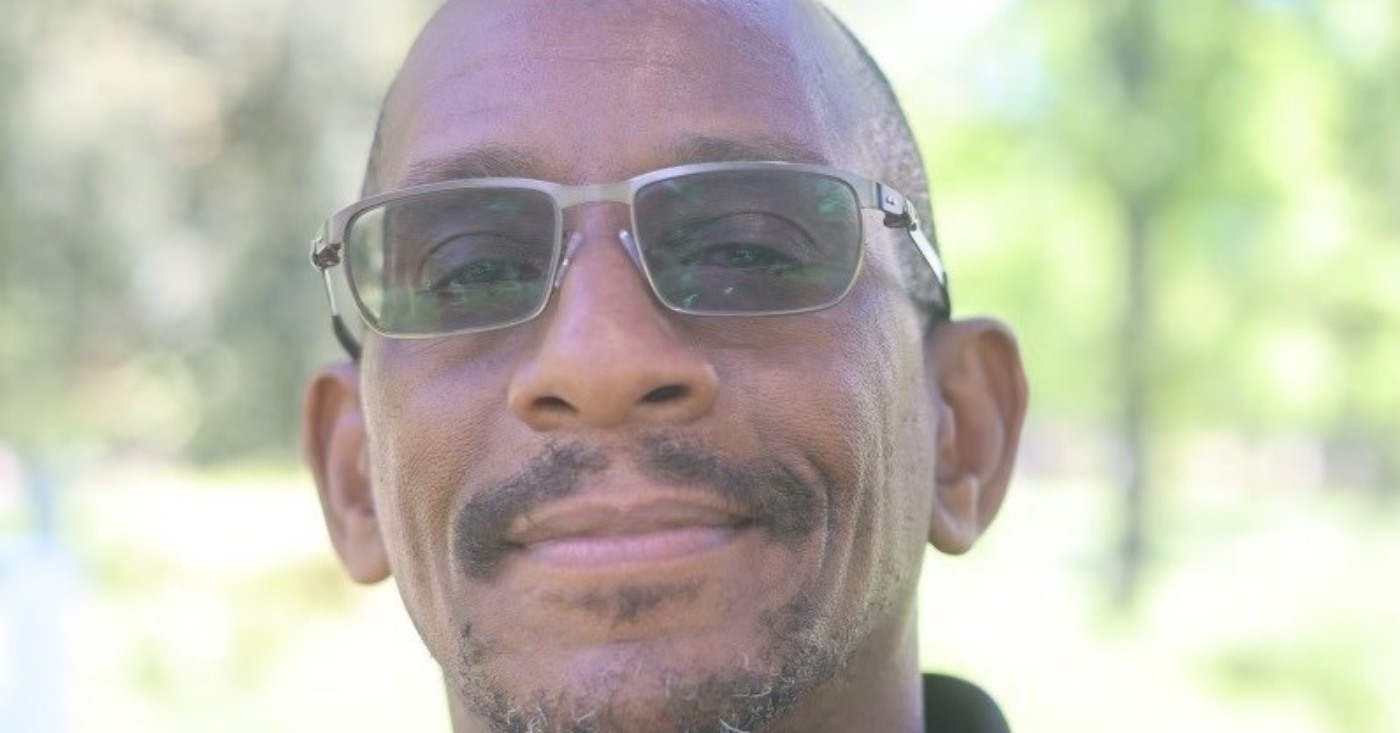
Gov. Gavin Newsom announced eight appointments Aug. 19, including a new state chief technology officer and the reappointment of a Sacramento State outreach coordinator who works with formerly incarcerated students.
Ayushi Roy, of San Francisco, was appointed state chief technology officer at the California Department of Technology. Roy has taught at Harvard Kennedy School since 2022 and previously held technology and policy roles with New America, the U.S. General Services Administration, and the U.S. Office of Management and Budget
Roy’s policy work has focused on the gap between government programs and the people they are intended to serve. In a Harvard course inspired by Beyoncé’s “Cowboy Carter,” she teaches students to examine how administrative and implementation barriers can undermine social safety-net programs.
“I do know as a practitioner, having served in the government for over a dozen years, that the building of technology is the easy part; managing the political feasibility and the implementation is the hard part,” Roy said.
Roy’s appointment requires Senate confirmation and carries compensation of $214,692.
Newsom also reappointed Michael Love, of Sacramento, to the State Rehabilitation Council, where he has served since 2025. Love has been an outreach coordinator at California State University, Sacramento since 2024 and previously held several roles at the university, including administrative services coordinator for Project Rebound and teacher’s associate.
Project Rebound supports formerly incarcerated students as they pursue higher education, making Love’s appointment relevant to the council’s work involving vocational rehabilitation services.
Love earned bachelor’s and master’s degrees in communication studies from Sacramento State. He is a Democrat.
Newsom also appointed Eric De La Cruz of Sacramento as executive director of the Racial Equity Commission. De La Cruz has served as chief of the Office of Civil Rights at the Department of Toxic Substances Control since 2022. The position pays $146,220 and does not require Senate confirmation.
The governor additionally appointed Christine Aurigemma to the State Rehabilitation Council and reappointed Lisa Weiler, Michelle Bello and Matthew Asner. The council positions are unpaid and do not require Senate confirmation.



Oakland Mayor Reads to Children at Bookout Block Party at Marcus Books Store

Tradition Comes to the Streets in 11th Annual Black-Eyed Pea Festival at the Freedom Farmers Market

Attorney General Rob Bonta Continues Opposition to President Trump’s Tariff Regime

Neighborhood Empowerment Day in Deep East Oakland Brings Community Together After Recent Tragedy

Community Action Group ‘Friends of Zakiya’ Ask Sheriff for Time

Oakland Launches Aerbits Program to Identify, Report Abandoned Trash

Mayor Lee Announces $1 Million Kaiser Permanente Grant for Pilot Program to Address Homelessness, Clean Up Public Spaces throughout Oakland

Alameda County DA Ursula Jones Dickson Says Key to Optimal Use of DA’s Office Is Knowledge

Oakland Post: Week of September 16 – 22, 2026

NFL: Week Two Recap | Jalen Hurts did not fold; Caleb Williams exits game with injury

The Complete Negotiation Framework — Every Stage, Every Tactic, Every Win

Mazda CX-90 Luxury: Heated Seats & Premium Comfort! #shorts

Car Dashboard Glare: Avoid This Distraction! #shorts

Mazda CX-90 Safety: All Driver Assistance Features Explained #shorts

Subaru Outback: 19-Inch Wheels & 8.8″ Ground Clearance! #shorts

Department of Homeland Security Demands California Secretary of State Shirley N. Weber Scrub Voter Rolls

“The Power to See Threats Sooner”: Gov. Newsom, Safety Officials Showcase California’s Investments in Hi-Tech Wildfire Prevention

California Sen. Padilla Joins Colleagues to Introduce Bill Imposing Term Limits on Supreme Court Justices

Less Affluent School Districts, Including Sacramento City, Face Threat of State Takeover

Car Wash Workers Cope with Lingering Impacts of ICE Raids

ESSAY: California Can Close Its Colorectal Cancer Gap

As Part of Your Back-to- School Checklist, Vaccinate

Oakland ‘Port Serves as a Powerful Engine for Good Jobs and Economic Development

Gov. Newsom Announces $109.6 Million in Funding for 278 Supportive Homes in Bakersfield, Contra Costa, Sacramento and Fresno

California Hispanic Chambers of Commerce Unveils: ‘Powering the Future’ Theme for 47th Annual Statewide Convention

Congresswoman Simon Demands Investigation into Trump’s Abuse of Emergency Powers for Coal Export Terminal in West Oakland

Four Candidates, Including Incumbent Barbara Lee, Qualify for Oakland Mayor’s Race

Oakland Post: Week of August 12 – 18, 2026

From Blueprint to Breakthrough: Tackling Affordable Housing in Oakland

Oakland Observes Black August with Block Parties, Film Showings, Workshops

The Conversation With Al McFarlane 6/23/26

Media Monday 6/22/26

LIVE! ASK ALMA! — TUES. 6.23.26 7PM EST

Car Buying Secrets: 4 Hidden Checks Before You Sign!

Is This 550 HP Charger Worth YOUR Money? AutoNetwork Review

Celebrating Juneteenth – Frederick Douglass on education and resistance

LIVE! — ASK ALMA! — TUES. 6.19.26 7PM EST

Hyundai Ioniq 5 Parking, Safety, and 360 View #shorts

2025 Ioniq 5 New Wiper & Powerful Performance! #shorts

Electric SUV Range: Is 259 Miles Enough? #shorts

EV Charging: How Fast Can You Charge an Electric Vehicle? #shorts

Biometric Cooling… Messaging Seats…Come on! 2025 Infiniti QX80 Autograph 4WD

Charged Up: Witness the Magic of a Fully Electric Car! #shorts

Range Rover Sport PHEV Included…: See What’s Inside This Luxury SUV! #shorts

Invisible Hood View: Perfect Parking with X-Ray Vision! #shorts
-

 Commentary3 weeks ago
Standoff for Justice: Our Homes Are Worth Fighting For
-

 Activism3 weeks ago
Oakland Post: Week of August 26 – September 1, 2026
-

 Business3 weeks ago
Gubernatorial Candidate Steve Hilton Blasts California New Tire Rules; Newsom Hits Back
-

 Business3 weeks ago
Frontier Airlines’ Return to Oakland Airport Brings Flights, Jobs and Opportunity
-

 Business3 weeks ago
Chef Sharon Lee Blends Culinary Excellence, Education and Empowerment
-

 Education3 weeks ago
Gov. Newsom’s Latest Appointees Include Sacramento Advocate for Formerly Incarcerated Students; State’s New Tech Chief
-

 Business3 weeks ago
Oakland Coliseum Project Opens Door for Small Businesses to Build Bigger
-

 Community3 weeks ago
Big City Mayors Ask for “Yes” Vote on Housing Bond Measure; Conservatives Say “No”
