
Books
Back in Session, California Lawmakers to Decide More Than 1,300 Bills
Some of those bills are related to hot-button issues under increasing national scrutiny as the country approaches national elections in November, including Assembly Bill (AB) 1825. Titled the California Freedom to Read Act, AB 1825 would prevent library review committees from banning material that deals with race or sexuality. This proposed law requires state public libraries to outline their policies for approving or rejecting books. State public libraries will also have to establish a system that allows people to voice their concerns and objections regarding the books and policies.


By Bo Tefu, California Black Media
After a monthlong summer recess in July, the California Legislature reconvened last week on Aug 5.
On their plates are more than 1,300, bills they must discuss and decide before their Aug. 31 deadline.
Some of those bills are related to hot-button issues under increasing national scrutiny as the country approaches national elections in November, including Assembly Bill (AB) 1825.
Titled the California Freedom to Read Act, AB 1825 would prevent library review committees from banning material that deals with race or sexuality. This proposed law requires state public libraries to outline their policies for approving or rejecting books. State public libraries will also have to establish a system that allows people to voice their concerns and objections regarding the books and policies.
According to the American Library Association, approximately 4,420 books were targeted last year nearly double the number of books since 2022.
“The number of titles targeted for censorship surged 65% in 2023 compared to 2022, reaching the highest levels ever documented by the American Library Association (ALA),” the organization said in a statement.
The Jewish Public Affairs Committee is one of the groups set to rally in Sacramento to support AB 1825 to expand disclosure agreements for school districts that use ethnic studies courses in the curriculum. State legislators backing AB 1825 include California State Sen. David Min (D-Irvine) and U.S. Rep. Katie Porter (D-CA-47).
State legislators are also working on two bills that would tax online platforms such as Google and Meta and use the funds generated to support local journalism. They are AB 886 authored by Assemblymember Buffy Wicks (D-Oakland) and SB 1327 authored by Sen. Steve Glazer (D-Orinda).
Other bills in the works include legislation that would ban legacy admissions at private universities such as Stanford. Authors of that bill, AB 1780, include California Legislative Black Caucus members Assemblymember Lori D. Wilson (D-Suisun City) and Assemblymember Kevin McCarty (D-Sacramento).
The Legislature has until Aug. 31 to vote on bills and pass them on to Gov. Gavin Newsom for approval.
Newsom has until Sept. 30 to sign or veto proposed bills that reach on his desk.










Books
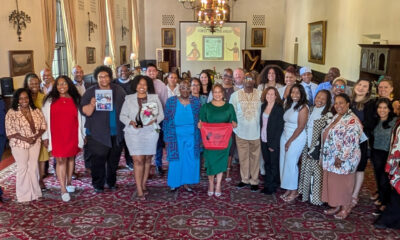
Oakland Mayor Reads to Children at Bookout Block Party at Marcus Books Store
Booths lined the street with arts and crafts, and children participated in hands-on art projects. A large display of books was on display and each child chose his/her free book to take home. Food and snacks were available, and free water was encouraged to keep all hydrated.


Floating bubbles greeted families on arrival at the Bookout Block Party held on Sat. Sept. 12 at 39th and MLK Blvd. in Oakland.
Sponsored by Marcus Books and Storyland Collective, a wonderland of activity for children stretched to Longfellow School while live music filled the air, courtesy of KWC Complex Jazz Group.
Booths lined the street with arts and crafts, and children participated in hands-on art projects. A large display of books was on display and each child chose his/her free book to take home. Food and snacks were available, and free water was encouraged to keep all hydrated.
A large area of turf was filled with huge bean bags for jumping, rolling, and sitting to listen as families crowded close to listen to Oakland Mayor Barbara Mayor Barbara Lee read a book out loud.
Of the numerous booths present were, “Claim Your Scholarship,” a program for Oakland Public School students and “VOLUNTEER NOW,” a program encouraging volunteers to help boost reading proficiency. Individuals sold their art and products. Free gifts were at many tables and a raffle was held.
The event with Marcus books culminated a summer-long program organized by Storyland Collective, a literacy arts organization bringing children’s ‘storytime,’ local authors, and art activities to Bay Area neighborhoods. Marcus Books is the oldest, independent Black-owned book store in the U.S., featuring books by and about Black people here and abroad.

Activism
Oakland Post: Week of September 16 – 22, 2026
The printed Weekly Edition of the Oakland Post: Week of September 16 – 22, 2026
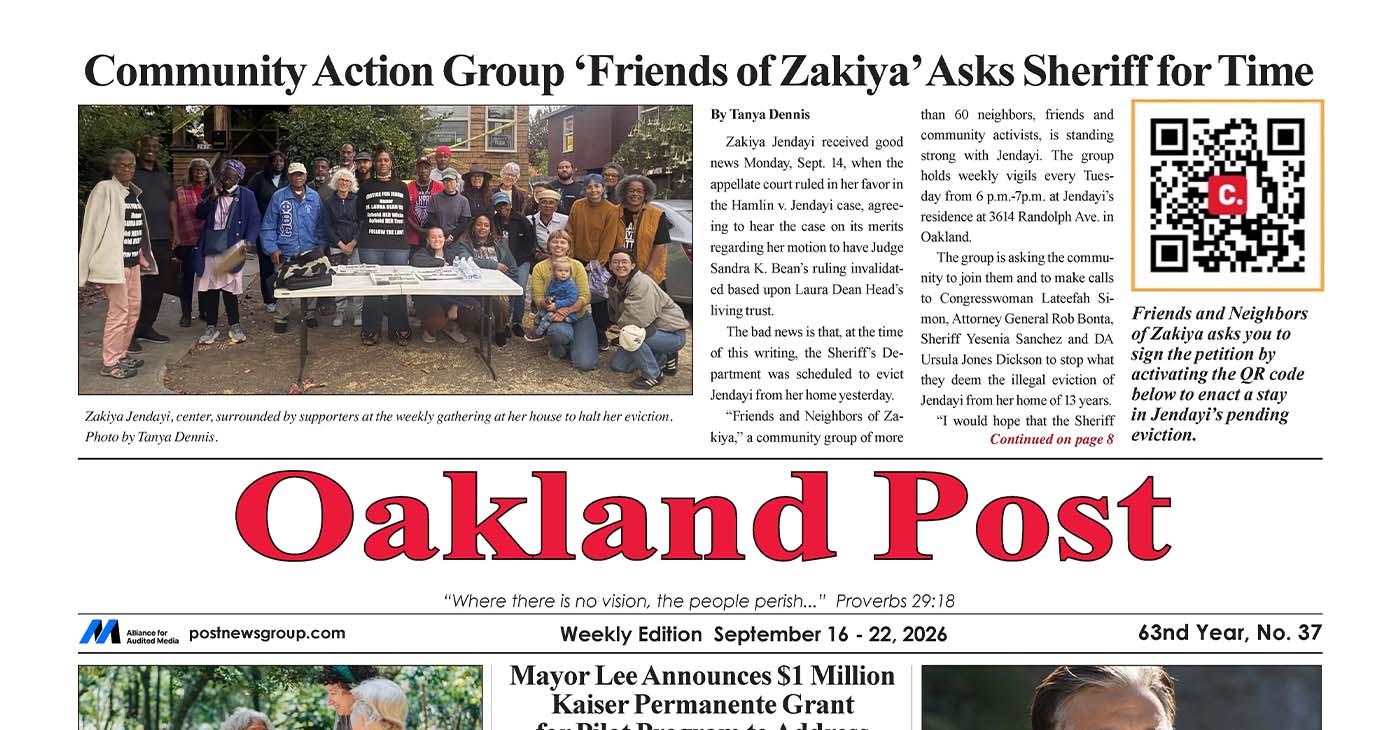
To enlarge your view of this issue, use the slider, magnifying glass icon or full page icon in the lower right corner of the browser window.
Black History
BOOK REVIEW — Curved Air: A Biography of Sickle Cell Anemia and the Quest to Cure the First Molecular Disease
OAKLAND POST — Over decades, researchers worked haphazardly. Papers were written, treatments were tried, used, or discarded. Doctors discovered that genetic testing could prevent new cases, a heartbreak for would-be parents. Researchers discovered that “a perfect storm” of confluence spread SCD: malaria, human population, and mosquitoes.
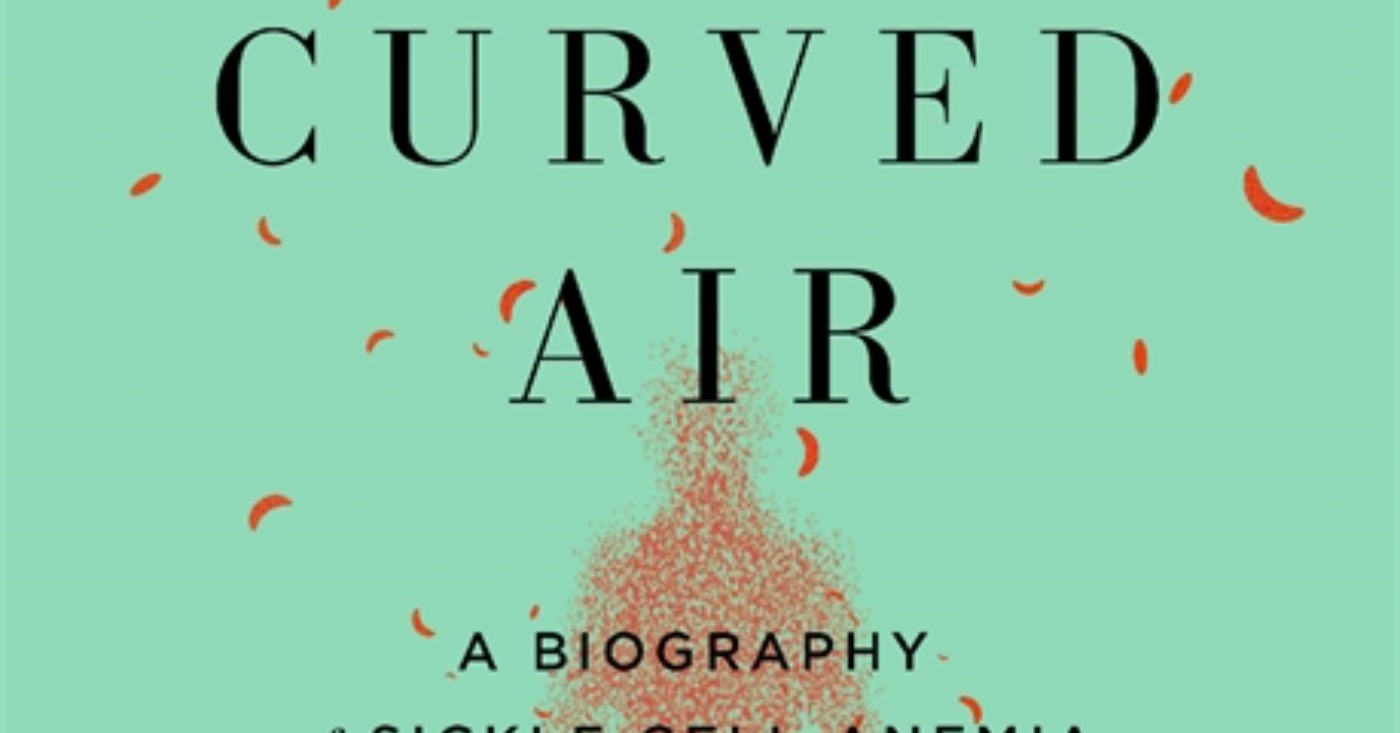
Copyright: c.2026, Publisher: The Belknap Press of Harvard University Press, SRP: $29.95, Page Count: 338 pages
Four weeks of testing, and you’re exhausted.
Two gallons of blood, maybe three, have been removed. No lie. You’ve laid on tables, slid through machines, been scanned so much you lost count and finally, your doctors have a diagnosis. As in the new book “Curved Air” by Kevin Davies, you have hope there’s a what next?
Though the disease was known in parts of Africa and likely existed here in the United States for hundreds of years, sickle cell disease (SCD) is a relative newcomer in disease research.
Says Davies, “Sickle cell was first identified more than 120 years ago” and it was considered as a “Black disease.” Because of that, discrimination followed “sickle cell warriors” and research was scant, though white people can and do get SCD.
With “agonizing” pain as a major symptom, “SCD is one of roughly seven thousand genetic diseases” currently known to science. When someone has SCD, a genetic mutation causes their red blood cells to curve and get stuck in blood vessels, rather than flowing freely as they should. This diminishes the oxygen supply “to various parts of the body… which causes inflammation and pain,” jaundice, stroke, and damaged organs. Anemia, Davies says, can leave a patient fatigued and short of breath. Anticipating pain crises causes anxiety and PTSD.
Says Davies, “More than forty million people carry” one copy of the genetic mutation that causes SCD, and “five hundred thousand affected” babies are born with the disease per year, worldwide.
Over decades, research was done haphazardly. Papers were written; treatments were tried, used, or discarded. Doctors discovered that genetic testing could prevent new cases, a heartbreak for would-be parents. Researchers discovered that “a perfect storm” of confluence spread SCD: malaria, human population, and mosquitoes.
There was always hope that someday, sickle cell disease might be cured.
Then, Clustered Regularly Interspaced Short Palindromic Repeats (CRISPR) gene-editing therapy was approved by the FDA, and a brave volunteer named Victoria Gray stepped forward…
So, you want to – need to – learn more about sickle cell disease? Is it imperative for you? Then, this is your book. But there are things you’ll want to know before you dive into “Curved Air.”
Because author Kevin Davies is the editor of The CRISPR Journal, you can expect up-to-date, cutting-edge information; but that’s a two-sided coin: the information is heavy-duty, not always easy to grasp, and it’s burdened by acronyms that can be overwhelming. Yes, that’ll inform you, but it may also send you elsewhere for further understanding, which really should’ve come from this book.
And yet, if you or someone you love has SCD, this is your book. It explains where the disease came from, why it hasn’t been completely cured yet, and what kind of hope you can hold. It’s a good start on a path to comprehension.
Also, be aware that the narrative here is sometimes padded with journalistic fluff that might annoy you if you’re eager to get to the science. Indeed, “Curved Air” will teach you. Then again, it also might test you.



Oakland Mayor Reads to Children at Bookout Block Party at Marcus Books Store

Tradition Comes to the Streets in 11th Annual Black-Eyed Pea Festival at the Freedom Farmers Market

Attorney General Rob Bonta Continues Opposition to President Trump’s Tariff Regime

Neighborhood Empowerment Day in Deep East Oakland Brings Community Together After Recent Tragedy

Community Action Group ‘Friends of Zakiya’ Ask Sheriff for Time

Oakland Launches Aerbits Program to Identify, Report Abandoned Trash

Mayor Lee Announces $1 Million Kaiser Permanente Grant for Pilot Program to Address Homelessness, Clean Up Public Spaces throughout Oakland

Alameda County DA Ursula Jones Dickson Says Key to Optimal Use of DA’s Office Is Knowledge

Oakland Post: Week of September 16 – 22, 2026

NFL: Week Two Recap | Jalen Hurts did not fold; Caleb Williams exits game with injury

The Complete Negotiation Framework — Every Stage, Every Tactic, Every Win

Mazda CX-90 Luxury: Heated Seats & Premium Comfort! #shorts

Car Dashboard Glare: Avoid This Distraction! #shorts

Mazda CX-90 Safety: All Driver Assistance Features Explained #shorts

Subaru Outback: 19-Inch Wheels & 8.8″ Ground Clearance! #shorts

Department of Homeland Security Demands California Secretary of State Shirley N. Weber Scrub Voter Rolls

“The Power to See Threats Sooner”: Gov. Newsom, Safety Officials Showcase California’s Investments in Hi-Tech Wildfire Prevention

California Sen. Padilla Joins Colleagues to Introduce Bill Imposing Term Limits on Supreme Court Justices

Less Affluent School Districts, Including Sacramento City, Face Threat of State Takeover

Car Wash Workers Cope with Lingering Impacts of ICE Raids

ESSAY: California Can Close Its Colorectal Cancer Gap

As Part of Your Back-to- School Checklist, Vaccinate

Oakland ‘Port Serves as a Powerful Engine for Good Jobs and Economic Development

Gov. Newsom Announces $109.6 Million in Funding for 278 Supportive Homes in Bakersfield, Contra Costa, Sacramento and Fresno

California Hispanic Chambers of Commerce Unveils: ‘Powering the Future’ Theme for 47th Annual Statewide Convention

Congresswoman Simon Demands Investigation into Trump’s Abuse of Emergency Powers for Coal Export Terminal in West Oakland

Four Candidates, Including Incumbent Barbara Lee, Qualify for Oakland Mayor’s Race

Oakland Post: Week of August 12 – 18, 2026

From Blueprint to Breakthrough: Tackling Affordable Housing in Oakland

Oakland Observes Black August with Block Parties, Film Showings, Workshops

The Conversation With Al McFarlane 6/23/26

Media Monday 6/22/26

LIVE! ASK ALMA! — TUES. 6.23.26 7PM EST

Car Buying Secrets: 4 Hidden Checks Before You Sign!

Is This 550 HP Charger Worth YOUR Money? AutoNetwork Review

Celebrating Juneteenth – Frederick Douglass on education and resistance

LIVE! — ASK ALMA! — TUES. 6.19.26 7PM EST

Hyundai Ioniq 5 Parking, Safety, and 360 View #shorts

2025 Ioniq 5 New Wiper & Powerful Performance! #shorts

Electric SUV Range: Is 259 Miles Enough? #shorts

EV Charging: How Fast Can You Charge an Electric Vehicle? #shorts

Biometric Cooling… Messaging Seats…Come on! 2025 Infiniti QX80 Autograph 4WD

Charged Up: Witness the Magic of a Fully Electric Car! #shorts

Range Rover Sport PHEV Included…: See What’s Inside This Luxury SUV! #shorts

Invisible Hood View: Perfect Parking with X-Ray Vision! #shorts
-

 Commentary3 weeks ago
Standoff for Justice: Our Homes Are Worth Fighting For
-

 Activism3 weeks ago
Oakland Post: Week of August 26 – September 1, 2026
-

 Business3 weeks ago
Gubernatorial Candidate Steve Hilton Blasts California New Tire Rules; Newsom Hits Back
-

 Business3 weeks ago
Frontier Airlines’ Return to Oakland Airport Brings Flights, Jobs and Opportunity
-

 Business3 weeks ago
Chef Sharon Lee Blends Culinary Excellence, Education and Empowerment
-

 Education3 weeks ago
Gov. Newsom’s Latest Appointees Include Sacramento Advocate for Formerly Incarcerated Students; State’s New Tech Chief
-

 Business3 weeks ago
Oakland Coliseum Project Opens Door for Small Businesses to Build Bigger
-

 Community3 weeks ago
Big City Mayors Ask for “Yes” Vote on Housing Bond Measure; Conservatives Say “No”
