
#NNPA BlackPress
OP-ED: Black Americans Are Winning with President Trump
NNPA NEWSWIRE — President Trump is taking action to ensure that Black Americans have unparalleled opportunity in the American economy. A major piece of the Tax Cuts and Jobs Act of 2017 were Opportunity Zones. The administration identified over 8,700 economically distressed communities and packaged tax incentives for anyone willing to invest time, resources, and capital to these underserved corners of America.

By The Honorable Dr. Benjamin Carson
Actions speak louder than words, and the Trump Administration has bellowed its vision for Black America. For years, politicians have demonstrated reform and the advancement of our communities. The results are far from what you hear in a stump speech. President Trump has fundamentally altered the ways of Washington for the better, and Black Americans are reaping some of the biggest rewards. As we approach the 2020 Election, we should embrace conservative policies that are working and reject big government politicians whose policies have failed us. The era of false promises is over. Let’s vote using evidence versus rhetoric.
President Trump is the only politician in recent memory who has a record of making sure Black Americans are a priority. His pro-growth policies have brought everyone to the table. President Trump believes in equal rights, not extra rights. Rather than pander or treat any American as a special voting bloc, his view is that Americans are patriots and deserve a country that works on their behalf. That’s why I endorsed then-candidate Donald Trump in March 2016, pledged to help him get elected and have served as the Secretary of Housing and Urban Development. I knew he would make Washington work for all Americans – including the Black community.
Chicago is America’s third most populous city and is where many Obama administration alumni began their careers. Chicago’s population is over one-third Black and Democratic party policies have done an incredible disservice for generations. The Cloverhill Bakery in Northwest Chicago was found guilty of employing over 800 illegal immigrants using false identification. After the investigation and action from ICE, the new employees were 90 percent Black and received a higher wage than the prior illegal immigrants. A harsh reality is that illegal immigration siphons wages, jobs, and housing from Black Americans. Yet, no pundit or political spinster will ever say that out loud. Instead, they insist that putting America First is somehow against our patriotic interests.
Over nine million black Americans live in poverty, yet Democrats continually put illegal immigrants first. Immigration is good when done legally and can be very advantageous when done in a thoughtful and compassionate way.
The Trump Administration is committed to reversing this trend by aggressively tackling some of the root issues causing generational poverty – access to education and reviving distressed communities. President Trump has given more money to Historically Black Colleges and Universities than any president ever elected and has waived an additional $322 million in HBCU federal debt. Moreover, $100 million for HBCU scholarships and research funding for land-grant institutions were allocated in the recent Farm Bill. This is a stark contrast to the previous administration, which drove a wedge between the government and HBCUs.
However, rather than throwing more money at the same problem and expecting different results, President Trump is taking action to ensure that Black Americans have unparalleled opportunity in the American economy. A major piece of the Tax Cuts and Jobs Act of 2017 were Opportunity Zones. The administration identified over 8,700 economically distressed communities and packaged tax incentives for anyone willing to invest time, resources, and capital to these underserved corners of America.
Opportunity Zones have long been deemed as a bipartisan policy goal that could help tackle the desperate need for capital in otherwise ignored parts of our country. The Trump Administration is expecting $100 billion in these communities and private sector money is beginning to pour in. Opportunity Zones can reawaken Detroit, Cleveland, Philadelphia, and cities long forgotten, but represented, by complacent and ineffective politicians. Rather than rely on the government for an answer, President Trump knows that American ingenuity, work ethic, and entrepreneurial spirit are how we improve our situations.
While the Trump Administration sets its eyes towards the future, we are also set on improving the lives of Black Americans today. Funding for public housing repairs is at the highest level in a decade since the one-time Recovery Act, thanks to President Trump. Last year, the city of Baltimore received billions of dollars in federal aid from this Administration, yet the troubled city remains in stagnant disrepair. The current funding bill in the senate, if signed by the President would provide a record level of homeless program funding from California to New York.
While Democrats – including a young Delaware Senator named Joe Biden – were the architects of the notorious “3 strikes rule” that the NAACP deems directly responsible for the disproportionate imprisonment of millions of minority men, President Trump has just passed the most comprehensive prison reform bill in over three decades – resulting in the immediate release of over 1200 non-violent minority offenders.
Under the Trump Administration, the African American poverty rate is at a record low and historic, bipartisan criminal justice reform was signed – giving non-violent offenders a second chance at life and the American Dream. We are not just getting people out of prison, we are concentrating on providing them with training, education and skills that will provide a great alternative to a life of crime. The results speak for themselves. President Trump has done more for Black Americans in his first two and a half years in office than Democrats have in decades.
That’s why the launch of Black Voices for Trump is so critical. This coalition will focus on highlighting those accomplishments and sharing stories of success. The status quo has been changed forever under President Trump, and Black America is better because of his leadership.







#NNPA BlackPress
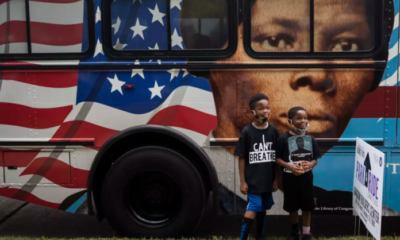
Jovita Moore Mural Still Has Not Been Repainted in Grant Park
ATLANTA VOICE — A mural depicting late journalist Jovita Moore, painted on the exterior wall of a building now occupied by Bellwood Coffee in Grant Park, was painted over in April. Moore passed away in 2021 after decades of working in Atlanta television news. Bellwood Coffee owners stated in May they were unaware of Moore’s identity or significance to the community before painting over the mural.
The post Jovita Moore Mural Still Has Not Been Repainted in Grant Park appeared first on BlackPressUSA.

At the corner of Boulevard, SE. and Rosalia St., SE., directly across the street from an abandoned home and a Methodist Church, is Bellwood Coffee. One of hundreds of coffee shops in Atlanta, this place of business would not be worth a solitary discussion if not for the way its exterior walls are currently painted. There was once a mural depicting the late Jovita Moore, a beloved journalist who worked in Atlanta for decades. Moore, who passed away in 2021, mentored many of the people you see on television newscasts today. Though her legacy will never be forgotten, it was the mural of her image that was erased.
In April, members of the Grant Park community voiced their disgust at the mural, which graced a side wall of the building now occupied by Bellwood Coffee’s Grant Park location, before it was painted over. In its place are the words “Bellwood Coffee; Cocktails, Biscuits, Dry Goods, Air Conditioning. *Heat Too”. In May, the business owners responded to the community pushback on social media by acknowledging they did not know who Moore was before painting over her image. And later admitted that they did not attempt to find out what she meant to the community.
On May 21, the Bellwood Coffee Instagram account had a post about being “in close contact with Jovita’s family and are actively working on next steps in this process.” Two months later, the mural has not been replaced, repainted, or repositioned on the property. Nothing has been done. Black history is often erased, most recently by the current Presidential administration, but oftentimes on a smaller, quieter scale. The mural was originally painted by muralist Tommy Bronx, who had been in contact with the business owners about repainting it. As of July 6, Tommy Bronx had responded to a direct message via his Instagram account from The Atlanta Voice about any updates on his plans to repaint the mural.
“We’re currently working on it. You should see some movement in the weeks to come,” he wrote in a response.
On Monday, July 6, the business had several patrons inside and was running smoothly with three employees manning the counter. The Atlanta Voice dropped by Bellwood Coffee to get a look at the exterior wall where the mural once stood as a memorial to a journalist and mother who lost her life to brain cancer at the young age of 54. Moore’s image added some color to the block. The grey wall in its place does not.
A direct message was sent to the Bellwood Coffee Instagram account, and there hasn’t been a response as of 7 p.m. on Monday.
The post Jovita Moore Mural Still Has Not Been Repainted in Grant Park appeared first on The Atlanta Voice.
Based on reporting by Atlanta Voice.
The post Jovita Moore Mural Still Has Not Been Repainted in Grant Park appeared first on BlackPressUSA.
#NNPA BlackPress
‘Proud to Hang Her from a Tree’: Man Arrested for Threatening Black Senator
ATLANTA DAILY WORLD — A New York man faces felony hate crime charges for allegedly posting a threat against New York State Senator Lea Webb. James A. Crosby, 49, of Binghamton, was arrested by New York State Police after investigators determined he posted a threatening comment on a social media news post about a Juneteenth celebration.
The post ‘Proud to Hang Her from a Tree’: Man Arrested for Threatening Black Senator appeared first on BlackPressUSA.

A New York man is facing felony hate crime charges after allegedly posting that he’d be “proud to hang” New York State Senator Lea Webb from a tree in response to a news story about a Juneteenth celebration.
James A. Crosby, 49, of Binghamton, was arrested June 23 by New York State Police after investigators determined he posted a threatening comment on a WBNG 12 News Facebook post. “I’d be proud to hang her from a tree,” Crosby wrote, according to WBNG.
Crosby was charged with making a terroristic threat as a hate crime, a class C felony, per the New York State Police. He is currently being held at Broome County Jail.
During the subsequent investigation, state police found Crosby was in illegal possession of firearms despite being prohibited from owning them due to a prior felony conviction. Investigators recovered a rifle, a large-capacity ammunition feeding device, and a firearm suppressor — all prohibited under New York state law, per the NYSP.
Crosby was charged with four additional counts of criminal possession of a weapon in the third degree, all class D felonies.

Webb, who represents New York’s 52nd Senate District, had been a featured speaker at a Juneteenth flag-raising ceremony at Binghamton City Hall, where the celebration included prayers and the singing of the Black national anthem.
Police said Crosby’s comment was posted in response to a WBNG news story covering the event.
The day before his arrest, Crosby posted a Facebook apology claiming the comment “was not intended to be racial in any way” and was made in reference to what he described as a “criminal,” citing criticism of Webb over her use of nonprofit legal aid in a foreclosure case — a matter state watchdogs said created an appearance of a conflict of interest, per the Ithaca Voice. He was arrested the following day.
Webb issued a public statement June 25 condemning the threat.
“It was extremely disappointing and hurtful to see the now-deleted threat and attacks on my life in response to a story about Juneteenth, a national holiday that recognizes the ending of slavery in America,” she said. “Feedback and thoughts on policy are one thing, but to make a public call for lethal violence is absolutely unacceptable and dangerous. We must recognize our shared humanity and reject violence in all forms.”
She thanked Gov. Kathy Hochul, Senate Majority Leader Andrea Stewart-Cousins, and law enforcement for their “swift response.”
Following Crosby’s comments, social media users called for a boycott of his contracting business, Crosby Home Improvements.
The Binghamton City Democratic Committee also called for an investigation into the incident before his arrest.
The Black Information Network is your source for Black News! Get the latest news 24/7 on The Black Information Network. Listen now on the iHeartRadio app or click HEREto tune in live.
The post ‘Proud to hang her from a tree’: Man arrested for threatening Black Senator appeared first on Atlanta Daily World.
Based on reporting by Atlanta Daily World.
The post ‘Proud to Hang Her from a Tree’: Man Arrested for Threatening Black Senator appeared first on BlackPressUSA.
#NNPA BlackPress
CARICOM: Strengthen Integration for Future Generations
NEW YORK CARIB NEWS — Outgoing CARICOM Chairman Terrance Drew called on regional leaders to build a stronger and more effective Caribbean Community that benefits future generations. Speaking at the 51st Regular Meeting, Drew urged modernization of governance structures and improved implementation of Community decisions to make CARICOM safer and more prosperous.
The post CARICOM: Strengthen Integration for Future Generations appeared first on BlackPressUSA.

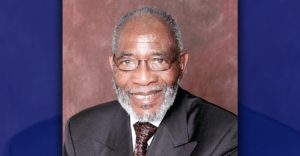
Speaking Sunday at the opening of the 51st Regular Meeting of the Conference of Heads of Government in Saint Lucia, Dr. Terrance Drew said the region must modernize its governance structures, improve the implementation of Community decisions, and ensure CARICOM becomes safer, more prosperous, and more relevant to the lives of its citizens.
The meeting, being held under the theme “CARICOM: From Resilience to Renewal in a Changing World,” coincides with the Community’s 53rd anniversary. During the ceremony, Dr. Drew formally handed over the rotating CARICOM chairmanship to Saint Lucia’s Prime Minister, Philip J. Pierre.
Reflecting on his six-month tenure as chairman, Drew praised fellow regional leaders for maintaining their commitment to democracy, good governance, unity, and the rule of law despite mounting global economic and geopolitical challenges.
“Throughout these challenges, CARICOM chose engagement over isolation. Together, we reaffirmed our commitment to a fair and rules-based international trading system and ensured that the interests of small developing states continued to be heard.”
He highlighted progress made in strengthening the CARICOM Single Market and Economy, including deeper trade cooperation, expanded labour mobility, and efforts to lay the foundation for long-term economic growth. Drew also noted the Community’s growing partnerships beyond the Caribbean, particularly with the African Union, while stressing that every international partnership should advance the interests of all parties involved.
The outgoing chairman also expressed appreciation to Dr. Carla Barnett and the CARICOM Secretariat for their professionalism and unwavering support during his tenure.
“Whenever I called, you answered. Whenever support was required, you and your team responded with diligence, competence, and excellence.”
Dr. Drew urged the Secretariat to continue preserving its impartiality while faithfully implementing decisions made by Heads of Government, saying that balance has helped strengthen the regional integration movement.
The conference continues in Saint Lucia with regional leaders expected to deliberate on key issues including regional security, climate resilience, trade, economic integration, food security, Haiti, reparations, and strengthening the CSME.
Based on reporting by New York Carib News.
The post CARICOM: Strengthen Integration for Future Generations appeared first on BlackPressUSA.

WORK FROM HOME
Home-based business with potential monthly income of $10K+ per month. A proven training system and website provided to maximize business effectiveness. Perfect job to earn side and primary income. Contact Lynne for more details: Lynne4npusa@gmail.com 800-334-0540


Rep. Garamendi, House Democrats Demand Trump Administration Abandon Illegal Plans to Dismantle Civil Rights, Special Ed Offices

Council Gives Approval for $125 Million Oakland Coliseum Sale to AASEG

Job Readiness, Housing Resources Among Services Provided at Coliseum Job Fair

Free Back-to-School Summer Family and Community Event Is Coming to Richmond

New State Law Limits Student’s Cell Phone Use During School Hours

Why Trade Show Success Depends On Standing Out (Not Just Showing Up)

Gov. Gavin Newsom Signs Law Streamlining Affordable Housing Rules

Smart Home Technology is Becoming a Tool for Preventing Property Damage

Volunteer Work for Black Americans Pays Off By Helping Others and Building Portfolios

Discover What IT Technicians Do: A Complete Guide

Staying Sober: Your Guide to a Joyful Life

Top Strategies to Resolve Operational Issues Effectively

The Part of Buying a Home That No Real Estate Show Ever Prepares You For

When to Say Goodbye: The Unmistakable Signs Your Old Car Has Had Its Last Good Day

COMMENTARY: Property Is Power! Why the Dream Booker T. Washington Preached in 1905 Still Matters Today

Saving Black Mothers Starts Outside the Hospital

Oakland Celebrates $125 Million Coliseum Sale
Gov. Gavin Newsom Signs Law Streamlining Affordable Housing Rules


IN MEMORIAM: Oakland Dance Legend Reginald Ray-Savage, 67

Oakland Post: Week of June 17 – 23, 2026

Agricultural Engineer Effie Gant Plans Bay Area Farmers Market Initiative
The Part of Buying a Home That No Real Estate Show Ever Prepares You For

UC Berkeley Named Top Public University in the U.S. and No. 7 in the World by ‘U.S. News’

NCBW-OBAC Champions Black Women Entrepreneurs at Business en Blaque Expo

Ferry Fares to Increase July 1 as Ridership Hits Record Highs

NPRC Heads to Washington to Elevate Adult Guardianship Reform at National Whistleblower Summit

Oakland Post: Week of July 1 – 7, 2026

Oakland Post: Week of June 10 – 16, 2026

Sale of Coliseum to African American Developers Moves Toward Completion

The Conversation With Al McFarlane 6/23/26

Media Monday 6/22/26

LIVE! ASK ALMA! — TUES. 6.23.26 7PM EST

Car Buying Secrets: 4 Hidden Checks Before You Sign!

Is This 550 HP Charger Worth YOUR Money? AutoNetwork Review

Celebrating Juneteenth – Frederick Douglass on education and resistance

LIVE! — ASK ALMA! — TUES. 6.19.26 7PM EST

Hyundai Ioniq 5 Parking, Safety, and 360 View #shorts

2025 Ioniq 5 New Wiper & Powerful Performance! #shorts

Electric SUV Range: Is 259 Miles Enough? #shorts

EV Charging: How Fast Can You Charge an Electric Vehicle? #shorts

Biometric Cooling… Messaging Seats…Come on! 2025 Infiniti QX80 Autograph 4WD

Charged Up: Witness the Magic of a Fully Electric Car! #shorts

Range Rover Sport PHEV Included…: See What’s Inside This Luxury SUV! #shorts

Invisible Hood View: Perfect Parking with X-Ray Vision! #shorts
-
 Black History4 days ago
Saving Black Mothers Starts Outside the Hospital
-
 Black History7 days ago
Oakland Celebrates $125 Million Coliseum Sale
-
 Business2 days ago
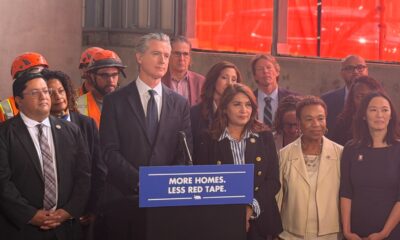
Gov. Gavin Newsom Signs Law Streamlining Affordable Housing Rules
-
 Activism1 week ago
Agricultural Engineer Effie Gant Plans Bay Area Farmers Market Initiative
-
 Business3 days ago
The Part of Buying a Home That No Real Estate Show Ever Prepares You For
-
 Community1 week ago
NPRC Heads to Washington to Elevate Adult Guardianship Reform at National Whistleblower Summit
-
 Activism3 weeks ago
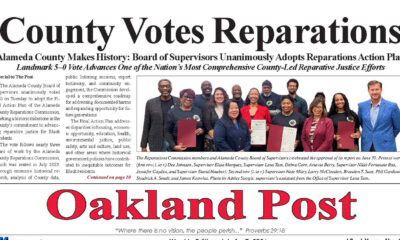
Oakland Post: Week of July 1 – 7, 2026
-
 Black History4 days ago
COMMENTARY: Property Is Power! Why the Dream Booker T. Washington Preached in 1905 Still Matters Today
