
#NNPA BlackPress
OP-ED: How heavy a burden does a person of color alleging discrimination have to carry to have his day in court?
NNPA NEWSWIRE — The United States Supreme Court’s decision will determine whether a plaintiff who alleges race discrimination pursuant to 42 USC 1981 may have his or her day in court if he or she can show that racial discrimination was a factor, even among others, in a defendant’s refusal to do business.

By Falen O. Cox, Esq., Founding Partner, Cox, Rodman, and Middleton
The case, Comcast Corp. v. National Association of African American Owned Media and Entertainment Studios Networks, is, on the surface, a case about procedural issues. Beneath the surface it is about the ease or complexity a plaintiff may face when raising claims of racial discrimination under 42 US 1981.
Even though it has reached the United States Supreme Court, procedurally, the lawsuit is in the beginning stages, and the Supreme Court will be deciding whether the plaintiffs (Byron Allen company) may move forward in the legal process to have its “day in court” before a jury, or whether its suit should be dismissed before it reaches a jury or the investigatory process that we lawyers call “discovery.”
During the discovery process each side has an opportunity to ask questions of the other and compel answers, to request documents, and to question potential witnesses. This process is “investigative” and allows the plaintiff to gather the information necessary to present his or her case to a jury, and the defendant the ability to form any defenses he or she may have.
For example, if a plaintiff sues a defendant for rear-ending her at a red light, during the discovery process the plaintiff can ask the defendant whether he was texting at the time of the accident — if he was, the plaintiff can use that to show that the defendant was negligent.

On the other hand, if the plaintiff claims that she has back pain as a result of the collision, the defendant can ask if she has ever had back problems before. If she had been seeing a doctor about back pain prior to the collision, the defendant may be able to show that her back pain was not a result of the collision. However, if the court dismisses a case before the discovery process begins, the case is over, and these “discoveries” are never made.
In short, whether a case makes it to the discovery process, depends on whether the case is allowed to move forward after the plaintiff files a complaint. As common practice, defendants usually file a motion for summary judgement, asking the court to dismiss the plaintiff’s complaint prior to discovery and prior to any decision on the merits of the plaintiff’s claim along with its answer to the plaintiff’s complaint. It is a procedural tactic to prevent the lawsuit from moving further than the written complaint.
There are valid reasons for motions for summary judgement (dismissal). It is designed to make sure that frivolous claims do not overwhelm the court system and to ensure that the court’s limited resources and time are spent on legitimate claims. Additionally, defending a lawsuit can be time consuming and extremely costly for a defendant. A defendant should not have to spend thousands (or in this case probably hundreds of thousands) on legal fees and lost productivity to defend a frivolous claim. The motion for summary judgement acts as a gatekeeper to the legal system.
In this case, the National Association of African-American Owned Media and Entertainment Studios Networks, Inc. (the “Plaintiffs”) filed suit against Comcast, Time-Warner Cable, the former FCC Commissioner, the NAACP, the National Urban League, the National Action Network, and Reverend Al Sharpton alleging that Comcast and the others conspired together to deny it a contract to carry its network/television shows because it is a 100% black-owned company. (Editor’s note: NAN, NUL, and NAACP each are no longer party to the lawsuit).
However, the Court dismissed the suits against everyone except Comcast and Time-Warner for lack of personal jurisdiction, and the plaintiffs abandoned its argument of conspiracy.
At issue now, and before the United States Supreme Court, is whether Comcast, in refusing to contract with the Plaintiff, is in violation of 42 USC 1981. More specifically, whether a plaintiff who alleges discrimination in violation of 42 USC 1981 must allege that racial discrimination was the but for cause of the refusal to contract: “But for the plaintiff’s race, Comcast would have contracted with the plaintiff,” or whether the plaintiff may allege that race was a motivating factor in Comcast’s refusal to contract.
Even though there may have been other reasons that Comcast did not contract with Plaintiffs, the fact that it is a black company was a motivating factor. For context, 42 USC 1981 was enacted in 1886 during Reconstruction (after slavery) and reads:
“All persons within the jurisdiction of the United States shall have the same right in every State and Territory to make and enforce contracts, to sue, be parties, give evidence, and to the full and equal benefit of all laws and proceedings for the security of persons and property as is enjoyed by white citizens, and shall be subject to like punishment, pains, penalties, taxes, licenses, and exactions of every kind, and to no other.”
The District Court, which acts as a trial court in the federal court system, dismissed the Plaintiff’s complaint three times for failure to state a claim for which relief can be granted. It held that the Plaintiff’s complaint failed to show that, but for racial discrimination, Comcast would have contracted with Plaintiff, and that Plaintiff failed to allege that other companies that Comcast did in fact contract with were similarly situated to Plaintiff.
However, Plaintiff appealed the District Court’s decision to the 9th Circuit Court of Appeals which reversed the District Court’s rulings and held that Plaintiff could move forward with its lawsuit. It denied Comcast’s motion for rehearing. Comcast filed a petition for certiorari in the United States Supreme Court, which was granted.
Comcast argues that Plaintiff’s lawsuit should be dismissed because it alleges that Plaintiff’s complaint was insufficient and that it did not allege “but for” causation or refute what Comcast alleges are legitimate business considerations for its refusal to contract with Plaintiff.
Comcast argues that it did not extend a contract to Plaintiff’s as a result of legitimate business practices, e.g.: that it did not have the bandwidth necessary, that it had a preference for sports and news programming, and that there was a lack of demand for Plaintiff’s programming. As a result, Comcast argues that Plaintiffs have failed to show that Comcast would have contracted with them but for Plaintiff’s race.
Comcast points out that it had, within the same time period, considered contracting with ESN; that it had in fact contracted with “Aspire” led by Earvin “Magic” Johnson and Revolt TV led by Sean “Diddy” Combs, which it claims has majority or substantial African-American ownership. Additionally, Comcast alleges that it has carried two 100% black-owned networks, African Channel and Black Family Channel.
Lastly, Comcast argues that Plaintiff’s case should be dismissed because Plaintiff has failed to show that it was similarly situated to the white-owned channels that it did contract with. The reasoning there is that apples must be compared to apples. For instance, if there is a white-owned channel with tremendous interest that is within Comcast’s preferred programming, then the fact that Comcast contracted with that network as opposed to Plaintiff’s — which Comcast alleges does not have interest and is not its preferred programing —is not a result of race discrimination, but instead is Comcast simply choosing the best content for its company.
On the other hand, Plaintiffs allege that it has attempted to contract with Comcast for approximately 8 years and has repeatedly been passed over for white-owned companies despite Comcast’s assurances that its channels were “good enough” and that it was on a “short list.” Additionally, Plaintiff offered its Justice.TV network to Comcast for free and without licensing fees. Comcast declined. As it relates to the lack of bandwidth that Comcast claims is a reason for its refusal to contract, Plaintiff notes that Comcast carries every channel (more than 500) that its competitors carry, except for Plaintiff’s.
Plaintiff’s channels are currently carried on Verizon, FIOS, AT&T, U-Verse, Direct TV, Sudden Link, RCN, Century Link, and many others. Additionally, despite its refusal to contract with Plaintiff as a result of its alleged bandwidth scarcity, Comcast has launched more than 80 lesser known white-owned channels. Plaintiff alleges that during the 8 years that it attempted to contract with Comcast, Comcast directed it to gain field support within the Comcast corporation, once that support had been gained, Plaintiffs were told that field support was no longer a factor.
Next, Plaintiffs were told that it needed Division Support only to be told by the Divisions that it deferred to corporate.
Plaintiffs allege that it spent hundreds of thousands of dollars in marketing and travel to gather support that was deemed necessary, but once achieved, was no longer sufficient.
Most explicit, is Plaintiff’s claim that a Comcast Executive stated, “We’re not trying to create anymore Bob Johnsons.” Bob Johnson is the founder and former owner of B.E.T. which was sold to Viacom for a reported $3 billion.
Plaintiffs allege that Comcast’s refusal to contract, in addition to being motivated by race alone, is also motivated by its desire not to have its networks (and the white-owned networks that it carries) be required to compete with Plaintiff’s networks, which are black-owned.
The United States Supreme Court’s decision will determine whether a plaintiff who alleges race discrimination pursuant to 42 USC 1981 may have his or her day in court if he or she can show that racial discrimination was a factor, even among others, in a defendant’s refusal to do business. If so, the plaintiff will be able to move forward through the legal process — and most importantly, through the discovery process — to investigate his or her claim and obtain the evidence necessary (if it exists) to put the question before a jury.
On the other hand, if the Court rules instead that a plaintiff must allege that, but for racial discrimination, the defendant would have contracted with him or her, a plaintiff looking to have his or her day in court will need much stronger evidence, and will be required to disprove any other reason given by the defendant for its refusal to contract without the benefit of discovery.
For example, if a defendant denies discrimination and instead says that it refused to contract because of limited resources without the benefit of discovery, the plaintiff may never learn that the defendant doubled its spending with white-owned companies within that same time period. To the contrary, this is information that the plaintiff might learn through the discovery process if his or her case is allowed to proceed.
This case, like so many other recent cases, will test the Supreme Court’s interpretation of the strength of civil rights law.
Falen O. Cox is the founding partner and director of operations at the Savannah, Ga.-based law firm of Cox, Rodman and Middleton.













#NNPA BlackPress
Smooth Ride! Car Suspension & Comfort Tested #shorts
Smooth suspension meets surprisingly spacious legroom. Experience true comfort on any road!

 Watch the full video: https://youtu.be/l9Z571za5Gc
#NNPA BlackPress
61 years since Selma, Houston leaders say the bridge remains to be crossed
61 years after Selma, Houston leaders say the fight for equality continues. The issues that sparked the marches still impact Black Americans today.
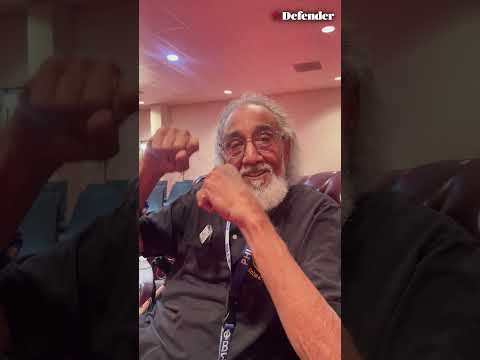
It has been 61 years since the Selma marches. But political leaders in Houston say that the issues protesters were marching for still plague the lives of Black Americans.
Visit Our Website
Read more stories by our team
https://defendernetwork.com/category/news/opinion/
Sign-up for the Top 5 newsletter
Donate/ Support Our Work
#NNPA BlackPress
Here is what you need to know about finding unique white elephant gift ideas that everyone wants to steal
The best white elephant gift ideas are funny enough to get a reaction but useful enough that people actually want to steal them. Look for gifts with a surprise factor, broad appeal, an inside joke, and just enough personality to spark some friendly competition. The wrapping paper comes off, the room goes quiet for half […]

The best white elephant gift ideas are funny enough to get a reaction but useful enough that people actually want to steal them. Look for gifts with a surprise factor, broad appeal, an inside joke, and just enough personality to spark some friendly competition.
The wrapping paper comes off, the room goes quiet for half a second, and suddenly everyone wants the same gift. That is the sweet spot. A great white elephant pick should make people laugh, lean in, and start plotting their next steal before the turn is even over.
Should a White Elephant Gift Be Funny or Useful?
A white elephant gift can be funny or useful, but the strongest choices usually give people a reason to laugh and a reason to keep the item. A practical gift with an odd design, unexpected feature, or playful theme can get a reaction without becoming something the recipient immediately wants to give away.
The right balance depends on the group. Close friends and family members may enjoy a ridiculous gag gift because they already understand one another’s sense of humor.
A workplace exchange, neighborhood party, or mixed-age gathering usually calls for something with broader appeal. In those settings, humor works better when it is built into an item people could still use afterward.
It also helps to think about how quickly the gift will make sense once it is opened. A strangely shaped kitchen tool, oversized mug, quirky desk accessory, or unexpectedly fancy everyday item can create an immediate reaction. Guests understand the joke right away, while the item still has enough practical value to attract a steal.
Pure gag gifts can be harder to pull off. Something that exists only for the punchline may get a big laugh during the reveal and then sit untouched for the rest of the game. If the goal is to bring one of the gifts everyone keeps fighting over, usefulness gives the joke staying power.
Memorable Present Ideas: Creating Inside Joke Gifts
Inside joke gifts can make a white elephant exchange feel much more personal, especially when most of the group shares the same stories. The trick is choosing a reference that people will recognize quickly instead of building the entire joke around something only two guests understand.
You can turn a memorable vacation mishap, office catchphrase, family story, or long-running group joke into the theme of the gift. A personalized comic book can work especially well when it turns familiar people or a ridiculous shared moment into part of the story.
Think carefully about who the joke involves before ordering anything permanent. The gift should make the person feel included in the fun, not singled out for the wrong reason.
Can You Bring Something You Already Own?
Holiday gift exchanges can be a good place to re-gift something you never used, especially if it is unopened and clean.
The following can all work if they still look presentable:
- A duplicate kitchen gadget
- An untouched game
- A decorative item
- A sealed gift set
- An unopened candle
- A new travel accessory
The goal is to give the item a second chance, not use the exchange as an excuse to clear out damaged or unwanted clutter.
Take a close look at the packaging before wrapping it. Faded boxes, missing pieces, visible wear, or anything that looks obviously used can make the gift feel careless.
Wrapping Budget-Friendly Gifts
Wrapping can make gifts more entertaining before anyone even knows what’s inside.
Misdirection works especially well for fun party games. Put a small gift inside a much larger box. Use packaging from an unrelated household item.
Add harmless weight so guests cannot guess what they are holding. The reveal becomes part of the joke without changing the gift itself.
You can also lean into the theme of the exchange. Bright paper, oversized bows, reusable bags, or deliberately over-the-top wrapping can make an ordinary item feel more memorable. If the gift itself is already funny, simple wrapping may work better so the surprise stays hidden until the last second.
Frequently Asked Questions
Is Picking Last an Advantage in White Elephant?
Picking last can be an advantage because you get to see almost every gift before making your move. Instead of choosing blindly from the remaining wrapped presents, you can steal something that has already caught your attention if the rules still allow it.
That advantage depends on the house rules. Some games limit how many times a gift can be stolen.
Others lock an item once it reaches a certain number of steals. If the most popular gifts are already unavailable, the final player may have fewer strong options than expected.
The first player can also get another turn at the end in some versions of the game. That rule can balance things out, since the person who started with the least information may get one final chance to steal.
How Do You Plan White Elephant for a Large Group?
For a large white elephant exchange, set a firm spending limit and establish the stealing rules in advance.
Create a clear turn order before the game begins. Drawing numbers as guests arrive can save time once everyone is ready to start.
Keep the number of steals per gift limited so the game does not drag on. It also helps to have one person track which creative holiday presents have been stolen and when they are locked, especially if dozens of people are participating.
Can You Play White Elephant Virtually?
A virtual white elephant exchange can work over a video call, with one person keeping track of the turn order and each steal. Guests can either mail physical gifts ahead of time or use digital gifts that can be delivered once the game ends.
Set the spending limit and stealing rules before everyone joins. It also helps to decide how gifts will be revealed and who is responsible for sending each one afterward so the exchange does not become confusing.
Choose a Perfect White Elephant Gift in a Snap
Look for a white elephant gift that fits some of these criteria, and everyone will be trying to grab it at your next celebration.
Do you need more gift-giving tips and tricks? Make sure you read some of our other posts.



How the Sandwich Generation Can Help Protect Aging Parents’ Finances

As Progressive Democrats Celebrate ‘Blue Tsunami,’ Oakland Counts Victories

Golden State Valkyries Become Bay Area Legends Winning WNBA Championship on Halloween Night

IN MEMORIAM: Marcia Ann Gillespie, Editor of Essence and Ms. Magazines, Dies at 82

U.S. Rep. John Garamendi Honors local ‘Women of the Year’ at Annual Awards Ceremony

Richmond Neighbors Put Pantry Power on the Map

Oakland Latino Chamber of Commerce Hosts Statewide Convention, Generating $3 Million in Economic Impact

HISTORY MADE: Keisha Lance Bottoms Becomes First Black Woman Elected Governor in American History

HISTORY MADE: Keisha Lance Bottoms Becomes First Black Woman Elected Governor in American History

Five Hospitals Said No! Who Will Help Annette Henry Recover?

Oakland NAACP, BWOPA Speak Out Against Alleged Harassment of Black Women Political Leaders

COMMENTARY: Oakland’s Black Students Have Gained Ground: We Shouldn’t Stop Now

From Backyard Grilling to Jack London Square: Jamale Carlyle’s Chicken Wing Success Story

SEIU Local 1000 and State of California Will Continue to Negotiate New Labor Contract

OPINION: We Can Restore Checks and Balances on Trump

COMMENTARY: Valarie Bachelor and Jennifer Brouhard are Excellent School Board Members and Deserve to Be Reelected

Listening as a Lifeline: A Doula’s Witness to Black Maternal Health

Poll: Becerra Widens His Lead Over Hilton; Californians Split on Wealth Tax
HISTORY MADE: Keisha Lance Bottoms Becomes First Black Woman Elected Governor in American History

Zakiya Jendayi Arrested, Locked Out of Home by Sheriff’s Deputies

County Office of Education Says OUSD Finances Are Getting Healthier, Materially Stronger

From Historic Memories to New Possibilities: Oakland Celebrates Coliseum 60

OUSD Receives State Review of District Finances; Outlines Progress Since January

BLACspace Cooperative Invites Bay Area to Experience Oakland’s Black Cultural Ecosystem Through a BLAC Map Tour + Party

Oakland Post: Week of September 23 – 29, 2026
SEIU Local 1000 and State of California Will Continue to Negotiate New Labor Contract

It’s Time to Lose Weight Before the Holidays

Democrats, Community Groups Back Measure EE to Change How Oakland Is Governed

Oakland Post: Week of September 30 – October 6, 2026

Mayor Barbara Lee Holds Special State of the City Address in Deep East Oakland

The Conversation With Al McFarlane 6/23/26

Media Monday 6/22/26

LIVE! ASK ALMA! — TUES. 6.23.26 7PM EST

Car Buying Secrets: 4 Hidden Checks Before You Sign!

Is This 550 HP Charger Worth YOUR Money? AutoNetwork Review

Celebrating Juneteenth – Frederick Douglass on education and resistance

LIVE! — ASK ALMA! — TUES. 6.19.26 7PM EST

Hyundai Ioniq 5 Parking, Safety, and 360 View #shorts

2025 Ioniq 5 New Wiper & Powerful Performance! #shorts

Electric SUV Range: Is 259 Miles Enough? #shorts

EV Charging: How Fast Can You Charge an Electric Vehicle? #shorts

Biometric Cooling… Messaging Seats…Come on! 2025 Infiniti QX80 Autograph 4WD

Charged Up: Witness the Magic of a Fully Electric Car! #shorts

Range Rover Sport PHEV Included…: See What’s Inside This Luxury SUV! #shorts

Invisible Hood View: Perfect Parking with X-Ray Vision! #shorts
-
 Commentary1 week ago
COMMENTARY: Valarie Bachelor and Jennifer Brouhard are Excellent School Board Members and Deserve to Be Reelected
-
 Black History6 days ago
HISTORY MADE: Keisha Lance Bottoms Becomes First Black Woman Elected Governor in American History
-
 Education1 week ago
OUSD Receives State Review of District Finances; Outlines Progress Since January
-
 Business1 week ago
SEIU Local 1000 and State of California Will Continue to Negotiate New Labor Contract
-
 Community3 weeks ago
It’s Time to Lose Weight Before the Holidays
-
 Community4 weeks ago
Democrats, Community Groups Back Measure EE to Change How Oakland Is Governed
-
 Community3 weeks ago
Mayor Barbara Lee Holds Special State of the City Address in Deep East Oakland
-

 Business1 week ago
COMMENTARY: Your California Living Trust Could Be Next: When Evidence Isn’t Enough
