
Bay Area
Jews of Color Navigate Issues of Inclusion During High Holiday Season


The Jewish population is becoming more and more diverse, with Black and Brown people who are born in the faith or converts becoming more visible.
Their experience during the high holiday season, including Rosh Hashanah, the new year, which began on September 28, and the solemn season of Atonement, which begins on October 9 can stand out even more.
Jews of color navigate prejudice as they try to worship and yet there are cultural triumphs as well, in particular the casting of Ja Latinx Jew for the Hannukah and coronation specials Disney show, “Elena of Avalor,” which is to open in December.
In a Washington Post story published on Sunday, Rabbi Joseph Berman planned a new year’s sermon using a term from the Exodus known as ‘Erev Rav,’ which refers to the ‘mixed multitude’ of people who fled biblical Egypt with the Israelites. It was important to Berman, whose New Synagogue Project is in Wash., D.C., to bring voice to Jews whose roots are African American, Middle Eastern, Asian and everything in between.
“There’s this problematic narrative, that Jews of color are new to the community because they’re converts or part of mixed marriages, and that’s not true,” Berman told The Washington Post. “For some Jews of color, that’s part of their story, but there have always been Jews of color. It’s where Judaism started.”
Groups and projects around the country are grappling with the issue of what comprises Jewish identity, belonging for Jews of color and challenges Jews of color face. There are about 600,000 Jews in the United States who identify as Black, Latinx, Native American, Sephardic and Mizrahi.
Their presence is influencing the framing of the Yom Kippur confessional prayer, called Ashamnu, to include mass incarceration, unfair housing and police violence.
The spike in anti-Jewish and attacks on synagogues like the ones in Pittburgh Pa., in 2018 that left 11 people dead and Poway Ca., attack that left one dead on the last day of Passover this year, mean security has been increased, but there are worries about profiling by security guards and police.
“How can Jews of color be totally engaged if they’re profiled on their way to synagogue?” Ilana Kaufman, executive director of the Jews of Color Field Building Initiative and a Berkeley resident, told the Washington Post. “Jews of color are asked: Who do they know here? What’s the rabbi’s name? Someone using the facilities might be asked if they’re janitorial staff.” She said she believes there is some American Jewish anxiety around the topic of nonwhite Jews that’s not unlike American anxiety and racism about national demographic shifts.
“They worry about diluting Jewishness, that people of color celebrating their Jewish identity will eclipse our ‘Jewishness.’ It’s like we’re dealing with a finite pie,” she said.
Carla Mays, who grew up in Los Angeles with a mother and grandmother who considered themselves Jewish but were uncomfortable in institutional settings, is now a board member of the Jewish Multiracial Network, which formed in the 1990s to support multiracial Jewish families.
She joined the group when she moved to San Francisco as she tried to balance between Jewish and African American spaces.“I couldn’t worship in peace, and was constantly questioned about who I was. And I saw [young Jews of color] having to bear that brunt.
That’s why I stepped into this role,” she said of her work in the Network.
On the other hand, news of actress Jamie Lee Sigler, a Sephardic Jew of Cuban American heritage, was cause for excitement for mothers of young Jewish children.
The casting of the Latinx Jewish princess in a Disney vehicle is important to Latinx familes, according to a story written by Ruth Abusch-Magder, for Be’chol Lashon, a magazine focusing on Jews of color.
“As a Latinx Jewish woman, I’m thrilled that my children will be able to see aspects of their heritage and culture represented on a platform where they have largely gone unnoticed,” Stempel told Be’chol Lashon. “We may not be royal, but when we see ourselves positively reflected on the media we consume, it definitely impacts self-image.”
Sarah Aroeste is a Sephardi singer educator who was thrilled to hear of the character and what it would mean for her two young girls.
“To show a Jewish princess – explicitly in the script – is something so exciting by itself,” Aroeste told Be’chol Lashon. “To add the Latina element is an amazing added bonus! I love the fact that people will see a character that is not only Jewish but one that is not necessarily Ashkenazi.
Of course just because she’s Latina does NOT mean she’s Sephardic, but to show a non-standard portrayal of a Jewish girl is something I didn’t think we’d see yet in mainstream kids’ media”

Activism
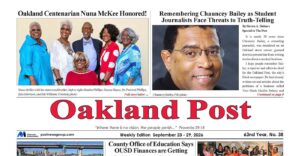
Oakland Post: Week of September 23 – 29, 2026
The printed Weekly Edition of the Oakland Post: Week of September 23 – 29, 2026


To enlarge your view of this issue, use the slider, magnifying glass icon or full page icon in the lower right corner of the browser window.

Activism
Oakland Post: Week of September 16 – 22, 2026
The printed Weekly Edition of the Oakland Post: Week of September 16 – 22, 2026

To enlarge your view of this issue, use the slider, magnifying glass icon or full page icon in the lower right corner of the browser window.
Activism
Oakland Post: Week of September 9 – 15, 2026
The printed Weekly Edition of the Oakland Post: Week of September 9 – 15, 2026

To enlarge your view of this issue, use the slider, magnifying glass icon or full page icon in the lower right corner of the browser window.


Asm. Corey Jackson Announces Launch of 24-Hour Childcare in His District

IN MEMORIAM: The Rev. Leon “Sonny” Clark, Longtime Orange County Pastor and Community Leader, Dies at 72

Poll: Becerra Widens His Lead Over Hilton; Californians Split on Wealth Tax

From Historic Memories to New Possibilities: Oakland Celebrates Coliseum 60

County Office of Education Says OUSD Finances Are Getting Healthier, Materially Stronger

LIVE FREE Sunday Dinner Brings Faith, Fellowship and Civic Conversation to Oakland

Remembering Chauncey Bailey as Student Journalists Face Threats to Truth-Telling

BLACspace Cooperative Invites Bay Area to Experience Oakland’s Black Cultural Ecosystem Through a BLAC Map Tour + Party

In Wake of Death on Doorstep, Williams Chapel Baptist Church Calls for Better Care, Funding for Unhoused

Oakland Centenarian Nuna McKee Honored!

Caribbean Nations Produce Action Plan Calling for UK Reparations Over Slavery

Oakland Post: Week of September 23 – 29, 2026

Doulas Are Helping Black California Moms Navigate Pregnancy–Even as High Mortality Rates Persist

Newsom Signs Addictive Social Media Law to Protect Kids

On Your November Ballot: Prop 38 Would Allocate $8.4 Billion to Immunology and Immunotherapy Funding

Standoff for Justice: Our Homes Are Worth Fighting For

Oakland Post: Week of August 26 – September 1, 2026

Frontier Airlines’ Return to Oakland Airport Brings Flights, Jobs and Opportunity

Gubernatorial Candidate Steve Hilton Blasts California New Tire Rules; Newsom Hits Back

Chef Sharon Lee Blends Culinary Excellence, Education and Empowerment

Jackie Wright Champions Bay Area Stories, Filmmakers and Cultural Institutions

Big City Mayors Ask for “Yes” Vote on Housing Bond Measure; Conservatives Say “No”

Oakland Coliseum Project Opens Door for Small Businesses to Build Bigger

Gov. Newsom’s Latest Appointees Include Sacramento Advocate for Formerly Incarcerated Students; State’s New Tech Chief

Misnamed ‘Parent’ PAC Seeks to Influence Oakland School Board Elections

Longtime BWOPA Member Brendalyn Goodall Appointed to California Workforce Development Board

Gov. Newsom Signs Law Shielding Immigration Aid Workers From Doxing Threats

Secretary of State Shirley N. Weber Urges Californians to Vote Early as Voter ID Battle Intensifies

From Palestine to Oakland: Seeds for Liberation Examines Shared Struggles for Freedom

IN MEMORIAM: Dolly Parton Dead at 80 — How She Built a Legacy of Love and Earned Her Place in Black Culture

The Conversation With Al McFarlane 6/23/26

Media Monday 6/22/26

LIVE! ASK ALMA! — TUES. 6.23.26 7PM EST

Car Buying Secrets: 4 Hidden Checks Before You Sign!

Is This 550 HP Charger Worth YOUR Money? AutoNetwork Review

Celebrating Juneteenth – Frederick Douglass on education and resistance

LIVE! — ASK ALMA! — TUES. 6.19.26 7PM EST

Hyundai Ioniq 5 Parking, Safety, and 360 View #shorts

2025 Ioniq 5 New Wiper & Powerful Performance! #shorts

Electric SUV Range: Is 259 Miles Enough? #shorts

EV Charging: How Fast Can You Charge an Electric Vehicle? #shorts

Biometric Cooling… Messaging Seats…Come on! 2025 Infiniti QX80 Autograph 4WD

Charged Up: Witness the Magic of a Fully Electric Car! #shorts

Range Rover Sport PHEV Included…: See What’s Inside This Luxury SUV! #shorts

Invisible Hood View: Perfect Parking with X-Ray Vision! #shorts
-
 Community3 weeks ago
Misnamed ‘Parent’ PAC Seeks to Influence Oakland School Board Elections
-

 Activism4 weeks ago
Oakland Post: Week of September 2 – 8, 2026
-

 Community3 weeks ago
Richmond Tiny House Village Farm & Garden Set to Open Gates on Sept. 26
-

 Activism3 weeks ago
Oakland Post: Week of September 9 – 15, 2026
-

 Black History3 weeks ago
Latest Massacre in Haiti Reveals Cruelty U.S. Deportations
-

 Black History3 weeks ago
OPINION: Nolan Wells’ Death One of Several Signifying Racial Terror Lives on in U.S. South
-

 Community3 weeks ago
Democratic Clubs Interview Candidates for Oakland School Board
-

 Business2 weeks ago
Mayor Lee Announces $1 Million Kaiser Permanente Grant for Pilot Program to Address Homelessness, Clean Up Public Spaces throughout Oakland
