
#NNPA BlackPress
Majella Hamilton: Preserving City’s African American History
BIRMINGHAM TIMES —

By Erica Wright
As an avid student of race and culture with a passion for telling stories, Majella Chube Hamilton wakes up and goes to sleep with a love for history. That’s why her work as executive director of the Ballard House Project Inc. is so important.
“We research, document, preserve, and share the information we uncover regarding the African American experience in Birmingham,” said Hamilton. “We host oral-history sessions, community conversations, and temporary exhibits, and we’re [also] working on permanent exhibits.”
The Ballard House Project Inc., part of the downtown Birmingham Civil Rights District, is a 501(c)(3) charitable organization dedicated to disseminating the history of the African American experience among children and adults within the community, across the state, and beyond.
The building, named after renowned Birmingham physician Edward H. Ballard, MD, was constructed in the first half of the 20th century as a medical office and residence for the doctor’s family; it is one of the few surviving live-work structures in the Magic City.
The Ballard home served as a meeting place for African American organizations barred from gathering in other areas of the city and hosted noted physicians, including Dodson Curry, MD, Herschell Hamilton, MD, and Ross Gardner, MD.

Hamilton and her team focus on and feature not only specifics about what happened in the Ballard House but also the innovative contributions, educators, business owners, and women who lived together and created amazing networks throughout Birmingham.
“We have some resources we’ve gathered that are part of our exhibits, some of which are from the early 1900s,” Hamilton said. “We have information we’ve been sharing about the African American experience in Birmingham, … what was going on here and what we think is important for the community to know.”
Shared Experiences
The Ballard House Project, which received its nonprofit status in 2010, began with community conversations, collective-memory sessions, and oral history.
“We have been working for more than 10 years to gather the shared experiences of [Birmingham’s] African American community. We started having community conversations and gatherings of individuals to learn about their shared experiences and also individual oral histories,” said Hamilton, who has long been interested in learning the back story of a particular initiative or why things are the way they are.
“I recognized early on that there were aspects of this community that had been marginalized, had been ignored, and we weren’t talking about it,” she said. “People talk about their culture and their families and their extended families and their neighborhoods, usually within their own circles. I felt through all of my community activism that some aspects were not being discussed and engaged.
“It’s important to uncover and discover rich, historical information not to dwell on the past but to connect what happened yesterday with what is currently happening in our community today,” Hamilton said.
“In order to move forward, we feel that we’ve got to reach back and find out about what happened in the past so we can empower each other,” she continued. “I’d like to see children, adults, all of us be empowered by this information. … I’d also like to make sure that this is the history of not just Birmingham’s African American communities but all of Birmingham’s communities, which are part of the history of this nation. It is universally important.”
“Culturally Rich”
Hamilton, who is in her early 50s, spent most of her childhood in Franklin, La., a small town outside of New Orleans. When she was 12 years old, her family moved to Gary, Ind.
“My childhood was culturally rich,” she said. “My parents were dedicated to the community in which they lived, and they worked all of their lives to uplift the small community we lived in. I have one brother and two sisters, and we all learned the importance of hard work, giving back to our communities, and using the opportunities we received in ways that would be beneficial for others.”
Both of Hamilton’s parents, O’Neal and Merion, were educators and community activists.
“They were Civil Rights activists in the sense that they broke down barriers in their community, as well as worked to unify their community,” she said. “[In Franklin], there is a street named after my dad and … a library named after my mom. In that community, my mother was the first African American librarian … and my dad was one of the first African American principals.”
When the family moved to Indiana, Hamilton’s parents were retired. They moved so her father could help his brother, who was a family physician, with his medical practice.
Hamilton finished high school in Gary and went on to Howard University in Washington, D.C., where she majored in public relations.
“I did several internships in that career and decided I wanted to stop after three years in school for a period of time to work in D.C.,” she said. “I started an internship and really liked it, so I was like, ‘Hey, this is cool. I want to do this.’ I decided to really get my feet wet and see if I really liked what I was doing. I worked for close to year and then I decided to finish my studies at DePaul University in Chicago, [Ill.]”
Hamilton earned a Bachelor of Arts degree in communications with an emphasis on public relations and journalism. While living in Chicago, she worked in several different fields and was engaged to be married to her college sweetheart, Herschell, who she met at Howard. The Hamiltons, who have been married since the early 1990s, have two children, Jillian and Herschell O’Neal, called Neal. Jillian is a Howard University graduate currently pursuing a PhD in psychology at the University of Oregon, and Neal is a student at Howard.
The Magic City
Hamilton accepted a position with Macy’s and took part in the company’s executive training program, which is how she ultimately landed in Birmingham. After living in Atlanta, Ga., she and her husband relocated to the Magic City, where Hamilton moved into a corporate position with the locally based Parisian department store chain (now known as Belk).
“Eventually, I became the public information director for the city of Birmingham and worked for Mayor Richard Arrington and his administration for a little more than five years,” she said. “In that role, I created and opened the Office of Public Information to inform, engage, and be responsive to the questions and needs residents had about their city.”
From there, Hamilton started her own strategic communications business.
“I did project management and worked on a number of different special projects, including editing magazines and conducting special-event initiatives,” she said. “[I also videotaped] projects, managing and coordinating … many that dealt with community, culture, and history.”
Hamilton put her business to the side for a time to work for Southern Living magazine, covering areas such as interior design and architecture. What she enjoyed most, however, was doing features that enabled her to chronicle the stories of prominent African Americans in society.
“I did stories on people like Children’s Defense Fund founder Marian Wright Edelman and the quilters of Gee’s Bend,” she said. “I also did a story on Haley Farms, the farm outside Knoxville, Tenn., that [“Roots” author] Alex Haley purchased prior to his death.”
During her magazine stint, Hamilton was also able to cover the African American experience: “I saw a gap was there,” she said. “[There were so many] individuals and aspects of our community that had contributed so much but not very many people knew about them, so that was an opportunity I loved.”
After leaving Southern Living, Hamilton returned to being a businessowner, establishing Enclave Communication Strategies, where she created strategic plans for projects in the community. She spent her free time on efforts designed to raise awareness about history, art, and culture, and along with her husband and others started working on the Ballard House Project.
“Quietly and methodically, we started to pull back the layers on the Ballard House and began stripping things away and restoring what was here,” said Hamilton, who is currently enrolled in a PhD program in history with an emphasis on race and culture at Howard University.
“We realized how important this aspect of history in the community is to the entire history of the area, so we started making plans to do what we’re doing now—telling those stories and highlighting the voices and experiences of the African American community in Birmingham.”
Talking Circles
This summer, the Ballard House Project started hosting a new series, entitled “Talking Circles: The Impact of Jim Crow Then and Now.”
“We cover every facet of the impact of Jim Crow, [including] culture, health, education, business, housing, voting, traumatic violence, and everything as it relates to race and the laws, customs, and ordinances [under] Jim Crow in Birmingham,” said Hamilton.
“We didn’t know exactly how we were going to focus on it, but it was a wonderful opportunity because we focus on dialogic engagement. Through dialogue [among those attending the Talking Circle], we were able to determine the specific topics or facets of community impact we wanted to focus on. We’re inviting different individuals and community leaders who have some expertise on the different topics … to lead this initiative.”
So far, there have been three Talking Circles at the Ballard House and other locations. They are held on the second and fourth Saturday of each month; starting in October, they will be held on the second and third Saturday of each month. Among the myriad topics discussed are genealogy, migration, and the African diaspora. At the next event, scheduled for October 12, Greg Townsend of the Jefferson County Department of Health will discuss the impact of Jim Crow on health and health care in the African American community.
Ongoing Restoration
Currently, the Ballard House Project is conducting a $1 million capital campaign to raise funds to restore the building.
“We want to fully restore the building,” Hamilton said. “[We’ve been making improvements] little by little throughout the years as needed, but we know full restoration of this building is critical. We also have already started on the development of a master community garden, which … will be in the lot next door. This plan also includes infrastructure for permanent exhibits, … [both] interior and exterior.”
In addition to the special events and Talking Circles series, the organization hosts community conversations and collaborates with other groups.
“We’ve hosted community conversations, … most of which are in different parts of the city, as well as sometimes here at the Ballard House and at several [local] libraries,” Hamilton said. “We’ve also hosted temporary exhibits, whether here or somewhere else, including one at the Taste of 4th Avenue Jazz Festival, where we’ve hosted exhibits [that enable] people to come learn more about their history.”
The Ballard House also does presentations at schools for students and adults.
“We want this to be a community initiative. That’s our focus,” Hamilton said. “We’re doing more than just unveiling what happened. This is a collaborative process with members of the community.”
This article originally appeared in The Birmingham Times.









#NNPA BlackPress
Youth-Led Black August Event Brings Past to Present at East Oakland Boxing Association
The mission of Youth Alive! Is to “break the cycle of violence, heal trauma, and uplift a thriving community of leaders, to save lives in Oakland and beyond” by serving “as mentors, youth leaders, counselors, case managers, intervention specialists and violence interrupters,” working “to help violently wounded people heal themselves and their community.”
The post The mission of Youth Alive! Is to “break the cycle of violence, heal trauma, and uplift a thriving community of leaders, to save lives in Oakland and beyond” by serving “as mentors, youth leaders, counselors, case managers, intervention specialists and violence interrupters,” working “to help violently wounded people heal themselves and their community.” appeared first on BlackPressUSA.
Youth-Led Black August Event Brings Past to Present at East Oakland Boxing Association
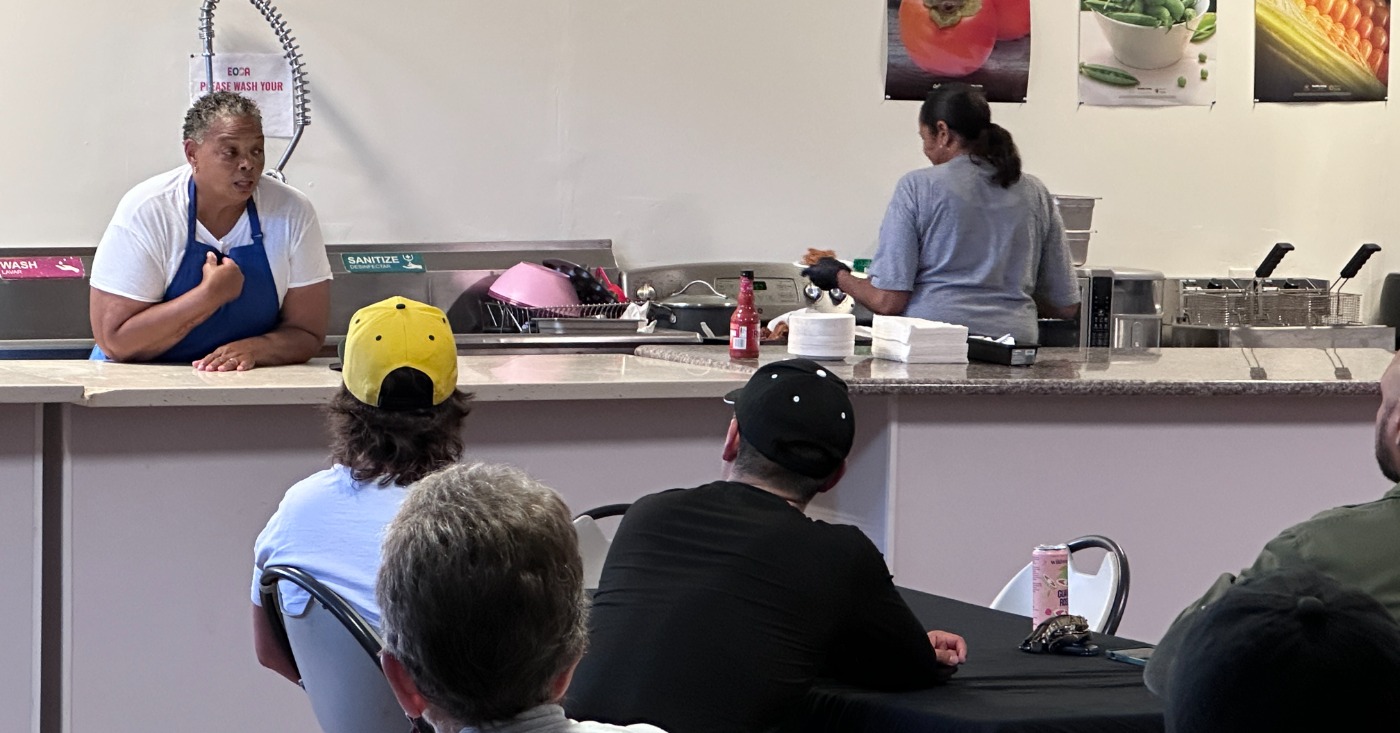
The East Oakland Boxing Association (EOBA) and Youth Alive! came together on Aug. 21 to share with their community all that Black August means to them.
Held on EOBA’s patio at 816 98th Ave. in Deep East Oakland, the two organizations hosted their second annual Black August Experience, featuring a food tasting, financial literacy and mindfulness workshops, and voter registration with the League of Women Voters Oakland (LWV).
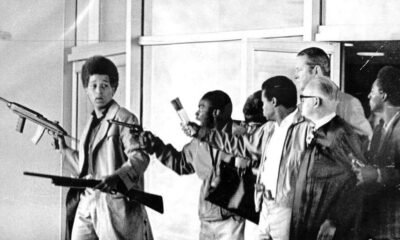
Black August is known as a time to uphold the legacy of prisoners who protested their conditions by fasting, fighting, and educating themselves on the economic and political circumstances that contributed to their incarceration.
According to its website, “EOBA is a multi-service youth and community development hub that goes far beyond the ring. While rooted in the discipline of boxing, for nearly 40 years EOBA has also integrated robust programs in workforce development, food justice, afterschool enrichment, financial literacy, mentorship, and wellness.”.
The mission of Youth Alive! Is to “break the cycle of violence, heal trauma, and uplift a thriving community of leaders, to save lives in Oakland and beyond” by serving “as mentors, youth leaders, counselors, case managers, intervention specialists and violence interrupters,” working “to help violently wounded people heal themselves and their community.”
Through Coro California, another leadership organization serving young people across the state for 80 years, they gained a broader understanding of Black August.
EOBA Executive Director Dawna Williams spoke about how much she learned about Black August from the youth who created it. “I let them educate me,” she said. Instead of talking about prison reform and mass incarceration, Williams and youth interns found that Black August meant so much more. “We would have done a disservice if we had just focused on who the people were and what their situation was…We tried to take their message from back in the day and make it relevant to the young people today. What do they need to know?”
Youth interns created and placed posters around the patio to help participants understand how traditional Black foodways, civic engagement, financial literacy, and the power of education are relevant to Black resistance today.
An EOBA member described Black August with Youth ALIVE! as “a whole vibe. “This year we added the Fun Zone for the kids, because you really cannot go wrong with a Fun Zone. I also loved seeing everyone chillin’ in the outdoor lounge, catching some Vitamin D and just enjoying a Friday evening together.”
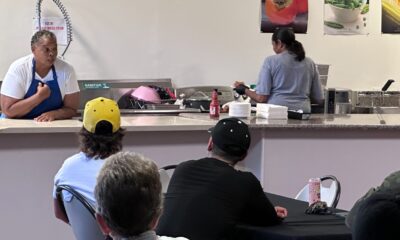
The food tasting, a popular event from last year, featured traditional Black foods such as black-eyed peas, johnny cakes, and fried chicken. Led by Williams, the tasting included a talk about how these traditional foods were made and why they are forms of Black resilience.
The “‘Plate of History’ was a favorite of the online writers. “Fun, educational, and did I mention delicious? Our Taste of History cook, Angela Southall, served up some good eats while connecting food to history and culture.”
The writer also commended the “League of Women Voters Oakland for their civic leadership and for getting our young people informed, ready, and registered to vote.”
Overall, it was a “good Friday event in East Oakland,” the writer said.
Upcoming Black August events: Building Opportunities for Self-Sufficiency (BOSS), will host “Black August: The Arc of Liberation” at Oakland City Hall on Sat. Aug. 29, from 11 a.m. to 3 p.m.
The websites for East Oakland Boxing Association, Youth Alive! and CORO are sources for this report.
Jana Lang is an Oakland resident, teacher, gardener and poet participating in the Propel News Initiative.
The post The mission of Youth Alive! Is to “break the cycle of violence, heal trauma, and uplift a thriving community of leaders, to save lives in Oakland and beyond” by serving “as mentors, youth leaders, counselors, case managers, intervention specialists and violence interrupters,” working “to help violently wounded people heal themselves and their community.” appeared first on BlackPressUSA.
#NNPA BlackPress
EV Home Charging Warning: What Dealerships Won’t Tell You! #shorts
Is your home EV charging setup ready? Dealerships may not warn you about critical outlet and circuit needs. Find out before you plug in!
The post EV Home Charging Warning: What Dealerships Won’t Tell You! #shorts appeared first on BlackPressUSA.

Dealerships won’t tell you: charging this big battery at home isn’t always simple. Verify your outlet capacity, circuit, and setup before assuming level one or basic outdoor outlets will suffice.
 Watch the full video: https://youtu.be/A9Cd2SspoaQ
#AutoNetwork
The post EV Home Charging Warning: What Dealerships Won’t Tell You! #shorts appeared first on BlackPressUSA.
#NNPA BlackPress
Car Buying Secrets: Dealership Traps & How to Avoid Them #shorts
Don’t get tricked at the dealership! Learn essential car buying secrets to secure the best deal and avoid hidden traps.
The post Car Buying Secrets: Dealership Traps & How to Avoid Them #shorts appeared first on BlackPressUSA.

Before stepping into a dealership, secure bank pre-approval for your financing rate. Then, get the out-the-door price in writing. Never discuss monthly payments until that number is fixed. Test road noise and rear visibility yourself. Decline add-ons with a simple ‘Not today’. Check backseat space with your tallest household member.
Watch the full video: https://youtu.be/maAOBjO1puY
#AutoNetwork
The post Car Buying Secrets: Dealership Traps & How to Avoid Them #shorts appeared first on BlackPressUSA.


Prostate Cancer is Twice as Likely to Kill Black Men. Talking to Your Doctor Could Help Save Your Life

Oakland Post: Week of September 2 – 8, 2026

Longtime BWOPA Member Brendalyn Goodall Appointed to California Workforce Development Board

Jackie Wright Champions Bay Area Stories, Filmmakers and Cultural Institutions

Chef Sharon Lee Blends Culinary Excellence, Education and Empowerment

‘Passing a Law Isn’t The Finish Line’: California Assembly Evaluates Implementation, Results

OPINION: Angie Nixon Will Turn You Into a Democratic Socialist If Donald Trump Hasn’t Already

Gov. Newsom Signs Law Shielding Immigration Aid Workers From Doxing Threats

BOOK REVIEW: Every Inch of a Lady

Big City Mayors Ask for “Yes” Vote on Housing Bond Measure; Conservatives Say “No”

Madeline M. Turner: The Inventor Who Made Juicing Easier

Gubernatorial Candidate Steve Hilton Blasts California New Tire Rules; Newsom Hits Back

Frontier Airlines’ Return to Oakland Airport Brings Flights, Jobs and Opportunity

Secretary of State Shirley N. Weber Urges Californians to Vote Early as Voter ID Battle Intensifies

Gov. Newsom’s Latest Appointees Include Sacramento Advocate for Formerly Incarcerated Students; State’s New Tech Chief

Department of Homeland Security Demands California Secretary of State Shirley N. Weber Scrub Voter Rolls

New Judge Could Decide if Karmelo Anthony Gets a New Trial

“The Power to See Threats Sooner”: Gov. Newsom, Safety Officials Showcase California’s Investments in Hi-Tech Wildfire Prevention

Alpha Kappa Alpha Sorority, Inc. Celebrates New North Atlantic Regional Director

California Sen. Padilla Joins Colleagues to Introduce Bill Imposing Term Limits on Supreme Court Justices

Less Affluent School Districts, Including Sacramento City, Face Threat of State Takeover

Car Wash Workers Cope with Lingering Impacts of ICE Raids

COMMENTARY: You Are Already Paying for the AI Boom

California Bill Would Let Abuse Victims Use Trauma as Legal Defense for Violent Crime

Oakland Post: Week of July 29 – August 4, 2026

How Oakland’s Courtsmith is Scaling its Business and Local Impact

ESSAY: California Can Close Its Colorectal Cancer Gap

As Part of Your Back-to- School Checklist, Vaccinate

Oakland Post: Week of August 5 – 11, 2026

Oakland ‘Port Serves as a Powerful Engine for Good Jobs and Economic Development

The Conversation With Al McFarlane 6/23/26

Media Monday 6/22/26

LIVE! ASK ALMA! — TUES. 6.23.26 7PM EST

Car Buying Secrets: 4 Hidden Checks Before You Sign!

Is This 550 HP Charger Worth YOUR Money? AutoNetwork Review

Celebrating Juneteenth – Frederick Douglass on education and resistance

LIVE! — ASK ALMA! — TUES. 6.19.26 7PM EST

Hyundai Ioniq 5 Parking, Safety, and 360 View #shorts

2025 Ioniq 5 New Wiper & Powerful Performance! #shorts

Electric SUV Range: Is 259 Miles Enough? #shorts

EV Charging: How Fast Can You Charge an Electric Vehicle? #shorts

Biometric Cooling… Messaging Seats…Come on! 2025 Infiniti QX80 Autograph 4WD

Charged Up: Witness the Magic of a Fully Electric Car! #shorts

Range Rover Sport PHEV Included…: See What’s Inside This Luxury SUV! #shorts

Invisible Hood View: Perfect Parking with X-Ray Vision! #shorts
-
 Community4 weeks ago
Less Affluent School Districts, Including Sacramento City, Face Threat of State Takeover
-
 Commentary4 weeks ago
ESSAY: California Can Close Its Colorectal Cancer Gap
-
 Business4 weeks ago
California Hispanic Chambers of Commerce Unveils: ‘Powering the Future’ Theme for 47th Annual Statewide Convention
-
 Community4 weeks ago
Four Candidates, Including Incumbent Barbara Lee, Qualify for Oakland Mayor’s Race
-
 Activism4 weeks ago
Oakland Post: Week of August 12 – 18, 2026
-

 Business4 weeks ago
From Blueprint to Breakthrough: Tackling Affordable Housing in Oakland
-
 Black History4 weeks ago
Oakland Observes Black August with Block Parties, Film Showings, Workshops
-

 Commentary4 weeks ago
COMMENTARY: Why Local School Tax Measure G1 Will Not Be on the November Ballot
