
Health
State Seeks to Boost Mental Health Counseling

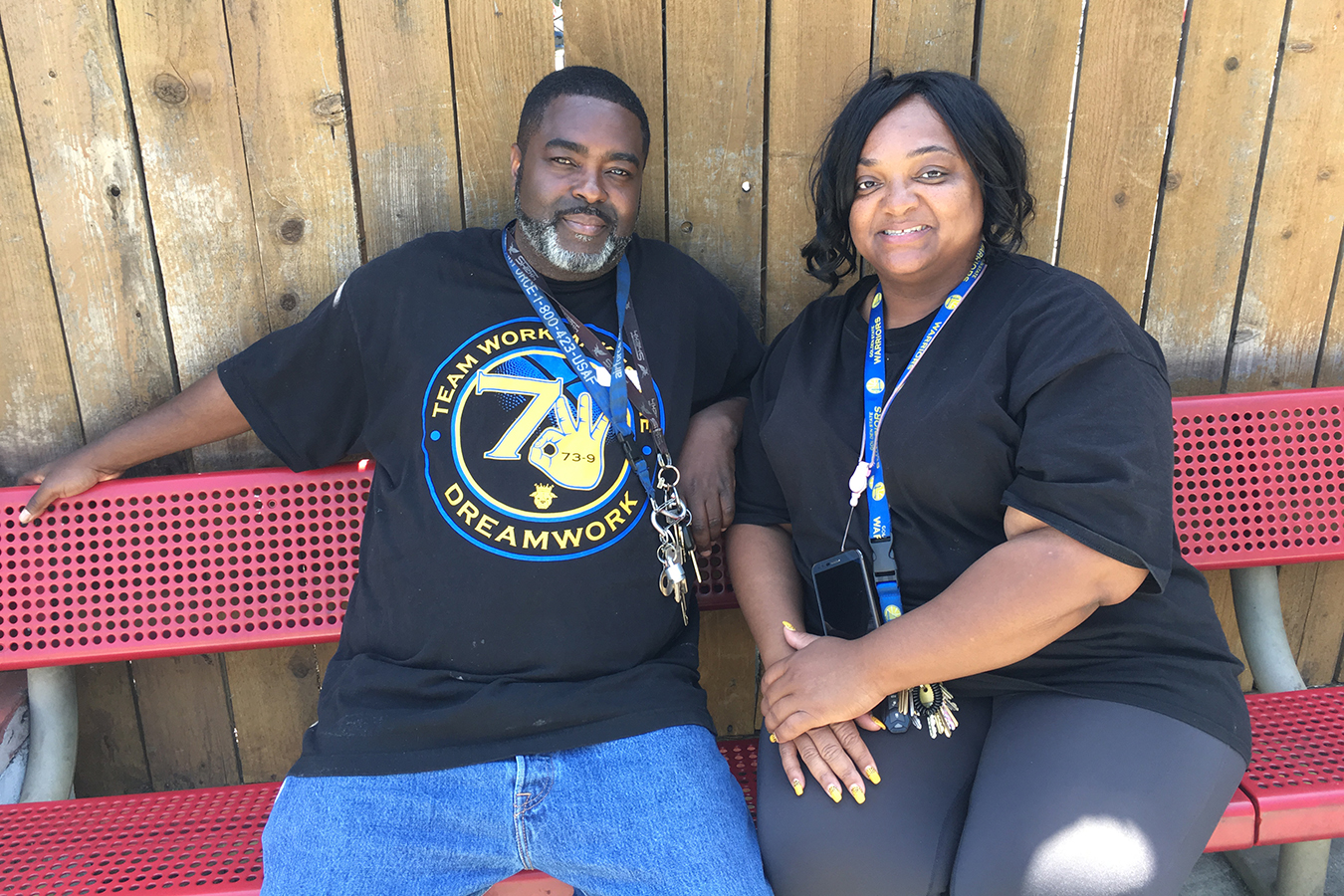
It’s 1 p.m. on a balmy Oakland afternoon as residents of Great Expectations Residential Care, a home for people with mental illness, gather in an activity room for a game of bingo.
Lee Frierson, an unpaid volunteer, introduces himself as he and his team leader, Charlie Jones, unpack chips, soda, batteries and shampoo that they will hand out as prizes.
“I’m Lee with Reach Out,” Frierson says. “I’m a peer. I suffer from depression. It helps me to help you guys.”
“And I’m Charlie the angel,” Jones says. “We go to board-and-cares and psychiatric and wellness facilities to inspire hope and model recovery.”
A few rounds into the game, Frierson calls B-5, and a dark-haired man shouts, “Bingo!”
“Winner, winner, chicken dinner!” Frierson calls back, prompting chuckles.
What unfolds in this room is not exactly therapy, but it is something that mental health advocates and research suggest can be healing in its own right: people who have struggled with mental illness helping others who are experiencing similar struggles. Frierson and Jones are former mental health patients who now work with the Reach Out program, part of the nonprofit Alameda County Network of Mental Health Clients, which provides what is called peer support.
The value of peer support is recognized by Medicaid, the health insurance program for people with low incomes, and it funds such services. That money is available for certified peer-support workers in states that have a formal certification process.
California does not, and that means it is “leaving money on the table,” said Keris Myrick, chief of peer services at the Los Angeles County Department of Mental Health. South Dakota is the only other state with no peer certification program.
But a bill pending in Sacramento, SB-10, would direct the State Department of Health Care Services to create a process for certifying peer support workers and establish a set of core aptitudes and ethics guidelines for the job. The legislation passed the state Senate unanimously in May and will move to the Assembly Health Committee on Tuesday.
More than 6,000 peer support specialists already work in wellness programs, hospitals and clinics across California, according to SB-10’s sponsor, Sen. Jim Beall (D-San Jose). They help mental health patients navigate bureaucracies, find housing or locate services.
“They’re sharing their experiences: ‘Been there, done that, now I’m going to help another person,’” said Myrick, who has been diagnosed with schizoaffective disorder, was hospitalized several times and spent 10 years running a peer support program in Los Angeles.
Last year, the legislature unanimously passed a bill to certify peer support workers, but then-Gov. Jerry Brown vetoed it, saying it was costly and unnecessary.
Legislative analysts estimate the state would spend hundreds of thousands of dollars to set up a certification process and millions more a year to implement it. Advocates say the new federal money would help offset those costs. And, they say, the legislation would cement the bona fides of peer mentoring as an occupation.
Gov. Gavin Newsom has not declared his position on the current bill, but he has said that addressing the state’s mental health crisis is a top priority for his administration. During his campaign for governor, he endorsed “expanded roles for nurse practitioners and peer providers.”
Dr. Thomas Insel, a former director of the National Institute of Mental Health whom Newsom named in May as a key mental health adviser, told California Healthline he supports the peer certification bill.
“For many people, having a connection to someone else who’s had this experience proves vital,” Insel said. “There may be nothing more healing than giving people an opportunity to help others.”
Peer programs grew out of a movement in the 1970s opposing coercive psychiatric treatment, led by people who’d been treated against their will and felt they would receive better care from those who personally identified with their experiences.

Business
Oakland Children’s Hospital Workers and Patients Rally for Pediatric Medical Care
OAKLAND POST — “Children who go through a bone marrow transplant are immunocompromised, meaning that their immune system has been wiped out,” and having to take public transport to San Francisco exposes patients to the risk of getting a dangerous infection, said Paola Portillo, a social worker.

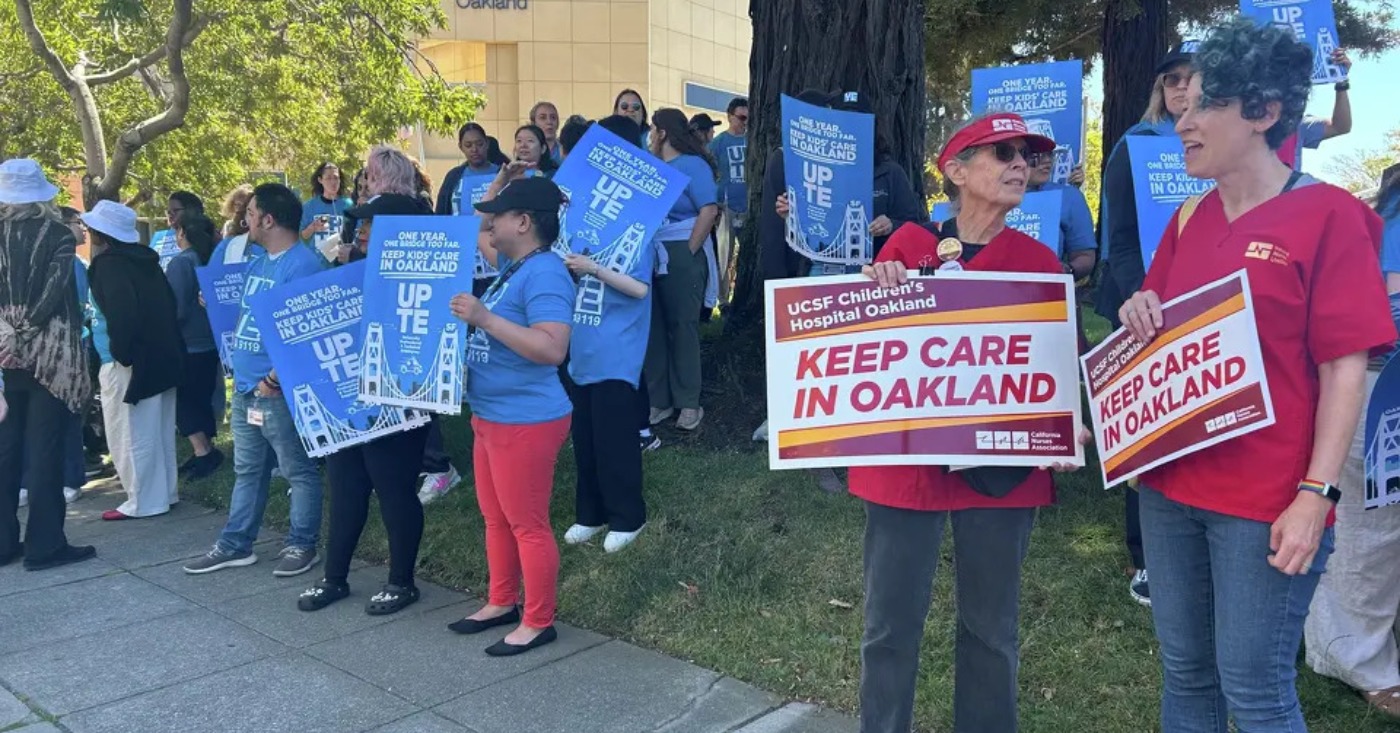
Staff, patients’ families, and supporters held a rally recently at UCSF Benioff Children’s Hospital in Oakland to protest the hospital’s decision to relocate specialized treatment clinics to San Francisco.
Protesters said the move is creating barriers for patients to access care and raised concerns over whether the hospital was appropriately using funds partially designated for pediatric services.
In response, hospital officials say they are concentrating resources for highly specialized procedures so patients can receive the highest quality of care.
One of the speakers at the rally, Paola Portillo, a social worker, said the hospital started transferring the clinics a year ago when UCSF Health integrated with the Children’s Hospital Oakland, located at 747 52nd St. in North Oakland.
According to Portillo, patients who need bone marrow treatments and interventional radiology are forced to travel to UCSF Benioff Children’s Hospital in San Francisco, which can be dangerous, she said.
“Children who go through a bone marrow transplant are immunocompromised, meaning that their immune system has been wiped out,” and having to take public transport to San Francisco exposes patients to the risk of getting a dangerous infection, she said.

UCSF spokesperson Kristen Bole says the move improves the hospital’s quality of care, giving bone marrow treatment (BMT) as an example.
“Inpatient BMT is a highly complex service where patient volume, specialized infrastructure, faculty coverage and 24/7 support are essential,” she said in a statement. “Concentrating non-gene therapy inpatient BMT care at Mission Bay allows us to provide the safest and most sustainable model for patients and families.”
Hospital officials also emphasized that moving care was not a one-way street. Beginning this month, patients admitted for rehabilitative treatment have been directed to the children’s hospital in Oakland, Bole said.
Speakers at the rally also claimed UCSF has not been transparent about how it has allocated funding from 2020’s Measure C, a measure that created a half-percent sales tax that partially funded pediatric health care at the children’s hospital.
“The community fought so hard for Measure C because every child deserves access to lifesaving, pediatric, high-quality care right here in Oakland,” said Agnes Cho, a policy advisor speaking on behalf of Alameda County Supervisor Nikki Fortunato Bas. “The funding should go towards strengthening care for children right here in Oakland.”
Protesters also said UCSF’s $3.3 billion endowment has been misused. Last October, the University Professional & Technical Employees union published a report on the University of California’s spending, which highlighted projects such as the $4.3 billion UCSF Helen Diller Medical Center at Parnassus Heights.
“What I have a problem with is saying the kids from the East Bay have to go to San Francisco to get care, so that UC can build a fancy hospital for its richest patients in San Francisco,” said union President Dan Russell.
The UCSF spokesperson said UCSF has been investing in its Oakland campus, explaining that upgrades that are expected to be completed in 2030 at a cost of $1.6 billion.
“Oakland is central to our pediatric health system, and we are making the largest investment in the campus’ history,” the spokeswoman said. “We do not make investments of this scale in a campus, workforce or community we plan to leave behind.”
This article includes coverage from Bay City News Service and media releases.

Commentary
NPRC to Meet with California Attorney General’s Office on to Urge Guardianship Reform
OAKLAND POST — Black has been a professor of law and finance at Northwestern University and Northwestern Pritzker School of Law since 2010. Before joining Northwestern, he served on the faculties of Stanford University, Columbia University, and the University of Texas at Austin, earning international recognition as one of America’s foremost empirical legal scholars.
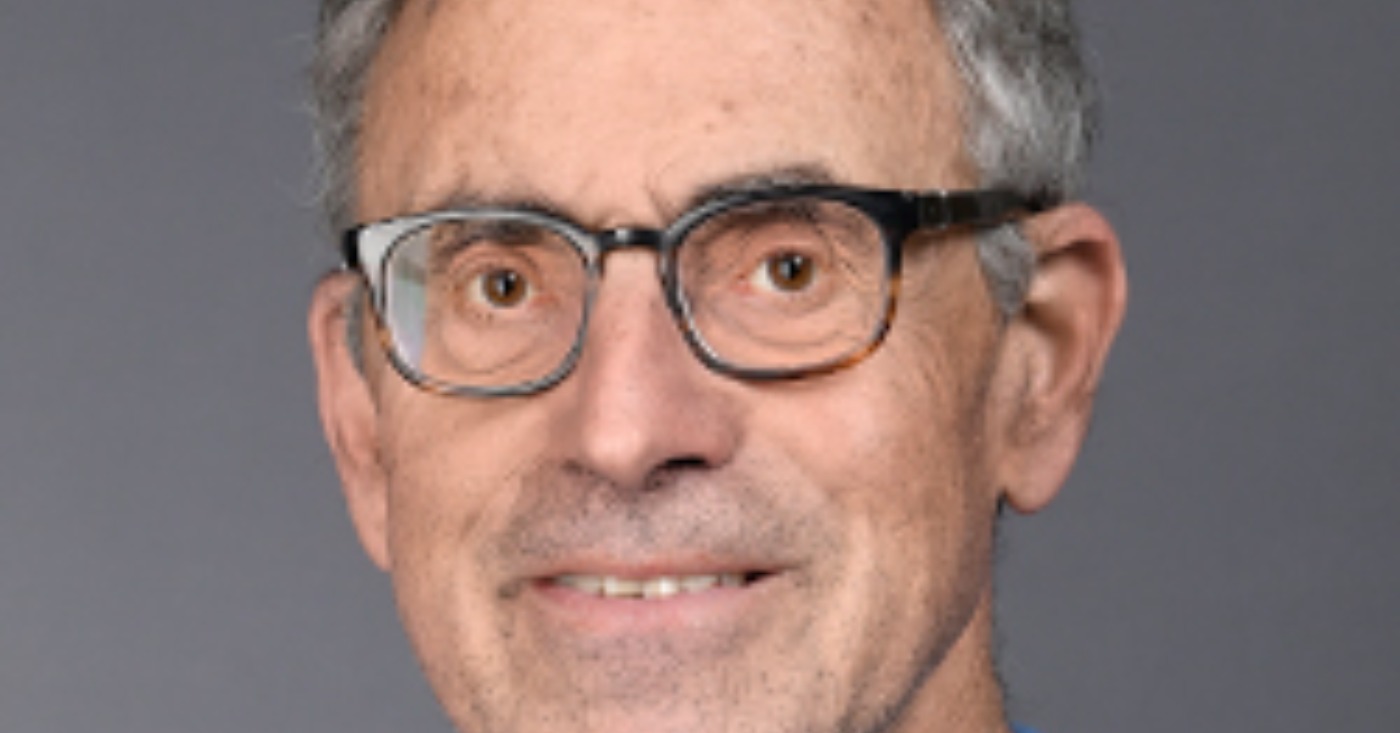
The National Probate Reform Coalition (NPRC) has announced that Bernard ‘Bernie’ Black, a nationally respected legal scholar, will meet with California Assistant Attorney General Eleanor Blume on July 27 to discuss the urgent need for guardianship, conservatorship, and probate reform.
The meeting marks another important step in NPRC’s effort to encourage California’s governor and attorney general to take a leadership role in addressing systemic abuse, financial exploitation, and the lack of meaningful oversight within probate and guardianship courts.
Black has been a professor of law and finance at Northwestern University and Northwestern Pritzker School of Law since 2010. Before joining Northwestern, he served on the faculties of Stanford University, Columbia University, and the University of Texas at Austin, earning international recognition as one of America’s foremost empirical legal scholars.
Despite his legal expertise, Black says neither his knowledge nor his professional reputation protected his family from what he describes as a deeply flawed guardianship system.
Following the death of his mother in 2012, Black’s sister, Joanne, who had lived with schizophrenia for more than 35 years, became the beneficiary of approximately two-thirds of their mother’s $4 million estate through a special needs trust established to provide for her lifetime care.
Seeking to preserve his mother’s estate plan and protect Joanne’s eligibility for public benefits, Black petitioned the Denver Probate Court for a temporary conservatorship and requested judicial approval for actions necessary to preserve assets. According to Black, the case initially appeared to proceed appropriately. Both the court-appointed counsel and a guardian ad litem supported his proposed conservatorship plan.
Black says the case later took a dramatically different turn.
According to Black, court-appointed professionals used family disagreements to seize control of the family trusts. What followed was 12 years of litigation and 96 probate court decisions, resulting in millions of dollars in professional fees.
Black says repeated settlement proposals intended to preserve assets for his sister’s benefit were rejected. He also strongly disputes adverse findings made by the probate court against him, his wife, and his son, arguing the court lacked jurisdiction over members of his family. Appeals were unsuccessful, reinforcing his concern that probate courts exercise extraordinary discretion with insufficient oversight.
Joanne Black passed away on Aug. 14, 2025. Black contends that millions of dollars that should have benefited his sister and preserved his family’s legacy have instead been consumed by litigation and administrative expenses. He continues to fight efforts to deplete the remaining family trusts.
“My sister has died, yet the Denver Probate Court and the guardianship professionals are still pursuing what is left of our family’s money,” Black said. “I’m talking millions of dollars.”
Black believes his family’s experience demonstrates that even experienced attorneys can become overwhelmed by a probate system that often lacks transparency and accountability.
Joining Black at the July 27 meeting will be Rick Black, founder of the Center for Estate Administration Reform (CEAR), who will present his organization’s proposed Victims’ Bill of Rights for individuals and families involved in probate and guardianship proceedings.
Together with the NPRC, they will urge the Attorney General’s Office to investigate fraud, financial exploitation, and predatory practices while aggressively enforcing existing laws that protect elders, disabled adults, and vulnerable families.
NPRC asserts California’s Attorney General, as the state’s chief law enforcement officer, has both the authority and responsibility to investigate fraud, public corruption, and financial exploitation occurring within probate courts.
The Coalition also hopes California will lead a national initiative by working with attorneys general across the country to develop coordinated enforcement strategies and meaningful reforms that restore integrity, transparency, and accountability to probate courts nationwide.
Bernard Black’s experience echoes hundreds of similar stories documented by probate reform advocates throughout the nation. His message to the Attorney General is both simple and sobering:
“If this can happen to one of America’s most respected law professors, it can happen to anyone.”
Business
Mount Zion MBC, Church of Jesus Christ of Latter-day Saints Partner to Bring 29,000 Meals to Alameda County
OAKLAND POST — A semi-truckload of food arrived at MZMBC in Oakland on Tuesday, July 21. This was one of 250 trucks the LDS church is sending throughout the United States. By the end of the year 10 million pounds of food will be donated. Each truck carries approximately 40,000 pounds of shelf-stable pantry staples that can feed 1,400 families for one week.
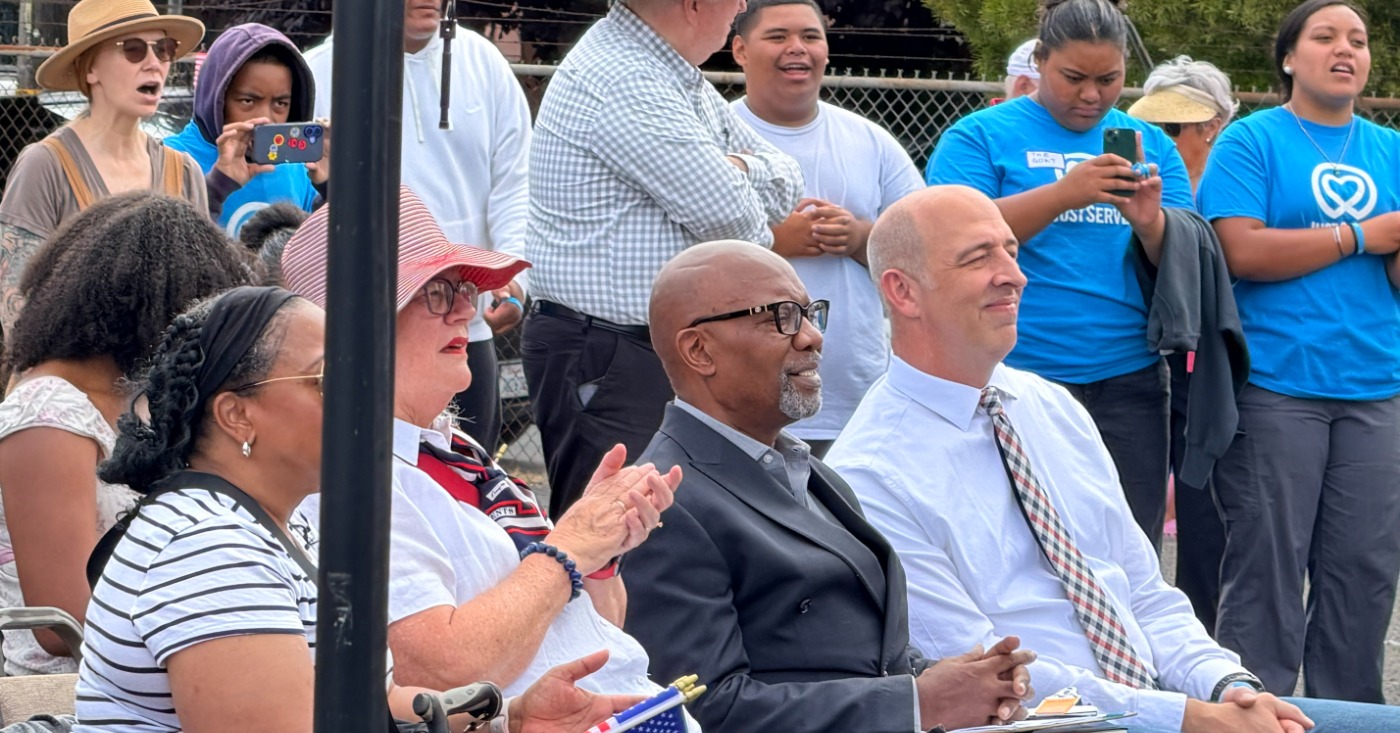
The interfaith community effort commemorates the 250th anniversary of the U.S.
More than 29,000 meals were received and distributed at the historic Mount Zion Missionary Baptist Church in West Oakland as part of an interfaith community effort to commemorate the 250th anniversary of the United States.
The Alameda County Community Food Bank (ACCFB), Mt. Zion Missionary Baptist Church (MZMBC), and the Church of Jesus Christ of Latter-day Saints (LDS) partnered to address food insecurity throughout Alameda County.
A semi-truckload of food arrived at MZMBC in Oakland on Tuesday, July 21. This was one of 250 trucks the LDS church is sending throughout the United States. By the end of the year 10 million pounds of food will be donated. Each truck carries approximately 40,000 pounds of shelf-stable pantry staples that can feed 1,400 families for one week.

The need for food is significant. According to the ACCFB, 1 in 4 members of the community they serve is experiencing or at risk of hunger.

“The challenges get much harder during the summer when children no longer have access to healthy meals at school,” says Regi Young, executive director of Alameda County Community Food Bank. “Our community and our food bank face similar challenges accessing some of the highest quality and high demand foods because they are typically also the most expensive.

“Fresh milk is among the top items on these lists, so we are extremely grateful for this donation to help more families stretch their budgets and get through these challenging summer months,” Young said.
Two days later, on July 23, another semi-truck, this one bearing fresh milk from the LDS church, arrived at the ACCFB.
Event organizers share a commitment to caring for those in need and fostering meaningful service connections within communities.
“After 250 years, there is still food insecurity in America, and this is an interfaith community effort to eradicate hunger in our communities and cities,” said Pastor Michael Wallace of Mount Zion. “We believe that having food is a basic human right and to address it is our Christian duty. That’s what makes this partnership so meaningful.”
“Members of the Church of Jesus Christ of Latter-day Saints believe in following the Savior’s commandments to love God and to love our neighbor,” says David Kimball, president of the Oakland Stake of the LDS church. “We are grateful to partner with these organizations to help care for those in need in our community.”
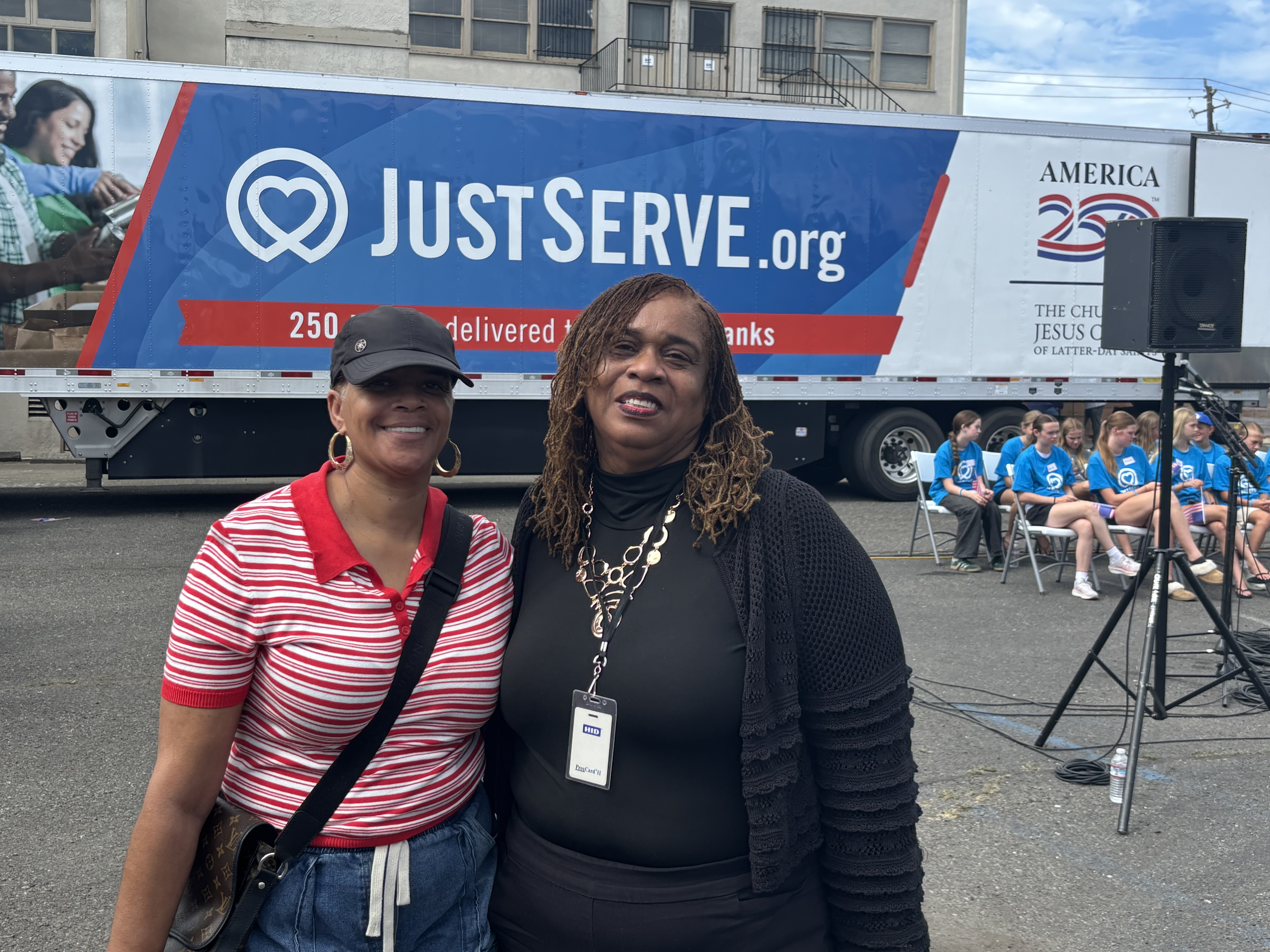
Welcoming the truck’s arrival at 10 a.m. at MZMBC were Kimball, Young, Wallace of MZMBC, and civil rights activist and Post News Group Publisher Paul Cobb. Oakland Mayor Barbara Lee was in attendance and addressed the hundreds of volunteers. Inspiring music was provided by members of the Oakland Interfaith Gospel Choir under the leadership of Terrance Kelly.
Teens from both churches were on hand to assist with loading food items for various local nonprofits and community groups to distribute to those in need. The teens also assembled 1,000 hygiene kits for the unhoused. Each kit will include a note of encouragement written by the children and youth of each church.
The churches and organizations that received food include:
- Mt. Zion Missionary Baptist Church
- ECAP (Emeryville Citizens Assistance Program)
- Support Life Foundation/Islamic Cultural Center of Northern California (ICCNC)
- Serenity House
- CRECE (Central American Refugee Committee)
- ION (Impact Oakland Now -Word Assembly, Center of Hope and Abyssinian Baptist Church)
- True Faith Baptist Church (East Oakland)
“These two large shipments of food and milk, along with this interfaith, community event, exemplify the spirit of volunteerism and community service that this country was built on,” says Gregg Ankenman, assistant director of Community Service for the Oakland/San Francisco Communication Council of the LDS Church.

WORK FROM HOME
Home-based business with potential monthly income of $10K+ per month. A proven training system and website provided to maximize business effectiveness. Perfect job to earn side and primary income. Contact Lynne for more details: Lynne4npusa@gmail.com 800-334-0540


Oakland Post: Week of July 22 – 28, 2026

Fed Court to Decide Landmark First Amendment Case

Jordan Walker Leads Call for More Black Youth in Baseball

How Black WNBA Players Became Collateral Damage in the Caitlin Clark Culture War

NAACP Announces $20m Voter Registration Drive at National Convention in Chicago

Starting This Summer, California Car Buyers Can Get an Instant $3500 Off the Cost of Electric Vehicles

Surveillance Pricing Fight: State Senate Debates Bill Banning Retailers from Using AI to Set Prices Based on a Buyer’s Profile

Oakland Children’s Hospital Workers and Patients Rally for Pediatric Medical Care

Opinion: When Politicians Start Sanitizing One Chapter of History, They’re Coming After The Whole Book

Beyond Politics: California Legislators Across Party Lines Celebrate Lori Wilson at 50

NPRC to Meet with California Attorney General’s Office on to Urge Guardianship Reform

Mount Zion MBC, Church of Jesus Christ of Latter-day Saints Partner to Bring 29,000 Meals to Alameda County

Councilmember Houston Helps Deter Trend to Award Contracts to Suburban Companies

Rep. Garamendi, House Democrats Demand Trump Administration Abandon Illegal Plans to Dismantle Civil Rights, Special Ed Offices

Council Gives Approval for $125 Million Oakland Coliseum Sale to AASEG
Oakland Children’s Hospital Workers and Patients Rally for Pediatric Medical Care
Mount Zion MBC, Church of Jesus Christ of Latter-day Saints Partner to Bring 29,000 Meals to Alameda County
Surveillance Pricing Fight: State Senate Debates Bill Banning Retailers from Using AI to Set Prices Based on a Buyer’s Profile

IN MEMORIAM: Oakland Dance Legend Reginald Ray-Savage, 67

Saving Black Mothers Starts Outside the Hospital

Gov. Gavin Newsom Signs Law Streamlining Affordable Housing Rules

Oakland Celebrates $125 Million Coliseum Sale


NPRC Heads to Washington to Elevate Adult Guardianship Reform at National Whistleblower Summit

The Part of Buying a Home That No Real Estate Show Ever Prepares You For

Agricultural Engineer Effie Gant Plans Bay Area Farmers Market Initiative

Oakland Post: Week of June 17 – 23, 2026

Oakland Post: Week of July 1 – 7, 2026

NCBW-OBAC Champions Black Women Entrepreneurs at Business en Blaque Expo

Ferry Fares to Increase July 1 as Ridership Hits Record Highs

The Conversation With Al McFarlane 6/23/26

Media Monday 6/22/26

LIVE! ASK ALMA! — TUES. 6.23.26 7PM EST

Car Buying Secrets: 4 Hidden Checks Before You Sign!

Is This 550 HP Charger Worth YOUR Money? AutoNetwork Review

Celebrating Juneteenth – Frederick Douglass on education and resistance

LIVE! — ASK ALMA! — TUES. 6.19.26 7PM EST

Hyundai Ioniq 5 Parking, Safety, and 360 View #shorts

2025 Ioniq 5 New Wiper & Powerful Performance! #shorts

Electric SUV Range: Is 259 Miles Enough? #shorts

EV Charging: How Fast Can You Charge an Electric Vehicle? #shorts

Biometric Cooling… Messaging Seats…Come on! 2025 Infiniti QX80 Autograph 4WD

Charged Up: Witness the Magic of a Fully Electric Car! #shorts

Range Rover Sport PHEV Included…: See What’s Inside This Luxury SUV! #shorts

Invisible Hood View: Perfect Parking with X-Ray Vision! #shorts
-
 Business1 day ago
Oakland Children’s Hospital Workers and Patients Rally for Pediatric Medical Care
-
 Business1 day ago
Mount Zion MBC, Church of Jesus Christ of Latter-day Saints Partner to Bring 29,000 Meals to Alameda County
-
 Business22 hours ago
Surveillance Pricing Fight: State Senate Debates Bill Banning Retailers from Using AI to Set Prices Based on a Buyer’s Profile
-
 Black History5 days ago
Saving Black Mothers Starts Outside the Hospital
-
 Business3 days ago
Gov. Gavin Newsom Signs Law Streamlining Affordable Housing Rules
-
 Black History1 week ago
Oakland Celebrates $125 Million Coliseum Sale
-
 Community1 week ago
NPRC Heads to Washington to Elevate Adult Guardianship Reform at National Whistleblower Summit
-
 Business4 days ago
The Part of Buying a Home That No Real Estate Show Ever Prepares You For
