
#NNPA BlackPress
Artist Erika Mixon: The Art of Healing
BIRMINGHAM TIMES — By day, Erika Mixon of Fairfield, Ala., trains physicians and sometimes hospital staff on how to use electronic medical record software for the University of Alabama at Birmingham (UAB). By night, she is an artist.

By Ameera Steward
By day, Erika Mixon of Fairfield, Ala., trains physicians and sometimes hospital staff on how to use electronic medical record software for the University of Alabama at Birmingham (UAB). By night, she is an artist.
“My day life is drastically different from art,” said Mixon, 37. “I think there are layers to every person: part of me is fascinated and in love with the human body, science, anatomy, medicine—that’s the avenue I took with my education. Art was more just a hobby.”
Mixon has been a functional analyst with UAB Medicine in the Health Systems Information Services (HSIS) department since 2016, but art allows her to breathe.
“I feel like I’m having a therapy session every time I do another piece,” she said. … “It continuously allows me to grow, to challenge myself.”

Her two occupations complement one another in other ways, too. She volunteers with an organization called Art and Medicine, and this week she traveled to Arusha, Tanzania, where she will teach students in an orphanage for which a new clinic has been opened.
By Faith
Art also helped Mixon when her father began dealing with serious health issues in 2013.
“I was traveling for quite some time, then my father got sick and I chose to quit my job,” she said. “I like to plan things out, but at the time I just actually went off of faith.”
Mixon had been traveling across the U.S. and back to Fairfield to take care of her dad, who had coronary artery disease that led to a kidney infection; she was an only child and his primary caretaker. After prayer and a promotion, she left her job.
“Something said, ‘You have to go home,’” she said. “It actually turned out that I only had two or three weeks left with him.”
After her father passed away in 2013, Mixon said she found some paintings she had done when she was younger and felt encouraged.
“When I found them, I was like, ‘Maybe I can do that again. It kind of helped me boost myself,” she said. “It was just real therapeutic. I fell back in love with the brush after 15 years of not painting.”
Artistic Healing
Mixon said she wasn’t prepared for her father’s death, and she went to therapy after her mother told her, “I don’t know what it’s going to take for you, but you’re not doing good.”
Mixon said, “I didn’t realize how disconnected I was in the process [of caring for my father]. … I was trying to do what I needed to do to get him to his doctor’s appointments. … I don’t think my heart was connected to ‘I think he’s about to go.’ I was going through the motions of just waking up doing what I had to do, but I was totally disconnected from people emotionally.”
Painting enabled Mixon to say, “‘I don’t have to think about why I’m sad today,’” she said. “Eventually, the painting began to speak to me.”
Another painting she found in her mother’s home was the product of a spiritual fast she did in 2009, at which time Mixon saw a vision.
“During a prayer, I felt like God was saying, ‘Paint this vision,’” she said. “I was reluctant because I was like, ‘I don’t even know how to start.’ … I started anyway.”
“Faith, Hope, and Love”
In 2014, the painting from Mixon’s vision was part of a three-piece work she named “Faith, Hope, and Love.” One image was from a self point of view, about going through life. The second piece was a linear view of life, with its ups and downs. The third piece was from a higher perspective. For Mixon, finishing the painting was “God just saying, ‘I’m about to push you back into something you didn’t think you were going to do or need,’” she said.
Mixon has found that art can be healing.
“I didn’t realize until later that the same … painting was healing me,” she said. “Whether it’s singing, whether it’s someone who dances, whether your art is speaking, [I believe] we all have a divine, creative spirit that is necessary for someone else. There’s something we’re supposed to be sharing with other people to [help them] get whatever they need at whatever point they are in their life.”
As for a process, Mixon doesn’t try to develop particular images; they just come to her.
“When I say stuff hits me, [I mean] I’ll grab whatever is close,” she said. “[For instance], I’ll get a napkin and sketch out [an image]. Very plainly, just an outline because I need to do it at that time, so I won’t forget it. I’ll maybe post it on my wall until I ask myself, … ‘How can I flesh that out? How can I make it make sense?’”
Another key component of Mixon’s artistic process is her support system, which includes her mother, her family, and three of her friends: Jasmin Taylor, Josselyn Thompson, and Debra Butler.
“These three ladies have been a solid rock for me,” said Mixon, adding that she and her friends call themselves “The Quad.”
Becoming Present
Around the age of eight or nine, Mixon remembers “doodling [and] drawing.” At the time, she just enjoyed painting: “There was no connection. There was no purpose behind it.”
Mixon graduated from Fairfield High School in 2000 and enrolled in Talladega College. In 2005, she completed her studies at UAB, earning a degree in radiological sciences. She traveled as a catherization technologist until 2011, and she now serves as an implementation specialist and functional analyst.
When it comes to her art, Mixon is now more conscious and intentional.
“At this point my biggest struggle is selling art because I’m not doing it for the money,” she said. “I truly want someone to have a piece because … they’re connected to it for whatever reason. I want [each piece] to be with its rightful owner.”
Her paintings are very personal: “I pray over my pieces,” Mixon said.
“I sing, I speak to them. People might say that’s crazy, [but] people talk to plants. I’m really putting my heart and soul on this canvas. It’s the way I express [myself], talk to other people, connect with people soul to soul.”
After her father’s passing, Mixon has become more connected to her art and, as a result, has developed more ideas and visions.
“Before that, I was the type of person that [thought], ‘I’m here, but I’m probably thinking about [something else].’ [Now] I’ve become more present and more aware of how important that is,” she said, adding that she wasn’t a present type of person because of her lifestyle at the time.
“I was always focused on the task at hand,” she said.
Inspiration
Mixon wants to leave a legacy and have an impact.
“Art gives me that,” she said. “It makes me feel like, ‘I’m going to leave, but I’ll still be here. There’ll be someone else who will be impacted or encouraged in some way, [and it] will spark them to do the same thing.’ The goal is to keep it going. The goal is to think about other people as much as you think about yourself.”
She has many different inspirations.
“I’m still finding my way. … It just depends on what hits me,” she said. “I will say, however, that what you will find cohesive in my work is … black culture. I really believe representation matters, seeing us in a positive way or even reflecting our own issues within our culture. … I usually try to convey some sort of message.
“Art is subjective, [so people will get] whatever, however from it. I can have [an idea of] what I was trying to interpret or convey, but I usually am quiet about that. I just like to hear another person’s perspective because then it opens me up to something I may not even have thought about. I love that part.”
This article originally appeared in The Birmingham Times.











#NNPA BlackPress
NFL: Week Two Recap | Jalen Hurts did not fold; Caleb Williams exits game with injury
Philadelphia Eagles quarterback Jalen Hurts found Darius Cooper with nine seconds left for the game winning touchdown as his team beat the Tennessee Titans 24-20 in Nashville. Hurts finished the day 26/37 for 264 yards. He threw for two touchdowns and two interceptions. Prior to the final drive, the Eagles ran 25 plays for 45 […]
The post NFL: Week Two Recap | Jalen Hurts did not fold; Caleb Williams exits game with injury appeared first on BlackPressUSA.
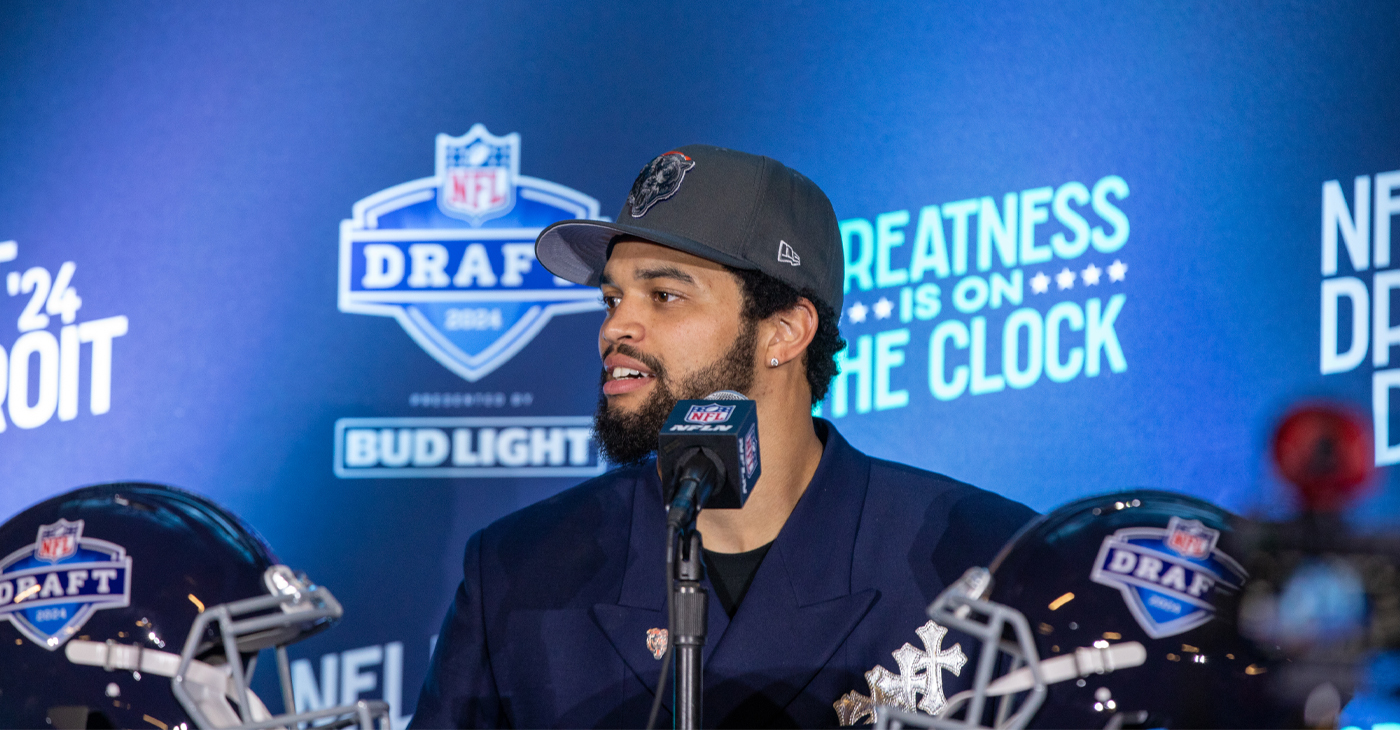
Philadelphia Eagles quarterback Jalen Hurts found Darius Cooper with nine seconds left for the game winning touchdown as his team beat the Tennessee Titans 24-20 in Nashville. Hurts finished the day 26/37 for 264 yards. He threw for two touchdowns and two interceptions.
Prior to the final drive, the Eagles ran 25 plays for 45 yards. During the final drive Hurts went 6-8 with 61 passing yards and the touchdown. Titans defensive tackle — and team captain — Jeffery Simmons said this week that the way to defend Jalen Hurts is to make him “play quarterback.”
Hurts said to Simmons after today’s game: “You started that sh**. I had to finish it.”
Running back Saquon Barkley suffered a stinger in the first half but he ultimately finished the game. He had four carries and nine yards and one catch for eleven yards. He will get an MRI for his injury, but admitted to Cameron Wolfe of the NFL Network he was fine.
Caleb Williams leaves game against Vikings with apparent lower-body injury
Chicago Bears quarterback Caleb Williams was helped off the field with a right leg injury with 7:42 remaining in the fourth quarter. Williams was down, writhing in pain after scrambling to his left. After departing the injury tent, Williams raised his right fist, acknowledging the crowd while expressing his frustration. Testing will commence on Monday to find out more details about his injury.
“We’ll know tomorrow,” Johnson admitted regarding Williams’ injury. “He’s in good spirits. He’s a team player.”
Williams finished the day with 138 passing yards and one interception.
“I’m actually happy it’s nothing with the knee — that was my first inclination,” Johnson said. “But, a hamstring could be pretty damaging as well. So, we’ll see. We’ll see how bad it is tomorrow and we’ll go from there.”
Bryce Young once again dominated the Falcons
Carolina Panthers quarterback Bryce Young is 5-1 against the Atlanta Falcons and is undefeated at Mercedes-Benz Stadium. Today, Young threw for 287 yards and three touchdowns as he led the Panthers to a 34-3 dismembering of the Atlanta Falcons. Georgia Tech alumnus Darren Waller caught two touchdowns and linebacker Devin Lloyd returned one of his two interceptions for a touchdown.
Cooper Rush started his second straight game for the Falcons and it did not go well. The partisan crowd voiced their displeasure after Rush completed 10/17 passes for 86 yards and two interceptions. Jack Strand entered the game for Rush prompting cheers from the Falcons fans. The rookie threw a pick-six on his first career pass attempt. Strand was the first QB to accomplish that feat since Sam Darnold in 2018 and is the first Falcons player to do that since Brett Favre in 1991. Strand finished the day with 59 passing yards and 16 rushing yards.
According to reports, quarterback Michael Penix, Jr. is expected to make his season debut this Thursday at the Green Bay Packers. His return should help the Falcons. They are the first team since the 2008 Rams to not run any plays in the red zone after the first two games to open a season.
The bright spots for the Falcons today were the Spelman College Jaguarettes performing with the Falcons cheerleaders and Florida A&M’s marching band, The Marching 100, also performed during halftime!
Jayden Daniels gets carted off after apparent arm injury
Washington Commanders quarterback Jayden Daniels appeared to injure his left elbow on the final play of the first half in his game against the Dallas Cowboys. During the play, Daniels got stepped on, braced himself for the fall, and his elbow bent the wrong way. Daniels draped a towel over his head as he exited the field on the cart.
He was later ruled out.
Daniels suffered a dislocated elbow to the same arm during week nine of last season against the Washington Commanders, which led to him being shut down for the remainder of the season.
The post NFL: Week Two Recap | Jalen Hurts did not fold; Caleb Williams exits game with injury appeared first on BlackPressUSA.
#NNPA BlackPress
The Complete Negotiation Framework — Every Stage, Every Tactic, Every Win
Master the complete vehicle-purchase negotiation framework with Roosevelt Gist and Roosevelt. Learn every stage, tactic, and win!
The post The Complete Negotiation Framework — Every Stage, Every Tactic, Every Win appeared first on BlackPressUSA.

Roosevelt Gist and Roosevelt deliver the complete vehicle-purchase negotiation framework in Episode 8 of The Color of Our Money Is Green. This episode covers the three foundations of every effective negotiation, the full seven-stage negotiation sequence with exact language for every stage, and five of the most common dealership tactics with the specific response each one requires.
What You Learn in This Episode:
The three foundations that make every negotiation tactic work
The complete seven-stage car-buying negotiation sequence
Exact language for every stage of the dealership conversation
Five common dealership tactics — the turnover, the four-square, the packed payment, spot delivery, and forced add-ons — and how to counter each one
Why signing preliminary paperwork isn’t the same as signing the final contract
___________________________________________________________________
“The Color of Our Money Is Green: A Buyer’s Guide to What Cars Actually Cost” — stan.store/RGist
____________________________________________________________________
AutoNetwork helps serious car shoppers inspect any new vehicle online before walking into a dealership. I’m Roosevelt — I’ve been reviewing cars and shaping digital car buying and credit union auto leasing since before YouTube car reviews existed.
You’ll find detailed walkaround reviews, POV test drives, and buyer-focused breakdowns covering comfort, space, features, and real-world value.
How to use the channel:
Watch the walkaround of the car you’re considering
Visit AutoNetwork.com for the full review
Check CouponsOffersAndDeals.com for current dealer specials
Walk in already knowing what you want — and what it should cost
 AutoNetwork.com
 CouponsOffersAndDeals.com
Affiliate disclosure: some links earn a small commission at no cost to you and help support the channel. Insta360 is one of those partners.
The post The Complete Negotiation Framework — Every Stage, Every Tactic, Every Win appeared first on BlackPressUSA.
#NNPA BlackPress
Mazda CX-90 Luxury: Heated Seats & Premium Comfort! #shorts
Stay toasty in the CX-90! Plush Nappa leather, heated/ventilated seats, and a memory-equipped heated steering wheel deliver ultimate luxury.
The post Mazda CX-90 Luxury: Heated Seats & Premium Comfort! #shorts appeared first on BlackPressUSA.
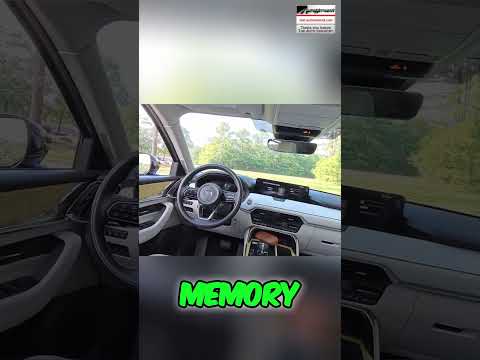
Experience ultimate comfort in the CX-90. Nappa leather, heated/ventilated seats, 8-way power adjustments, and memory settings for both front passengers. The heated steering wheel with memory tilt/telescope adds premium convenience.
 Watch the full video: https://youtu.be/EH5A4eQ4ipY
#AutoNetwork
The post Mazda CX-90 Luxury: Heated Seats & Premium Comfort! #shorts appeared first on BlackPressUSA.


Listening as a Lifeline: A Doula’s Witness to Black Maternal Health

New Protections for Ticket Buyers: Gov. Newsom Signs Assemblymember Isaac Bryan’s Bill

‘We Don’t Talk Trash — We Pick Up Trash!’

Zakiya Jendayi Arrested, Locked Out of Home by Sheriff’s Deputies

Oakland Post: Week of September 30 – October 6, 2026

Asm. Corey Jackson Announces Launch of 24-Hour Childcare in His District

IN MEMORIAM: The Rev. Leon “Sonny” Clark, Longtime Orange County Pastor and Community Leader, Dies at 72

Poll: Becerra Widens His Lead Over Hilton; Californians Split on Wealth Tax

From Historic Memories to New Possibilities: Oakland Celebrates Coliseum 60

County Office of Education Says OUSD Finances Are Getting Healthier, Materially Stronger

LIVE FREE Sunday Dinner Brings Faith, Fellowship and Civic Conversation to Oakland

Remembering Chauncey Bailey as Student Journalists Face Threats to Truth-Telling

BLACspace Cooperative Invites Bay Area to Experience Oakland’s Black Cultural Ecosystem Through a BLAC Map Tour + Party

In Wake of Death on Doorstep, Williams Chapel Baptist Church Calls for Better Care, Funding for Unhoused

Oakland Centenarian Nuna McKee Honored!

Standoff for Justice: Our Homes Are Worth Fighting For

Oakland Post: Week of August 26 – September 1, 2026

Frontier Airlines’ Return to Oakland Airport Brings Flights, Jobs and Opportunity

Gubernatorial Candidate Steve Hilton Blasts California New Tire Rules; Newsom Hits Back

Chef Sharon Lee Blends Culinary Excellence, Education and Empowerment

Jackie Wright Champions Bay Area Stories, Filmmakers and Cultural Institutions

Oakland Coliseum Project Opens Door for Small Businesses to Build Bigger

Big City Mayors Ask for “Yes” Vote on Housing Bond Measure; Conservatives Say “No”

Misnamed ‘Parent’ PAC Seeks to Influence Oakland School Board Elections

Gov. Newsom’s Latest Appointees Include Sacramento Advocate for Formerly Incarcerated Students; State’s New Tech Chief

Longtime BWOPA Member Brendalyn Goodall Appointed to California Workforce Development Board

Gov. Newsom Signs Law Shielding Immigration Aid Workers From Doxing Threats

Secretary of State Shirley N. Weber Urges Californians to Vote Early as Voter ID Battle Intensifies

Oakland Post: Week of September 2 – 8, 2026

IN MEMORIAM: Dolly Parton Dead at 80 — How She Built a Legacy of Love and Earned Her Place in Black Culture

The Conversation With Al McFarlane 6/23/26

Media Monday 6/22/26

LIVE! ASK ALMA! — TUES. 6.23.26 7PM EST

Car Buying Secrets: 4 Hidden Checks Before You Sign!

Is This 550 HP Charger Worth YOUR Money? AutoNetwork Review

Celebrating Juneteenth – Frederick Douglass on education and resistance

LIVE! — ASK ALMA! — TUES. 6.19.26 7PM EST

Hyundai Ioniq 5 Parking, Safety, and 360 View #shorts

2025 Ioniq 5 New Wiper & Powerful Performance! #shorts

Electric SUV Range: Is 259 Miles Enough? #shorts

EV Charging: How Fast Can You Charge an Electric Vehicle? #shorts

Biometric Cooling… Messaging Seats…Come on! 2025 Infiniti QX80 Autograph 4WD

Charged Up: Witness the Magic of a Fully Electric Car! #shorts

Range Rover Sport PHEV Included…: See What’s Inside This Luxury SUV! #shorts

Invisible Hood View: Perfect Parking with X-Ray Vision! #shorts
-
 Community3 weeks ago
Misnamed ‘Parent’ PAC Seeks to Influence Oakland School Board Elections
-
 Activism4 weeks ago
Oakland Post: Week of September 2 – 8, 2026
-

 Community3 weeks ago
Richmond Tiny House Village Farm & Garden Set to Open Gates on Sept. 26
-

 Activism3 weeks ago
Oakland Post: Week of September 9 – 15, 2026
-

 Black History3 weeks ago
Latest Massacre in Haiti Reveals Cruelty U.S. Deportations
-

 Black History3 weeks ago
OPINION: Nolan Wells’ Death One of Several Signifying Racial Terror Lives on in U.S. South
-

 Community3 weeks ago
Democratic Clubs Interview Candidates for Oakland School Board
-

 Business2 weeks ago
Mayor Lee Announces $1 Million Kaiser Permanente Grant for Pilot Program to Address Homelessness, Clean Up Public Spaces throughout Oakland
