
Food
Leah Chase: “We Changed The Course of the World over a Bowl of Gumbo”
NEW ORLEANS DATA NEWS WEEKLY — With the passing this week of New Orleans’ Queen of Creole cuisine, Leah Chase, a part of New Orleans has died. It was at her table where the Freedom Riders gathered to break bread after their dangerous journey into the segregated south. It was there where the NAACP planned strategy. She hosted musicians, artists, actors and Presidents. In typical fashion, she scolded President Obama for adding hot sauce to her already-perfectly-seasoned gumbo.

By Marc H. Morial, President and CEO National Urban League
“I was taught that your job was to make this earth better. I hope my children will carry on. I hope I’ve taught them enough to keep trying to grow, keep trying to make people understand how to enjoy life. Look at all the beautiful things around you, look at the progress. You gotta enjoy that, you gotta appreciate that, and I do.” – Leah Chase
With the passing this week of New Orleans’ Queen of Creole cuisine, Leah Chase, a part of New Orleans has died. It was at her table where the Freedom Riders gathered to break bread after their dangerous journey into the segregated south. It was there where the NAACP planned strategy. She hosted musicians, artists, actors and Presidents. In typical fashion, she scolded President Obama for adding hot sauce to her already-perfectly-seasoned gumbo.
My earliest memories of Mrs. Chase were Friday night outings with my grandparents to her landmark restaurant, Dooky Chase. In the days of Jim Crow, most of the upscale restaurants refused to serve Black patrons, so Dooky Chase quickly became a cultural, social and political center for Black life in New Orleans. When the National Urban League held our conference in New Orleans in 2012, I was proud to hold our Board of Trustees meeting there.
No visit home to New Orleans has ever been complete without a meal at Dooky Chase and a visit to the kitchen to catch up with its tireless proprietress. The woman whose portrait is enshrined in the National Portrait Gallery, and whose life inspired a beloved Disney character was born in Madisonville, Louisiana, across Lake Ponchartrain from New Orleans. One of 11 children, she was 6 years old when the Great Depression struck, and she recalled wearing clothes made from grain sacks and subsisting on food from their own garden.
She arrived in New Orleans to attend Catholic high school, and went on to work at a French Quarter restaurant for $1 a day. Just after World War II ended, she married jazz musician Edgar “Dooky” Chase, whose parents owned a po’ boy stand in Treme. Over the years she would transform the business into one of the most significant and celebrated restaurants in the entire country.
A generation of children were introduced to Leah Chase in the character of Tiana, Disney’s first African-American princess, in 2009’s The Princess and the Frog. When he first visited Dooky Chase, the film’s co-director John Musker, he was surprised to see a photo of General George Patton on the wall among Mrs. Chase’s famed collection of African-American art.
“She goes, ‘That was a man that I admired,’” Musker recalled. “It was just a great thing to see this warm and nurturing thing, but she has this flinty side, too, where she can be both. That’s what we tried to get with Tiana, that she’s very warm and vulnerable but she has a passion, spine and a backbone and she’s really trying to get something done and doesn’t give in easily to things.”
Mrs. Chase always said, “In my dining room, we changed the course of America over a bowl of gumbo and some fried chicken.” It was an honor beyond words to count her among my friends, and to carry forth her legacy.











Black History
Tradition Comes to the Streets in 11th Annual Black-Eyed Pea Festival at the Freedom Farmers Market
Mayor Barbara Lee stops by to support vendors, Winky Dinky Dogs owner Tyranny Allen A streamlined Oakland Black-Eyed Pea Festival took place on Sat. Sept. 12 in the lower Temescal neighborhood on the blocked off street that connect Shattuck and Telegraph avenues. An early start b

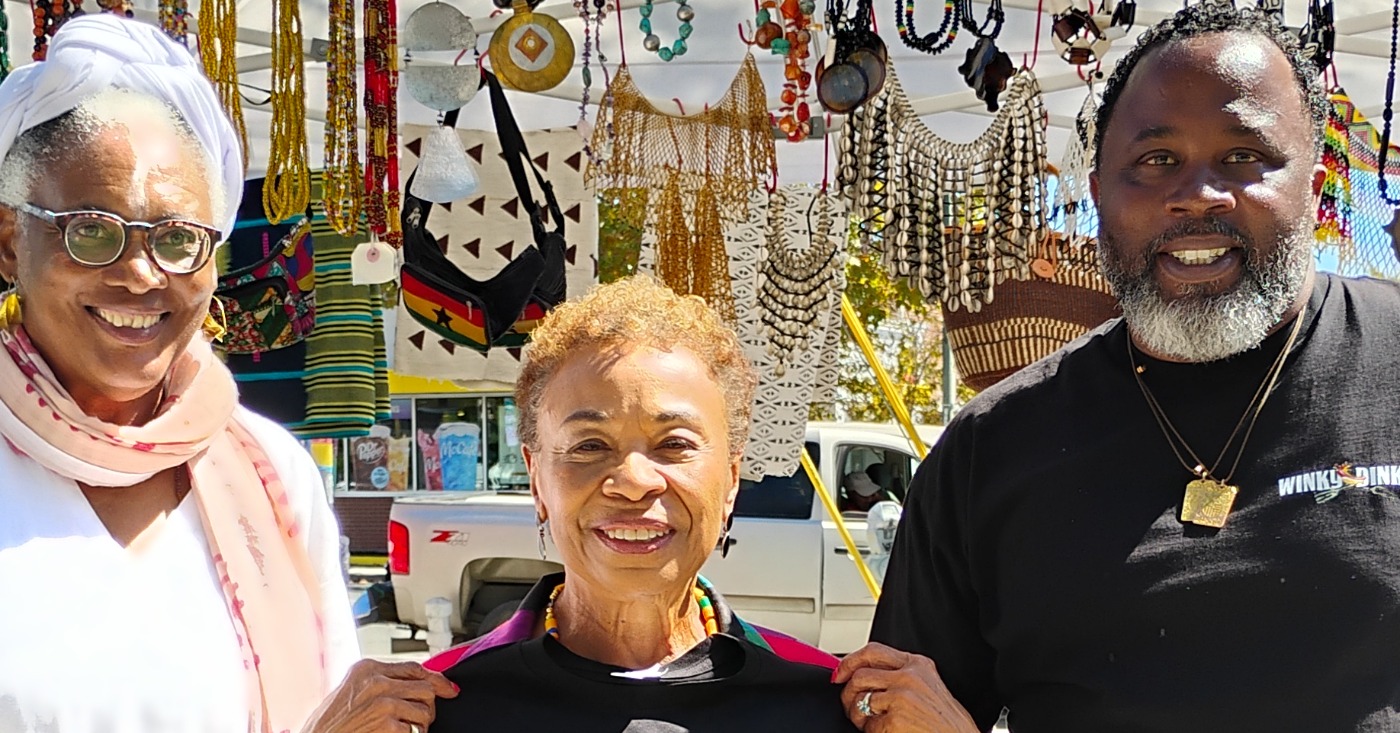
Mayor Barbara Lee stops by to support vendors, Winky Dinky Dogs owner Tyranny Allen
A streamlined Oakland Black-Eyed Pea Festival took place on Sat. Sept. 12 in the lower Temescal neighborhood on the blocked off street that connect Shattuck and Telegraph avenues.
An early start brought together vendor regulars from festival partner, the Freedom Farmers’ Market, and vendors who have supported the festival at its previous location at Marston Campbell Park.
Wanda Ravernell, the festival producer/director was on the verge of cancelling the festival because of funding limitations in May before reaching out to Elaine Smith, president of Farms to grow, Inc., which supervisors the market.
From its start in 2014, the festival has focused on the traditions of African American culture through music, food and art. That emphasis included fresh food vendors, particularly growers of African American legacy crops like black-eyed peas, yams, watermelon, collard greens and okra, which all originate in Africa.
To Fresno farmer Will Scott of Scott Family Farms, the Freedom Farmers’ Market allows him to bring those crops to the inner city – and support the nutrition of African Americans.
Shortly after the festival opened Saturday morning with prayers and salutes to the ancestors by Wakan Wiya Two-Spirit Drum and Awon Ohun Omnira, led M. Zamora and Otobaji Stewart respectively, 86-year-old Scott, the son of a sharecropper, announced that he will put other endeavors aside to dedicate the rest of his life to raise those foods.
Smith shared that Farms to Grow assists Black farmers in helping them overcome one of their main impediments to success – distribution – while creating alliances to help Black people maintain farmland and make it prosperous for younger generations to keep farming and farmland in the family.
As the morning progressed to afternoon, a steady stream of visitors drifted from booth to booth, chatting with vendors and each other.
Scott noted that a market day like this was what he was accustomed to in his youth, where the market was not just about buying things but also a place for valuable social exchange.
The social aspect became even pronounced shortly after midday when Oakland Mayor Barbara Lee stopped by to shop and visit with some of the vendors, including Ellen Bimpeh of Sankofa, and Ravernell who was selling T-shirts designed by Stewart.
Lee is also a fan of Winky Dinky Dogs, an eatery owned by Tyranny Allen whose second brick-and-mortar venture further anchors a hub of businesses at that corner.
As he has in previous years, Andre Thierry of Accordion Soul, closed the festival with a 90-minute set that brought young and the young-at-heart on their feet to dance in a line or as impromptu couples.
And, surprisingly, the man Allen refers to as the mayor of 45th Street, came out on cane and chair to sit by the curb in the sun and listen to music reminiscent of his Louisiana roots. His appearance seemed to echo Scott’s observance about the market: to bring people together.
The Freedom Farmers’ Market is located at 4521 Telegraph Avenue in Oakland and is open on the second and fourth Saturdays of each month until Nov. 14. For more information and to apply to be a vendor, go to https://www.farmstogrow.org/freedomfarmersmarket

Business
Chef Sharon Lee Blends Culinary Excellence, Education and Empowerment
Lee’s professional training took her to New Orleans, where she worked at Restaurant August and expanded her knowledge of Cajun, Creole, and French cuisine under the guidance of internationally recognized chef John Besh. When she returned to San Francisco, Lee was part of the kitchen staff that helped reopen the remodeled Cliff House at Ocean Beach.
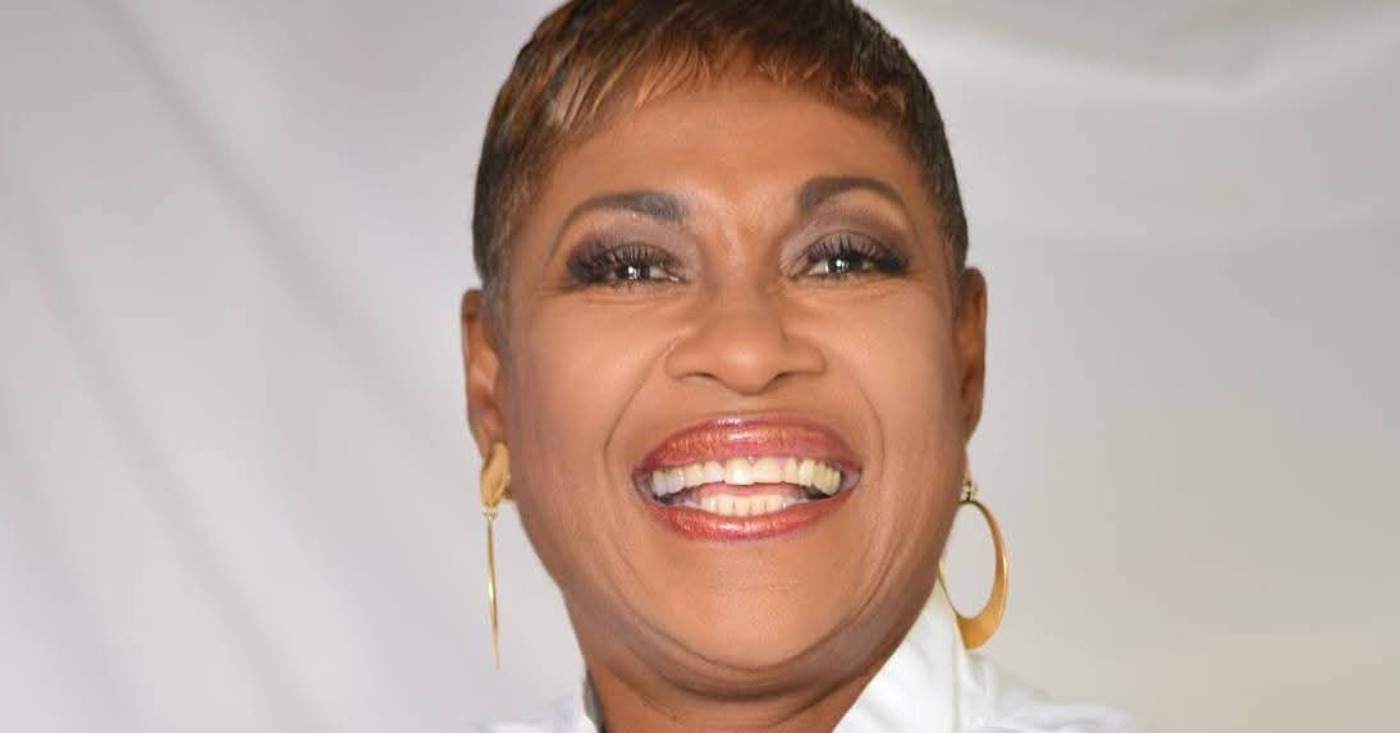
For Chef Sharon Lee, the kitchen has never been just a place to prepare meals. It has been a classroom, a workplace, a training ground and a doorway to opportunity.
The San Francisco chef, culinary educator and owner of The Spot! Fine Catering Services has spent more than two decades building a career that blends professional cooking with community service.
Now, Lee is expanding that mission through culinary workforce training and plans to launch a culinary academy that would provide underserved youth and adults with a pathway into the food and hospitality industries. Lee’s passion for cooking began in her mother’s kitchen; however, she built a thriving barbering business before graduating from the California Culinary Academy in San Francisco, where she completed the Cordon Bleu program with an associate degree in operations.
“At some point I wanted to try something new, and I have wonderful memories of helping my mother in the kitchen,” said Lee.
Lee’s professional training took her to New Orleans, where she worked at Restaurant August and expanded her knowledge of Cajun, Creole, and French cuisine under the guidance of internationally recognized chef John Besh. When she returned to San Francisco, Lee was part of the kitchen staff that helped reopen the remodeled Cliff House at Ocean Beach.
Those experiences helped shape the culinary style she later brought to The Spot! Fine Catering Services, which she founded in 2003.
“I have cooking specialties, but I can also cook Italian, soul food, and many foods inspired by different cultures.”
Along the way, Lee strengthened her business and operational skills by working with Paula LeDuc Fine Catering and Levy Restaurants, as well as venues such as the Oakland Arena and Coliseum, Chase Center, and Moscone Convention Center.
As a culinary department head with the San Francisco Unified School District, she directed enrichment programming for high school juniors and seniors, designing curriculum, field trips and health education seminars. She also created a pilot culinary and nutrition program through the University of San Francisco’s Upward Bound Program, teaching college-bound students healthy cooking through a garden-to-table model.
Her community work has included youth culinary education through Big Moma House, food safety and kitchen fundamentals through the Holiday Apron & Hat Program, reentry and job-readiness training through Black Owned Project 365, and culinary instruction for formerly incarcerated men through the Black Cultural Zone in East Oakland.
In her spare time, Lee enjoys feeding her friends, family, and the homeless in the community.
Lee also hosts culinary cohorts to help underserved participants develop practical skills needed to enter the workforce as prep cooks.
Her long-term vision is to build a culinary academy that brings those experiences together under one roof. Lee wants the academy to provide students with more than cooking lessons. Her goal is to teach employable skills, discipline, confidence, and the business knowledge needed to move from an entry-level kitchen position into careers in catering, hospitality, food service management, or entrepreneurship.
For Lee, the recipe is simple.
“It’s all about the next generation and making sure they have the skills and a level of preparation to build a viable career, a good life, and always help others on your journey,” she said.
Chef Sharon Lee will be a guest vendor at the 11th Annual Black-Eyed Pea Festival on Sept. 12 with the Freedom Farmer’s Market at 4521 Telegraph Ave. in Oakland from 9 a.m. to 2 p.m.
Black History
Madeline M. Turner: The Inventor Who Made Juicing Easier
Turner lived in Oakland during the early twentieth century, a period when opportunities for both women and African Americans in engineering, manufacturing, and invention were extremely limited. Nevertheless, she designed a sophisticated mechanical fruit press that could process citrus fruits much more efficiently than squeezing them by hand.
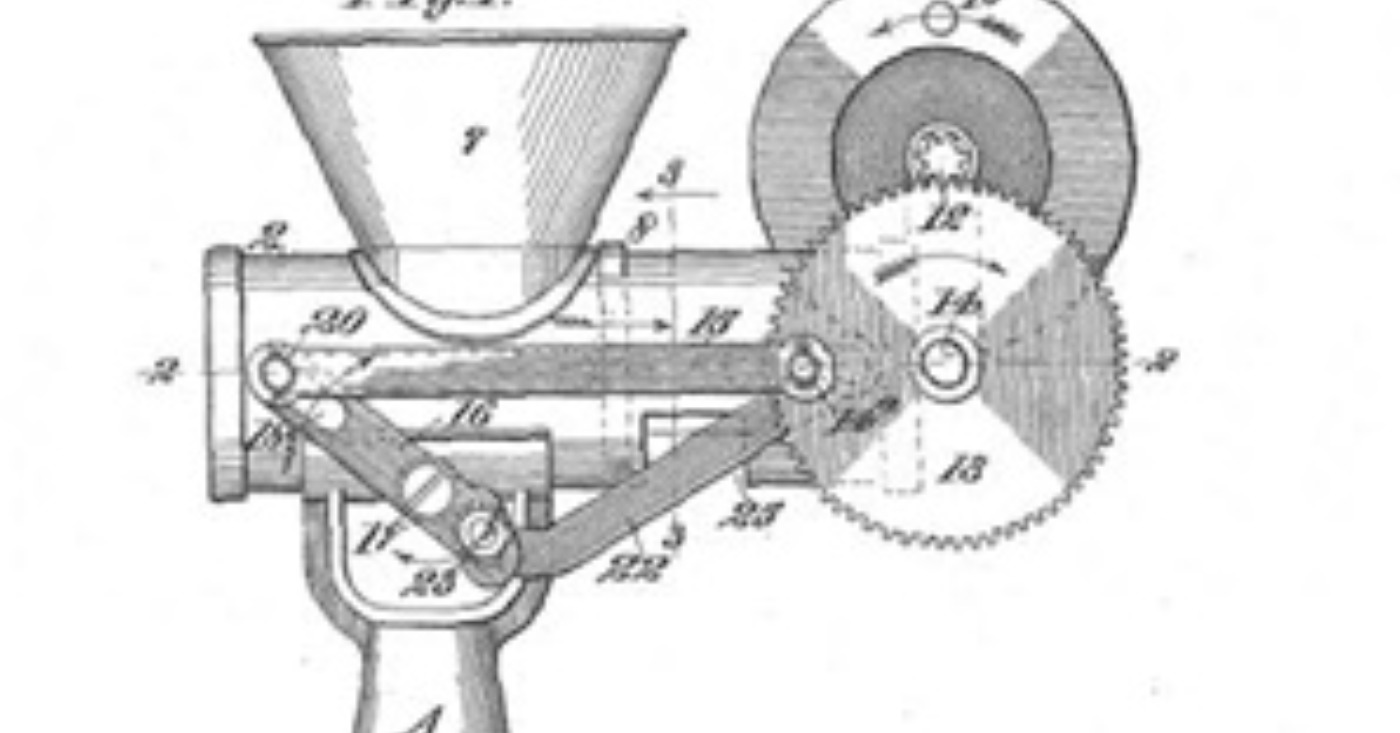
More than a century before juice bars, smoothie shops, and freshly pressed beverages became commonplace, an African American woman in Oakland, California, developed an ingenious machine for extracting juice from fruit.
Her name was Madeline M. Turner, and although little is known about her personal life, her remarkable invention earned her an important place in the history of American innovation.
Turner lived in Oakland during the early twentieth century, a period when opportunities for both women and African Americans in engineering, manufacturing, and invention were extremely limited. Nevertheless, she designed a sophisticated mechanical fruit press that could process citrus fruits much more efficiently than hand squeezing.
On July 26, 1915, Turner filed an application with the United States Patent Office for what she described as improvements to machines designed to extract juice from fruits such as oranges and lemons. On April 25, 1916, she received U.S. Patent No. 1,180,959 for her “Fruit-Press.”
Turner’s machine was much more complicated than a simple handheld juicer. Fruit entered the machine through an opening at the top and was fed individually into a pressing chamber. Inside, a cutting mechanism divided the fruit. Two plungers then moved toward one another, using specially shaped concave and convex pressing surfaces to squeeze the fruit and extract its juice.

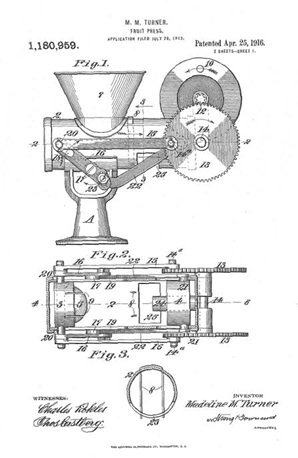
One particularly clever feature was the way the two plungers moved at different speeds and traveled different distances. Their coordinated movement allowed the machine to feed, cut, compress, and eventually release the fruit’s remains. She designed the apparatus to accomplish several steps mechanically rather than requiring a person to perform each operation by hand.
In her patent application, she also emphasized practicality. She explained that the machine was effective for its intended purpose and designed so that its parts could be kept clean—an especially important consideration for equipment used to prepare food and beverages.
Turner’s invention appeared during an era when the American food industry was rapidly becoming more mechanized. Machines were increasingly being developed to process, package, and distribute foods in larger quantities. Her fruit press demonstrated how mechanical engineering could make juice extraction faster and more efficient.
Unfortunately, historical records reveal little about what happened to Turner after her patent was issued. Her birth and death dates, education, family life, and later career have not been reliably documented. Even so, the surviving patent provides powerful evidence of her mechanical creativity and technical ability.
Today, Turner is remembered as one of the African American inventors whose innovations helped transform everyday life. Modern commercial juicing equipment is far more advanced than her 1916 machine, but the basic challenge Madeline tackled—automatically feeding, cutting, pressing, and extracting juice from fruit—remains central to food-processing technology.
Turner’s story reminds us that important inventors are sometimes nearly lost to history. However, thank goodness her patent will ensure that her creativity and contribution to American innovation will not be forgotten.



Asm. Corey Jackson Announces Launch of 24-Hour Childcare in His District

IN MEMORIAM: The Rev. Leon “Sonny” Clark, Longtime Orange County Pastor and Community Leader, Dies at 72

Poll: Becerra Widens His Lead Over Hilton; Californians Split on Wealth Tax

From Historic Memories to New Possibilities: Oakland Celebrates Coliseum 60

County Office of Education Says OUSD Finances Are Getting Healthier, Materially Stronger

LIVE FREE Sunday Dinner Brings Faith, Fellowship and Civic Conversation to Oakland

Remembering Chauncey Bailey as Student Journalists Face Threats to Truth-Telling

BLACspace Cooperative Invites Bay Area to Experience Oakland’s Black Cultural Ecosystem Through a BLAC Map Tour + Party

In Wake of Death on Doorstep, Williams Chapel Baptist Church Calls for Better Care, Funding for Unhoused

Oakland Centenarian Nuna McKee Honored!

Caribbean Nations Produce Action Plan Calling for UK Reparations Over Slavery

Oakland Post: Week of September 23 – 29, 2026

Doulas Are Helping Black California Moms Navigate Pregnancy–Even as High Mortality Rates Persist

Newsom Signs Addictive Social Media Law to Protect Kids

On Your November Ballot: Prop 38 Would Allocate $8.4 Billion to Immunology and Immunotherapy Funding

Standoff for Justice: Our Homes Are Worth Fighting For

Oakland Post: Week of August 26 – September 1, 2026

Frontier Airlines’ Return to Oakland Airport Brings Flights, Jobs and Opportunity

Gubernatorial Candidate Steve Hilton Blasts California New Tire Rules; Newsom Hits Back

Chef Sharon Lee Blends Culinary Excellence, Education and Empowerment

Jackie Wright Champions Bay Area Stories, Filmmakers and Cultural Institutions

Big City Mayors Ask for “Yes” Vote on Housing Bond Measure; Conservatives Say “No”

Oakland Coliseum Project Opens Door for Small Businesses to Build Bigger

Gov. Newsom’s Latest Appointees Include Sacramento Advocate for Formerly Incarcerated Students; State’s New Tech Chief

Misnamed ‘Parent’ PAC Seeks to Influence Oakland School Board Elections

Longtime BWOPA Member Brendalyn Goodall Appointed to California Workforce Development Board

Gov. Newsom Signs Law Shielding Immigration Aid Workers From Doxing Threats

Secretary of State Shirley N. Weber Urges Californians to Vote Early as Voter ID Battle Intensifies

From Palestine to Oakland: Seeds for Liberation Examines Shared Struggles for Freedom

IN MEMORIAM: Dolly Parton Dead at 80 — How She Built a Legacy of Love and Earned Her Place in Black Culture

The Conversation With Al McFarlane 6/23/26

Media Monday 6/22/26

LIVE! ASK ALMA! — TUES. 6.23.26 7PM EST

Car Buying Secrets: 4 Hidden Checks Before You Sign!

Is This 550 HP Charger Worth YOUR Money? AutoNetwork Review

Celebrating Juneteenth – Frederick Douglass on education and resistance

LIVE! — ASK ALMA! — TUES. 6.19.26 7PM EST

Hyundai Ioniq 5 Parking, Safety, and 360 View #shorts

2025 Ioniq 5 New Wiper & Powerful Performance! #shorts

Electric SUV Range: Is 259 Miles Enough? #shorts

EV Charging: How Fast Can You Charge an Electric Vehicle? #shorts

Biometric Cooling… Messaging Seats…Come on! 2025 Infiniti QX80 Autograph 4WD

Charged Up: Witness the Magic of a Fully Electric Car! #shorts

Range Rover Sport PHEV Included…: See What’s Inside This Luxury SUV! #shorts

Invisible Hood View: Perfect Parking with X-Ray Vision! #shorts
-
 Community2 weeks ago
Misnamed ‘Parent’ PAC Seeks to Influence Oakland School Board Elections
-

 Activism3 weeks ago
Oakland Post: Week of September 2 – 8, 2026
-

 Community2 weeks ago
Richmond Tiny House Village Farm & Garden Set to Open Gates on Sept. 26
-

 Black History2 weeks ago
OPINION: Nolan Wells’ Death One of Several Signifying Racial Terror Lives on in U.S. South
-

 Black History2 weeks ago
Latest Massacre in Haiti Reveals Cruelty U.S. Deportations
-

 Activism2 weeks ago
Oakland Post: Week of September 9 – 15, 2026
-

 Community2 weeks ago
Democratic Clubs Interview Candidates for Oakland School Board
-
 Featured2 weeks ago
‘Ready to See These Bills Become Law’: Sen. Weber’s Package of 15 Bills Advance to Gov. Newsom’s Desk

1 Comment