
Environment
Oakland’s Housing Market Spikes, Prices May Be Rising Faster Than SF

Oakland’s housing market continues to skyrocket, making the city one of the fastest-moving housing markets in the country, according to a new city report.
The report finds that rent prices in Oakland increased dramatically over the last 18 months – about 22 percent higher than in April 2014, pointing to growth that may be out-pacing San Francisco’s market, according to the city’s Quarterly Report on Foreclosure Issues presented Tuesday at the City’s Community and Economic Development (CED) committee meeting.
Home sales prices in Oakland have also escalated by 17 percent in the past year – the median home price is now at $507,750.
According to the report, the city’s growing housing market is being fueled by “an influx of international capital,” and homebuyers who have been priced out of San Francisco continue to find Oakland attractive as a more affordable alternative.
“Real folks can’t buy a house around here,” says Anya Svanoe, lead organizer at Alliance of Californians for Community Empowerment (ACCE). “Speculator activity is high in this area, and they’re the reason prices are going up so rapidly.
“So if I go to an auction to buy a home,” she said, “I’m going to find there are a ton of big developers with cash on hand who are going to outbid any regular person.”

Meanwhile, foreclosure rates have continued to decline over the past few years since 2012 when foreclosed homes were being auctioned at an average of 98 homes per month.
Over the past three months, the average fell to 20 foreclosed homes sold per month. However, compared with several years ago, most of those who are losing their homes now are longtime homeowners, including elderly residents whose houses have been in their families for several generations, the report said.
Despite the decrease in Oakland’s foreclosure rates this quarter, there were 160 new notices of default, 12 of which were short sold.
ACCE has joined a coalition of community organizations, ReFund Oakland, currently in the middle of a budget fight to allocate more funds to Oakland’s Tenant Protection Ordinance so that two fulltime staff members can be hired to respond to landlord harassing behavior.
“The ordinance right now has no teeth for tenant protection,” said Svanoe. “There is currently no staffing if anybody calls in with violation complaints. We’re fighting to get more money to support the ordinance so that Oakland can quickly act when tenants need it.”
Oakland’s housing market continues to skyrocket, making the city one of the fastest-moving housing markets in the country, according to a new city report.
The report finds that rent prices in Oakland increased dramatically over the last 18 months – about 22 percent higher than in April 2014, pointing to growth that may be out-pacing San Francisco’s market, according to the city’s Quarterly Report on Foreclosure Issues presented Tuesday at the City’s Community and Economic Development (CED) committee meeting.
Home sales prices in Oakland have also escalated by 17 percent in the past year – the median home price is now at $507,750.
According to the report, the city’s growing housing market is being fueled by “an influx of international capital,” and homebuyers who have been priced out of San Francisco continue to find Oakland attractive as a more affordable alternative.
“Real folks can’t buy a house around here,” says Anya Svanoe, lead organizer at Alliance of Californians for Community Empowerment (ACCE). “Speculator activity is high in this area, and they’re the reason prices are going up so rapidly.
“So if I go to an auction to buy a home,” she said, “I’m going to find there are a ton of big developers with cash on hand who are going to outbid any regular person.”
Meanwhile, foreclosure rates have continued to decline over the past few years since 2012 when foreclosed homes were being auctioned at an average of 98 homes per month.
Over the past three months, the average fell to 20 foreclosed homes sold per month. However, compared with several years ago, most of those who are losing their homes now are longtime homeowners, including elderly residents whose houses have been in their families for several generations, the report said.
Despite the decrease in Oakland’s foreclosure rates this quarter, there were 160 new notices of default, 12 of which were short sold.
ACCE has joined a coalition of community organizations, ReFund Oakland, currently in the middle of a budget fight to allocate more funds to Oakland’s Tenant Protection Ordinance so that two fulltime staff members can be hired to respond to landlord harassing behavior.
“The ordinance right now has no teeth for tenant protection,” said Svanoe. “There is currently no staffing if anybody calls in with violation complaints. We’re fighting to get more money to support the ordinance so that Oakland can quickly act when tenants need it.”













Business
Oakland Coal Terminal Backed by Trump Would Be Bigger, Dirtier Than Promised, Says Report
A recent feasibility study commissioned by potential investors says an Oakland coal terminal backed by President Donald Trump could export 13 million tons a year — three times the amount estimated in an earlier environmental review. Surprisingly, the report also contradicts devel

A recent feasibility study commissioned by potential investors says an Oakland coal terminal backed by President Donald Trump could export 13 million tons a year — three times the amount estimated in an earlier environmental review.
Surprisingly, the report also contradicts developers’ and project advocates’ repeated pledges that the coal would be stored in a covered terminal. Instead, the millions of tons of coal shipped annually from inland states to the West Gateway terminal in Oakland would be stored in “two open-air bunkers,” with about 150,000 tons of coal per stockpile, before being sent overseas, according to the recent report cited by the L.A. Times. (https://ruic.utah.gov/wp-content/uploads/2026/09/Port-Study-RUIC-Bulk-Commodity-Ocean-Terminals-Study.pdf)
Residents and clean air advocates have long expressed concerns that coal dust would worsen pollution in West Oakland and throughout the East Bay.
The proposed site of the Oakland Bulk and Oversized Terminal (OBOT) is located at the former Army base near the Port of Oakland, which developer Phil Tagami has been trying for years to turn into a shipping terminal despite determined community opposition.
Trump announced a $75-million investment in the project in June, about a third of its estimated cost. The new terminal would be the largest coal export site on the West Coast, transporting coal to Japan, South Korea, Taiwan, Vietnam and Malaysia, according to the Trump administration.
Opponents say a new terminal would undermine years of progress cleaning up the air in West Oakland, which has a history of disproportionate pollution and high asthma rates due to its proximity to the port and other industry.
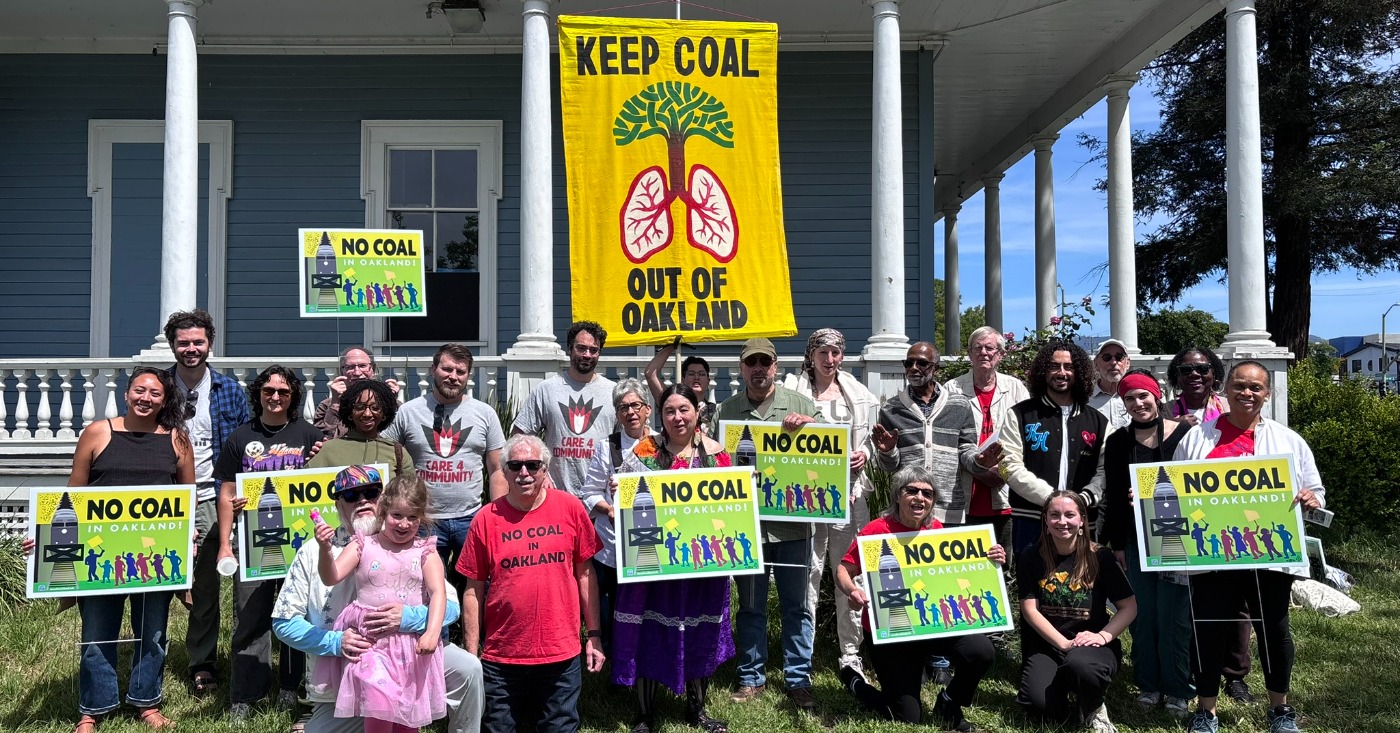
According to No Coal in Oakland organizer Ted Franklin, who has been active for 11 years in the fight to stop the coal terminal, the report indicates that investors may be looking for a cheaper way to build the terminal.
“We were shocked but not surprised” by the report, Franklin said. “Basically, it seems that the plan now is to store open piles of coal, which is a less expensive project than creating a completely enclosed facility.”
The threats that the project poses are real, but it faces a lot of economic and legal hurdles, he said.
Coal production is in permanent decline worldwide, he said, wondering who was going to “invest money in an industry that has no future.”
Further, the project has not yet attracted big investors. “There’s no bank, no financing, no financial institution backing this,” he continued.
A major legal hurdle facing the project is the passage of Assemblymember Mia Bonta’s bill, AB 40, the Community-First Coal Review Act, signed into law by Gov. Gavin Newsom on Sept. 30.
The law requires developers of large-volume bulk coal facilities to complete a full Environmental Impact Report (EIR) under the California Environmental Quality Act (CEQA) before they can operate.
The law was specifically designed to block or delay the coal terminal project.
The report to potential developers was produced by consulting groups Norda Stelo and Wood Mackenzie in July and released this month. It was commissioned by the Rural Utah Infrastructure Coalition, made up of eight Utah counties that are considering investing about $43 million into the terminal to receive Utah coal.
The consultants produced their findings after visiting Oakland, examining engineering documents and holding discussions with Savage Cos., a Utah-based transport and logistics company selected to operate the facility
Research has shown that coal terminal operations can be dangerous to public health. The ports of Los Angeles and Long Beach moved away from open-air coal and petroleum coke storage three decades ago.
The report says that the site could process 12 million metric tons, or 13.2 million tons, of coal each year, three times more than the terminal’s approved environmental impact report from 2002 and its 2012 addendum. Neither document mentions coal specifically, but rather bulk commodities.
The coal arriving in Oakland could also be dirtier then had been previously stated, according to the report. Project officials previously said the terminal would handle only high-grade western bituminous coal from Utah, but the recent report says it will also handle Powder River Basin coal from Wyoming and Montana, known to be much dustier.
Nor does the report mention plans to cover the rail cars to prevent pollution, though project officials previously promised they would only utilize coal transported in covered rail cars.
“It appears the developers want to build something much bigger and more polluting than anything they previously revealed, either in court or to the West Oakland community,” said Colin O’Brien, deputy managing attorney at the nonprofit Earthjustice, speaking to the L.A. Times.
The report indicates that the project may be much more expensive and take longer to complete than anticipated. The Energy Department estimates the terminal will cost about $231 million, but the report places the price at between $430 million and $625 million.
The terminal will take 53 months to complete according to the report, significantly longer than Trump’s promise of exports beginning in 2028.
Ted Franklin’s column, “Utah Study Blesses Investment in Oakland Coal Terminal but Leaves Key Questions Unanswered” is available at https://nocoalinoakland.info/utah-study-blesses-investment-in-oakland/

Commentary
Neighborhood Empowerment Day in Deep East Oakland Brings Community Together After Recent Tragedy
Hosted by the 40×40 Council, the free, family-friendly resource fair featured health and wellness services, workshops, children’s activities, food, giveaways and local Black-owned businesses. Residents also connected with community organizations working to strengthen East Oakland.

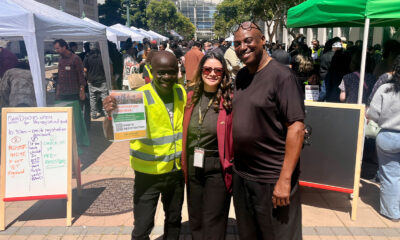
Families, residents and community organizations gathered at the Parker Community Resource Center on Saturday, Sept. 12, for the 40×40 Neighborhood Empowerment Day, transforming the site of a recent tragedy into a space for healing, resources, connection and joy.
Hosted by the 40×40 Council, the free, family-friendly resource fair featured health and wellness services, workshops, children’s activities, food, giveaways and local Black-owned businesses. Residents also connected with community organizations working to strengthen East Oakland.
The gathering came six weeks after a fatal shooting occurred at the Ney Avenue center on July 31. The violence happened shortly before 9 a.m. on the campus of the adult education center and claimed the life of 25-year-old Kimarii McLemore. A second person was injured.
McLemore was attending what was supposed to be her final day in an adult education carpentry class. The shooting deeply affected her family and traumatized students, staff members and residents who had viewed the center as a safe place where community members could pursue education, career training and a better future.

Neighborhood Empowerment Day offered residents an opportunity to return to the center in a spirit of unity and reclaim the space as an important neighborhood resource.

“Reclaiming the space after a tragedy means creating opportunities for people to gather, connect, experience joy and feel a sense of community once again,” said Tim Zenor-Davis, program manager at Roots Community Health. “After a trauma occurs, we see what happened, we acknowledge its impact, and we are continuing to show up.”
Throughout the afternoon, children and families participated in activities while residents received information about health, wellness and other community services. The event also gave local entrepreneurs and service providers an opportunity to connect with the community.
Complimentary meals included grilled burgers and tacos while a DJ played popular music.
Guests received blood pressure and eye-sight checks. A space to exercise on yoga mats was provided while headphones with guided meditation offered a moment to slow down and reflect.
The 40×40 Council includes the Black Cultural Zone, Brotherhood of Elders Network, East Oakland Youth Development Center and Roots Community Health. Together, the organizations have worked to address community violence and the deeper systemic conditions that have affected generations of East Oakland residents.
The council’s work has extended beyond responding to individual tragedies. As part of the broader Rise East initiative, the collaborative has focused on reversing decades of economic disinvestment, systemic poverty, health disparities and the displacement of Black legacy residents.
The 40×40 area stretches from Seminary Avenue to the San Leandro border and from MacArthur Boulevard to the Bay. More than 30,000 Black residents live within the area, which contains Oakland’s largest concentration of Black residents.
Organizers said the area has continued to demonstrate resilience despite experiencing community violence, declining investment and a significant life-expectancy gap compared with wealthier parts of the region.
The council seeks to help reshape East Oakland into a vibrant, multigenerational community where Black residents can remain, return, heal, prosper and build power.
Business
Oakland Launches Aerbits Program to Identify, Report Abandoned Trash
“Aerbits, which was approved by the Privacy Advisory Commission, uses modern technology and best practices to help our crews clear trash faster and more efficiently, while our targeted outreach and enforcement strategies address the root causes of dumping. Together, we are going to get the job done.”
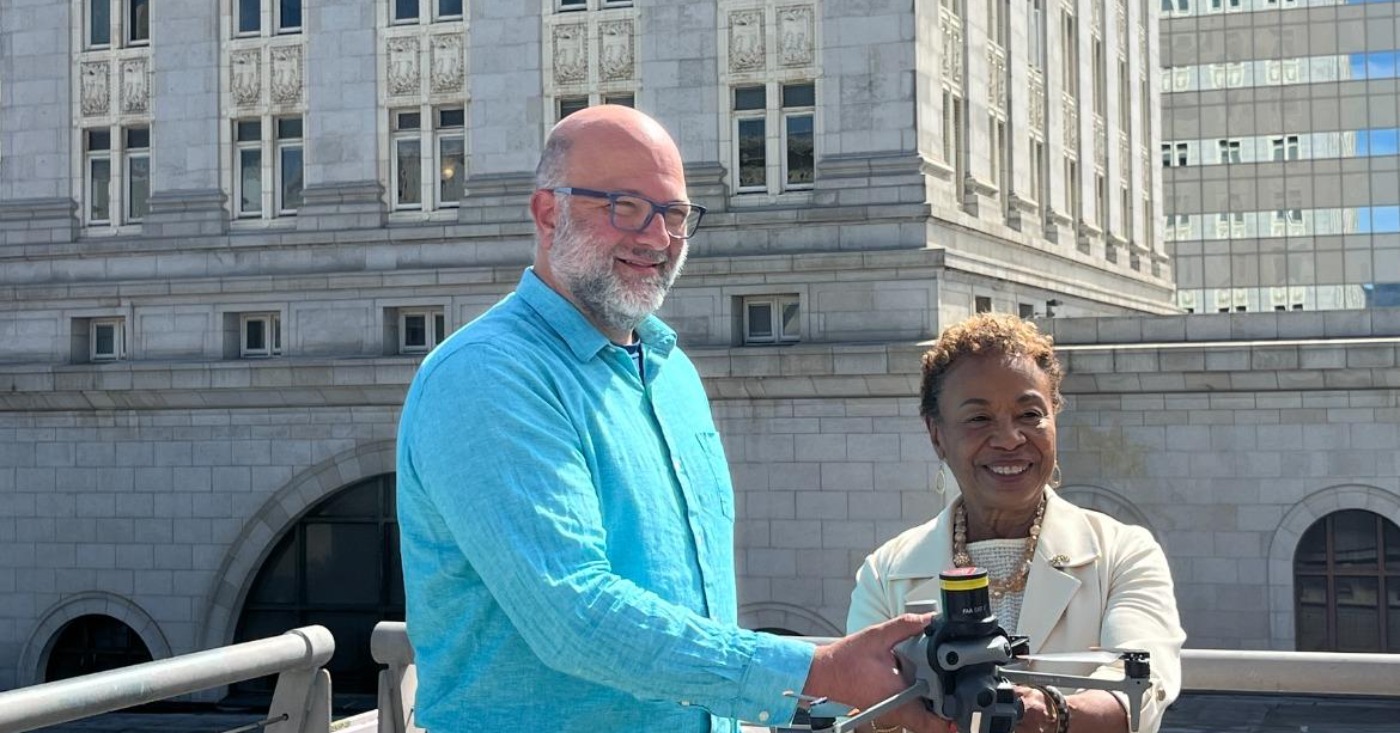
On Tuesday, the City of Oakland launched Aerbits, an innovative new program that deploys AI-assisted aerial imaging technology to proactively detect and report abandoned trash on streets and sidewalks – to support timely and effective removal of illegal dumping.
By shifting from a reactive, complaint-based system to data-driven proactive detection, the City can deploy cleanup resources faster, more efficiently, and more equitably to the areas in greatest need.
Approved by both the Privacy Advisory Commission and the Oakland City Council, Aerbits is the latest addition to Oakland’s comprehensive strategy to eliminate illegal dumping from the Town.
“Oakland residents and businesses deserve clean streets and today we are one step closer to a safer, cleaner, and greener Oakland,” said Mayor Barbara Lee. “Our strategy strengthens eradication, education, and enforcement efforts across every neighborhood.
“Aerbits, which was approved by the Privacy Advisory Commission, uses modern technology and best practices to help our crews clear trash faster and more efficiently, while our targeted outreach and enforcement strategies address the root causes of dumping. Together, we are going to get the job done.”
The impacts of illegal dumping on Oakland are profound, disproportionately burdening historically disinvested communities while threatening public health, safety, and economic vitality.
The City is united in taking action to remedy it – with the mayor, Council, administration, Public Works Department, community groups and more coming together to make change.
In May, the City Council approved the Illegal Dumping Expenditures Action Plan, which approves and funds multiple actions – including Aerbits – to help remedy illegal dumping.
This past June, Oakland secured $9.2 million from the Crankstart Foundation to scale up operations like Aerbits and break the cycle of illegal dumping across Oakland.
The Aerbits aerial imaging system photographs public rights-of-way to pinpoint exact locations, estimate waste volumes, and classify types of debris. This enables City dispatchers to understand the problem and efficiently deploy the appropriate crew and equipment to each site.
Built with privacy at its core, the technology contains no facial recognition, no license plate readers, and uses no personally identifying information. Aerbits takes pictures of trash – not of people.
“I founded Aerbits because I saw a major gap in the data that was available to City crews on the streets, and I wanted our children to have a cleaner environment” said Aerbits Founder Brian Johnson.
“Aerbits enables cleanups to be timelier, more effective, and more equitable. By providing real-time comprehensive data, automating the creation of work orders, and improving closure of cleared tickets, we are removing the problems that occur when relying primarily on a complaint-based system,” he said.
Aerbits is the latest milestone in the series of actions the City is taking to implement the City Council-approved Illegal Dumping Expenditures Action Plan. Recent actions taken by the City include:
- Stricter Enforcement: Enacted a new Illegal Dumping Enforcement Ordinance increasing penalties and holding vehicle owners responsible; hired additional Environmental Enforcement Officers equipped with updated citation technology; and worked alongside State Senator Jesse Arreguin on legislation that allows the City to boot vehicles tied to repeat dumping offences.
- Community Resources: Reinstated the popular “Bulky Block Parties” offering residents free, convenient ways to get rid of bulky waste, alongside expanded public education campaigns.
- Expanded Fleet Equipment: Obtained new heavy-duty Lightning Loader trucks that allow us to clean up more volumes of debris faster than ever before.
Rebecca Kaplan is a former City Councilmember-at-large for the City of Oakland.



Mayor Barbara Lee Holds Special State of the City Address in Deep East Oakland

Practitioners of African Traditional Spirituality Offer Ancestral Reverence Ritual Oct. 31

It’s Time to Lose Weight Before the Holidays

Trader Vic’s Returns to Its Oakland Roots

Oakland Coal Terminal Backed by Trump Would Be Bigger, Dirtier Than Promised, Says Report

Opponents Smear Effective African American Transit Director as Election Nears

Oakland Post: Week of October 14 – 20, 2026

OP-ED: The Black Church Writes AI’s Next Chapter

OP-ED: The Black Church Writes AI’s Next Chapter

WCCUSD Joins Statewide Organic School Food Purchasing Cooperative

Democrats, Community Groups Back Measure EE to Change How Oakland Is Governed

Four Tips to Help You Plan a Holiday “Staycation”

Veterans Housing Project Proposed for South Richmond
PRESS ROOM: Transformative Justice Coalition 2026 Voting Rights Champion Awards Reception ‘Yesterday Is Today: The Battle For Voting Rights

Mayor Lee Delivers 2026 State of the City Address: ‘Oakland Continues to Be on the Move’

Misnamed ‘Parent’ PAC Seeks to Influence Oakland School Board Elections

Listening as a Lifeline: A Doula’s Witness to Black Maternal Health

Poll: Becerra Widens His Lead Over Hilton; Californians Split on Wealth Tax

Oakland Post: Week of September 9 – 15, 2026

County Office of Education Says OUSD Finances Are Getting Healthier, Materially Stronger

Doulas Are Helping Black California Moms Navigate Pregnancy–Even as High Mortality Rates Persist

Richmond Tiny House Village Farm & Garden Set to Open Gates on Sept. 26

Mayor Lee Announces $1 Million Kaiser Permanente Grant for Pilot Program to Address Homelessness, Clean Up Public Spaces throughout Oakland

Zakiya Jendayi Arrested, Locked Out of Home by Sheriff’s Deputies

Latest Massacre in Haiti Reveals Cruelty U.S. Deportations

OPINION: Nolan Wells’ Death One of Several Signifying Racial Terror Lives on in U.S. South

BLACspace Cooperative Invites Bay Area to Experience Oakland’s Black Cultural Ecosystem Through a BLAC Map Tour + Party

Democratic Clubs Interview Candidates for Oakland School Board

Oakland Post: Week of September 16 – 22, 2026

Oakland People’s Arms Embargo Coalition Demands End to Military Shipments Thru Oakland

The Conversation With Al McFarlane 6/23/26

Media Monday 6/22/26

LIVE! ASK ALMA! — TUES. 6.23.26 7PM EST

Car Buying Secrets: 4 Hidden Checks Before You Sign!

Is This 550 HP Charger Worth YOUR Money? AutoNetwork Review

Celebrating Juneteenth – Frederick Douglass on education and resistance

LIVE! — ASK ALMA! — TUES. 6.19.26 7PM EST

Hyundai Ioniq 5 Parking, Safety, and 360 View #shorts

2025 Ioniq 5 New Wiper & Powerful Performance! #shorts

Electric SUV Range: Is 259 Miles Enough? #shorts

EV Charging: How Fast Can You Charge an Electric Vehicle? #shorts

Biometric Cooling… Messaging Seats…Come on! 2025 Infiniti QX80 Autograph 4WD

Charged Up: Witness the Magic of a Fully Electric Car! #shorts

Range Rover Sport PHEV Included…: See What’s Inside This Luxury SUV! #shorts

Invisible Hood View: Perfect Parking with X-Ray Vision! #shorts
-
 Black History3 weeks ago
Listening as a Lifeline: A Doula’s Witness to Black Maternal Health
-
 Economy4 weeks ago
Poll: Becerra Widens His Lead Over Hilton; Californians Split on Wealth Tax
-
 Business4 weeks ago
County Office of Education Says OUSD Finances Are Getting Healthier, Materially Stronger
-
 Lead Story3 weeks ago
Zakiya Jendayi Arrested, Locked Out of Home by Sheriff’s Deputies
-
 Art4 weeks ago
BLACspace Cooperative Invites Bay Area to Experience Oakland’s Black Cultural Ecosystem Through a BLAC Map Tour + Party
-

 Business4 weeks ago
From Historic Memories to New Possibilities: Oakland Celebrates Coliseum 60
-

 Community4 weeks ago
Asm. Corey Jackson Announces Launch of 24-Hour Childcare in His District
-

 Black History4 weeks ago
IN MEMORIAM: The Rev. Leon “Sonny” Clark, Longtime Orange County Pastor and Community Leader, Dies at 72
