
Books
Local teacher’s book teaches children reading, self-esteem
THE PHILADELPHIA TRIBUNE — In the 12 years that he spent teaching in the School District of Philadelphia, Andrew Vassall saw children struggle daily with issues that he wanted to address. But he wasn’t exactly sure how.

By John N. Mitchell
In the 12 years that he spent teaching in the School District of Philadelphia, Andrew Vassall saw children struggle daily with issues that he wanted to address.
But he wasn’t exactly sure how.
Years later, Vassall, now a fifth-grade teacher at the Elkins Park School in Cheltenham, thinks he has found a starting place with the publication of his first book, “The Black Crayon.”
“The Black Crayon,” Vassall says, “is a colorful, vibrant and captivating story of a box of colorful crayons with one black crayon who struggles to be accepted. With the love of a little girl, Laila, the black crayon begins to see his inner beauty. The book teaches self-awareness and cultural awareness to young children.”
The crayon shares a box with other crayons, all of whom are taken out and used daily by other children. Meanwhile, the black crayon never gets used. He begins to think that his color is the reason he is ignored and, as the days and weeks go by, his self-esteem dwindles and he begins to doubt his self-worth.
One day, Laila pulls him from the box. She draws a castle, a night sky, a princess, a bed for the princess and her pets as well — all with the black crayon. He eventually sheds tears of joy, and he learns “never to doubt himself, always be proud of who he is, and that black can be used in any picture because black is beautiful.”
Vassall, who is working on a doctorate in reading and literacy, said the idea for the book stems from the 1940s “Doll test” conducted by Kenneth and Mamie Clark. In the experiment, children of different races ages 3 to 7 were given four dolls of different colors and asked to identify which they preferred. Overwhelmingly, the children preferred the white dolls, which led Clark to conclude that “prejudice, discrimination and segregation” created feelings of inferiority among Black children.
Vassall sees the book, illustrated by Unc Jon, as an attack on racial perceptions and as a mechanism to encourage children, particularly African Americans and children in low-income homes, to become more avid readers.
While he was teaching in Philadelphia, Vassall said, he often became frustrated teaching children sometimes reading as many as three years below grade level.
“I wanted to do something that would both help build esteem in students and spark in them a desire to be more excited about reading, especially in urban areas,” Vassall said. “That’s why I went back to school.”
Vassall said “The Black Crayon” can be purchased both in stores and online. He has sold it locally at a number of events. During a Black History Month event at Cheltenham High School, his alma mater, Vassall was joined by his former elementary school teacher who was stunned to learn that her former student was not only teaching but also writing children’s books.
“I must have taught more than 800 students, so it’s rewarding when you see that one is following in your footsteps,” retired teacher Sydney Tiller said. “And to see that he has written such a delightful book that I know is going to encourage reading among students makes you feel good.”
A father of three children, Vassall, 47, has had his hands full raising a family and working on a doctorate. However, he says he has been bitten by the publishing bug and plans to publish another book looking at blended families and changing family dynamics during the summer.
“It’s a great outlet and great way to encourage reading and teaching,” Vassall said. “I’m excited about doing this work.”
This article originally appeared in The Philadelphia Tribune.









Black History
Oakland Observes Black August with Block Parties, Film Showings, Workshops
On Aug. 7, 1970, Jonathan Jackson burst into a Marin County courtroom armed with a shotgun to demand the freedom of the Soledad Brothers. He, along with the inmates he freed, was shot and killed while driving away. This involved one of the Black Panther Party’s most notable associates, Angela Davis, because the shotgun was registered in her name. She was later acquitted for charges of conspiracy, kidnapping, and murder in 1972.


Study. Train. Fast. Fight.
These are the four tenets of Black August, a month dedicated to commemorating the sacrifices of political prisoners and Black revolutionaries in the struggle for Black liberation.
Observers are urged to study the history of the Black struggle for freedom, train their bodies for health and self-defense, fast to cleanse the mind, body, and spirit, and fight ongoing oppression alongside their communities and local political organizations.
In Oakland, Black August celebrations are being held all month long. It has particular significance here because of the links between the Black Panthers’ organizing activities that highlighted both the social conditions and over-policing of the Black community, leading to the high incarceration rates and disproportionately long prison sentences.
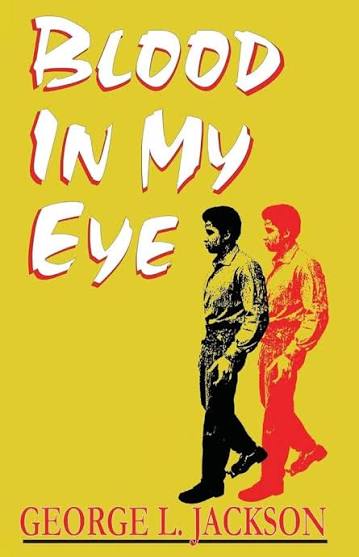
Beginning in 1979 in San Quentin State Prison, the Black Guerrilla Family called for the remembrance of political prisoner George Jackson and his brother Jonathan Jackson, who were assassinated in the early 1970s. George Jackson was considered a political prisoner in that it was the anti-Black justice system that led to his incarceration for armed robbery with a sentence of one year-to-life in 1960.

While in prison, George befriended fellow prisoner W.L. Nolen, who introduced him to the works of Karl Marx, Vladimir Lenin, Mao Zedong, and Frantz Fanon. This radicalization coupled with his experiences of violence while imprisoned led to him writing and publishing two books, “Soledad Brother” (1970), and “Blood in my Eye” (1972). In January of 1970, George and two other prisoners were charged with murdering a corrections officer at Soledad State Prison in Monterey County.
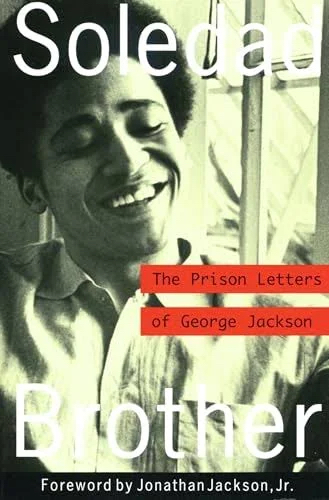
On Aug. 7, 1970, Jonathan Jackson burst into a Marin County courtroom armed with a shotgun to demand the freedom of the Soledad Brothers. He, along with the inmates he freed, was shot and killed while driving away. This involved one of the Black Panther Party’s most notable associates, Angela Davis, because the shotgun was registered in her name. She was later acquitted for charges of conspiracy, kidnapping, and murder in 1972.
On Aug. 21, 1971, George Jackson was assassinated by a corrections officer after attempting to escape and free other inmates. As a result, there were uprisings and protests within prisons all over the country that year, calling forth resistance against racial oppression and mass incarceration.
Since its outset, Black August has evolved across the country, taking many forms to honor this history and embody the four tenets.
In Oakland, the upcoming Black August Experience, hosted by Youth Alive! and the East Oakland Boxing Association (EOBA), is a free, family-friendly event celebrating the legacy of Black August. Activities include free food and drinks, a kids’ activity zone, interactive workshops, live cooking and boxing demonstrations, and more.
Happening on Aug. 21 from 4-8 p.m. at the EOBA Patio, Carolyn Flynn, director of administration at EOBA, said the event, in its second year, will be an opportunity to engage with people in person through food, shared space, and education.
“We do regular classes in education, and those are ongoing programs that we offer, but we wanted to have [an opportunity] for our neighbors to utilize this space.” Combined with Youth Alive’s work in community violence prevention and youth leadership, this event surely aims to bring the Oakland community together to capture what Black August means today.
Here are additional Black August events happening in Oakland:
Forum and Community Discussion hosted by the Oakland Liberation Center, 1499 Fruitvale Ave., Aug. 14, 7 p.m.
“George Jackson/San Quentin” Screening hosted by Nostalgic for Nothing Cinema at Moments Co-Op, 410 13th St., Aug. 16, doors at 6 p.m., show at 6:30 p.m. (Masks required and scent-free)
Commemorating the Struggle, Building the Altar for Liberation: Black August at Bandung Books, 2269 International Blvd., Aug. 23, 1-5 p.m.
Building Opportunities for Self-Sufficiency (BOSS), will host “Black August: The Arc of Liberation” at Oakland City Hall on Sat. Aug. 29, from 11 a.m. to 3 p.m.

Black History
Oakland Observes Black August with Block Parties, Film Showings, Workshops
POST NEWS GROUP — Beginning in 1979 in San Quentin State Prison, the Black Guerrilla Family called for the remembrance of political prisoner George Jackson and his brother Jonathan Jackson who were assassinated in the early 1970s. George Jackson was considered a political prisoner in that it was the anti-Black justice system that led to his incarceration for armed robbery with a sentence of one year-to-life in 1960.
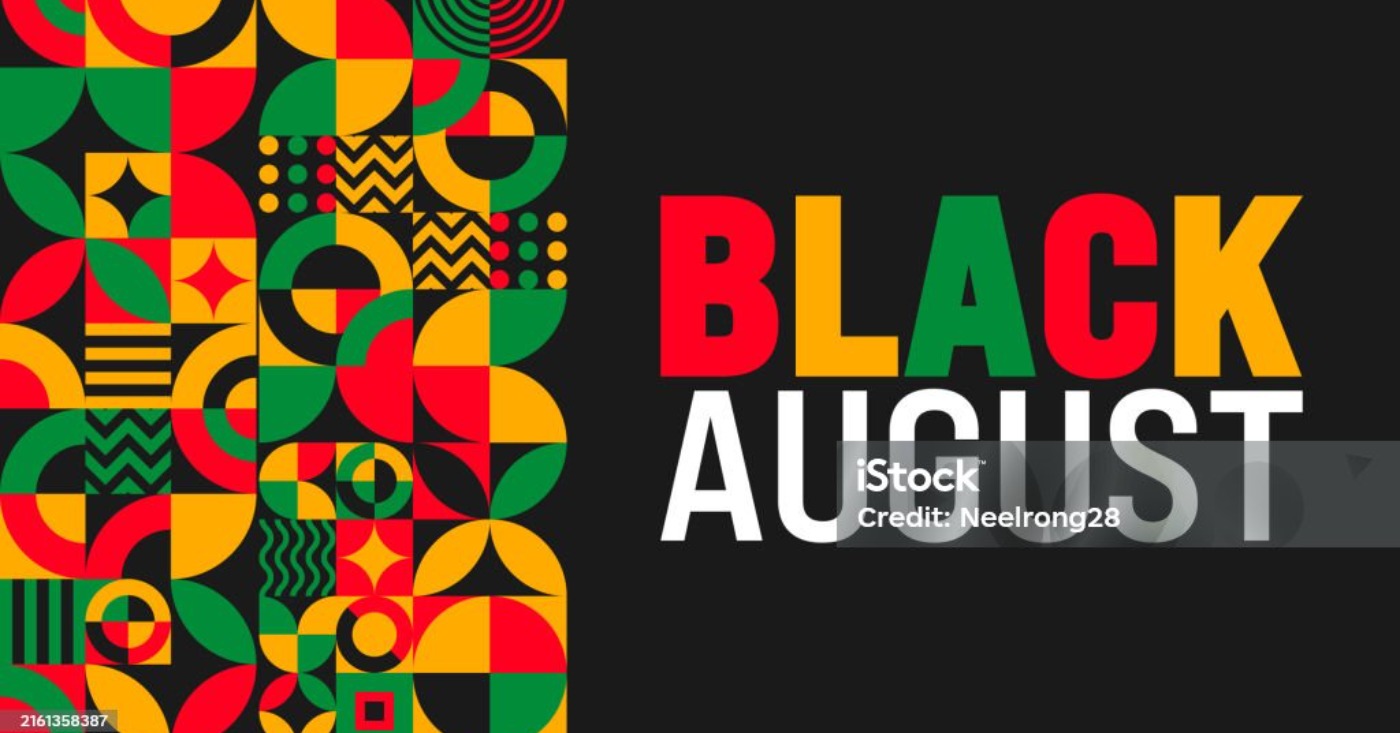
Study. Train. Fast. Fight.
These are the four tenets of Black August, a month dedicated to commemorating the sacrifices of political prisoners and Black revolutionaries in the struggle for Black liberation.
Observers are urged to study the history of the Black struggle for freedom, train their bodies for health and self-defense, fast to cleanse the mind, body, and spirit, and fight ongoing oppression alongside their communities and local political organizations.
Beginning in 1979 in San Quentin State Prison, the Black Guerrilla Family called for the remembrance of political prisoner George Jackson and his brother Jonathan Jackson who were assassinated in the early 1970s. George Jackson was considered a political prisoner in that it was the anti-Black justice system that led to his incarceration for armed robbery with a sentence of one year-to-life in 1960.
While in prison, George befriended fellow prisoner W.L. Nolen, who introduced him to the works of Karl Marx, Vladimir Lenin, Mao Zedong, and Frantz Fanon. This radicalization coupled with his experiences of violence while imprisoned led to him writing and publishing two books, “Soledad Brother” (1970), and “Blood in my Eye” (1972). In January of 1970, George and two other prisoners were charged with murdering a corrections officer at Soledad State Prison in Monterey County.

On Aug. 7, 1970, Jonathan Jackson burst into a Marin County courtroom armed with a shotgun to demand the freedom of the Soledad Brothers. He, along with the inmates he freed, was shot and killed while driving away. This involved one of the Black Panther Party’s most notable associates, Angela Davis, because the shotgun was registered in her name. She was later acquitted of charges of conspiracy, kidnapping, and murder in 1972.
On Aug. 21, 1971, George Jackson was assassinated by a corrections officer after attempting to escape and free other inmates. As a result, there were uprisings and protests within prisons all over the country that year, calling forth resistance against racial oppression and mass incarceration.
Since its outset, Black August has evolved across the country, taking many forms to honor this history and embody the four tenets.
In Oakland, the upcoming Black August Experience, hosted by Youth Alive! and the East Oakland Boxing Association (EOBA), is a free, family-friendly event celebrating the legacy of Black August. Activities include free food and drinks, a kids’ activity zone, interactive workshops, live cooking and boxing demonstrations, and more.
Happening on Aug. 21 from 4-8 p.m. at the EOBA Patio, Carolyn Flynn, director of administration at EOBA, said the event, in its second year, will be an opportunity to engage with people in person through food, shared space, and education.
“We do regular classes in education, and those are ongoing programs that we offer, but we wanted to have [an opportunity] for our neighbors to utilize this space.” Combined with Youth Alive’s work in community violence prevention and youth leadership, this event surely aims to bring the Oakland community together to capture what Black August means today.
Here are additional Black August events happening in Oakland:
Forum and Community Discussion hosted by the Oakland Liberation Center, 1499 Fruitvale Ave., Aug. 14, 7 p.m.
“George Jackson/San Quentin” Screening hosted by Nostalgic for Nothing Cinema at Moments Co-Op, 410 13th St., Aug. 16, doors at 6 p.m., show at 6:30 p.m. (Masks required and scent-free)
Commemorating the Struggle, Building the Altar for Liberation: Black August at Bandung Books, 2269 International Blvd., Aug. 23rd, 1-5 p.m.
Building Opportunities for Self-Sufficiency (BOSS), will host “Black August: The Arc of Liberation” at Oakland City Hall on Sat. Aug. 29, from 11 a.m. to 3 p.m.
Activism
Oakland Post: Week of August 12 – 18, 2026
The printed Weekly Edition of the Oakland Post: Week of August 12 – 18, 2026


To enlarge your view of this issue, use the slider, magnifying glass icon or full page icon in the lower right corner of the browser window.


WORK FROM HOME
Home-based business with potential monthly income of $10K+ per month. A proven training system and website provided to maximize business effectiveness. Perfect job to earn side and primary income. Contact Lynne for more details: Lynne4npusa@gmail.com 800-334-0540


OPINION: 57,000 Empty Apartments and Not a Word of Apology – City Limits

Oakland Protesters Rally to Defend Haitian Immigrants and TPS

First 5 Alameda County Celebrates First Year of Measure C’s Implementation

From Palestine to Oakland: Seeds for Liberation Examines Shared Struggles for Freedom

NABJ Convention Brings Black Journalists, Civic Leaders Together in Atlanta

At Sacramento Summit, Becerra Discusses Policy; Uses “Family” Metaphor to Frame Case for National Political Unity

$5 Billion Coliseum Vision Puts Oakland Jobs, Businesses at Center

Gov. Newsom Nominates 3 Black Women Judges to Serve on State Courts of Appeal

Oakland Observes Black August with Block Parties, Film Showings, Workshops

NPRC Elder Justice Symposium Invites Community to Join Effort to Protect Alameda County Elders
Episode 4: Grow Stronger After 50
Episode 4: Grow Stronger After 50

Four Candidates, Including Incumbent Barbara Lee, Qualify for Oakland Mayor’s Race

Oakland Observes Black August with Block Parties, Film Showings, Workshops

Oakland Post: Week of August 12 – 18, 2026

Department of Homeland Security Demands California Secretary of State Shirley N. Weber Scrub Voter Rolls

New Judge Could Decide if Karmelo Anthony Gets a New Trial

Oakland Children’s Hospital Workers and Patients Rally for Pediatric Medical Care

“The Power to See Threats Sooner”: Gov. Newsom, Safety Officials Showcase California’s Investments in Hi-Tech Wildfire Prevention

Alpha Kappa Alpha Sorority, Inc. Celebrates New North Atlantic Regional Director

Surveillance Pricing Fight: State Senate Debates Bill Banning Retailers from Using AI to Set Prices Based on a Buyer’s Profile

Mount Zion MBC, Church of Jesus Christ of Latter-day Saints Partner to Bring 29,000 Meals to Alameda County

California Sen. Padilla Joins Colleagues to Introduce Bill Imposing Term Limits on Supreme Court Justices

Less Affluent School Districts, Including Sacramento City, Face Threat of State Takeover

Car Wash Workers Cope with Lingering Impacts of ICE Raids

Starting This Summer, California Car Buyers Can Get an Instant $3500 Off the Cost of Electric Vehicles

COMMENTARY: You Are Already Paying for the AI Boom

California Bill Would Let Abuse Victims Use Trauma as Legal Defense for Violent Crime

Fed Court to Decide Landmark First Amendment Case

Gov. Gavin Newsom Signs Law Streamlining Affordable Housing Rules

The Conversation With Al McFarlane 6/23/26

Media Monday 6/22/26

LIVE! ASK ALMA! — TUES. 6.23.26 7PM EST

Car Buying Secrets: 4 Hidden Checks Before You Sign!

Is This 550 HP Charger Worth YOUR Money? AutoNetwork Review

Celebrating Juneteenth – Frederick Douglass on education and resistance

LIVE! — ASK ALMA! — TUES. 6.19.26 7PM EST

Hyundai Ioniq 5 Parking, Safety, and 360 View #shorts

2025 Ioniq 5 New Wiper & Powerful Performance! #shorts

Electric SUV Range: Is 259 Miles Enough? #shorts

EV Charging: How Fast Can You Charge an Electric Vehicle? #shorts

Biometric Cooling… Messaging Seats…Come on! 2025 Infiniti QX80 Autograph 4WD

Charged Up: Witness the Magic of a Fully Electric Car! #shorts

Range Rover Sport PHEV Included…: See What’s Inside This Luxury SUV! #shorts

Invisible Hood View: Perfect Parking with X-Ray Vision! #shorts
-
 Featured2 weeks ago
Department of Homeland Security Demands California Secretary of State Shirley N. Weber Scrub Voter Rolls
-
 #NNPA BlackPress3 weeks ago
New Judge Could Decide if Karmelo Anthony Gets a New Trial
-
 Business4 weeks ago
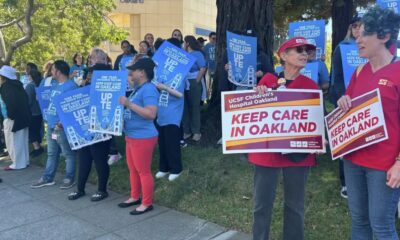
Oakland Children’s Hospital Workers and Patients Rally for Pediatric Medical Care
-
 Environment2 weeks ago
“The Power to See Threats Sooner”: Gov. Newsom, Safety Officials Showcase California’s Investments in Hi-Tech Wildfire Prevention
-
 Black History3 weeks ago
Alpha Kappa Alpha Sorority, Inc. Celebrates New North Atlantic Regional Director
-
 Business4 weeks ago
Surveillance Pricing Fight: State Senate Debates Bill Banning Retailers from Using AI to Set Prices Based on a Buyer’s Profile
-
 Business4 weeks ago
Mount Zion MBC, Church of Jesus Christ of Latter-day Saints Partner to Bring 29,000 Meals to Alameda County
-
 Featured2 weeks ago
California Sen. Padilla Joins Colleagues to Introduce Bill Imposing Term Limits on Supreme Court Justices
