
Commentary
COMMENTARY: Florida Education Plan Lacking in Both Promise and Practice
THE WESTSIDE GAZETTE —

By Carma Henry
How is Florida addressing the needs of its lowest-performing schools under Every Student Succeeds Act (ESSA)? Last year, an independent non-profit education advocacy organization called the Collaborative for Student Success set out to find out. They did so by convening a group of education experts from around the country to take an in-depth look at the way 17 states were supporting and encouraging local school improvement efforts (which can be found at http://promisetopractice.org). The experts, both from the federal and district level, provided education officials, and state lawmakers with independent information on how each state could improve their plans, as well as their plans’ implementation. What they found, however, was not encouraging when it comes to Florida’s ESSA plan and implementation.
Florida’s ESSA Saga
In September 2018, Florida received final approval from the U.S. Department of Education for its plan for tracking student progress and measuring school performance, as required by federal law.
Florida was the last state in the nation to receive such approval, as the state and federal education officials wrangled for months over the state’s proposed plan. Originally, the state’s plan was submitted to the U.S. Department of Education in September 2017, but failed to include specific waiver requests to portions of the law to which it objected. Federal officials sent it back to Florida’s Department of Education saying they couldn’t pick and choose what aspects of the law to follow, and that they needed to submit waivers for portions of the law to which they would like an exception. The state submitted a revised ESSA plan to federal officials in April 2018 to try and comply with federal officials’ requests and included a separate federal school rating system—one that factors in English-language performance—which would work alongside the state’s existing A-F grading methodology to target struggling schools.
ESSA, Equity, English-Language Learners, and Subgroups
The primary areas of divergence between Florida and federal education officials had to do with the state’s proposed approach to provisions regarding English-language learners and demographic-based sub-groups. But federal officials weren’t the only ones saying that Florida’s plan left a lot to be desired. Civil rights groups repeatedly raised the alarm as well, asking Secretary DeVos to reject Florida’s ESSA plan. In a November 2017 letter to DeVos, more than a dozen civil rights groups said they had “significant concerns” regarding the plan, which they believed failed “to serve the interests of marginalized students in the state” and “to comply with the requirements of the law.”
According to Dr. Rosa Castro Feinberg, who serves on the committee for LULAC Florida, an advocacy group serving all Hispanic nationality groups, Florida’s “current plan includes features that contradict common sense, expert opinion, popular will, and the intent of the ESSA. Contrary to the purposes of the ESSA, the Florida plan denies attention to struggling subgroups of students. Without attention, there can be no correction.”
A year later, with Florida now implementing a revised state accountability plan, the peer reviewers convened by the Collaborative had similar (and additional) concerns. While noting that “empowering local leaders is a core component of successful school turnaround,” the peer reviewers worried that “too much autonomy, without sufficient state supports, may not help the students and schools in most need.” This, the peer reviewers believe, reflects a “lack of commitment to closing achievement gaps by not addressing subgroup performance or English learner proficiency in the state’s accountability system,” meaning “districts and schools are less likely to focus on these populations as they plan and implement school improvement strategies.” The exact concern and fear raised by civil rights groups a year earlier.
The peer reviewers did applaud Florida for its “overall clear, student-focused vision around high standards, college and career readiness, and rigorous accountability and improvement,” and “clearly defined and easy-to-understand A-F grading system, which places a strong emphasis on academic growth and accelerated coursework.”
However, the peer re-viewers recommend that the state rework its accountability system to incorporate student subgroups and English-language learner proficiency. They also note that Florida’s use of dual accountability systems “raises issues with school improvement implementation as it can cause confusion about which schools are being identified and how to prioritize efforts.”











Business
OPINION: 57,000 Empty Apartments and Not a Word of Apology – City Limits
BLACKPRESSUSA NEWSWIRE — “Short-term rental income was, for many of these families, not a luxury. It was the margin between keeping the house and losing it. Local Law 18 closed that door, and the people who closed it are now waving away 57,000 empty apartments as statistical noise.”

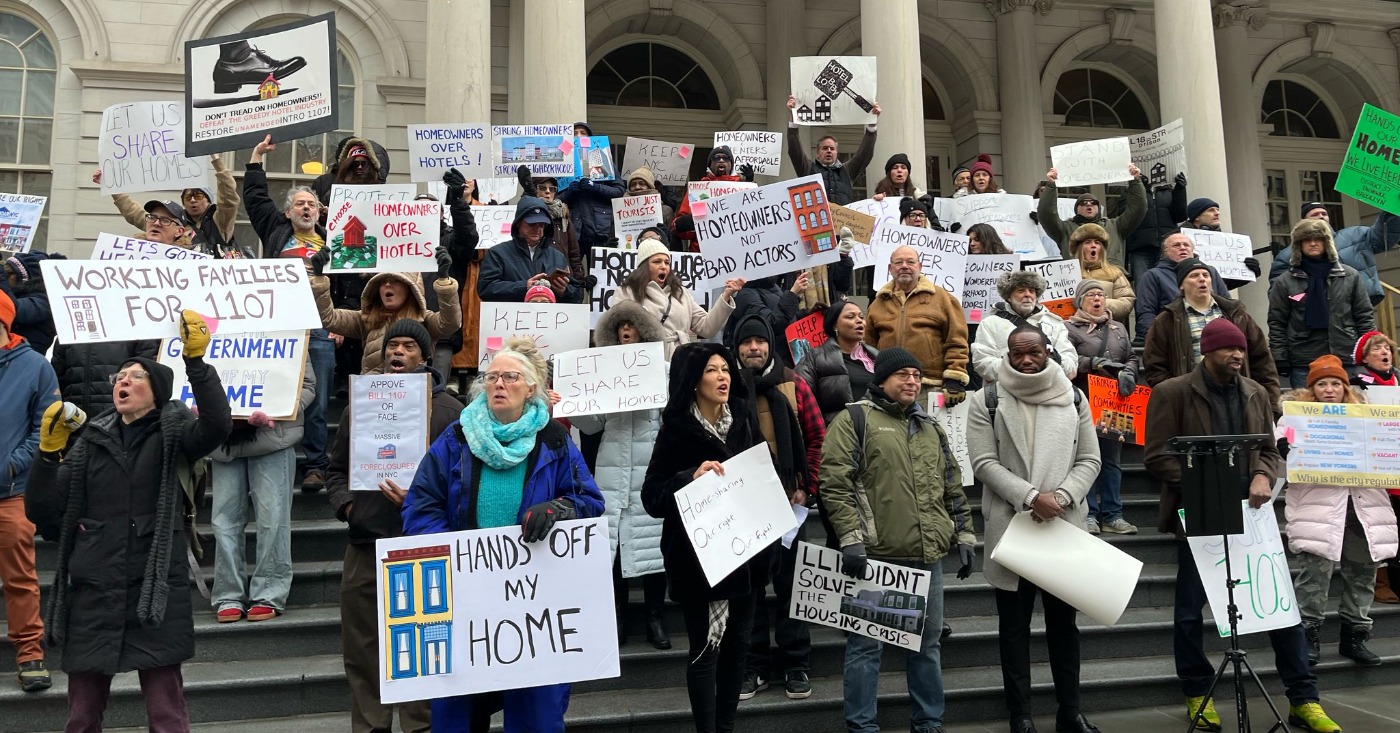
Every indicator in New York City’s housing market is pointing in the wrong direction.
Rents are at historic highs. Foreclosure notices are climbing in Black and brown neighborhoods that never fully recovered from the last crisis. Deed theft, the predatory stripping of generational wealth from families who built their equity over decades, continues to devastate communities from Brownsville to Jamaica.
On top of all these factors, there were more than 57,000 rent-stabilized apartments sitting completely empty as of April last year. That number grew by 8,000 units in a single year, with the sharpest increases hitting Brooklyn and Queens hardest.
Brooklyn and Queens. My neighborhoods. Your neighborhoods.
You would think that news of 57,000 empty affordable apartments in the middle of a housing emergency would produce outrage, emergency hearings, and demands for accountability. Instead, New Yorkers got a collective shrug from opinion leaders.
Read that again: 57,000 families could be housed in those apartments. Households currently paying market rent, doubled up, couch-surfing, or one missed paycheck away from the street could have relief. And silence from the city’s housing leadership, activists, and coalitions.
In my experience as chair of the Subcommittee on Affordable Housing in the Assembly, that is not advocacy. That is surrender.

These are the same voices, the same institutions, the same political class that successfully lobbied to effectively ban short-term rentals in New York City through Local Law 18. At its peak, Airbnb had roughly 20,000 listings in New York City, nearly a third the number of apartments currently sitting vacant and padlocked in the rent-stabilized system. The campaign against those listings was relentless, loud, and wrapped in the language of affordability and housing justice.
Where is that energy now?
Where are the press conferences about landlords warehousing stabilized units while families sleep in shelters? Where is the legislation with teeth? Where is the outrage that was apparently plentiful when a Black homeowner in Bed Stuy wanted to rent out her spare bedroom to make ends meet?
Because that is exactly who Local Law 18 hit hardest. Not the corporate bad actors. Not the hedge funds. The struggling homeowner, disproportionately Black, disproportionately in Brooklyn and Queens, who used their home as a small economic engine to survive in a city that grows more expensive by the month.
Those families were told their activity was destabilizing the housing market. Those families were fined, delisted, and legislated out of a livelihood. And now we learn that 57,000 stabilized units are sitting empty while rents spiral and foreclosures mount, and the response from housing advocates is essentially: that’s just how big numbers work.
This is not sound policy. This is politics. And the communities paying the price know the difference.
I have spoken with homeowners across Central Brooklyn who are barely holding on. They bought their homes, sometimes one generation removed from the Great Migration, and they have watched the equity they built become both their greatest asset and their greatest vulnerability. Predatory lenders, deed theft schemes, and rising property taxes all circle that equity like wolves.
Short-term rental income was, for many of these families, not a luxury. It was the margin between keeping the house and losing it. Local Law 18 closed that door, and the people who closed it are now waving away 57,000 empty apartments as statistical noise.
Everyone in this fight knows what needs to happen but will not say it out loud: Local Law 18 needs reform. Common sense reform. The kind that distinguishes between an investor running a ghost hotel and a homeowner renting a room. The kind that actually targets bad actors instead of penalizing the most economically vulnerable property owners in the city.
I hear it in private conversations with elected officials, with housing attorneys, with planners. The consensus is there. The political will is not, because the same advocacy groups and political donors who pushed the original law are still in the room, and nobody wants to take their call.
What this moment requires is courage, not calculation.
Every month that passes with 57,000 empty stabilized apartments is a month of families in crisis, of shelter costs ballooning, of neighborhoods destabilizing. Every month that Local Law 18 remains unreformed is another month a Black homeowner in Flatbush or Hollis faces impossible choices that wealthier New Yorkers simply never have to make.
You cannot ban the small and ignore the large. You cannot mobilize armies of lobbyists against a homeowner’s spare bedroom while shrugging at tens of thousands of warehoused affordable units. You cannot claim to stand for housing justice and then tell 57,000 families worth of empty apartments that the math just works out this way.
The hypocrisy has to stop. Politics have to give way to people. And the officials and advocates who have the power to fix this, who know what needs to be done, have to decide which side they are actually on.
Because from where I stand, in the communities I have served for decades, it is very clear who is being left out in the cold.
Dr. Annette Robinson is a former member of both the State Assembly and City Council in Brooklyn.

Black History
Oakland Protesters Rally to Defend Haitian Immigrants and TPS
The Haiti Action Committee traces its roots to the international movement that emerged following Haiti’s 1991 military coup, which overthrew the nation’s first democratically elected president, Jean-Bertrand Aristide. Political violence sent thousands of Haitians fleeing the country, while U.S. policies resulted in refugees being intercepted at sea, repatriated, or detained at Guantanamo Bay.
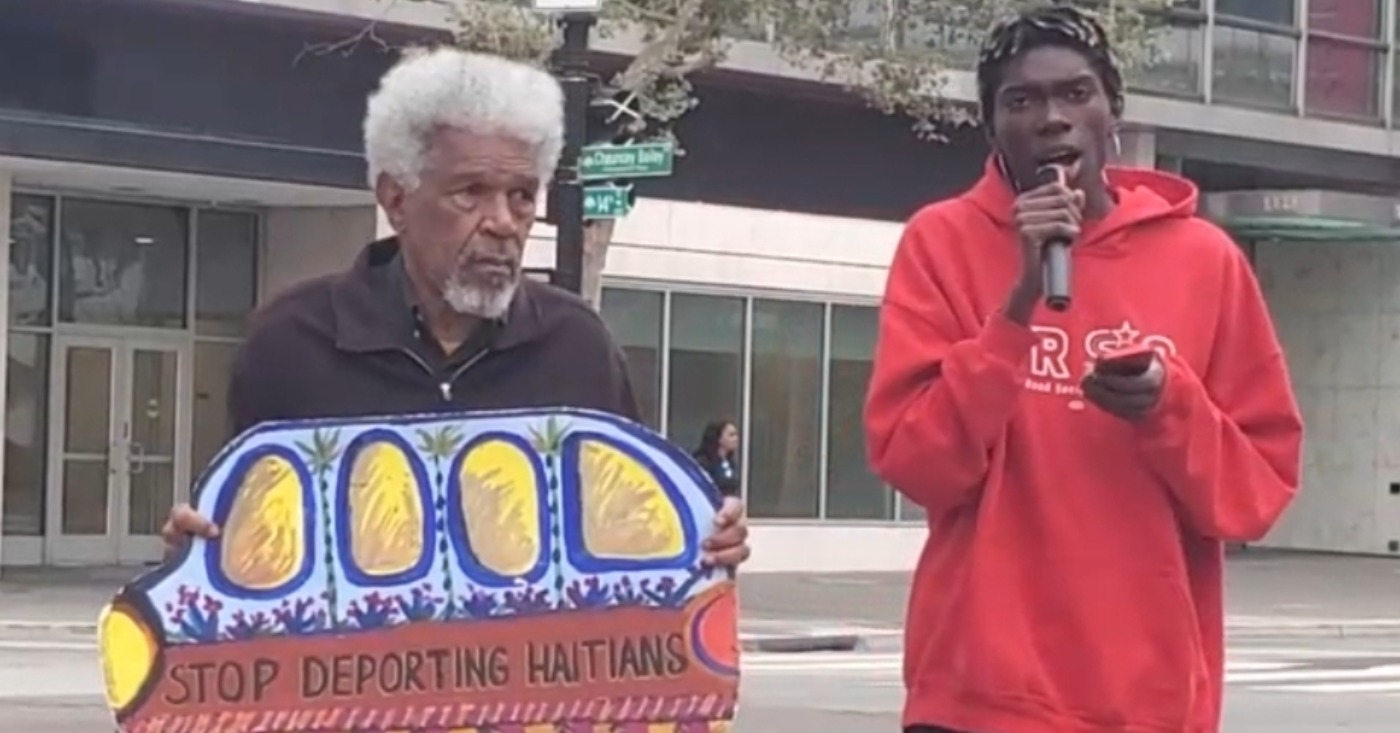
Protesters gathered in downtown Oakland near City Hall at 14th Street and Broadway on Thursday, Aug. 13, calling for protections for Haitian immigrants and an end to deportation policies affecting Haitian communities across the United States.
Organized as a call to action by the Legalization for All Network and supported by the Haiti Action Committee and other community organizations, the demonstration carried a clear message: “Defend TPS! Legalization, Not Deportation!”
Participants focused attention on the termination of Temporary Protected Status, or TPS, for Haiti and immigration policies protesters described as continuing attacks on Haitian immigrants under the Trump administration.
Haitian Romaine Charite of the Freedom Road Socialist Organization urged demonstrators to stand with Haitian families and led chants:
“When Haitians are under attack, what do we do? We fight back.”
Injustice to one is an injustice to us all.”
“Dump Trump!”
Charite and other protesters condemned the federal government’s treatment of Haitian immigrants, describing the policies as an attack on a population already facing extraordinary hardship.

Haiti’s TPS designation was terminated effective July 27, 2026, removing temporary deportation protections and work authorization for hundreds of thousands of Haitian beneficiaries who lacked another legal basis to remain in the United States.
Gerald Smith, a protester and former member of the Black Panther Party during the 1970s, said Haitians were being unfairly targeted and warned that ending TPS would have a devastating impact on Haitian families and communities.
“These policies are racially motivated and unfair,” Smith said. “Everyone deserves the right to self-determination and protection from persecution.”
The Haiti Action Committee cited the continuing political, economic and humanitarian crisis in Haiti as evidence that returning large numbers of immigrants to the country could place already vulnerable people at greater risk.
The Oakland gathering, which drew about 20 participants, reflected a decades-long history of Bay Area activism surrounding Haitian democracy, refugee rights and U.S. immigration policy.
The Haiti Action Committee traces its roots to the international movement that emerged following Haiti’s 1991 military coup, which overthrew the nation’s first democratically elected president, Jean-Bertrand Aristide. Political violence sent thousands of Haitians fleeing the country, while U.S. policies resulted in refugees being intercepted at sea, repatriated or detained at Guantanamo Bay.
Those policies sparked protests involving Haitian communities, Black activists, artists, college students, churches, labor organizations and human rights advocates. Prominent figures, including dancer and activist Katherine Dunham, tennis champion Arthur Ashe, and TransAfrica leader Randall Robinson, joined campaigns challenging the treatment of Haitian refugees.
In 1992, Haiti Action Committee joined other Bay Area organizations in a dramatic demonstration on San Francisco Bay. Boats carrying Haitian participants were intercepted by the U.S. Coast Guard while supporters gathered along the waterfront and reportedly chanted, “Let Them Land!”
More than three decades later, protesters have returned to the streets of Oakland, centering on protecting Haitian immigrants, opposing deportation and pressing for immigration policies that provide families with a pathway toward permanent legal residency.
For more information, visit Haitisolidarity.net.
Commentary
From Palestine to Oakland: Seeds for Liberation Examines Shared Struggles for Freedom
The screening was hosted by the East Bay Democratic Socialists of America and the Dr. Huey P. Newton Foundation. Following the film, director Matthew Solomon joined local community leaders for a discussion about solidarity, resistance, and the historical connections explored throughout the documentary.

Community members gathered at the Black Panther Party Museum on Saturday, Aug. 15, in downtown Oakland for a screening of “Seeds for Liberation,” an award-winning documentary examining the Palestinian liberation movement and its connections to Black, Chicano and other movements for collective liberation.
The film reveals the face of conflict, struggle, and injustice today and yesterday. In one scene, a bleeding child pleads for help on a shell-shattered rooftop after a bombing in the Gaza Strip last year. In another scene, newly freed Nelson Mandela addresses thousands at the Oakland Coliseum in 1990, at the end of apartheid.
The screening was hosted by the East Bay Democratic Socialists of America and the Dr. Huey P. Newton Foundation. Following the film, director Matthew Solomon joined local community leaders for a discussion about solidarity, resistance, and the historical connections explored throughout the documentary.
Directed by Solomon and executive-produced by Donna Hadjikhani and Alana Hadid, “Seeds for Liberation” situates Palestinian experiences within the broader history of anti-imperialist and decolonial movements.
Through interviews with historians, legal scholars, activists and organizers, the documentary examines Palestinian resistance. It also details the role of social media in shaping the public’s understanding of the impact of Palestine’s 77-year occupation by Israeli forces, events in Gaza and the West Bank, and relationships between liberation movements across generations and geographic boundaries.
The film includes perspectives of people connected to the Black Liberation Army, La Raza Unida and the Stop Cop City movement. Those featured talk about colonialism, U.S. foreign policy, policing, racial justice and their views of what solidarity with Palestinians has meant.
Solomon developed the documentary following his previous film, “Reimagining Safety,” which explored alternatives to traditional policing.
“I use film as a medium to connect personal testimony with larger social and political questions,” said Solomon, who is currently touring the film across the nation as well as Canada and other countries.
Executive producer Hadjikhani brought a personal connection to the project. An Iranian American designer and social justice advocate, she traveled to Gaza and the West Bank as a college student in 1993 during the First Intifada. Hadid has since focused on Palestinian stories and other underrepresented voices.
The Oakland screening carried added historical significance because it was held in the Black Panther Party Museum, where the history of Black resistance and community organizing provided a backdrop for the film’s examination of interconnected struggles.
Activist and artist Cat Brooks passionately spoke about the fight for the freedom of all people. “No one is free until everyone is free,” she said.
Brooks played a key role in the struggle for justice for Oscar Grant, who was gunned down by a BART police officer in 2009 and is co-founder of the Anti Police-Terror Project (APTP), whose mission is to rapidly respond to and ultimately eradicate state violence in communities of color.
Rather than treating liberation movements as isolated chapters, “Seeds for Liberation” asks audiences to consider how movements separated by time, race and geography have influenced one another and how solidarity has continued to evolve across generations.
HASHTAGS
#PostNewsGroup #CarlaThomas #OaklandPost #SanFranciscoPost
#SeedsForLiberation #BlackPantherPartyMuseum #Oakland #Palestine #FreePalestine #BlackLiberation #ChicanoMovement #CollectiveLiberation #SocialJustice #CommunityOrganizing #Solidarity #DocumentaryFilm #IndependentFilm #OaklandEvents #EastBay #BlackHistory #LiberationMovements #MatthewSolomon #HueyPNewtonFoundation #BayAreaEvents

WORK FROM HOME
Home-based business with potential monthly income of $10K+ per month. A proven training system and website provided to maximize business effectiveness. Perfect job to earn side and primary income. Contact Lynne for more details: Lynne4npusa@gmail.com 800-334-0540


OPINION: 57,000 Empty Apartments and Not a Word of Apology – City Limits

Oakland Protesters Rally to Defend Haitian Immigrants and TPS

First 5 Alameda County Celebrates First Year of Measure C’s Implementation

From Palestine to Oakland: Seeds for Liberation Examines Shared Struggles for Freedom

NABJ Convention Brings Black Journalists, Civic Leaders Together in Atlanta

At Sacramento Summit, Becerra Discusses Policy; Uses “Family” Metaphor to Frame Case for National Political Unity

$5 Billion Coliseum Vision Puts Oakland Jobs, Businesses at Center

Gov. Newsom Nominates 3 Black Women Judges to Serve on State Courts of Appeal

Oakland Observes Black August with Block Parties, Film Showings, Workshops

NPRC Elder Justice Symposium Invites Community to Join Effort to Protect Alameda County Elders
Episode 4: Grow Stronger After 50
Episode 4: Grow Stronger After 50

Four Candidates, Including Incumbent Barbara Lee, Qualify for Oakland Mayor’s Race

Oakland Observes Black August with Block Parties, Film Showings, Workshops

Oakland Post: Week of August 12 – 18, 2026

Department of Homeland Security Demands California Secretary of State Shirley N. Weber Scrub Voter Rolls

New Judge Could Decide if Karmelo Anthony Gets a New Trial

Oakland Children’s Hospital Workers and Patients Rally for Pediatric Medical Care

“The Power to See Threats Sooner”: Gov. Newsom, Safety Officials Showcase California’s Investments in Hi-Tech Wildfire Prevention

Alpha Kappa Alpha Sorority, Inc. Celebrates New North Atlantic Regional Director

Surveillance Pricing Fight: State Senate Debates Bill Banning Retailers from Using AI to Set Prices Based on a Buyer’s Profile

Mount Zion MBC, Church of Jesus Christ of Latter-day Saints Partner to Bring 29,000 Meals to Alameda County

California Sen. Padilla Joins Colleagues to Introduce Bill Imposing Term Limits on Supreme Court Justices

Less Affluent School Districts, Including Sacramento City, Face Threat of State Takeover

Car Wash Workers Cope with Lingering Impacts of ICE Raids

Starting This Summer, California Car Buyers Can Get an Instant $3500 Off the Cost of Electric Vehicles

COMMENTARY: You Are Already Paying for the AI Boom

California Bill Would Let Abuse Victims Use Trauma as Legal Defense for Violent Crime

Fed Court to Decide Landmark First Amendment Case

Gov. Gavin Newsom Signs Law Streamlining Affordable Housing Rules

The Conversation With Al McFarlane 6/23/26

Media Monday 6/22/26

LIVE! ASK ALMA! — TUES. 6.23.26 7PM EST

Car Buying Secrets: 4 Hidden Checks Before You Sign!

Is This 550 HP Charger Worth YOUR Money? AutoNetwork Review

Celebrating Juneteenth – Frederick Douglass on education and resistance

LIVE! — ASK ALMA! — TUES. 6.19.26 7PM EST

Hyundai Ioniq 5 Parking, Safety, and 360 View #shorts

2025 Ioniq 5 New Wiper & Powerful Performance! #shorts

Electric SUV Range: Is 259 Miles Enough? #shorts

EV Charging: How Fast Can You Charge an Electric Vehicle? #shorts

Biometric Cooling… Messaging Seats…Come on! 2025 Infiniti QX80 Autograph 4WD

Charged Up: Witness the Magic of a Fully Electric Car! #shorts

Range Rover Sport PHEV Included…: See What’s Inside This Luxury SUV! #shorts

Invisible Hood View: Perfect Parking with X-Ray Vision! #shorts
-
 Featured2 weeks ago
Department of Homeland Security Demands California Secretary of State Shirley N. Weber Scrub Voter Rolls
-
 #NNPA BlackPress3 weeks ago
New Judge Could Decide if Karmelo Anthony Gets a New Trial
-
 Business4 weeks ago
Oakland Children’s Hospital Workers and Patients Rally for Pediatric Medical Care
-
 Environment2 weeks ago
“The Power to See Threats Sooner”: Gov. Newsom, Safety Officials Showcase California’s Investments in Hi-Tech Wildfire Prevention
-
 Black History3 weeks ago
Alpha Kappa Alpha Sorority, Inc. Celebrates New North Atlantic Regional Director
-
 Business4 weeks ago
Surveillance Pricing Fight: State Senate Debates Bill Banning Retailers from Using AI to Set Prices Based on a Buyer’s Profile
-
 Business4 weeks ago
Mount Zion MBC, Church of Jesus Christ of Latter-day Saints Partner to Bring 29,000 Meals to Alameda County
-
 Featured2 weeks ago
California Sen. Padilla Joins Colleagues to Introduce Bill Imposing Term Limits on Supreme Court Justices
