
Black History
VP Records, Largest Independent Reggae Label Celebrates 40th Anniversary
NNPA NEWSWIRE — “VP is integral to the history of reggae and dancehall music. We take this responsibility seriously and we are using our 40th anniversary to celebrate the music’s rich heritage as we steward the genre into the future,” said company president Randy Chin.


VP Records Anniversary Logo

By Stacy M. Brown, NNPA Newswire Correspondent
@StacyBrownMedia
VP Records, the world’s largest reggae music company, has announced a year-long calendar of activities in celebration of its 40 years in the United States.
For two generations, the Queens, N.Y.-based company has marketed Caribbean culture and island lifestyle through music, events and merchandise, and has been at the heart of reggae, dancehall and soca.
The year of celebrations will feature a variety of music and cultural events, products, historical exhibits and experiences, in Jamaica, across the U.S., Toronto, Canada and London, England.
“VP is integral to the history of reggae and dancehall music. We take this responsibility seriously and we are using our 40th anniversary to celebrate the music’s rich heritage as we steward the genre into the future,” said company president Randy Chin.
“A major focus for the anniversary is highlighting the company’s commitment to the development, promotion and globalization of Jamaican music.”
From Dennis Brown, Barrington Levy, and Freddie McGregor to Sean Paul, Beenie Man, Lady Saw, and Tarrus Riley, VP Records has become home to some of the biggest acts in reggae music.
The label’s current roster includes Alborosie, Jah Cure, Raging Fyah, Gyptian, Beres Hammond, Queen Ifrica, Ikaya, Jah9, Fay-Ann Lyons, Christopher Martin, Maxi Priest, Busy Signal, Spice, Romain Virgo, and Spiritual.
The company kicked off its anniversary celebrations with a return to its homeland of Jamaica in January and will continue into the summer with a historical exhibit titled “A Reggae Music Journey,” at Donald Sangster airport in Montego Bay.
The exhibition will move to Kingston’s Norman Manley International Airport in June 2019 through the end of the year.

Chin recently sat down for a Q&A with NNPA Newswire:
NNPA Newswire: How did the company get started and what or who inspired you?
Chin: My parents, Vincent and Patricia, started the Jamaican chapter of the company after my father accumulated records that he changed out of jukeboxes around Jamaica.
The owner of the jukeboxes had no use for the records, so my parents kept them, and then started selling them out of their ice cream parlor.
They named the business ‘Randy’s” after the sponsor of an American radio program that was heard down there at the time. Obviously, that became my nickname too.
They couldn’t have gotten into the Jamaican music business at a better time. They got in on the ground floor in every sense, because Jamaican music was about to become an international phenomenon, starting a few years later with Millie’s “My Boy Lollipop,” then Desmond Dekker’s “Israelites,” and of course Bob Marley and the Wailers, and the rest is history.
In 1962, they moved from their first location to 17 North Parade, and records were becoming the central focus of the business.
My father started producing music with a popular singer named Lord Creator and built a studio above the new shop, which became known as Randy’s Studio 17. My brother Clive became involved in producing also, and many local independent producers such as Lee Scratch Perry rented the studio.
This was right as reggae was born. Everyone recorded there, including Bob Marley, Gregory Isaacs, Dennis Brown, Burning Spear, Augustus Pablo, you name them. Reggae may not have been born at our studio, but it grew up there.
NNPA Newswire: What were perhaps one or two of your biggest challenges getting things off the ground?
Chin: One of the biggest challenges was that the business environment in Jamaica in the 70’s made it hard to get records to the international market. So, my parents decided to move from Jamaica to New York in the late 70s, which is how the VP Records chapter began. VP is their initials.
It’s always been a challenge to get music that comes from Jamaica, from our culture in our way of speaking, patois, to translate to international ears and international tastes in a way that people can really relate.
I think overall, it’s impressive how well received our music is outside our small island, but we still have to be mindful of the music that is made for a local Jamaican audience and the music that can make it on the bigger stage.
NNPA Newswire: Briefly tell us about a couple of your top artists, i.e., who they are and how did you land them for the company?
Chin: From the VP chapter of the story, the top artists have been dancehall stars over the last 20 to 25 years like Sean Paul, Beenie Man, Lady Saw, and Bounty Killer, but the veteran reggae singers and emcees have been the foundation of the business, including Dennis Brown, Barrington Levy, Freddie McGregor, and Yellowman.
Beres Hammond really stands out as well, because of the length of time he has been with the company.
My brother Chris has been involved with the company his whole life, initially on the technical side of mastering records but also deciding about what music to release. He and my mother built relationships with artists and producers over many decades. Relationships are a key to bringing in great artists. That extends to our whole A&R team.
Some people are surprised to learn that one of our top artists is Alborosie, who was born in Italy but lived in Jamaica so long that he earned the respect of the local dancehall crowd.
His music is popular all over the world.
Our current roster includes Alborosie, Jah Cure, Raging Fyah, Gyptian, Beres Hammond, Queen Ifrica, Ikaya, Jah9, Fay-Ann Lyons, Christopher Martin, Busy Signal, Spice, Romain Virgo, and Spiritual.
NNPA Newswire: What would you say was the company’s biggest hit and why do you believe it was such a hit?
Chin: In 2002, we had a distribution agreement with Atlantic Records that was a key to Sean Paul’s breakthrough. His ‘Dutty Rock’ album sold 6 million copies and was loaded with hits like “Get Busy,” “Gimme The Light,” “Like Glue,” and others.
We had Wayne Wonder at the same time with “No Letting Go,” which was also a big hit. With the distribution deal with Atlantic, VP Records was able to bridge the gap between working with a major mainstream label while still supporting Sean with the core foundation of the Jamaican community and its diaspora.
Overall his sound was fresh and distinct and never confused with any of his peers at the time. He had his own identity, which is a key to making a hit.
NNPA Newswire: What does the future hold for the company?
Chin: We’re excited about the future. We want Jamaican music, in all its forms — past, present, and future — to continue to develop in new directions and have an international following.
The streaming world makes that more of a reality than ever. We see it when we look at where our fans are. There is so much potential for streaming in developing markets that we just have to make sure we continue to put out quality music for the world to hear.
We’re also very proud of where we’ve come from.
It was a real boost when UNESCO recognized reggae as a cultural heritage asset last year. We want the Randy’s and VP story to always be included in the story of reggae and dancehall.
We bought Greensleeves Records a decade ago and have a 25,000-song catalog that covers a lot of the history of reggae, dub, dancehall, and beyond.
We continue to be interested in new developments and new musical forms that are related to reggae and dancehall, such as afro-beats and all the offshoots of dance and urban music around the world that trace right back to Jamaica.
We’re open to the future and very proud of our past.









Black History
Listening as a Lifeline: A Doula’s Witness to Black Maternal Health
OAKLAND POST — Maternal mortality and pregnancy-related mortality use different time frames and methods and are not interchangeable. Finalized 2024 CDC data recorded 649 maternal deaths nationally. The overall rate was 17.9 deaths per 100,000 live births, but for non-Hispanic Black women it was 44.8, compared with 14.2 for White women and 12.1 for Hispanic women.

Word Count: 1058
Note: Client A, B & C, names are withheld for privacy; these accounts reflect my recollections as their Doula.
Client A rocked her hips on a birthing ball, surrounded by pale wood and warm textiles in a softly lit Scandinavian-style office. I was her doula through a Southern California maternal health company combining nurse-led care, technology, and wraparound support.
She was a healthy Black woman in her thirties. Her baby girl was doing well; her partner took notes as we discussed labor and advocacy.
Then we turned to their chosen hospital. I knew it well—and remembered a phrase from another client’s experience: “Policy of Sovereignty.”
Client B had been told she needed a repeat cesarean as a precaution, though the reasoning was unclear. Her obstetrician, who performed her first cesarean two years earlier, had assured her throughout pregnancy that she was healthy, healed, and ready for a vaginal birth. We asked staff to review her chart, consult her obstetrician, and reconsider immediate surgery. Instead, they invoked the “Policy of Sovereignty.”
The physician on duty, we were told, had final authority, regardless of her established care plan. I asked whether an ultrasound or reassessing the baby’s position could offer clarity. Cesareans can be lifesaving. But were Client B’s history, informed consent, and circumstances guiding this decision—or was routine overriding individualized care? We kept asking for her obstetrician. Beneath every request was a deeper question: Was she being heard?
The Numbers Behind the Stories
Statistics arrive in clean columns. The experiences behind them do not.
Maternal mortality and pregnancy-related mortality use different time frames and methods and are not interchangeable. Finalized 2024 CDC data recorded 649 maternal deaths nationally. The overall rate was 17.9 deaths per 100,000 live births, but for non-Hispanic Black women it was 44.8, compared with 14.2 for White women and 12.1 for Hispanic women.
In California, Black birthing people experienced 56.5 pregnancy-related deaths per 100,000 live births during 2020–2022—3.8 times the White rate and four times the Asian rate.
As a doula serving Los Angeles and San Bernardino Counties, I see faces behind those numbers. I remember concerns raised softly, then firmly, then desperately. I am tired of watching Black families enter spaces meant to protect them, only to discover they must defend themselves while laboring, bleeding, trembling, or recovering.
Returning to Client A
Client A’s labor stretched nearly 48 hours. As her condition worsened, she, her partner, and I asked whether a cesarean should happen sooner. A provider questioned my place as a doula, then said she was next.
Six more hours passed.
She entered surgery visibly ill with a serious uterine infection, her baby malpositioned and stuck. Her partner later recalled the provider saying, “This baby would never have made it through the birth canal.”
Those words landed like a blow. Our urgency had been treated as ignorance. With Client B, we questioned why surgery was inevitable. With Client A, why it was delayed. Doula advocacy is not about one kind of birth. It is about informed consent, individualized care, and timely action. Hospital routine should never outweigh the person carrying the risk.
Survival Cannot Be the Standard
The Black maternal health crisis includes unequal care, untreated conditions, racial bias, delayed referrals, poor communication, and inadequate postpartum support. It is about birth plans respected only until a hospital becomes less busy and postpartum care that asks whether a mother survived, not whether she has what she needs to recover.
Survival cannot be the standard. Technology can support care, but it cannot replace human connection. An algorithm cannot detect fear in a patient’s eyes, and a mission statement alone cannot ensure adequate staffing or culturally responsive care.
The Story of Client C
Before I arrived, I heard the chaos through Client C’s phone. Staff struggled to locate her baby’s heartbeat on an external monitor as her fear and blood pressure rose. I pleaded for an internal electrode before surgery.
“There’s not enough time,” a nurse said.
“I would like to wait for my doula,” Client C called out.
But she was medicated, hurried through consent, and wheeled away while I listened.
In the operating room, after a shift change, another nurse placed an internal electrode and said, “The previous monitor wasn’t working.”
No one responded.
According to her father, the obstetrician avoided eye contact: “We need to move forward.”
Surgery may still have been necessary; that was not mine to determine. But if faulty equipment helped create the emergency, the family deserved acknowledgment and explanation—not silence. No family should have to wonder whether major surgery followed an unavoidable crisis or a machine failure no one recognized in time.
From Prevention to Accountability
After supporting nearly 100 families, I have learned that danger often begins before admission. I have urged clients to seek care—and heard why they feared returning: dismissed pain, harsh words, shame for asking questions.
Care cannot be holistic where Black families do not feel safe enough to speak or return. Representation matters, but providers of color cannot repair inequity alone. They need adequate staffing, mentorship, culturally responsive training, reliable equipment, and colleagues that are reflective of all the aforementioned. It’s not the Black providers job to care for just the Black patients, everyone should have the same goal.
The Momnibus Act, California’s Medi-Cal doula benefit, the Transforming Maternal Health Model and the Perinatal Equity Initiative require more than promises; they need sustained funding, reliable reimbursement and accountable implementation.
Birth should be sacred. Yet too many Black birthing people arrive carrying the burden of proving their pain is real. A doula can listen, educate, comfort, and advocate—but cannot repair a system that refuses to listen. The true measure of progress is what happens when a Black birthing person says, “Something is wrong.”
Are they believed? When equipment fails, is that failure acknowledged? Do families leave not merely alive, but safe, respected, supported, and whole?
Until those answers are consistently yes, California’s maternal health success story remains unfinished.
About the Author
Antoinette Stewart-Eneh is a mother of two, holistic maternal wellness advocate, and birth and postpartum doula who has supported families since 2019. She serves as program operations coordinator for Frontline Doulas, a volunteer client coordinator with the Joy in Birthing Foundation and a childbirth educator in South Los Angeles. She is studying to become a midwife and lactation educator.

Activism
Oakland Post: Week of September 30 – October 6, 2026
The printed Weekly Edition of the Oakland Post: Week of September 30 – October 6, 2026
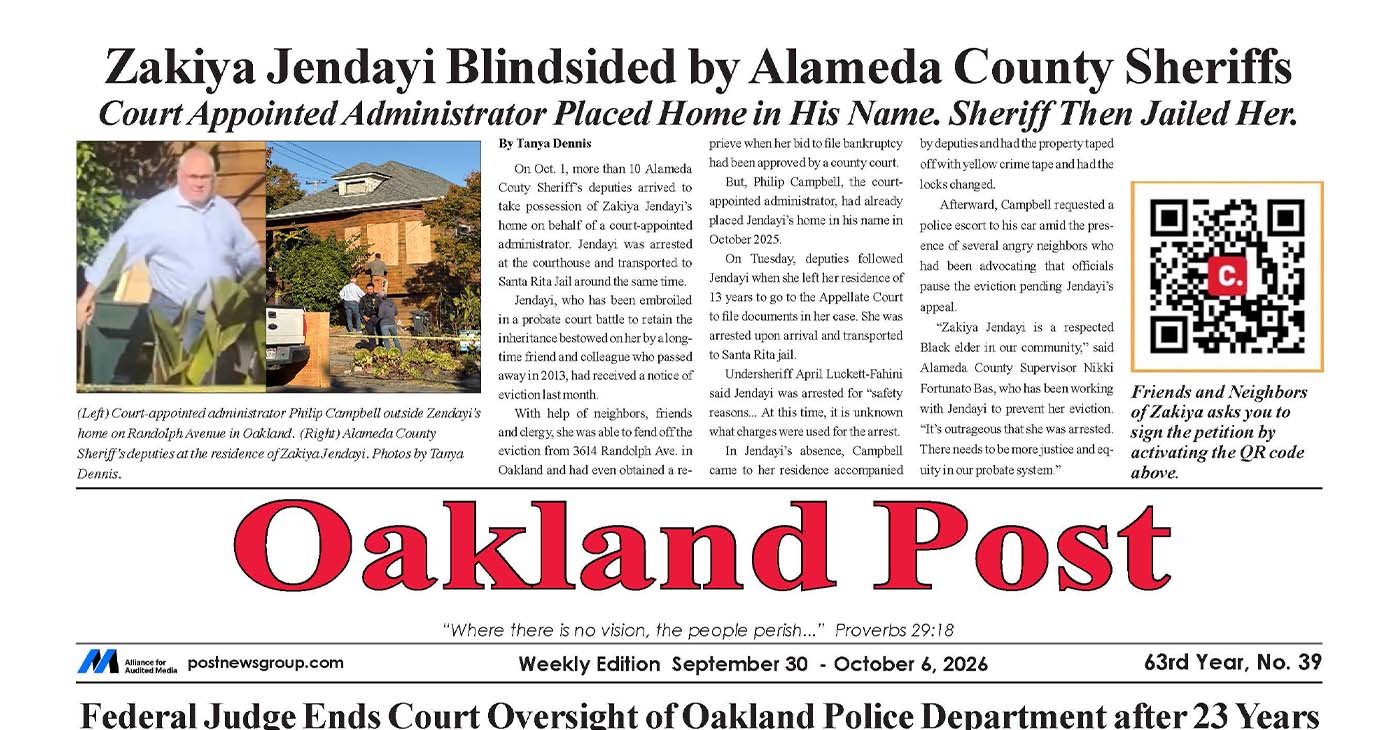
To enlarge your view of this issue, use the slider, magnifying glass icon or full page icon in the lower right corner of the browser window.
Black History
IN MEMORIAM: The Rev. Leon “Sonny” Clark, Longtime Orange County Pastor and Community Leader, Dies at 72
Rev. Leon William “Sonny” Clark, the longtime pastor of New Spirit Baptist Church in Santa Ana and a prominent faith and community leader in Orange County, passed away on September 9 at the age of 72. Born in Bennettsville, South Carolina, Clark was a U.S. Navy veteran who dedicated his life to service. He served various Southern California churches before leading New Spirit Baptist Church for over 22 years, extending his work into counseling, mentoring, and civic engagement, and supporting the African American community. To learn more about his life and contributions, read more.
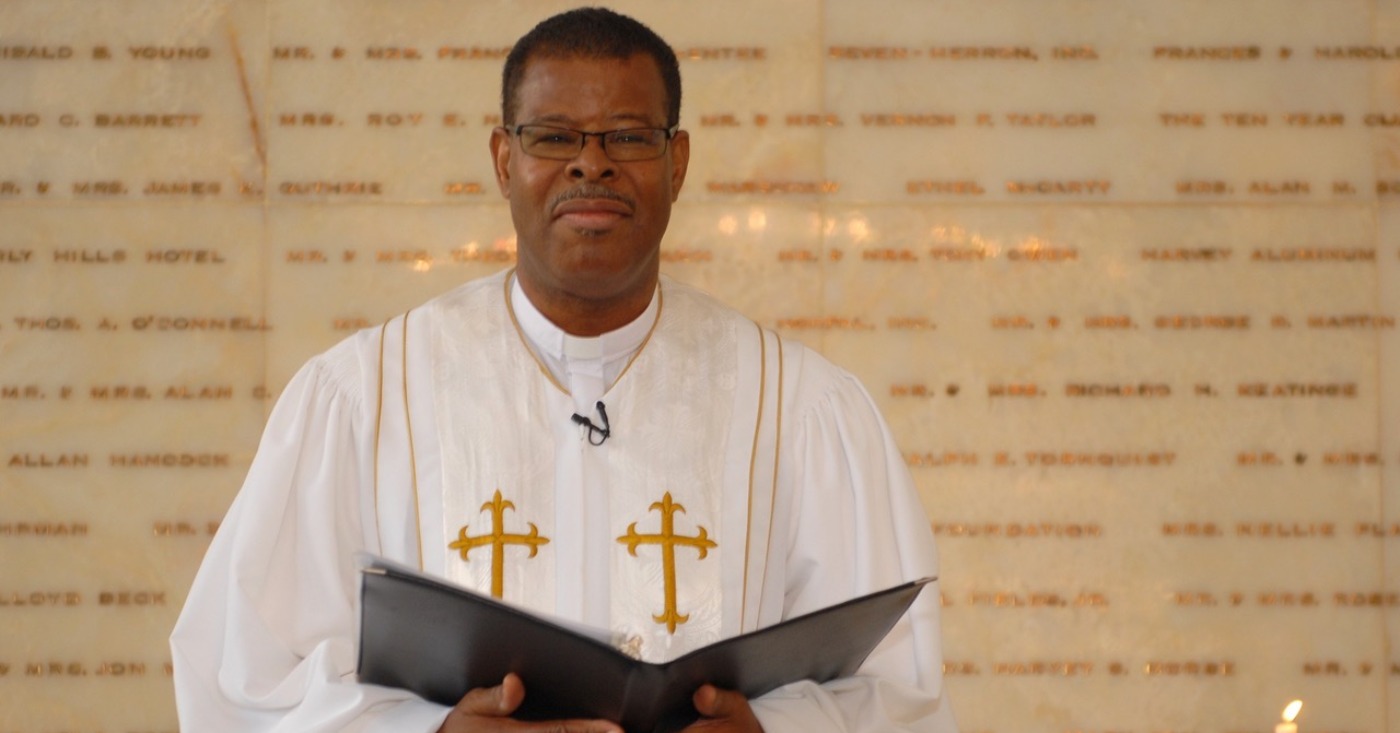
Rev. Leon William “Sonny” Clark, longtime pastor of New Spirit Baptist Church in Santa Ana and a respected faith and community leader in Orange County, died Sept. 9. He was 72.
Born Oct. 2, 1953, in Bennettsville, South Carolina, Clark was a U.S. Navy veteran who later built a life of service centered on family, faith, ministry, and community.
Clark began his formal ministry at Metropolitan Baptist Church in Altadena in 1978. After acknowledging his call to ministry in 1980, he preached his first sermon and went on to serve churches throughout Southern California, including Second Baptist Church in Riverside, Mount Vernon Baptist Church in Rubidoux, Antioch Missionary Baptist Church in Pomona, and Friendship Baptist Church in Yorba Linda.
In November 2003, Clark was called to lead New Spirit Baptist Church in Santa Ana, where he served as pastor for more than 22 years. His work extended beyond the pulpit through counseling, mentoring, civic engagement, and efforts to strengthen Orange County’s African American community.
Clark served on the Orange County Heritage Council and supported efforts to preserve and celebrate African American history and culture. He helped organize the Orange County Black History Parade and Unity Festival, served on the Interfaith Committee and the Orange County Transit Authority, and served as president of the Orange County Ministers Conference.
In 2024, the City of Santa Ana recognized Clark for his contributions to the community. He also received the Orange County Southern Baptist Association Hall of Faith Award and was previously honored as Pastor of the Year by the Orange County Heritage Council.
Clark is survived by his wife, Andrea Joyles Clark; six children, Shawn Williams, Le Ondra Clark Harvey, Kyla Coward, Joshua Clark, Marissa Clark and Ashley Clark; grandchildren and great-grandchildren; siblings; extended family; and the New Spirit Baptist Church congregation.
A wake will be held Thursday, Oct. 1, from 4 to 8 p.m. at New Spirit Baptist Church, 701 S. Sullivan St. in Santa Ana, with a remembrance service from 5 to 6:30 p.m.
A Celebration of Life will be held Friday, Oct. 2, at Friendship Baptist Church, 17145 Bastanchury Road in Yorba Linda. Viewing begins at noon, followed by the service at 1 p.m.
Burial will take place Monday, Oct. 5, at 10:15 a.m. at Riverside National Cemetery.
Clark often shared a guiding principle that shaped his ministry: “Start where you are. Use what you have. Do what you can.”


Listening as a Lifeline: A Doula’s Witness to Black Maternal Health

New Protections for Ticket Buyers: Gov. Newsom Signs Assemblymember Isaac Bryan’s Bill

‘We Don’t Talk Trash — We Pick Up Trash!’

Zakiya Jendayi Arrested, Locked Out of Home by Sheriff’s Deputies

Oakland Post: Week of September 30 – October 6, 2026

Asm. Corey Jackson Announces Launch of 24-Hour Childcare in His District

IN MEMORIAM: The Rev. Leon “Sonny” Clark, Longtime Orange County Pastor and Community Leader, Dies at 72

Poll: Becerra Widens His Lead Over Hilton; Californians Split on Wealth Tax

From Historic Memories to New Possibilities: Oakland Celebrates Coliseum 60

County Office of Education Says OUSD Finances Are Getting Healthier, Materially Stronger

LIVE FREE Sunday Dinner Brings Faith, Fellowship and Civic Conversation to Oakland

Remembering Chauncey Bailey as Student Journalists Face Threats to Truth-Telling

BLACspace Cooperative Invites Bay Area to Experience Oakland’s Black Cultural Ecosystem Through a BLAC Map Tour + Party

In Wake of Death on Doorstep, Williams Chapel Baptist Church Calls for Better Care, Funding for Unhoused

Oakland Centenarian Nuna McKee Honored!

Standoff for Justice: Our Homes Are Worth Fighting For

Oakland Post: Week of August 26 – September 1, 2026

Frontier Airlines’ Return to Oakland Airport Brings Flights, Jobs and Opportunity

Gubernatorial Candidate Steve Hilton Blasts California New Tire Rules; Newsom Hits Back

Chef Sharon Lee Blends Culinary Excellence, Education and Empowerment

Jackie Wright Champions Bay Area Stories, Filmmakers and Cultural Institutions

Misnamed ‘Parent’ PAC Seeks to Influence Oakland School Board Elections

Oakland Coliseum Project Opens Door for Small Businesses to Build Bigger

Big City Mayors Ask for “Yes” Vote on Housing Bond Measure; Conservatives Say “No”

Gov. Newsom’s Latest Appointees Include Sacramento Advocate for Formerly Incarcerated Students; State’s New Tech Chief

Longtime BWOPA Member Brendalyn Goodall Appointed to California Workforce Development Board

Gov. Newsom Signs Law Shielding Immigration Aid Workers From Doxing Threats

Secretary of State Shirley N. Weber Urges Californians to Vote Early as Voter ID Battle Intensifies

Oakland Post: Week of September 2 – 8, 2026

IN MEMORIAM: Dolly Parton Dead at 80 — How She Built a Legacy of Love and Earned Her Place in Black Culture

The Conversation With Al McFarlane 6/23/26

Media Monday 6/22/26

LIVE! ASK ALMA! — TUES. 6.23.26 7PM EST

Car Buying Secrets: 4 Hidden Checks Before You Sign!

Is This 550 HP Charger Worth YOUR Money? AutoNetwork Review

Celebrating Juneteenth – Frederick Douglass on education and resistance

LIVE! — ASK ALMA! — TUES. 6.19.26 7PM EST

Hyundai Ioniq 5 Parking, Safety, and 360 View #shorts

2025 Ioniq 5 New Wiper & Powerful Performance! #shorts

Electric SUV Range: Is 259 Miles Enough? #shorts

EV Charging: How Fast Can You Charge an Electric Vehicle? #shorts

Biometric Cooling… Messaging Seats…Come on! 2025 Infiniti QX80 Autograph 4WD

Charged Up: Witness the Magic of a Fully Electric Car! #shorts

Range Rover Sport PHEV Included…: See What’s Inside This Luxury SUV! #shorts

Invisible Hood View: Perfect Parking with X-Ray Vision! #shorts
-
 Community3 weeks ago
Misnamed ‘Parent’ PAC Seeks to Influence Oakland School Board Elections
-
 Activism4 weeks ago
Oakland Post: Week of September 2 – 8, 2026
-

 Activism3 weeks ago
Oakland Post: Week of September 9 – 15, 2026
-

 Community3 weeks ago
Richmond Tiny House Village Farm & Garden Set to Open Gates on Sept. 26
-

 Black History3 weeks ago
Latest Massacre in Haiti Reveals Cruelty U.S. Deportations
-

 Black History3 weeks ago
OPINION: Nolan Wells’ Death One of Several Signifying Racial Terror Lives on in U.S. South
-

 Business2 weeks ago
Mayor Lee Announces $1 Million Kaiser Permanente Grant for Pilot Program to Address Homelessness, Clean Up Public Spaces throughout Oakland
-

 Community3 weeks ago
Democratic Clubs Interview Candidates for Oakland School Board
