
Crime
Oakland, Violence and PTSD


Mental health is almost never brought up as a subject of conversation in Black America – certainly not in urban communities like Oakland where shootings and bursts of domestic violence are often leading stories on the evening news.
In a city like Oakland – where 35 percent of non-affluent young adults are unemployed –children grow up in a world constantly rocked by crime and violence that shapes their expectations for themselves and they people they love.
Oakland has become a modern day warzone. According to the 2013 Year End Crime Report from the City of Oakland, the city averages 107 homicides a year. The city’s ShotSpotter technology, which captures the sound of gunshots within the city, recorded 16,000 rounds of gunfire last year.
It’s a sad truth, but by the time many Oakland youth have entered high school, they have experienced the sudden death of a friend or loved one.
Yet discussing the impact of these long-term wounds is taboo, more than likely swept under the rug where they are left to fester. The unwillingness to initiate a frank discussion of mental health issues contributes to the problem.
According to the National Center for Victims of Crime “The trauma of victimization is a direct reaction to the aftermath of crime” and that “crime victims suffer a tremendous amount of physical and psychological trauma, often referred to as Post Traumatic Stress Disorder (PTSD).
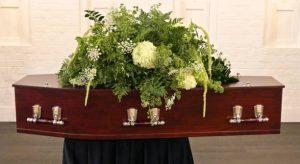
This is a sobering insight that becomes more starkly real in the context of one young man’s

22nd Avenue and E. 28th streets, the place where Ricky Hollins and friends were shot.
life.
Rickey Hollins, 18 years old in 2006, was standing on a corner talking to a group of friends when a car pulled up. Three shooters got out with AK47s and opened fire on the group.
His sister was shot in the pelvis, and another friend was hit in the shoulder and back. Hollins received a shoulder wound. His friend Jay Black died on the scene.
Hollins’ best friend, Willie Clay, III, was laying on the ground unresponsive. He was transported to a hospital but died from one gunshot wound to the head.
“I feel guilty because we should have left the scene before anything happened,” said Hollins. “We had a plan to leave but we stayed.”
Hollins remembers cleaning his friend’s blood and brains off the concrete. He says some of Clay’s dreadlocks had come off his head when he was shot. He cleaned them and gave them to Clay’s mother.
One health professional who has to deal with the aftermath of these bursts of horrific violence is Dr. Swapnil Shah, director of the Orthopedic Trauma Center of Alameda Health Systems.
Working at Highland Hospital, the center assists patients with numerous muscular and skeletal problems. Nearly 50 percent of those daily patients are victims of violence.
The center’s patients have physical injuries that are noticeable and in most instances easily treatable, but the psychological issues are lasting and go untreated, according to Dr. Shah.
“If they’ve lost a loved one, they will become very distrustful and easily develop a hypersensitivity to pain,” he said. “They hold onto that physical pain as a marker to their emotional pain.
“[PTSD] is an under-diagnosed condition in our clinic and undertreated condition in our population,” he said.

Willie Clay III, the best friend of Hollins who was fatally shot.
In Oakland, as in other urban communities, “It’s like a badge of honor to say I’ve been shot, but nobody is willing to say how scared they were when they got shot,…or how they feel going into the world after being shot,” Shah added.
“They are so terrified.”
Hollins is one victim who is unafraid to admit that he was scared or that the incident left him physically and emotionally sick. He said he was angry frustrated, and had to smoke a lot of weed to get through.
That instant of violence has permanently changed his perspective on life. He no longer likes Fourth of July because he can’t deal with the loud noises, and being out late makes him feel uncomfortable.
Though he went to a doctor for his physical wound, he was never offered a counselor or provided any resources to talk to a psychologist. Rather, he admits – just as Dr. Shah stated – that the bullet lodged in his bicep became a marker for his emotional pain.
Before the bullet was finally removed in 2012, he says he couldn’t work, because he couldn’t move his arm, and when he did it reminded him of the day he lost his best friend.
“It probably was a mental thing,” he said. “[But] I was never offered help, I counseled myself .”
And that’s the story that affects the lives of so many youth living in Oakland’s minority communities – the place most dominantly affected by the violence.
In order for that to change, Dr. Shah suggests that the basic approach of health systems has to be one that works with people to help them change their approach to life.
“The whole point is to not only save people lives but to save people’s lifestyles,” he said. “That shift in mentality has to come at this fundamental level.”
This story was reported with support from a grant from the nonprofit(s) Entertainment Industries Council.









Activism
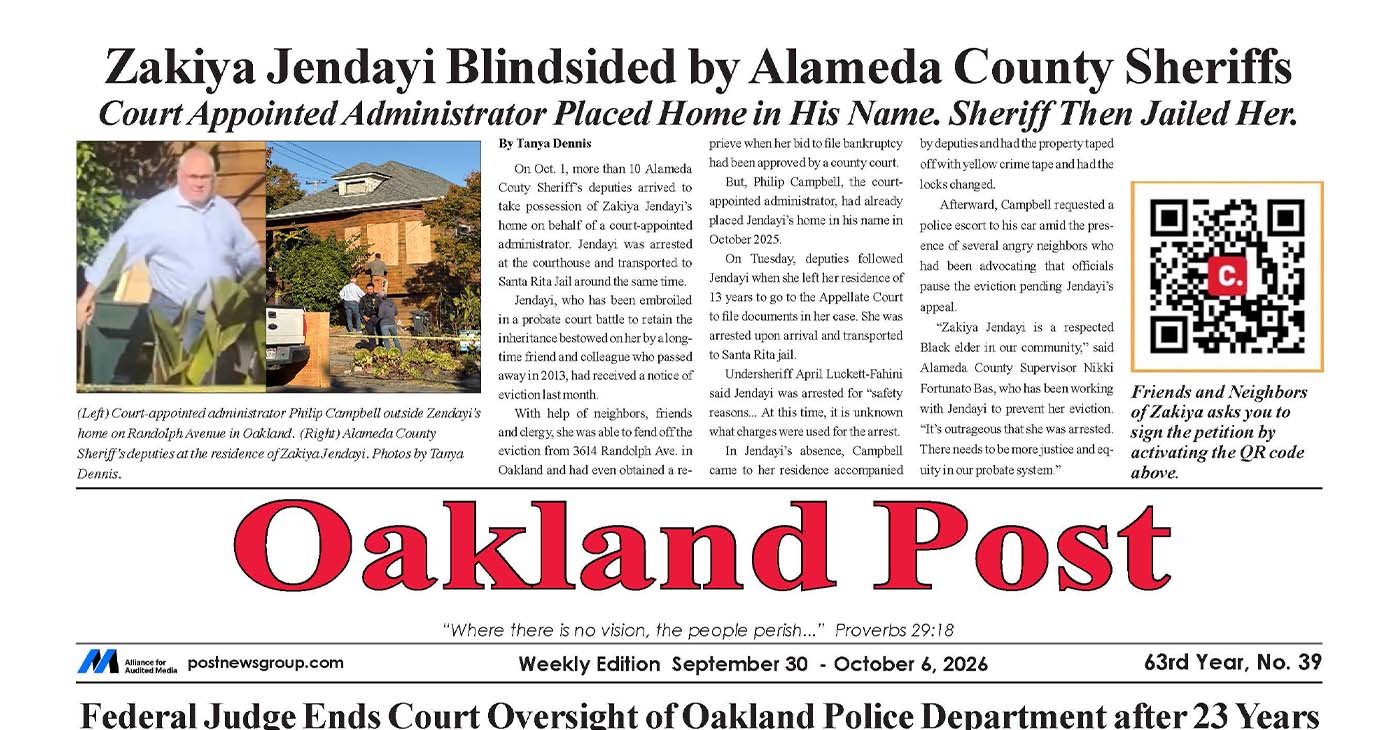
Oakland Post: Week of September 30 – October 6, 2026
The printed Weekly Edition of the Oakland Post: Week of September 30 – October 6, 2026
To enlarge your view of this issue, use the slider, magnifying glass icon or full page icon in the lower right corner of the browser window.

Activism
Oakland Post: Week of September 23 – 29, 2026
The printed Weekly Edition of the Oakland Post: Week of September 23 – 29, 2026

To enlarge your view of this issue, use the slider, magnifying glass icon or full page icon in the lower right corner of the browser window.
Community
Assemblymember LaShae Sharp-Collins’s Bill Would Pause Law Enforcement’s Use of Shock Gloves Pending Study
The device at the center of the debate is known as the G.L.O.V.E., an acronym for Generated Low Output Voltage Emitter. U.S. Immigration and Customs Enforcement awarded a $16.7 million contract for 6,000 pairs of the gloves, which are designed to deliver an electric shock through an officer’s hand.

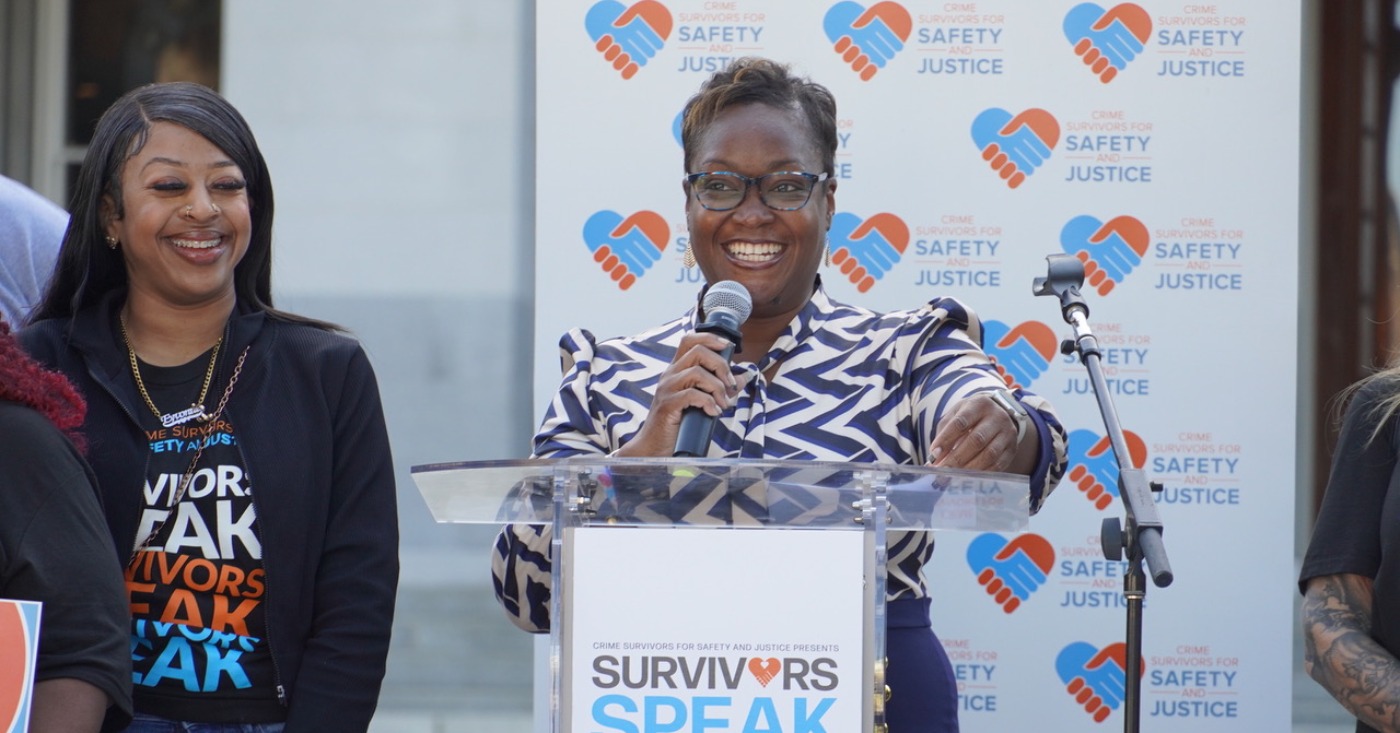
A bill temporarily prohibiting law enforcement agencies from using electric shock gloves in California is awaiting action by Gov. Gavin Newsom.
Assembly Bill (AB) 2760, authored by Assemblymember LaShae Sharp-Collins (D-San Diego), passed the Senate 29-9 on Aug. 31. The Assembly concurred in Senate amendments the same day on a 55-16 vote.
The bill would prohibit state, local and federal law enforcement agencies from using wearable electroshock devices in California until Jan. 1, 2030. It would also bar agencies from using state funds to purchase the devices and require them to update their use-of-force policies accordingly.
Traditional handheld devices, including tasers and stun guns, are exempt.
Newsom has until Sept. 30 to sign or veto the bill. If he takes no action, it will become law without his signature.
Sharp-Collins introduced the measure after reviewing information indicating that the devices could cause serious injury or death if used without adequate safeguards and training.
“AB 2760 draws a line that public safety technology must be proven safe and accountable before it is employed. Not after someone is killed or injured,” said Sharp-Collins, a member of the California Legislative Black Caucus (CLBC).
“Our commitment is to protect our communities, especially the most vulnerable. That is what AB 2760 is about and that is what AB 2760 will do,” Sharp-Collins told her colleagues.
The device at the center of the debate is known as the G.L.O.V.E., an acronym for Generated Low Output Voltage Emitter. U.S. Immigration and Customs Enforcement awarded a $16.7 million contract for 6,000 pairs of the gloves, which are designed to deliver an electric shock through an officer’s hand.
During the Assembly debate, Assemblymember Rhodesia Ransom (D-Stockton), also a CLBC member, thanked law enforcement representatives for helping negotiate amendments to the bill.
“This is something new to us (and) it’s something that absolutely should be studied,” Ransom said. “I appreciate law enforcement for agreeing to work with the legislature to figure out if this is an appropriate tool to be used.”
Neither the Los Angeles County Sheriff’s Department nor the Los Angeles Police Department has reported using electric shock gloves. However, the Santa Monica and El Monte police departments have obtained devices for testing.
The Sacramento County Sheriff’s Office purchased 10 shock gloves as part of a $35,000 acquisition that also included 10 remotely activated shock bands. Sheriff’s officials had been developing training and policies for the devices before AB 2760 advanced.
State Sen. Tony Strickland (R-Huntington Beach) opposed the legislation, arguing that it would unnecessarily force agencies to change their use-of-force policies and could compromise public safety.
“I don’t disagree with the author that the electric shocks are not a great option, but at the end of the day, I think it’s important to understand that we need to give law enforcement the tools they need to keep themselves safe and the community safe,” Strickland said.
Supporters countered that wearable electroshock devices have not been sufficiently studied and could pose particular risks to immigrants, children, older adults and other vulnerable groups.
“People who are Black or Brown could be test subjects for these gloves of torment,” Mark González (D-Los Angeles) said. “I appreciate law enforcement for agreeing to work with the legislature.”




Listening as a Lifeline: A Doula’s Witness to Black Maternal Health

New Protections for Ticket Buyers: Gov. Newsom Signs Assemblymember Isaac Bryan’s Bill

‘We Don’t Talk Trash — We Pick Up Trash!’

Zakiya Jendayi Arrested, Locked Out of Home by Sheriff’s Deputies

Oakland Post: Week of September 30 – October 6, 2026

Asm. Corey Jackson Announces Launch of 24-Hour Childcare in His District

IN MEMORIAM: The Rev. Leon “Sonny” Clark, Longtime Orange County Pastor and Community Leader, Dies at 72

Poll: Becerra Widens His Lead Over Hilton; Californians Split on Wealth Tax

From Historic Memories to New Possibilities: Oakland Celebrates Coliseum 60

County Office of Education Says OUSD Finances Are Getting Healthier, Materially Stronger

LIVE FREE Sunday Dinner Brings Faith, Fellowship and Civic Conversation to Oakland

Remembering Chauncey Bailey as Student Journalists Face Threats to Truth-Telling

BLACspace Cooperative Invites Bay Area to Experience Oakland’s Black Cultural Ecosystem Through a BLAC Map Tour + Party

In Wake of Death on Doorstep, Williams Chapel Baptist Church Calls for Better Care, Funding for Unhoused

Oakland Centenarian Nuna McKee Honored!

Standoff for Justice: Our Homes Are Worth Fighting For

Oakland Post: Week of August 26 – September 1, 2026

Frontier Airlines’ Return to Oakland Airport Brings Flights, Jobs and Opportunity

Gubernatorial Candidate Steve Hilton Blasts California New Tire Rules; Newsom Hits Back

Chef Sharon Lee Blends Culinary Excellence, Education and Empowerment

Jackie Wright Champions Bay Area Stories, Filmmakers and Cultural Institutions

Misnamed ‘Parent’ PAC Seeks to Influence Oakland School Board Elections

Oakland Coliseum Project Opens Door for Small Businesses to Build Bigger

Big City Mayors Ask for “Yes” Vote on Housing Bond Measure; Conservatives Say “No”

Gov. Newsom’s Latest Appointees Include Sacramento Advocate for Formerly Incarcerated Students; State’s New Tech Chief

Longtime BWOPA Member Brendalyn Goodall Appointed to California Workforce Development Board

Gov. Newsom Signs Law Shielding Immigration Aid Workers From Doxing Threats

Secretary of State Shirley N. Weber Urges Californians to Vote Early as Voter ID Battle Intensifies

Oakland Post: Week of September 2 – 8, 2026

IN MEMORIAM: Dolly Parton Dead at 80 — How She Built a Legacy of Love and Earned Her Place in Black Culture

The Conversation With Al McFarlane 6/23/26

Media Monday 6/22/26

LIVE! ASK ALMA! — TUES. 6.23.26 7PM EST

Car Buying Secrets: 4 Hidden Checks Before You Sign!

Is This 550 HP Charger Worth YOUR Money? AutoNetwork Review

Celebrating Juneteenth – Frederick Douglass on education and resistance

LIVE! — ASK ALMA! — TUES. 6.19.26 7PM EST

Hyundai Ioniq 5 Parking, Safety, and 360 View #shorts

2025 Ioniq 5 New Wiper & Powerful Performance! #shorts

Electric SUV Range: Is 259 Miles Enough? #shorts

EV Charging: How Fast Can You Charge an Electric Vehicle? #shorts

Biometric Cooling… Messaging Seats…Come on! 2025 Infiniti QX80 Autograph 4WD

Charged Up: Witness the Magic of a Fully Electric Car! #shorts

Range Rover Sport PHEV Included…: See What’s Inside This Luxury SUV! #shorts

Invisible Hood View: Perfect Parking with X-Ray Vision! #shorts
-
 Community3 weeks ago
Misnamed ‘Parent’ PAC Seeks to Influence Oakland School Board Elections
-
 Activism4 weeks ago
Oakland Post: Week of September 2 – 8, 2026
-

 Community3 weeks ago
Richmond Tiny House Village Farm & Garden Set to Open Gates on Sept. 26
-

 Activism3 weeks ago
Oakland Post: Week of September 9 – 15, 2026
-

 Black History3 weeks ago
Latest Massacre in Haiti Reveals Cruelty U.S. Deportations
-

 Black History3 weeks ago
OPINION: Nolan Wells’ Death One of Several Signifying Racial Terror Lives on in U.S. South
-

 Community3 weeks ago
Democratic Clubs Interview Candidates for Oakland School Board
-

 Business2 weeks ago
Mayor Lee Announces $1 Million Kaiser Permanente Grant for Pilot Program to Address Homelessness, Clean Up Public Spaces throughout Oakland
