
Economy
Young Advocates for a Black State Treasurer
THE AFRO — As the Maryland General Assembly begins the 2019 session the Black delegates have an opportunity to make a statement that could affect the funding for their constituents.

As the Maryland General Assembly begins the 2019 session the Black delegates have an opportunity to make a statement that could affect the funding for their constituents. With Governor Larry Hogan entrenched for his second and final term and Peter Franchot serving another term as state comptroller, just one statewide office remains to be settled.
Former state senator turned talk show host Larry Young says now is the time for the Maryland Black Legislative Caucus to provide a viable list of candidates for state treasurer to oppose a fifth term for Nancy Kopp. Kopp, who has been treasurer since 2002 is currently unopposed for the position, which could be detrimental to the hopes of appropriation of funding for the free state’s Historically Black Colleges and Universities among other urban programs.
The Maryland State Treasurer is responsible for the State’s cash deposits, money from bond sales and manages the investments of those assets. The Treasurer is elected by a joint ballot of both houses of the General Assembly. Maryland has only appointed one Black treasure in its history, and Young is advocating that now would be the time for the Black Legislative Caucus to aggressively push for a Black nominee to hold the position as Kopp approaches what would be her 20th year of service.

“When will the state’s democratic leadership do right by its Black constituents,” Young told the AFRO in an exclusive interview. “We’ve been the most loyal supporters of the party yet whenever there is an opportunity to support a Black nominee for a statewide office they always lose [the election].”
On Jan. 10 the Black Legislative Caucus met to discuss a potential nominee. Former State Senator Joan Carter Conway was put forward for the Treasurer’s job. However, she didn’t accept the nomination because of family considerations. Young sees this as an opportunity for the state’s most powerful Black Democratic political group to galvanize and pressure their white peers to support their attempt to diversify statewide offices starting with this non-elected position.
There is a perception among many political observers that White Democrats have taken Black support for those candidates for granted, which has led to recent defeats statewide elections. During the past two statewide election cycles two Black nominees lost Gubernatorial elections in what is a staunchly democratic state.
“Black democrats have been more supportive of White Democratic candidates than their White counterparts have been,” Young says. “It’s ironic that when it comes to statewide offices the Republicans have been more supportive of Black candidates than the democrats have been.”
The 2010 United States Census concluded that 29.4 percent of Maryland residents identified themselves as Black or African American. However, more than 80 percent of those who are registered to vote identify themselves as Democrats although they have not been able to swing the balance of power in the Governor’s office. Former Lieutenant Governor Anthony Brown and NAACP President Benjamin Jealous both lost to Governor Hogan as White Democrats continue to be elected and are serving decades in Congress and the state legislature which is what Kopp is on the precipice of.
Richard Dixon of Carroll County, who preceded Kopp, has been the only African American to serve as state treasurer from 1996-2002 which coincided with an unprecedented era of growth for HBCUs around the state. With Conway unable to serve, Young sees Baltimore County Director of Finance Keith Dorsey as a viable nominee to oppose Kopp if the Black Legislative Caucus can wield its influence as a united front throughout the state legislature.
“They [White delegates] owe us this,” Young says. “Black Democrats have been extremely supportive. [Kopp] hasn’t stepped up for HBCUs.”
This article originally appeared in The Afro.










Books
Oakland Mayor Reads to Children at Bookout Block Party at Marcus Books Store
Booths lined the street with arts and crafts, and children participated in hands-on art projects. A large display of books was on display and each child chose his/her free book to take home. Food and snacks were available, and free water was encouraged to keep all hydrated.

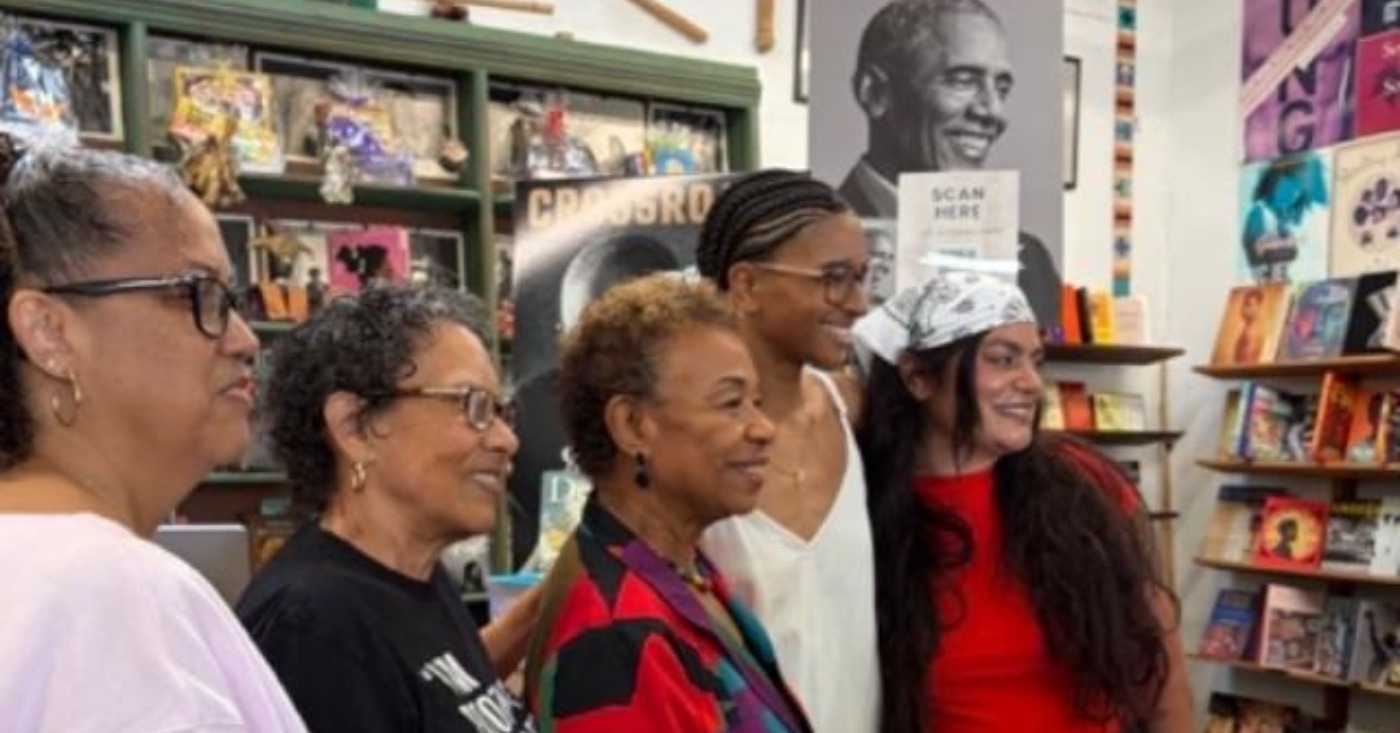
Floating bubbles greeted families on arrival at the Bookout Block Party held on Sat. Sept. 12 at 39th and MLK Blvd. in Oakland.
Sponsored by Marcus Books and Storyland Collective, a wonderland of activity for children stretched to Longfellow School while live music filled the air, courtesy of KWC Complex Jazz Group.
Booths lined the street with arts and crafts, and children participated in hands-on art projects. A large display of books was on display and each child chose his/her free book to take home. Food and snacks were available, and free water was encouraged to keep all hydrated.
A large area of turf was filled with huge bean bags for jumping, rolling, and sitting to listen as families crowded close to listen to Oakland Mayor Barbara Mayor Barbara Lee read a book out loud.
Of the numerous booths present were, “Claim Your Scholarship,” a program for Oakland Public School students and “VOLUNTEER NOW,” a program encouraging volunteers to help boost reading proficiency. Individuals sold their art and products. Free gifts were at many tables and a raffle was held.
The event with Marcus books culminated a summer-long program organized by Storyland Collective, a literacy arts organization bringing children’s ‘storytime,’ local authors, and art activities to Bay Area neighborhoods. Marcus Books is the oldest, independent Black-owned book store in the U.S., featuring books by and about Black people here and abroad.

Black History
Tradition Comes to the Streets in 11th Annual Black-Eyed Pea Festival at the Freedom Farmers Market
Mayor Barbara Lee stops by to support vendors, Winky Dinky Dogs owner Tyranny Allen A streamlined Oakland Black-Eyed Pea Festival took place on Sat. Sept. 12 in the lower Temescal neighborhood on the blocked off street that connect Shattuck and Telegraph avenues. An early start b
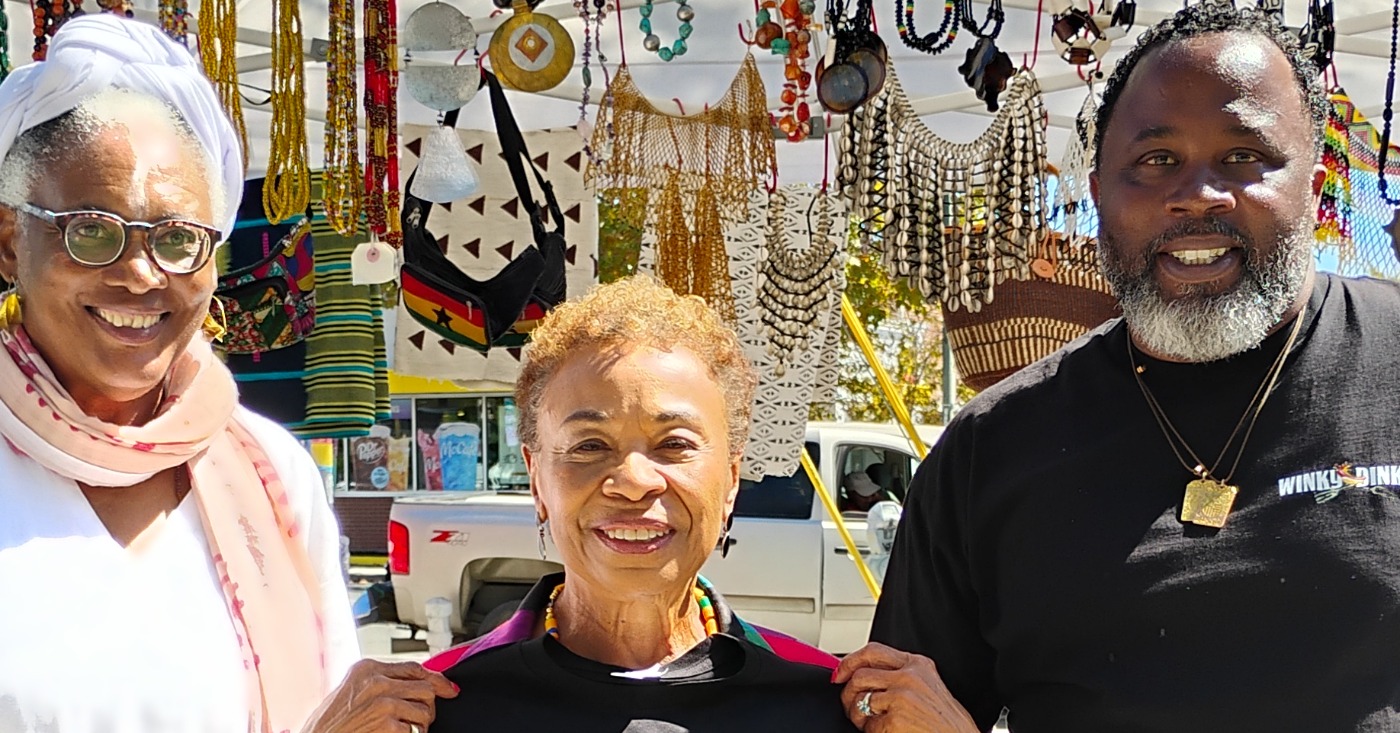
Mayor Barbara Lee stops by to support vendors, Winky Dinky Dogs owner Tyranny Allen
A streamlined Oakland Black-Eyed Pea Festival took place on Sat. Sept. 12 in the lower Temescal neighborhood on the blocked off street that connect Shattuck and Telegraph avenues.
An early start brought together vendor regulars from festival partner, the Freedom Farmers’ Market, and vendors who have supported the festival at its previous location at Marston Campbell Park.
Wanda Ravernell, the festival producer/director was on the verge of cancelling the festival because of funding limitations in May before reaching out to Elaine Smith, president of Farms to grow, Inc., which supervisors the market.
From its start in 2014, the festival has focused on the traditions of African American culture through music, food and art. That emphasis included fresh food vendors, particularly growers of African American legacy crops like black-eyed peas, yams, watermelon, collard greens and okra, which all originate in Africa.
To Fresno farmer Will Scott of Scott Family Farms, the Freedom Farmers’ Market allows him to bring those crops to the inner city – and support the nutrition of African Americans.
Shortly after the festival opened Saturday morning with prayers and salutes to the ancestors by Wakan Wiya Two-Spirit Drum and Awon Ohun Omnira, led M. Zamora and Otobaji Stewart respectively, 86-year-old Scott, the son of a sharecropper, announced that he will put other endeavors aside to dedicate the rest of his life to raise those foods.
Smith shared that Farms to Grow assists Black farmers in helping them overcome one of their main impediments to success – distribution – while creating alliances to help Black people maintain farmland and make it prosperous for younger generations to keep farming and farmland in the family.
As the morning progressed to afternoon, a steady stream of visitors drifted from booth to booth, chatting with vendors and each other.
Scott noted that a market day like this was what he was accustomed to in his youth, where the market was not just about buying things but also a place for valuable social exchange.
The social aspect became even pronounced shortly after midday when Oakland Mayor Barbara Lee stopped by to shop and visit with some of the vendors, including Ellen Bimpeh of Sankofa, and Ravernell who was selling T-shirts designed by Stewart.
Lee is also a fan of Winky Dinky Dogs, an eatery owned by Tyranny Allen whose second brick-and-mortar venture further anchors a hub of businesses at that corner.
As he has in previous years, Andre Thierry of Accordion Soul, closed the festival with a 90-minute set that brought young and the young-at-heart on their feet to dance in a line or as impromptu couples.
And, surprisingly, the man Allen refers to as the mayor of 45th Street, came out on cane and chair to sit by the curb in the sun and listen to music reminiscent of his Louisiana roots. His appearance seemed to echo Scott’s observance about the market: to bring people together.
The Freedom Farmers’ Market is located at 4521 Telegraph Avenue in Oakland and is open on the second and fourth Saturdays of each month until Nov. 14. For more information and to apply to be a vendor, go to https://www.farmstogrow.org/freedomfarmersmarket
Business
Attorney General Rob Bonta Continues Opposition to President Trump’s Tariff Regime
“President Trump is so intent on raising the cost of living for Americans that he is willing to break law after law to continue his tariff regime,” said Bonta.
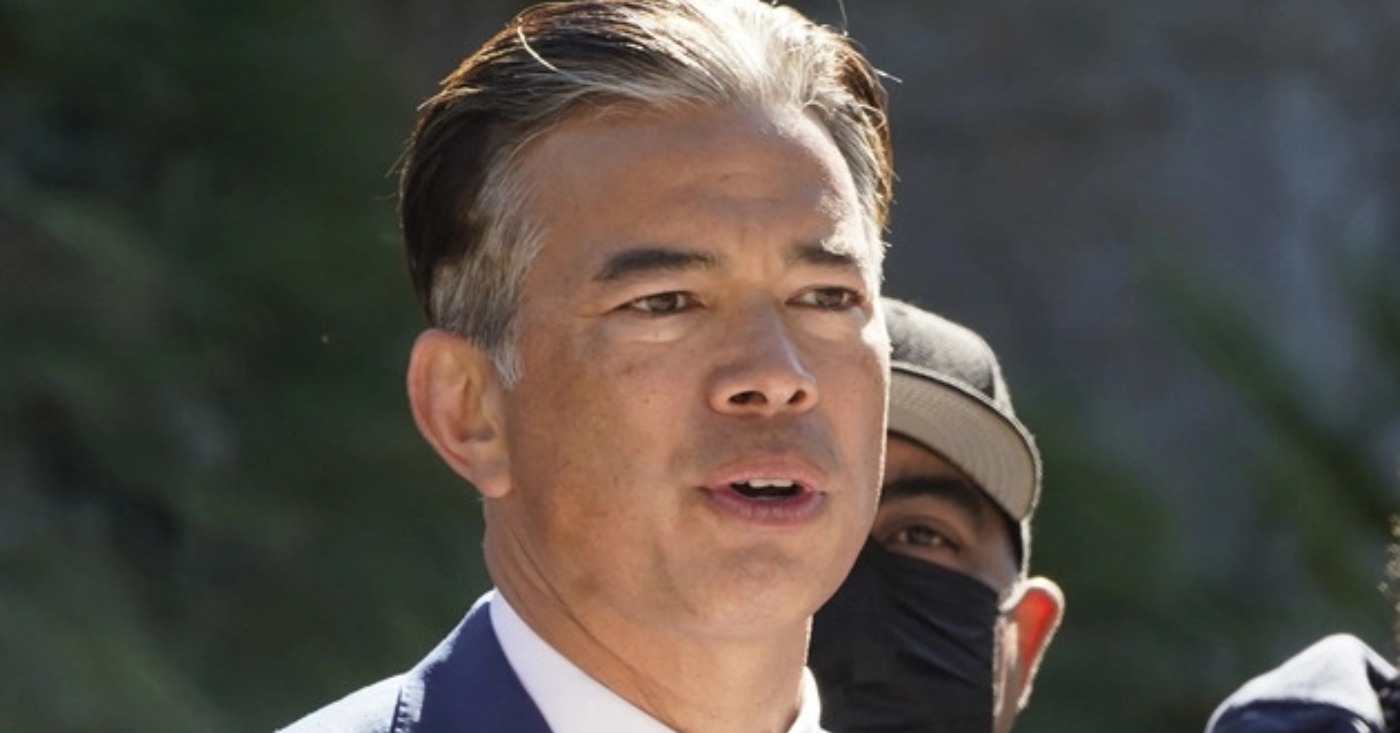
California Attorney General Rob Bonta, as part of a coalition of 25 states, filed an amicus brief in the Court of International Trade in Learning Resources v. Trump, a case challenging President Trump’s latest “unlawful” attempt to tax the states and American consumers through illegal tariffs, according to a media release issued by the California Department of Justice.
In the brief, Bonta argues the latest round of tariffs levied under Section 301 of the Trade Act of 1974 are pretextual and are not targeted to address the purported harms of forced labor, as that statute requires, but instead are designed to re-create the tariffs already declared illegal by various courts.
Last month, Bonta and the coalition filed a lawsuit challenging the administration’s decision to impose these tariffs on over 80 countries that together account for 99.4% of all U.S. imports — costs that will be passed along to Americans already struggling with affordability.
“President Trump is so intent on raising the cost of living for Americans that he is willing to break law after law to continue his tariff regime,” said Bonta.
“Imposing these tariffs under Section 301 has nothing to do with forced labor and everything to do with continuing the President’s failed economic policy and reimposing the global tariffs that the Supreme Court invalidated,” he continued.
“We urge the Court of International Trade to declare the president’s tariffs under Section 301 illegal. Tariffs are taxes, and the American people cannot and should not shoulder the extra costs that come from the president’s illegal tariffs.”



Doulas Are Helping Black California Moms Navigate Pregnancy–Even as High Mortality Rates Persist

Newsom Signs Addictive Social Media Law to Protect Kids

On Your November Ballot: Prop 38 Would Allocate $8.4 Billion to Immunology and Immunotherapy Funding

Ask California: Golden State Releases New AI Chatbot

Asm. Isaac Bryan’s Bill Banning California Police From ICE Side Jobs Reaches Newsom’s Desk

Assemblymember LaShae Sharp-Collins’s Bill Would Pause Law Enforcement’s Use of Shock Gloves Pending Study

BOOK REVIEW: ‘Laws of Solomon’ Reveals Tender Heart of Former Child Soldier

OPINION: The New American Fear – From 9-11 to AI

Passing for White, Fighting for Black America: The Courage of Walter White

Oakland People’s Arms Embargo Coalition Demands End to Military Shipments Thru Oakland

Barbara Lee Mourns Gloria Steinem, Remembers a Friendship Rooted in Equality

Event Preview: ‘Fashion v. Fascism’ – A Runway Revolution Is Coming to the Bay Area

Two Looming Threats Every Alameda County Elder Should Know About

Oakland Mayor Reads to Children at Bookout Block Party at Marcus Books Store

Tradition Comes to the Streets in 11th Annual Black-Eyed Pea Festival at the Freedom Farmers Market

Less Affluent School Districts, Including Sacramento City, Face Threat of State Takeover

ESSAY: California Can Close Its Colorectal Cancer Gap

California Hispanic Chambers of Commerce Unveils: ‘Powering the Future’ Theme for 47th Annual Statewide Convention

Four Candidates, Including Incumbent Barbara Lee, Qualify for Oakland Mayor’s Race

Oakland Post: Week of August 12 – 18, 2026

From Blueprint to Breakthrough: Tackling Affordable Housing in Oakland

Oakland Observes Black August with Block Parties, Film Showings, Workshops

COMMENTARY: Why Local School Tax Measure G1 Will Not Be on the November Ballot

Standoff for Justice: Our Homes Are Worth Fighting For

Returning to Its Roots, the Oakland Black-Eyed Pea Festival Partners with the Freedom Farmers Market Sept. 12

Oakland Post: Week of August 26 – September 1, 2026

NPRC Scores First Advocacy Victory: David Shaw Finally Gets His Wish to ‘Go Home’

Frontier Airlines’ Return to Oakland Airport Brings Flights, Jobs and Opportunity

Gubernatorial Candidate Steve Hilton Blasts California New Tire Rules; Newsom Hits Back

Chef Sharon Lee Blends Culinary Excellence, Education and Empowerment

The Conversation With Al McFarlane 6/23/26

Media Monday 6/22/26

LIVE! ASK ALMA! — TUES. 6.23.26 7PM EST

Car Buying Secrets: 4 Hidden Checks Before You Sign!

Is This 550 HP Charger Worth YOUR Money? AutoNetwork Review

Celebrating Juneteenth – Frederick Douglass on education and resistance

LIVE! — ASK ALMA! — TUES. 6.19.26 7PM EST

Hyundai Ioniq 5 Parking, Safety, and 360 View #shorts

2025 Ioniq 5 New Wiper & Powerful Performance! #shorts

Electric SUV Range: Is 259 Miles Enough? #shorts

EV Charging: How Fast Can You Charge an Electric Vehicle? #shorts

Biometric Cooling… Messaging Seats…Come on! 2025 Infiniti QX80 Autograph 4WD

Charged Up: Witness the Magic of a Fully Electric Car! #shorts

Range Rover Sport PHEV Included…: See What’s Inside This Luxury SUV! #shorts

Invisible Hood View: Perfect Parking with X-Ray Vision! #shorts
-
 Commentary4 weeks ago
Standoff for Justice: Our Homes Are Worth Fighting For
-
 Activism4 weeks ago
Oakland Post: Week of August 26 – September 1, 2026
-
 Business4 weeks ago
Frontier Airlines’ Return to Oakland Airport Brings Flights, Jobs and Opportunity
-
 Business4 weeks ago
Gubernatorial Candidate Steve Hilton Blasts California New Tire Rules; Newsom Hits Back
-
 Business4 weeks ago
Chef Sharon Lee Blends Culinary Excellence, Education and Empowerment
-

 Community4 weeks ago
Big City Mayors Ask for “Yes” Vote on Housing Bond Measure; Conservatives Say “No”
-

 Education4 weeks ago
Gov. Newsom’s Latest Appointees Include Sacramento Advocate for Formerly Incarcerated Students; State’s New Tech Chief
-
 Black History4 weeks ago
Jackie Wright Champions Bay Area Stories, Filmmakers and Cultural Institutions
