
Uncategorized
OP-ED: Black Movies That Matter: The Best Man Holiday

By Dr. Richard M. Cooper
What happens when a film combines a talented ensemble cast of ebony actors bearing resplendent skin tones, a solid storyline, superb direction, a banging subliminal soundtrack and a production budget of 17 million dollars? You get an upscale BUPPIE narrative that explores latent intrinsic desires of African Americans nationwide recapitulating a grand communal theme of “brotherly-sisterly love” delivered via the medium of the “Big Screen.” Best Man Holiday (BMH) is an aptly crafted and updated sequel to a “back-in-the-day classic” homeboy-flavored romantic comedy, “The Best Man” circa 1999 directed and solidly written by Malcolm Lee.
“mce-wp-more” title=”More…”>”font-size: medium;”>Simply attend any regional movie theater within a 15-mile radius of a critical mass of Black folks, as I did this past Saturday morning for the film’s debut, and bear witness to high doses of agape healing being dispensed to brothers and sisters in attendance. During the “sunrise secular movie service” I took an observant pause, and then I watched, and listened as multigenerational audience members inhaled and absorbed all that they were experiencing right before their very eyes. My circular gaze intensified during this movie-church service as I heard the varied tones of rhythmic laughter-tears-claps, whispers and adulations from this approving audience. Outsiders might confuse these spontaneous eruptions of seemingly disruptive sounds as a new form of lower class Black cacophony. As an insider however, these muted noises are better interpreted as indigenous call and response cultural patterns of cosigning and jubilation to the shared communal experience. Let the church say, “Amen!”
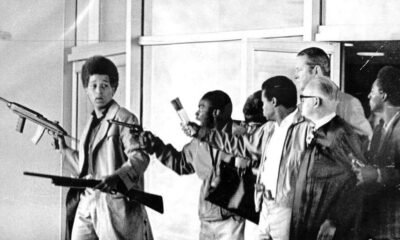
BMH glows with warm opening visual arrays of marriage photographs and other gleaming images of Harper, Robin, Lance, Jordan, Que, Julian, Shelby and Mia. Previous old-school audiences are reconnected to the cast and newer audiences are simultaneously introduced to these beloved characters. Best Man is as familiar as any film narrative as the story has been carried via every visual medium possible over the past 14 years; thus it sets the stage for BMH to attract a wider cohort of Black viewers. There’s always a new back-story of the struggle of Black filmmakers taking their idea to market and needing to persuade-beg-implore a new group of unenlightened corporate drones as to why their story ideas will sell to the masses. BHM successfully aborts the Eurocentric romantic comedy formula by daring to offer a plot deviation that also explores existential meanings of life. Writer director Malcolm Lee should earn props for taking such risks. The newly resurrected Arsenio Hall show recently hit some season high rating notes by featuring the main male and female cast members of BMH over two consecutive nights on the show. Hall producers were likely attempting to regain their historic “street cred” with hipper and historically Black viewers. Although Hall didn’t dance with the brothers of BMH on the show as they lip-synced and glided to the rhythms of former boy band New Edition’s,” Can You Stand the Rain”, the show likely scored high marks with viewers.
After this weekend’s successful nationwide opening, many reviewers will simplistically critique BMH for its box office cache and the cheddar that it grossed this weekend for the good folks at Universal Films. The tallying of its weekend receipts will buttress Malcolm Lee’s persuasive arguments as to why he always knew BMH would be a successful film. Others writers will feel compelled to analyze how BMH competed well against the nation’s current testosterone Norse classic “Thor 2.” As if a tired oft-studied western mythology recapitulated as “Thor: The Dark World” produced for $55 million and opening on roughly 3,841 screens compared to BMH’s largely African American audiences on much fewer screens. Once again, it feels like Rocky Balboa taking on Apollo Creed in a metaphoric reversal of roles.
It’s far better to compare BMH to its predecessor film, Best Man as BMH during its 3-day opener grossed 31 million dollars and made more money than its predecessor did for its entire theatrical run. Films featuring all Black casts typically suffer undue mainstream criticism historically as did early artistic expressions of other African American productions. Directors Spike Lee, Robert Townsend, Julie Dash and Lee Daniels can certainly validate this experience. Initially hating and scorning Black culture is such a really old habit told via rock-n-roll, jazz, Hip Hop, tap dance, banjo music, and race record sensibilities. Just hark back to MTV’s initial dismissal of both Rick James’ Super Freak video and the story of their initial refusal to air the late King of Pop Michael Jackson’s Billie Jean video on its then new MTV video show to underscore the point.
Finally, please don’t make the mistake made by several so-called media experts who state that BMH is largely a movie constructed as pure visual candy for the sisters; I say not at all. I view the Best Man Holiday as another form of Afrocentric synergy as I do other aspects of Black cultural life like for example as found in big mamma’s gumbo, potato salad, collard greens and corn bread— the sum of the individual ingredients is far greater than its parts. And it’s refreshing that some movies being made today still do really matter. Shhh …. ca-ching! Listen carefully now just one short week after the successful release of BMH you can hear the murmurs of a trifecta dark horse yet to be identified; the negotiations for Best Man III just may be in the works. Can the Best Man franchise as a brand continue to be sustained? We’ll have to wait and see.
Richard M. Cooper, Ph.D. MSW is social work clinical professor at Widener University and hosts/produces a weekly talk radio show on the only independently owned Black talk radio station in Pennsylvania, WWW.900AMWURD.COM He can be contacted at drrichardcooper@gmail.com










Uncategorized
Not Just a Southern Issue: Advocates Say SCOTUS Voting Rights Decision Has Already Started to Reshape Black Political Power
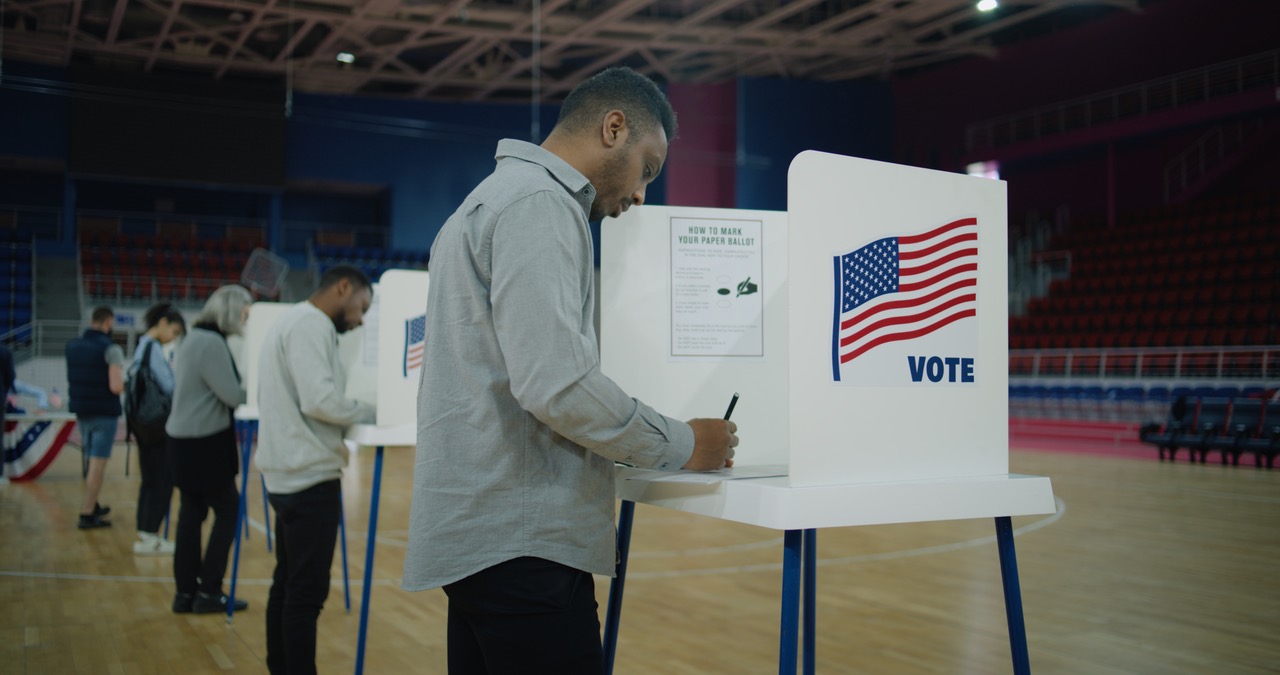
OAKLAND POST — Following the Civil War and Reconstruction, constitutional amendments expanded Black citizenship and voting rights across the South, leading to dramatic increases in Black political representation. But those gains were quickly met with violent backlash and the rise of Jim Crow laws designed to suppress Black voting through poll taxes, literacy tests, and other “race-neutral” restrictions.

By Edward Henderson, California Black Media
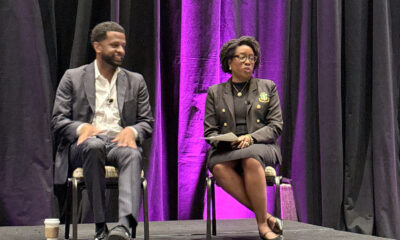
U.S. Rep. Sydney Kamlager-Dove (D-CA-37), a member of the Congressional Black Caucus (CBC) whose district spans parts of Los Angeles County, joined fellow CBC member U.S. Rep. Troy Carter (D-LA-2) for a May 21 briefing with Black media outlets in California.
The lawmakers highlighted what they describe as a mounting threat to Black political representation resulting from an April 29 U.S. Supreme Court ruling that weakened key protections under the federal Voting Rights Act.
Kamlager-Dove and Carter warned that the decision, which narrowed the role of race in redistricting, is already reshaping congressional districts across the South and undermining Black voters’ ability to elect candidates of their choice.
“While we are a super blue state, we have far to go when it comes to Black representation; we tend to take that for granted,” Kamlager-Dove said of California, noting that the Golden State has the fifth largest Black population in the country and only has three Black members of Congress.
“While I support building coalitions, we have to make sure that as a Black community we are not yielding our power,” she added.
Calling the fight “not unique to the South,” Carter urged Black communities nationwide to recognize the broader implications of the legal and political battles unfolding in Southern legislatures and courtrooms.
The Supreme Court ruling centers on Section 2 of the Voting Rights Act of 1965, the portion of the law that prohibits voting systems or district maps that dilute the voting strength of racial minorities. For decades, Section 2 allowed civil rights groups to challenge district maps that weakened Black political representation even when lawmakers did not openly state discriminatory intent.
Now, advocates fear that standard has fundamentally changed.
“You have to have smoking gun evidence,” said Mitchell Brown, senior voting rights counsel at the Southern Coalition for Social Justice, during a recent media briefing hosted by American Community Media on May 15. “Legislators are not going to say the quiet part out loud.”
The implications could stretch far beyond congressional elections, Brown said.
Section 2 protections have historically applied not only to U.S. House districts, but also to state legislatures, school boards, county commissions, judgeships, and local governing bodies. Voting rights advocates warn that weakening those protections could reshape political representation throughout the South, particularly in states with large Black populations.
“This is not just a Southern issue,” said Amir Badat, manager of Black Voters on the Rise and voting special counsel at the NAACP Legal Defense and Educational Fund.
Badat described the current moment as part of a much longer historical pattern.
Following the Civil War and Reconstruction, constitutional amendments expanded Black citizenship and voting rights across the South, leading to dramatic increases in Black political representation. But those gains were quickly met with violent backlash and the rise of Jim Crow laws designed to suppress Black voting through poll taxes, literacy tests, and other “race-neutral” restrictions.
“This is the same move,” Badat said.
Advocates also emphasized that the consequences of weakened voting protections extend into everyday life.
Local elected offices such as school boards, city councils, county commissions, and judgeships often determine funding priorities, public safety policy, education standards, and infrastructure investments.
“These are not abstract numbers,” Badat said. “These have real political consequences and policy consequences on people’s day-to-day lives.”

Uncategorized
Rest in Peace: A.M.E. Pastor and L.A Civil Rights Icon Cecil “Chip” Murray Passes
The Rev. Dr. Cecil L. “Chip” Murray, former pastor of First African Methodist Episcopal Church (FAME) in Los Angeles, died of natural causes April 6 at his Windsor Hills Home. He was 94. “Today, we lost a giant. Reverend Dr. Cecil Murray dedicated his life to service, community, and putting God first in all things. I had the absolute honor of working with him, worshiping with him, and seeking his counsel,” said Los Angeles Mayor Karen Bass of the dynamic religious leader whose ministry inspired and attracted millionaires as well as former gang bangers and people dealing with substance use disorder (SUD).
The Rev. Dr. Cecil L. “Chip” Murray, former pastor of First African Methodist Episcopal Church (FAME) in Los Angeles, died of natural causes April 6 at his Windsor Hills Home. He was 94.
“Today, we lost a giant. Reverend Dr. Cecil Murray dedicated his life to service, community, and putting God first in all things. I had the absolute honor of working with him, worshiping with him, and seeking his counsel,” said Los Angeles Mayor Karen Bass of the dynamic religious leader whose ministry inspired and attracted millionaires as well as former gang bangers and people dealing with substance use disorder (SUD).
Murray oversaw the growth of FAME’s congregation from 250 members to 18,000.
“My heart is with the First AME congregation and community today as we reflect on a legacy that changed this city forever,” Bass continued.
Murray served as Senior Minister at FAME, the oldest Black congregation in the city, for 27 years. During that time, various dignitaries visited and he built strong relationships with political and civic leaders in the city and across the state, as well as a number of Hollywood figures. Several national political leaders also visited with Murray and his congregation at FAME, including Presidents George W. Bush and Bill Clinton.

Murray, a Florida native and U.S. Air Force vet, attended Florida A&M University, where he majored in history, worked on the school newspaper and pledged Alpha Phi Alpha Fraternity. He later attended Claremont School of Theology in Los Angeles County, where he earned his doctorate in Divinity.
Murray is survived by his son Drew. His wife Bernadine, who was a committed member of the A.M.E. church and the daughter of his childhood pastor, died in 2013.
Uncategorized
Court Throws Out Law That Allowed Californians to Build Duplexes, Triplexes and RDUs on Their Properties
Charter cities in California won a lawsuit last week against the state that declared Senate Bill (SB) 9, a pro-housing bill, unconstitutional. Passed in 2021, SB 9 is also known as the California Housing Opportunity and More Efficiency Act (HOME). That law permits up to four residential units — counting individual units of duplexes, triplexes and residential dwelling units (RDUs) – to be built on properties in neighborhoods that were previously zoned for only single-family homes.
Charter cities in California won a lawsuit last week against the state that declared Senate Bill (SB) 9, a pro-housing bill, unconstitutional.
Passed in 2021, SB 9 is also known as the California Housing Opportunity and More Efficiency Act (HOME). That law permits up to four residential units — counting individual units of duplexes, triplexes and residential dwelling units (RDUs) – to be built on properties in neighborhoods that were previously zoned for only single-family homes.
A Los Angeles Superior Court Judge ruled in favor of the cities, pointing out that SB 9 discredited charter cities that were granted jurisdiction to create new governance systems and enact policy reforms. The court ruling affects 121 charter cities that have local constitutions.
Attorney Pam Lee represented five Southern California cities in the lawsuit against the state and Attorney General Rob Bonta.
“This is a monumental victory for all charter cities in California,” Lee said.
However, general law cities are excluded from the court ruling as state housing laws still apply in residential areas.
Attorney General Bonta and his team are working to review the decision and consider all options that will protect SB 9 as a state law. Bonta said the law has helped provide affordable housing for residents in California.
“Our statewide housing shortage and affordability crisis requires collaboration, innovation, and a good faith effort by local governments to increase the housing supply,” Bonta said.
“SB9 is an important tool in this effort, and we’re going to make sure homeowners have the opportunity to utilize it,” he said.
Charter cities remain adamant that the state should refrain from making land-use decisions on their behalf. In the lawsuit, city representatives argued that SB 9 eliminates local authority to create single-family zoning districts and approve housing developments.


The mission of Youth Alive! Is to “break the cycle of violence, heal trauma, and uplift a thriving community of leaders, to save lives in Oakland and beyond” by serving “as mentors, youth leaders, counselors, case managers, intervention specialists and violence interrupters,” working “to help violently wounded people heal themselves and their community.”

Standoff for Justice: Our Homes Are Worth Fighting For

‘Eyes on Cuba’: A Conversation About Humanitarian Conditions Facing Cuba in Midst of Crippling U.S. Blockade

Richmond Fire Victims Benefit from Tacos El Rulas Fundraiser

Arnold Perkins: At 85, a Life of Service, Faith and Giving Back

Oakland Post: Week of August 26 – September 1, 2026

EV Home Charging Warning: What Dealerships Won’t Tell You! #shorts

Car Buying Secrets: Dealership Traps & How to Avoid Them #shorts

Mazda3 Hatchback Smart Trim Choices & Backseat Test #shorts

Loan Trap: The 7-Year Secret to Higher Payments #shorts

Marvel Has No Problem Finding Room for Spider-Man. So, Why Wasn’t There Room for Blade?

Young Black Men Suffering in Silence A curse that can be Broken

Black August Was Never Meant to End in August

IN MEMORIAM: Dolly Parton Dead at 80 — How She Built a Legacy of Love and Earned Her Place in Black Culture

LIVE! — HE SAID, HE SAID, HE SAID — “The Next Chapter in Living with HIV” — FRI. 8.28.26 7PM EST

Department of Homeland Security Demands California Secretary of State Shirley N. Weber Scrub Voter Rolls

New Judge Could Decide if Karmelo Anthony Gets a New Trial

Oakland Children’s Hospital Workers and Patients Rally for Pediatric Medical Care

“The Power to See Threats Sooner”: Gov. Newsom, Safety Officials Showcase California’s Investments in Hi-Tech Wildfire Prevention

Alpha Kappa Alpha Sorority, Inc. Celebrates New North Atlantic Regional Director

Surveillance Pricing Fight: State Senate Debates Bill Banning Retailers from Using AI to Set Prices Based on a Buyer’s Profile

Mount Zion MBC, Church of Jesus Christ of Latter-day Saints Partner to Bring 29,000 Meals to Alameda County

California Sen. Padilla Joins Colleagues to Introduce Bill Imposing Term Limits on Supreme Court Justices

Less Affluent School Districts, Including Sacramento City, Face Threat of State Takeover

Car Wash Workers Cope with Lingering Impacts of ICE Raids

Starting This Summer, California Car Buyers Can Get an Instant $3500 Off the Cost of Electric Vehicles

COMMENTARY: You Are Already Paying for the AI Boom

California Bill Would Let Abuse Victims Use Trauma as Legal Defense for Violent Crime

Fed Court to Decide Landmark First Amendment Case

Oakland Celebrates $125 Million Coliseum Sale

The Conversation With Al McFarlane 6/23/26

Media Monday 6/22/26

LIVE! ASK ALMA! — TUES. 6.23.26 7PM EST

Car Buying Secrets: 4 Hidden Checks Before You Sign!

Is This 550 HP Charger Worth YOUR Money? AutoNetwork Review

Celebrating Juneteenth – Frederick Douglass on education and resistance

LIVE! — ASK ALMA! — TUES. 6.19.26 7PM EST

Hyundai Ioniq 5 Parking, Safety, and 360 View #shorts

2025 Ioniq 5 New Wiper & Powerful Performance! #shorts

Electric SUV Range: Is 259 Miles Enough? #shorts

EV Charging: How Fast Can You Charge an Electric Vehicle? #shorts

Biometric Cooling… Messaging Seats…Come on! 2025 Infiniti QX80 Autograph 4WD

Charged Up: Witness the Magic of a Fully Electric Car! #shorts

Range Rover Sport PHEV Included…: See What’s Inside This Luxury SUV! #shorts

Invisible Hood View: Perfect Parking with X-Ray Vision! #shorts
-
 Featured3 weeks ago
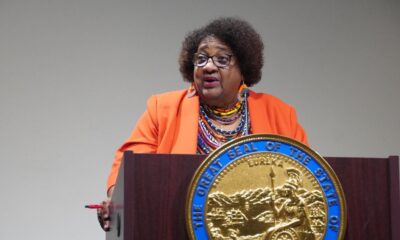
Department of Homeland Security Demands California Secretary of State Shirley N. Weber Scrub Voter Rolls
-
 #NNPA BlackPress4 weeks ago
New Judge Could Decide if Karmelo Anthony Gets a New Trial
-
 Environment3 weeks ago
“The Power to See Threats Sooner”: Gov. Newsom, Safety Officials Showcase California’s Investments in Hi-Tech Wildfire Prevention
-
 Black History4 weeks ago
Alpha Kappa Alpha Sorority, Inc. Celebrates New North Atlantic Regional Director
-
 Featured3 weeks ago
California Sen. Padilla Joins Colleagues to Introduce Bill Imposing Term Limits on Supreme Court Justices
-
 Community2 weeks ago
Less Affluent School Districts, Including Sacramento City, Face Threat of State Takeover
-
 Business3 weeks ago
Car Wash Workers Cope with Lingering Impacts of ICE Raids
-
 #NNPA BlackPress4 weeks ago
COMMENTARY: You Are Already Paying for the AI Boom
