
Politics
Update: MO Black Caucus and OBS Meet to Discuss Policing Initiative Proposal


Police officers confront protesters Tuesday, Nov. 25, 2014, in Ferguson, Mo. Missouri’s governor ordered hundreds more state militia into Ferguson on Tuesday, after a night of protests and rioting over a grand jury’s decision not to indict police officer Darren Wilson in the fatal shooting of Michael Brown, a case that has inflamed racial tensions in the U.S. (AP Photo/David Goldman)
by Bridjes O’Neil
Special to the NNPA from The St. Louis American
Members of the Missouri Legislative Black Caucus met with those from the Organization for Black Struggle on Friday at Greater St. Marks Family Church in Ferguson. They discussed legislative strategy for the upcoming session and ways to incorporate OBS’ Quality Policing Initiative into legislation at the state, county, and local levels.
OBS members hand-delivered the policy proposal to legislators in Jefferson City on Wednesday, January 7, along with an invite to attend Friday’s meeting. They had also disrupted the opening ceremony in the Senate chamber by chanting and dropping banners. One banner read, “You’ve got mail.”
“With the start of the year and a new legislative session,” the letter read, “we, the people, are committed to holding our elected officials accountable to us as constituents.”
Signed by OBS Executive Director Montague Simmons, the letter went on to say that the “systematic lynching” of Black people at the hands of police has continued since the death of Michael Brown Jr. on Aug. 9 —and that the judicial system has failed to hold police to the same level of accountability. It warned that the community is dealing with a “structural problem” requiring a “structural solution.” That “structural solution” is the Quality Policing Initiative, a broad policy proposal that organizers demand lawmakers use as a blueprint to transform the state’s broken policing system.
Three months ago, back when protests were more frequent, state Rep. Michael Butler said he knew many of those same people would be in Jefferson City come January. From a list of 20 Caucus members invited to attend the meeting, Butler was among the handful that showed up. He was joined by state Reps. Courtney Curtis, Sharon Pace, Joe Adams, and Tommie Pierson. Pierson is also pastor of Greater St. Mark Family Church. It seemed to be a disappointing number for OBS organizer Kayla Reed.
“When I think of where I live, I’m looking at my Representative right now,” Reed said. “When I think about who my Senator is and the fact that she’s not here is very concerning.”
Despite their absence, Senators Jamilah Nasheed and Maria Chappelle-Nadal have been outspoken throughout the protest movement. On Wednesday, Chappelle-Nadal filed a formal “remonstrance” against Governor Jay Nixon calling for his resignation or impeachment, citing “failed and incompetent leadership.” In December, she also introduced legislation governing police conduct.
Reed spoke of a shift in the protest movement – from identifying problems to finding solutions.
“Protesting is not a solution,” she said. “It’s a tactic to force a solution.”
Most at the meeting agreed that there should be a greater focus on accountability, which comprises a large portion of the Quality Policing Initiative. The proposal tackles five phases of policing authority: recruitment, training, deployment, accountability and advancement.
Parts of the proposal outlines the creation of “use of force” and “search and seizure” reports along with a media accountability system – in which body and dash camera data is controlled by a citizen’s review board.
With a pen in hand, Butler listened intently with an occasional head nod as he jotted down notes on the back of a piece of paper.
Legislators gave brief updates on sponsored bills, particularly those dealing with community policing.
“You already have changes to the racial profiling act, municipal reform, and some policing tweaks that we have tried in the past year. That I’m sure these guys will re-file this year,” Butler said.
Simmons said there’s no greater time than now to effect real change. Although he seemed a bit concerned with attempting to pass any legislation with a Republican super-majority in both the House and the Senate. All is not lost, according to Curtis.
“There are some good Republicans we can work with,” he said.




Economy
Poll: Becerra Widens His Lead Over Hilton; Californians Split on Wealth Tax
A new Public Policy Institute of California poll shows Democrat Xavier Becerra leads Republican Steve Hilton by 22 points in California’s governor’s race, with 60% of likely voters supporting Becerra compared to 38% for Hilton. The September survey also reveals Californians are closely divided on a proposed one-time tax on billionaires, with 52% of likely voters in favor of Proposition 40. Affordability issues are a major factor for voters. Read more to learn about the poll’s additional findings on voter sentiment.

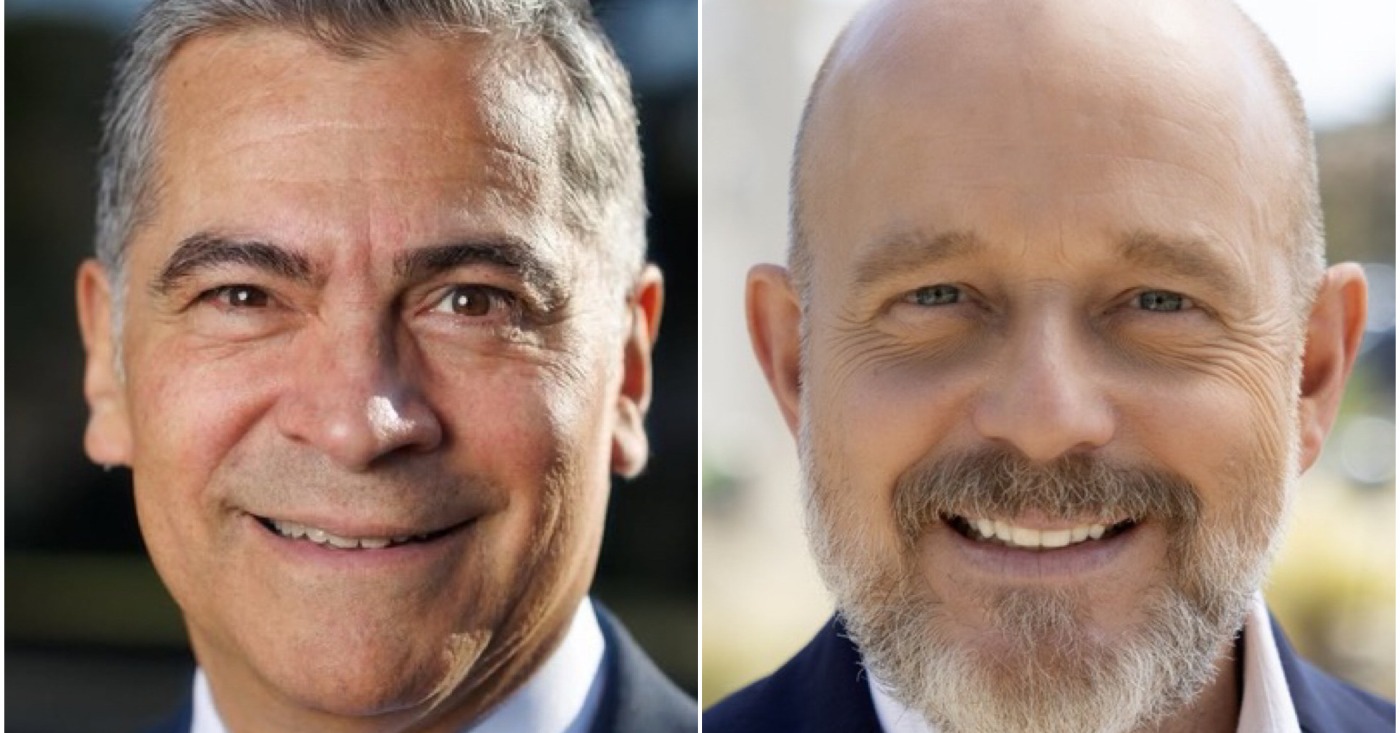
Democrat Xavier Becerra holds a 22-point lead over Republican Steve Hilton in California’s governor’s race, while voters remain closely divided over a proposed one-time tax on billionaires, according to a new Public Policy Institute of California poll.
The September PPIC survey found that 60% of likely voters support Becerra, compared with 38% for Hilton. His lead is actually narrower than it was in July, when he led Hilton 61% to 36%.
Becerra leads among independent voters, with 57% supporting him compared with 38% for Hilton. Party loyalty remains strong, with 93% of Democratic likely voters backing Becerra and 92% of Republicans supporting Hilton.
Hilton leads in the Central Valley, where 52% of likely voters support him compared with 46% for Becerra.
Affordability remains a major factor: 65% of likely voters say candidates’ plans to address cost-of-living issues are “very important” to their vote.
“Affordability continues to be top of mind for Californians when considering their choice for governor,” said Mark Baldassare, PPIC Statewide Survey director and Miller Chair in Public Policy.
The poll also found a narrow split over Proposition 40, a proposed one-time tax of up to 5% on taxpayers with assets exceeding $1 billion. Fifty-two percent of likely voters said they would vote yes, while 46% said they would vote no.
Support for the wealth tax varies sharply by party. Seventy-two percent of Democrats favor Proposition 40, compared with 46% of independents and 21% of Republicans.
Two competing measures also drew majority support. Fifty-one percent back Proposition 41, while 54% support Proposition 42, both of which could affect the wealth-tax proposal.
The findings come as Californians express broader frustration with the state’s political direction. Seventy-one percent of likely voters expect bad economic times in California over the next year.
“Californians are clearly grumpy and aren’t enamored with any particular political party or movement,” Baldassare said.
The survey interviewed 1,745 California adults, including 1,103 likely voters, from Sept. 4-10. The margin of error for likely voters is plus or minus 3.8 percentage points.

Community
LIVE FREE Sunday Dinner Brings Faith, Fellowship and Civic Conversation to Oakland
Approximately 50 members and guests gathered at Imani Community Church for a LIVE FREE Sunday Dinner, sharing a meal with Pastor Michael McBride. The event, hosted by Imani Community Church Pastor Jeremy McCants, focused on faith, community preparedness, and civic participation. Participants discussed “sacred resistance” and how communities can collectively respond to challenges, including practical suggestions for emergencies. The conversation also touched upon the importance of civic engagement and voting in the upcoming election. Read more to learn about the specific actions discussed.
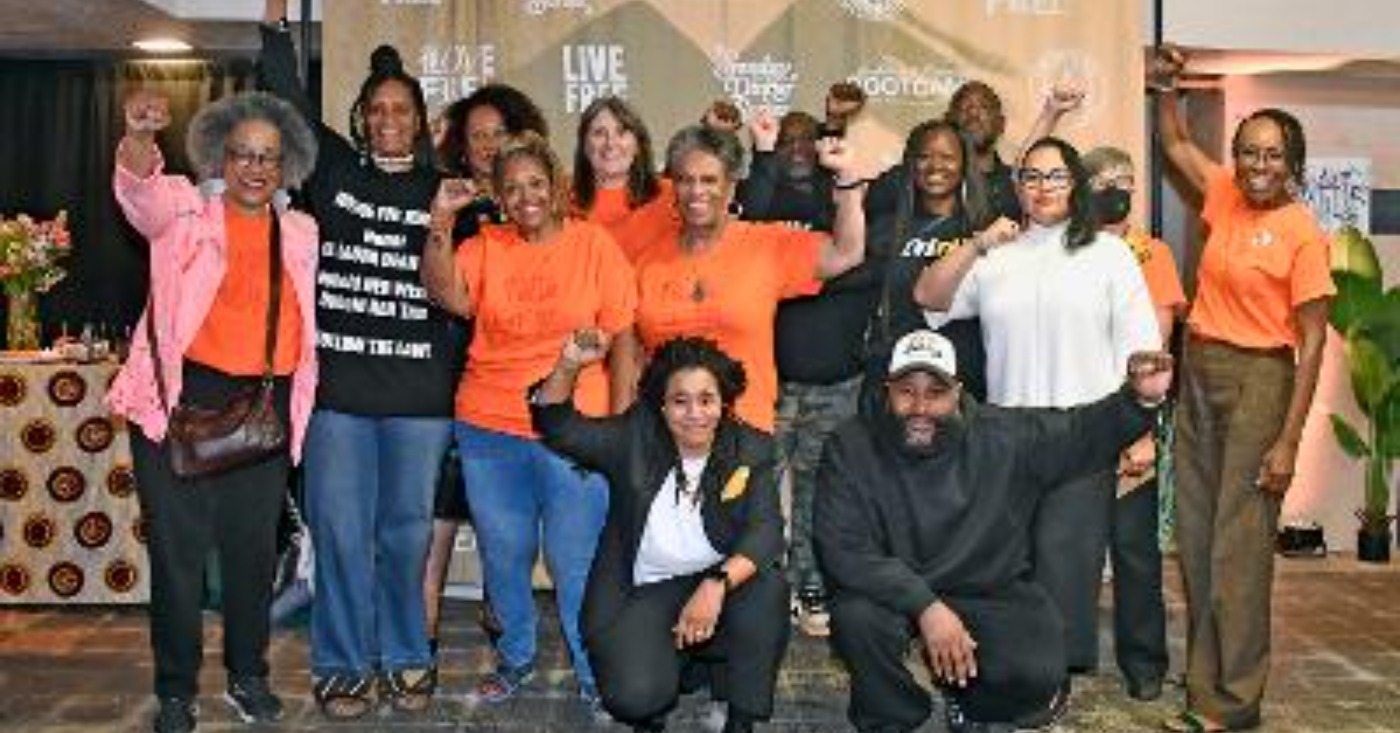
Pastor Michael McBride joins Imani Community Church Members for Food, Faith and Conversation about Community Action
Approximately 50 members and guests of Imani Community Church gathered Sunday afternoon for a LIVE FREE Sunday Dinner, sharing a meal with Pastor Michael McBride while discussing faith, community preparedness and civic participation.
Hosted by Imani Community Church Pastor Jeremy McCants, the Sept. 20 gathering was part of LIVE FREE’s Sunday Dinner initiative, which draws upon the tradition of families, neighbors and faith communities gathering around the Sunday dinner table to break bread and discuss issues affecting their lives.
McBride is founder of LIVE FREE and lead pastor of The Way Christian Center on University Avenue in Berkeley. His Bay Area ministry has deep roots. The congregation traces its history to a church planted by McBride’s grandmother in 1969. McBride returned to the Bay Area in 2005 and became its fourth pastor.
His ministry later expanded into community organizing and national advocacy. McBride founded LIVE FREE in 2011 following organizing work in Oakland and has been involved in efforts addressing gun violence, mass incarceration and civic engagement.

At Imani, the Sunday dinner concept was simple: sit down together, eat together and talk.
McBride recalled a time when Sunday dinner provided families and neighbors an opportunity to discuss what was happening in their communities. LIVE FREE has adapted that tradition into gatherings where faith communities and neighbors can meet, communicate, and consider how to respond collectively to current challenges.
Much of Sunday’s conversation centered on what McBride described as “sacred resistance,” bringing faith into discussions about how communities respond during difficult and uncertain times.
Participants considered a fundamental question: How do we make sense of what is happening around us, and how do we move forward?
The conversation was grounded in faith and prayer, but participants also discussed action and preparation. Attendees talked about not assuming that institutions and everyday systems will always function as expected.
Practical suggestions included keeping basic food staples such as rice and beans available during emergencies. Participants cited the water crisis in Flint, Michigan, as an example as they discussed communities that have experienced disruptions to essential services.
The broader message was one of preparedness and connection: neighbors should know and support one another before a crisis occurs.
The conversation also turned to civic participation and the upcoming election.
McBride’s message was brief: “Vote. We must vote.”
Participants were encouraged to register to vote, verify that their registration is current, and learn what will appear on their ballots. The discussion included researching candidates and ballot measures, voting early, and making a voting plan.
An Oct. 3 workshop was announced as another opportunity for community members to learn more about candidates, volunteer phone banking, ballot measures, and issues before voters.
For Imani’s Social Justice Team, the gathering provided another opportunity to share information with the congregation and surrounding community regarding Imani member Zakiya Jendayi, fighting for her home, and how the community can support her by attending a vigil at her Oakland home every Tuesday from 6-7 p.m. at 3614 Randolph Ave. 94610.
Black History
Caribbean Nations Produce Action Plan Calling for UK Reparations Over Slavery
Caribbean nations are developing an action plan with legal options to press the United Kingdom for negotiations regarding slavery reparations. Officials at a recent conference indicated that regional leaders hope for targeted talks at upcoming Commonwealth and UN summits. However, if diplomatic efforts are resisted, the Caribbean nations are prepared to pursue international court action. A spokesperson for the British government recently reiterated its long-held position against paying reparations. Read more about the unified strategy being pursued.
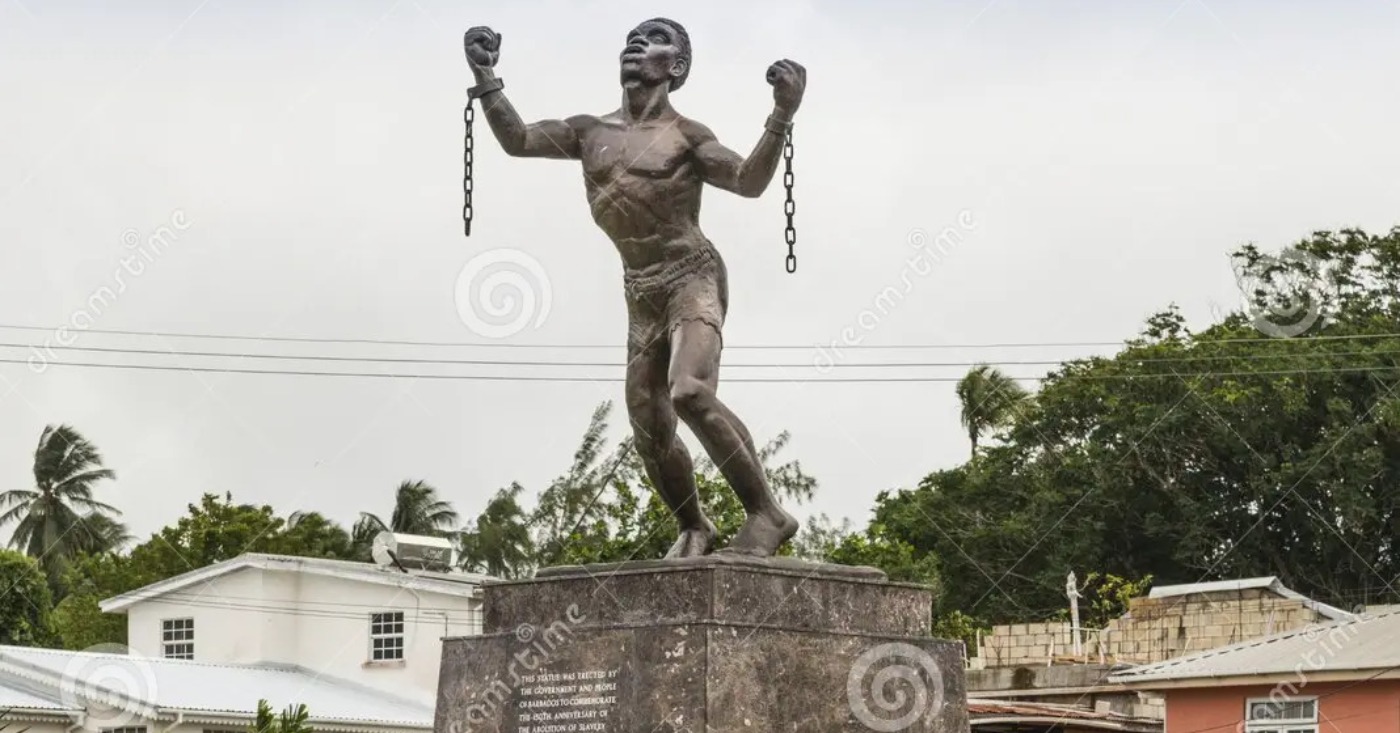
Caribbean nations are producing an “action plan” with legal options to push the United Kingdom (UK) into negotiating a decades-long slavery reparations deal, according to officials at a reparations conference.
Leaders in the region are hoping the UK would agree to targeted and constructive negotiation talks at upcoming Commonwealth and UN summits, but they are ready to take the matter to international courts if Britain continues to resist diplomatic options, according to the Guardian.
Earlier this month, a spokesperson reiterated the British government’s long‑held position that “the UK does not and will not pay reparations”.
Ralph Gonsalves, the former prime minister of St. Vincent and the Grenadines, said the Caricom Regional Conference on Reparations, which was hosted last week by Barbados with the Caricom Reparations Commission (CRC), was key for agreeing to a unified strategy to bring Britain to the negotiating table. Gonsalves is now an elder and adviser for the Repair Campaign, a social movement for reparatory justice.
He said that slavery happened over centuries and reparations had to be realistic and set over decades. “We need a concrete, multigenerational plan,” he said.
On the legal options available to the Caribbean, Gonsalves challenged arguments that Britain did not violate historical laws during transatlantic slavery, adding that the UK’s signature on contemporary UN conventions had established a binding legal obligation for reparative justice.
“The fact is that the consequences of slavery fall squarely under the Committee on the Elimination of Racial Discrimination, which obliges states to help address the consequences of native genocide and slavery,” Gonsalves said.


Asm. Corey Jackson Announces Launch of 24-Hour Childcare in His District

IN MEMORIAM: The Rev. Leon “Sonny” Clark, Longtime Orange County Pastor and Community Leader, Dies at 72

Poll: Becerra Widens His Lead Over Hilton; Californians Split on Wealth Tax

From Historic Memories to New Possibilities: Oakland Celebrates Coliseum 60

County Office of Education Says OUSD Finances Are Getting Healthier, Materially Stronger

LIVE FREE Sunday Dinner Brings Faith, Fellowship and Civic Conversation to Oakland

Remembering Chauncey Bailey as Student Journalists Face Threats to Truth-Telling

BLACspace Cooperative Invites Bay Area to Experience Oakland’s Black Cultural Ecosystem Through a BLAC Map Tour + Party

In Wake of Death on Doorstep, Williams Chapel Baptist Church Calls for Better Care, Funding for Unhoused

Oakland Centenarian Nuna McKee Honored!

Caribbean Nations Produce Action Plan Calling for UK Reparations Over Slavery

Oakland Post: Week of September 23 – 29, 2026

Doulas Are Helping Black California Moms Navigate Pregnancy–Even as High Mortality Rates Persist

Newsom Signs Addictive Social Media Law to Protect Kids

On Your November Ballot: Prop 38 Would Allocate $8.4 Billion to Immunology and Immunotherapy Funding

Standoff for Justice: Our Homes Are Worth Fighting For

Oakland Post: Week of August 26 – September 1, 2026

Frontier Airlines’ Return to Oakland Airport Brings Flights, Jobs and Opportunity

Gubernatorial Candidate Steve Hilton Blasts California New Tire Rules; Newsom Hits Back

Chef Sharon Lee Blends Culinary Excellence, Education and Empowerment

Jackie Wright Champions Bay Area Stories, Filmmakers and Cultural Institutions

Big City Mayors Ask for “Yes” Vote on Housing Bond Measure; Conservatives Say “No”

Oakland Coliseum Project Opens Door for Small Businesses to Build Bigger

Gov. Newsom’s Latest Appointees Include Sacramento Advocate for Formerly Incarcerated Students; State’s New Tech Chief

Misnamed ‘Parent’ PAC Seeks to Influence Oakland School Board Elections

Longtime BWOPA Member Brendalyn Goodall Appointed to California Workforce Development Board

Gov. Newsom Signs Law Shielding Immigration Aid Workers From Doxing Threats

Secretary of State Shirley N. Weber Urges Californians to Vote Early as Voter ID Battle Intensifies

From Palestine to Oakland: Seeds for Liberation Examines Shared Struggles for Freedom

IN MEMORIAM: Dolly Parton Dead at 80 — How She Built a Legacy of Love and Earned Her Place in Black Culture

The Conversation With Al McFarlane 6/23/26

Media Monday 6/22/26

LIVE! ASK ALMA! — TUES. 6.23.26 7PM EST

Car Buying Secrets: 4 Hidden Checks Before You Sign!

Is This 550 HP Charger Worth YOUR Money? AutoNetwork Review

Celebrating Juneteenth – Frederick Douglass on education and resistance

LIVE! — ASK ALMA! — TUES. 6.19.26 7PM EST

Hyundai Ioniq 5 Parking, Safety, and 360 View #shorts

2025 Ioniq 5 New Wiper & Powerful Performance! #shorts

Electric SUV Range: Is 259 Miles Enough? #shorts

EV Charging: How Fast Can You Charge an Electric Vehicle? #shorts

Biometric Cooling… Messaging Seats…Come on! 2025 Infiniti QX80 Autograph 4WD

Charged Up: Witness the Magic of a Fully Electric Car! #shorts

Range Rover Sport PHEV Included…: See What’s Inside This Luxury SUV! #shorts

Invisible Hood View: Perfect Parking with X-Ray Vision! #shorts
-
 Community2 weeks ago
Misnamed ‘Parent’ PAC Seeks to Influence Oakland School Board Elections
-

 Activism3 weeks ago
Oakland Post: Week of September 2 – 8, 2026
-

 Community2 weeks ago
Richmond Tiny House Village Farm & Garden Set to Open Gates on Sept. 26
-

 Black History2 weeks ago
Latest Massacre in Haiti Reveals Cruelty U.S. Deportations
-

 Black History2 weeks ago
OPINION: Nolan Wells’ Death One of Several Signifying Racial Terror Lives on in U.S. South
-

 Activism2 weeks ago
Oakland Post: Week of September 9 – 15, 2026
-

 Community2 weeks ago
Democratic Clubs Interview Candidates for Oakland School Board
-
 Featured2 weeks ago
‘Ready to See These Bills Become Law’: Sen. Weber’s Package of 15 Bills Advance to Gov. Newsom’s Desk
