
National
5 Things About the 50th Anniversary of the Selma Marches


In this March 1965 file photo, Martin Luther King, center, leads a march from Selma to Montgomery, Ala. In early 1965, King’s Southern Christian Leadership Conference began a series of marches as part of a push for black voting rights. (AP Photo/File)
JESSE J. HOLLAND, Associated Press
WASHINGTON (AP) — This weekend marks the 50th anniversary of “Bloody Sunday,” a civil rights march in which protesters were beaten, trampled and tear-gassed by police at the Edmund Pettus Bridge in Selma, Alabama. On March 7, 1965, marchers were walking from Selma to the state capital, Montgomery, to demand an end to discriminatory practices that robbed blacks of their right to vote. It took two more attempts for marchers to successfully complete their journey. Images of the violence during the first march shocked the nation and turned up the pressure to pass the Voting Rights Act of 1965, which helped open voter rolls to millions of Southern blacks.
Five things to know about Bloody Sunday:
___
SELMA TO MONTGOMERY
The march was conceived by James Bevel, one of Martin Luther King Jr.’s aides. After a 26-year-old black church deacon, Jimmie Lee Jackson, was fatally shot by a state trooper during an earlier march in Marion, Alabama, Bevel suggested that protesters carry Jackson’s casket from Marion to the steps of the state capitol. A protest march was planned instead, and the starting point changed to Selma. That march ended in the Bloody Sunday beatings.
Afterward, King issued a call for volunteers and ministers to come to Selma for a second march. However, federal judge Frank M. Johnson had forbidden marches pending his ruling on a petition to shield marchers from police interference. To heed the judge’s order, King led protesters two days later, on Tuesday, March 9, 1965, to the Pettus bridge, where they kneeled, prayed, sang and left. King’s refusal to take the march across the bridge, where Alabama lawmen were waiting, led critics to call the second march “Turnaround Tuesday.”
Johnson ordered federal protection for the marchers, and on March 21, 1965, thousands of marchers made the 50-mile journey to Montgomery. Two other people were also killed during these protests: James Reeb, a white Unitarian minister who was beaten to death by local whites on March 11 and Viola Liuzzo, a white Michigan woman who was fatally shot by the Ku Klux Klan on March 25.
___
WHERE WAS KING?
Martin Luther King Jr. was not in Selma for the Bloody Sunday march, although he had been there before working on voting rights issues, even doing a stint in jail there. King was obliged to preach at his church in Atlanta on the day people showed up to march to Montgomery, since it was their “Men’s Day” program, former King aide Andrew Young said. Young said they heard that people were showing up to march and so he immediately headed to Selma.
He and other King aides then telephoned Atlanta to convince King not to call it off.
“We persuaded him that since there were about three hundred people there, maybe they could go ahead and march, that they weren’t going to get far, anyway,” Young said in interviews for the documentary “Eyes on the Prize: America’s Civil Rights Years (1954-1965).” ”That we had seen the state troopers and they were going to probably stop them and turn them around, or maybe they would, people would get arrested.
“So he said, ‘Well, OK, go ahead and march,’ he said, ‘but don’t you all go to jail,'” Young said.
___
SHERIFF WITH NO REGRETS
One of the most polarizing figures of the Selma movement was Dallas County Sheriff Jim Clark, who’d already had several confrontations with protesters before the Bloody Sunday beatings. In fact, Clark insisted that the protesters who knelt down to pray before the state troopers attacked had actually provoked the police first. “The marchers fell to the ground and as the troopers moved on to them, that was when they attacked the troopers with ice picks, and straight razors, and knives, and even broken glass,” Clark told interviewers for the same “Eyes on the Prize” documentary. “And that was when they used tear gas on them and they started retreating across the bridge at that time.”
Clark lost his next election in 1966. He ended up selling mobile homes and once was sentenced to prison for conspiring to smuggle marijuana. He died in 2007.
In a 2006 interview, Clark told the Montgomery Advertiser that he did not regret his actions in Selma. “Basically, I’d do the same thing today if I had to do it all over again,” Clark said. “I did what I thought was right to uphold the law.”
___
MALCOLM X
Malcolm X had visited Selma in the weeks leading up to Bloody Sunday to support the voting rights movement there. By the time he arrived, King was in a Selma jail for protesting voting discrimination in the South. The two had first met the year before on Capitol Hill during Senate debate of the Civil Rights Act of 1964.
Malcolm X shared the podium with King’s wife, Coretta Scott King, at Brown Chapel African Methodist Episcopal Church, and Mrs. King told “Eyes on the Prize” interviewers that Malcolm X said he had changed his mind about visiting King in jail, and asked her to pass along a message.
“I didn’t come to Selma to make his job more difficult, but I thought that if the white people understood what the alternative was that they would be more inclined to listen to your husband,” she said he told her.
Malcolm X was assassinated on February 21, 1965, in New York City, roughly two weeks before Bloody Sunday.
___
CONGRESSIONAL GOLD MEDAL
Congress on Tuesday authorized the awarding of the Congressional Gold Medal to the marchers who participated in all three Selma-to-Montgomery marches. “This nation should never forget the sacrifices those who refused to accept second-class citizenship and demanded that our nation live up to the very ideals on which it was founded.” said Rep. Terri Sewell, D-Ala.
The Congressional Gold Medal is Congress’s highest honor.
Copyright 2015 The Associated Press. All rights reserved. This material may not be published, broadcast, rewritten or redistributed.







Community
Alameda County Supervisor Miley to Propose Illegal Dumping Ordinance
POST NEWS GROUP — The proposed ordinance would add Chapter 6.121 to the County’s General Ordinance Code, establishing an administrative enforcement process that would allow the County to hold more parties accountable without relying solely on criminal prosecution.

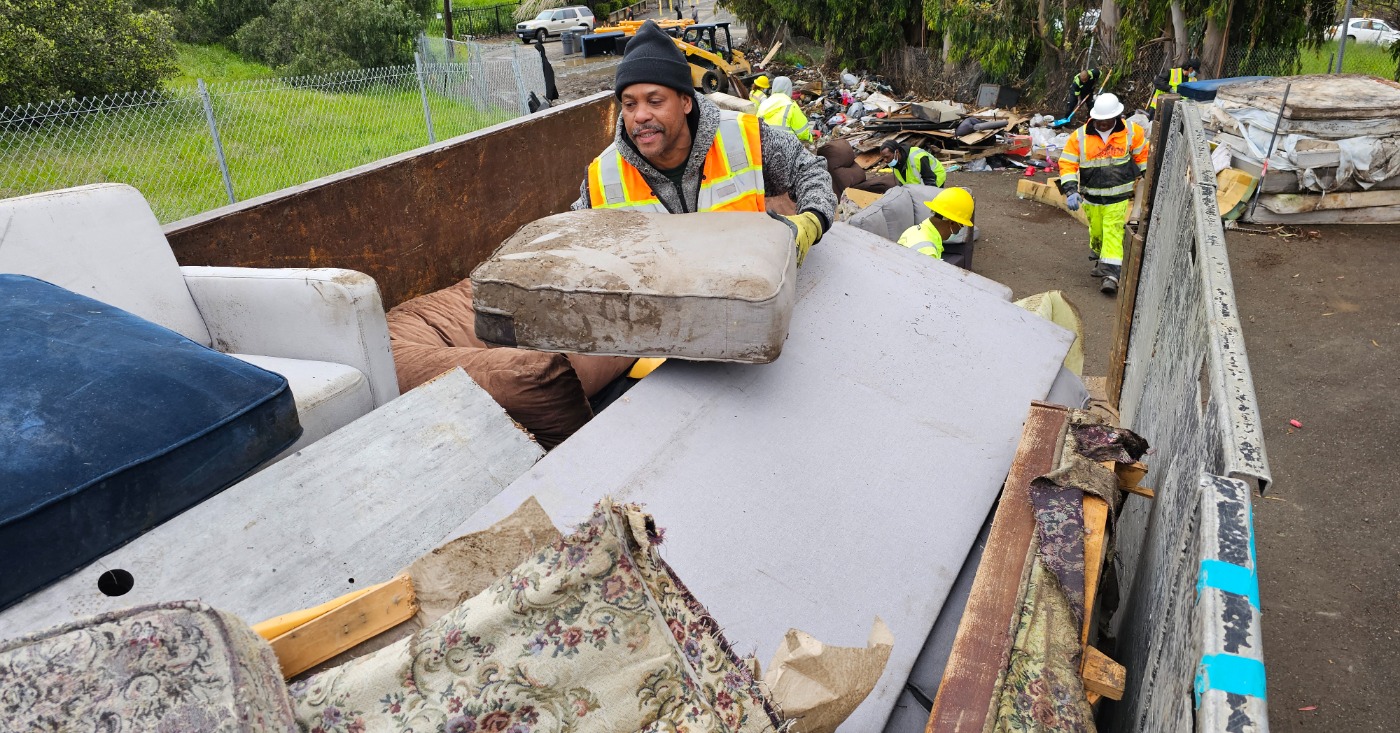
Proposal expands accountability, establishes administrative penalties, and ties fines to cleanup costs
On Tuesday, Nov. 17, the Alameda County Board of Supervisors is scheduled to consider the first reading of an ordinance proposed by Supervisor Nate Miley to strengthen enforcement against illegal dumping in unincorporated Alameda County, including Ashland, Cherryland, Castro Valley, San Lorenzo and Fairview.
Illegal dumping places a significant financial burden on residents and taxpayers. In 2024, Alameda County spent $3.8 million addressing 1,483 illegal dumping incidents, an average of approximately $2,562 per incident. Yet no illegal dumping cases from the unincorporated county were charged that year.
The proposed ordinance would add Chapter 6.121 to the County’s General Ordinance Code, establishing an administrative enforcement process that would allow the County to hold more parties accountable without relying solely on criminal prosecution.
Key provisions include:
- Expanded accountability: Penalties could apply to individuals who dump waste, those who provide waste to unlicensed haulers who illegally dispose of it, and vehicle owners who knowingly consent to their vehicles being used for illegal dumping.
- Administrative enforcement: Authorized County personnel could issue penalties and abatement orders, with opportunities for administrative hearings and judicial review.
- Penalties tied to cleanup costs: Fines would start at $2,500 for a first violation, increase to $5,000 for a second and $10,000 for a third. Enhanced penalties of up to $10,000 per violation could apply to large-scale dumping, hazardous waste, or dumping near sensitive locations such as creeks, schools and storm drains.
The ordinance includes safeguards for people acting in good faith. Residents and businesses using licensed haulers would be exempt from waste-generator liability, while vehicle owners whose vehicles were used without their consent and property owners unaware of dumping on their land would also be protected.

Cited individuals could request community service in lieu of penalties, with ability to pay among the factors considered. The proposal would also allow property owners, business improvement districts and community groups to pursue recovery of cleanup costs and authorize the Board to establish a reward fund for tips identifying illegal dumpers.
“Every mattress and every truckload of construction debris dumped in Ashland, Cherryland and Castro Valley gets paid for by the people who live there, and right now the people responsible almost never face a consequence,” Miley said. “This ordinance closes the loopholes that let people hand off their waste and walk away. It gives the County a fair and swift way to hold dumpers accountable, protects people who do the right thing, and makes the penalty match what it costs us to clean up after them.”
Modeled on Santa Cruz County’s illegal dumping ordinance, which took effect in July 2025, the proposal was recommended for approval by the Board’s Unincorporated Services Committee.
Miley is also urging cities and counties throughout the region to adopt similar standards. His office has released a Model Illegal Dumping Enforcement Ordinance developed through the Alameda County Illegal Dumping (ACID) Task Force to support coordinated regional enforcement.
If the Board conducts the first reading on Nov. 17, the ordinance will return for adoption at a subsequent meeting and take effect 30 days after adoption.
Paul Sanftner is the director of communications and special projects for the office of Alameda County Supervisor Nate Miley.

Community
On Veterans Day, U.S. Rep. Simon Demands Answers on Status of Veterans Affairs Clinic, Columbarium Project
POST NEWS GROUP — “Our veterans have served our nation with dignity and sacrificed so much for our nation – they deserve the best care and benefits possible, close to home. That’s why it is abhorrent that the Trump Administration has canceled the planned construction of a new clinic and columbarium at Alameda Point, despite years of planning and more than $395 million in federal funding already invested in the project.
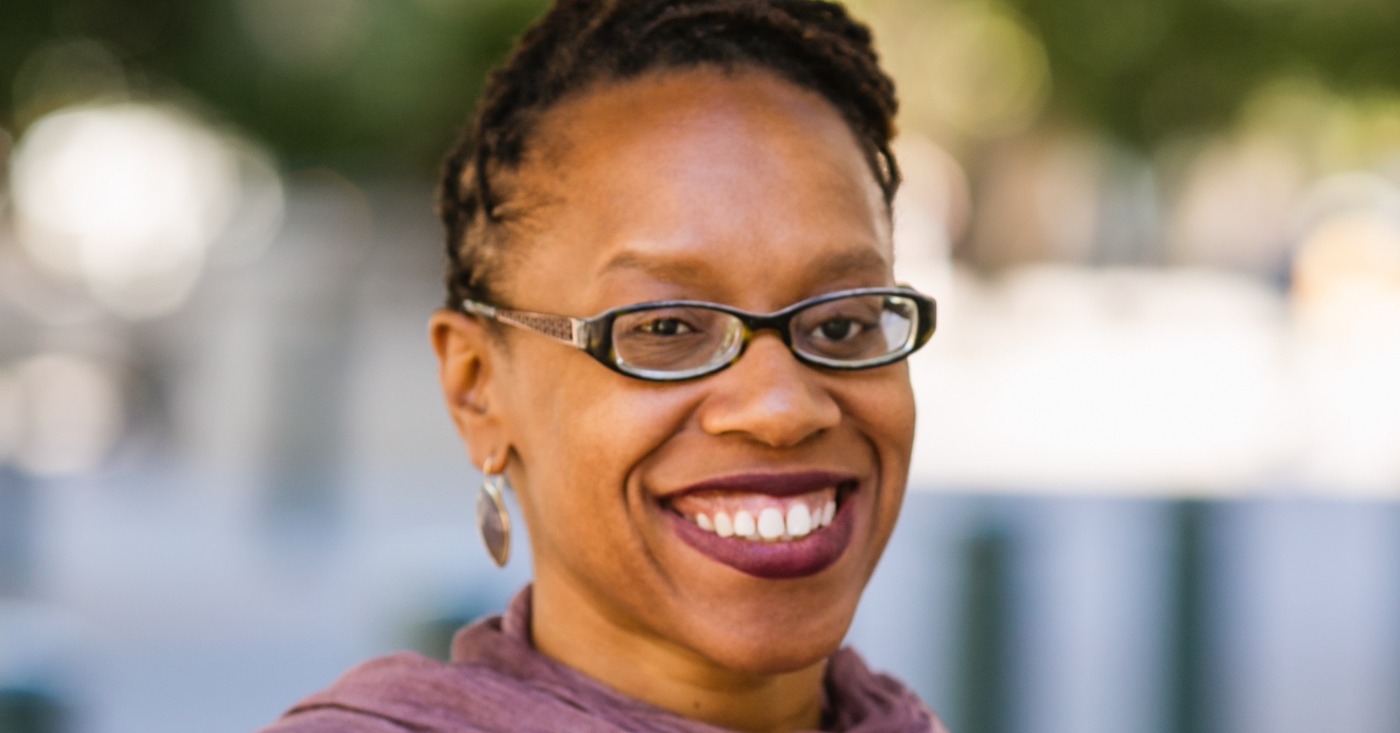
On Veterans Day, Congresswoman Lateefah Simon (D-CA-12) once again called on the Trump administration to provide answers on the status of the Alameda Point Veterans Affairs Clinic and Columbarium Project. Her statement is provided below.
“Our veterans have served our nation with dignity and sacrificed so much for our nation – they deserve the best care and benefits possible, close to home. That’s why it is abhorrent that the Trump Administration has canceled the planned construction of a new clinic and columbarium at Alameda Point, despite years of planning and more than $395 million in federal funding already invested in the project.
“Last year, I demanded answers from the Secretary of Veterans Affairs, Douglas Collins, about the decision and received no response.
That’s why, earlier this year, I worked with my colleagues Speaker Emerita Nancy Pelosi and Rep. Kevin Mullin to successfully fight for and secure report language in the Fiscal Year 2027 Military Construction, Veterans Affairs, and Related Agencies Appropriations bill that would require the Trump administration to provide answers on the status of the project.
“As the Senate considers the Fiscal Year 2027 Military Construction, Veterans Affairs (MilCon-VA), and Related Agencies Appropriations bill, the report language we secured in the House must be included in any final MilCon-VA appropriations bill, so that the 27,000 veterans in my district get the answers they deserve.
“I will not stand idly by as this administration unfairly reels back healthcare services and access for our veterans, and I will continue to hold this administration’s feet to the fire and fight for our district’s previously allocated resources.”
U.S. Rep. Lateefah Simon’s media relations office is the source of this report.
Commentary
OPINION: Mario Juarez’s Courtroom Admissions Raise Questions About Allegations That Fueled Recall of Pamela Price
POST NEWS GROUP — Juarez’ claims became a significant part of the political narrative surrounding the recall campaign that removed me from office. Even though I denied the allegations, for two years, Juarez’s allegation was repeated across news outlets and used as political ammunition against me. His former local criminal defense attorney Ernest Castillo proclaimed Juarez’ innocence and claimed that the charges were politically motivated. Castillo is now a judge in the Alameda County Superior Co
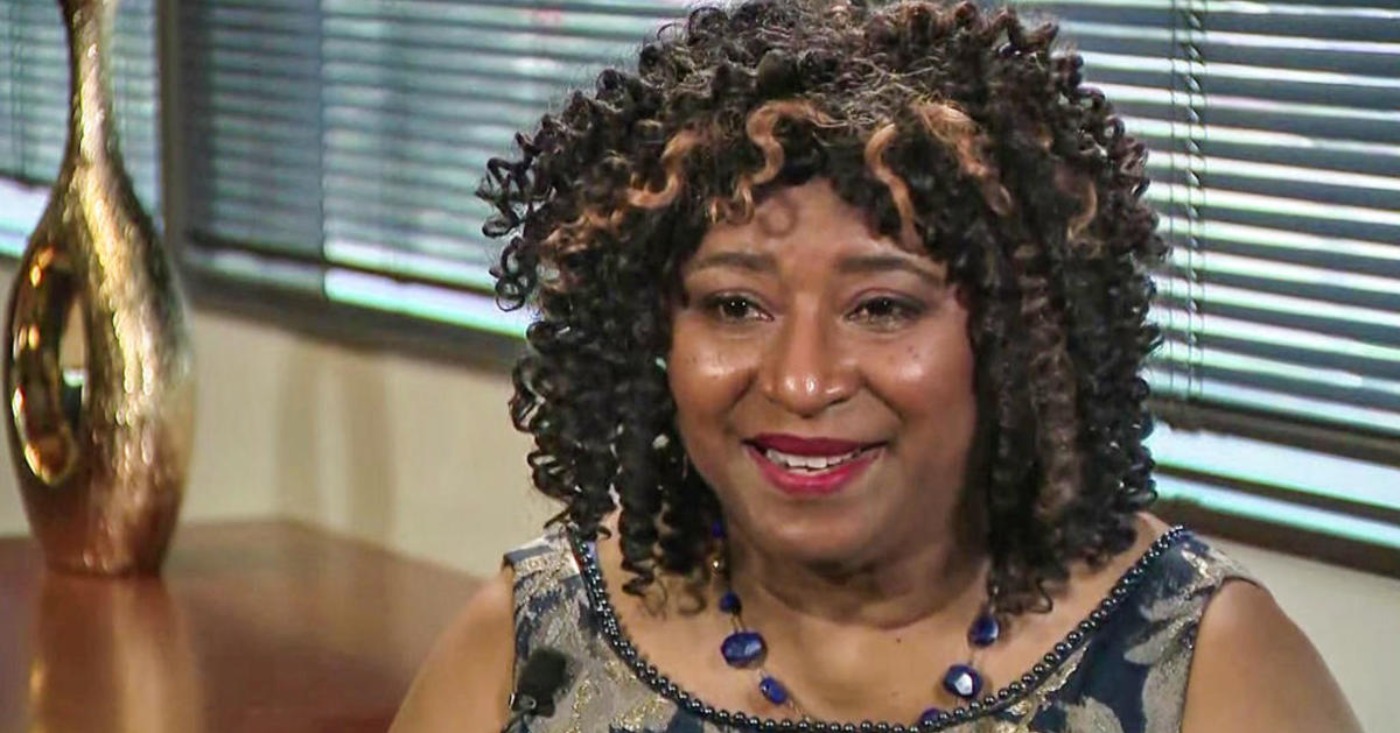
Former Alameda County District Attorney says it may take time, but ‘the truth will always catch up to the lie.’
In 2024, Mario Juarez, the U.S. government’s star witness in former Oakland Mayor Sheng Thao’s bribery case, steadfastly proclaimed his innocence of charges filed by the Alameda County District Attorney’s office under my leadership for allegedly passing tens of thousands of dollars in bad checks.
After he was charged in January 2024, Juarez fabricated a story claiming that I tried to extort $25,000 in cash from him for the anti-recall campaign.
In his recent courtroom testimony at Sheng’s trial, Juarez admitted that he knew the checks he wrote to print brokers Butterfly Direct Marketing were bad and would bounce. He also testified that he took money intended to pay the printer for himself. Juarez has a long, documented history of making false accusations and scamming business partners and acquaintances.
I denied Juarez’s allegation from the beginning. I never solicited a $25,000 payment from Juarez in exchange for dismissing criminal charges. It did not happen.
Now, in open court, the public is hearing Juarez admit that he knew the checks he wrote would bounce and that he took money intended to pay Butterfly for himself.
Juarez’ claims became a significant part of the political narrative surrounding the recall campaign that removed me from office. Even though I denied the allegations, for two years, Juarez’s allegations were repeated across news outlets and used as political ammunition against me. His former local criminal defense attorney, Ernest Castillo, proclaimed Juarez’ innocence and claimed that the charges were politically motivated. Castillo is now a judge in the Alameda County Superior Court.
Juarez’ false allegations against me had political consequences. The media and local bloggers were quick to amplify his allegations. Now they each have an obligation to give the public the same level of attention to the facts that have emerged in court. Anyone who repeated those allegations has a responsibility to revisit them now that Juarez admits he was guilty of the charges.
Juarez’s admissions also raise serious questions about why current District Attorney Ursula Jones Dickson chose to dismiss the charges against him rather than pursue accountability for the criminal conduct he has now admitted under oath. One of Jones Dickson’s first acts in February 2025 was to dismiss the charges against Juarez, despite the victim’s objections.
Political opponents should not be able to turn an unverified accusation into a public verdict. My reputation, my career, and the confidence of voters were all affected by an accusation that was never established as true.
The press should never confuse an allegation with proof and mislead the public about the veracity of a claim. And the current district attorney should not make prosecution decisions based on politics.
About Hon. Pamela Price
Pamela Price earned her B.A. from Yale College and a J.D. and M.A. from the Berkeley School of Law. She was admitted to practice law in California in 1983 and has specialized in federal civil rights litigation since 1991. She has successfully prosecuted civil and criminal cases in Bay area courts and is one of the few Black women to ever argue a case in the U.S. Supreme Court. She served as the elected District Attorney of Alameda County from 2023 to 2024.



Alameda County Supervisor Miley to Propose Illegal Dumping Ordinance

Oakland City Council Extends AI Data Center Moratorium for 10 Months.

On Veterans Day, U.S. Rep. Simon Demands Answers on Status of Veterans Affairs Clinic, Columbarium Project

OPINION: Mario Juarez’s Courtroom Admissions Raise Questions About Allegations That Fueled Recall of Pamela Price

Hutchinson Concedes: Ballots Still Being Counted in Oakland Board Elections

Mayor Lee and Schools’ Supt. Saddler Issue Joint Statement on Recent ICE Activity in Oakland

Mississippi Congressman Bennie Thompson Congratulates Scott Colom on Historic Victory

Farms to Grow, Inc. Hosts the 8th Annual Sweet Potato Pie Tasting Contest

How the Sandwich Generation Can Help Protect Aging Parents’ Finances

As Progressive Democrats Celebrate ‘Blue Tsunami,’ Oakland Counts Victories

Golden State Valkyries Become Bay Area Legends Winning WNBA Championship on Halloween Night

IN MEMORIAM: Marcia Ann Gillespie, Editor of Essence and Ms. Magazines, Dies at 82

U.S. Rep. John Garamendi Honors local ‘Women of the Year’ at Annual Awards Ceremony

Richmond Neighbors Put Pantry Power on the Map

Oakland Latino Chamber of Commerce Hosts Statewide Convention, Generating $3 Million in Economic Impact

COMMENTARY: Valarie Bachelor and Jennifer Brouhard are Excellent School Board Members and Deserve to Be Reelected

Listening as a Lifeline: A Doula’s Witness to Black Maternal Health

OUSD Receives State Review of District Finances; Outlines Progress Since January

HISTORY MADE: Keisha Lance Bottoms Becomes First Black Woman Elected Governor in American History

Zakiya Jendayi Arrested, Locked Out of Home by Sheriff’s Deputies

SEIU Local 1000 and State of California Will Continue to Negotiate New Labor Contract
Golden State Valkyries Become Bay Area Legends Winning WNBA Championship on Halloween Night

COMMENTARY: Your California Living Trust Could Be Next: When Evidence Isn’t Enough

Fate of Bay Area Public Transit Hinges on Regional Transit Measure

Oakland Post: Week of September 30 – October 6, 2026

It’s Time to Lose Weight Before the Holidays

Mayor Barbara Lee Holds Special State of the City Address in Deep East Oakland

Democrats, Community Groups Back Measure EE to Change How Oakland Is Governed

Oakland Awarded More than $14 Million in State Funding

OP-ED: Proposition 44 Would Put a Price on Trust

The Conversation With Al McFarlane 6/23/26

Media Monday 6/22/26

LIVE! ASK ALMA! — TUES. 6.23.26 7PM EST

Car Buying Secrets: 4 Hidden Checks Before You Sign!

Is This 550 HP Charger Worth YOUR Money? AutoNetwork Review

Celebrating Juneteenth – Frederick Douglass on education and resistance

LIVE! — ASK ALMA! — TUES. 6.19.26 7PM EST

Hyundai Ioniq 5 Parking, Safety, and 360 View #shorts

2025 Ioniq 5 New Wiper & Powerful Performance! #shorts

Electric SUV Range: Is 259 Miles Enough? #shorts

EV Charging: How Fast Can You Charge an Electric Vehicle? #shorts

Biometric Cooling… Messaging Seats…Come on! 2025 Infiniti QX80 Autograph 4WD

Charged Up: Witness the Magic of a Fully Electric Car! #shorts

Range Rover Sport PHEV Included…: See What’s Inside This Luxury SUV! #shorts

Invisible Hood View: Perfect Parking with X-Ray Vision! #shorts
-
 Commentary2 weeks ago
COMMENTARY: Valarie Bachelor and Jennifer Brouhard are Excellent School Board Members and Deserve to Be Reelected
-
 Education2 weeks ago
OUSD Receives State Review of District Finances; Outlines Progress Since January
-
 Black History2 weeks ago
HISTORY MADE: Keisha Lance Bottoms Becomes First Black Woman Elected Governor in American History
-
 Business2 weeks ago
SEIU Local 1000 and State of California Will Continue to Negotiate New Labor Contract
-
 Community1 week ago
Golden State Valkyries Become Bay Area Legends Winning WNBA Championship on Halloween Night
-
 Business2 weeks ago
COMMENTARY: Your California Living Trust Could Be Next: When Evidence Isn’t Enough
-
 Business3 weeks ago
Fate of Bay Area Public Transit Hinges on Regional Transit Measure
-
 Community4 weeks ago
It’s Time to Lose Weight Before the Holidays
