
National
3 Sentenced to Prison in Slaying of Black Man in Mississippi


James Craig Anderson (Family Photo)
JACK ELLIOTT JR., Associated Press
JACKSON, Mississippi (AP) — Three young white men who admitted they were out hunting black people to attack when they beat, ran over and killed a 47-year-old car plant worker in Mississippi’s capital city were sentenced Tuesday to federal prison following a hate crimes investigation.
U.S. District Judge Carlton Reeves sentenced Deryl Paul Dedmon to 50 years; John Aaron Rice to 18 ½ years; and Dylan Wade Butler to seven years on the most serious of the counts against them, commission of a hate crime. Dedmon, 22, Rice, 21, and Butler, 23, are all from Brandon, Mississippi.
Dedmon also faces two life sentences in state prison. He pleaded guilty in a Mississippi court in 2012 to capital murder and hate crime.
“What these people did was ugly, painful and sad and criminal,” Reeves said.
They were charged in the June 2011 death of James Craig Anderson.
All three, wearing red prison jumpsuits and shackled at the waist and ankles, took to a podium to apologize to members of Anderson’s family for their actions. “I want to tell the Anderson family how truly sorry I am,” Dedmon said.
The apologies came after an impassioned condemnation of their actions from Anderson’s sister. Barbara Anderson Young said her brother’s death came “at the hands of these strangers with eyes full of hatred.”
She said her brother “helplessly fought to stay alive” as he was attacked by people he did not know.
“My God have mercy on your sinful souls,” Young said.
Prosecutors said the youths harassed or assaulted people who they thought were homeless or intoxicated. Victims were chosen because they thought they would not tell police, authorities said. The harassment began in April 2011, culminating in the death of Anderson.
The three pleaded guilty in March 2012 to one count of conspiracy and one count of committing a hate crime. Each was sentenced to five years on the conspiracy count to run concurrent with the other.
In Dedmon’s case, Reeves said the federal sentenced would run concurrent with his state sentence. Dedmon was at the wheel of a truck that ran over Anderson in the parking lot of a Jackson hotel. The scene was caught on a security camera at the hotel.
The surveillance video, obtained by The Associated Press and other media, shows a white Jeep Cherokee in which Rice was allegedly a passenger leaving a hotel parking lot at 5:05 a.m. Less than 20 seconds later, a Ford truck backs up and then lunges forward. Anderson’s shirt is illuminated in the headlights before he disappears under the vehicle next to the curb.
Before sentencing the three, Reeves told the courtroom that the Anderson’s death reflected the “inhumanity of racism” with which Mississippi has dealt throughout its history.
Seven others are awaiting sentencing.
Copyright 2015 The Associated Press. All rights reserved. This material may not be published, broadcast, rewritten or redistributed.


Activism
Oakland Post: Week of February 11 = 17, 2026
The printed Weekly Edition of the Oakland Post: Week of – February 11 – 17, 2026

To enlarge your view of this issue, use the slider, magnifying glass icon or full page icon in the lower right corner of the browser window.
Advice
Rising Optimism Among Small And Middle Market Business Leaders Suggests Growth for California
“Business leaders across the Pacific region continue to demonstrate a unique blend of resilience and forward-thinking, even in the face of ongoing economic uncertainty,” said Brennon Crist, Managing Director and Head of the Pacific Segment, Commercial Banking, J.P. Morgan. “Their commitment to innovation and growth is evident in the way they adapt to challenges and seize new opportunities. It’s this spirit that keeps our region at the forefront of business leadership and progress. We look forward to helping our clients navigate all that’s ahead in 2026.”

Sponsored by JPMorganChase
Business optimism is returning for small and midsize business leaders at the start of 2026, fueling confidence and growth plans.
The 2026 Business Leaders Outlook survey, released in January by JPMorganChase reveals a turnaround from last June, when economic headwinds and uncertainty about shifting policies and tariffs caused some leaders to put their business plans on hold.
Midsize companies, who often find themselves more exposed to geopolitical shifts and policy changes, experienced a significant dip in business and economic confidence in June of 2025. As they have become more comfortable with the complexities of today’s environment, we are seeing optimism rebounding in the middle market nationwide – an encouraging sign for growth, hiring, and innovation. Small businesses, meanwhile, maintained steady optimism throughout 2025, but they aren’t shielded from domestic concerns. Many cited inflation and wage pressures as the top challenges for 2026 and are taking steps to ensure their businesses are prepared for what’s ahead.
“Business leaders across the Pacific region continue to demonstrate a unique blend of resilience and forward-thinking, even in the face of ongoing economic uncertainty,” said Brennon Crist, Managing Director and Head of the Pacific Segment, Commercial Banking, J.P. Morgan. “Their commitment to innovation and growth is evident in the way they adapt to challenges and seize new opportunities. It’s this spirit that keeps our region at the forefront of business leadership and progress. We look forward to helping our clients navigate all that’s ahead in 2026.”

Overall, both small and midsize business leaders are feeling more confident to pursue growth opportunities, embrace emerging technologies and, in some cases, forge new strategic partnerships. That bodes well for entrepreneurs in California. Here are a few other key findings from the Business Leaders Outlook about trends expected to drive activity this year:
- Inflation remains the top concern for small business owners. Following the 2024 U.S. presidential election, many anticipated a favorable business environment. By June 2025, however, that feeling shifted amid concerns about political dynamics, tariffs, evolving regulations and global economic headwinds.
Going into 2026, 37% of respondents cited inflation as their top concern. Rising taxes came in second at 27% and the impact of tariffs was third at 22%. Other concerns included managing cash flow, hiring and labor costs.
- For middle market leaders, uncertainty remains an issue. Almost half (49%) of all midsize business leaders surveyed cited “economic uncertainty” as their top concern – even with an improved outlook from a few months ago. Revenue and sales growth was second at 33%, while tariffs and labor both were third at 31%.
- And tariffs are impacting businesses costs. Sixty-one percent of midsize business leaders said tariffs have had a negative impact on the cost of doing business.
- Despite challenges, leaders are bullish on their own enterprises. Though the overall outlook is mixed, 74% of small business owners and 71% of middle market companies are optimistic about their company’s prospects for 2026.
- Adaption is the theme. For small business owners surveyed across the U.S., responding to continuing pressures is important in 2026. Building cash reserves (47%), renegotiating supplier terms (36%) and ramping up investments in marketing and technology are among the top priorities.
- Big plans are on the horizon. A majority midsized company leaders expect revenue growth this year, and nearly three out of five of (58%) plan to introduce new products or services in the coming year, while 53% look to expand into new domestic and/or international markets. Forty-nine percentsay they’re pursuing strategic partnerships or investments.
The bottom line
Rebounding optimism among U.S. business leaders at the start of the year is setting the stage for an active 2026. With business leaders looking to implement ambitious growth plans that position themselves for the future, momentum in California could be beneficial for leaders looking to launch, grow or scale their business this year.
#NNPA BlackPress
COMMENTARY: The National Protest Must Be Accompanied with Our Votes
Just as Trump is gathering election data like having the FBI take all the election data in Georgia from the 2020 election, so must we organize in preparation for the coming primary season to have the right people on ballots in each Republican district, so that we can regain control of the House of Representatives and by doing so, restore the separation of powers and balance that our democracy is being deprived of.
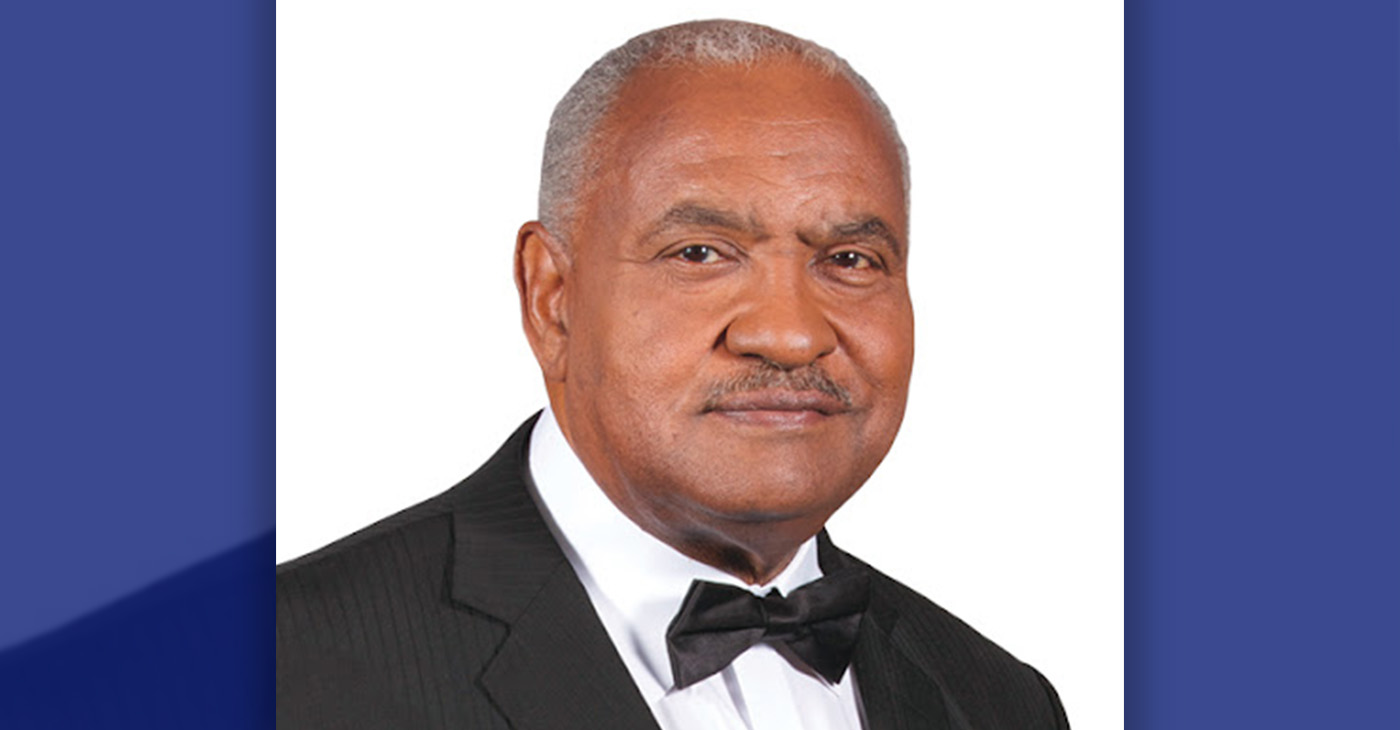
By Dr. John E. Warren, Publisher San Diego Voice & Viewpoint Newspaper
As thousands of Americans march every week in cities across this great nation, it must be remembered that the protest without the vote is of no concern to Donald Trump and his administration.
In every city, there is a personal connection to the U.S. Congress. In too many cases, the member of Congress representing the people of that city and the congressional district in which it sits, is a Republican. It is the Republicans who are giving silent support to the destructive actions of those persons like the U.S. Attorney General, the Director of Homeland Security, and the National Intelligence Director, who are carrying out the revenge campaign of the President rather than upholding the oath of office each of them took “to Defend The Constitution of the United States.”
Just as Trump is gathering election data like having the FBI take all the election data in Georgia from the 2020 election, so must we organize in preparation for the coming primary season to have the right people on ballots in each Republican district, so that we can regain control of the House of Representatives and by doing so, restore the separation of powers and balance that our democracy is being deprived of.

In California, the primary comes in June 2026. The congressional races must be a priority just as much as the local election of people has been so important in keeping ICE from acquiring facilities to build more prisons around the country.
“We the People” are winning this battle, even though it might not look like it. Each of us must get involved now, right where we are.
In this Black History month, it is important to remember that all we have accomplished in this nation has been “in spite of” and not “because of.” Frederick Douglas said, “Power concedes nothing without a struggle.”
Today, the struggle is to maintain our very institutions and history. Our strength in this struggle rests in our “collectiveness.” Our newspapers and journalists are at the greatest risk. We must not personally add to the attack by ignoring those who have been our very foundation, our Black press.
Are you spending your dollars this Black History Month with those who salute and honor contributions by supporting those who tell our stories? Remember that silence is the same as consent and support for the opposition. Where do you stand and where will your dollars go?

WORK FROM HOME
Home-based business with potential monthly income of $10K+ per month. A proven training system and website provided to maximize business effectiveness. Perfect job to earn side and primary income. Contact Lynne for more details: Lynne4npusa@gmail.com 800-334-0540


CITY OF SAN LEANDRO STATE OF CALIFORNIA PUBLIC WORKS DEPARTMENT ENGINEERING DIVISION NOTICE TO BIDDERS FOR ANNUAL STREET OVERLAY/REHABILITATION 2019-21 – PHASE III

Oakland Post: Week of February 11 = 17, 2026

Rising Optimism Among Small And Middle Market Business Leaders Suggests Growth for California

Discrimination in City Contracts

COMMENTARY: The National Protest Must Be Accompanied with Our Votes

Congresswoman Simon Votes Against Department of Homeland Security, ICE Funding

Post Newspaper Invites NNPA to Join Nationwide Probate Reform Initiative

Community Celebrates Turner Group Construction Company as Collins Drive Becomes Turner Group Drive

New Bill, the RIDER Safety Act, Would Support Transit Ambassadors and Safety on Public Transit

Trump’s White House Pushes to Control California Wildfire Recovery

Gov. Newsom, AG Bonta to Local Law Enforcement: You Have Authority to Investigate Federal Agents

Dorothy Lee Bolden: Uniting Domestic Workers

Cracking Down on Human Trafficking, California DOJ Announces 120 Arrests

COMMENTARY: The Biases We Don’t See — Preventing AI-Driven Inequality in Health Care

California Launches Study on Mileage Tax to Potentially Replace Gas Tax as Republicans Push Back

Life Expectancy in Marin City, a Black Community, Is 15-17 Years Less than the Rest of Marin County

Oakland Post: Week of January 28, 2025 – February 3, 2026

Jefferson County (AL) Democrats Open Qualifying for 2026 Primary Elections

Skater Emmanuel Savary Sharpens Routines for the 2026 U.S. Championships

COMMENTARY: With Gratitude and Praise for 2026
Community Celebrates Turner Group Construction Company as Collins Drive Becomes Turner Group Drive
California Launches Study on Mileage Tax to Potentially Replace Gas Tax as Republicans Push Back

OP-ED: The Dream Cannot be Realized Without Financial Freedom

From Civil Rights to ICE Raids, Trump’s Unchecked Power Puts Every Community at Risk
From Civil Rights to ICE Raids, Trump’s Unchecked Power Puts Every Community at Risk

Oakland Post: Week of January 21 – 27, 2026

Travis Scott Teaches Us How to Give Forward

Four Stolen Futures: Will H-E-B Do The Right Thing?
Discrimination in City Contracts

After Don Lemon’s Arrest, Black Officials Raise Concerns About Independent Black Media

Hyundai Ioniq 5 Parking, Safety, and 360 View #shorts

2025 Ioniq 5 New Wiper & Powerful Performance! #shorts

Electric SUV Range: Is 259 Miles Enough? #shorts

EV Charging: How Fast Can You Charge an Electric Vehicle? #shorts

Biometric Cooling… Messaging Seats…Come on! 2025 Infiniti QX80 Autograph 4WD

Charged Up: Witness the Magic of a Fully Electric Car! #shorts

Range Rover Sport PHEV Included…: See What’s Inside This Luxury SUV! #shorts

Invisible Hood View: Perfect Parking with X-Ray Vision! #shorts

AI Is Reshaping Black Healthcare: Promise, Peril, and the Push for Improved Results in California

ESSAY: Technology and Medicine, a Primary Care Point of View

Sanctuary Cities

The RESISTANCE – FREEDOM NOW

STATE OF THE PEOPLE: Freddie

ECONOMIC BOYCOTT DAY!!!!!

I told You So
-
 Activism3 weeks ago
Life Expectancy in Marin City, a Black Community, Is 15-17 Years Less than the Rest of Marin County
-
 Activism3 weeks ago
Oakland Post: Week of January 28, 2025 – February 3, 2026
-
 Activism2 weeks ago
Community Celebrates Turner Group Construction Company as Collins Drive Becomes Turner Group Drive
-
 Business2 weeks ago
California Launches Study on Mileage Tax to Potentially Replace Gas Tax as Republicans Push Back
-
 Activism2 weeks ago
Discrimination in City Contracts
-
 Activism2 weeks ago
After Don Lemon’s Arrest, Black Officials Raise Concerns About Independent Black Media
-

 Activism3 weeks ago
Medi-Cal Cares for You and Your Baby Every Step of the Way
-
 Activism2 weeks ago
COMMENTARY: The Biases We Don’t See — Preventing AI-Driven Inequality in Health Care
