
Community

Vietnam 2013
In 1965, I remember talking to a classmate when I was 14 yrs. old about the Vietnam war. Even then we were speculating about the likelihood of us being drafted into what was then called a police action. I told him by the time we turn eighteen that war will be over—so not to worry. Well, the years went by and the next thing I knew I was about to graduate from high school and that damn war was still going strong. I was turning eighteen a few days before my graduation and at that time every eighteen year old, by law, was required to register with his local selective service board. So, If memory serves me right, I fulfilled that obligation by signing up at my local post office.
< p>< p> Basic Training 1970 Ft. Jackson
The war was being fought unfairly by the poor while the rich and upper middle-class kids were seeking and getting student deferments, medical deferments, or fleeing to Canada. I can’t emphasize strongly enough as to how important this war had become to the eighteen year old. From the ever increasing body count dished out on the nightly news, to the student protests, to the wounded soldiers returning home in wheel chairs–it was inescapable. My oldest sister had brought a returning vet to our home once who was missing both legs and consigned to a wheel chair. I had never seen a person in such condition. There had become such a hue and cry about the unfairness of the draft that a lottery system was devised based on every eighteen year old’s birthday.
The first drawing of numbers, which I was not eligible, was for those born between 1944 and 1950. The results of that drawing, had I been eligible, would have given my birth date of June 8th the number 366 which represented leap year. So, I certainly would have never been drafted that year. The following year of 1970, however, which I was eligible, was for those born in 1951. I received the number 7 for that drawing which meant I was guaranteed to be drafted.
Tank Hill, Fort Jackson, South Carolina
Not being one to wait for the Sword of Damocles to befall me, I approached my neighbor who had earlier joined the Army National Guard and asked him to take me with him on his next drill date where I would join forthwith. Yes, I had successfully dodged the draft by choosing the lesser of the two evils. I would do a four month active duty stint called Basic Training at Fort Jackson, South Carolina, and an Advanced Infantry Training (AIT) at Fort Gordon, Georgia. I received the same training as the regular army draftees with the only difference being I knew I was coming home while the majority of the people I trained with would be going to Vietnam.
The last day of our training, we all stood in formation as the Sergeant barked out the orders for our next duty station. Private So-and-So, Republic of Vietnam, Private Such-and-Such, Republic of Vietnam went the refrain as we stood at attention. One after another ordered to Vietnam while a lucky few heard names like the Presidio in San Francisco, Korea, or a base in Germany. For the minority of National Guardsmen in the company our orders were preordained, we knew where we were going. Some would jokingly say, “Fort Home.”
Although I was only obligated to serve six years in the National Guard, I would stick around for the next nine years. In hindsight, I’ve often wondered if I made the right decision. A combination of guilt I suppose and a sense that I missed out on something akin to a rite of passage. I find myself asking, how many of the friends I had made during my training are now names etched on a black granite wall in Washington, D.C.? I look at the faces in many photographs of the guys I lived with for four months wondering if this one is alive or if that one is alive. We were all so young and dumb. The oldest guy in our company was a prior service 26 year old–and we called him grandpa.
Ft. Gordon, Georgia
So, here it is 2013 and I am considerably older and much more reflective. I have traveled and experienced many things in the world. I have few regrets and continue to enjoy life with the zest and zeal of an eighteen year old. I will be returning to America soon after spending a year in China and Taiwan. Upon my return to Asia, I will be embarking on my next quest—called Vietnam. Not for the beaches or the Pagodas, not for the culture or the food, not for the landscape or the language, but for the War. My war, ironically. I will visit as many of the historical locations that I remember about that war from the iconic photo of the execution by General Nguyen Ngoc Loan of the Vietcong prisoner on a Saigon street, to the Son My Village massacre better known as the My Lai Massacre, to the Hanoi Hilton where American pilots were imprisoned, to Dien Bien Phu where the French suffered a humiliating defeat, to the ancient imperial city of Hue virtually demolished during the Tet offensive, to Khe Sanh where the U.S. Marines were under siege and Hamburger Hill. Hopefully, I will visit many sites of battlefield lore and take in the ghosts of Vietnam.
For more information visit:





Activism
Oakland Post: Week of April 8 – 14, 2026
The printed Weekly Edition of the Oakland Post: Week of April 8 – 14, 2026

To enlarge your view of this issue, use the slider, magnifying glass icon or full page icon in the lower right corner of the browser window.
Activism
Oakland Post: Week of April 1 – 7, 2026
The printed Weekly Edition of the Oakland Post: Week of April 1 – 7, 2026

To enlarge your view of this issue, use the slider, magnifying glass icon or full page icon in the lower right corner of the browser window.
#NNPA BlackPress
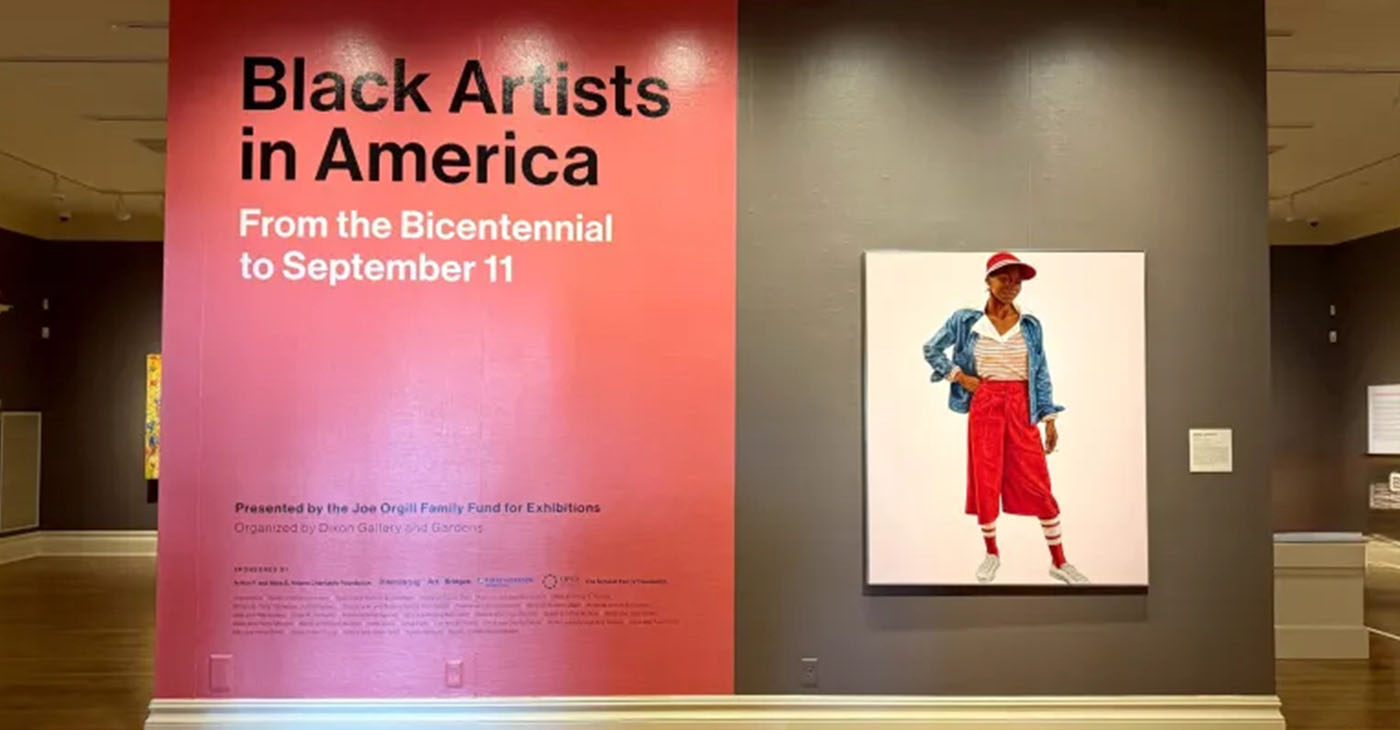
Black Artists in America, Installation Three Wraps at the Dixon Gallery and Gardens
TRI-STATE DEFENDER — With 50+ paintings, sculptures and assemblages, the exhibit features artists like Varnette Honeywood from Los Angeles, whose pieces appeared in Bill Coby’s private collection (before they were auctioned off) and on “The Cosby Show.” Also included are works by Alonzo Davis, another Los Angeles artist who opened one of the first galleries there where Black Artists could exhibit.

By Candace A. Gray | Tri-State Defender
The tulips gleefully greet those who enter the gates at the Dixon Gallery & Gardens on an almost spring day. More than 650,000 bulbs of various hues are currently on display. And they are truly breathtaking.
Inside the gallery, and equally as breathtaking, is the “Black Artists in America, From the Bicentennial to September 11” exhibit, which runs through Sunday, March 29. This is the third installment of a three-part series that started years ago and illustrates part of the Black experience through visual arts in the 20th century.
“This story picks up where part two left off,’’ said Kevin Sharp, the Linda W. and S. Herbert Rhea director for the Dixon. “This era is when we really start to see the emergence of these important Black artists’ agency and freedom shine through. They start to say and express what they want to, and it was a really beautiful time.”
With 50+ paintings, sculptures and assemblages, the exhibit features artists like Varnette Honeywood from Los Angeles, whose pieces appeared in Bill Coby’s private collection (before they were auctioned off) and on “The Cosby Show.” Also included are works by Alonzo Davis, another Los Angeles artist who opened one of the first galleries there where Black Artists could exhibit.
“Though [Davis] was from LA, he actually lived in Memphis for a decade,” said Sharp. “He was a dean at Memphis College of Art, and later opened the first gallery in New York owned and operated by black curators.”
Another featured artist is former NFL player, Ernie Barnes. His work is distinctive. Where have you seen one of his most popular paintings, Sugar Shack? On the end scene and credits of the hit show “Good Times.” His piece Saturday Night, Durham, North Carolina, 1974 is in this collection.
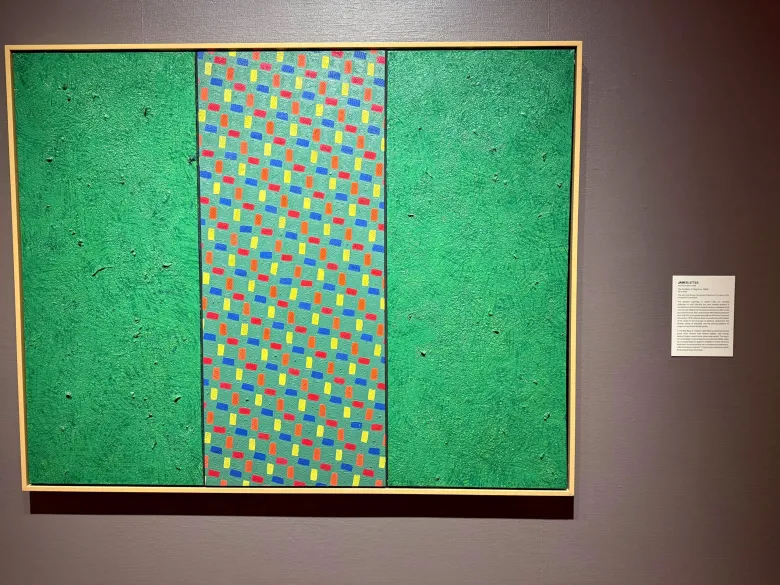
Memphis native James Little’s “The War Baby: The Triptych” is among more than 50 works featured in “Black Artists in America, From the Bicentennial to September 11” at the Dixon Gallery & Gardens, the final installment of a three-part series highlighting the impact and evolution of Black artists through 2011.
The exhibit features other artists with Memphis ties, including abstract painter James Little, who was raised in a segregated Memphis and attended Memphis Academy of Art (before it was Memphis College of Art). He later moved to New York, became a teacher and an internationally acclaimed fixture in the art world in 2022 when he was named a Whitney Biennial selected artist at the Whitney Museum of American Art in New York.
Other artists like Romare Bearden, who had a Southern experience but lived up North, were featured in all three installments.
“During this period of time, he was a major figure,” said Sharp. “He wrote one of the first books on the history of African American art during a time when there were more Black academics, art teachers, more Black everything!”
Speaking of Black educators, Sharp said the head curator behind this tri-part series and Dixon’s partner in the arts is Earnestine Jenkins, Ph.D., an art history professor at the University of Memphis, who also earned a Master of Arts degree from Memphis State University (now UofM). “We began working with Dr. Jenkins in 2018,” he said.
Sharp explained that it takes a team of curators, registrars, counterparts at other museums, and more, about three years to assemble an exhibit like this. It came together quite seamlessly, he added. Each room conjured up more jaw-dropping “wows” than the one before it. Each piece worked with the others to tell the story of Black people and their collective experience during this time period.
One of the last artists about whom Sharp shared information was Bettye Saar, who will turn 100 years old this year. She’s been working in Los Angeles for 80 years and is finally getting her due. Her medium is collages or assemblages, and an incredible work of hers is on display. She’s married to an artist and has two daughters, also artists.
The exhibit catalogue bears some of these artists’ stories, among other scholarly information.
The exhibit, presented by the Joe Orgill Family Fund for Exhibitions, is culturally and colorfully rich. It is a must see and admission to the Dixon is free.
Visit https://www.dixon.org/ to learn more.
Fun Facts: An original James Little design lives in the flooring of the basketball court at Tom Lee Park, and he makes and mixes his own paint colors.



WORK FROM HOME
Home-based business with potential monthly income of $10K+ per month. A proven training system and website provided to maximize business effectiveness. Perfect job to earn side and primary income. Contact Lynne for more details: Lynne4npusa@gmail.com 800-334-0540


Oakland Post: Week of April 8 – 14, 2026

Oakland Post: Week of April 1 – 7, 2026

Black Artists in America, Installation Three Wraps at the Dixon Gallery and Gardens

Grief, Advocacy, and Education: A Counselor Reflects on Black Maternal Health

Future of Florida’s Black History Museum in Limbo

New Research Shows the Many Benefits of Early Learning

South Hampton K-8 Students Among Top 10 Finalists for Samsung’s ‘Solve for Tomorrow’ Competition

Cuba: No Negotiation with US on the President or Political System

Brooklyn Academy of Music Names Jamaican-Born Tamara McCaw as President

Trinidad & Tobego – U.S. Launches WhatsApp Channel for American Citizens in the Country

Oakland Post: Week of March 18 – 24, 2026

AI Innovation vs. Ethics and Environmental Impact

AI, Web3, and Digital Reparations

What If You Owned Your AI Agent?

Season 7, Episode 3 – January Reporter’s Roundtable 📱

Reflecting on Black History Milestones in Birmingham AL

Oakland Post: Week of February 25 – March 3, 2026

Oakland Post: Week of March 4 – 10, 2026

PRESS ROOM: NBA Hall of Fame Nominee Terry Cummings Joins 100 Black Men of DeKalb County to Launch Victory & Values Initiative

Trump’s MAGA Allies are Creating Executive Order Plan to Steal the 2026 Midterms
Oakland Post: Week of March 18 – 24, 2026

Oakland Post: Week of March 11 -17, 2026

Poll Shows Support for Policies That Help Families Afford Child Care

OP-ED: One Hundred Years of Black Workers Telling the Truth

Financial Wellness and Mental Health: Managing Money Stress in College

Woman’s Search for Family’s Roots Leads to Ancestor John T. Ward – A Successful Entrepreneur and Conductor on the Underground Railroad

COMMENTARY: Women of Color Shape Our Past and Future
Brooklyn Academy of Music Names Jamaican-Born Tamara McCaw as President

PRESS ROOM: Civil Rights TV Launches in Selma as the World’s First 24/7 Civil Rights Television Network
New Research Shows the Many Benefits of Early Learning

Hyundai Ioniq 5 Parking, Safety, and 360 View #shorts

2025 Ioniq 5 New Wiper & Powerful Performance! #shorts

Electric SUV Range: Is 259 Miles Enough? #shorts

EV Charging: How Fast Can You Charge an Electric Vehicle? #shorts

Biometric Cooling… Messaging Seats…Come on! 2025 Infiniti QX80 Autograph 4WD

Charged Up: Witness the Magic of a Fully Electric Car! #shorts

Range Rover Sport PHEV Included…: See What’s Inside This Luxury SUV! #shorts

Invisible Hood View: Perfect Parking with X-Ray Vision! #shorts

AI Is Reshaping Black Healthcare: Promise, Peril, and the Push for Improved Results in California

ESSAY: Technology and Medicine, a Primary Care Point of View

Sanctuary Cities

The RESISTANCE – FREEDOM NOW

STATE OF THE PEOPLE: Freddie

ECONOMIC BOYCOTT DAY!!!!!

I told You So
-
 Activism3 weeks ago
Oakland Post: Week of March 18 – 24, 2026
-
 Activism4 weeks ago
Oakland Post: Week of March 11 -17, 2026
-
 Advice4 weeks ago
Financial Wellness and Mental Health: Managing Money Stress in College
-
 #NNPA BlackPress3 weeks ago
Brooklyn Academy of Music Names Jamaican-Born Tamara McCaw as President
-
 #NNPA BlackPress3 weeks ago
New Research Shows the Many Benefits of Early Learning
-
 #NNPA BlackPress3 weeks ago
Grief, Advocacy, and Education: A Counselor Reflects on Black Maternal Health
-
 #NNPA BlackPress3 weeks ago
Future of Florida’s Black History Museum in Limbo
-
 #NNPA BlackPress3 weeks ago
Black Artists in America, Installation Three Wraps at the Dixon Gallery and Gardens
