
#NNPA BlackPress
2026 Volkswagen Atlas SE w/Technology | The $49K Family Tank – Full Walkaround
The 2026 Volkswagen Atlas SE with Technology arrived in Pure Gray with black 20-inch wheels, a factory-installed trailer hitch, and a window sticker under $50,000. No performance pretensions. No lifestyle branding. Just a three-row, seven-seat family SUV built with the clarity of purpose that most competitors in this segment have forgotten how to deliver. What […]

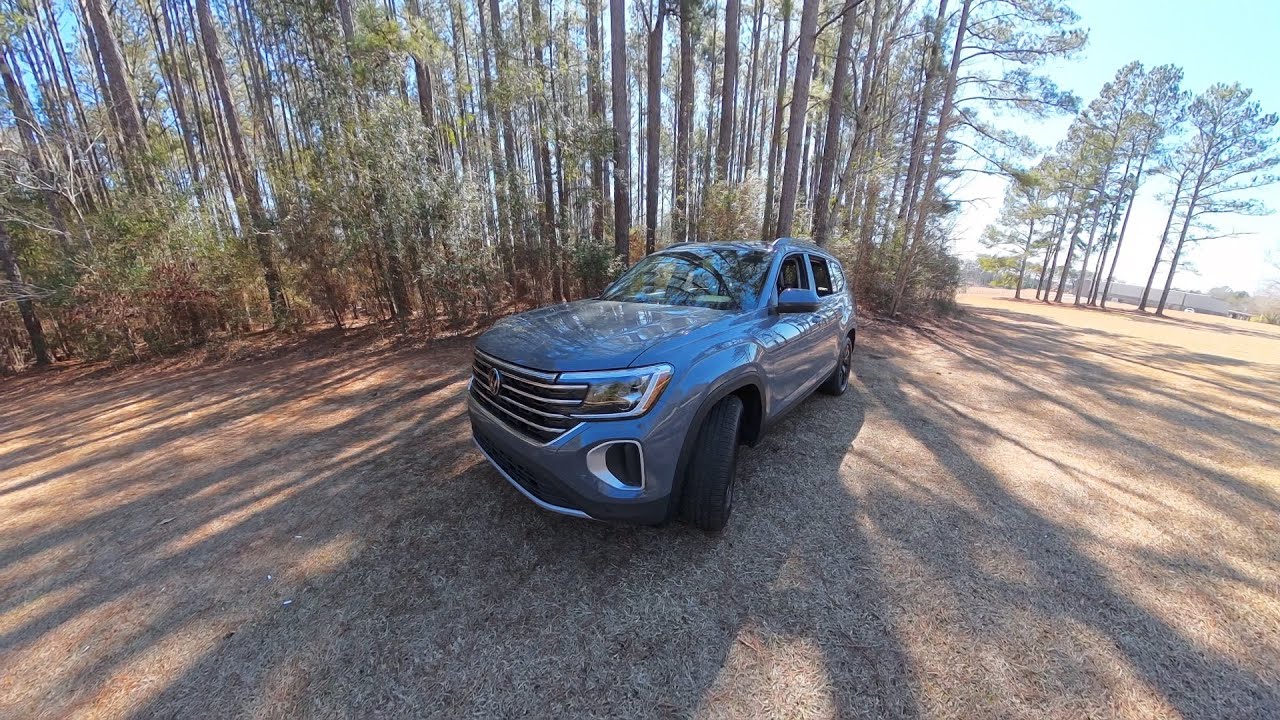
The 2026 Volkswagen Atlas SE with Technology arrived in Pure Gray with black 20-inch wheels, a factory-installed trailer hitch, and a window sticker under $50,000. No performance pretensions. No lifestyle branding. Just a three-row, seven-seat family SUV built with the clarity of purpose that most competitors in this segment have forgotten how to deliver.
What Powers the Atlas
The 2026 Atlas is motivated by a 2.0-liter TSI turbocharged four-cylinder engine with a stop-start system, paired with an 8-speed automatic Tiptronic transmission and 4MOTION all-wheel drive with Active Control. A four-cylinder in a vehicle this size raises an inevitable question, and the answer is more reassuring than you might expect.
Fuel economy registers at 20 miles per gallon city, 29 highway, and 22 combined. For a three-row SUV with all-wheel drive and a 5,000-pound towing capacity, those numbers do not apologize for themselves.
The Interior: Built for How Families Actually Live
Open the door, and the V-Tex leatherette seating surfaces set the tone immediately. This is a material chosen with intention. Leatherette wipes clean after spilled drinks, resists the abrasion of cleats and backpacks, and does not absorb the residue of sunscreen and snack crumbs that define daily life with children. In a vehicle designed for families with young athletes and big dogs, this is not the budget option — it is the strategic one.
The driver’s seat is heated, ventilated, and power-adjustable with lumbar support. The front passenger seat is also heated and ventilated. The heated, leatherette-wrapped steering wheel carries shift paddles and feels substantial in hand — a small detail that elevates every minute behind the wheel.
This particular Atlas is equipped with the 2nd-Row Dual Captain’s Chairs Package, replacing the standard bench with two individual seats and a walk-through aisle to the third row.
Climatronic Touch three-zone automatic climate control gives the driver, front passenger, and rear passengers independent temperature settings.
USB-C ports are installed in all three rows. A 115-volt AC household outlet in the second row charges laptops on road trips. A 12-volt port in the cargo area powers accessories in the back. Every seat in this vehicle has access to power — a detail that sounds minor until you have experienced the alternative.
Technology That Earns Its Name
The Volkswagen Digital Cockpit Pro provides a fully configurable digital instrument cluster behind the steering wheel — display your navigation map full-width, monitor your driver assistance systems, or keep a traditional gauge layout.
Wireless and USB App-Connect pairs your smartphone without a cable for Apple CarPlay and Android Auto. A Qi wireless charging pad keeps your phone powered while connected.
Safety: The Feature List That Should Be the Industry Standard
Active Side Assist monitors your blind spots. Rear Traffic Alert watches for cross traffic when you reverse out of parking spaces. The Exit Warning System detects approaching vehicles, cyclists, or pedestrians when you open your door — a feature that every vehicle sold in America should carry, but almost none do.
The Automatic Post-Collision Braking System applies the brakes after an initial impact to prevent or reduce the severity of secondary collisions. The Intelligent Crash Response System unlocks the doors, disconnects the battery, and activates the hazard lights automatically after a collision. Park Distance Control with front and rear sensors assists with tight parking maneuvers. Light Assist automatically manages high beam headlights based on oncoming traffic.
The Exterior: Understated Authority
The Black Wheel Package replaces the standard alloy finish with 20-inch black painted wheels that give the Atlas a purposeful, grounded appearance against the gray paint.
The Adaptive Front Lighting System pivots the headlight beams into corners as you turn, and Poor Weather Lights improve visibility in rain and fog. Roof rails come standard, ready for a cargo box or bike rack without aftermarket installation.
At $48,850, the Atlas does not ask you to choose which features your family can afford. It gives you the entire package and trusts you to use it. In a segment crowded with vehicles that charge five figures more for a comparable equipment list, that is not just competitive — it is disruptive.
If you are shopping for a three-row family SUV and your list does not include the Atlas, you are working with an incomplete list.
Visit CouponsOffersandDeals.com to check for any available specials on this vehicle in your area.
Unique to AutoNetwork.com.
Check for specials before visiting the dealer https://www.CouponsOffersAndDeals.com.
#autonetwork #autonetworkreports #povtestdrive #careview
Subscribe to our channel now for more videos https://www.youtube.com/channel/UCuN8D-xz08dJGWXVDMEIA1A











#NNPA BlackPress
Youth-Led Black August Event Brings Past to Present at East Oakland Boxing Association
The mission of Youth Alive! Is to “break the cycle of violence, heal trauma, and uplift a thriving community of leaders, to save lives in Oakland and beyond” by serving “as mentors, youth leaders, counselors, case managers, intervention specialists and violence interrupters,” working “to help violently wounded people heal themselves and their community.”
The post The mission of Youth Alive! Is to “break the cycle of violence, heal trauma, and uplift a thriving community of leaders, to save lives in Oakland and beyond” by serving “as mentors, youth leaders, counselors, case managers, intervention specialists and violence interrupters,” working “to help violently wounded people heal themselves and their community.” appeared first on BlackPressUSA.
Youth-Led Black August Event Brings Past to Present at East Oakland Boxing Association
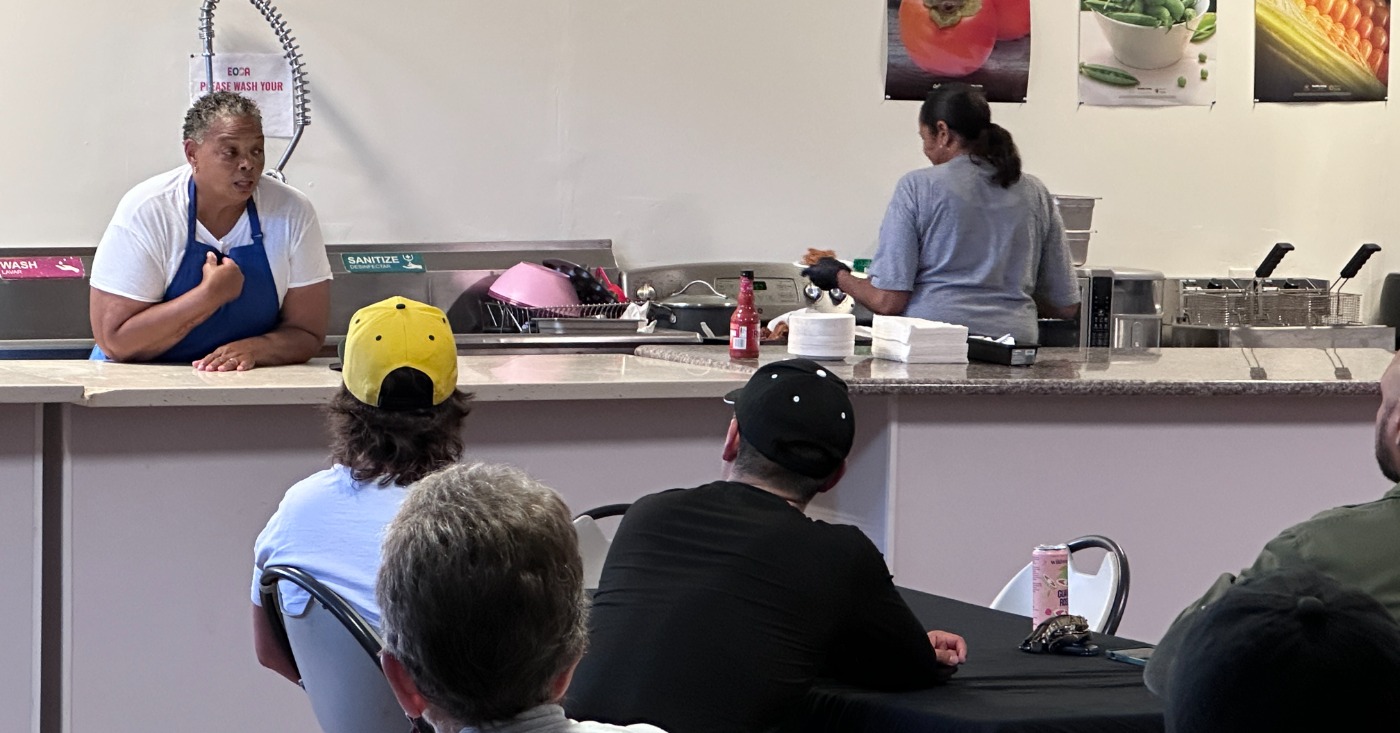
The East Oakland Boxing Association (EOBA) and Youth Alive! came together on Aug. 21 to share with their community all that Black August means to them.
Held on EOBA’s patio at 816 98th Ave. in Deep East Oakland, the two organizations hosted their second annual Black August Experience, featuring a food tasting, financial literacy and mindfulness workshops, and voter registration with the League of Women Voters Oakland (LWV).
Black August is known as a time to uphold the legacy of prisoners who protested their conditions by fasting, fighting, and educating themselves on the economic and political circumstances that contributed to their incarceration.
According to its website, “EOBA is a multi-service youth and community development hub that goes far beyond the ring. While rooted in the discipline of boxing, for nearly 40 years EOBA has also integrated robust programs in workforce development, food justice, afterschool enrichment, financial literacy, mentorship, and wellness.”.
The mission of Youth Alive! Is to “break the cycle of violence, heal trauma, and uplift a thriving community of leaders, to save lives in Oakland and beyond” by serving “as mentors, youth leaders, counselors, case managers, intervention specialists and violence interrupters,” working “to help violently wounded people heal themselves and their community.”
Through Coro California, another leadership organization serving young people across the state for 80 years, they gained a broader understanding of Black August.
EOBA Executive Director Dawna Williams spoke about how much she learned about Black August from the youth who created it. “I let them educate me,” she said. Instead of talking about prison reform and mass incarceration, Williams and youth interns found that Black August meant so much more. “We would have done a disservice if we had just focused on who the people were and what their situation was…We tried to take their message from back in the day and make it relevant to the young people today. What do they need to know?”
Youth interns created and placed posters around the patio to help participants understand how traditional Black foodways, civic engagement, financial literacy, and the power of education are relevant to Black resistance today.
An EOBA member described Black August with Youth ALIVE! as “a whole vibe. “This year we added the Fun Zone for the kids, because you really cannot go wrong with a Fun Zone. I also loved seeing everyone chillin’ in the outdoor lounge, catching some Vitamin D and just enjoying a Friday evening together.”
The food tasting, a popular event from last year, featured traditional Black foods such as black-eyed peas, johnny cakes, and fried chicken. Led by Williams, the tasting included a talk about how these traditional foods were made and why they are forms of Black resilience.
The “‘Plate of History’ was a favorite of the online writers. “Fun, educational, and did I mention delicious? Our Taste of History cook, Angela Southall, served up some good eats while connecting food to history and culture.”
The writer also commended the “League of Women Voters Oakland for their civic leadership and for getting our young people informed, ready, and registered to vote.”
Overall, it was a “good Friday event in East Oakland,” the writer said.
Upcoming Black August events: Building Opportunities for Self-Sufficiency (BOSS), will host “Black August: The Arc of Liberation” at Oakland City Hall on Sat. Aug. 29, from 11 a.m. to 3 p.m.
The websites for East Oakland Boxing Association, Youth Alive! and CORO are sources for this report.
Jana Lang is an Oakland resident, teacher, gardener and poet participating in the Propel News Initiative.
The post The mission of Youth Alive! Is to “break the cycle of violence, heal trauma, and uplift a thriving community of leaders, to save lives in Oakland and beyond” by serving “as mentors, youth leaders, counselors, case managers, intervention specialists and violence interrupters,” working “to help violently wounded people heal themselves and their community.” appeared first on BlackPressUSA.
#NNPA BlackPress
EV Home Charging Warning: What Dealerships Won’t Tell You! #shorts
Is your home EV charging setup ready? Dealerships may not warn you about critical outlet and circuit needs. Find out before you plug in!
The post EV Home Charging Warning: What Dealerships Won’t Tell You! #shorts appeared first on BlackPressUSA.

Dealerships won’t tell you: charging this big battery at home isn’t always simple. Verify your outlet capacity, circuit, and setup before assuming level one or basic outdoor outlets will suffice.
 Watch the full video: https://youtu.be/A9Cd2SspoaQ
#AutoNetwork
The post EV Home Charging Warning: What Dealerships Won’t Tell You! #shorts appeared first on BlackPressUSA.
#NNPA BlackPress
Car Buying Secrets: Dealership Traps & How to Avoid Them #shorts
Don’t get tricked at the dealership! Learn essential car buying secrets to secure the best deal and avoid hidden traps.
The post Car Buying Secrets: Dealership Traps & How to Avoid Them #shorts appeared first on BlackPressUSA.
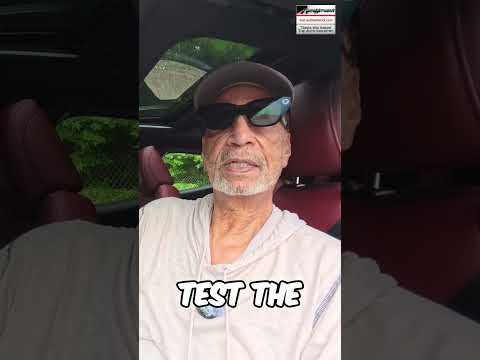
Before stepping into a dealership, secure bank pre-approval for your financing rate. Then, get the out-the-door price in writing. Never discuss monthly payments until that number is fixed. Test road noise and rear visibility yourself. Decline add-ons with a simple ‘Not today’. Check backseat space with your tallest household member.
Watch the full video: https://youtu.be/maAOBjO1puY
#AutoNetwork
The post Car Buying Secrets: Dealership Traps & How to Avoid Them #shorts appeared first on BlackPressUSA.



Port of Oakland, Army Corps Sign Historic Harbor Design Agreement

Democratic Clubs Interview Candidates for Oakland School Board

Nuna Phillips-McKee Celebrates 100 Years: ‘A Century of Faith, Family and God’s Amazing Grace!’

D.A. Ursula Jones Dickson: Terminix to Pay $3.15 Million Over Illegal Disposal of Pesticides, Customer Records

REPORT: Community Level Policy Is Impacting Homelessness and Drug Abuse in California

OPINION: AI Needs to Know Who Is the Boss
Goldi-Locs and Two (or Three) Bears in the Forest in California Hills

Election Watch 2026: 85% of Eligible Voters in California Are Registered

Don’t Let scammers Crash Your School Year

BOOK REVIEW — Curved Air: A Biography of Sickle Cell Anemia and the Quest to Cure the First Molecular Disease

California’s Legal Cannabis Market Hits $8 Billion as State Touts Progress on Fighting Drugs, Crime

Blacks and Latinos Clash Over LA’s Barrio Run; Mayor Karen Bass Calls for Dialogue Across Racial, Neighborhood Lines

Asm. Smallwood-Cuevas’s Bill Repealing ‘Racist’ CalWORKs ‘Man-in-the-House’ Rule Clears Legislature

Asm. Smallwood-Cuevas’s Bill Repealing ‘Racist’ CalWORKs ‘Man-in-the-House’ Rule Clears Legislature

‘Ready to See These Bills Become Law’: Sen. Weber’s Package of 15 Bills Advance to Gov. Newsom’s Desk

Department of Homeland Security Demands California Secretary of State Shirley N. Weber Scrub Voter Rolls

“The Power to See Threats Sooner”: Gov. Newsom, Safety Officials Showcase California’s Investments in Hi-Tech Wildfire Prevention

Alpha Kappa Alpha Sorority, Inc. Celebrates New North Atlantic Regional Director

California Sen. Padilla Joins Colleagues to Introduce Bill Imposing Term Limits on Supreme Court Justices

Less Affluent School Districts, Including Sacramento City, Face Threat of State Takeover

Car Wash Workers Cope with Lingering Impacts of ICE Raids

ESSAY: California Can Close Its Colorectal Cancer Gap

Oakland Post: Week of August 5 – 11, 2026

As Part of Your Back-to- School Checklist, Vaccinate

Oakland ‘Port Serves as a Powerful Engine for Good Jobs and Economic Development

Gov. Newsom Signs New Affordable Housing Legislation

Gov. Newsom Announces $109.6 Million in Funding for 278 Supportive Homes in Bakersfield, Contra Costa, Sacramento and Fresno

California Hispanic Chambers of Commerce Unveils: ‘Powering the Future’ Theme for 47th Annual Statewide Convention

Closing the Gap: What the Data and Frontline Experiences Reveal About Cancer in Black California

Congresswoman Simon Demands Investigation into Trump’s Abuse of Emergency Powers for Coal Export Terminal in West Oakland

The Conversation With Al McFarlane 6/23/26

Media Monday 6/22/26

LIVE! ASK ALMA! — TUES. 6.23.26 7PM EST

Car Buying Secrets: 4 Hidden Checks Before You Sign!

Is This 550 HP Charger Worth YOUR Money? AutoNetwork Review

Celebrating Juneteenth – Frederick Douglass on education and resistance

LIVE! — ASK ALMA! — TUES. 6.19.26 7PM EST

Hyundai Ioniq 5 Parking, Safety, and 360 View #shorts

2025 Ioniq 5 New Wiper & Powerful Performance! #shorts

Electric SUV Range: Is 259 Miles Enough? #shorts

EV Charging: How Fast Can You Charge an Electric Vehicle? #shorts

Biometric Cooling… Messaging Seats…Come on! 2025 Infiniti QX80 Autograph 4WD

Charged Up: Witness the Magic of a Fully Electric Car! #shorts

Range Rover Sport PHEV Included…: See What’s Inside This Luxury SUV! #shorts

Invisible Hood View: Perfect Parking with X-Ray Vision! #shorts
-

 Commentary2 weeks ago
Standoff for Justice: Our Homes Are Worth Fighting For
-

 Business2 weeks ago
Gubernatorial Candidate Steve Hilton Blasts California New Tire Rules; Newsom Hits Back
-

 Activism2 weeks ago
Oakland Post: Week of August 26 – September 1, 2026
-

 Education2 weeks ago
Gov. Newsom’s Latest Appointees Include Sacramento Advocate for Formerly Incarcerated Students; State’s New Tech Chief
-

 Business2 weeks ago
Frontier Airlines’ Return to Oakland Airport Brings Flights, Jobs and Opportunity
-

 Community2 weeks ago
Big City Mayors Ask for “Yes” Vote on Housing Bond Measure; Conservatives Say “No”
-

 Business2 weeks ago
Oakland Coliseum Project Opens Door for Small Businesses to Build Bigger
-

 Business2 weeks ago
Chef Sharon Lee Blends Culinary Excellence, Education and Empowerment
