
Bay Area
Unhoused Residents Claim OPD Harassment During Covid-19 Pandemic

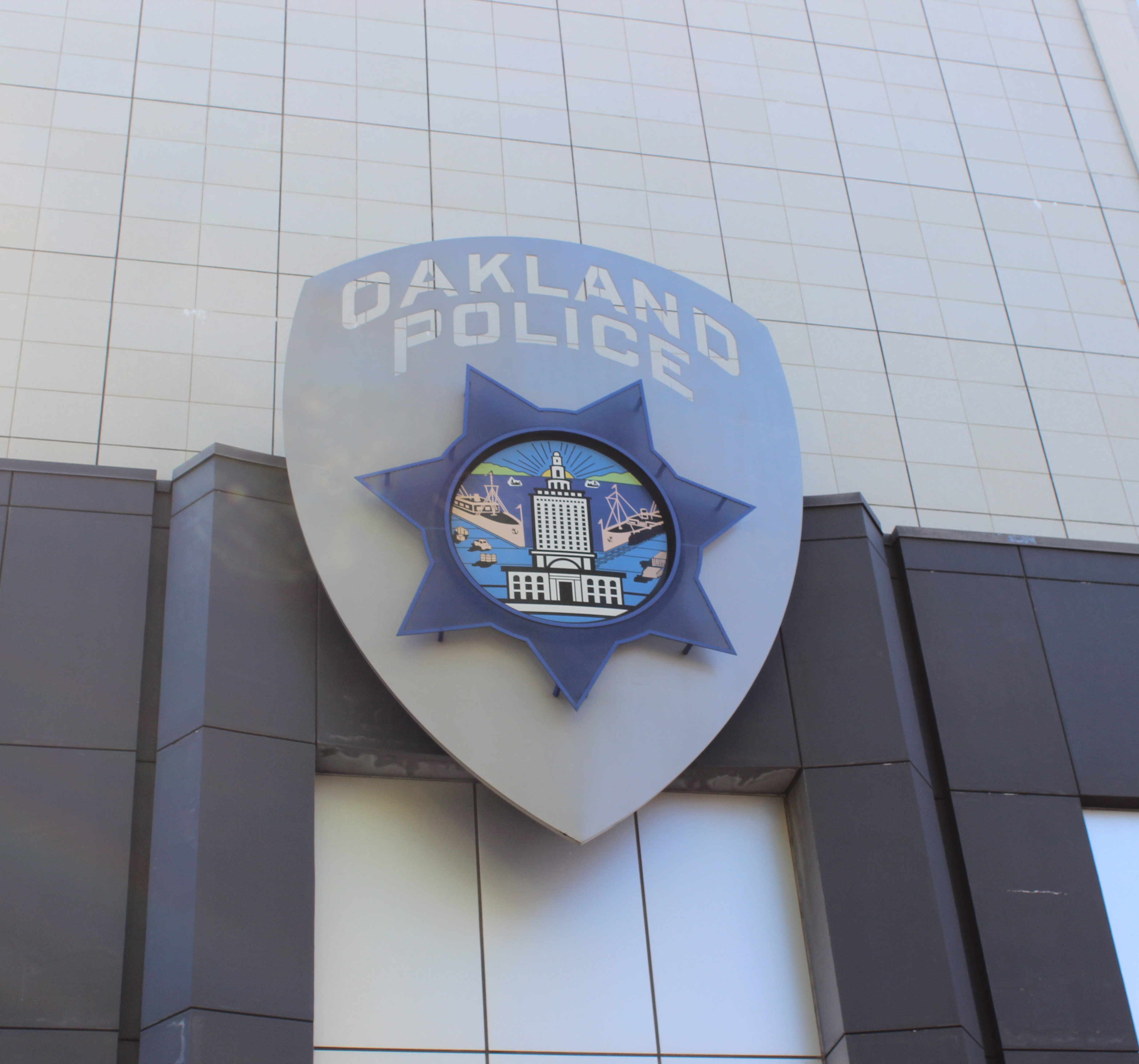
Unhoused Oakland residents say that officers from the Oakland Police Department (OPD) have been harassing and arresting them unjustly during the COVID-19 pandemic.
“We’re essential workers. We provide outreach to the community. There is no way, shape, form, or fashion we should even have been in that situation,” said unhoused resident Yanna Johnson, speaking of an incident on the evening of Friday, April 24 when police briefly detained her and arrested Leon Young, who is also unhoused, outside of The East Oakland Collective’s (EOC) headquarters near MacArthur Boulevard and 78th Avenue in East Oakland.
Before the incident, Johnson and Young had just finished doing work to provide essential needs to other unhoused people at risk for contracting COVID-19 who are temporarily sheltered in hotel rooms. EOC and Housing and Dignity Village (HDV), organizations that advocate for unhoused people, have fundraised to temporarily shelter those who are unsheltered and at risk for contracting COVID-19 at three different hotels.
Johnson and Young are lifelong Black Oakland residents. Needa Bee of HDV, who was helping at the hotels and was at the scene while the incident occurred says the police action was racially motivated.
“They targeted the Black folks who happened to be driving a luxury car that we got donated due to the work we’re doing,” said Bee.
Young says he was arrested due to a case of mistaken identity.
“[The officers] kept calling me this name: Emory, Emory, over and over again,” Young said.
One officer pointed a gun at Young’s face during the arrest.
“I got to fearing for my life,” said Young.
“Officers detained an individual at gunpoint who they believed at the time matched the description of a person wanted in connection with a prior shooting,” OPD media wrote in an email to Bay Area reporter Darwin BondGraham.
The same email also states that while “the officers determined he was not the shooting suspect,” Young was still transported to Santa Rita Jail because he had a no-bail warrant out in connection with an unrelated charge. He was released at eight the next morning.
Video of the incident that EOC’s Candice Elder posted to Facebook shows that some police did not wear masks during the incident and none wore gloves even while touching people. The Oakland Post emailed OPD media and asked if officers are required to wear gloves and masks in contact situations to protect themselves and the public from COVID-19 but have not yet heard a response.
In West Oakland, unhoused people living on and near Wood Street say there has been an increased police presence. Dayton Andrews of The United Front Against Displacement, a group that does clean up work around Wood Street and has recently installed handwashing stations and freshwater tanks at the site, says he’s seen police on site every weekend since shelter-in-place has started.
One unhoused Oakland resident told The Oakland Post his RV got stolen from Wood Street one night in mid-April so he sought shelter by putting pillows and a blanket in a van he said was “stripped and appeared abandoned.”
The resident said he saw a police officer and tried to tell him about his stolen RV, but while he was telling his story, the officer ran the VIN number on the van, which he found to be stolen, and arrested him for possession of a stolen vehicle, jailing him for a night. But the resident says he didn’t know the van was stolen.
Also in West Oakland, in the morning of April 24th and on 3rd and Peralta Streets, unhoused Oakland resident Paul Taj Schrager said that OPD and city workers pressured him to quickly move his three vehicles which blocked access to CalTrans land without, at first, offering to give him any aid with moving. The vehicles housed five people and his possessions, but one didn’t run.
“[They said] that we had an hour to move everything, and if not they’d come back with tow trucks. They were not very nice about it at all,” said Schrager.
Markaya Spikes, who lives nearby in a self-made home and says she had had previous interactions with the officers present, approached and helped mediate the situation. After discussion, Schrager says they agreed to let him into a city-sanctioned safe parking site.
When The Oakland Post contacted Schrager on April 27, he said he and the people he lives with never made it into the safe parking site. Instead, they moved to the other side of the street from where they had stayed previously.
“I was starting to pack and getting set to go, but I spoke with a person [at the safe parking site] that said I couldn’t just drive in,” said Schrager.



Activism
Oakland Post: Week of April 1 – 7, 2026
The printed Weekly Edition of the Oakland Post: Week of April 1 – 7, 2026


To enlarge your view of this issue, use the slider, magnifying glass icon or full page icon in the lower right corner of the browser window.

Activism
Oakland Post: Week of March 18 – 24, 2026
The printed Weekly Edition of the Oakland Post: Week of March 18 – 24, 2026

To enlarge your view of this issue, use the slider, magnifying glass icon or full page icon in the lower right corner of the browser window.
Activism
Oakland Post: Week of March 11 -17, 2026
The printed Weekly Edition of the Oakland Post: Week of March 11 – 17, 2026

To enlarge your view of this issue, use the slider, magnifying glass icon or full page icon in the lower right corner of the browser window.


WORK FROM HOME
Home-based business with potential monthly income of $10K+ per month. A proven training system and website provided to maximize business effectiveness. Perfect job to earn side and primary income. Contact Lynne for more details: Lynne4npusa@gmail.com 800-334-0540


Oakland Post: Week of April 1 – 7, 2026

Black Artists in America, Installation Three Wraps at the Dixon Gallery and Gardens

Grief, Advocacy, and Education: A Counselor Reflects on Black Maternal Health

Future of Florida’s Black History Museum in Limbo

New Research Shows the Many Benefits of Early Learning

South Hampton K-8 Students Among Top 10 Finalists for Samsung’s ‘Solve for Tomorrow’ Competition

Cuba: No Negotiation with US on the President or Political System

Brooklyn Academy of Music Names Jamaican-Born Tamara McCaw as President

Trinidad & Tobego – U.S. Launches WhatsApp Channel for American Citizens in the Country

Oakland Post: Week of March 18 – 24, 2026

AI Innovation vs. Ethics and Environmental Impact

AI, Web3, and Digital Reparations

What If You Owned Your AI Agent?

Season 7, Episode 3 – January Reporter’s Roundtable 📱

Season 7, Episode 3 – January Reporter’s Roundtable

Reflecting on Black History Milestones in Birmingham AL

Oakland Post: Week of February 25 – March 3, 2026

PRESS ROOM: NBA Hall of Fame Nominee Terry Cummings Joins 100 Black Men of DeKalb County to Launch Victory & Values Initiative

Oakland Post: Week of March 4 – 10, 2026

Trump’s MAGA Allies are Creating Executive Order Plan to Steal the 2026 Midterms

U.S. manufacturing rebounds – how foundry services are adapting to rising demand

Poll Shows Support for Policies That Help Families Afford Child Care

OP-ED: One Hundred Years of Black Workers Telling the Truth

Oakland Post: Week of March 11 -17, 2026

Advancements in solar technology that are changing the way we power the world

Woman’s Search for Family’s Roots Leads to Ancestor John T. Ward – A Successful Entrepreneur and Conductor on the Underground Railroad
Oakland Post: Week of March 18 – 24, 2026

COMMENTARY: Women of Color Shape Our Past and Future

PRESS ROOM: Civil Rights TV Launches in Selma as the World’s First 24/7 Civil Rights Television Network

OP-ED: NNPA Launches 2026 “Leadership Matters” Video Series

Hyundai Ioniq 5 Parking, Safety, and 360 View #shorts

2025 Ioniq 5 New Wiper & Powerful Performance! #shorts

Electric SUV Range: Is 259 Miles Enough? #shorts

EV Charging: How Fast Can You Charge an Electric Vehicle? #shorts

Biometric Cooling… Messaging Seats…Come on! 2025 Infiniti QX80 Autograph 4WD

Charged Up: Witness the Magic of a Fully Electric Car! #shorts

Range Rover Sport PHEV Included…: See What’s Inside This Luxury SUV! #shorts

Invisible Hood View: Perfect Parking with X-Ray Vision! #shorts

AI Is Reshaping Black Healthcare: Promise, Peril, and the Push for Improved Results in California

ESSAY: Technology and Medicine, a Primary Care Point of View

Sanctuary Cities

The RESISTANCE – FREEDOM NOW

STATE OF THE PEOPLE: Freddie

ECONOMIC BOYCOTT DAY!!!!!

I told You So
-
 Activism3 weeks ago
Oakland Post: Week of March 11 -17, 2026
-
 #NNPA BlackPress4 weeks ago
Woman’s Search for Family’s Roots Leads to Ancestor John T. Ward – A Successful Entrepreneur and Conductor on the Underground Railroad
-
 Activism2 weeks ago
Oakland Post: Week of March 18 – 24, 2026
-
 #NNPA BlackPress4 weeks ago
COMMENTARY: Women of Color Shape Our Past and Future
-

 Advice3 weeks ago
Financial Wellness and Mental Health: Managing Money Stress in College
-

 #NNPA BlackPress4 weeks ago
Advocates Raise Alarm Over ICE Operation, MOU and Detention Risks in Baltimore County
-

 #NNPA BlackPress4 weeks ago
Pete Buttigieg to Join Mayor Randall Woodfin for Community Town Hall in Birmingham
-
 #NNPA BlackPress2 weeks ago
Brooklyn Academy of Music Names Jamaican-Born Tamara McCaw as President
